http://www.dynamic-connectome.org
http://neuroinformatics.ncl.ac.uk/
@ConnectomeLab
Dr Marcus Kaiser
A Tutorial in Connectome Analysis (II):
Topological and Spatial Features of Brain Networks
Professor of Neuroinformatics
School of Computing Science /
Institute of Neuroscience
Newcastle University
United Kingdom
2
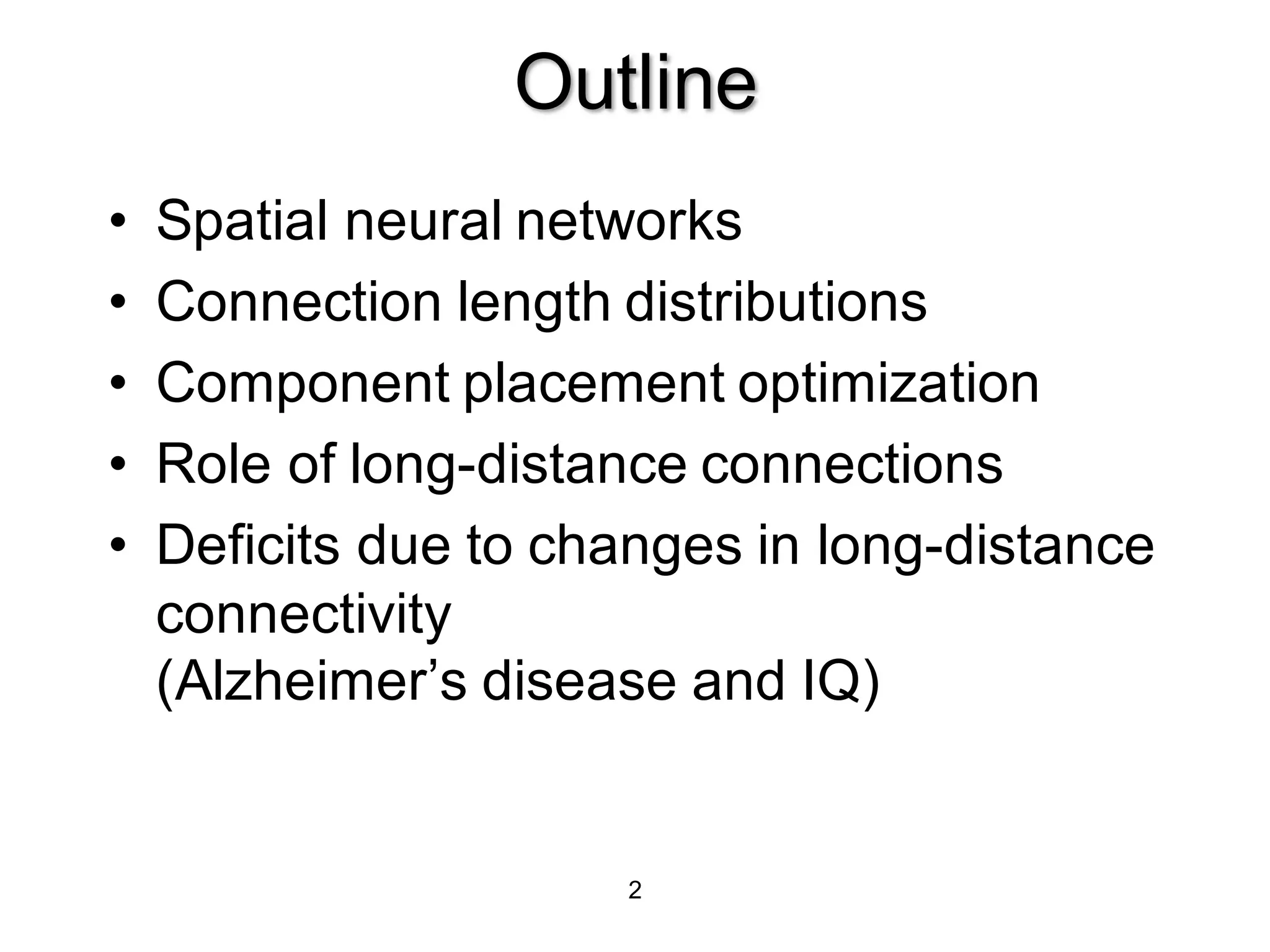
Outline
• Spatial neural networks
• Connection length distributions
• Component placement optimization
• Role of long-distance connections
• Deficits due to changes in long-distance
connectivity
(Alzheimer’s disease and IQ)
3
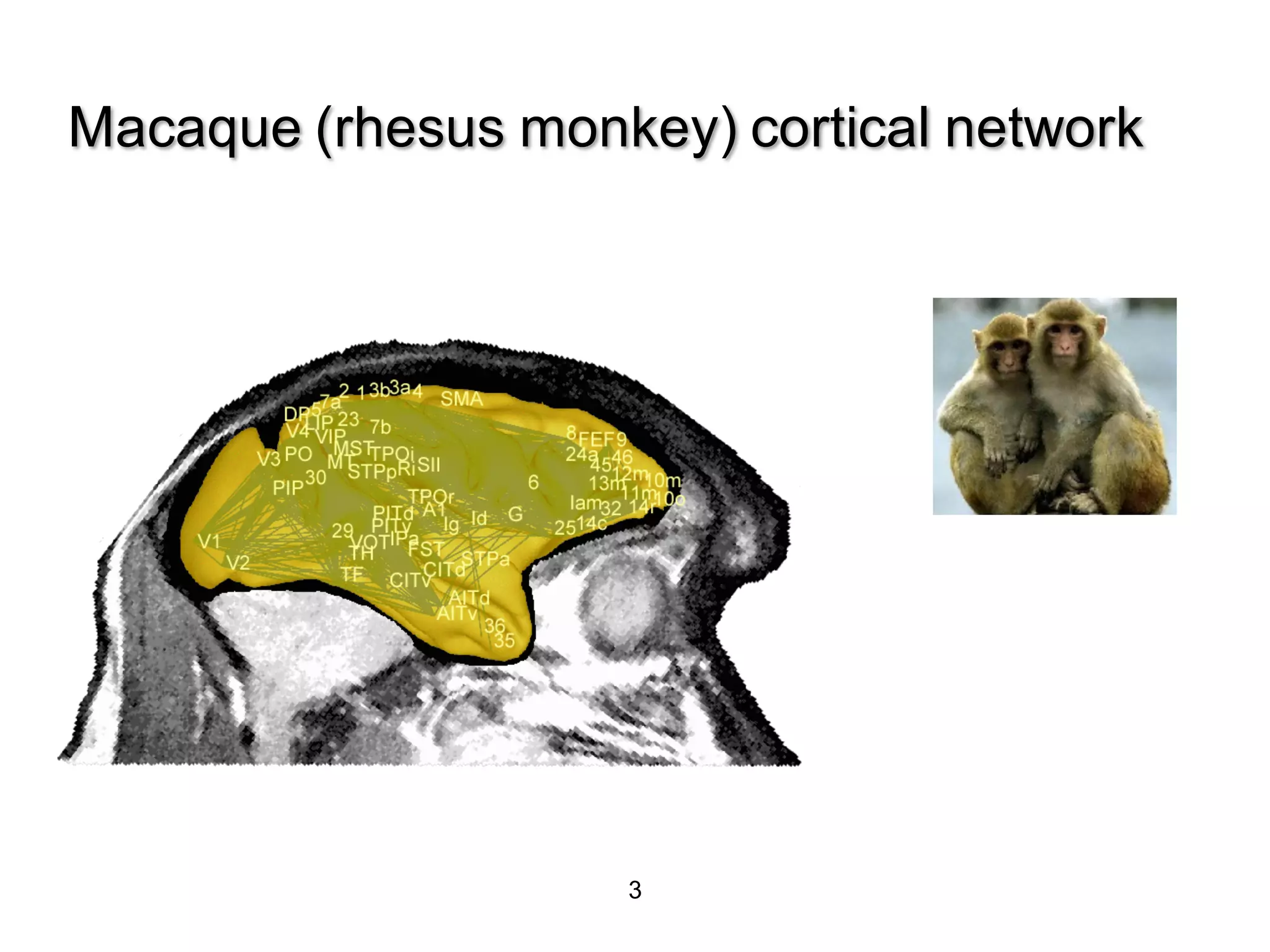
Macaque (rhesus monkey) cortical network
4
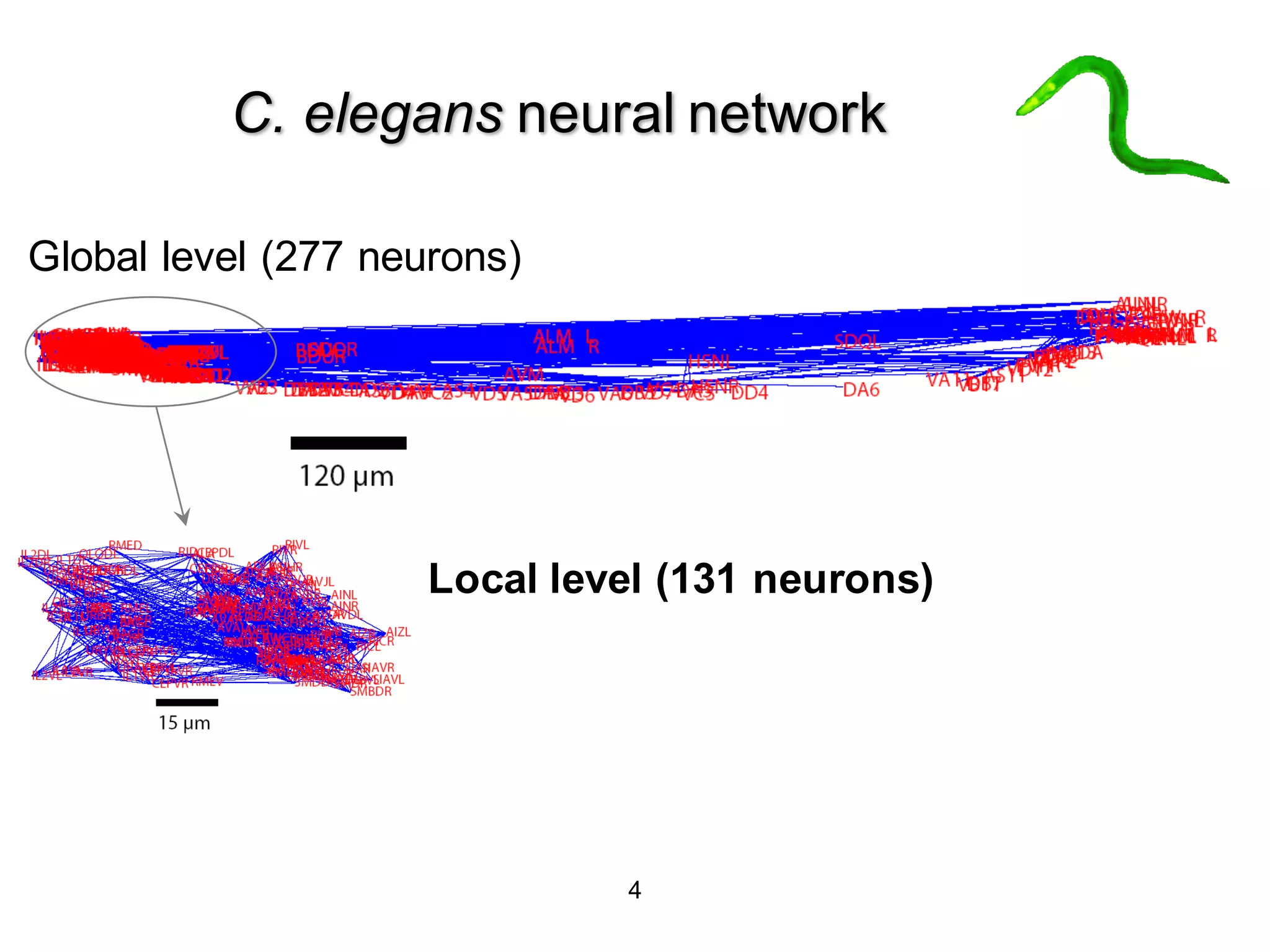
C. elegans neural network
Global level (277 neurons)
Local level (131 neurons)
5
Most projections connect adjacent neurons
(Gamma function for connection length distribution)
0 20 40
0.05
0.1
0.15
0.2
Connection length[mm]
Frequency
0 0.5 1
0
0.1
0.2
0.3
Connection length[mm]
Frequency
0 0.02 0.04 0.06 0.08
0.05
0.1
0.15
0.2
0.25
Connection length[mm]
Frequency
0.2 0.4 0.6 0.8 1
0.2
0.4
0.6
Connection length[mm]
Frequency
Macaque
cortical
Rat
neuronal
C. elegans
neuronal (local)
C. elegans
neuronal (global)
Kaiser et al. (2009) Cerebral Cortex
0 10 20 30 40 50
0
0.05
0.1
0.15
0.2
0.25
Connection length [mm]
Relativefrequency
C
0 0.2 0.4 0.6 0.8 1 1.2
0
0.05
0.1
0.15
0.2
0.25
0.3
Connection length [mm]
Relativefrequency
D
0 20 40 60 80 100 120
0
0.05
0.1
0.15
0.2
0.25
0.3
Connection length [mm]
Relativefrequency
A
20 40 60 80 100
0.05
0.1
0.15
0.2
0.25
Connection length [mm]
Relativefrequency
B
Macaque
cortical
Rat
neuronal
Human DTI Human
rsMRI
Also true for human structural
and functional connectivity
Kaiser (2011) Neuroimage
7
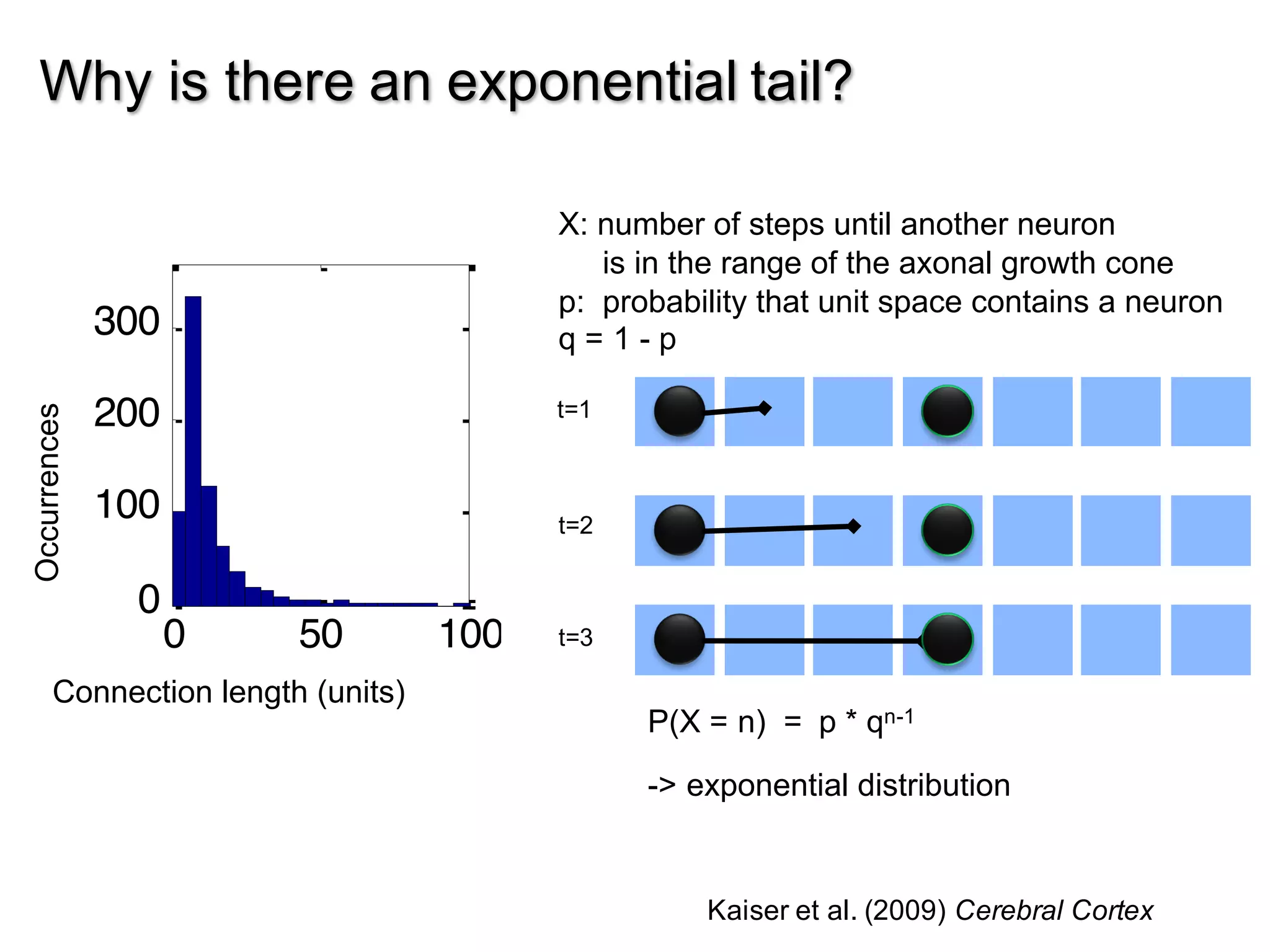
Why is there an exponential tail?
100
0
0 50 100
0
100
200
300
w2d1000001
0 50 100
0
100
200
300
w2d1000010
0 50 1
0
100
200
300
w2d1000011
0
300
w2d1000101
300
w2d1000110
300
w2d1000111
Connection length (units)
Occurrences
X: number of steps until another neuron
is in the range of the axonal growth cone
p: probability that unit space contains a neuron
q = 1 - p
t=1
t=2
t=3
P(X = n) = p * qn-1
-> exponential distribution
Kaiser et al. (2009) Cerebral Cortex
8
Reducing neural wiring costs
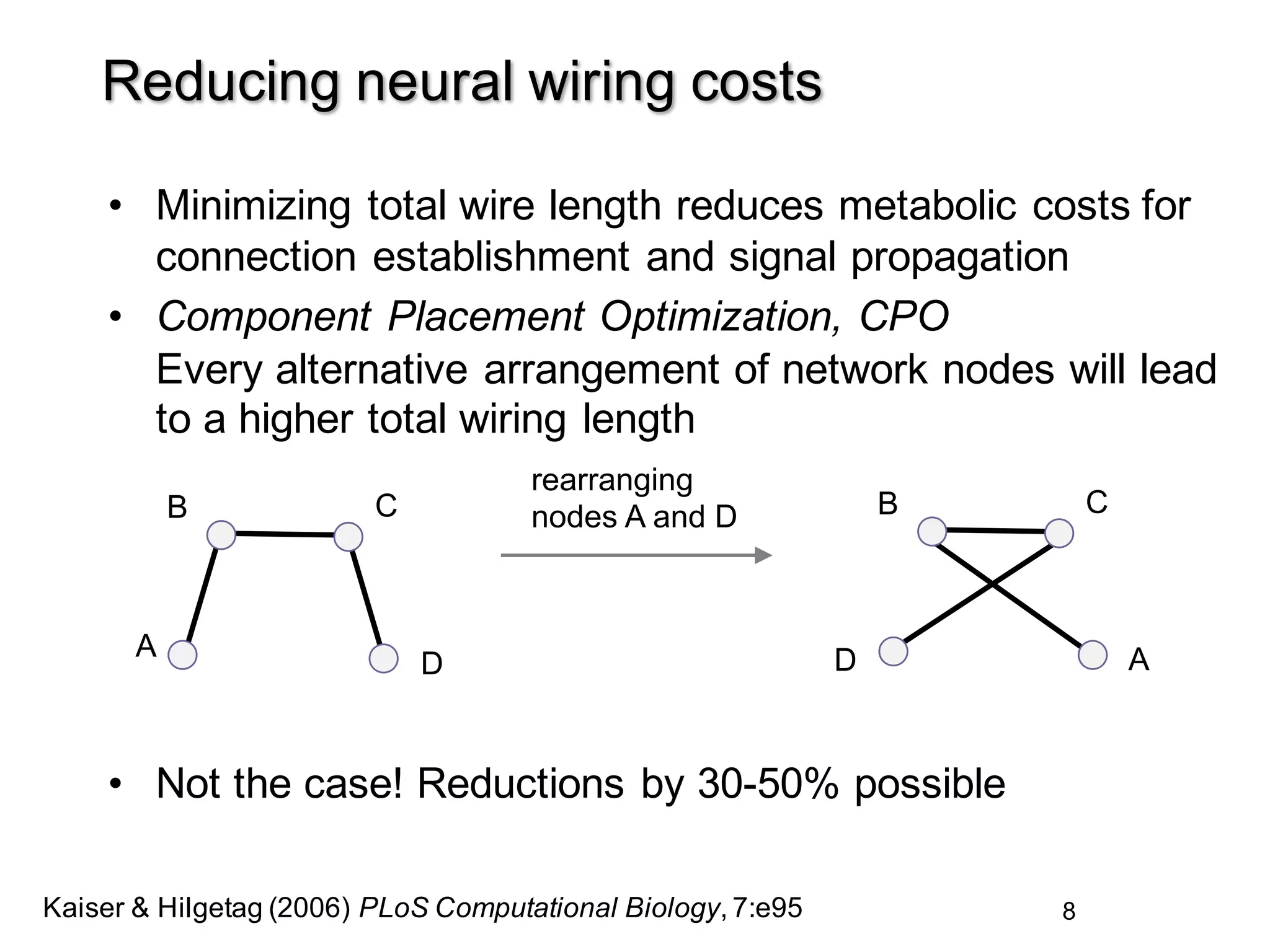
• Minimizing total wire length reduces metabolic costs for
connection establishment and signal propagation
• Component Placement Optimization, CPO
Every alternative arrangement of network nodes will lead
to a higher total wiring length
• Not the case! Reductions by 30-50% possible
A
B C
D A
B C
D
rearranging
nodes A and D
Kaiser & Hilgetag (2006) PLoS Computational Biology, 7:e95
9
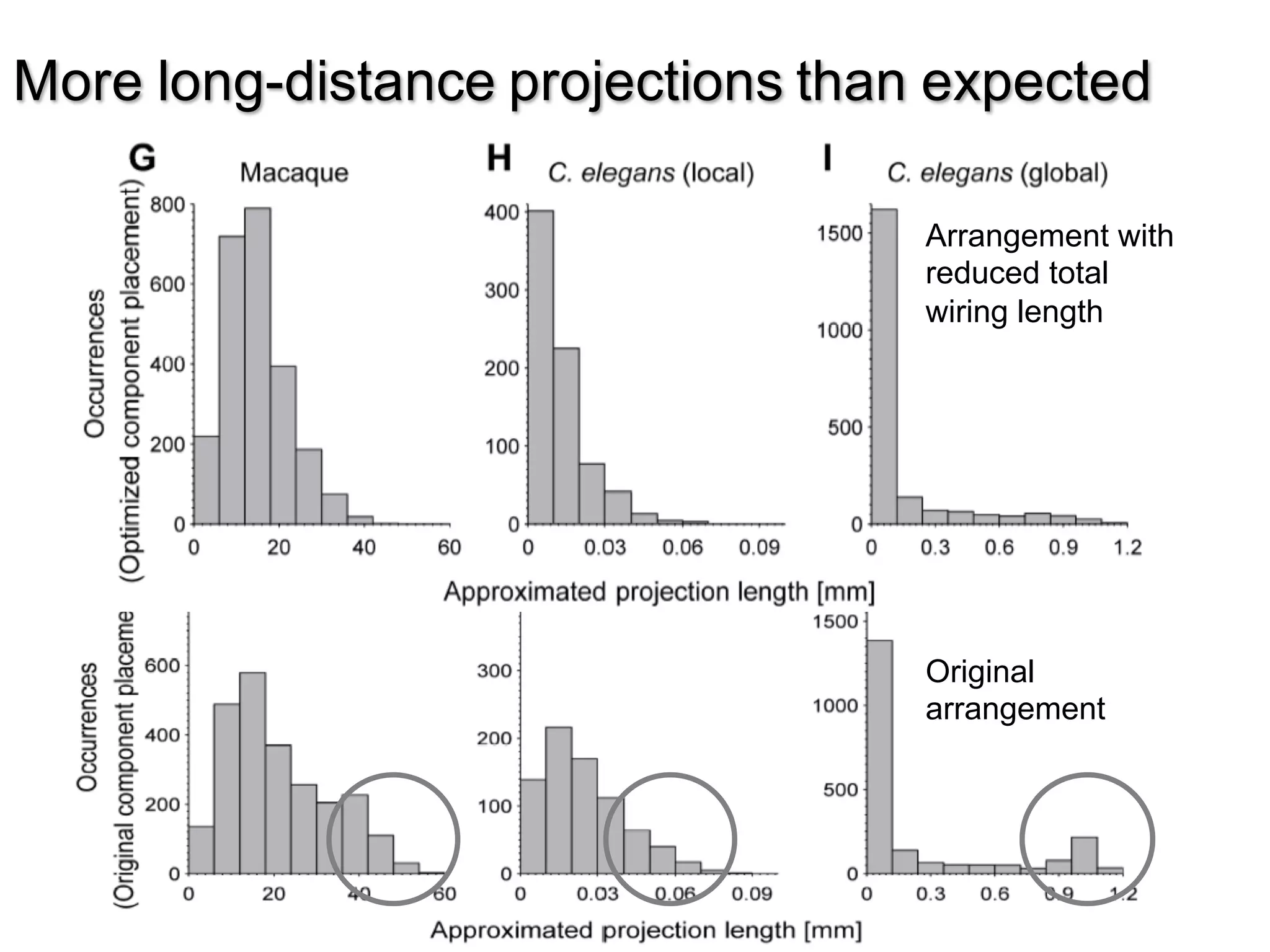
More long-distance projections than expected
Arrangement with
reduced total
wiring length
Original
arrangement
10
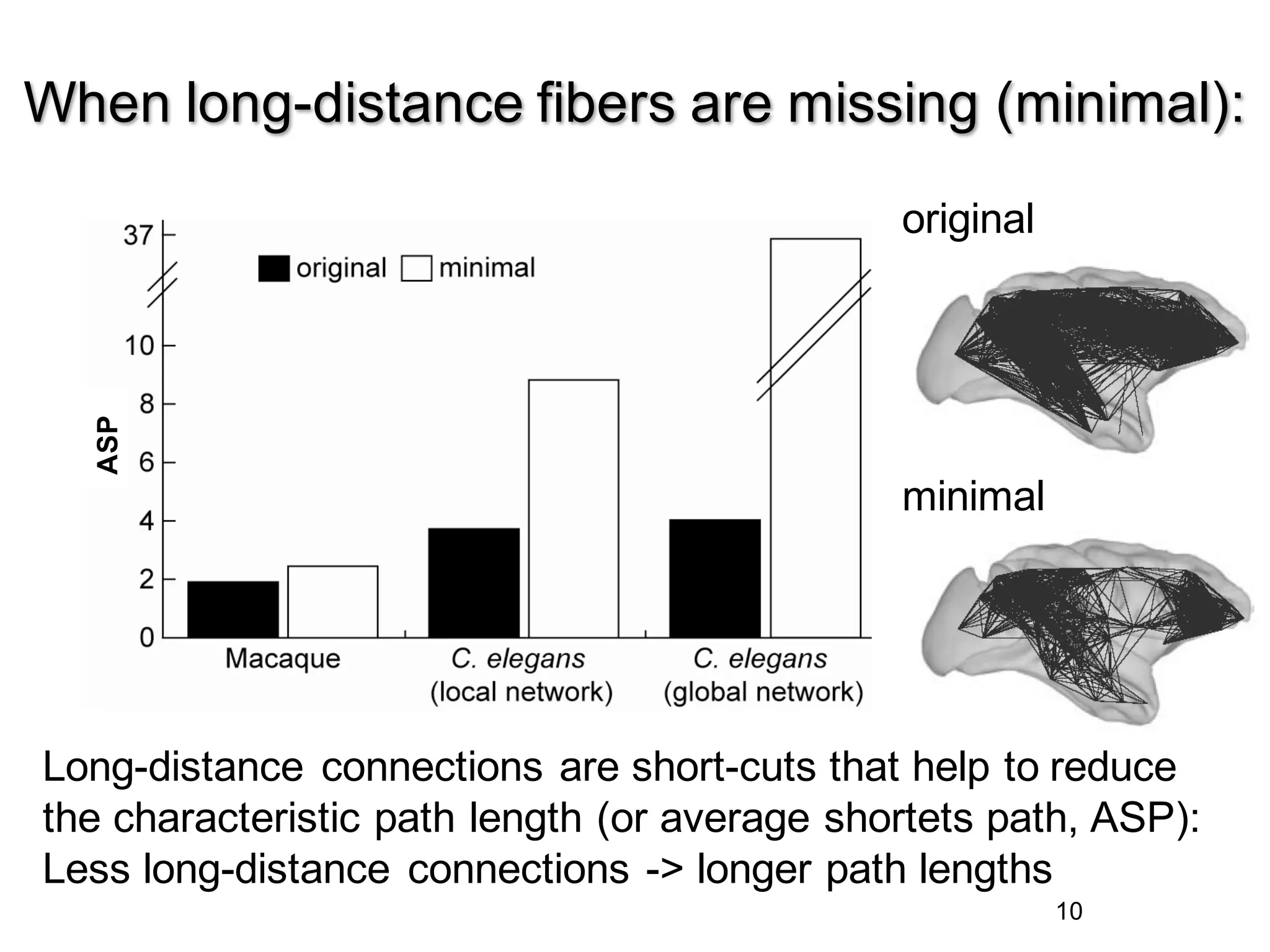
When long-distance fibers are missing (minimal):
original
minimal
ASP
Long-distance connections are short-cuts that help to reduce
the characteristic path length (or average shortets path, ASP):
Less long-distance connections -> longer path lengths
11
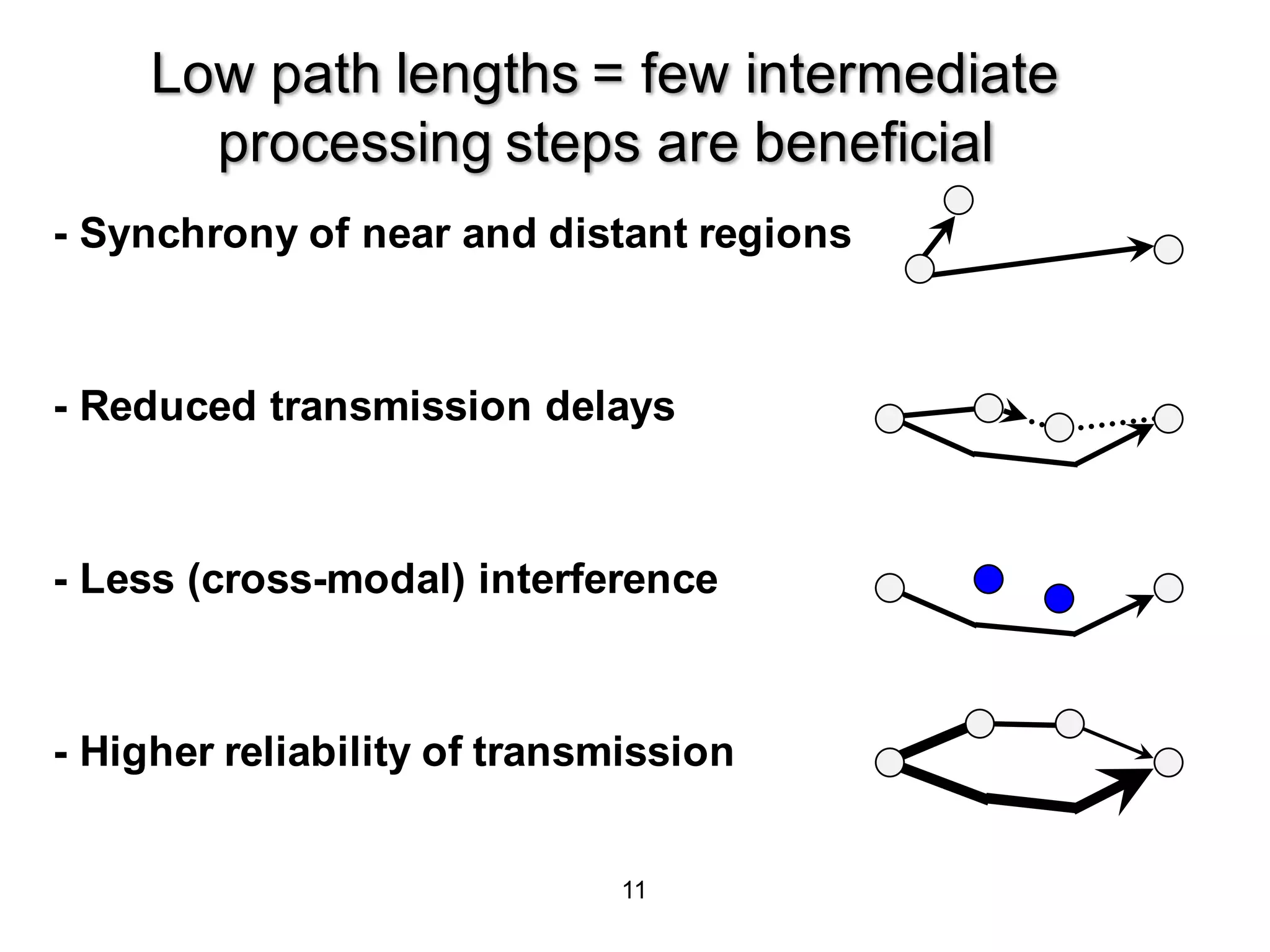
Low path lengths = few intermediate
processing steps are beneficial
- Synchrony of near and distant regions
- Reduced transmission delays
- Less (cross-modal) interference
- Higher reliability of transmission
12
Linking structure and function
13
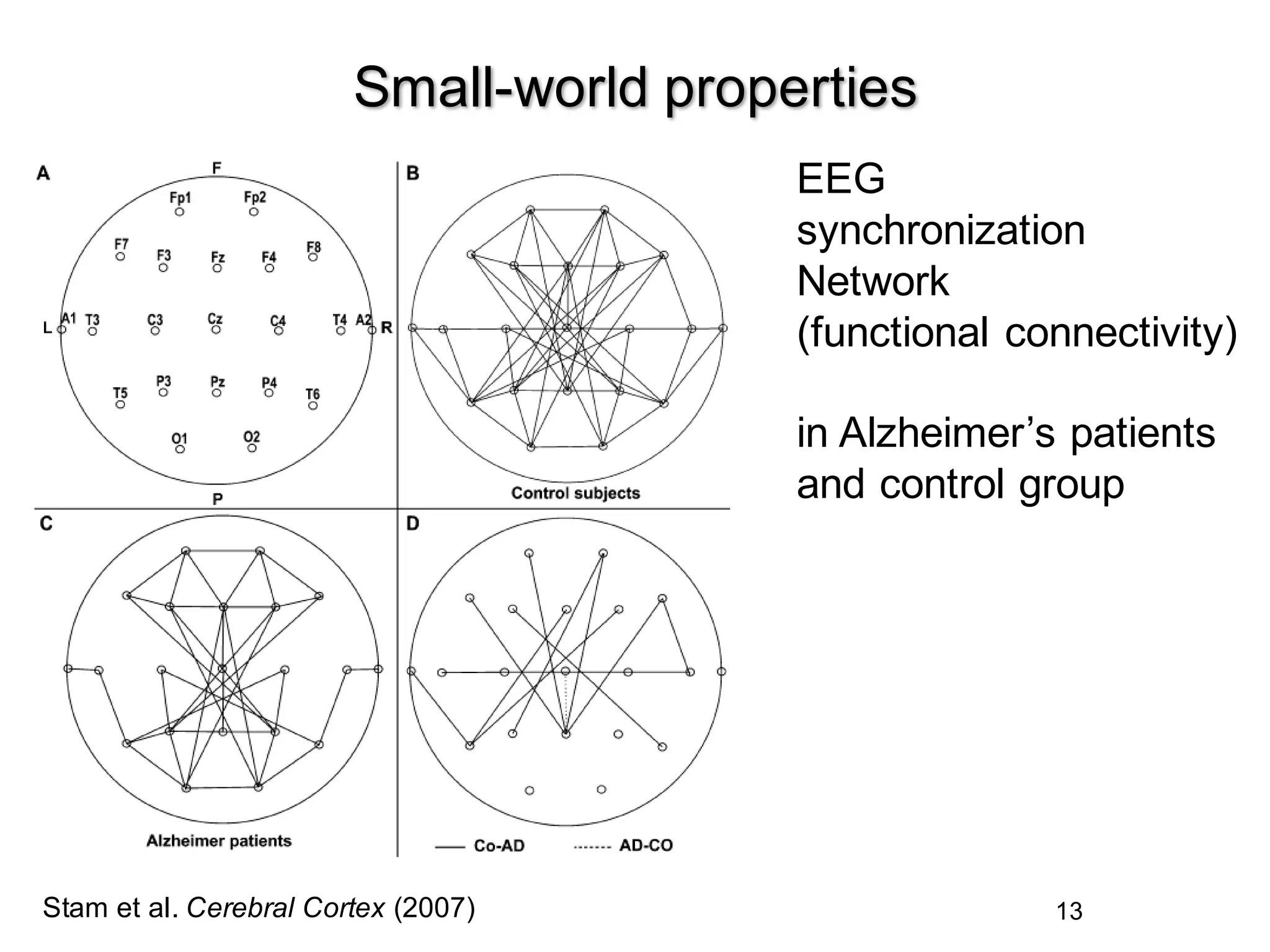
Small-world properties
Stam et al. Cerebral Cortex (2007)
EEG
synchronization
Network
(functional connectivity)
in Alzheimer’s patients
and control group
14
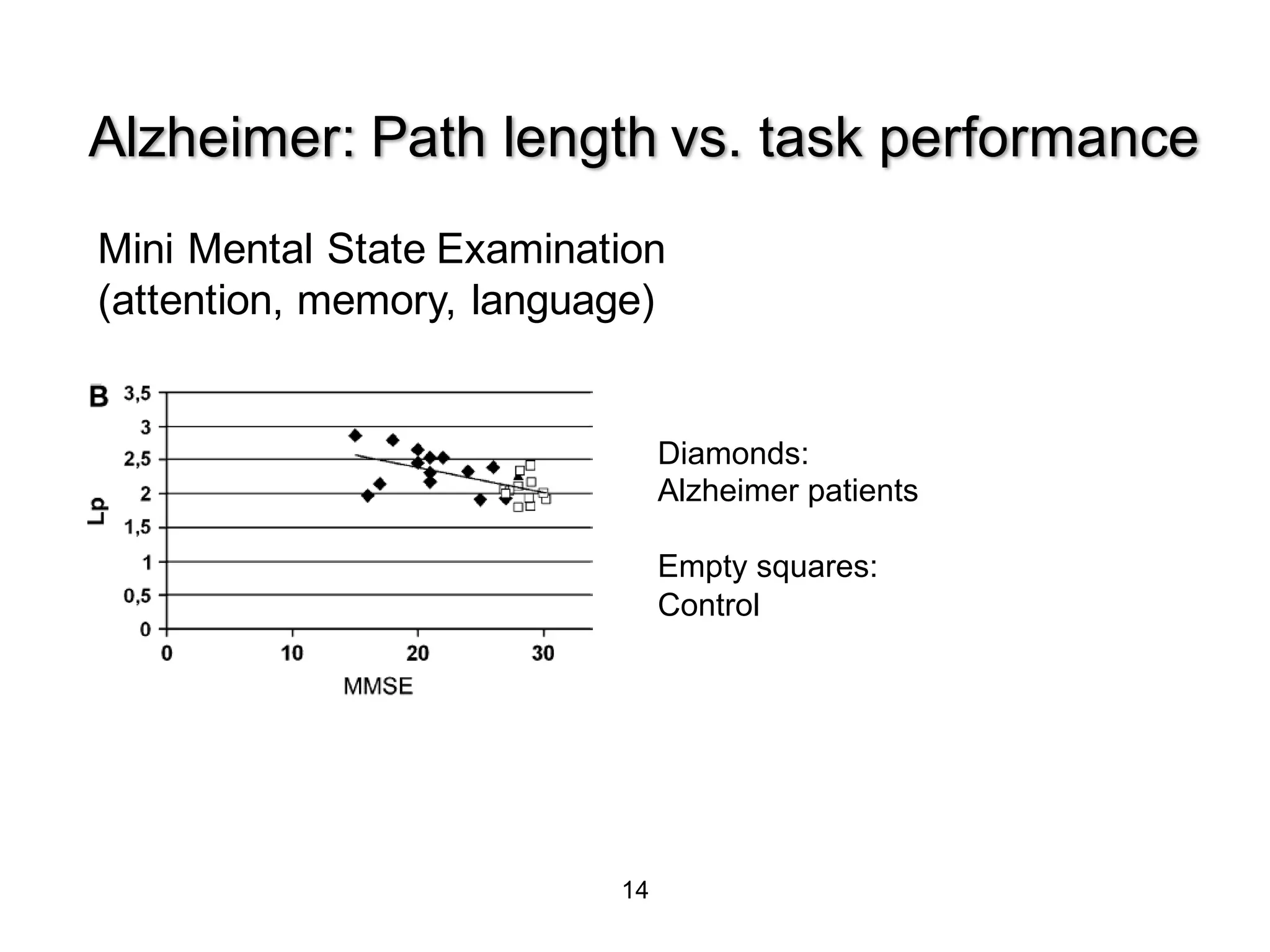
Alzheimer: Path length vs. task performance
Mini Mental State Examination
(attention, memory, language)
Diamonds:
Alzheimer patients
Empty squares:
Control
15
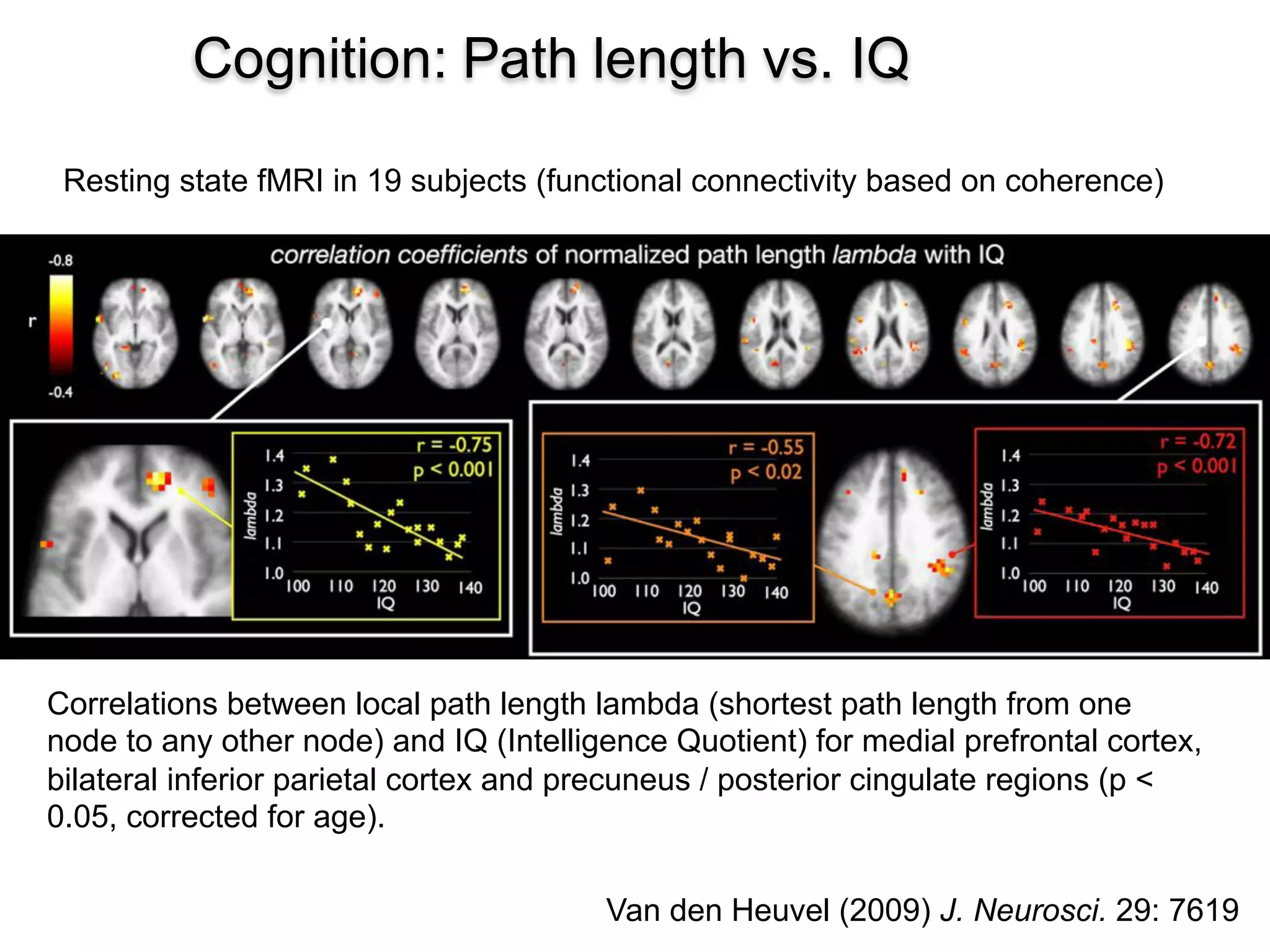
Cognition: Path length vs. IQ
Van den Heuvel (2009) J. Neurosci. 29: 7619
Correlations between local path length lambda (shortest path length from one
node to any other node) and IQ (Intelligence Quotient) for medial prefrontal cortex,
bilateral inferior parietal cortex and precuneus / posterior cingulate regions (p <
0.05, corrected for age).
Resting state fMRI in 19 subjects (functional connectivity based on coherence)
16
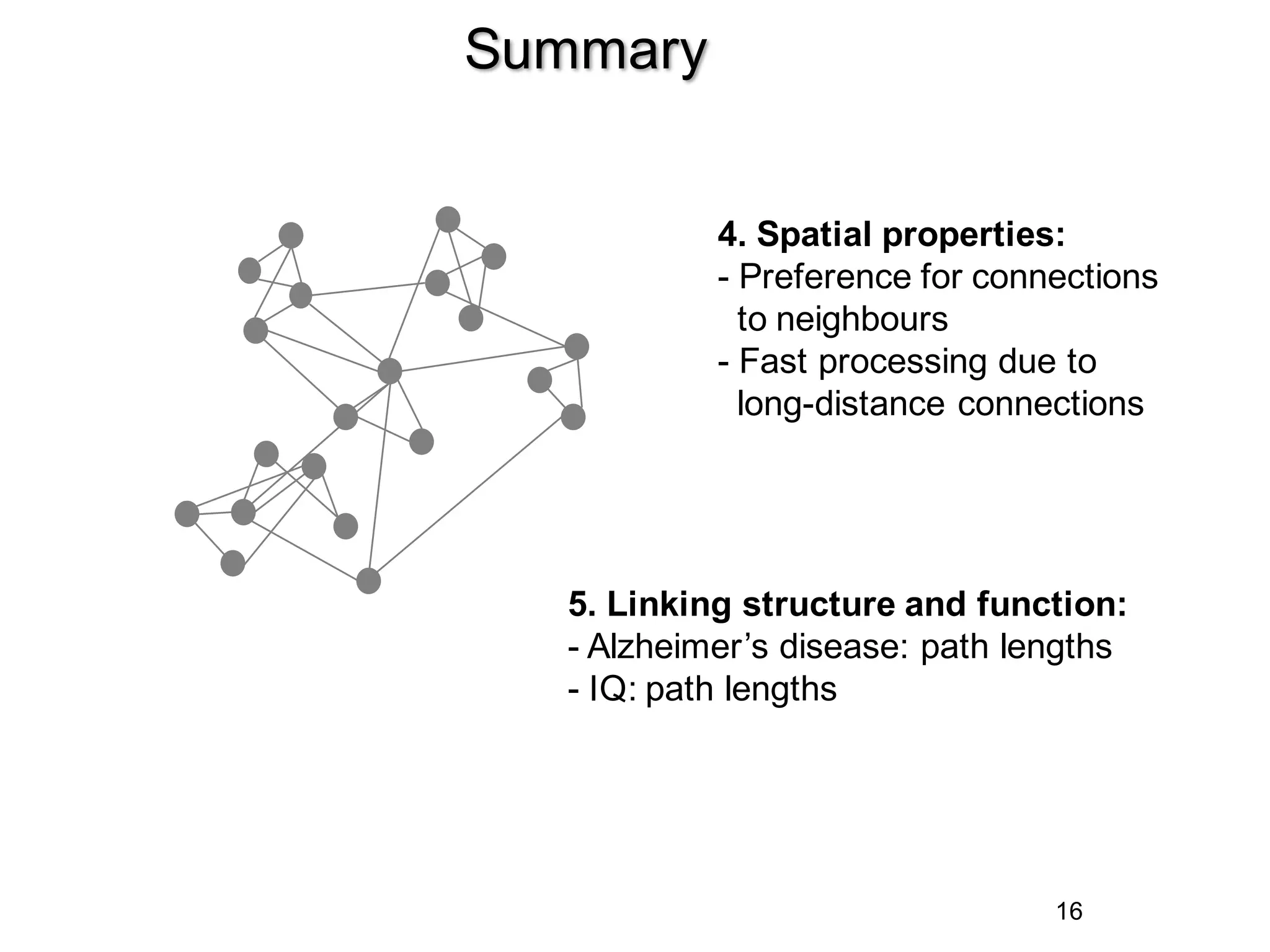
Summary
5. Linking structure and function:
- Alzheimer’s disease: path lengths
- IQ: path lengths
4. Spatial properties:
- Preference for connections
to neighbours
- Fast processing due to
long-distance connections

A tutorial in Connectome Analysis (2) - Marcus Kaiser

  • 1.
    http://www.dynamic-connectome.org http://neuroinformatics.ncl.ac.uk/ @ConnectomeLab Dr Marcus Kaiser ATutorial in Connectome Analysis (II): Topological and Spatial Features of Brain Networks Professor of Neuroinformatics School of Computing Science / Institute of Neuroscience Newcastle University United Kingdom
  • 2.
    2 Outline • Spatial neuralnetworks • Connection length distributions • Component placement optimization • Role of long-distance connections • Deficits due to changes in long-distance connectivity (Alzheimer’s disease and IQ)
  • 3.
    3 Macaque (rhesus monkey)cortical network
  • 4.
    4 C. elegans neuralnetwork Global level (277 neurons) Local level (131 neurons)
  • 5.
    5 Most projections connectadjacent neurons (Gamma function for connection length distribution) 0 20 40 0.05 0.1 0.15 0.2 Connection length[mm] Frequency 0 0.5 1 0 0.1 0.2 0.3 Connection length[mm] Frequency 0 0.02 0.04 0.06 0.08 0.05 0.1 0.15 0.2 0.25 Connection length[mm] Frequency 0.2 0.4 0.6 0.8 1 0.2 0.4 0.6 Connection length[mm] Frequency Macaque cortical Rat neuronal C. elegans neuronal (local) C. elegans neuronal (global) Kaiser et al. (2009) Cerebral Cortex
  • 6.
    0 10 2030 40 50 0 0.05 0.1 0.15 0.2 0.25 Connection length [mm] Relativefrequency C 0 0.2 0.4 0.6 0.8 1 1.2 0 0.05 0.1 0.15 0.2 0.25 0.3 Connection length [mm] Relativefrequency D 0 20 40 60 80 100 120 0 0.05 0.1 0.15 0.2 0.25 0.3 Connection length [mm] Relativefrequency A 20 40 60 80 100 0.05 0.1 0.15 0.2 0.25 Connection length [mm] Relativefrequency B Macaque cortical Rat neuronal Human DTI Human rsMRI Also true for human structural and functional connectivity Kaiser (2011) Neuroimage
  • 7.
    7 Why is therean exponential tail? 100 0 0 50 100 0 100 200 300 w2d1000001 0 50 100 0 100 200 300 w2d1000010 0 50 1 0 100 200 300 w2d1000011 0 300 w2d1000101 300 w2d1000110 300 w2d1000111 Connection length (units) Occurrences X: number of steps until another neuron is in the range of the axonal growth cone p: probability that unit space contains a neuron q = 1 - p t=1 t=2 t=3 P(X = n) = p * qn-1 -> exponential distribution Kaiser et al. (2009) Cerebral Cortex
  • 8.
    8 Reducing neural wiringcosts • Minimizing total wire length reduces metabolic costs for connection establishment and signal propagation • Component Placement Optimization, CPO Every alternative arrangement of network nodes will lead to a higher total wiring length • Not the case! Reductions by 30-50% possible A B C D A B C D rearranging nodes A and D Kaiser & Hilgetag (2006) PLoS Computational Biology, 7:e95
  • 9.
    9 More long-distance projectionsthan expected Arrangement with reduced total wiring length Original arrangement
  • 10.
    10 When long-distance fibersare missing (minimal): original minimal ASP Long-distance connections are short-cuts that help to reduce the characteristic path length (or average shortets path, ASP): Less long-distance connections -> longer path lengths
  • 11.
    11 Low path lengths= few intermediate processing steps are beneficial - Synchrony of near and distant regions - Reduced transmission delays - Less (cross-modal) interference - Higher reliability of transmission
  • 12.
  • 13.
    13 Small-world properties Stam etal. Cerebral Cortex (2007) EEG synchronization Network (functional connectivity) in Alzheimer’s patients and control group
  • 14.
    14 Alzheimer: Path lengthvs. task performance Mini Mental State Examination (attention, memory, language) Diamonds: Alzheimer patients Empty squares: Control
  • 15.
    15 Cognition: Path lengthvs. IQ Van den Heuvel (2009) J. Neurosci. 29: 7619 Correlations between local path length lambda (shortest path length from one node to any other node) and IQ (Intelligence Quotient) for medial prefrontal cortex, bilateral inferior parietal cortex and precuneus / posterior cingulate regions (p < 0.05, corrected for age). Resting state fMRI in 19 subjects (functional connectivity based on coherence)
  • 16.
    16 Summary 5. Linking structureand function: - Alzheimer’s disease: path lengths - IQ: path lengths 4. Spatial properties: - Preference for connections to neighbours - Fast processing due to long-distance connections