Download as PDF, PPTX
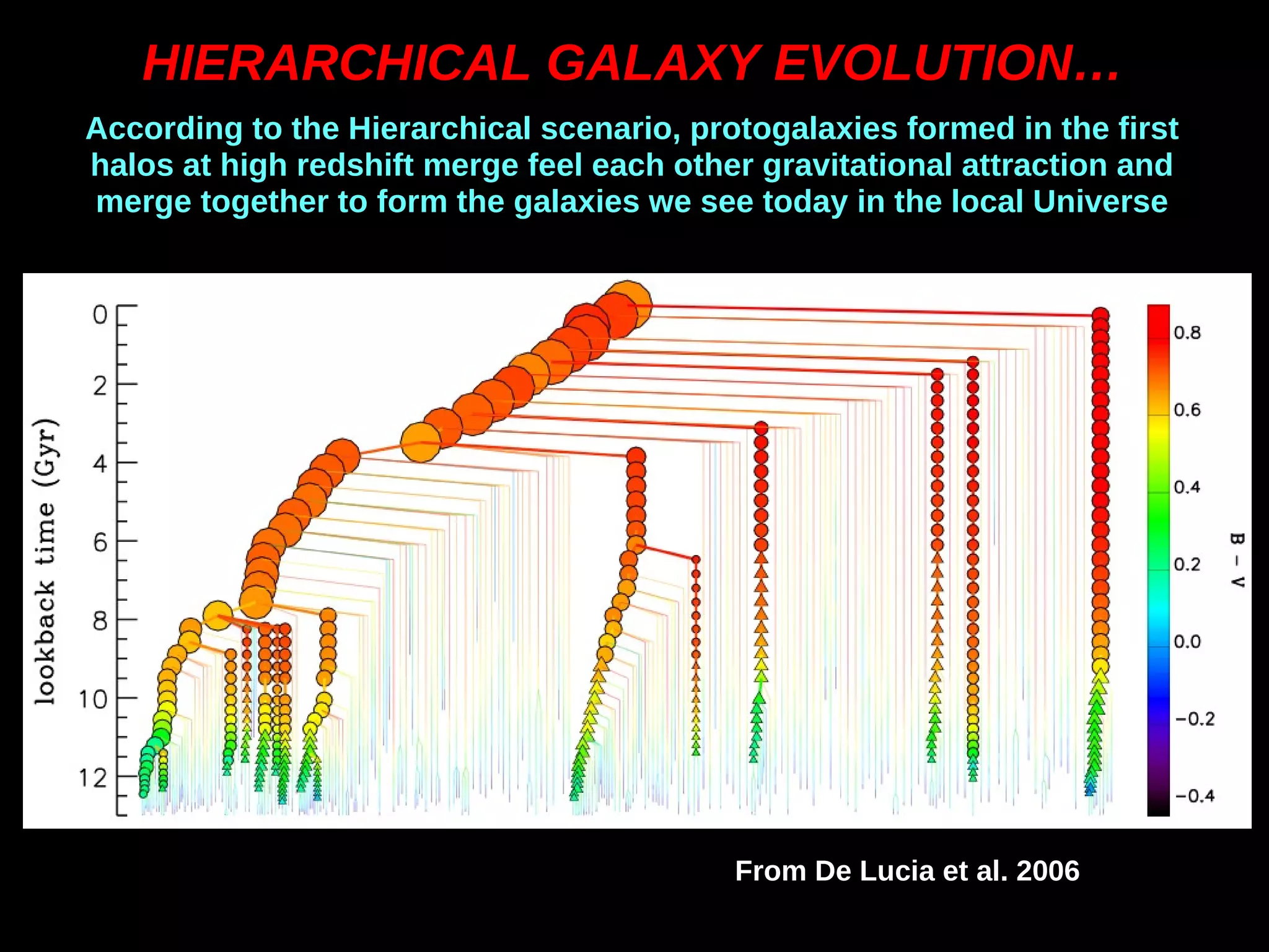
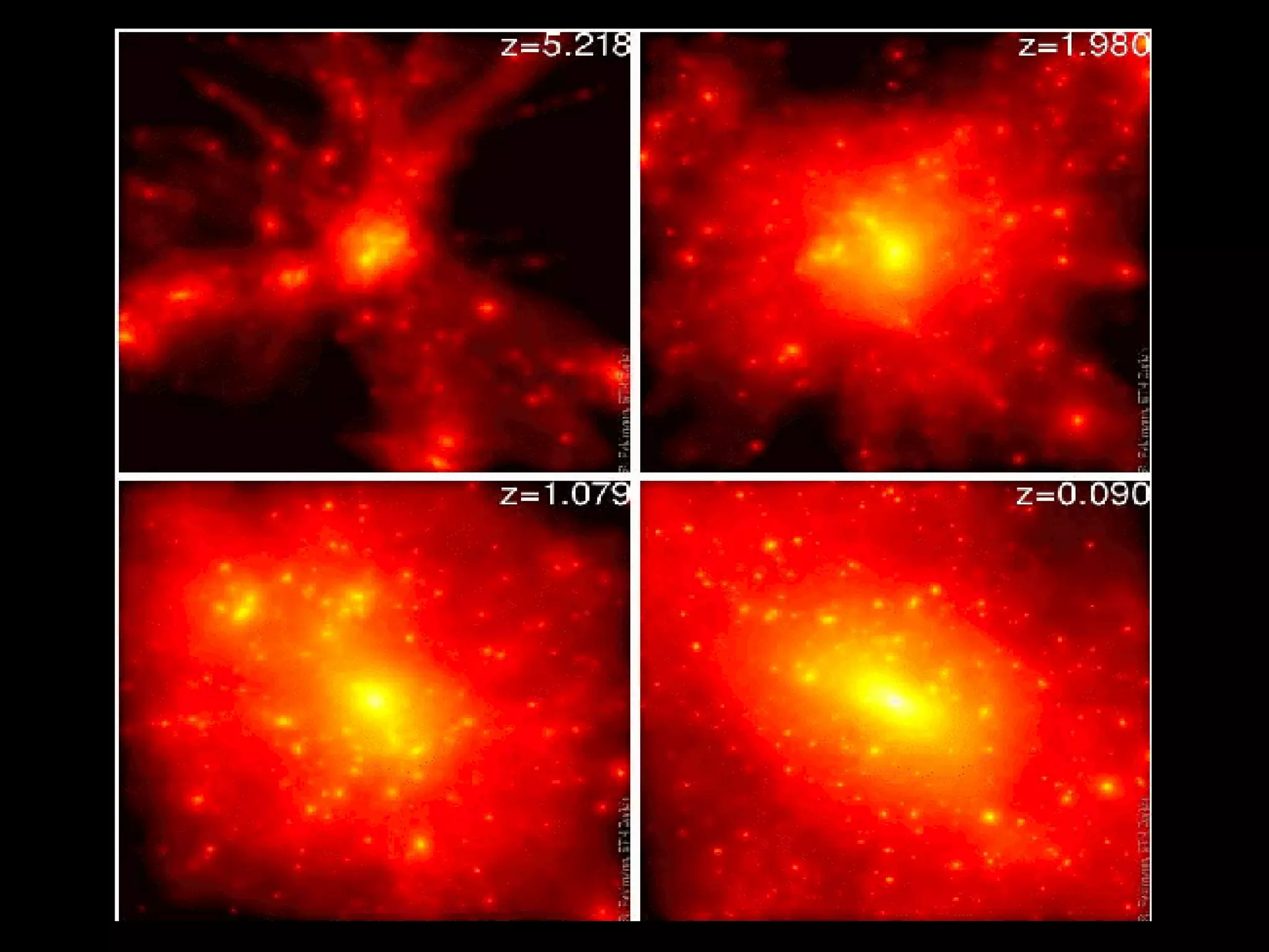
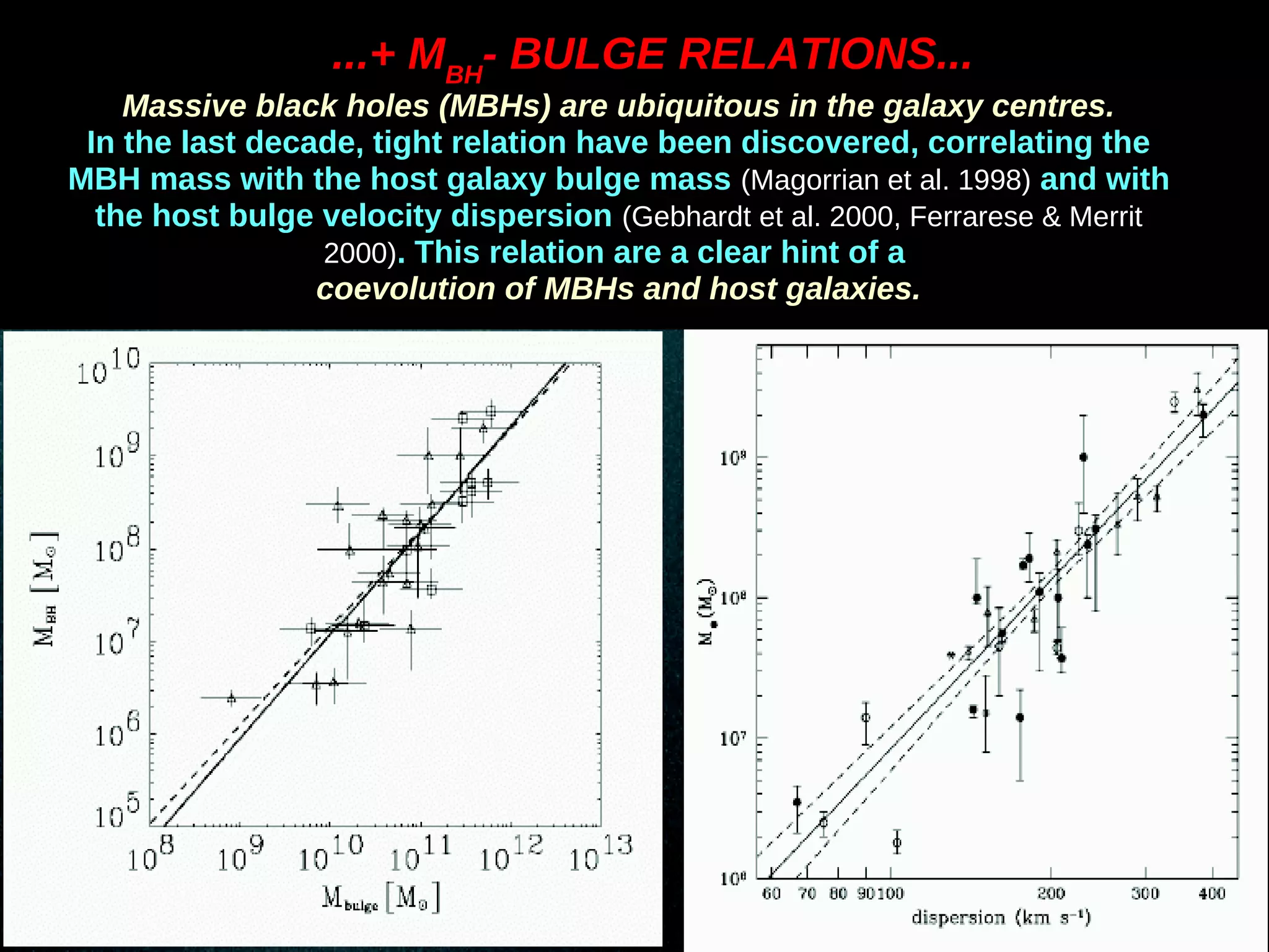
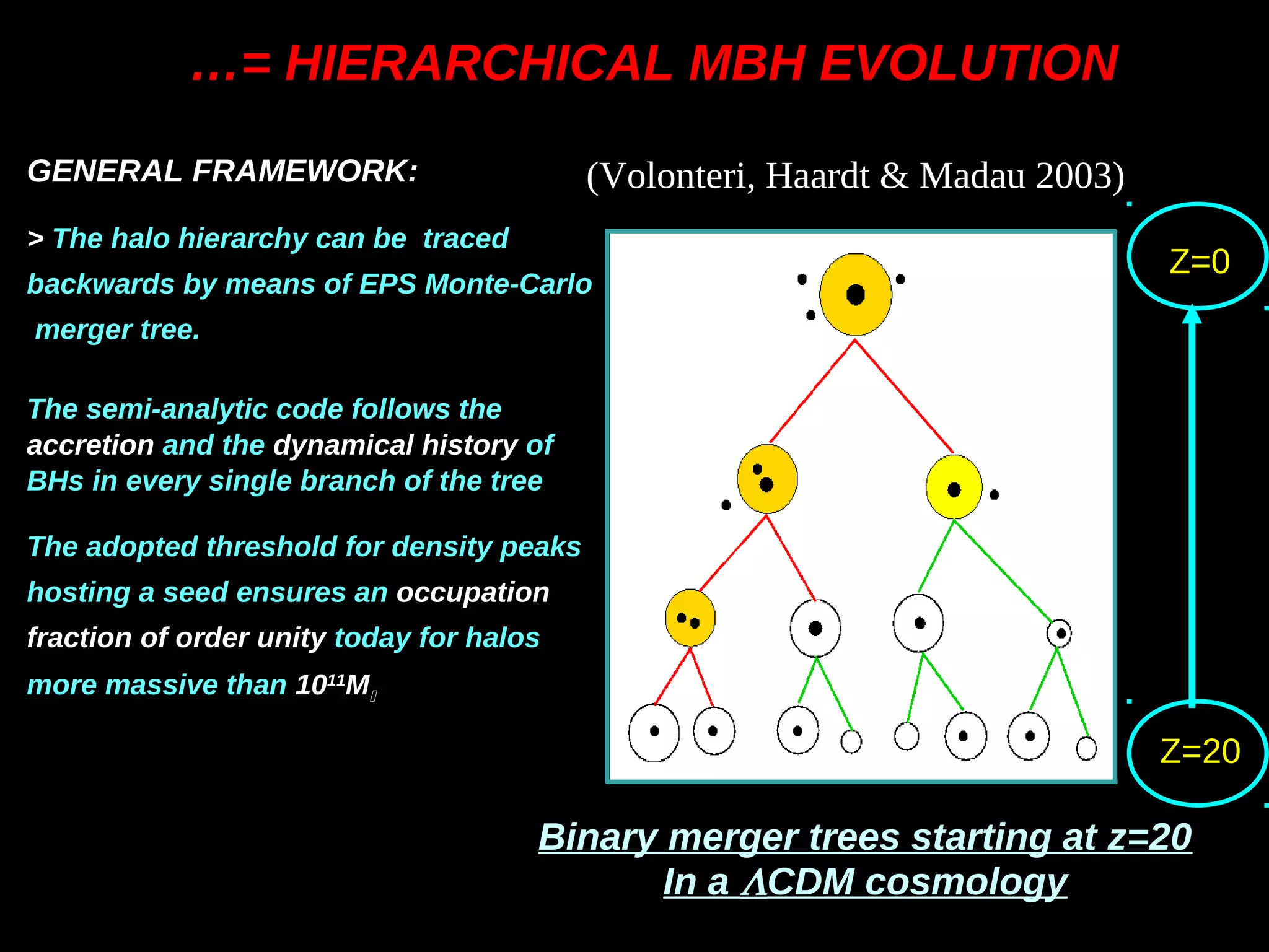
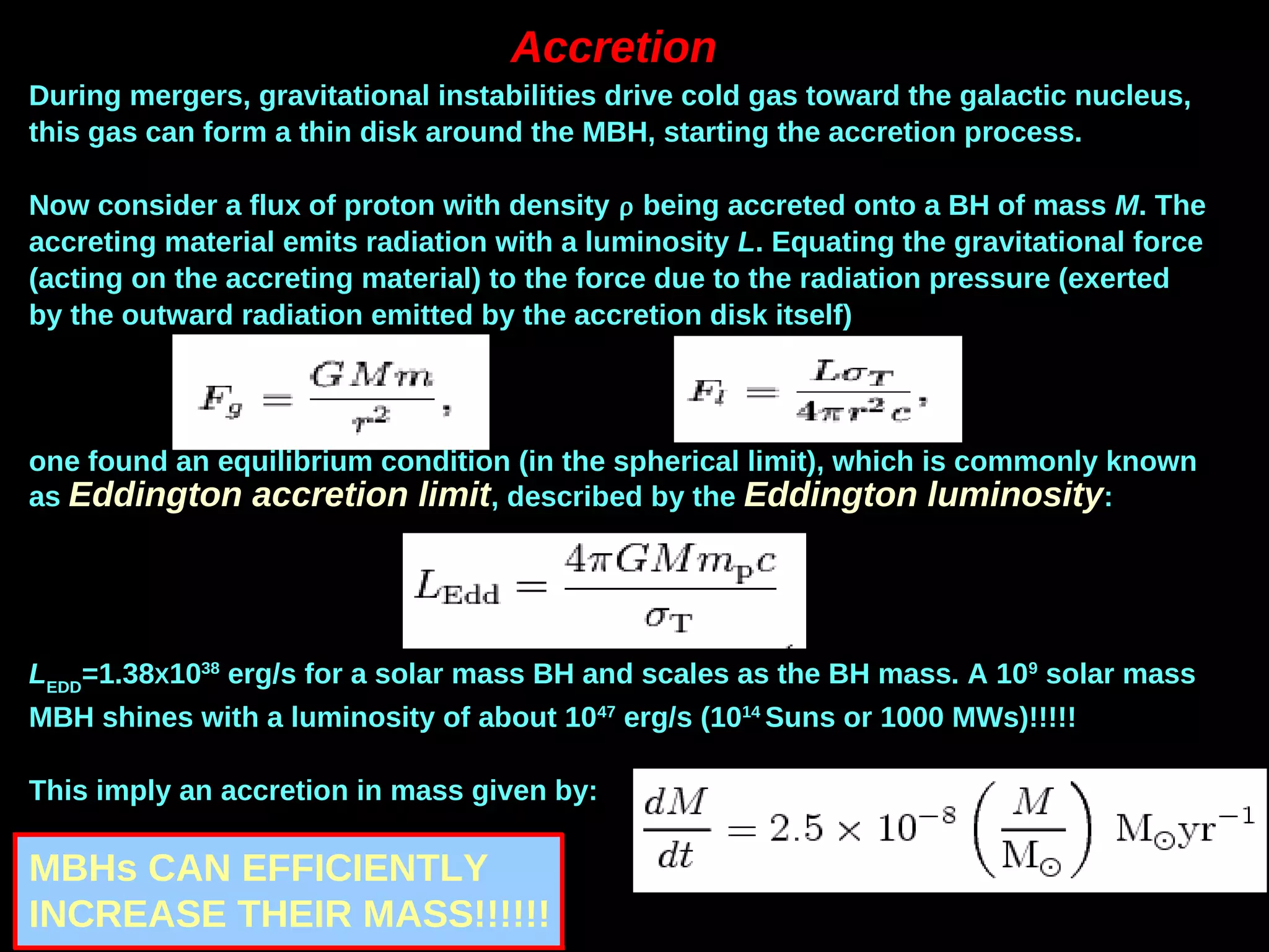
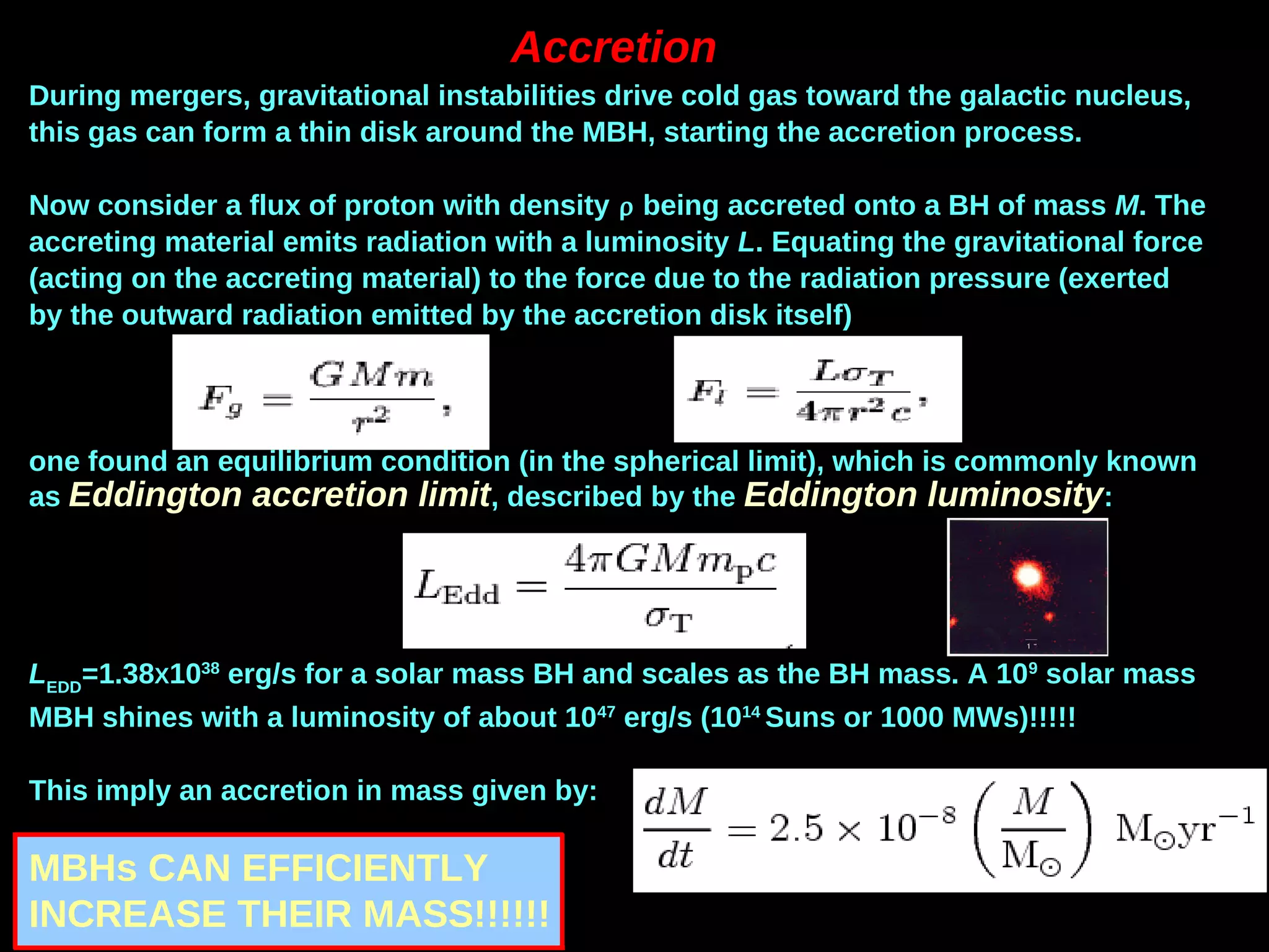
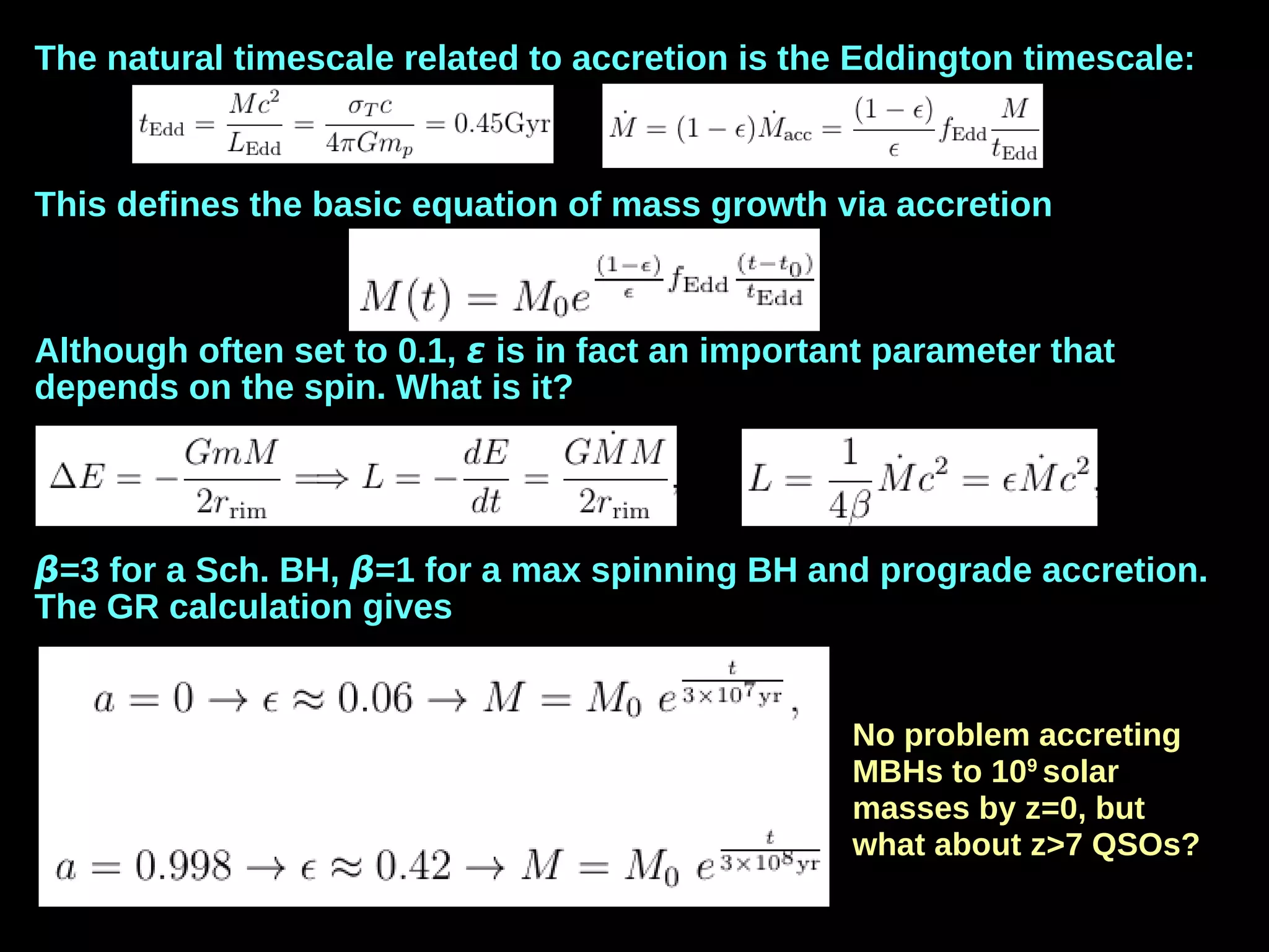
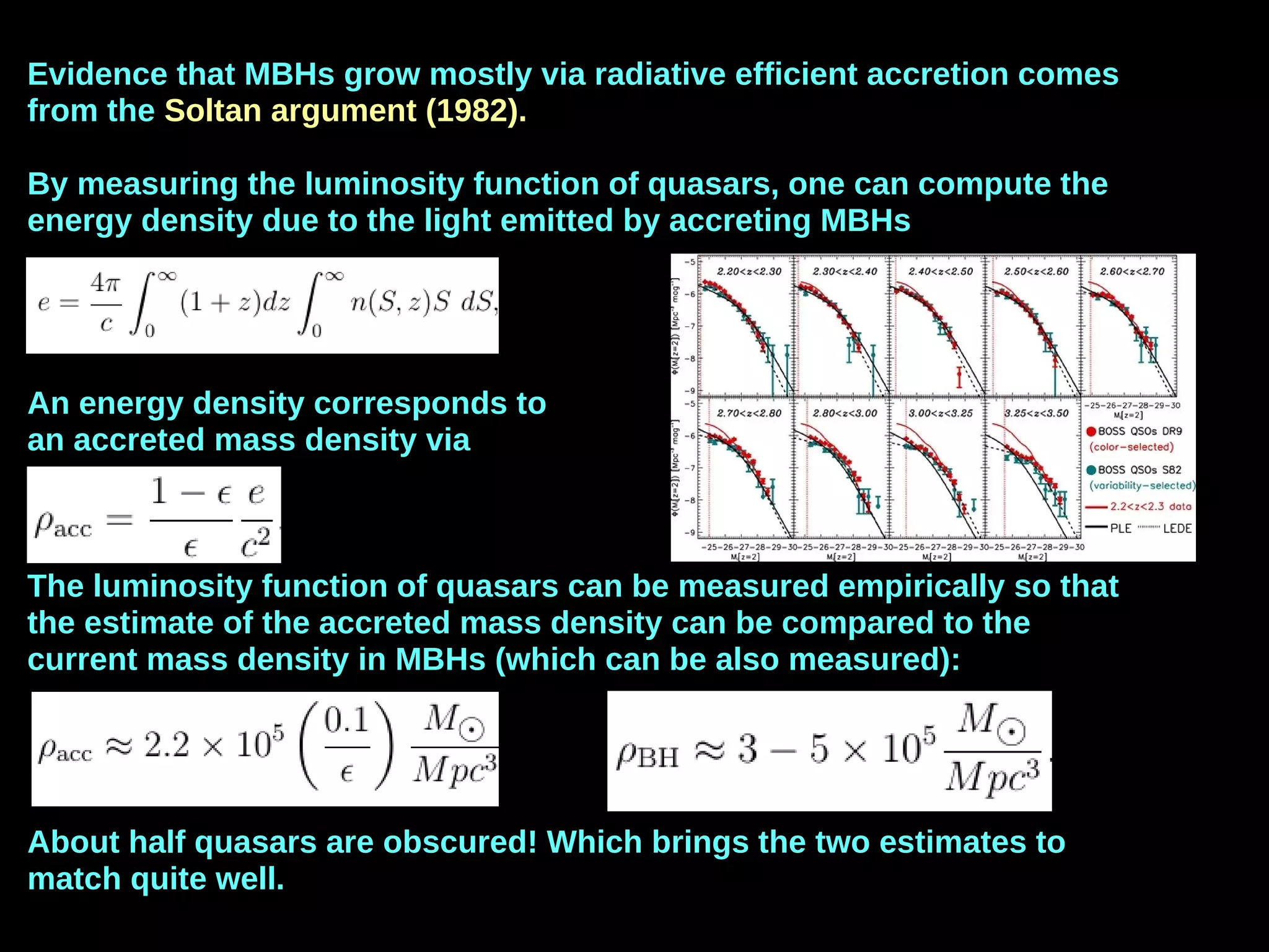
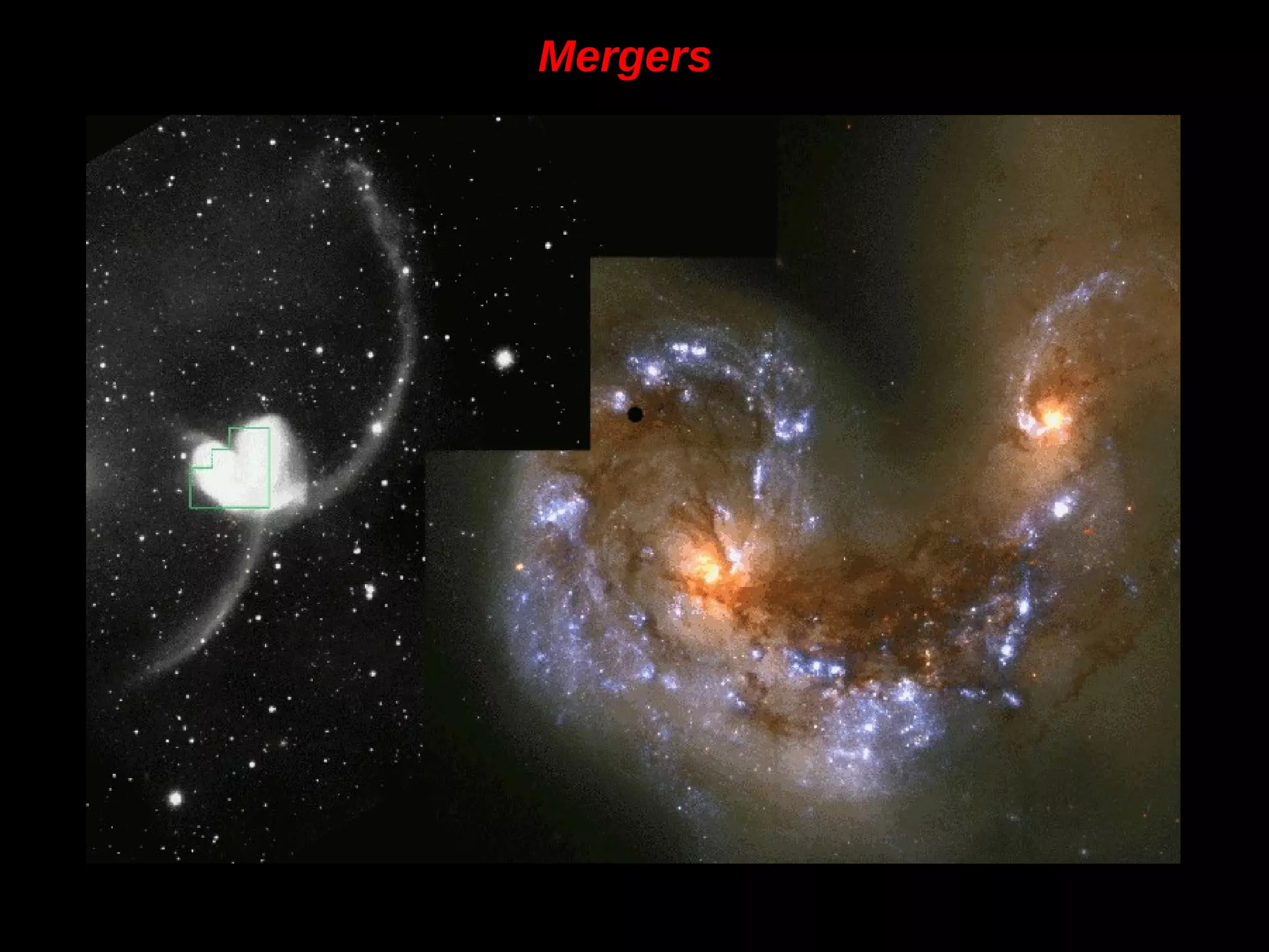
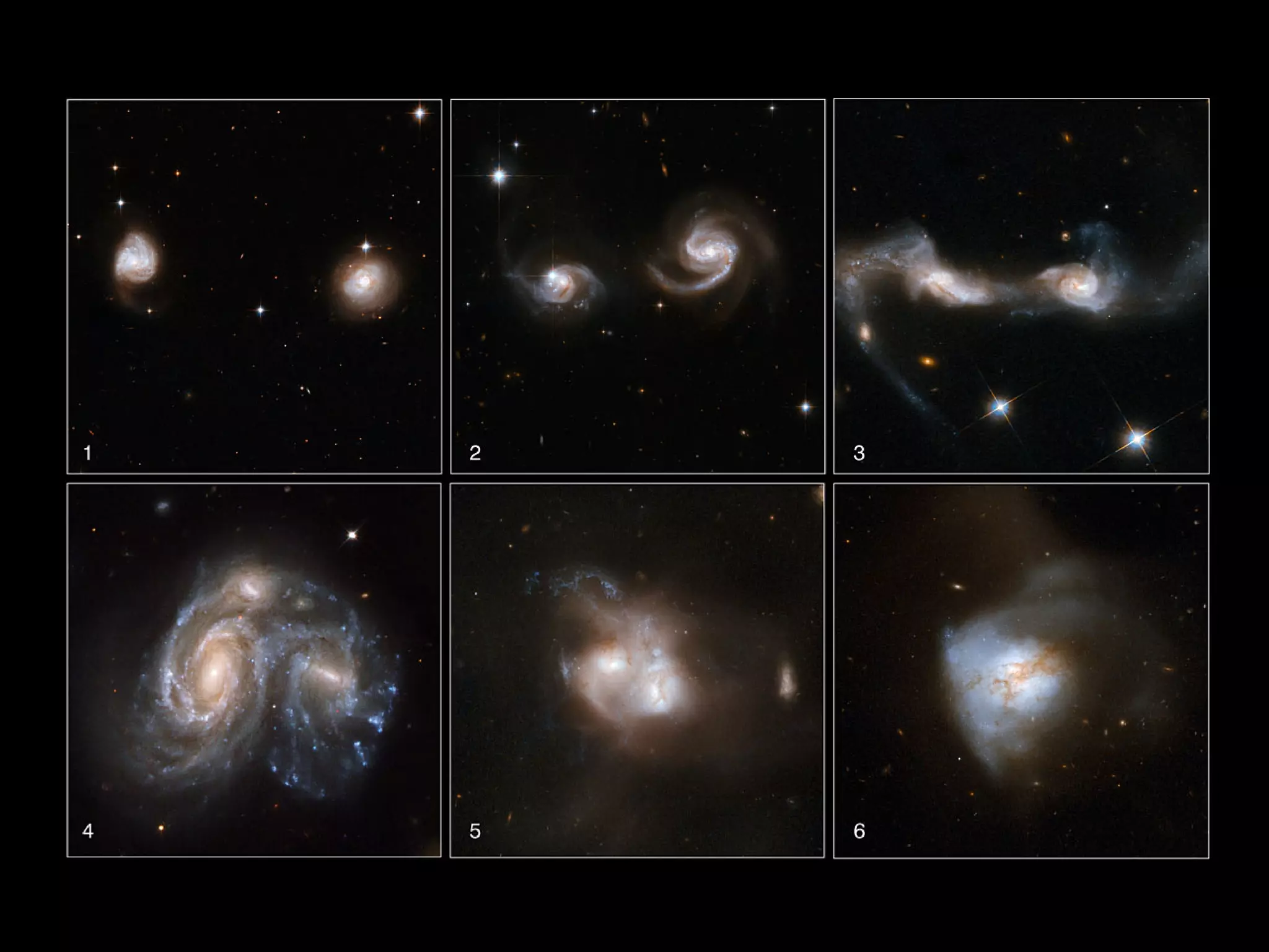
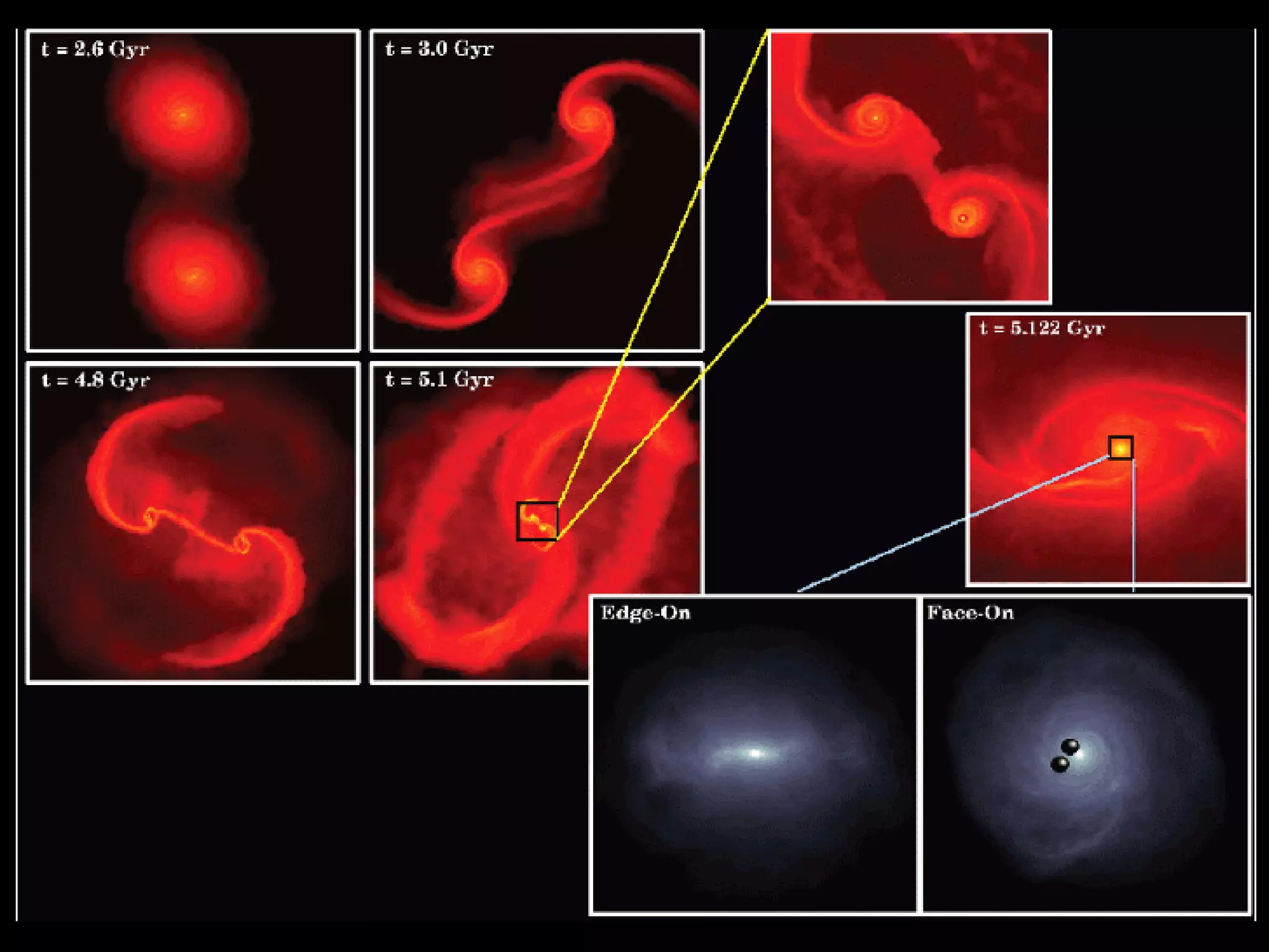
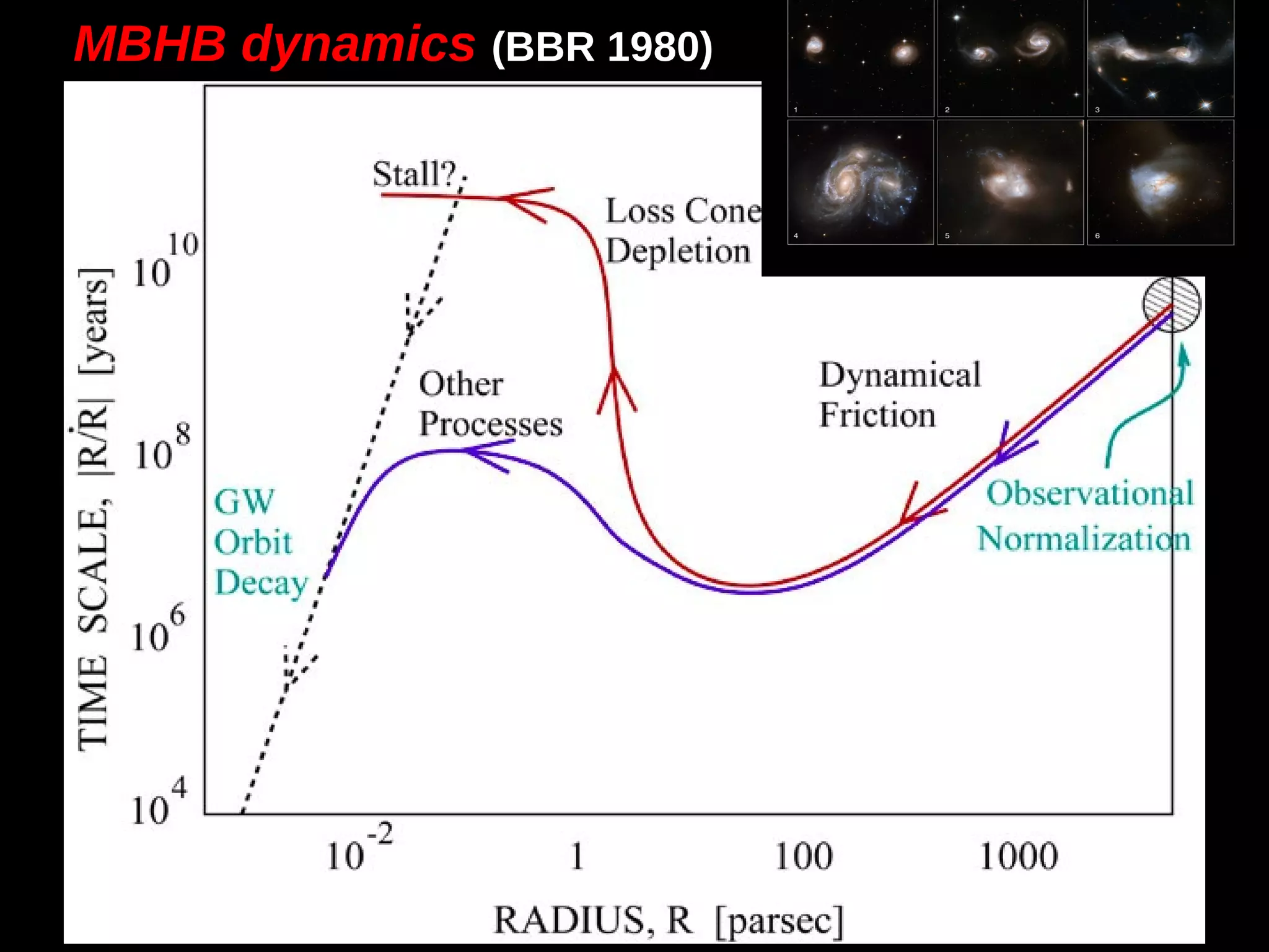
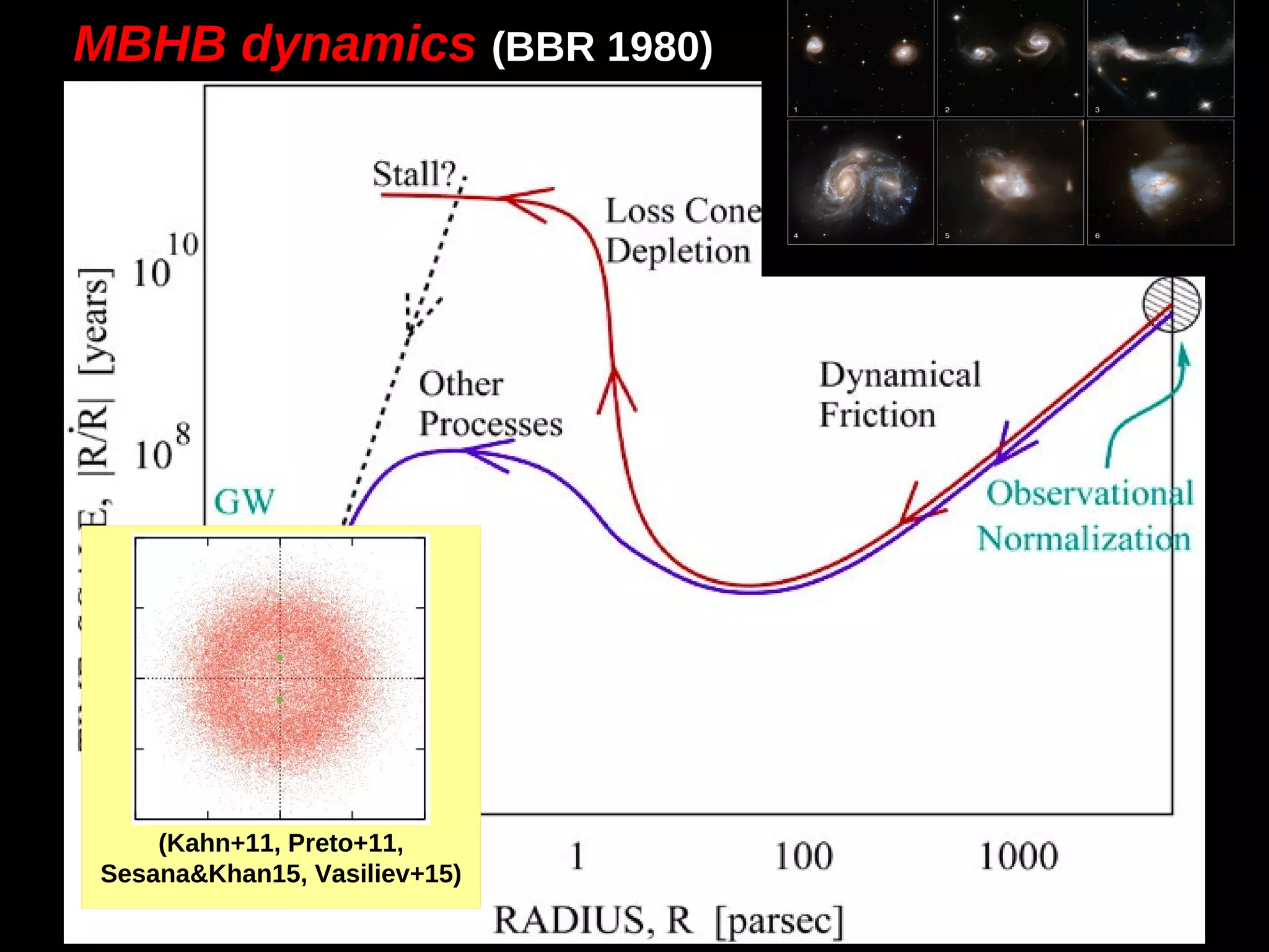
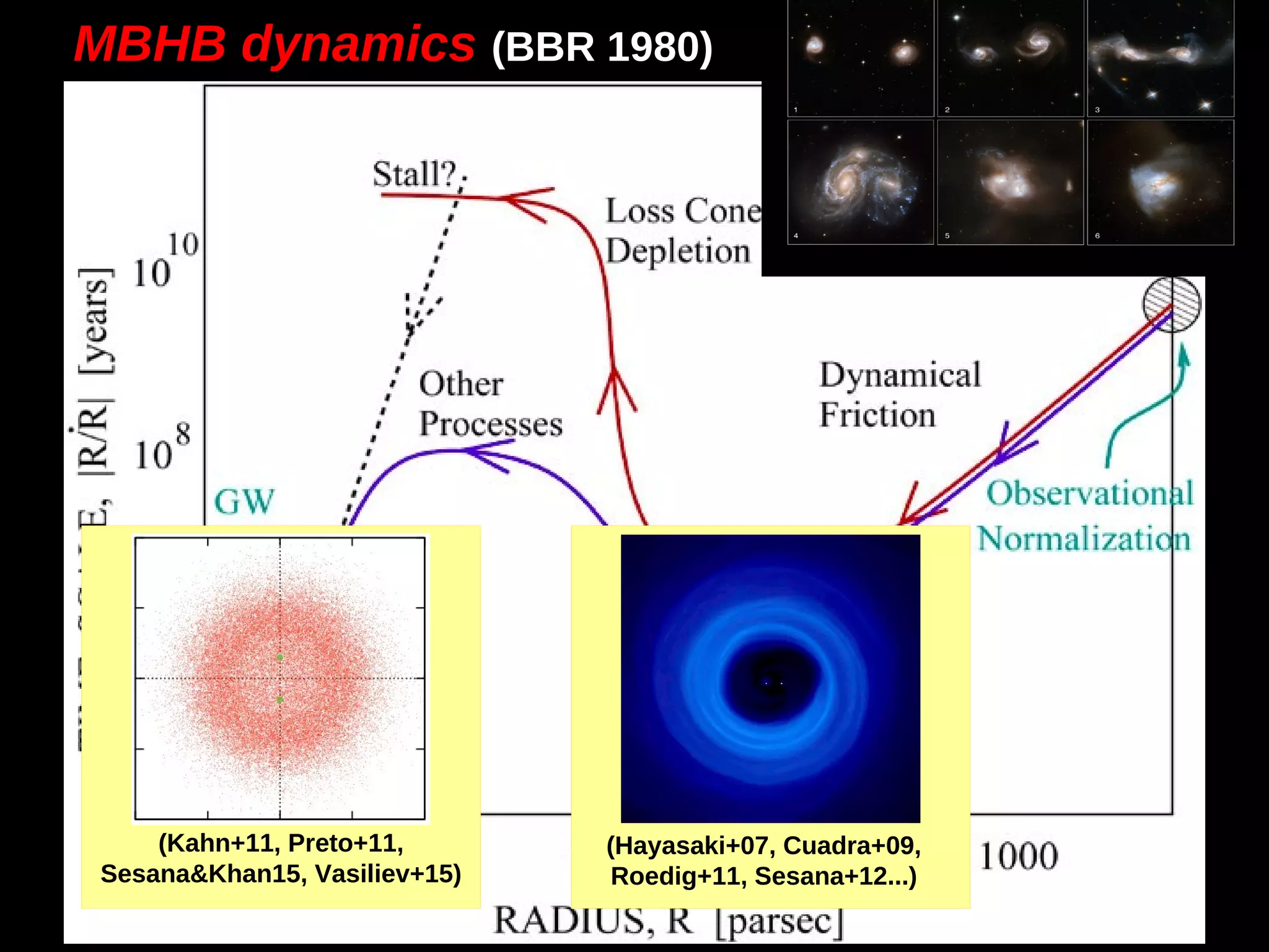
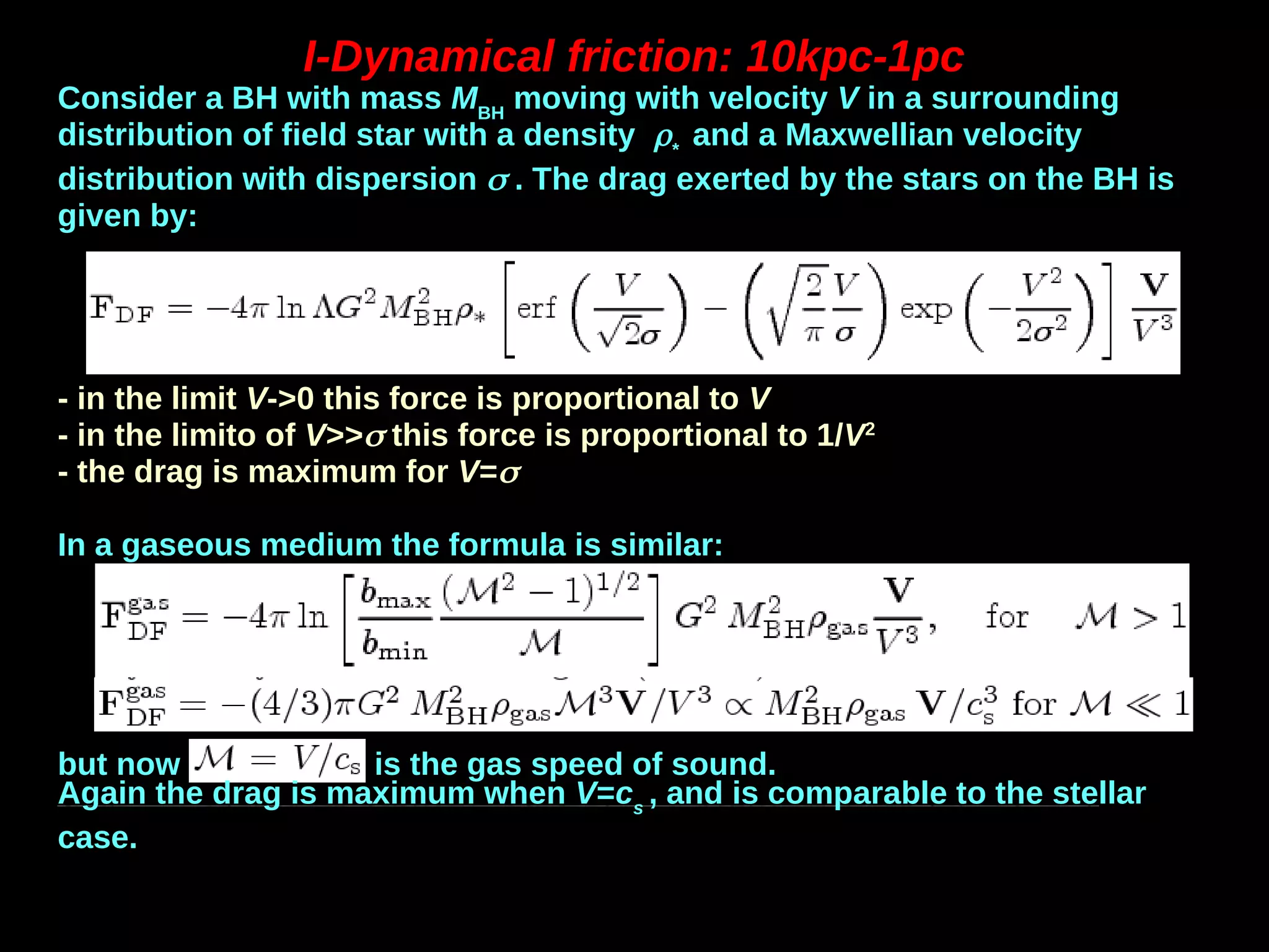
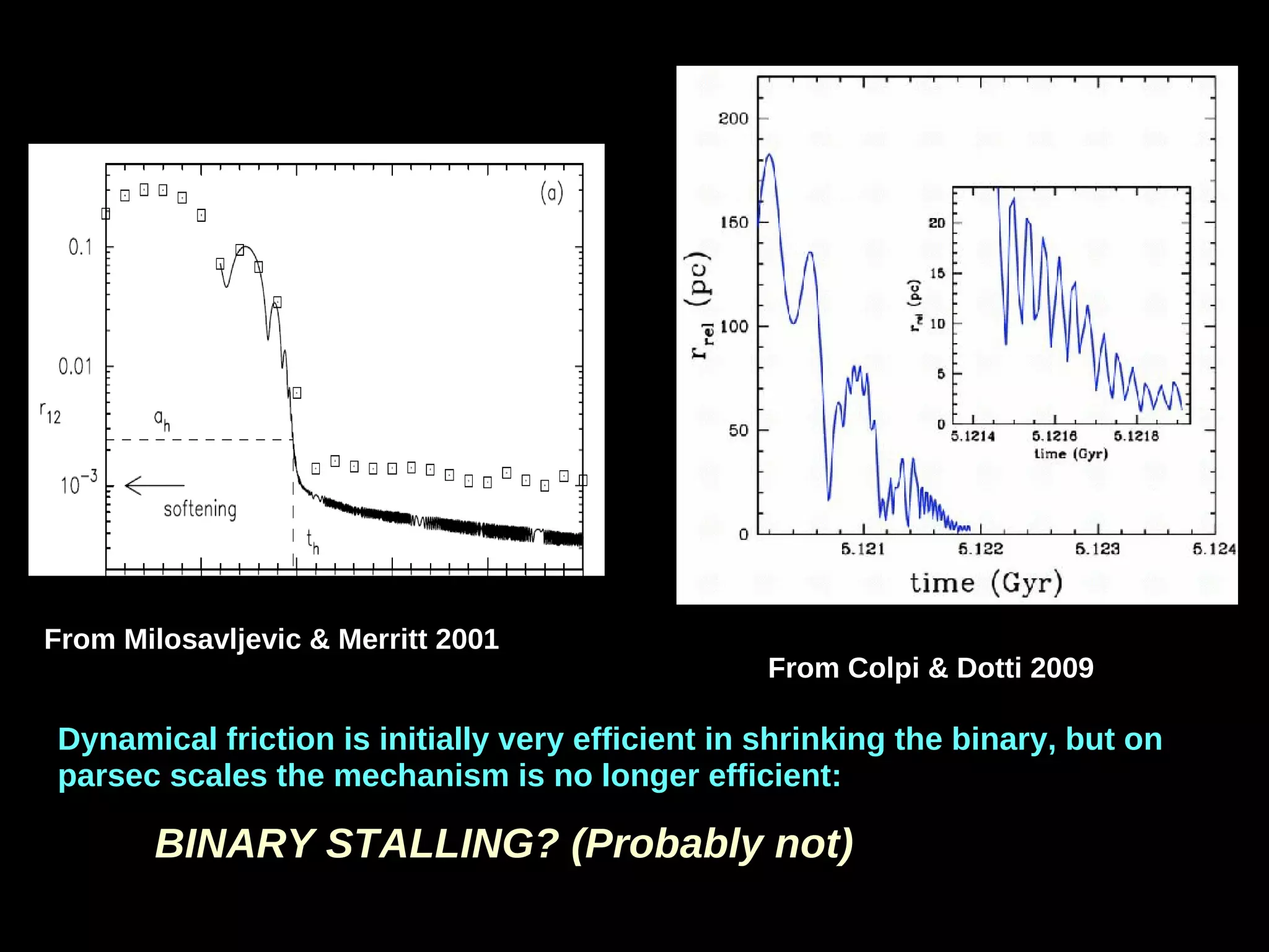
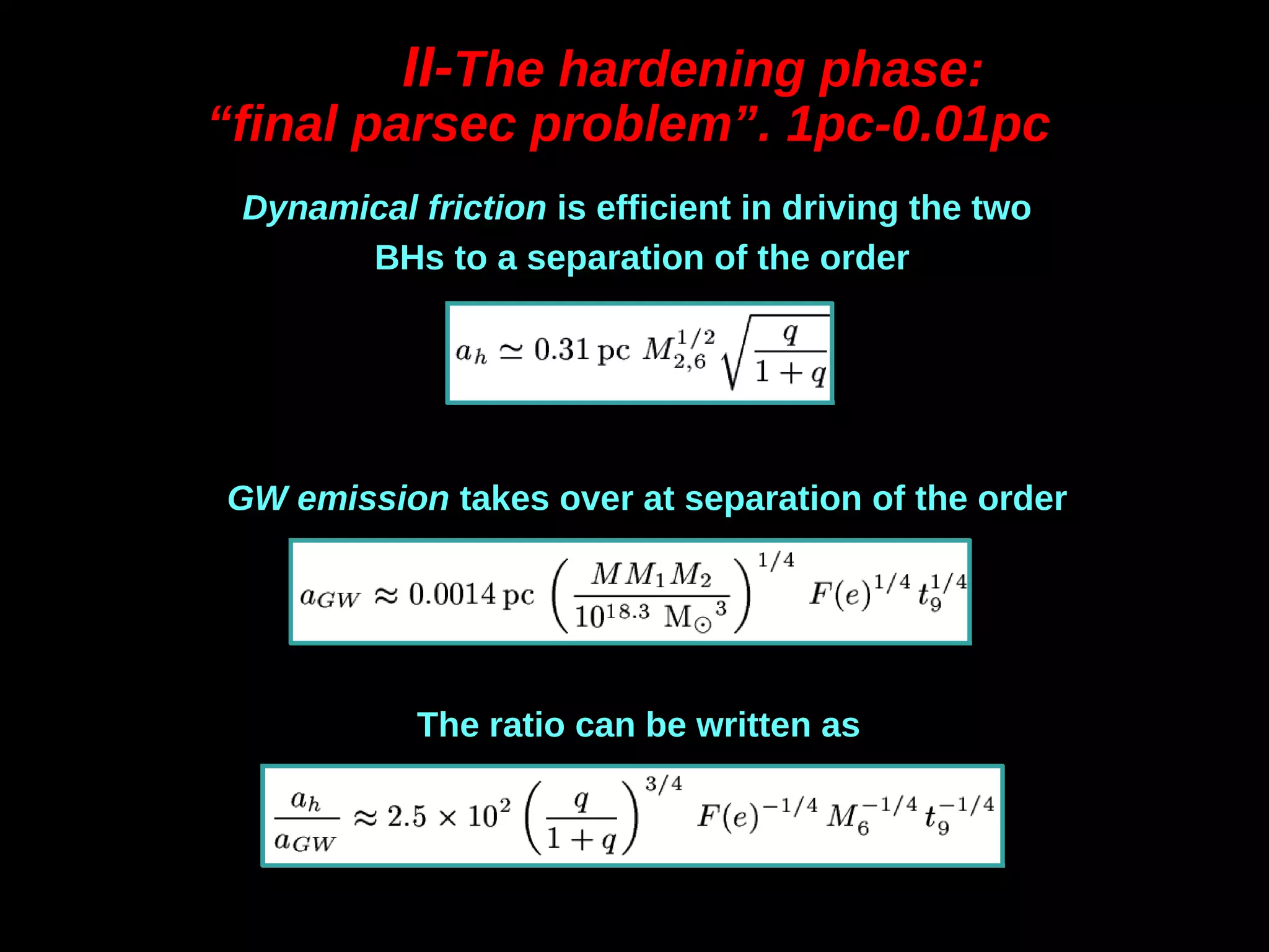
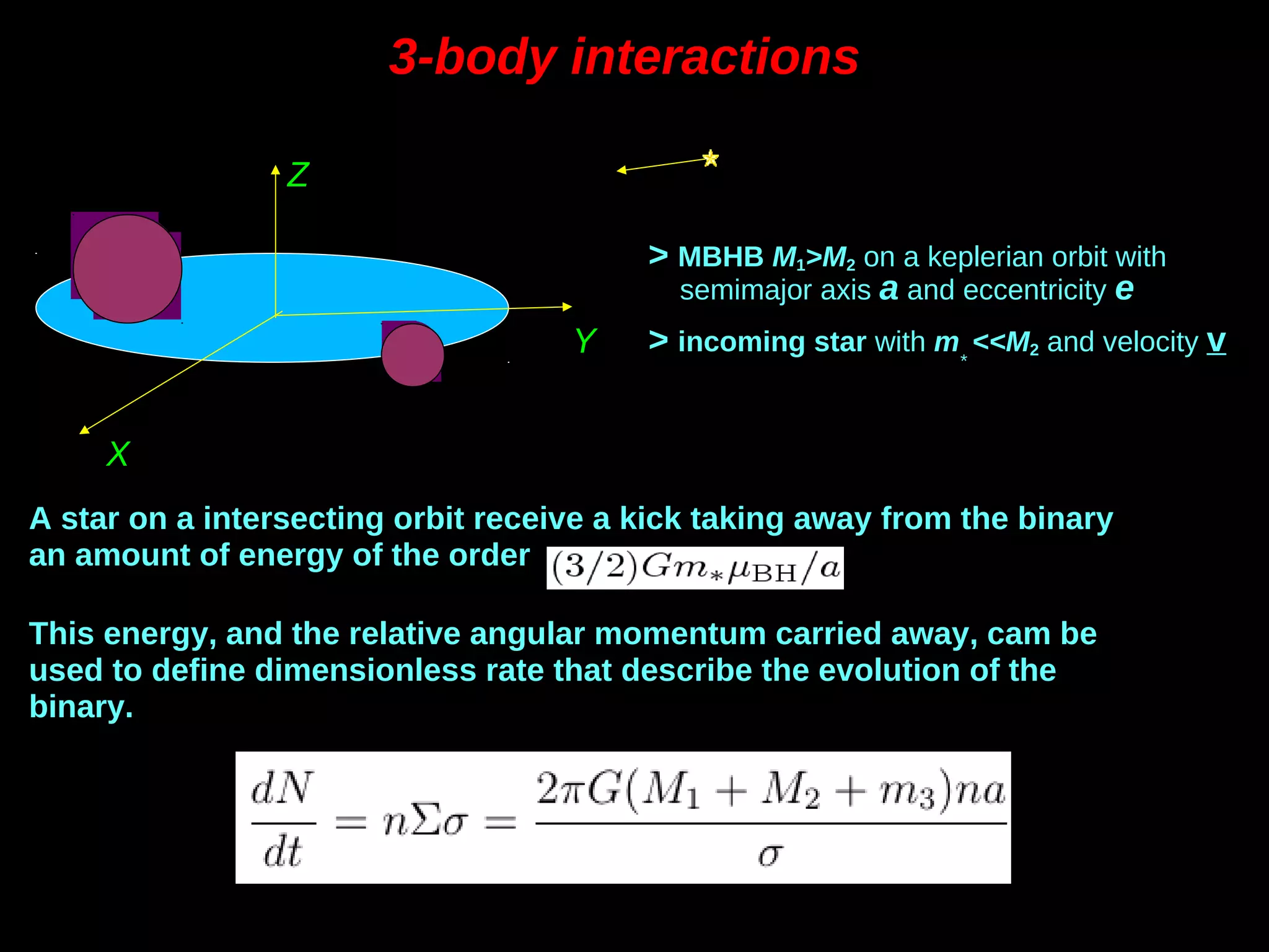
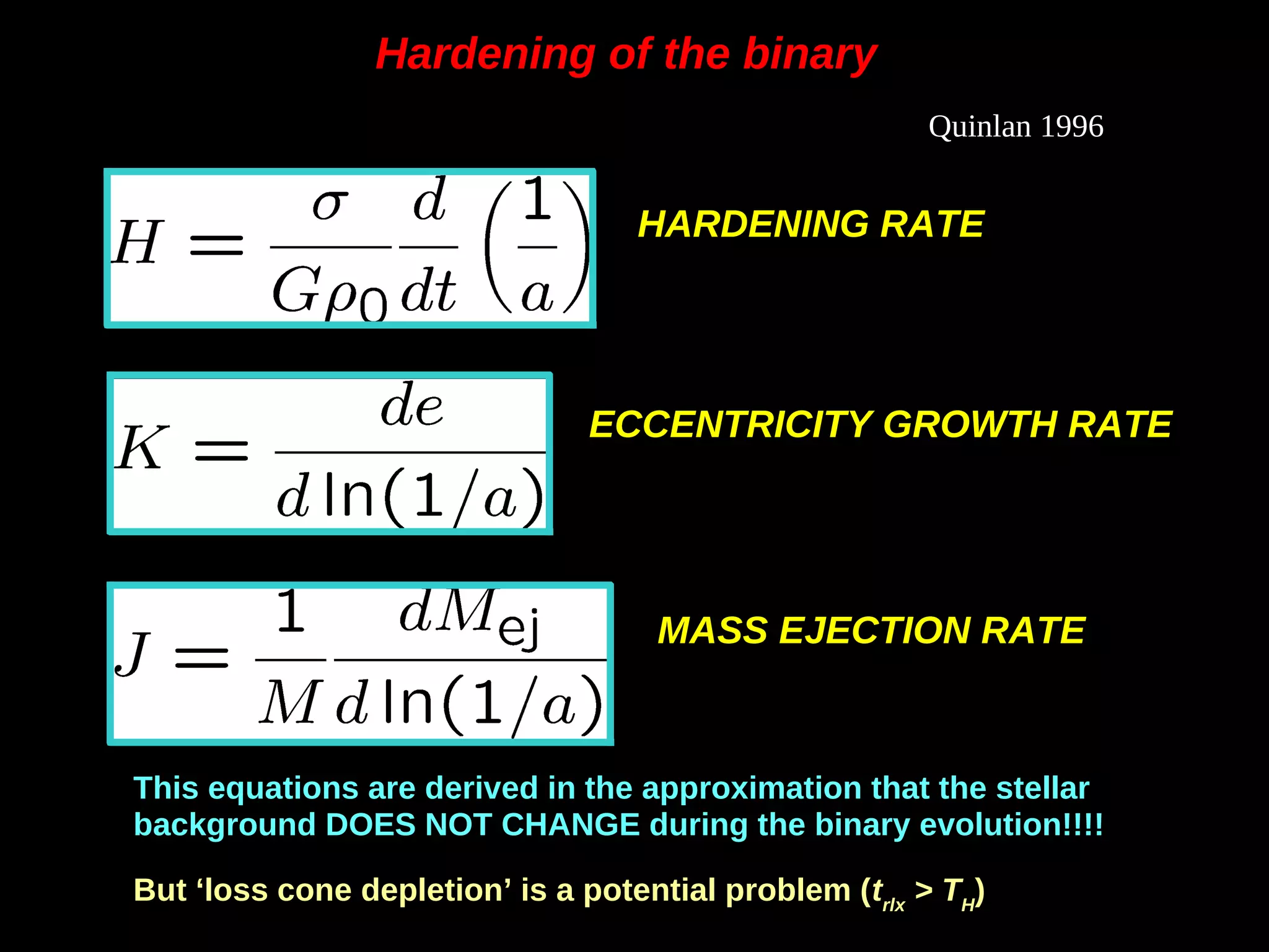
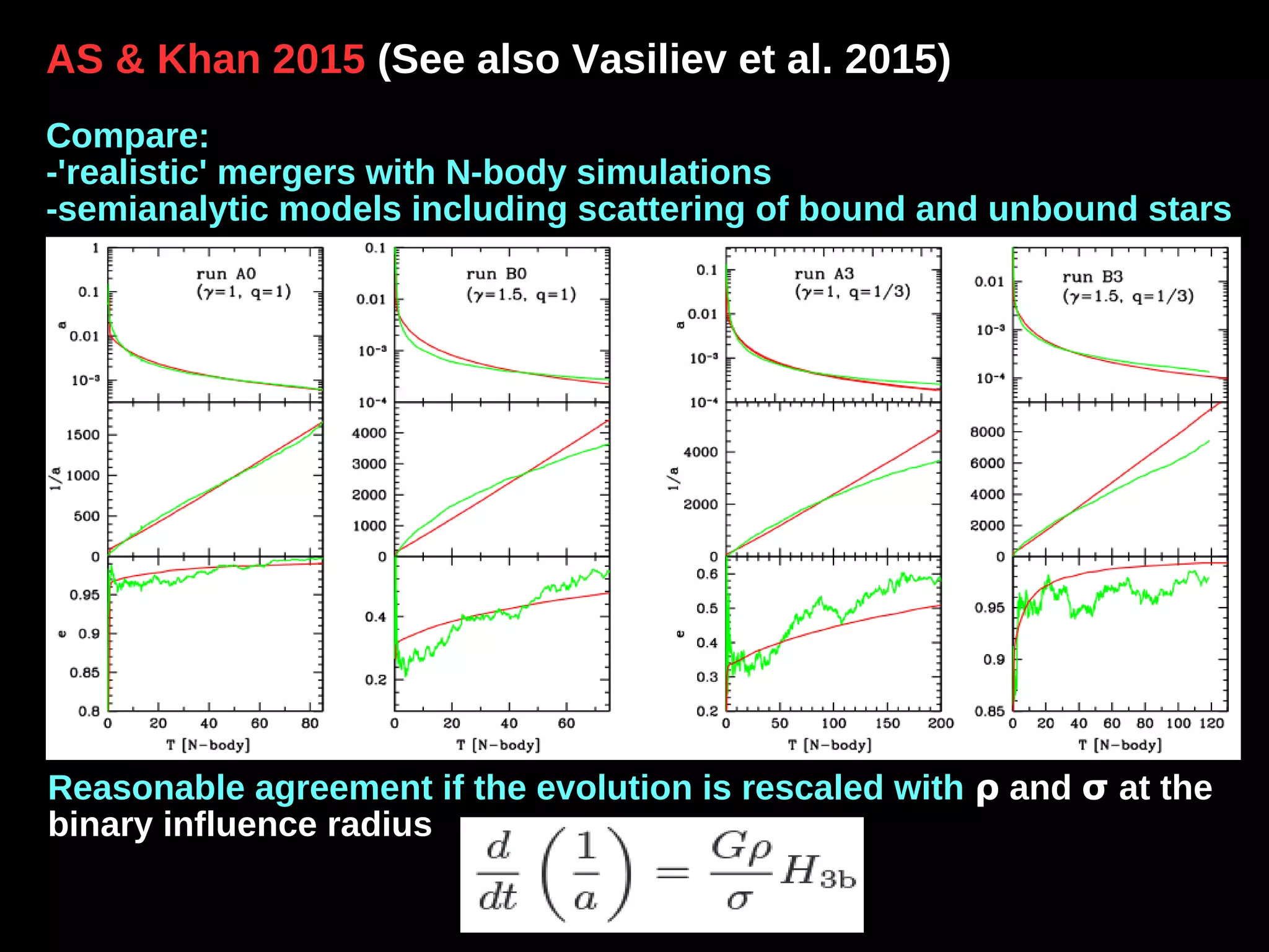
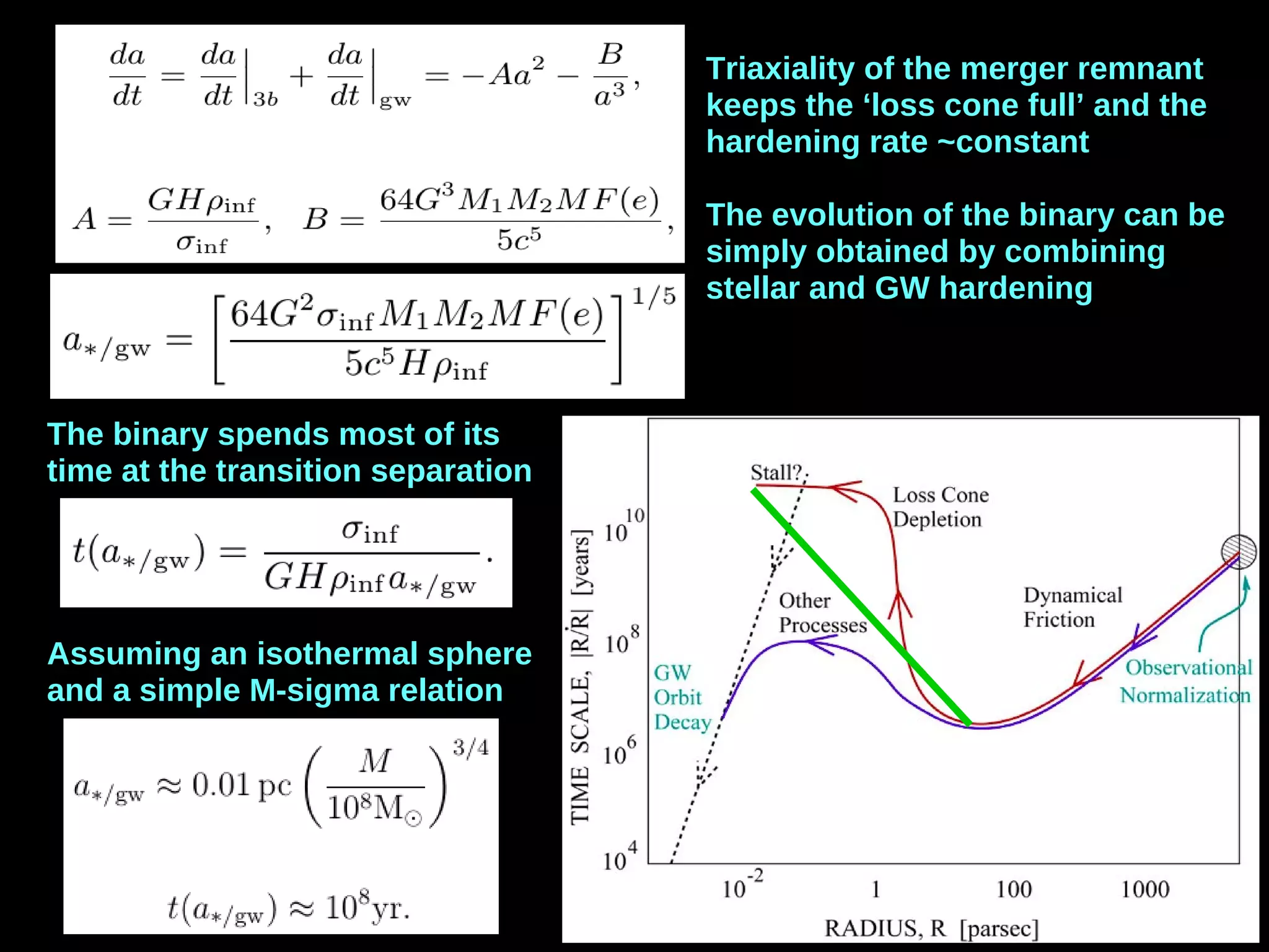
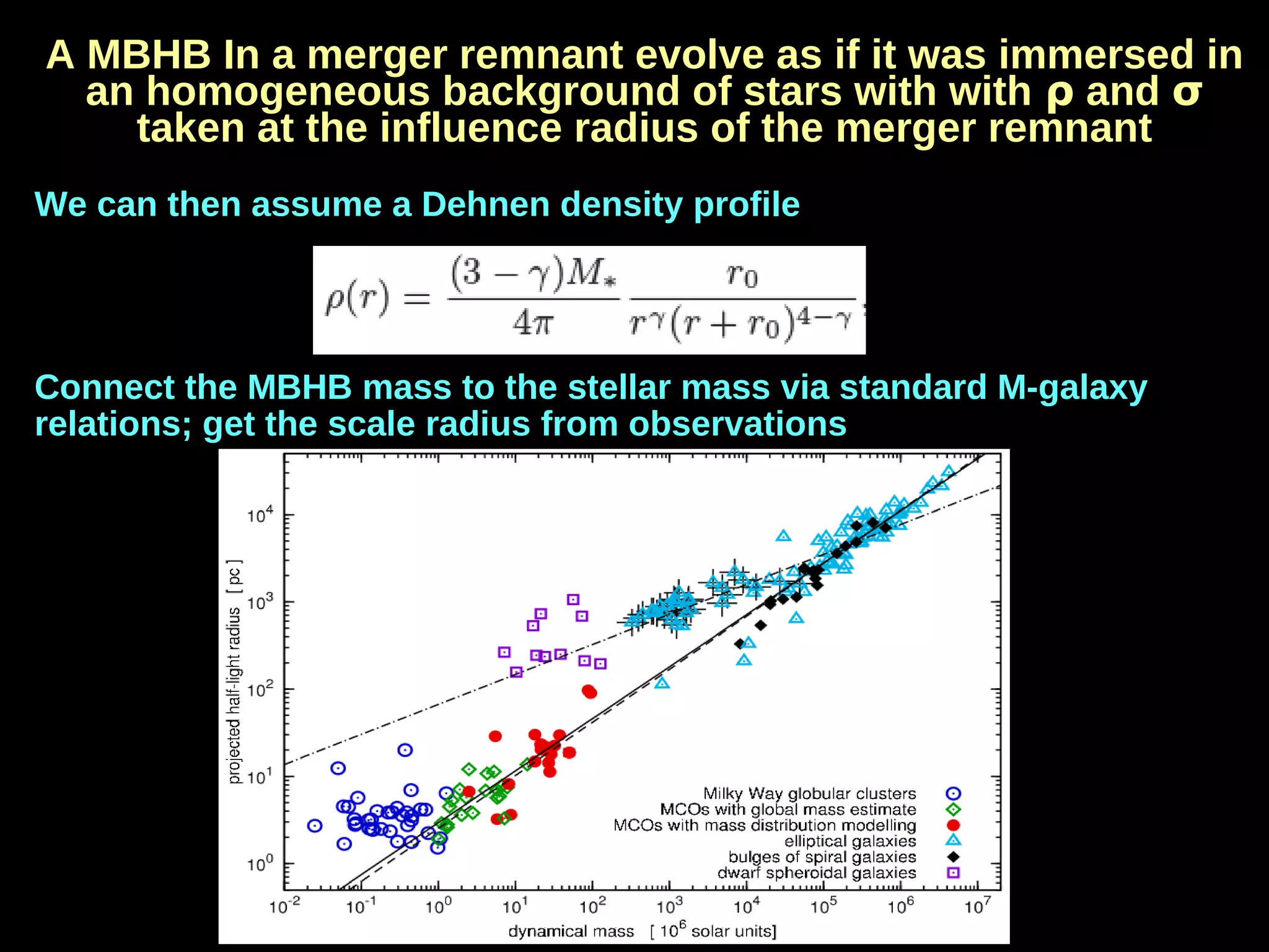
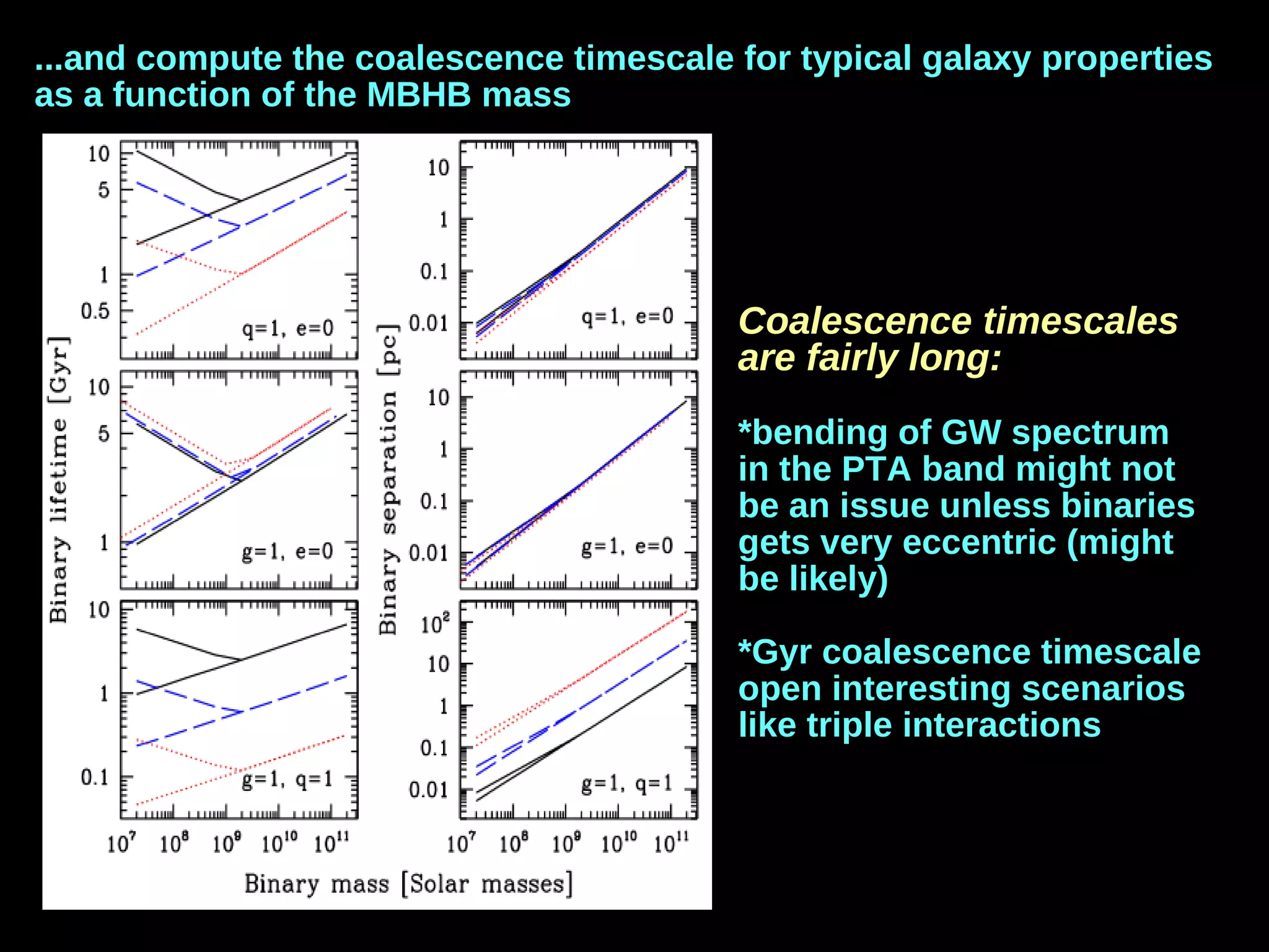
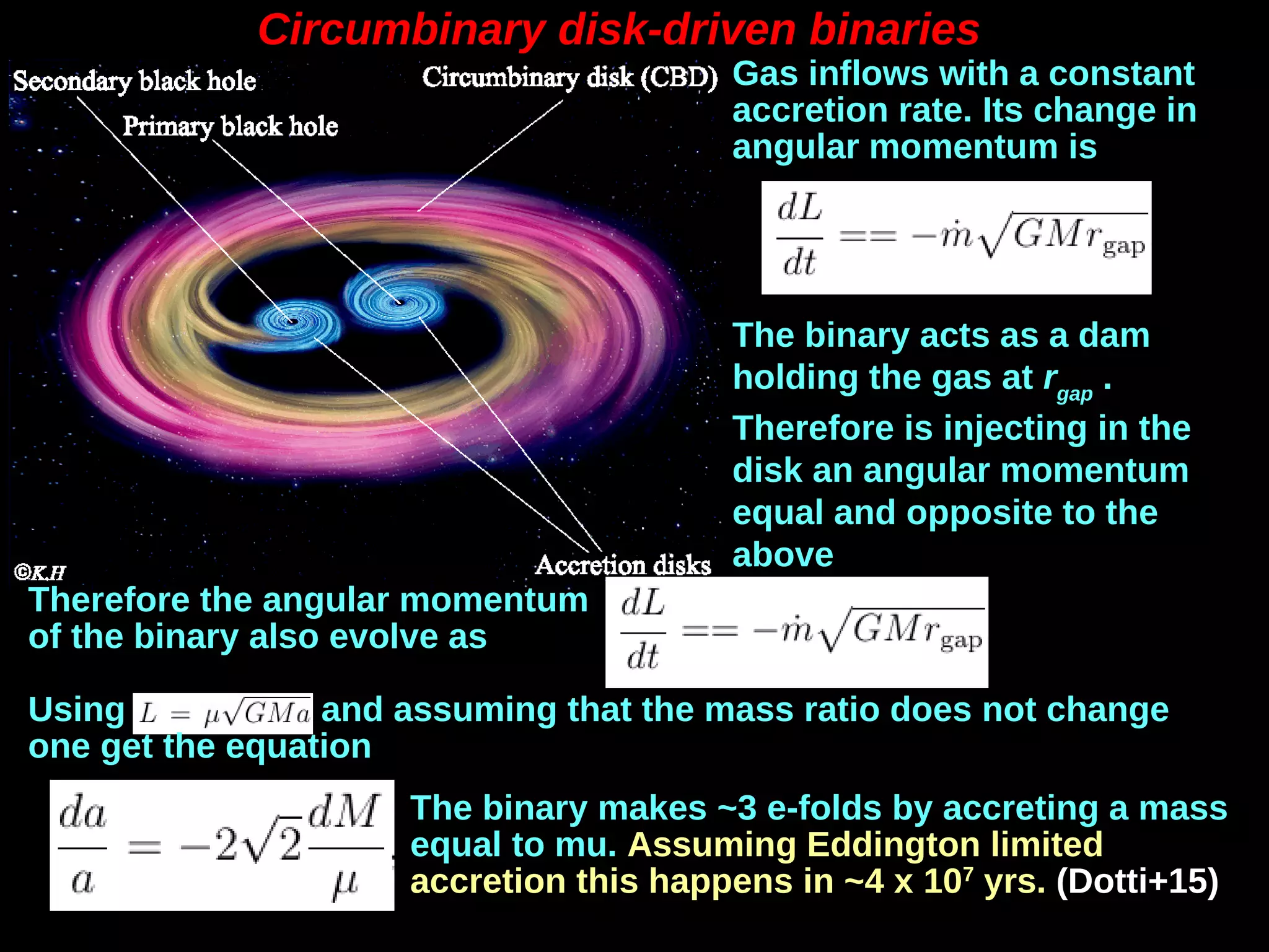
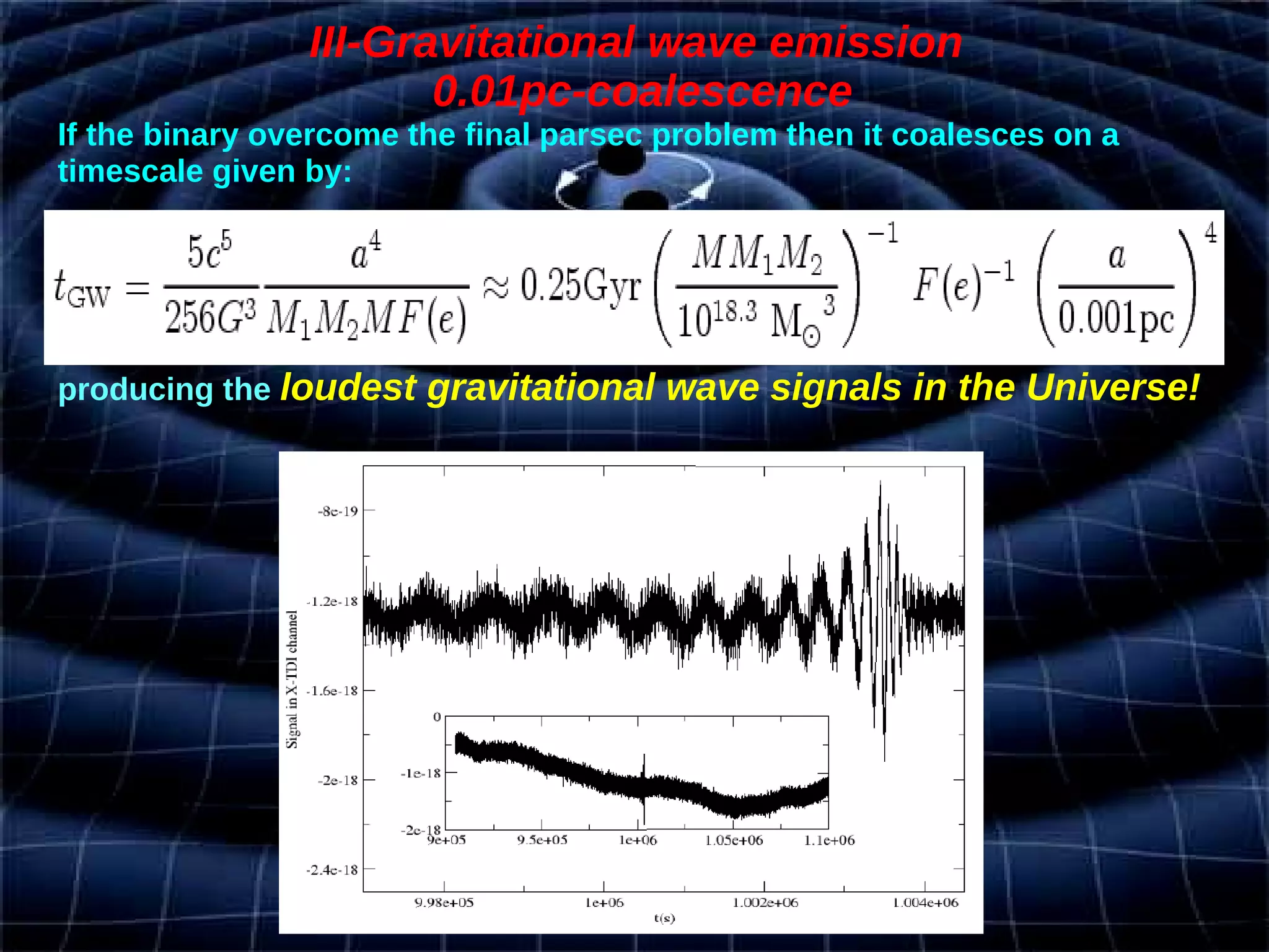
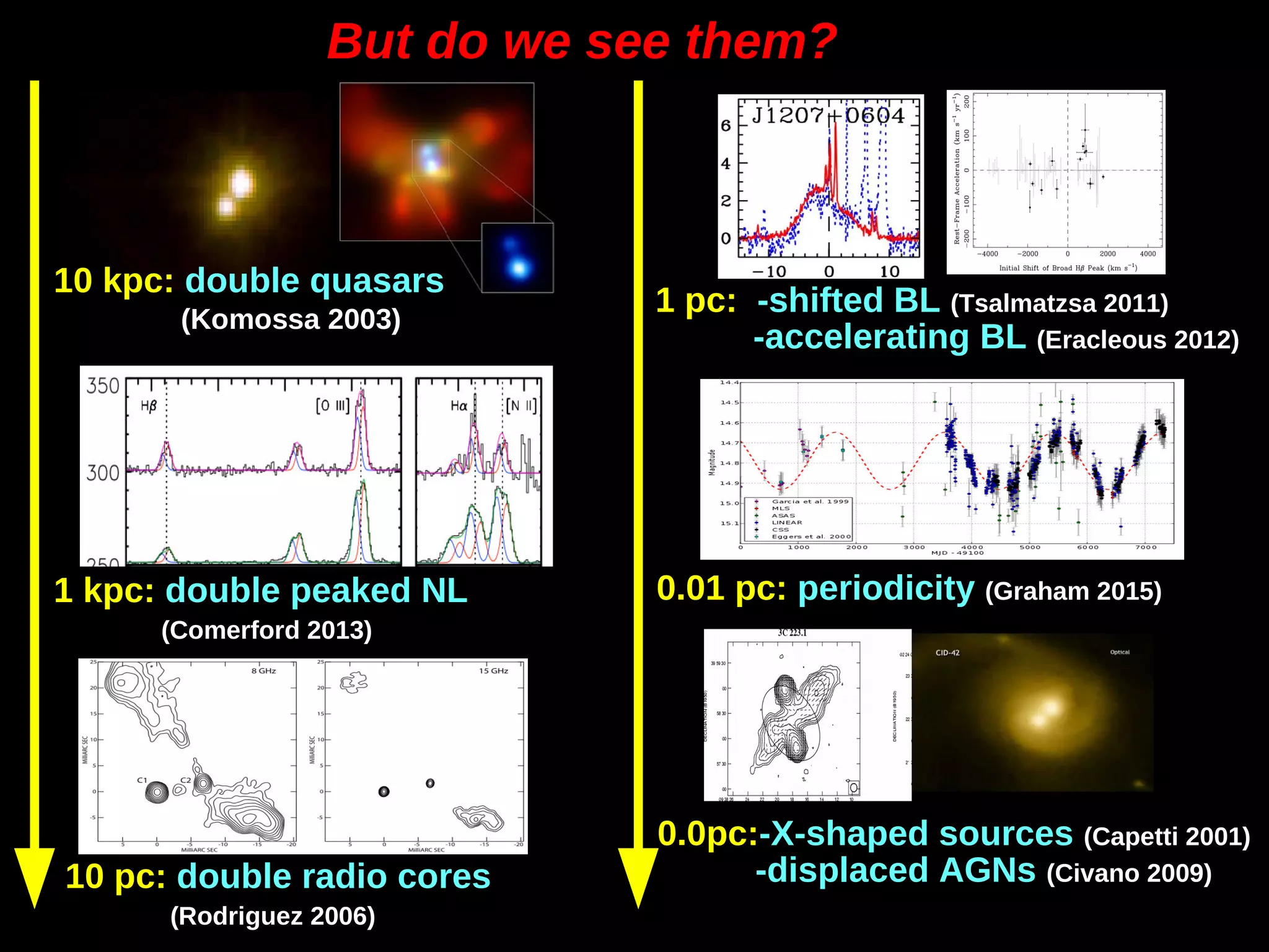


1) Massive black hole binaries form during galaxy mergers and evolve through dynamical friction and 3-body interactions with stars until reaching separations of ~0.01 pc where gravitational wave emission takes over. 2) Gas dynamics may also drive black hole binaries to smaller separations for coalescence. 3) Black hole binary coalescence timescales are typically long, on the order of billions of years, which has implications for gravitational wave detection and triple black hole interactions.


