© 2002, Educational Institute
Chapter 1
A Case for Training and
Development
Training and Development for the Hospitality Industry
First Edition
(354T or 354)
2
© 2002, Educational Institute
Competencies for
A Case for Training and Development
1. Describe the effects such factors as the work force,
strategic planning, and technology have had on the
hospitality training industry.
2. Explain how the principles of adult learning apply to
training and development in the hospitality industry,
and describe how trainers can promote training within
their organizations.
(continued)
3
© 2002, Educational Institute
(continued)
Competencies for
A Case for Training and Development
3. Explain how training and development activities are
affected by issues such as scheduling, negligent
training, cultural diversity, trainee disabilities, and
globalization.
4. Identify the duties and responsibilities of training
positions at the department, property, and
regional/corporate levels.
4
© 2002, Educational Institute
Learning Organizations
Thinks of learning as synonymous with working
 Becomes smarter over time
 Sees learning as the best source of competitive
advantage
 Thrives on change
 Nurtures collective wisdom of the entire work force
 Hires people who are constantly learning and
improving
5
© 2002, Educational Institute
Training Issues of the 21st
Century
Partnerships and alliances
 Inspirational leadership
 Global markets
 Advantage based on time
 Technological tools
 Diverse work force
 Cross-functional work processes and teams
 Favored work environment
6
© 2002, Educational Institute
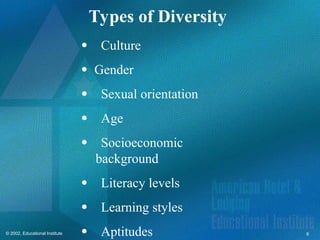
Types of Diversity
Culture
 Gender
Sexual orientation
Age
Socioeconomic
background
Literacy levels
Learning styles
Aptitudes
7
© 2002, Educational Institute
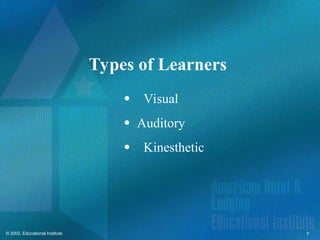
Types of Learners
Visual
 Auditory
Kinesthetic
8
© 2002, Educational Institute
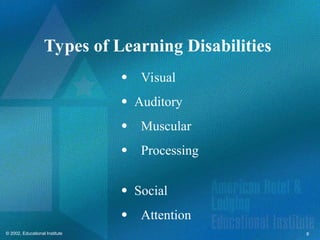
Types of Learning Disabilities
Visual
 Auditory
Muscular
Processing
 Social
Attention
9
© 2002, Educational Institute
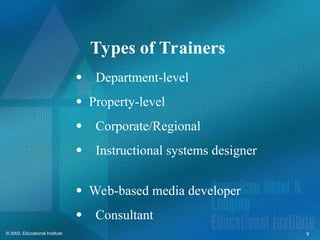
Types of Trainers
Department-level
 Property-level
Corporate/Regional
Instructional systems designer
 Web-based media developer
Consultant
10
© 2002, Educational Institute
Competencies for Property-Level
Trainers
Industry awareness
 Leadership skills
Interpersonal relationship skills
Technological awareness and
understanding
 Problem-solving skills
Systems thinking and understanding
Performance understanding
Knowledge of appropriate interventions
(continued)
11
© 2002, Educational Institute
(continued)
Competencies for Property-Level
Trainers
 Business understanding
Organization understanding
Negotiation/contracting skills
 Buy-in/advocacy skills
Coping skills
Ability to see the “big picture”
Consulting skills

A Case for Training and Development ch 1.ppt

  • 1.
    © 2002, EducationalInstitute Chapter 1 A Case for Training and Development Training and Development for the Hospitality Industry First Edition (354T or 354)
  • 2.
    2 © 2002, EducationalInstitute Competencies for A Case for Training and Development 1. Describe the effects such factors as the work force, strategic planning, and technology have had on the hospitality training industry. 2. Explain how the principles of adult learning apply to training and development in the hospitality industry, and describe how trainers can promote training within their organizations. (continued)
  • 3.
    3 © 2002, EducationalInstitute (continued) Competencies for A Case for Training and Development 3. Explain how training and development activities are affected by issues such as scheduling, negligent training, cultural diversity, trainee disabilities, and globalization. 4. Identify the duties and responsibilities of training positions at the department, property, and regional/corporate levels.
  • 4.
    4 © 2002, EducationalInstitute Learning Organizations Thinks of learning as synonymous with working  Becomes smarter over time  Sees learning as the best source of competitive advantage  Thrives on change  Nurtures collective wisdom of the entire work force  Hires people who are constantly learning and improving
  • 5.
    5 © 2002, EducationalInstitute Training Issues of the 21st Century Partnerships and alliances  Inspirational leadership  Global markets  Advantage based on time  Technological tools  Diverse work force  Cross-functional work processes and teams  Favored work environment
  • 6.
    6 © 2002, EducationalInstitute Types of Diversity Culture  Gender Sexual orientation Age Socioeconomic background Literacy levels Learning styles Aptitudes
  • 7.
    7 © 2002, EducationalInstitute Types of Learners Visual  Auditory Kinesthetic
  • 8.
    8 © 2002, EducationalInstitute Types of Learning Disabilities Visual  Auditory Muscular Processing  Social Attention
  • 9.
    9 © 2002, EducationalInstitute Types of Trainers Department-level  Property-level Corporate/Regional Instructional systems designer  Web-based media developer Consultant
  • 10.
    10 © 2002, EducationalInstitute Competencies for Property-Level Trainers Industry awareness  Leadership skills Interpersonal relationship skills Technological awareness and understanding  Problem-solving skills Systems thinking and understanding Performance understanding Knowledge of appropriate interventions (continued)
  • 11.
    11 © 2002, EducationalInstitute (continued) Competencies for Property-Level Trainers  Business understanding Organization understanding Negotiation/contracting skills  Buy-in/advocacy skills Coping skills Ability to see the “big picture” Consulting skills