Introduction to
Training and
Development
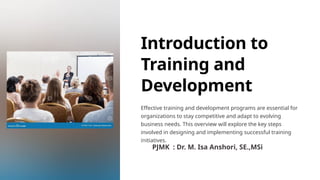
Effective training and development programs are essential for
organizations to stay competitive and adapt to evolving
business needs. This overview will explore the key steps
involved in designing and implementing successful training
initiatives.
PJMK : Dr. M. Isa Anshori, SE.,MSi
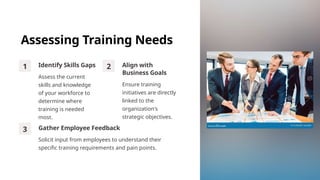
Assessing Training Needs
1 Identify Skills Gaps
Assess the current
skills and knowledge
of your workforce to
determine where
training is needed
most.
2 Align with
Business Goals
Ensure training
initiatives are directly
linked to the
organization's
strategic objectives.
3 Gather Employee Feedback
Solicit input from employees to understand their
specific training requirements and pain points.
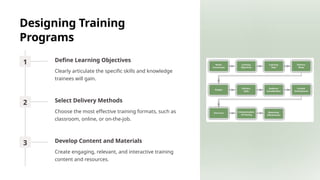
Designing Training
Programs
1 Define Learning Objectives
Clearly articulate the specific skills and knowledge
trainees will gain.
2 Select Delivery Methods
Choose the most effective training formats, such as
classroom, online, or on-the-job.
3 Develop Content and Materials
Create engaging, relevant, and interactive training
content and resources.
Selecting Training Methods
Traditional Methods
Classroom instruction,
workshops, and seminars offer
direct interaction and hands-on
learning.
Modern Approaches
Online courses, virtual
simulations, and mobile
learning provide flexibility and
scalability.
Blended Solutions
Combining traditional and
digital methods can create a
more comprehensive and
engaging learning experience.
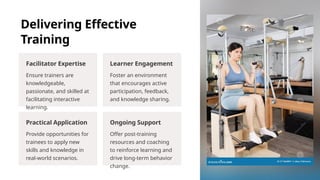
Delivering Effective
Training
Facilitator Expertise
Ensure trainers are
knowledgeable,
passionate, and skilled at
facilitating interactive
learning.
Learner Engagement
Foster an environment
that encourages active
participation, feedback,
and knowledge sharing.
Practical Application
Provide opportunities for
trainees to apply new
skills and knowledge in
real-world scenarios.
Ongoing Support
Offer post-training
resources and coaching
to reinforce learning and
drive long-term behavior
change.
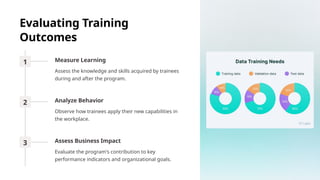
Evaluating Training
Outcomes
1 Measure Learning
Assess the knowledge and skills acquired by trainees
during and after the program.
2 Analyze Behavior
Observe how trainees apply their new capabilities in
the workplace.
3 Assess Business Impact
Evaluate the program's contribution to key
performance indicators and organizational goals.
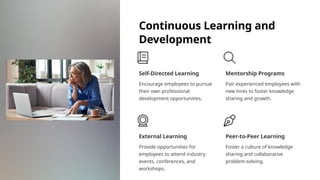
Continuous Learning and
Development
Self-Directed Learning
Encourage employees to pursue
their own professional
development opportunities.
Mentorship Programs
Pair experienced employees with
new hires to foster knowledge
sharing and growth.
External Learning
Provide opportunities for
employees to attend industry
events, conferences, and
workshops.
Peer-to-Peer Learning
Foster a culture of knowledge
sharing and collaborative
problem-solving.
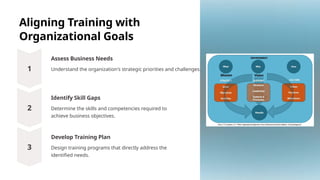
Aligning Training with
Organizational Goals
Assess Business Needs
Understand the organization's strategic priorities and challenges.
Identify Skill Gaps
Determine the skills and competencies required to
achieve business objectives.
Develop Training Plan
Design training programs that directly address the
identified needs.
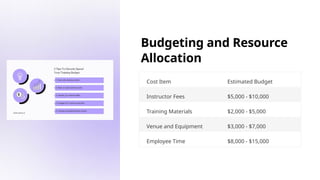
Budgeting and Resource
Allocation
Cost Item Estimated Budget
Instructor Fees $5,000 - $10,000
Training Materials $2,000 - $5,000
Venue and Equipment $3,000 - $7,000
Employee Time $8,000 - $15,000
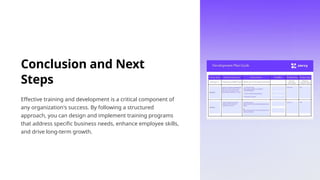
Conclusion and Next
Steps
Effective training and development is a critical component of
any organization's success. By following a structured
approach, you can design and implement training programs
that address specific business needs, enhance employee skills,
and drive long-term growth.

Introduction-to-Training-and-Development ( bab 3).ppsx

  • 1.
    Introduction to Training and Development Effectivetraining and development programs are essential for organizations to stay competitive and adapt to evolving business needs. This overview will explore the key steps involved in designing and implementing successful training initiatives. PJMK : Dr. M. Isa Anshori, SE.,MSi
  • 2.
    Assessing Training Needs 1Identify Skills Gaps Assess the current skills and knowledge of your workforce to determine where training is needed most. 2 Align with Business Goals Ensure training initiatives are directly linked to the organization's strategic objectives. 3 Gather Employee Feedback Solicit input from employees to understand their specific training requirements and pain points.
  • 3.
    Designing Training Programs 1 DefineLearning Objectives Clearly articulate the specific skills and knowledge trainees will gain. 2 Select Delivery Methods Choose the most effective training formats, such as classroom, online, or on-the-job. 3 Develop Content and Materials Create engaging, relevant, and interactive training content and resources.
  • 4.
    Selecting Training Methods TraditionalMethods Classroom instruction, workshops, and seminars offer direct interaction and hands-on learning. Modern Approaches Online courses, virtual simulations, and mobile learning provide flexibility and scalability. Blended Solutions Combining traditional and digital methods can create a more comprehensive and engaging learning experience.
  • 5.
    Delivering Effective Training Facilitator Expertise Ensuretrainers are knowledgeable, passionate, and skilled at facilitating interactive learning. Learner Engagement Foster an environment that encourages active participation, feedback, and knowledge sharing. Practical Application Provide opportunities for trainees to apply new skills and knowledge in real-world scenarios. Ongoing Support Offer post-training resources and coaching to reinforce learning and drive long-term behavior change.
  • 6.
    Evaluating Training Outcomes 1 MeasureLearning Assess the knowledge and skills acquired by trainees during and after the program. 2 Analyze Behavior Observe how trainees apply their new capabilities in the workplace. 3 Assess Business Impact Evaluate the program's contribution to key performance indicators and organizational goals.
  • 7.
    Continuous Learning and Development Self-DirectedLearning Encourage employees to pursue their own professional development opportunities. Mentorship Programs Pair experienced employees with new hires to foster knowledge sharing and growth. External Learning Provide opportunities for employees to attend industry events, conferences, and workshops. Peer-to-Peer Learning Foster a culture of knowledge sharing and collaborative problem-solving.
  • 8.
    Aligning Training with OrganizationalGoals Assess Business Needs Understand the organization's strategic priorities and challenges. Identify Skill Gaps Determine the skills and competencies required to achieve business objectives. Develop Training Plan Design training programs that directly address the identified needs.
  • 9.
    Budgeting and Resource Allocation CostItem Estimated Budget Instructor Fees $5,000 - $10,000 Training Materials $2,000 - $5,000 Venue and Equipment $3,000 - $7,000 Employee Time $8,000 - $15,000
  • 10.
    Conclusion and Next Steps Effectivetraining and development is a critical component of any organization's success. By following a structured approach, you can design and implement training programs that address specific business needs, enhance employee skills, and drive long-term growth.