Realizing the Spirit of  CMMI in Agile Form 以敏捷之形实现 CMMI 之神 December 2008
Agenda About the Presenter and Perficient Purpose and Expected Outcomes Agile and CMMI The BoldDelivery Agile Methodology  An Overview of Scrum Agile Ceremonies and Artifacts CMMI Model -- The “Spirit” Applying Agile Artifacts and Ceremonies -- The “Form” Q&A
About Me and Perficient Vernon Stinebaker ( 史文林) http://www. linkedin . com/in/vernonstinebaker Director of Technology/Principal Architect/SEPG Lead  20+ years experience in CMMI, SDLC/waterfall, and agile methodologies Certified ScrumMaster  Founder of the open source FDDTools project Perficient (Hangzhou) Co., Ltd. ( 博克软件(杭州)有限公司) http://www. perficient .com E stablished in 2004 as BoldTech Systems (Hangzhou) Co., Ltd. WOFE  of Perficient Inc. (NASAQ: PRFT) Agile BoldDelivery Methodology  2005 - CMMI 3 2006 - CMMI 4 2008- CMMI 5
Purpose and Outcomes Purpose To understand CMMI as a reference model The “spirit” of successful product or service delivery To understand Agile as an approach to deliver a product or service: the “form” To understand how to apply Agile form to the CMMI spirit Outcomes To be able to identify the key ceremonies and artifacts of the BoldDelivery and Scrum methodologies To recognize how Agile ceremonies and artifacts can be used to satisfy CMMI generic goals/practices and specific goals/practices To provide a foundation for further (self-driven) mapping
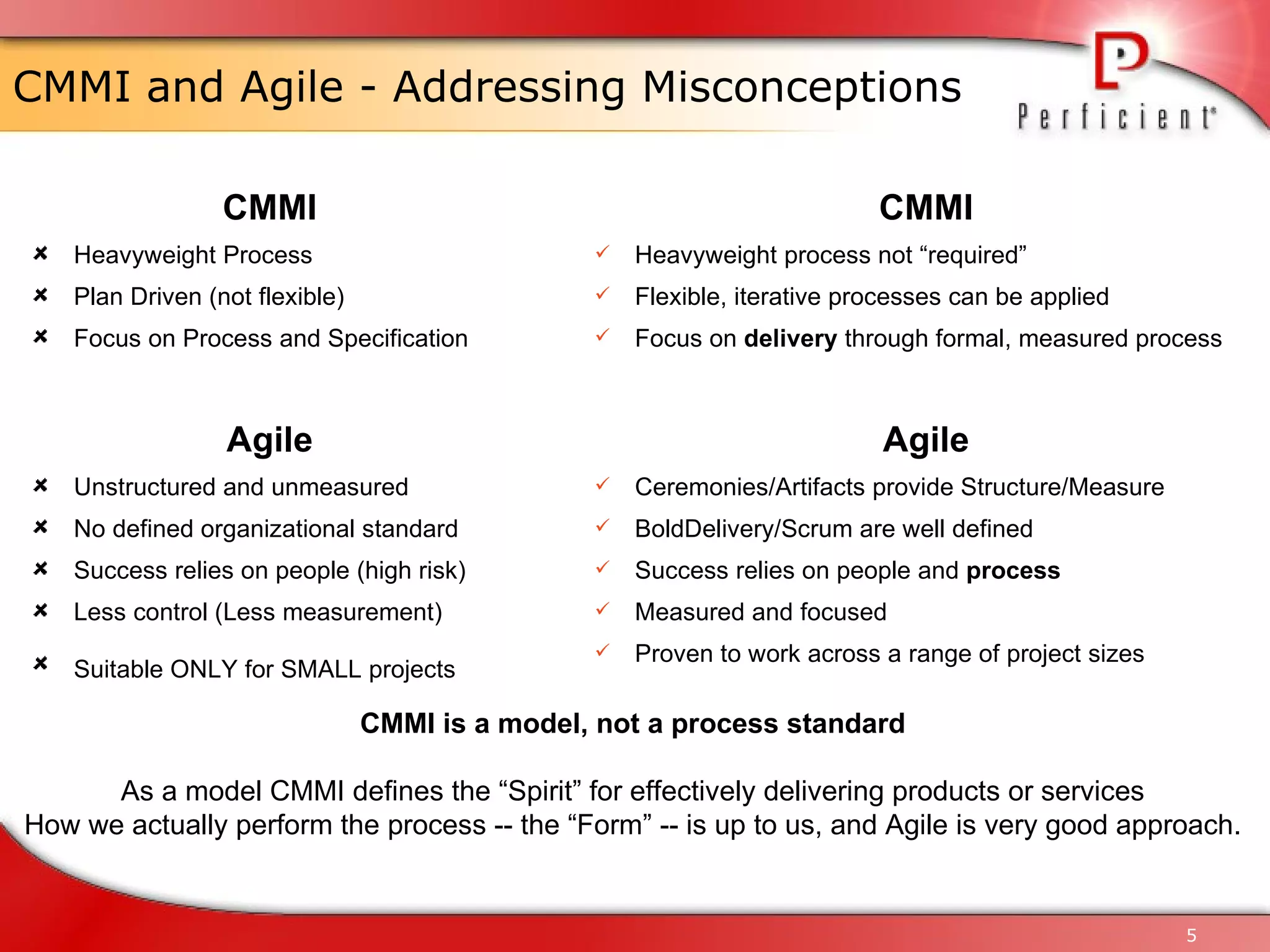
CMMI and Agile - Addressing Misconceptions CMMI Heavyweight Process Plan Driven (not flexible) Focus on Process and Specification Agile Unstructured and unmeasured No defined organizational standard Success relies on people (high risk) Less control (Less measurement) Suitable ONLY for SMALL projects   CMMI Heavyweight process not “required” Flexible, iterative processes can be applied Focus on  delivery  through formal, measured process  Agile Ceremonies/Artifacts provide Structure/Measure BoldDelivery/Scrum are well defined Success relies on people and  process Measured and focused Proven to work across a range of project sizes CMMI is a model, not a process standard As a model CMMI defines the “Spirit” for effectively delivering products or services How we actually perform the process -- the “Form” -- is up to us, and Agile is very good approach.
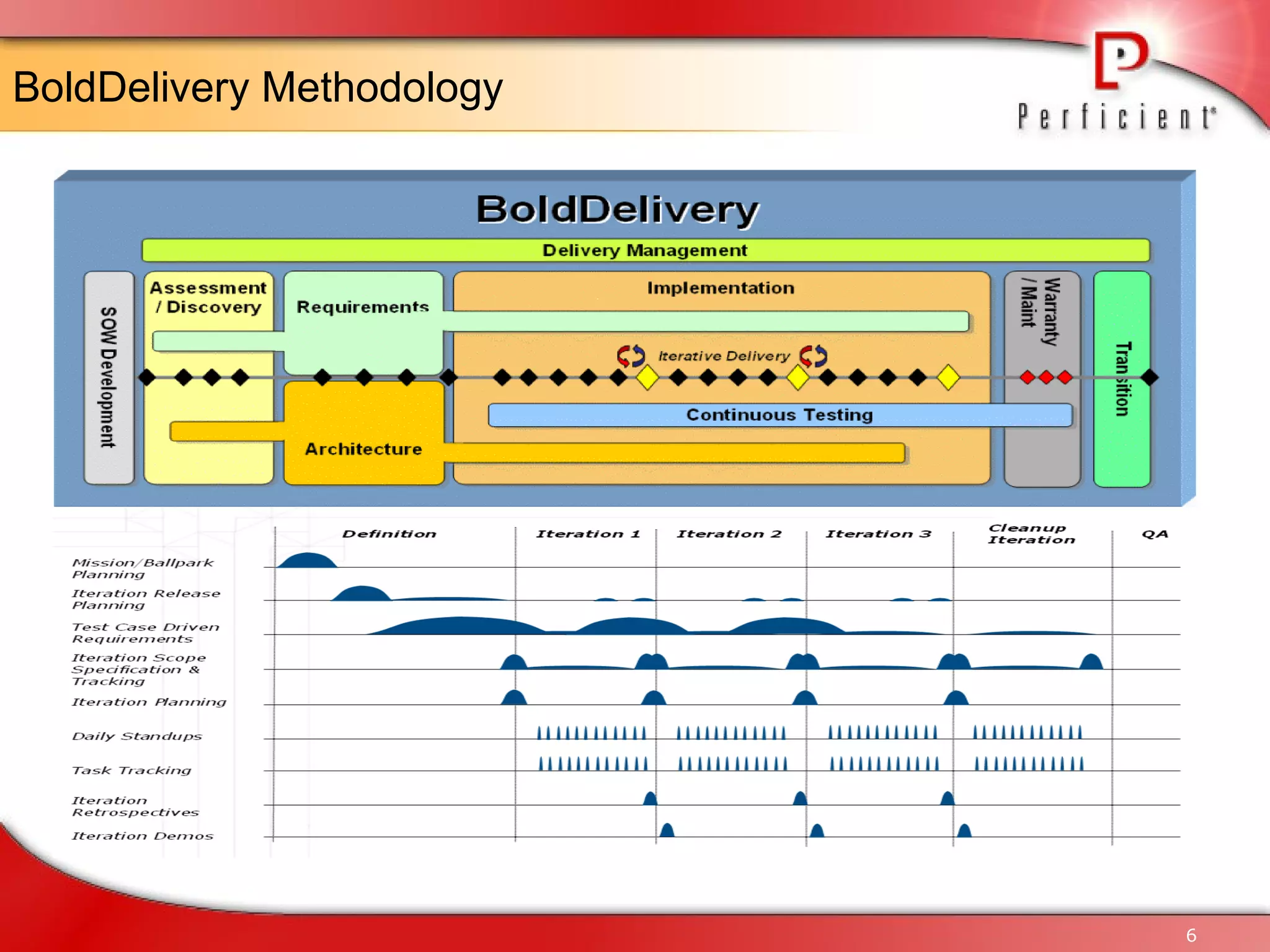
BoldDelivery Methodology
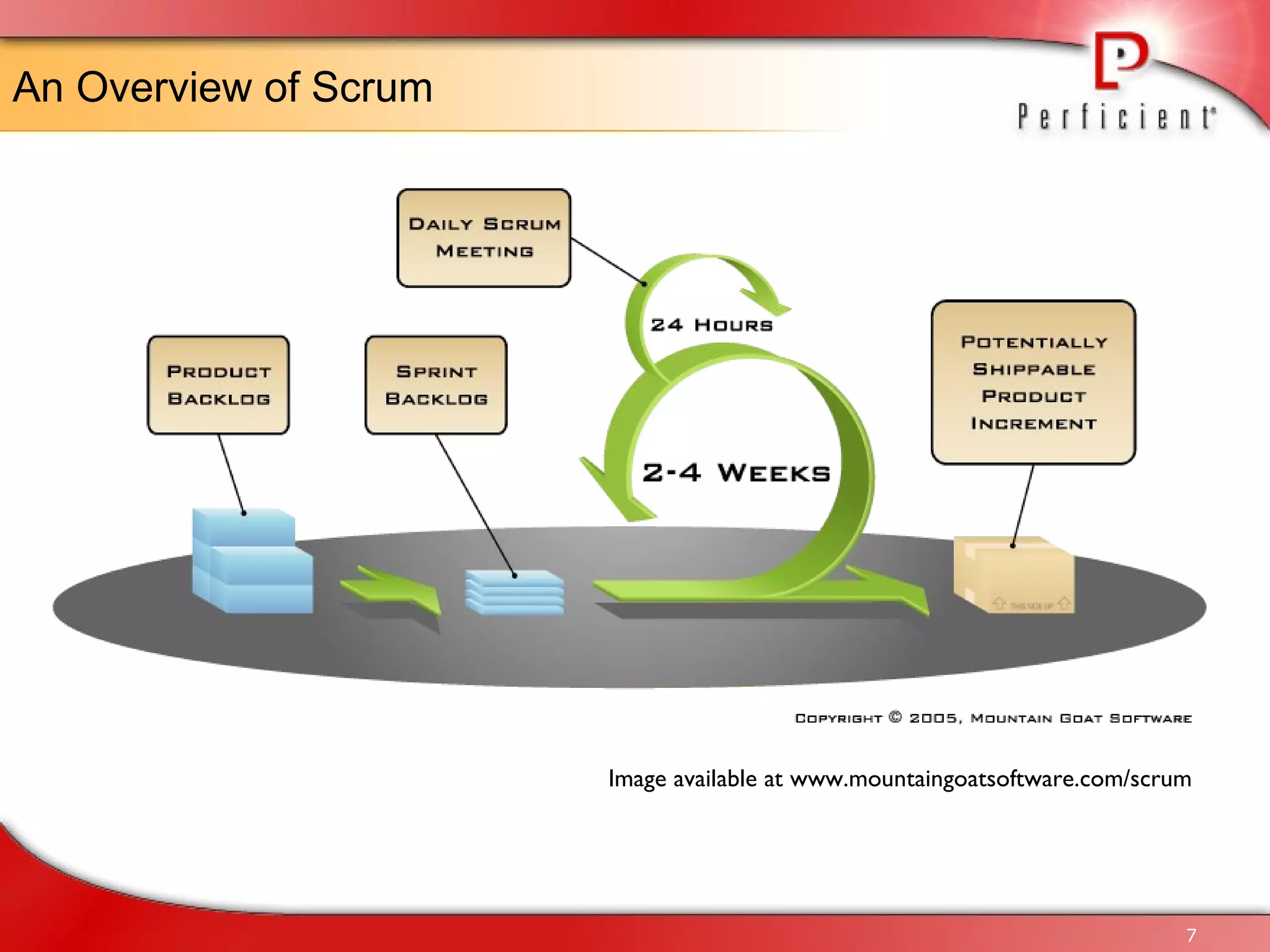
An Overview of Scrum Image available at www.mountaingoatsoftware.com/scrum
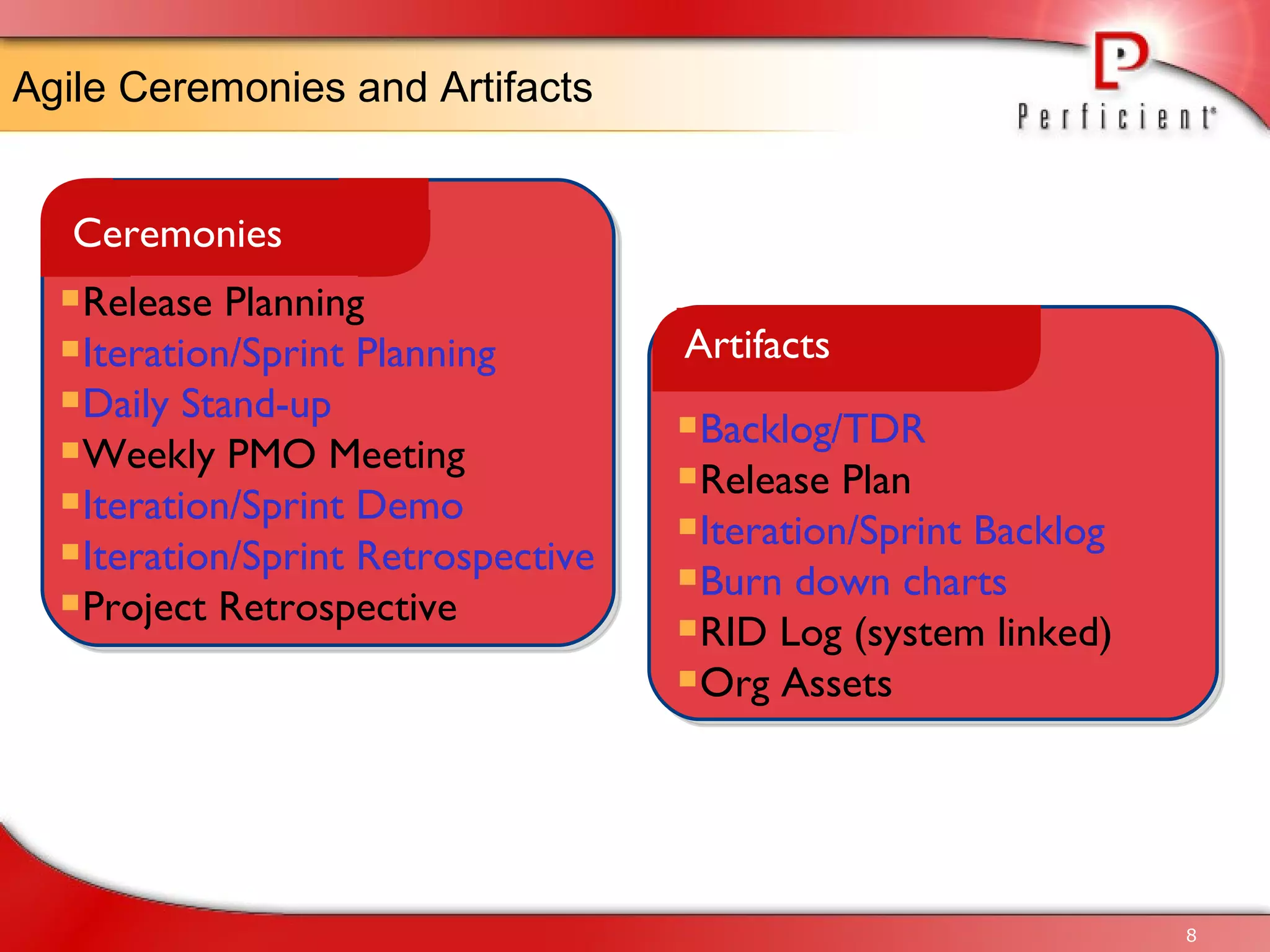
Agile Ceremonies and Artifacts Release Planning Iteration/Sprint Planning Daily Stand-up Weekly PMO Meeting Iteration/Sprint Demo Iteration/Sprint Retrospective Project Retrospective Ceremonies Backlog/TDR Release Plan Iteration/Sprint Backlog Burn down charts RID Log (system linked) Org Assets Artifacts
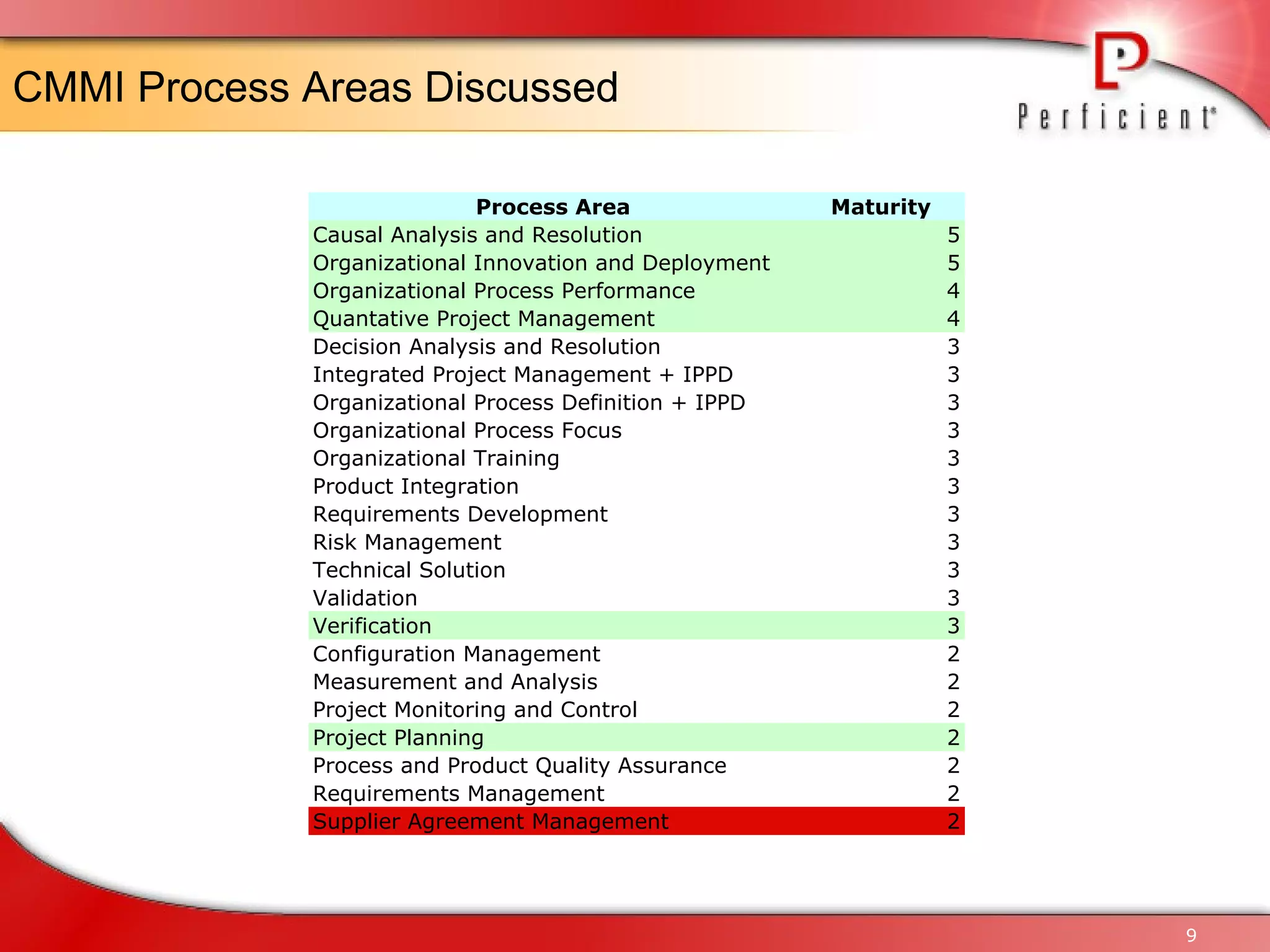
CMMI Process Areas Discussed
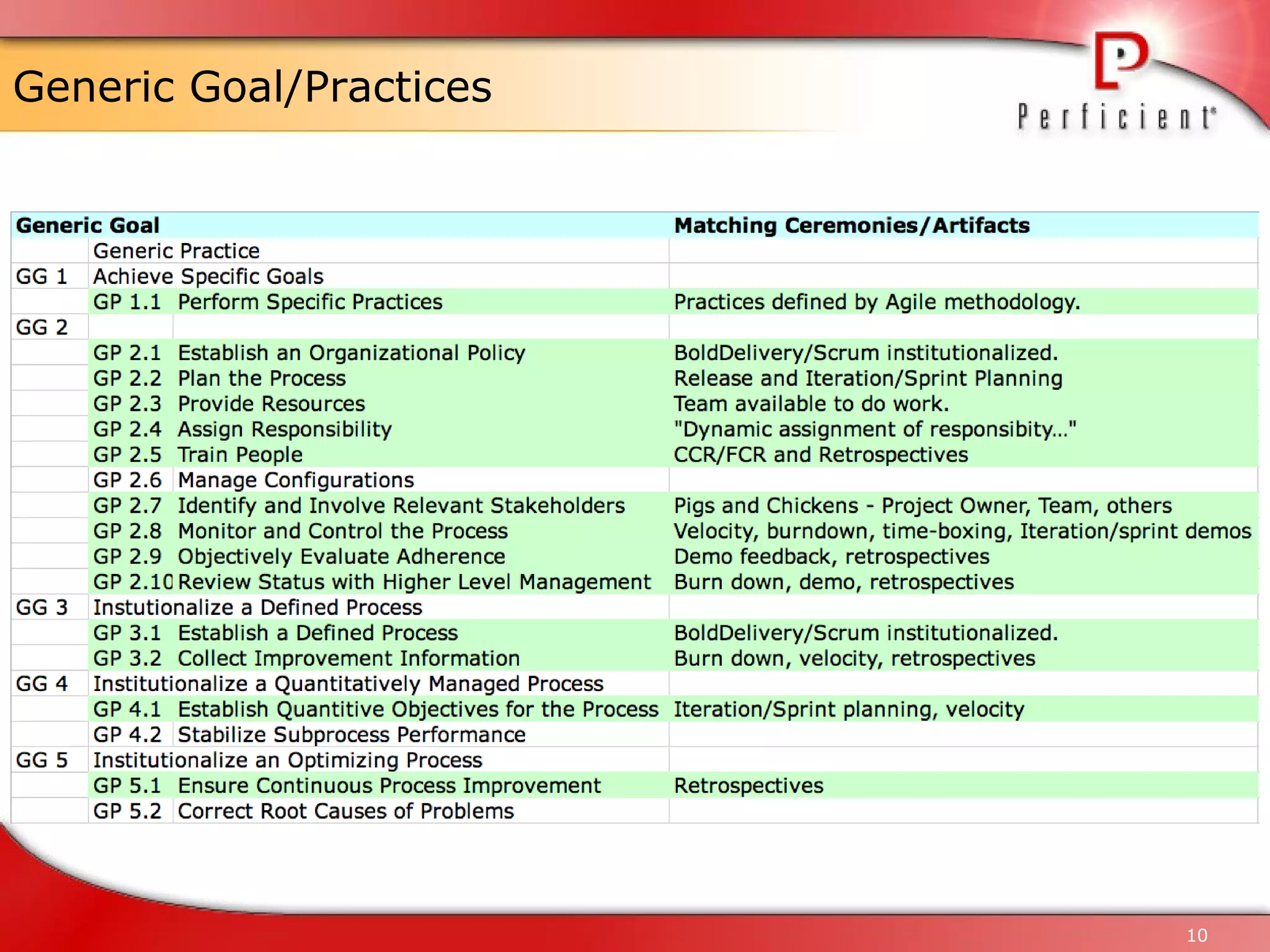
Generic Goal/Practices
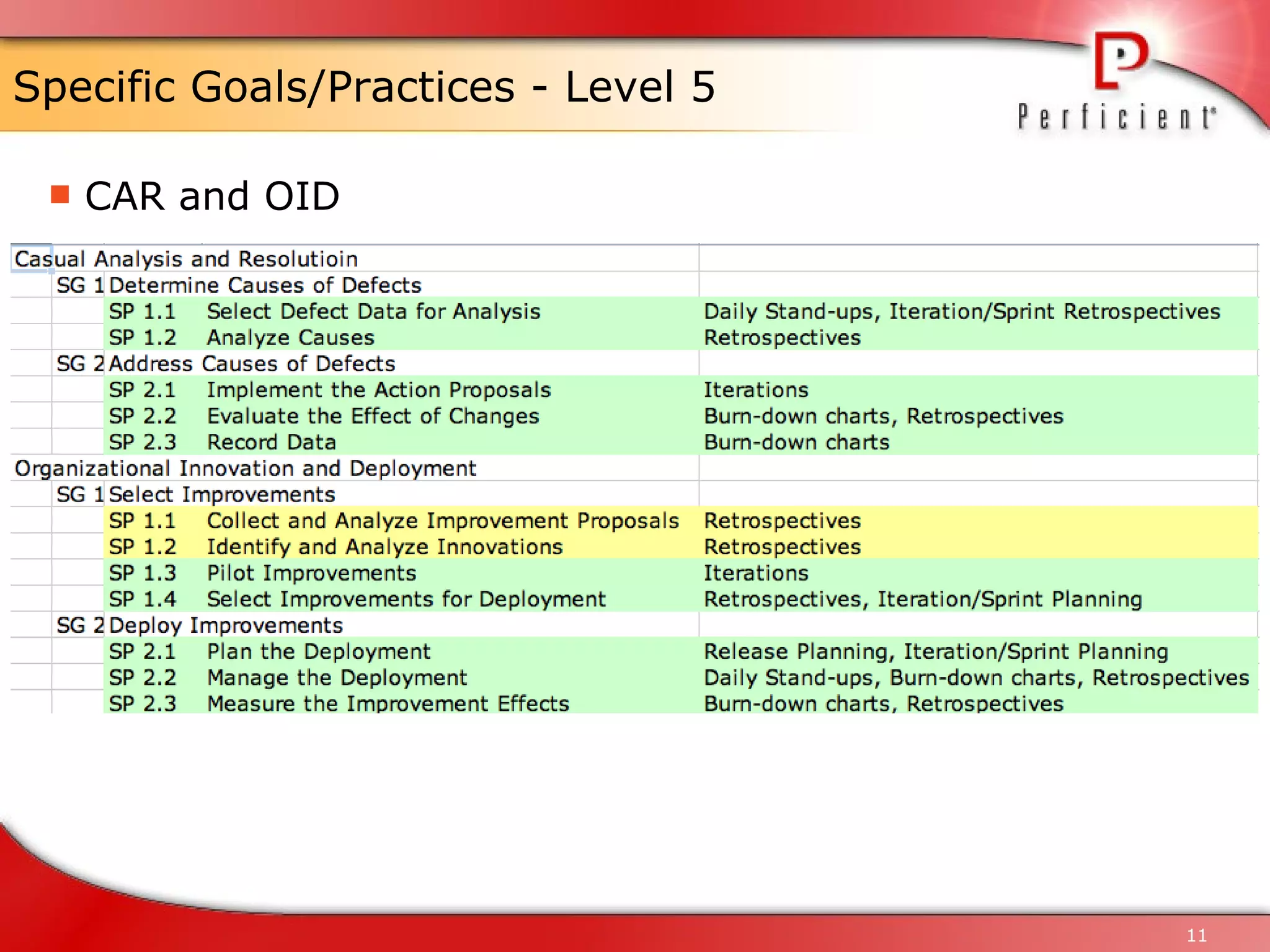
Specific Goals/Practices - Level 5 CAR and OID
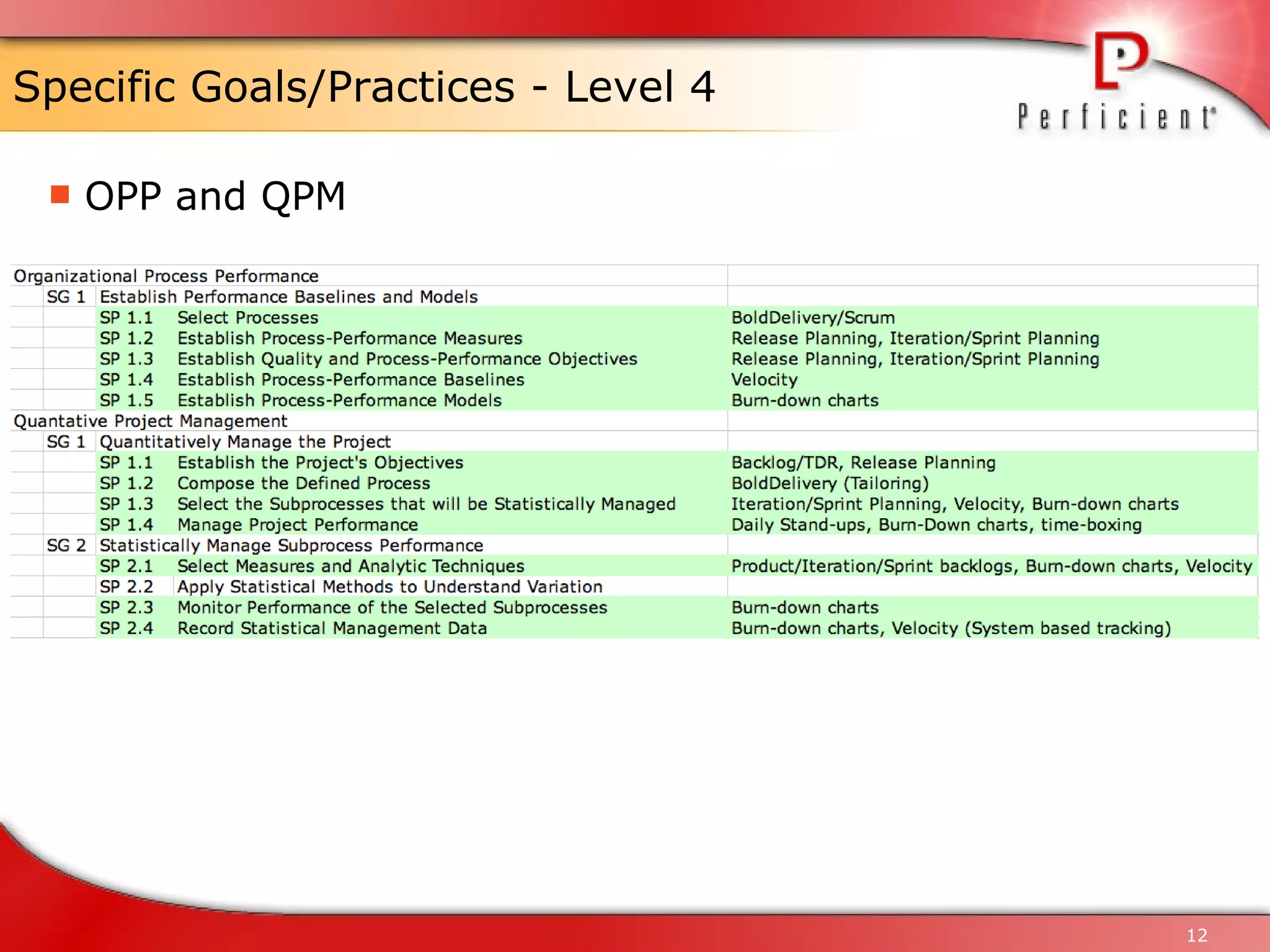
Specific Goals/Practices - Level 4 OPP and QPM
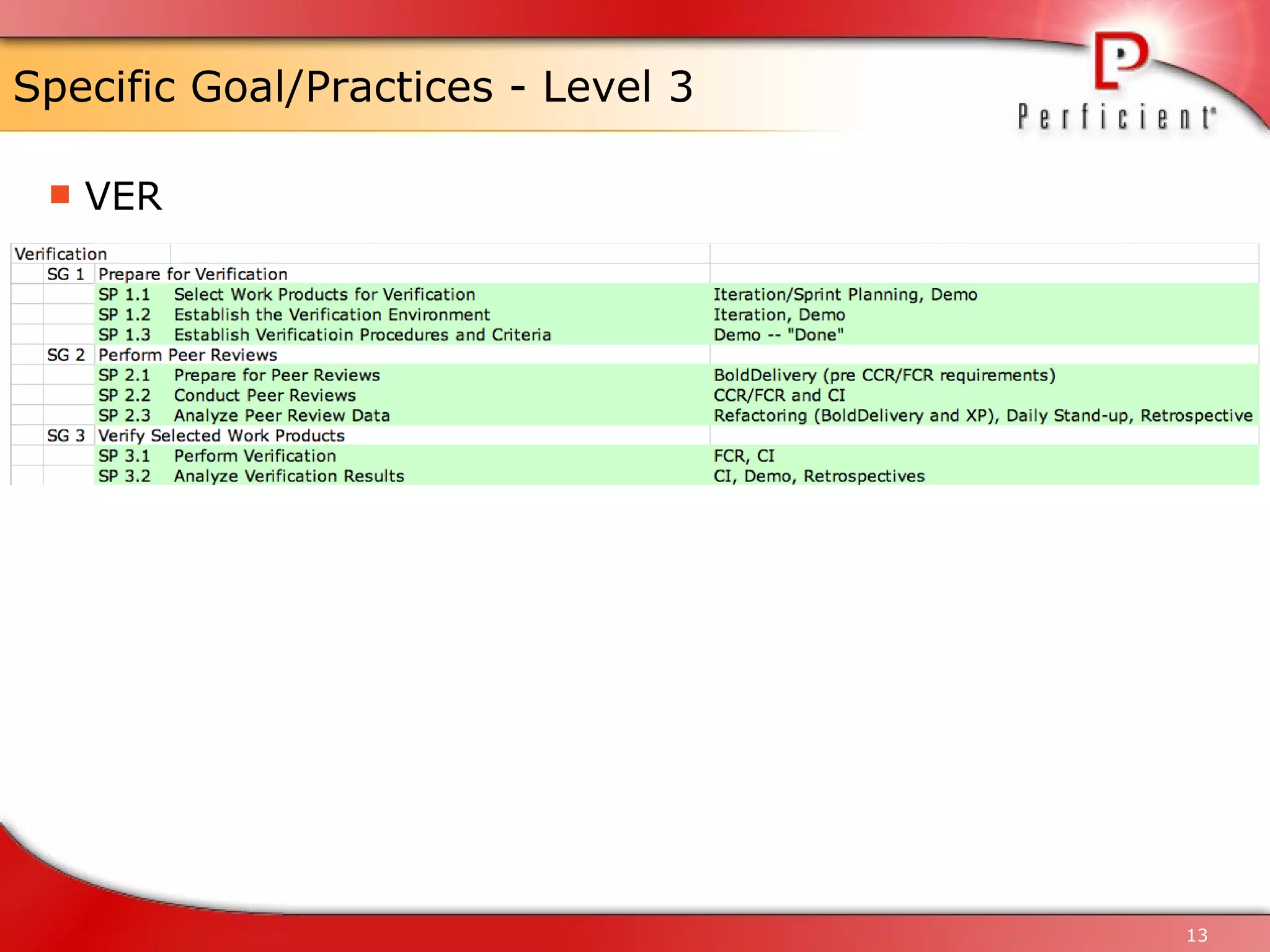
Specific Goal/Practices - Level 3 VER
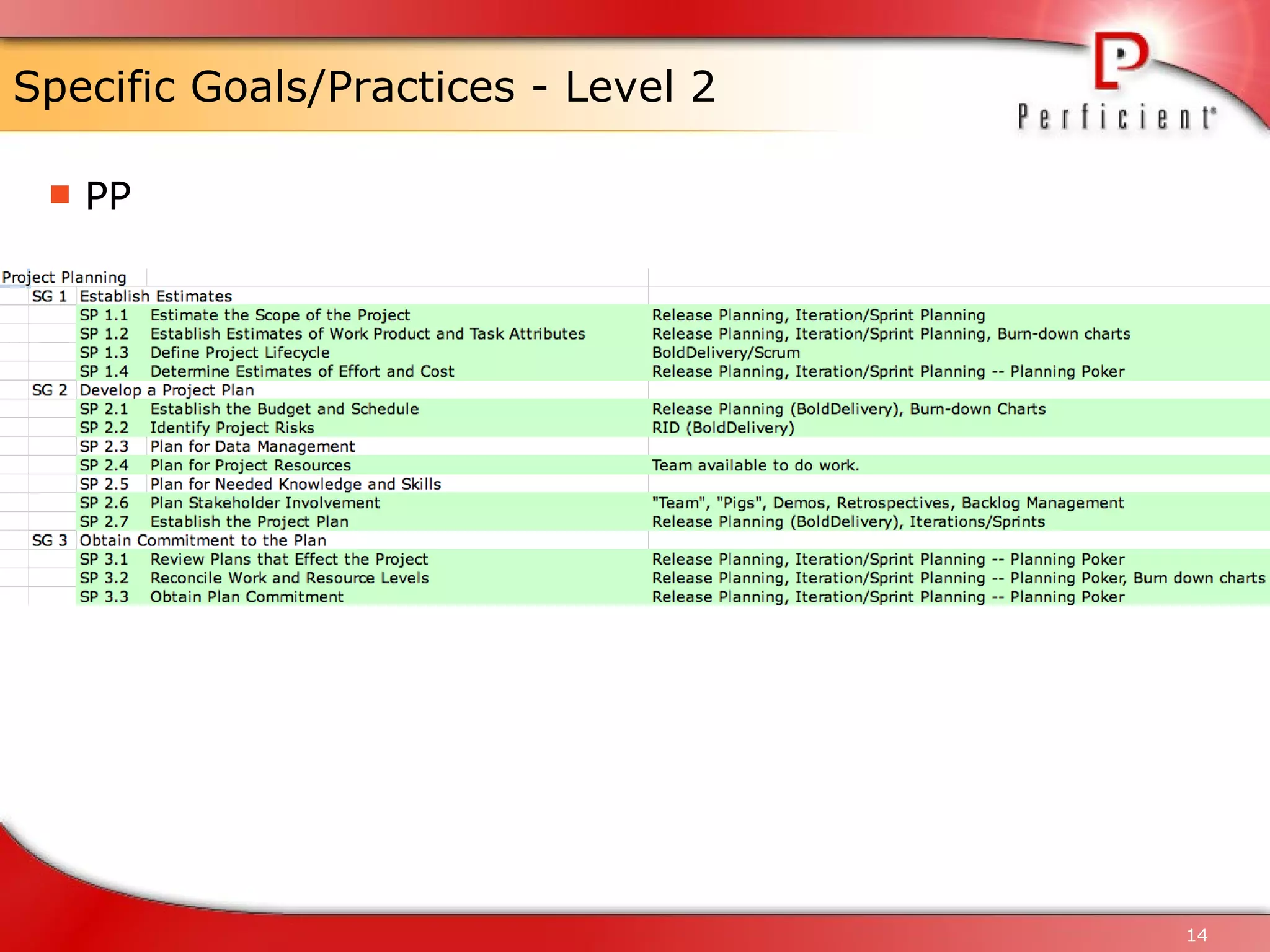
Specific Goals/Practices - Level 2 PP
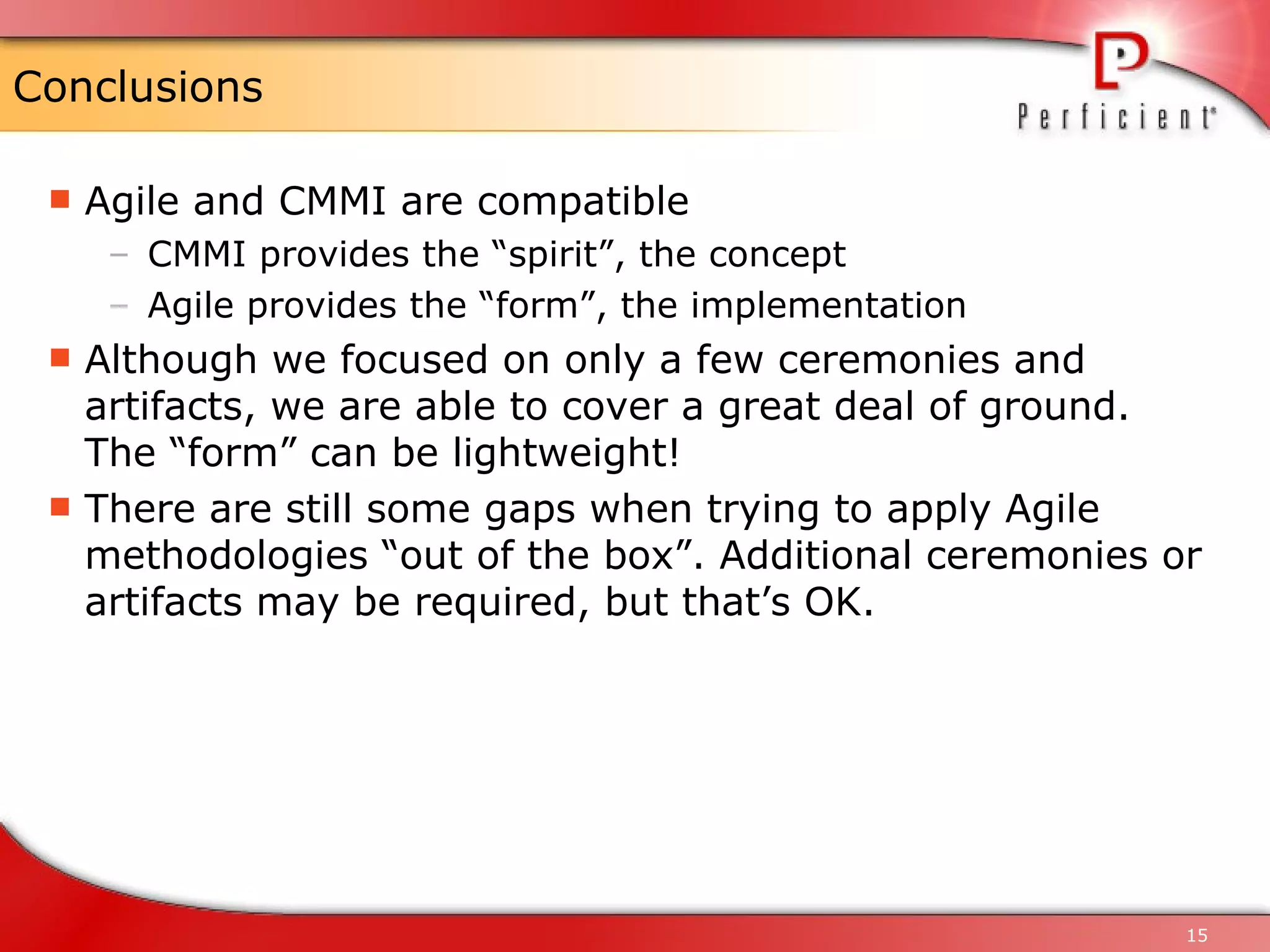
Conclusions Agile and CMMI are compatible CMMI provides the “spirit”, the concept Agile provides the “form”, the implementation Although we focused on only a few ceremonies and artifacts, we are able to cover a great deal of ground. The “form” can be lightweight! There are still some gaps when trying to apply Agile methodologies “out of the box”. Additional ceremonies or artifacts may be required, but that’s OK.
Thank you for attending! Q&A
Contact Information Vernon Stinebaker [email_address] [email_address] Perficient (Hangzhou) Co., Ltd http://www.perficient.com NASDAQ: PRFT

Realizing CMMI Spirit in Agile Form

  • 1.
    Realizing the Spiritof CMMI in Agile Form 以敏捷之形实现 CMMI 之神 December 2008
  • 2.
    Agenda About thePresenter and Perficient Purpose and Expected Outcomes Agile and CMMI The BoldDelivery Agile Methodology An Overview of Scrum Agile Ceremonies and Artifacts CMMI Model -- The “Spirit” Applying Agile Artifacts and Ceremonies -- The “Form” Q&A
  • 3.
    About Me andPerficient Vernon Stinebaker ( 史文林) http://www. linkedin . com/in/vernonstinebaker Director of Technology/Principal Architect/SEPG Lead 20+ years experience in CMMI, SDLC/waterfall, and agile methodologies Certified ScrumMaster Founder of the open source FDDTools project Perficient (Hangzhou) Co., Ltd. ( 博克软件(杭州)有限公司) http://www. perficient .com E stablished in 2004 as BoldTech Systems (Hangzhou) Co., Ltd. WOFE of Perficient Inc. (NASAQ: PRFT) Agile BoldDelivery Methodology 2005 - CMMI 3 2006 - CMMI 4 2008- CMMI 5
  • 4.
    Purpose and OutcomesPurpose To understand CMMI as a reference model The “spirit” of successful product or service delivery To understand Agile as an approach to deliver a product or service: the “form” To understand how to apply Agile form to the CMMI spirit Outcomes To be able to identify the key ceremonies and artifacts of the BoldDelivery and Scrum methodologies To recognize how Agile ceremonies and artifacts can be used to satisfy CMMI generic goals/practices and specific goals/practices To provide a foundation for further (self-driven) mapping
  • 5.
    CMMI and Agile- Addressing Misconceptions CMMI Heavyweight Process Plan Driven (not flexible) Focus on Process and Specification Agile Unstructured and unmeasured No defined organizational standard Success relies on people (high risk) Less control (Less measurement) Suitable ONLY for SMALL projects CMMI Heavyweight process not “required” Flexible, iterative processes can be applied Focus on delivery through formal, measured process Agile Ceremonies/Artifacts provide Structure/Measure BoldDelivery/Scrum are well defined Success relies on people and process Measured and focused Proven to work across a range of project sizes CMMI is a model, not a process standard As a model CMMI defines the “Spirit” for effectively delivering products or services How we actually perform the process -- the “Form” -- is up to us, and Agile is very good approach.
  • 6.
  • 7.
    An Overview ofScrum Image available at www.mountaingoatsoftware.com/scrum
  • 8.
    Agile Ceremonies andArtifacts Release Planning Iteration/Sprint Planning Daily Stand-up Weekly PMO Meeting Iteration/Sprint Demo Iteration/Sprint Retrospective Project Retrospective Ceremonies Backlog/TDR Release Plan Iteration/Sprint Backlog Burn down charts RID Log (system linked) Org Assets Artifacts
  • 9.
  • 10.
  • 11.
    Specific Goals/Practices -Level 5 CAR and OID
  • 12.
    Specific Goals/Practices -Level 4 OPP and QPM
  • 13.
  • 14.
  • 15.
    Conclusions Agile andCMMI are compatible CMMI provides the “spirit”, the concept Agile provides the “form”, the implementation Although we focused on only a few ceremonies and artifacts, we are able to cover a great deal of ground. The “form” can be lightweight! There are still some gaps when trying to apply Agile methodologies “out of the box”. Additional ceremonies or artifacts may be required, but that’s OK.
  • 16.
    Thank you forattending! Q&A
  • 17.
    Contact Information VernonStinebaker [email_address] [email_address] Perficient (Hangzhou) Co., Ltd http://www.perficient.com NASDAQ: PRFT

Editor's Notes

  • #2 Note the new tagline, “Experts in delivering business-driven technology solutions”, which is consistent with the tagline in our website. SPEAKER NOTES: