

About Me
Certified Scrum Master
16 + Years in IT industry in which 8 Years in Agile
Specialized in
 Distributed Agile Implementation



Large Scale Agile Transformation



Agile Training



SAFe implementation



Agile Assessment
Need for a Distributed Agile

Stakeholders are distributed
Skilled people are spread across
Round the clock support
Cost Savings

3
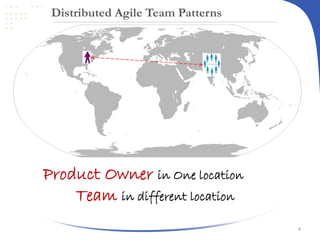
Distributed Agile Team Patterns

Product Owner in One location
Team in different location
4
Distributed Agile Team Patterns

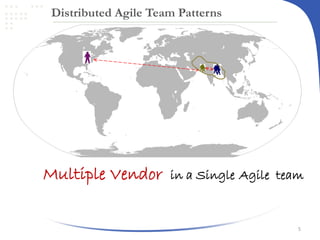
Multiple Vendor

in a Single Agile team

5
Distributed Agile Team Patterns

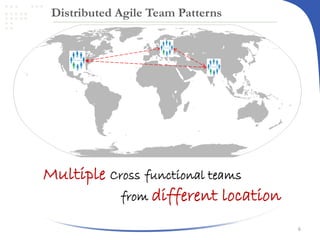
Multiple Cross functional teams
from different location
6
Distributed Agile Team Patterns

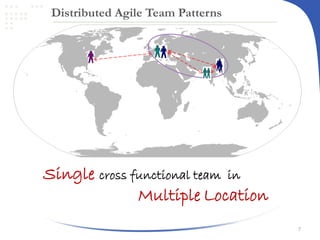
Single cross functional team in
Multiple Location
7
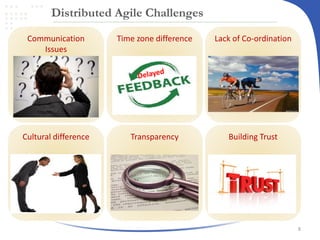
Distributed Agile Challenges
Communication
Issues

Time zone difference

Lack of Co-ordination

Cultural difference

Transparency

Building Trust

8
Best Practices

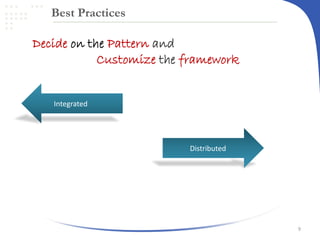
Decide on the Pattern and
Customize the framework

Integrated

Distributed

9
Best Practices

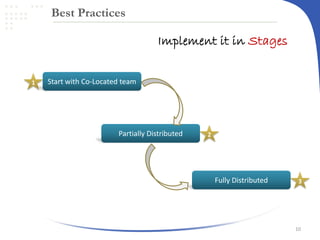
Implement it in Stages
1

Start with Co-Located team

Partially Distributed

2

Fully Distributed

3

10
Best Practices

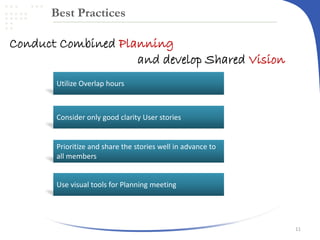
Conduct Combined Planning
and develop Shared Vision
Utilize Overlap hours

Consider only good clarity User stories

Prioritize and share the stories well in advance to
all members

Use visual tools for Planning meeting

11
Best Practices

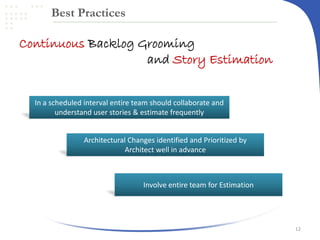
Continuous Backlog Grooming
and Story Estimation
In a scheduled interval entire team should collaborate and
understand user stories & estimate frequently
Architectural Changes identified and Prioritized by
Architect well in advance

Involve entire team for Estimation

12
Best Practices

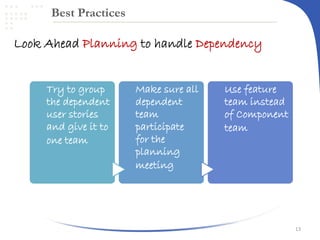
Look Ahead Planning to handle Dependency
Try to group
the dependent
user stories
and give it to
one team

Make sure all
dependent
team
participate
for the
planning
meeting

Use feature
team instead
of Component
team

13
Best Practices

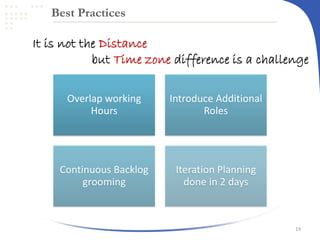
It is not the Distance
but Time zone difference is a challenge
Overlap working
Hours

Introduce Additional
Roles

Continuous Backlog
grooming

Iteration Planning
done in 2 days

14
Best Practices

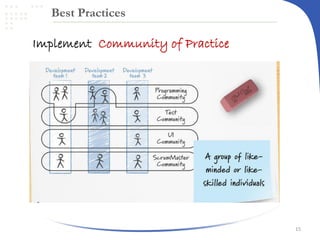
Implement Community of Practice

15
Best Practices

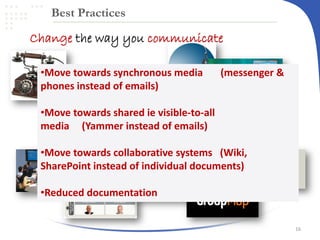
Change the way you communicate
•Move towards synchronous media
phones instead of emails)

(messenger &

•Move towards shared ie visible-to-all
media (Yammer instead of emails)
•Move towards collaborative systems (Wiki,
SharePoint instead of individual documents)
•Reduced documentation

16
Best Practices

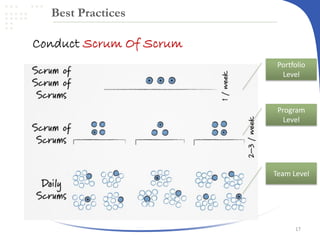
Conduct Scrum Of Scrum
Portfolio
Level

Program
Level

Team Level

17
Best Practices

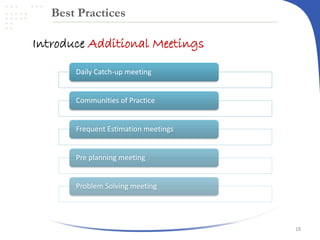
Introduce Additional Meetings
Daily Catch-up meeting

Communities of Practice

Frequent Estimation meetings

Pre planning meeting

Problem Solving meeting

18
Best Practices

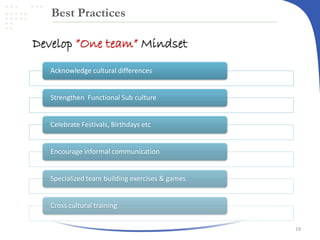
Develop ”One team” Mindset
Acknowledge cultural differences

Strengthen Functional Sub culture

Celebrate Festivals, Birthdays etc

Encourage informal communication

Specialized team building exercises & games

Cross cultural training
19
Best Practices

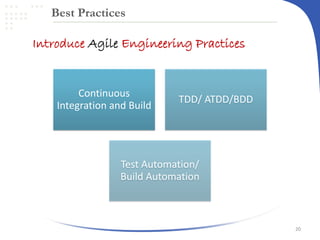
Introduce Agile Engineering Practices

Continuous
Integration and Build

TDD/ ATDD/BDD

Test Automation/
Build Automation

20
Best Practices

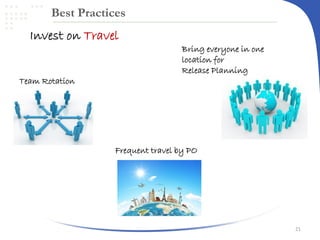
Invest on Travel
Bring everyone in one
location for
Release Planning
Team Rotation

Frequent travel by PO

21
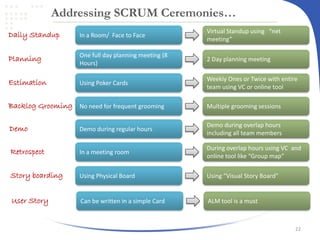
Addressing SCRUM Ceremonies…
Daily Standup

In a Room/ Face to Face

Virtual Standup using “net
meeting”

Planning

One full day planning meeting (8
Hours)

2 Day planning meeting

Estimation

Using Poker Cards

Weekly Ones or Twice with entire
team using VC or online tool

Backlog Grooming No need for frequent grooming

Multiple grooming sessions

Demo

Demo during regular hours

Demo during overlap hours
including all team members

Retrospect

In a meeting room

During overlap hours using VC and
online tool like “Group map”

Story boarding

Using Physical Board

Using “Visual Story Board”

User Story

Can be written in a simple Card

ALM tool is a must

22
Finally…

Co Located

Or

Distributed

is immaterial

But

how we bring
Agile values are Important
23
ATC2013-Umadevi- Distributed Agile Challenges

ATC2013-Umadevi- Distributed Agile Challenges

  • 2.
    About Me Certified ScrumMaster 16 + Years in IT industry in which 8 Years in Agile Specialized in  Distributed Agile Implementation  Large Scale Agile Transformation  Agile Training  SAFe implementation  Agile Assessment
  • 3.
    Need for aDistributed Agile Stakeholders are distributed Skilled people are spread across Round the clock support Cost Savings 3
  • 4.
    Distributed Agile TeamPatterns Product Owner in One location Team in different location 4
  • 5.
    Distributed Agile TeamPatterns Multiple Vendor in a Single Agile team 5
  • 6.
    Distributed Agile TeamPatterns Multiple Cross functional teams from different location 6
  • 7.
    Distributed Agile TeamPatterns Single cross functional team in Multiple Location 7
  • 8.
    Distributed Agile Challenges Communication Issues Timezone difference Lack of Co-ordination Cultural difference Transparency Building Trust 8
  • 9.
    Best Practices Decide onthe Pattern and Customize the framework Integrated Distributed 9
  • 10.
    Best Practices Implement itin Stages 1 Start with Co-Located team Partially Distributed 2 Fully Distributed 3 10
  • 11.
    Best Practices Conduct CombinedPlanning and develop Shared Vision Utilize Overlap hours Consider only good clarity User stories Prioritize and share the stories well in advance to all members Use visual tools for Planning meeting 11
  • 12.
    Best Practices Continuous BacklogGrooming and Story Estimation In a scheduled interval entire team should collaborate and understand user stories & estimate frequently Architectural Changes identified and Prioritized by Architect well in advance Involve entire team for Estimation 12
  • 13.
    Best Practices Look AheadPlanning to handle Dependency Try to group the dependent user stories and give it to one team Make sure all dependent team participate for the planning meeting Use feature team instead of Component team 13
  • 14.
    Best Practices It isnot the Distance but Time zone difference is a challenge Overlap working Hours Introduce Additional Roles Continuous Backlog grooming Iteration Planning done in 2 days 14
  • 15.
  • 16.
    Best Practices Change theway you communicate •Move towards synchronous media phones instead of emails) (messenger & •Move towards shared ie visible-to-all media (Yammer instead of emails) •Move towards collaborative systems (Wiki, SharePoint instead of individual documents) •Reduced documentation 16
  • 17.
    Best Practices Conduct ScrumOf Scrum Portfolio Level Program Level Team Level 17
  • 18.
    Best Practices Introduce AdditionalMeetings Daily Catch-up meeting Communities of Practice Frequent Estimation meetings Pre planning meeting Problem Solving meeting 18
  • 19.
    Best Practices Develop ”Oneteam” Mindset Acknowledge cultural differences Strengthen Functional Sub culture Celebrate Festivals, Birthdays etc Encourage informal communication Specialized team building exercises & games Cross cultural training 19
  • 20.
    Best Practices Introduce AgileEngineering Practices Continuous Integration and Build TDD/ ATDD/BDD Test Automation/ Build Automation 20
  • 21.
    Best Practices Invest onTravel Bring everyone in one location for Release Planning Team Rotation Frequent travel by PO 21
  • 22.
    Addressing SCRUM Ceremonies… DailyStandup In a Room/ Face to Face Virtual Standup using “net meeting” Planning One full day planning meeting (8 Hours) 2 Day planning meeting Estimation Using Poker Cards Weekly Ones or Twice with entire team using VC or online tool Backlog Grooming No need for frequent grooming Multiple grooming sessions Demo Demo during regular hours Demo during overlap hours including all team members Retrospect In a meeting room During overlap hours using VC and online tool like “Group map” Story boarding Using Physical Board Using “Visual Story Board” User Story Can be written in a simple Card ALM tool is a must 22
  • 23.
    Finally… Co Located Or Distributed is immaterial But howwe bring Agile values are Important 23