Downloaded 39 times



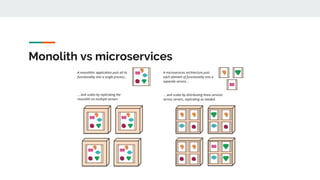
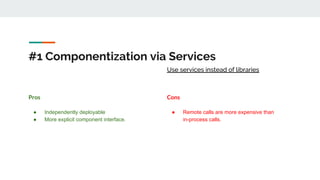
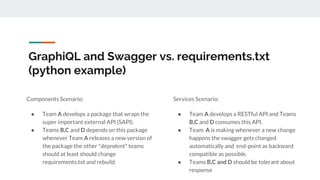

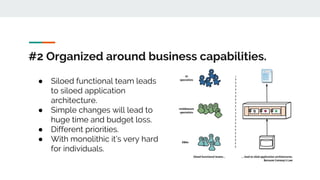
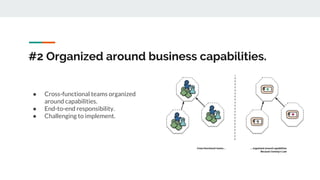
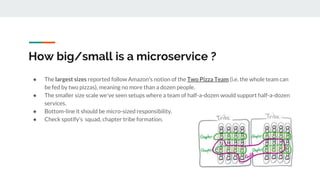

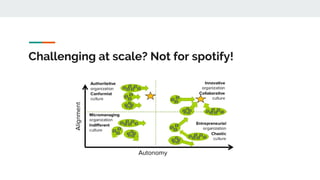


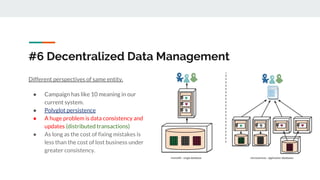


![#9 Evolutionary design
● Usually it’ll never be microservices from day1.
● Many microservice groups expects many services to be scrapped rather than evolved in the longer
term (2 weeks replaceability).
● The Guardian website Monolith to Microservices [add new features by building microservices that
use the monolith's API]
● StranglerApplication Pattern (Killing Softly!)
● Versioning of APIs and consistency.
● Evolutionary replaceability is another organic design.](https://image.slidesharecdn.com/9patternsofmicroservices-180528084053/85/9-patterns-of-microservices-19-320.jpg)



1. Microservices architecture involves developing applications as a suite of independently deployable services that communicate through APIs and focus on business capabilities. 2. Key patterns include organizing around business capabilities with cross-functional teams, treating services as long-running products rather than projects, using smart endpoints and dumb pipes for communication, and decentralized governance and data management. 3. Other important patterns are automating infrastructure, designing for failure of services, and evolving designs over time rather than expecting a big bang migration to microservices.


