SUMER
Social Studies for 8 th E.G.B.
 Teacher: Mauricio Torres
BACKGROUND
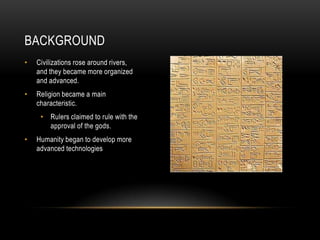
•   Civilizations rose around rivers,
    and they became more organized
    and advanced.
•   Religion became a main
    characteristic.
     • Rulers claimed to rule with the
       approval of the gods.
•   Humanity began to develop more
    advanced technologies
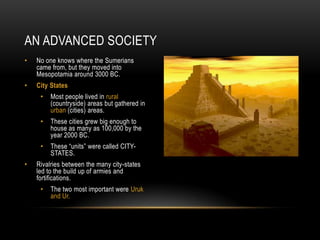
AN ADVANCED SOCIETY
•   No one knows where the Sumerians
    came from, but they moved into
    Mesopotamia around 3000 BC.
•   City States
     •   Most people lived in rural
         (countryside) areas but gathered in
         urban (cities) areas.
     •   These cities grew big enough to
         house as many as 100,000 by the
         year 2000 BC.
     •   These “units” were called CITY-
         STATES.
•   Rivalries between the many city-states
    led to the build up of armies and
    fortifications.
     •   The two most important were Uruk
         and Ur.
THE AKKADIANS
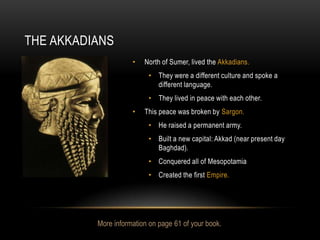
                     •   North of Sumer, lived the Akkadians.
                          • They were a different culture and spoke a
                            different language.
                          • They lived in peace with each other.
                     •   This peace was broken by Sargon.
                          • He raised a permanent army.
                          • Built a new capital: Akkad (near present day
                            Baghdad).
                          • Conquered all of Mesopotamia
                          • Created the first Empire.


          More information on page 61 of your book.
FALL OF THE AKKADIANS
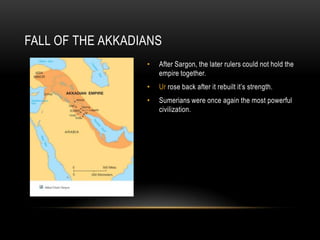
                  •   After Sargon, the later rulers could not hold the
                      empire together.
                  •   Ur rose back after it rebuilt it’s strength.
                  •   Sumerians were once again the most powerful
                      civilization.
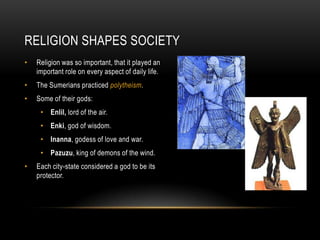
RELIGION SHAPES SOCIETY
•   Religion was so important, that it played an
    important role on every aspect of daily life.
•   The Sumerians practiced polytheism.
•   Some of their gods:
     • Enlil, lord of the air.
     • Enki, god of wisdom.
     • Inanna, godess of love and war.
     • Pazuzu, king of demons of the wind.
•   Each city-state considered a god to be its
    protector.
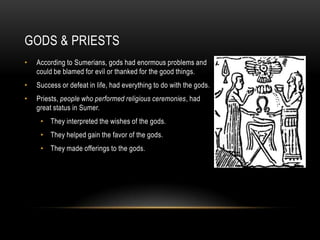
GODS & PRIESTS
•   According to Sumerians, gods had enormous problems and
    could be blamed for evil or thanked for the good things.
•   Success or defeat in life, had everything to do with the gods.
•   Priests, people who performed religious ceremonies, had
    great status in Sumer.
     • They interpreted the wishes of the gods.
     • They helped gain the favor of the gods.
     • They made offerings to the gods.
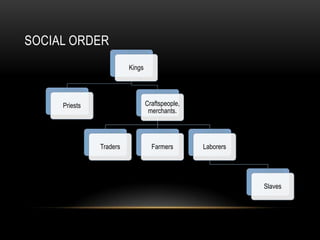
SOCIAL ORDER
                         Kings


     Priests                     Craftspeople,
                                  merchants.


               Traders             Farmers       Laborers


                                                            Slaves
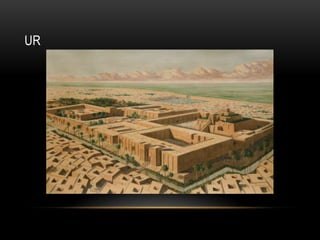
UR
UR

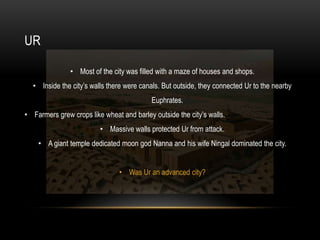
               • Most of the city was filled with a maze of houses and shops.
  • Inside the city’s walls there were canals. But outside, they connected Ur to the nearby
                                           Euphrates.
• Farmers grew crops like wheat and barley outside the city’s walls.
                         • Massive walls protected Ur from attack.
    • A giant temple dedicated moon god Nanna and his wife Ningal dominated the city.


                                • Was Ur an advanced city?
UR


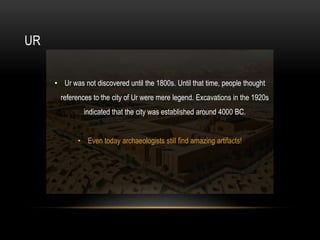
     • Ur was not discovered until the 1800s. Until that time, people thought
       references to the city of Ur were mere legend. Excavations in the 1920s
               indicated that the city was established around 4000 BC.


            • Even today archaeologists still find amazing artifacts!
ASK YOURSELF
•   Identify:
     • What is polytheism?
•   Explain:
     • What kind of powers did Sumerians think their gods have?
•   Recall:
     • What purpose did the walls around the cities serve?
•   Describe:
     • What were the city states?
•   Draw Conclusions:
     • How was Sargon able to build the first empire?
BIBLIOGRAPHY
•   Burstein, S. M., & Shek, R. (2012). World History (Teacher´s Edition) (1st Edition ed.). (H.
    McDougal, Ed.) Orlando, Florida, US.: Houghton Mifflin Harcourt Publishing Company.
•   Images taken from Google.com

Sumer

  • 1.
    SUMER Social Studies for8 th E.G.B. Teacher: Mauricio Torres
  • 2.
    BACKGROUND • Civilizations rose around rivers, and they became more organized and advanced. • Religion became a main characteristic. • Rulers claimed to rule with the approval of the gods. • Humanity began to develop more advanced technologies
  • 3.
    AN ADVANCED SOCIETY • No one knows where the Sumerians came from, but they moved into Mesopotamia around 3000 BC. • City States • Most people lived in rural (countryside) areas but gathered in urban (cities) areas. • These cities grew big enough to house as many as 100,000 by the year 2000 BC. • These “units” were called CITY- STATES. • Rivalries between the many city-states led to the build up of armies and fortifications. • The two most important were Uruk and Ur.
  • 4.
    THE AKKADIANS • North of Sumer, lived the Akkadians. • They were a different culture and spoke a different language. • They lived in peace with each other. • This peace was broken by Sargon. • He raised a permanent army. • Built a new capital: Akkad (near present day Baghdad). • Conquered all of Mesopotamia • Created the first Empire. More information on page 61 of your book.
  • 5.
    FALL OF THEAKKADIANS • After Sargon, the later rulers could not hold the empire together. • Ur rose back after it rebuilt it’s strength. • Sumerians were once again the most powerful civilization.
  • 6.
    RELIGION SHAPES SOCIETY • Religion was so important, that it played an important role on every aspect of daily life. • The Sumerians practiced polytheism. • Some of their gods: • Enlil, lord of the air. • Enki, god of wisdom. • Inanna, godess of love and war. • Pazuzu, king of demons of the wind. • Each city-state considered a god to be its protector.
  • 7.
    GODS & PRIESTS • According to Sumerians, gods had enormous problems and could be blamed for evil or thanked for the good things. • Success or defeat in life, had everything to do with the gods. • Priests, people who performed religious ceremonies, had great status in Sumer. • They interpreted the wishes of the gods. • They helped gain the favor of the gods. • They made offerings to the gods.
  • 8.
    SOCIAL ORDER Kings Priests Craftspeople, merchants. Traders Farmers Laborers Slaves
  • 9.
  • 10.
    UR • Most of the city was filled with a maze of houses and shops. • Inside the city’s walls there were canals. But outside, they connected Ur to the nearby Euphrates. • Farmers grew crops like wheat and barley outside the city’s walls. • Massive walls protected Ur from attack. • A giant temple dedicated moon god Nanna and his wife Ningal dominated the city. • Was Ur an advanced city?
  • 11.
    UR • Ur was not discovered until the 1800s. Until that time, people thought references to the city of Ur were mere legend. Excavations in the 1920s indicated that the city was established around 4000 BC. • Even today archaeologists still find amazing artifacts!
  • 12.
    ASK YOURSELF • Identify: • What is polytheism? • Explain: • What kind of powers did Sumerians think their gods have? • Recall: • What purpose did the walls around the cities serve? • Describe: • What were the city states? • Draw Conclusions: • How was Sargon able to build the first empire?
  • 13.
    BIBLIOGRAPHY • Burstein, S. M., & Shek, R. (2012). World History (Teacher´s Edition) (1st Edition ed.). (H. McDougal, Ed.) Orlando, Florida, US.: Houghton Mifflin Harcourt Publishing Company. • Images taken from Google.com