7 WONDERS OF
ENGINEERING DESIGN PROCESS
Presentation By: Mr. Govind Yadav
Contact: +91- 9354971230
The engineering design process emphasizes open-
ended problem solving and encourages students to
learn from failure. This process nurtures students’
abilities to create innovative solutions to challenges
in any subject!
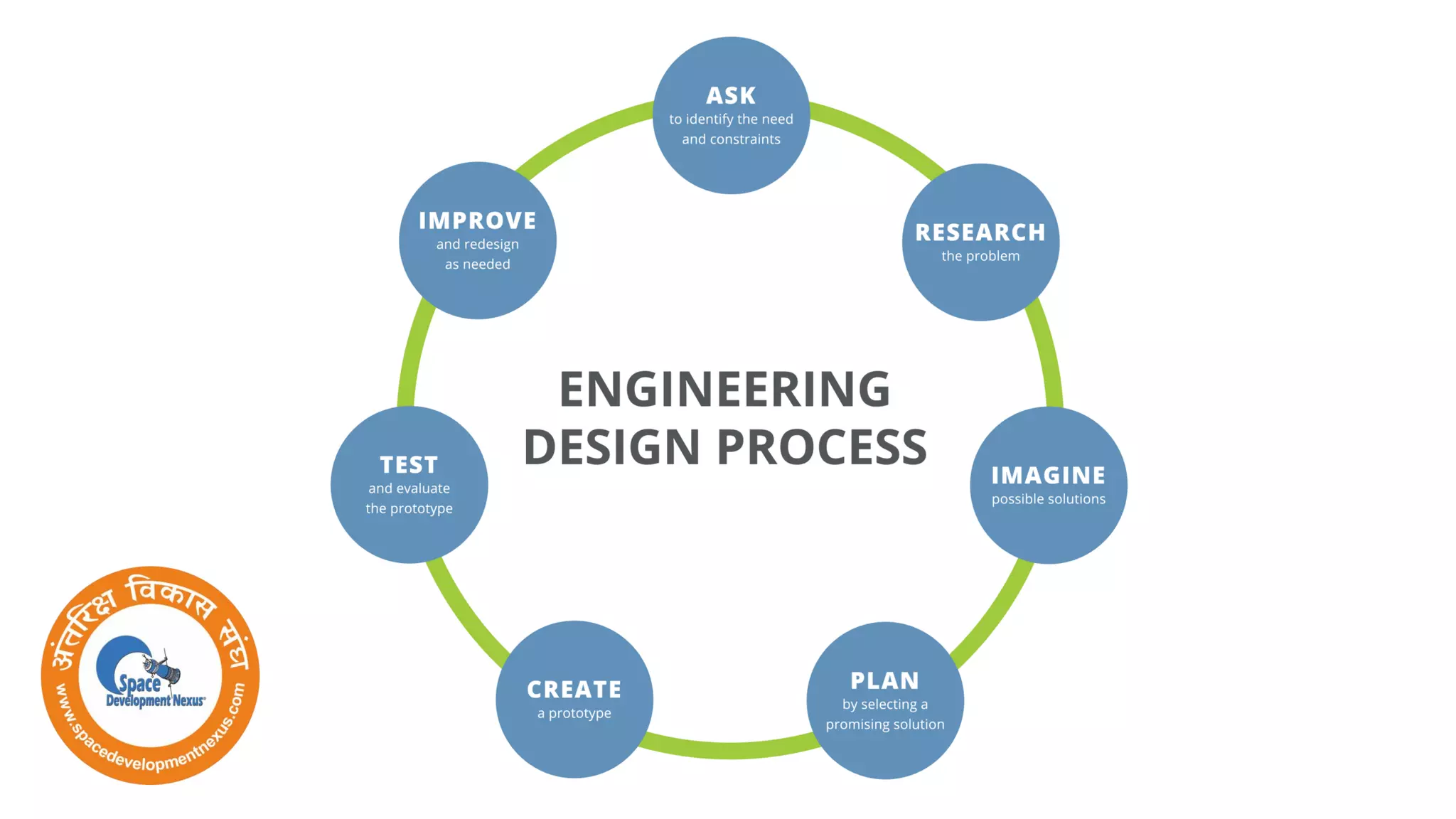
ENGINEERING DESIGN PROCESS
Ask: Identify the Need & Constraints
Engineers ask critical questions about what
they want to create, whether it be a skyscraper,
amusement park ride, bicycle or smartphone.
These questions include: What is the problem
to solve? What do we want to design? Who is it
for? What do we want to accomplish? What are
the project requirements? What are the
limitations? What is our goal?
#1
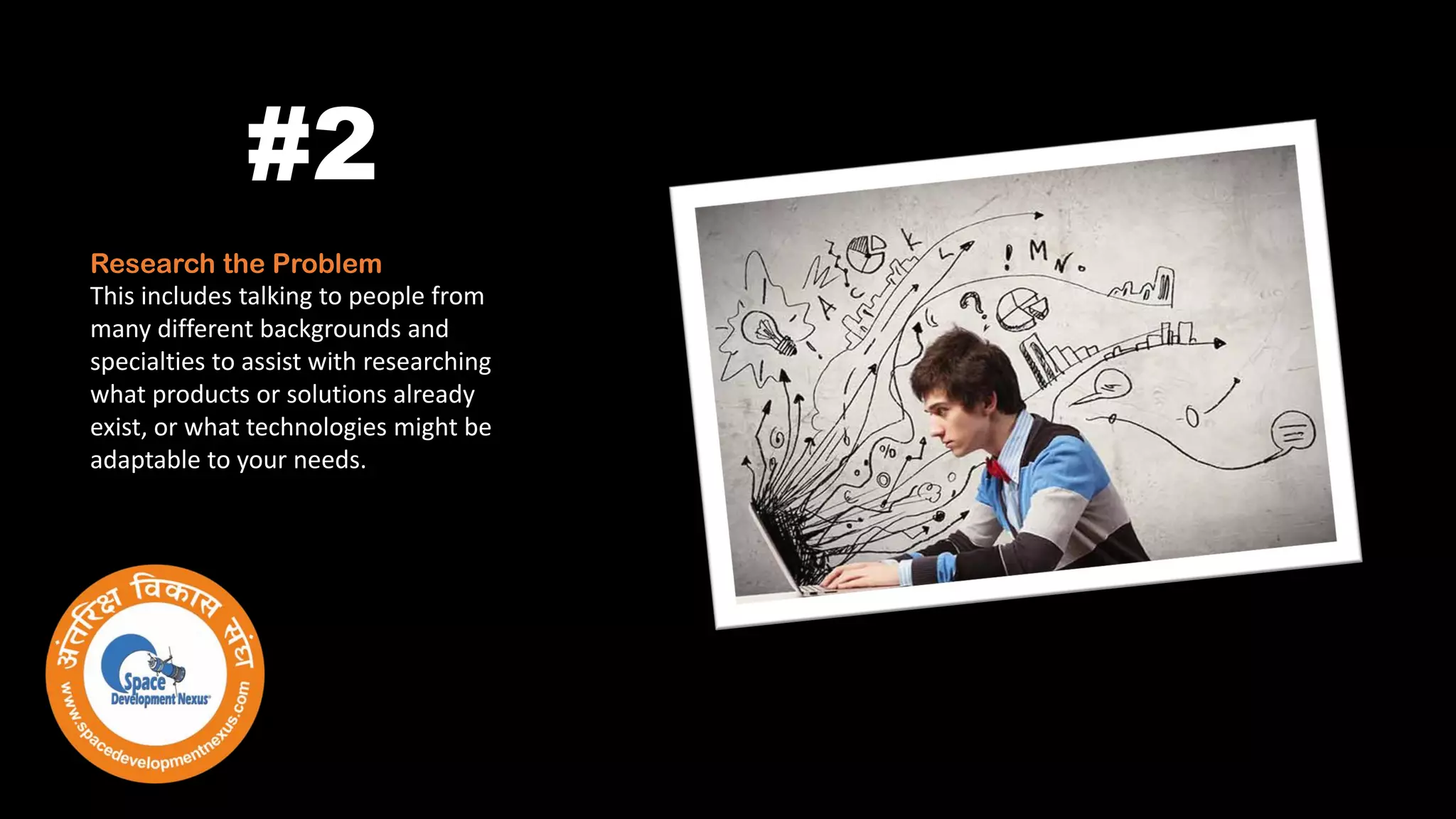
Research the Problem
This includes talking to people from
many different backgrounds and
specialties to assist with researching
what products or solutions already
exist, or what technologies might be
adaptable to your needs.
#2
Imagine: Develop Possible Solutions
You work with a team to brainstorm ideas
and develop as many solutions as possible.
This is the time to encourage wild ideas and
defer judgment! Build on the ideas of
others! Stay focused on topic, and have one
conversation at a time! Remember: good
design is all about teamwork!
#3
Plan: Select a Promising Solution
For many teams this is the hardest step!
Revisit the needs, constraints and
research from the earlier steps, compare
your best ideas, select one solution and
make a plan to move forward with it.
#4
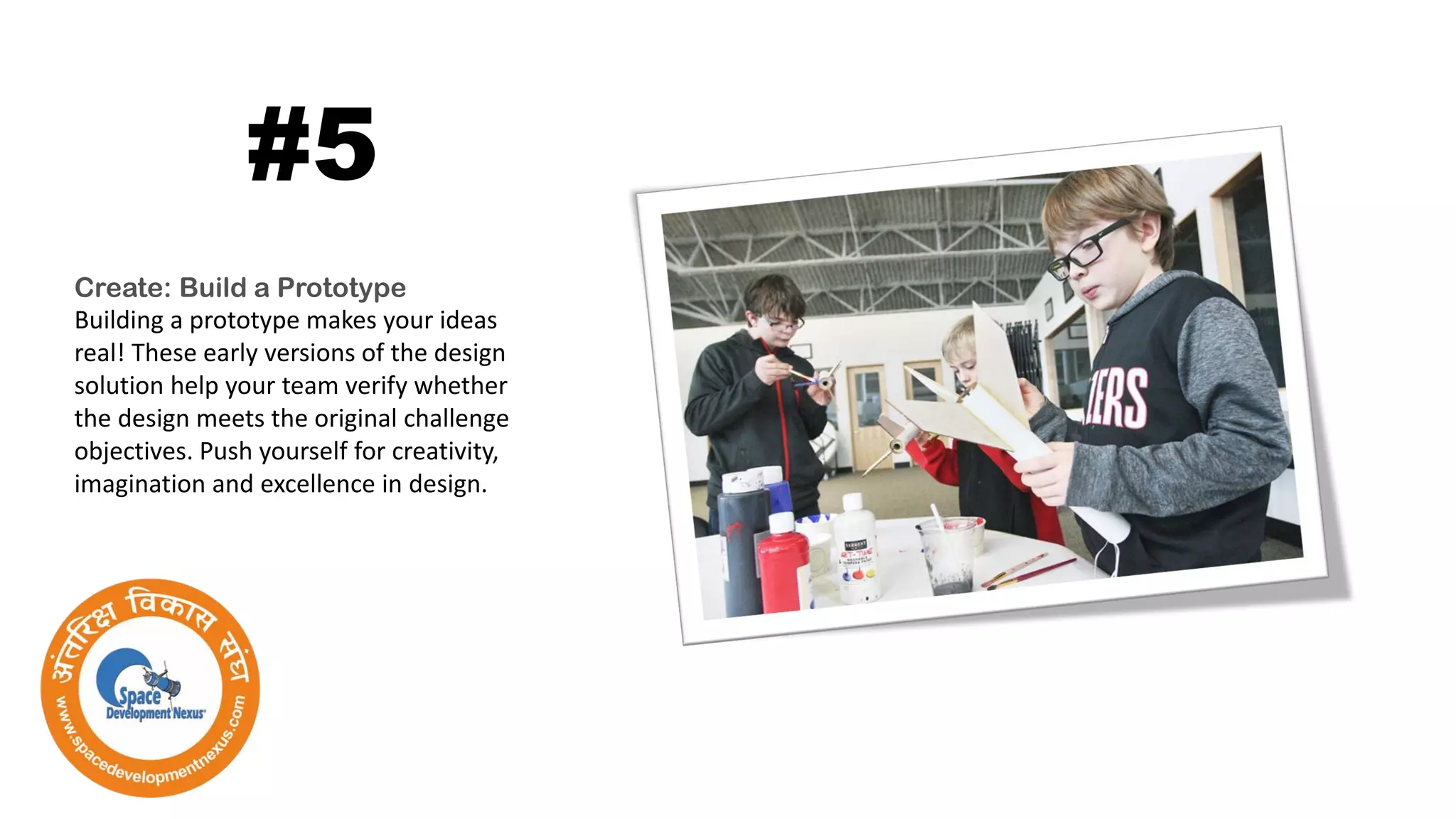
Create: Build a Prototype
Building a prototype makes your ideas
real! These early versions of the design
solution help your team verify whether
the design meets the original challenge
objectives. Push yourself for creativity,
imagination and excellence in design.
#5
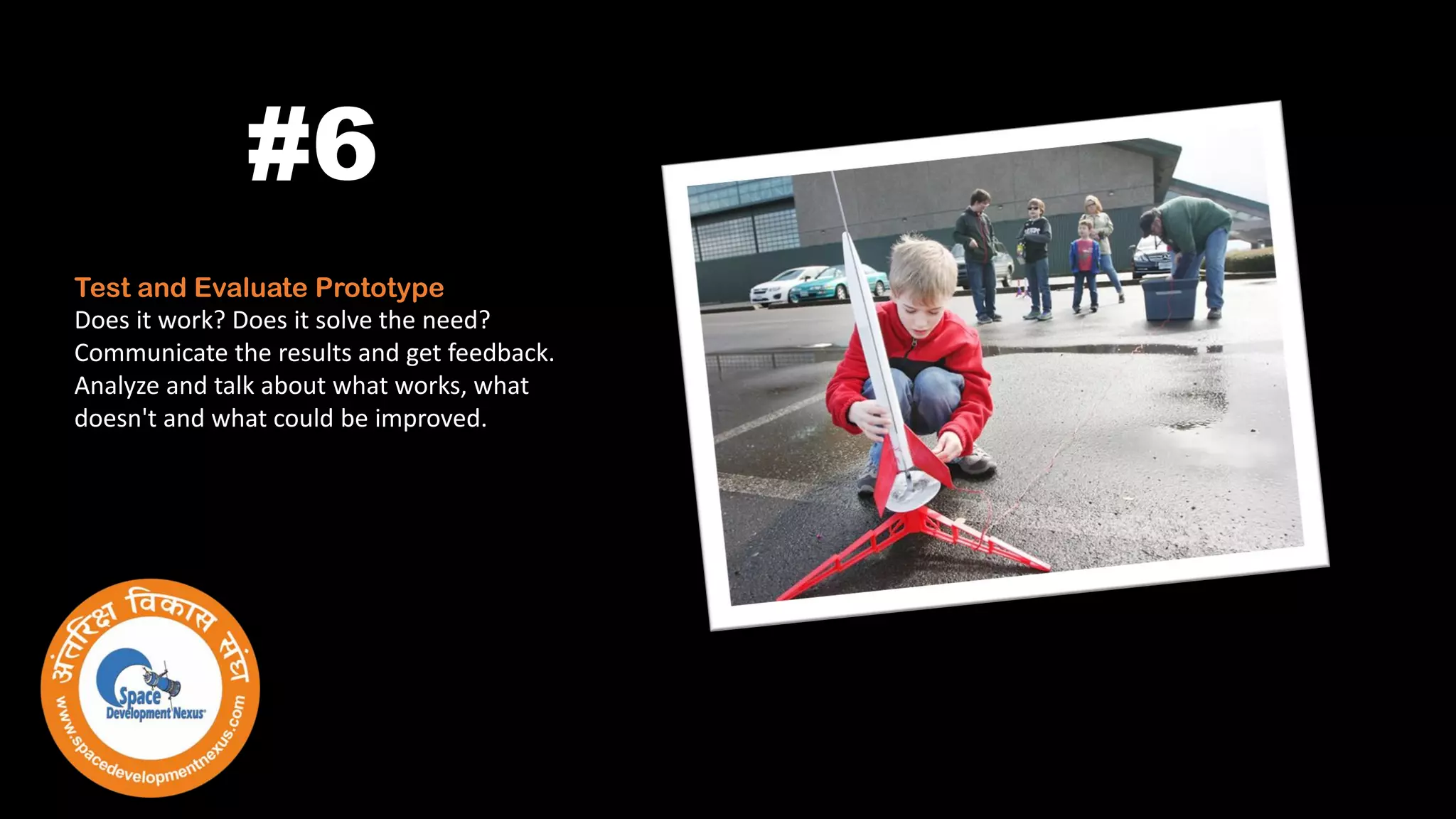
Test and Evaluate Prototype
Does it work? Does it solve the need?
Communicate the results and get feedback.
Analyze and talk about what works, what
doesn't and what could be improved.
#6
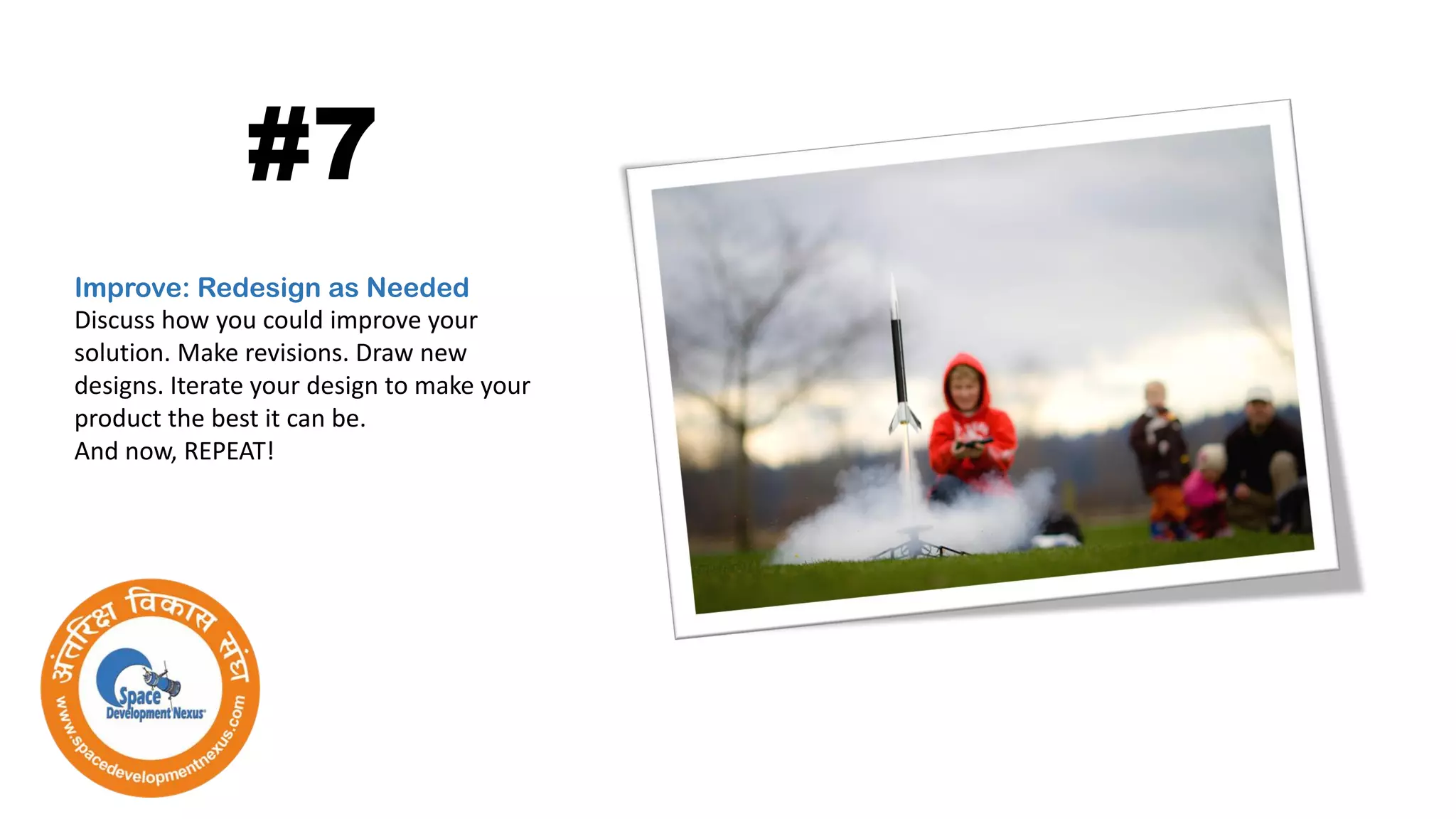
Improve: Redesign as Needed
Discuss how you could improve your
solution. Make revisions. Draw new
designs. Iterate your design to make your
product the best it can be.
And now, REPEAT!
#7
“Engineering is all around us, so it’s often taken for granted. Ask
yourself, what do I touch that is not engineered? Engineers
develop and deliver consumer goods; design the transportation
network of highways, air and rail travel; create and improve the
internet; mass produce antibiotics; create artificial heart valves
and other life saving medical devices; build lasers; and make
wonders such as imaging technology and conveniences like
microwave ovens and compact discs even possible. In short,
engineers make our quality of life possible.”
SDNx Astronaut’s Labs

7 Wonders of Engineering Design Process

  • 1.
    7 WONDERS OF ENGINEERINGDESIGN PROCESS Presentation By: Mr. Govind Yadav Contact: +91- 9354971230
  • 2.
    The engineering designprocess emphasizes open- ended problem solving and encourages students to learn from failure. This process nurtures students’ abilities to create innovative solutions to challenges in any subject! ENGINEERING DESIGN PROCESS
  • 4.
    Ask: Identify theNeed & Constraints Engineers ask critical questions about what they want to create, whether it be a skyscraper, amusement park ride, bicycle or smartphone. These questions include: What is the problem to solve? What do we want to design? Who is it for? What do we want to accomplish? What are the project requirements? What are the limitations? What is our goal? #1
  • 5.
    Research the Problem Thisincludes talking to people from many different backgrounds and specialties to assist with researching what products or solutions already exist, or what technologies might be adaptable to your needs. #2
  • 6.
    Imagine: Develop PossibleSolutions You work with a team to brainstorm ideas and develop as many solutions as possible. This is the time to encourage wild ideas and defer judgment! Build on the ideas of others! Stay focused on topic, and have one conversation at a time! Remember: good design is all about teamwork! #3
  • 7.
    Plan: Select aPromising Solution For many teams this is the hardest step! Revisit the needs, constraints and research from the earlier steps, compare your best ideas, select one solution and make a plan to move forward with it. #4
  • 8.
    Create: Build aPrototype Building a prototype makes your ideas real! These early versions of the design solution help your team verify whether the design meets the original challenge objectives. Push yourself for creativity, imagination and excellence in design. #5
  • 9.
    Test and EvaluatePrototype Does it work? Does it solve the need? Communicate the results and get feedback. Analyze and talk about what works, what doesn't and what could be improved. #6
  • 10.
    Improve: Redesign asNeeded Discuss how you could improve your solution. Make revisions. Draw new designs. Iterate your design to make your product the best it can be. And now, REPEAT! #7
  • 11.
    “Engineering is allaround us, so it’s often taken for granted. Ask yourself, what do I touch that is not engineered? Engineers develop and deliver consumer goods; design the transportation network of highways, air and rail travel; create and improve the internet; mass produce antibiotics; create artificial heart valves and other life saving medical devices; build lasers; and make wonders such as imaging technology and conveniences like microwave ovens and compact discs even possible. In short, engineers make our quality of life possible.” SDNx Astronaut’s Labs