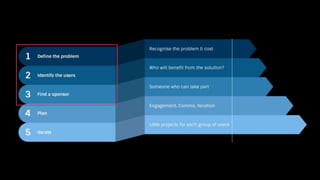
Your Priorities
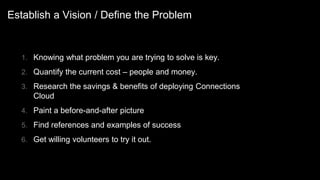
Establish a Vision / Define the Problem
1. Knowing what problem you are trying to solve is key.
2. Quantify the current cost – people and money.
3. Research the savings & benefits of deploying Connections
Cloud
4. Paint a before-and-after picture
5. Find references and examples of success
6. Get willing volunteers to try it out.
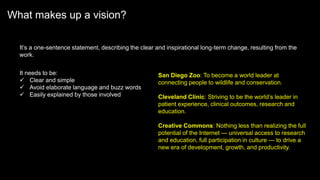
What makes up a vision?
It’s a one-sentence statement, describing the clear and inspirational long-term change, resulting from the
work.
It needs to be:
 Clear and simple
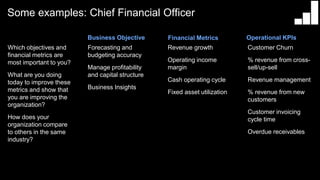
 Avoid elaborate language and buzz words
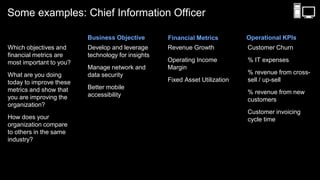
 Easily explained by those involved
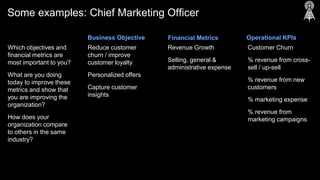
San Diego Zoo: To become a world leader at
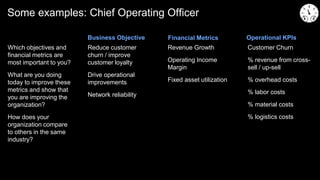
connecting people to wildlife and conservation.
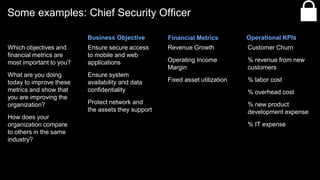
Cleveland Clinic: Striving to be the world’s leader in
patient experience, clinical outcomes, research and
education.
Creative Commons: Nothing less than realizing the full
potential of the Internet — universal access to research
and education, full participation in culture — to drive a
new era of development, growth, and productivity.
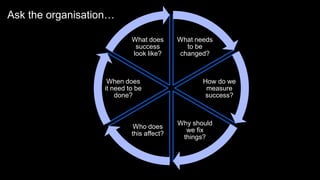
Ask the organisation…
What needs
to be
changed?
How do we
measure
success?
Why should
we fix
things?
Who does
this affect?
When does
it need to be
done?
What does
success
look like?
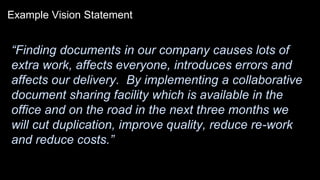
Example Vision Statement
“Finding documents in our company causes lots of
extra work, affects everyone, introduces errors and
affects our delivery. By implementing a collaborative
document sharing facility which is available in the
office and on the road in the next three months we
will cut duplication, improve quality, reduce re-work
and reduce costs.”
Vision Exercise Instructions
Keep the exercise slide up and ask the participants to form into
groups. Ask them to pick one area of collaboration they would
like to fix and to then create definitions for each of these
areas.
Once they have done this, go back to the example vision statement
and ask the teams to create their vision statement.
Write the vision statements on a wallchart or flipchart for later
referral.
Allow 30 minutes for this exercise.
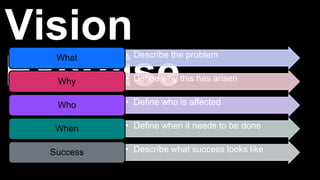
Vision
Exercise
• Describe the problemWhat
• Define why this has arisenWhy
• Define who is affectedWho
• Define when it needs to be doneWhen
• Describe what success looks likeSuccess
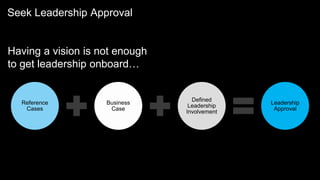
Seek Leadership Approval
Having a vision is not enough
to get leadership onboard…
Reference
Cases
Business
Case
Defined
Leadership
Involvement
Leadership
Approval
Reference Cases
Let us help you
find relevant
examples of other
customers doing
what you want to
do, and with the
results to prove it.
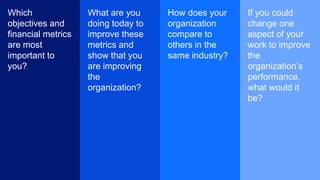
Which
objectives and
financial metrics
are most
important to
you?
What are you
doing today to
improve these
metrics and
show that you
are improving
the
organization?
How does your
organization
compare to
others in the
same industry?
If you could
change one
aspect of your
work to improve
the
organization’s
performance,
what would it
be?
Some Example Metrics, by Line of Business
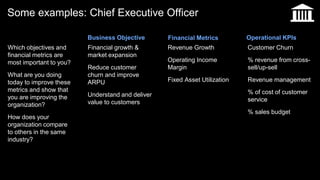
Some examples: Chief Executive Officer
Which objectives and
financial metrics are
most important to you?
What are you doing
today to improve these
metrics and show that
you are improving the
organization?
How does your
organization compare
to others in the same
industry?
Financial growth &
market expansion
Reduce customer
churn and improve
ARPU
Understand and deliver
value to customers
Revenue Growth
Operating Income
Margin
Fixed Asset Utilization
Customer Churn
% revenue from cross-
sell/up-sell
Revenue management
% of cost of customer
service
% sales budget
Business Objective Financial Metrics Operational KPIs
Which objectives and
financial metrics are
most important to you?
What are you doing
today to improve these
metrics and show that
you are improving the
organization?
How does your
organization compare
to others in the same
industry?
Forecasting and
budgeting accuracy
Manage profitability
and capital structure
Business Insights
Revenue growth
Operating income
margin
Cash operating cycle
Fixed asset utilization
Customer Churn
% revenue from cross-
sell/up-sell
Revenue management
% revenue from new
customers
Customer invoicing
cycle time
Overdue receivables
Business Objective Financial Metrics Operational KPIs
Some examples: Chief Financial Officer
Which objectives and
financial metrics are
most important to you?
What are you doing
today to improve these
metrics and show that
you are improving the
organization?
How does your
organization compare
to others in the same
industry?
Develop and leverage
technology for insights
Manage network and
data security
Better mobile
accessibility
Revenue Growth
Operating Income
Margin
Fixed Asset Utilization
Customer Churn
% IT expenses
% revenue from cross-
sell / up-sell
% revenue from new
customers
Customer invoicing
cycle time
Business Objective Financial Metrics Operational KPIs
Some examples: Chief Information Officer
Which objectives and
financial metrics are
most important to you?
What are you doing
today to improve these
metrics and show that
you are improving the
organization?
How does your
organization compare
to others in the same
industry?
Reduce customer
churn / improve
customer loyalty
Personalized offers
Capture customer
insights
Revenue Growth
Selling, general &
administrative expense
Customer Churn
% revenue from cross-
sell / up-sell
% revenue from new
customers
% marketing expense
% revenue from
marketing campaigns
Business Objective Financial Metrics Operational KPIs
Some examples: Chief Marketing Officer
Which objectives and
financial metrics are
most important to you?
What are you doing
today to improve these
metrics and show that
you are improving the
organization?
How does your
organization compare
to others in the same
industry?
Reduce customer
churn / improve
customer loyalty
Drive operational
improvements
Network reliability
Revenue Growth
Operating Income
Margin
Fixed asset utilization
Customer Churn
% revenue from cross-
sell / up-sell
% overhead costs
% labor costs
% material costs
% logistics costs
Business Objective Financial Metrics Operational KPIs
Some examples: Chief Operating Officer
Which objectives and
financial metrics are
most important to you?
What are you doing
today to improve these
metrics and show that
you are improving the
organization?
How does your
organization compare
to others in the same
industry?
Ensure secure access
to mobile and web
applications
Ensure system
availability and data
confidentiality
Protect network and
the assets they support
Revenue Growth
Operating Income
Margin
Fixed asset utilization
Customer Churn
% revenue from new
customers
% labor cost
% overhead cost
% new product
development expense
% IT expense
Business Objective Financial Metrics Operational KPIs
Some examples: Chief Security Officer
Which objectives and
financial metrics are
most important to you?
What are you doing
today to improve these
metrics and show that
you are improving the
organization?
How does your
organization compare
to others in the same
industry?
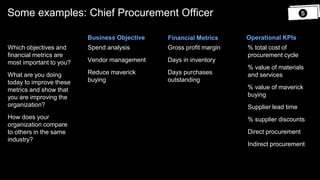
Spend analysis
Vendor management
Reduce maverick
buying
Gross profit margin
Days in inventory
Days purchases
outstanding
% total cost of
procurement cycle
% value of materials
and services
% value of maverick
buying
Supplier lead time
% supplier discounts
Direct procurement
Indirect procurement
Business Objective Financial Metrics Operational KPIs
Some examples: Chief Procurement Officer
Which objectives and
financial metrics are
most important to you?
What are you doing
today to improve these
metrics and show that
you are improving the
organization?
How does your
organization compare
to others in the same
industry?
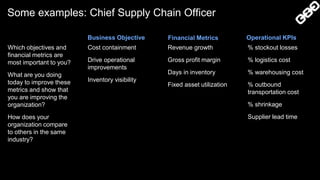
Cost containment
Drive operational
improvements
Inventory visibility
Revenue growth
Gross profit margin
Days in inventory
Fixed asset utilization
% stockout losses
% logistics cost
% warehousing cost
% outbound
transportation cost
% shrinkage
Supplier lead time
Business Objective Financial Metrics Operational KPIs
Some examples: Chief Supply Chain Officer
Which objectives and
financial metrics are
most important to you?
What are you doing
today to improve these
metrics and show that
you are improving the
organization?
How does your
organization compare
to others in the same
industry?
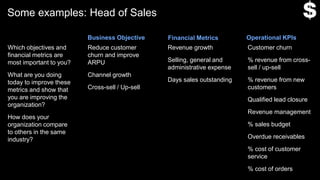
Reduce customer
churn and improve
ARPU
Channel growth
Cross-sell / Up-sell
Revenue growth
Selling, general and
administrative expense
Days sales outstanding
Customer churn
% revenue from cross-
sell / up-sell
% revenue from new
customers
Qualified lead closure
Revenue management
% sales budget
Overdue receivables
% cost of customer
service
% cost of orders
Business Objective Financial Metrics Operational KPIs
Some examples: Head of Sales
Which objectives and
financial metrics are
most important to you?
What are you doing
today to improve these
metrics and show that
you are improving the
organization?
How does your
organization compare
to others in the same
industry?
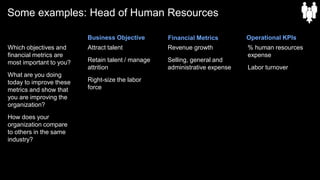
Attract talent
Retain talent / manage
attrition
Right-size the labor
force
Revenue growth
Selling, general and
administrative expense
% human resources
expense
Labor turnover
Business Objective Financial Metrics Operational KPIs
Some examples: Head of Human Resources
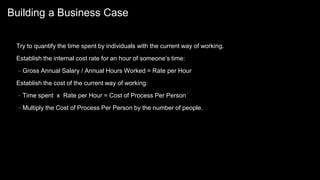
Building a Business Case
Try to quantify the time spent by individuals with the current way of working.
Establish the internal cost rate for an hour of someone’s time:
–Gross Annual Salary / Annual Hours Worked = Rate per Hour
Establish the cost of the current way of working:
–Time spent x Rate per Hour = Cost of Process Per Person
–Multiply the Cost of Process Per Person by the number of people.
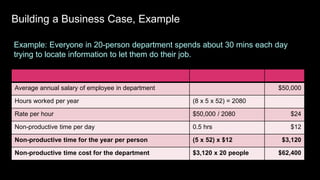
Building a Business Case, Example
Average annual salary of employee in department $50,000
Hours worked per year (8 x 5 x 52) = 2080
Rate per hour $50,000 / 2080 $24
Non-productive time per day 0.5 hrs $12
Non-productive time for the year per person (5 x 52) x $12 $3,120
Non-productive time cost for the department $3,120 x 20 people $62,400
Example: Everyone in 20-person department spends about 30 mins each day
trying to locate information to let them do their job.
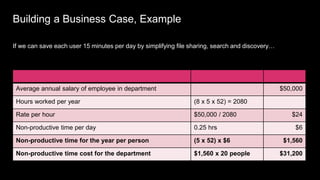
Building a Business Case, Example
If we can save each user 15 minutes per day by simplifying file sharing, search and discovery…
Average annual salary of employee in department $50,000
Hours worked per year (8 x 5 x 52) = 2080
Rate per hour $50,000 / 2080 $24
Non-productive time per day 0.25 hrs $6
Non-productive time for the year per person (5 x 52) x $6 $1,560
Non-productive time cost for the department $1,560 x 20 people $31,200
Building a Business Case
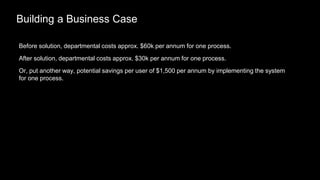
Before solution, departmental costs approx. $60k per annum for one process.
After solution, departmental costs approx. $30k per annum for one process.
Or, put another way, potential savings per user of $1,500 per annum by implementing the system
for one process.
Building a Business Case
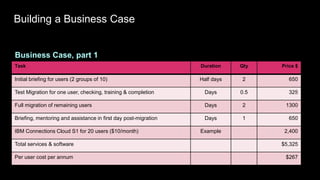
Task Duration Qty Price $
Initial briefing for users (2 groups of 10) Half days 2 650
Test Migration for one user, checking, training & completion Days 0.5 325
Full migration of remaining users Days 2 1300
Briefing, mentoring and assistance in first day post-migration Days 1 650
IBM Connections Cloud S1 for 20 users ($10/month) Example 2,400
Total services & software $5,325
Per user cost per annum $267
Business Case, part 1
Building a Business Case, Summary
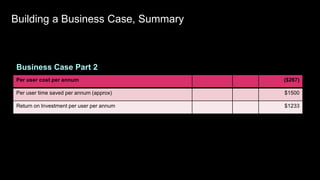
Per user cost per annum ($267)
Per user time saved per annum (approx) $1500
Return on Investment per user per annum $1233
Business Case Part 2
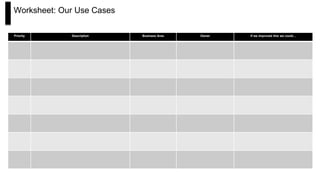
Worksheet: Our Use Cases
Priority Description Business Area Owner If we improved this we could…
Which Use Cases Can you work on today?
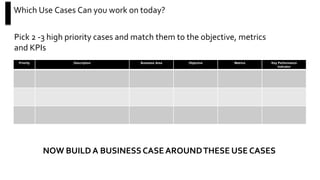
Pick 2 -3 high priority cases and match them to the objective, metrics
and KPIs
Priority Description Business Area Objective Metrics Key Performance
Indicator
NOW BUILD A BUSINESS CASEAROUNDTHESE USE CASES
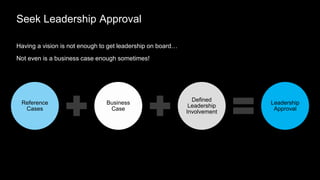
Reference
Cases
Business
Case
Defined
Leadership
Involvement
Leadership
Approval
Seek Leadership Approval
Having a vision is not enough to get leadership on board…
Not even is a business case enough sometimes!
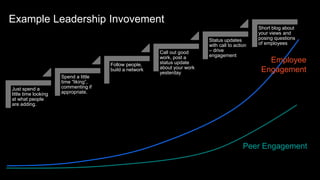
Just spend a
little time looking
at what people
are adding.
Spend a little
time “liking”,
commenting if
appropriate.
Follow people,
build a network
Call out good
work, post a
status update
about your work
yesterday
Status updates
with call to action
– drive
engagement
Short blog about
your views and
posing questions
of employees
Example Leadership Invovement
Employee
Engagement
Peer Engagement
Defined Leadership Involvement
• Remember in most organisations, everyone is interested in what the
leadership says. It might affect their job.
• If one leader is being successful with something, their peers will want to
be seen as being successful too.
• Employee engagement rises when they see their leaders using the
system.
• Employee engagement rises when they are given a call to action –
question to answer, opinion etc.
• Advocate 10 – 15 mins per day / every other day.
• Don’t encourage secretary to post on their behalf – authenticity very
important!
Summary
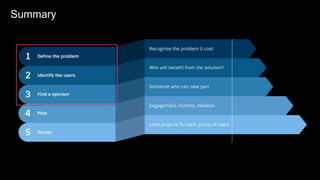
7. Planning your Priorities

7. Planning your Priorities

  • 1.
  • 3.
    Establish a Vision/ Define the Problem 1. Knowing what problem you are trying to solve is key. 2. Quantify the current cost – people and money. 3. Research the savings & benefits of deploying Connections Cloud 4. Paint a before-and-after picture 5. Find references and examples of success 6. Get willing volunteers to try it out.
  • 4.
    What makes upa vision? It’s a one-sentence statement, describing the clear and inspirational long-term change, resulting from the work. It needs to be:  Clear and simple  Avoid elaborate language and buzz words  Easily explained by those involved San Diego Zoo: To become a world leader at connecting people to wildlife and conservation. Cleveland Clinic: Striving to be the world’s leader in patient experience, clinical outcomes, research and education. Creative Commons: Nothing less than realizing the full potential of the Internet — universal access to research and education, full participation in culture — to drive a new era of development, growth, and productivity.
  • 5.
    Ask the organisation… Whatneeds to be changed? How do we measure success? Why should we fix things? Who does this affect? When does it need to be done? What does success look like?
  • 6.
    Example Vision Statement “Findingdocuments in our company causes lots of extra work, affects everyone, introduces errors and affects our delivery. By implementing a collaborative document sharing facility which is available in the office and on the road in the next three months we will cut duplication, improve quality, reduce re-work and reduce costs.”
  • 7.
    Vision Exercise Instructions Keepthe exercise slide up and ask the participants to form into groups. Ask them to pick one area of collaboration they would like to fix and to then create definitions for each of these areas. Once they have done this, go back to the example vision statement and ask the teams to create their vision statement. Write the vision statements on a wallchart or flipchart for later referral. Allow 30 minutes for this exercise.
  • 8.
    Vision Exercise • Describe theproblemWhat • Define why this has arisenWhy • Define who is affectedWho • Define when it needs to be doneWhen • Describe what success looks likeSuccess
  • 9.
    Seek Leadership Approval Havinga vision is not enough to get leadership onboard… Reference Cases Business Case Defined Leadership Involvement Leadership Approval
  • 10.
    Reference Cases Let ushelp you find relevant examples of other customers doing what you want to do, and with the results to prove it.
  • 11.
    Which objectives and financial metrics aremost important to you? What are you doing today to improve these metrics and show that you are improving the organization? How does your organization compare to others in the same industry? If you could change one aspect of your work to improve the organization’s performance, what would it be?
  • 12.
    Some Example Metrics,by Line of Business
  • 13.
    Some examples: ChiefExecutive Officer Which objectives and financial metrics are most important to you? What are you doing today to improve these metrics and show that you are improving the organization? How does your organization compare to others in the same industry? Financial growth & market expansion Reduce customer churn and improve ARPU Understand and deliver value to customers Revenue Growth Operating Income Margin Fixed Asset Utilization Customer Churn % revenue from cross- sell/up-sell Revenue management % of cost of customer service % sales budget Business Objective Financial Metrics Operational KPIs
  • 14.
    Which objectives and financialmetrics are most important to you? What are you doing today to improve these metrics and show that you are improving the organization? How does your organization compare to others in the same industry? Forecasting and budgeting accuracy Manage profitability and capital structure Business Insights Revenue growth Operating income margin Cash operating cycle Fixed asset utilization Customer Churn % revenue from cross- sell/up-sell Revenue management % revenue from new customers Customer invoicing cycle time Overdue receivables Business Objective Financial Metrics Operational KPIs Some examples: Chief Financial Officer
  • 15.
    Which objectives and financialmetrics are most important to you? What are you doing today to improve these metrics and show that you are improving the organization? How does your organization compare to others in the same industry? Develop and leverage technology for insights Manage network and data security Better mobile accessibility Revenue Growth Operating Income Margin Fixed Asset Utilization Customer Churn % IT expenses % revenue from cross- sell / up-sell % revenue from new customers Customer invoicing cycle time Business Objective Financial Metrics Operational KPIs Some examples: Chief Information Officer
  • 16.
    Which objectives and financialmetrics are most important to you? What are you doing today to improve these metrics and show that you are improving the organization? How does your organization compare to others in the same industry? Reduce customer churn / improve customer loyalty Personalized offers Capture customer insights Revenue Growth Selling, general & administrative expense Customer Churn % revenue from cross- sell / up-sell % revenue from new customers % marketing expense % revenue from marketing campaigns Business Objective Financial Metrics Operational KPIs Some examples: Chief Marketing Officer
  • 17.
    Which objectives and financialmetrics are most important to you? What are you doing today to improve these metrics and show that you are improving the organization? How does your organization compare to others in the same industry? Reduce customer churn / improve customer loyalty Drive operational improvements Network reliability Revenue Growth Operating Income Margin Fixed asset utilization Customer Churn % revenue from cross- sell / up-sell % overhead costs % labor costs % material costs % logistics costs Business Objective Financial Metrics Operational KPIs Some examples: Chief Operating Officer
  • 18.
    Which objectives and financialmetrics are most important to you? What are you doing today to improve these metrics and show that you are improving the organization? How does your organization compare to others in the same industry? Ensure secure access to mobile and web applications Ensure system availability and data confidentiality Protect network and the assets they support Revenue Growth Operating Income Margin Fixed asset utilization Customer Churn % revenue from new customers % labor cost % overhead cost % new product development expense % IT expense Business Objective Financial Metrics Operational KPIs Some examples: Chief Security Officer
  • 19.
    Which objectives and financialmetrics are most important to you? What are you doing today to improve these metrics and show that you are improving the organization? How does your organization compare to others in the same industry? Spend analysis Vendor management Reduce maverick buying Gross profit margin Days in inventory Days purchases outstanding % total cost of procurement cycle % value of materials and services % value of maverick buying Supplier lead time % supplier discounts Direct procurement Indirect procurement Business Objective Financial Metrics Operational KPIs Some examples: Chief Procurement Officer
  • 20.
    Which objectives and financialmetrics are most important to you? What are you doing today to improve these metrics and show that you are improving the organization? How does your organization compare to others in the same industry? Cost containment Drive operational improvements Inventory visibility Revenue growth Gross profit margin Days in inventory Fixed asset utilization % stockout losses % logistics cost % warehousing cost % outbound transportation cost % shrinkage Supplier lead time Business Objective Financial Metrics Operational KPIs Some examples: Chief Supply Chain Officer
  • 21.
    Which objectives and financialmetrics are most important to you? What are you doing today to improve these metrics and show that you are improving the organization? How does your organization compare to others in the same industry? Reduce customer churn and improve ARPU Channel growth Cross-sell / Up-sell Revenue growth Selling, general and administrative expense Days sales outstanding Customer churn % revenue from cross- sell / up-sell % revenue from new customers Qualified lead closure Revenue management % sales budget Overdue receivables % cost of customer service % cost of orders Business Objective Financial Metrics Operational KPIs Some examples: Head of Sales
  • 22.
    Which objectives and financialmetrics are most important to you? What are you doing today to improve these metrics and show that you are improving the organization? How does your organization compare to others in the same industry? Attract talent Retain talent / manage attrition Right-size the labor force Revenue growth Selling, general and administrative expense % human resources expense Labor turnover Business Objective Financial Metrics Operational KPIs Some examples: Head of Human Resources
  • 23.
    Building a BusinessCase Try to quantify the time spent by individuals with the current way of working. Establish the internal cost rate for an hour of someone’s time: –Gross Annual Salary / Annual Hours Worked = Rate per Hour Establish the cost of the current way of working: –Time spent x Rate per Hour = Cost of Process Per Person –Multiply the Cost of Process Per Person by the number of people.
  • 24.
    Building a BusinessCase, Example Average annual salary of employee in department $50,000 Hours worked per year (8 x 5 x 52) = 2080 Rate per hour $50,000 / 2080 $24 Non-productive time per day 0.5 hrs $12 Non-productive time for the year per person (5 x 52) x $12 $3,120 Non-productive time cost for the department $3,120 x 20 people $62,400 Example: Everyone in 20-person department spends about 30 mins each day trying to locate information to let them do their job.
  • 25.
    Building a BusinessCase, Example If we can save each user 15 minutes per day by simplifying file sharing, search and discovery… Average annual salary of employee in department $50,000 Hours worked per year (8 x 5 x 52) = 2080 Rate per hour $50,000 / 2080 $24 Non-productive time per day 0.25 hrs $6 Non-productive time for the year per person (5 x 52) x $6 $1,560 Non-productive time cost for the department $1,560 x 20 people $31,200
  • 26.
    Building a BusinessCase Before solution, departmental costs approx. $60k per annum for one process. After solution, departmental costs approx. $30k per annum for one process. Or, put another way, potential savings per user of $1,500 per annum by implementing the system for one process.
  • 27.
    Building a BusinessCase Task Duration Qty Price $ Initial briefing for users (2 groups of 10) Half days 2 650 Test Migration for one user, checking, training & completion Days 0.5 325 Full migration of remaining users Days 2 1300 Briefing, mentoring and assistance in first day post-migration Days 1 650 IBM Connections Cloud S1 for 20 users ($10/month) Example 2,400 Total services & software $5,325 Per user cost per annum $267 Business Case, part 1
  • 28.
    Building a BusinessCase, Summary Per user cost per annum ($267) Per user time saved per annum (approx) $1500 Return on Investment per user per annum $1233 Business Case Part 2
  • 29.
    Worksheet: Our UseCases Priority Description Business Area Owner If we improved this we could…
  • 30.
    Which Use CasesCan you work on today? Pick 2 -3 high priority cases and match them to the objective, metrics and KPIs Priority Description Business Area Objective Metrics Key Performance Indicator NOW BUILD A BUSINESS CASEAROUNDTHESE USE CASES
  • 31.
    Reference Cases Business Case Defined Leadership Involvement Leadership Approval Seek Leadership Approval Havinga vision is not enough to get leadership on board… Not even is a business case enough sometimes!
  • 32.
    Just spend a littletime looking at what people are adding. Spend a little time “liking”, commenting if appropriate. Follow people, build a network Call out good work, post a status update about your work yesterday Status updates with call to action – drive engagement Short blog about your views and posing questions of employees Example Leadership Invovement Employee Engagement Peer Engagement
  • 33.
    Defined Leadership Involvement •Remember in most organisations, everyone is interested in what the leadership says. It might affect their job. • If one leader is being successful with something, their peers will want to be seen as being successful too. • Employee engagement rises when they see their leaders using the system. • Employee engagement rises when they are given a call to action – question to answer, opinion etc. • Advocate 10 – 15 mins per day / every other day. • Don’t encourage secretary to post on their behalf – authenticity very important!
  • 34.

Editor's Notes

  • #7 Highlight the bold terms as being the key components of the Vision Statement.
  • #9 Keep this slide up and ask the participants to form into groups. Ask them to pick one area of collaboration they would like to fix and to then create definitions for each of these areas. Once they have done this, go back to the example vision statement and ask the teams to create their vision statement. Write the vision statements on a wallchart or flipchart for later referral. Allow 30 minutes for this exercise.