Mobilizing the Faith Community to
 Address Family Homelessness


               Claas Ehlers
        Director of Affiliate Services
        cehlers@familypromise.org
Definitions

Faith-Based Providers:
 Salvation Army, Rescue Missions, Church-run shelters and
 service programs, Denominational CDCs, YMCA/YWCA/etc.,
 Habitat for Humanity
Faith Community:
 Congregations, judicatorial bodies, interfaith alliances,
 ministeria, religious schools
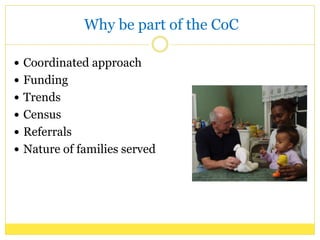
Why be part of the CoC

 Coordinated approach
 Funding
 Trends
 Census
 Referrals
 Nature of families served
Re-Aligning Who You Are and What You Do

 Housing First
    Interim Housing
        Solution-oriented
        Ending culture of
         shelter
        Reducing time in
         shelter
Opportunities

 Collaborations
 Additional Resources
   Funding

   Program expansion
Advocacy

Tapping into the faith community
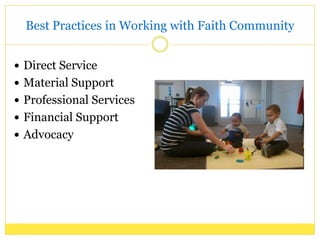
Best Practices in Working with Faith Community


 Direct Service
 Material Support
 Professional Services
 Financial Support
 Advocacy
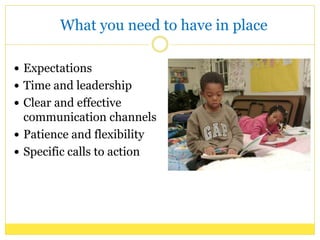
What you need to have in place

 Expectations
 Time and leadership
 Clear and effective
  communication channels
 Patience and flexibility
 Specific calls to action
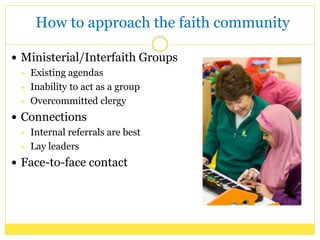
How to approach the faith community

 Ministerial/Interfaith Groups
   Existing agendas

   Inability to act as a group

   Overcommitted clergy

 Connections
   Internal referrals are best

   Lay leaders

 Face-to-face contact
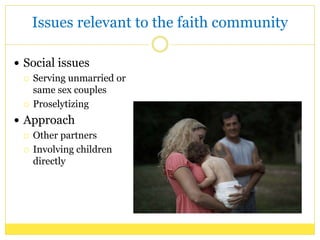
Issues relevant to the faith community

 Social issues
   Serving unmarried or
    same sex couples
   Proselytizing

 Approach
   Other partners

   Involving children
    directly
Tips

 Ignorance beats
  assumption
 The more specific the
  better
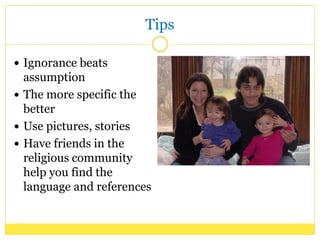
 Use pictures, stories
 Have friends in the
  religious community
  help you find the
  language and references
Tips

 Talk:
    Find out where people you know worship, how
     engaged they are in issues and who to approach
     at the congregation—and use your connectors
     names
 Thank:
    Acknowledge everything a congregation does
 Leaders:
    Find lay leadership for your efforts
 Connect:
    Person-to-person connection, letters, emails

6.5 The Role of Faith Based Providers

  • 1.
    Mobilizing the FaithCommunity to Address Family Homelessness Claas Ehlers Director of Affiliate Services cehlers@familypromise.org
  • 2.
    Definitions Faith-Based Providers: SalvationArmy, Rescue Missions, Church-run shelters and service programs, Denominational CDCs, YMCA/YWCA/etc., Habitat for Humanity Faith Community: Congregations, judicatorial bodies, interfaith alliances, ministeria, religious schools
  • 3.
    Why be partof the CoC  Coordinated approach  Funding  Trends  Census  Referrals  Nature of families served
  • 4.
    Re-Aligning Who YouAre and What You Do  Housing First  Interim Housing  Solution-oriented  Ending culture of shelter  Reducing time in shelter
  • 5.
    Opportunities  Collaborations  AdditionalResources  Funding  Program expansion
  • 6.
  • 7.
    Best Practices inWorking with Faith Community  Direct Service  Material Support  Professional Services  Financial Support  Advocacy
  • 8.
    What you needto have in place  Expectations  Time and leadership  Clear and effective communication channels  Patience and flexibility  Specific calls to action
  • 9.
    How to approachthe faith community  Ministerial/Interfaith Groups  Existing agendas  Inability to act as a group  Overcommitted clergy  Connections  Internal referrals are best  Lay leaders  Face-to-face contact
  • 10.
    Issues relevant tothe faith community  Social issues  Serving unmarried or same sex couples  Proselytizing  Approach  Other partners  Involving children directly
  • 11.
    Tips  Ignorance beats assumption  The more specific the better  Use pictures, stories  Have friends in the religious community help you find the language and references
  • 12.
    Tips  Talk:  Find out where people you know worship, how engaged they are in issues and who to approach at the congregation—and use your connectors names  Thank:  Acknowledge everything a congregation does  Leaders:  Find lay leadership for your efforts  Connect:  Person-to-person connection, letters, emails