6 TIPS FOR
BLOGGING SUCCESS
By Marsha Hudson
Social Media Coach
WHAT IS A BUSINESS BLOG?
A business blog is a marketing channel (just like
social media, direct mail, email marketing, etc.)
that helps support business growth. It does that
by driving traffic to your website and providing
opportunities for that traffic to convert in some
way.
Five Benefits of Blogging?
1. It helps to drive traffic to your website.
2. It helps convert that traffic into leads.
3. It helps establish authority.
4. It increases your SEO rankings.
5. It gives your company a voice.
Why should you blog?
Let’s look at Stats for 2015
• B2B marketers that use blogs receive 67% more leads
than those who do not.
• Marketers who have prioritized blogging are 13x more
likely to enjoy more positive ROI than those that do not.
• By 2020, customers will manage 85% of their
relationships without talking to a human.
• Companies who blog receive 97% more links to their
website
Blogging Terminology
• Blog - short for weblog. Collection of thoughts, media,
links, etc., shared with others online.
• Blogosphere - the entire network of blogs. It is like a
universe that is ongoing.
• Category - it is the list of topics you create on your
blog. It is like a table of contents for your blog.
• Hosting - refers to the place where your blog resides
(for example like Host Gator or Blue Host).
More Blogging Terminology
• Permalink - the specific link or URL for your blog. It
is the main page of your blog (for example:
http://marshahudsonwrites.com)
• Platform - refers to your blogging software like:
WordPress, or Blogger).
• SEO - stands for Search Engine Optimization.
It is how your blog ranks when someone searches
for it.
• Theme - the blogs layout, face or appearance.
Some themes are free and some are for purchase.
FOUR COMMON TYPES OF
BUSINESS BLOGS
If you are new to blogging, as a business or just
want to get the word out on a certain business,
you need to know the more common business
topics. This can provide you with a starting point.
There are five most common businesses that
use blogs to promote their business.
Specialty Blogs
This type of business blog is usually written by two
more contributors with a common interest. It is
a great way for you to build an online community
with people that share your interests and ideas.
This type of blog can include such things like
weight loss, how to stay healthy, or even golf
topics among others. The possibilities are endless.
Feature Blog
In this type of blog you will be advertising
creative types of businesses. These creative
topics can include topics on sewing, crafting,
computer programming and digital photography
as well as many others. The possibilities for this
type of business blog are endless. In this type of
business blog you have the opportunity to show
various pictures, video clips, and even sewing
projects that you have been working on among
others.
Industry Blogs
This blog focuses on a more narrow type of
industry and usually is made by industries that
sell their products to other businesses. It
usually consists of a variety of different topics
including trade shows, new lines of product, and
materials among others. It will take a lot of careful
research and you will need to know a lot of
information on the industry.
Consulting Blogs
Usually consulting blogs are run by one person
offering their opinion, and advice on a certain
topic. This is a great way to develop an online
community in a topic that interests you.
Easy Steps to Setting Up a Blog
Decide on a blogging platform.
• WordPress is the most widely used platform.
• It is simple, east, fast and free!
• Large and small companies alike prefer WordPress.
• Of course, there are others.
WordPress.com
opular among business bloggers
Determine Your Business Goals
• Build your customer list
• Create a content library that makes your company a
thought leader
• Engage customers in open dialogue
• Get better organic rankings from the fresh content
WRITE YOUR FIRST POST
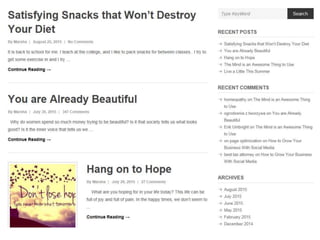
The Face of a Simple Blog
A Photography Blog - Sample
A Writer’s Sample Blog
Business Blog - Sample
How to Write and Find Good Content
Check out online news headlines for the scoop on industry
trends, stats, studies, new products, technologies or other
newsworthy topics related to your business. Simply set up
Google Alerts and RSS Feeds of your favorite industry and
other news sources.
Content is King
Content marketing demands attention. You need to pay
attention to the latest popular trends, analyze your
competitors’ strategies, and come up with new, original
ideas on a constant basis so you can post regularly and
build an audience that expects—and desires—your
consistent material.
Content for Blogs
• Check out blogs in other industries and put your own
spin on a topic.
• Your own email inbox and comments on blog posts can
spark great ideas for blog posts.
o What questions are your customers, clients and audience
asking the most?
o What topics have you recently discussed with colleagues?
Newsjacking for Content
Newsjacking has become a bit of a buzzword, but it’s a
viable and easy strategy that anyone can use. Essentially,
newsjacking involves finding a relevant trending topic
and repurposing it for your own blog.
It will take a bit of effort to find the right news story that fits
your niche or industry, and some more effort to brainstorm
and write a good spin on it.
Sharing-Curated Content
Speaking of sharing content, don’t be afraid to do it. The
best content strategies are the ones with mostly original
content, true, but the key word there is “mostly.”
If you see a cool infographic or an exciting video relevant to
your industry, feel free to post it on your site (along with
proper credit, of course).
For example: “Taken from Woman Today.”
Be creative!
You can get many ideas for blog posts from everywhere.
o Magazines
o Conversations with Others
o Social Media Sites
o Conferences, lectures and presentations
At your leisure time!
How to Drive Traffic to your Blog
• Website - put a link there.
• Email - let people know about your blog.
• Newsletter - announce it on your monthly newsletter. I
use Constant Contact.
• Social Media Platforms
• Speak and mention your blog
• Put the URL on your business cards
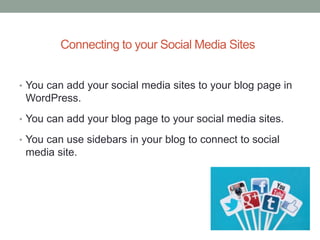
Connecting to your Social Media Sites
• You can add your social media sites to your blog page in
WordPress.
• You can add your blog page to your social media sites.
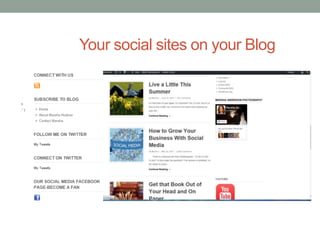
• You can use sidebars in your blog to connect to social
media site.
Your social sites on your Blog
Managing and Scheduling
How can you manage your blog with your busy life? How
can you schedule blog posts and still have a life?
1. Pick a day for blogging
2. Develop a content calendar
3. Use an auto-scheduler like Buffer
4. Blog 1-2 times a week. Once is good.
Making Money with your Blog
• Write an E-book
• Use affiliate marketing
• Become a guest blogger on other sites
• Sell your own products
Be a Successful Blogger
• Be creative with posts– put a twist on subjects.
• Add content on a regular basis
• Make your blog an interactive online community by
encouraging comments, feedback and shares.
• Promote your blog in a multi-faceted way.
• Keep the look and design professional
Be Consistent!

6 Tips for Blogging for Business

  • 1.
    6 TIPS FOR BLOGGINGSUCCESS By Marsha Hudson Social Media Coach
  • 2.
    WHAT IS ABUSINESS BLOG? A business blog is a marketing channel (just like social media, direct mail, email marketing, etc.) that helps support business growth. It does that by driving traffic to your website and providing opportunities for that traffic to convert in some way.
  • 3.
    Five Benefits ofBlogging? 1. It helps to drive traffic to your website. 2. It helps convert that traffic into leads. 3. It helps establish authority. 4. It increases your SEO rankings. 5. It gives your company a voice.
  • 4.
    Why should youblog? Let’s look at Stats for 2015 • B2B marketers that use blogs receive 67% more leads than those who do not. • Marketers who have prioritized blogging are 13x more likely to enjoy more positive ROI than those that do not. • By 2020, customers will manage 85% of their relationships without talking to a human. • Companies who blog receive 97% more links to their website
  • 5.
    Blogging Terminology • Blog- short for weblog. Collection of thoughts, media, links, etc., shared with others online. • Blogosphere - the entire network of blogs. It is like a universe that is ongoing. • Category - it is the list of topics you create on your blog. It is like a table of contents for your blog. • Hosting - refers to the place where your blog resides (for example like Host Gator or Blue Host).
  • 6.
    More Blogging Terminology •Permalink - the specific link or URL for your blog. It is the main page of your blog (for example: http://marshahudsonwrites.com) • Platform - refers to your blogging software like: WordPress, or Blogger). • SEO - stands for Search Engine Optimization. It is how your blog ranks when someone searches for it. • Theme - the blogs layout, face or appearance. Some themes are free and some are for purchase.
  • 7.
    FOUR COMMON TYPESOF BUSINESS BLOGS If you are new to blogging, as a business or just want to get the word out on a certain business, you need to know the more common business topics. This can provide you with a starting point. There are five most common businesses that use blogs to promote their business.
  • 8.
    Specialty Blogs This typeof business blog is usually written by two more contributors with a common interest. It is a great way for you to build an online community with people that share your interests and ideas. This type of blog can include such things like weight loss, how to stay healthy, or even golf topics among others. The possibilities are endless.
  • 9.
    Feature Blog In thistype of blog you will be advertising creative types of businesses. These creative topics can include topics on sewing, crafting, computer programming and digital photography as well as many others. The possibilities for this type of business blog are endless. In this type of business blog you have the opportunity to show various pictures, video clips, and even sewing projects that you have been working on among others.
  • 10.
    Industry Blogs This blogfocuses on a more narrow type of industry and usually is made by industries that sell their products to other businesses. It usually consists of a variety of different topics including trade shows, new lines of product, and materials among others. It will take a lot of careful research and you will need to know a lot of information on the industry.
  • 11.
    Consulting Blogs Usually consultingblogs are run by one person offering their opinion, and advice on a certain topic. This is a great way to develop an online community in a topic that interests you.
  • 12.
    Easy Steps toSetting Up a Blog Decide on a blogging platform. • WordPress is the most widely used platform. • It is simple, east, fast and free! • Large and small companies alike prefer WordPress. • Of course, there are others.
  • 13.
  • 14.
    Determine Your BusinessGoals • Build your customer list • Create a content library that makes your company a thought leader • Engage customers in open dialogue • Get better organic rankings from the fresh content
  • 15.
  • 16.
    The Face ofa Simple Blog
  • 18.
  • 19.
  • 20.
  • 21.
    How to Writeand Find Good Content Check out online news headlines for the scoop on industry trends, stats, studies, new products, technologies or other newsworthy topics related to your business. Simply set up Google Alerts and RSS Feeds of your favorite industry and other news sources.
  • 22.
    Content is King Contentmarketing demands attention. You need to pay attention to the latest popular trends, analyze your competitors’ strategies, and come up with new, original ideas on a constant basis so you can post regularly and build an audience that expects—and desires—your consistent material.
  • 23.
    Content for Blogs •Check out blogs in other industries and put your own spin on a topic. • Your own email inbox and comments on blog posts can spark great ideas for blog posts. o What questions are your customers, clients and audience asking the most? o What topics have you recently discussed with colleagues?
  • 24.
    Newsjacking for Content Newsjackinghas become a bit of a buzzword, but it’s a viable and easy strategy that anyone can use. Essentially, newsjacking involves finding a relevant trending topic and repurposing it for your own blog. It will take a bit of effort to find the right news story that fits your niche or industry, and some more effort to brainstorm and write a good spin on it.
  • 25.
    Sharing-Curated Content Speaking ofsharing content, don’t be afraid to do it. The best content strategies are the ones with mostly original content, true, but the key word there is “mostly.” If you see a cool infographic or an exciting video relevant to your industry, feel free to post it on your site (along with proper credit, of course). For example: “Taken from Woman Today.”
  • 26.
    Be creative! You canget many ideas for blog posts from everywhere. o Magazines o Conversations with Others o Social Media Sites o Conferences, lectures and presentations At your leisure time!
  • 27.
    How to DriveTraffic to your Blog • Website - put a link there. • Email - let people know about your blog. • Newsletter - announce it on your monthly newsletter. I use Constant Contact. • Social Media Platforms • Speak and mention your blog • Put the URL on your business cards
  • 28.
    Connecting to yourSocial Media Sites • You can add your social media sites to your blog page in WordPress. • You can add your blog page to your social media sites. • You can use sidebars in your blog to connect to social media site.
  • 29.
    Your social siteson your Blog
  • 30.
    Managing and Scheduling Howcan you manage your blog with your busy life? How can you schedule blog posts and still have a life? 1. Pick a day for blogging 2. Develop a content calendar 3. Use an auto-scheduler like Buffer 4. Blog 1-2 times a week. Once is good.
  • 31.
    Making Money withyour Blog • Write an E-book • Use affiliate marketing • Become a guest blogger on other sites • Sell your own products
  • 32.
    Be a SuccessfulBlogger • Be creative with posts– put a twist on subjects. • Add content on a regular basis • Make your blog an interactive online community by encouraging comments, feedback and shares. • Promote your blog in a multi-faceted way. • Keep the look and design professional Be Consistent!