

6Loss of Height of One or More
Vertebral Bodies
CLINICAL IMAGAGING
AN ATLAS OF DIFFERENTIAL DAIGNOSIS
EISENBERG
DR. Muhammad Bin Zulfiqar
PGR-FCPS III SIMS/SHL
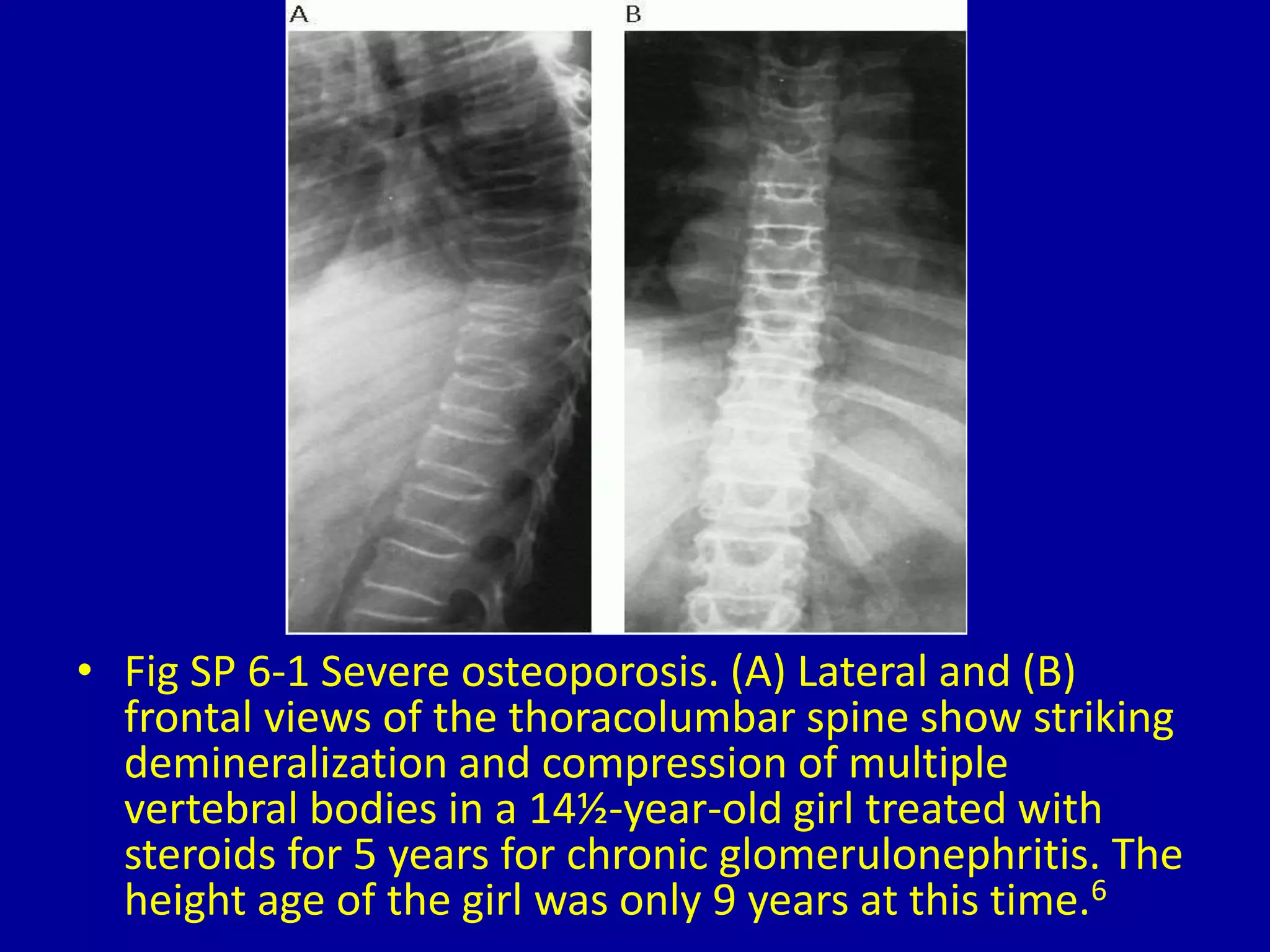
• Fig SP 6-1 Severe osteoporosis. (A) Lateral and (B)
frontal views of the thoracolumbar spine show striking
demineralization and compression of multiple
vertebral bodies in a 14½-year-old girl treated with
steroids for 5 years for chronic glomerulonephritis. The
height age of the girl was only 9 years at this time.6
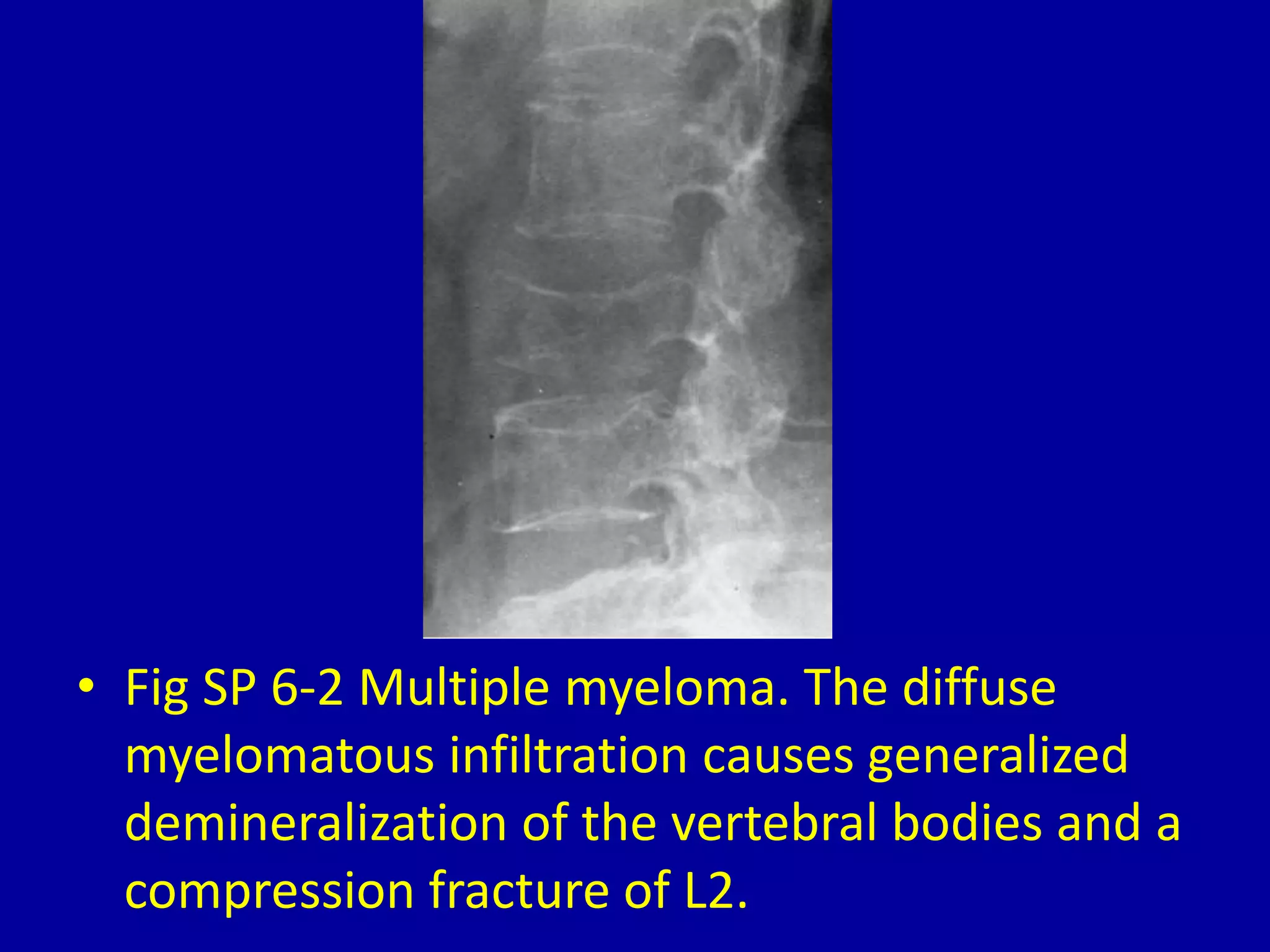
• Fig SP 6-2 Multiple myeloma. The diffuse
myelomatous infiltration causes generalized
demineralization of the vertebral bodies and a
compression fracture of L2.
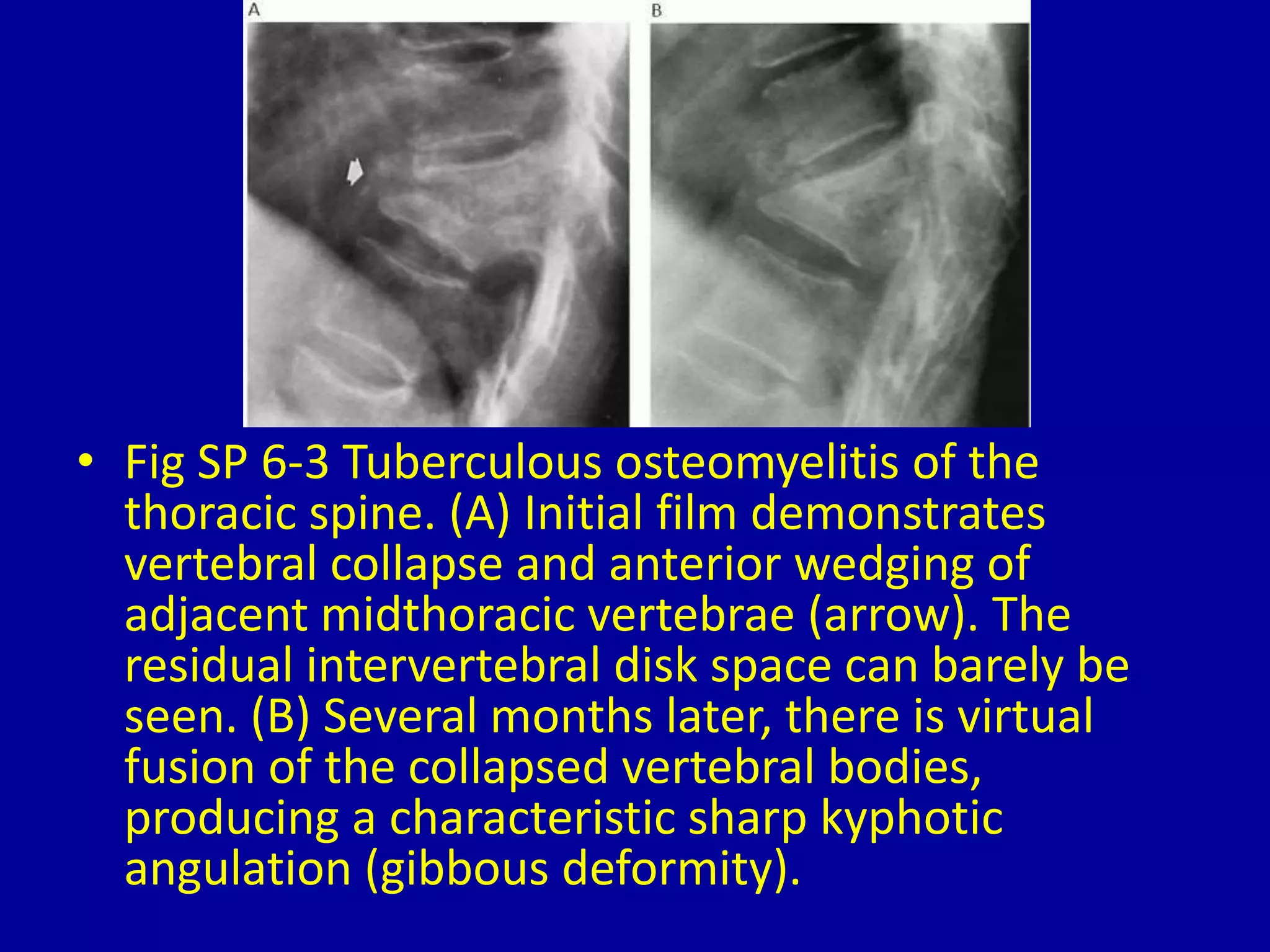
• Fig SP 6-3 Tuberculous osteomyelitis of the
thoracic spine. (A) Initial film demonstrates
vertebral collapse and anterior wedging of
adjacent midthoracic vertebrae (arrow). The
residual intervertebral disk space can barely be
seen. (B) Several months later, there is virtual
fusion of the collapsed vertebral bodies,
producing a characteristic sharp kyphotic
angulation (gibbous deformity).
• Fig SP 6-4 Brucellosis. (A) Frontal plain film of the lower
thoracic spine demonstrates loss of height of the T11
and T12 vertebral bodies with destruction of the end
plates and swelling of the paravertebral soft tissues
(arrows). (B) A lateral tomogram of the lower thoracic
spine demonstrates cortical destruction with sclerosis
of the inferior end plate of T11 and the superior end
plate of T12 (arrows). There is a mild degree of anterior
wedging. The overall radiographic appearance is
indistinguishable from that of tuberculous spondylitis.
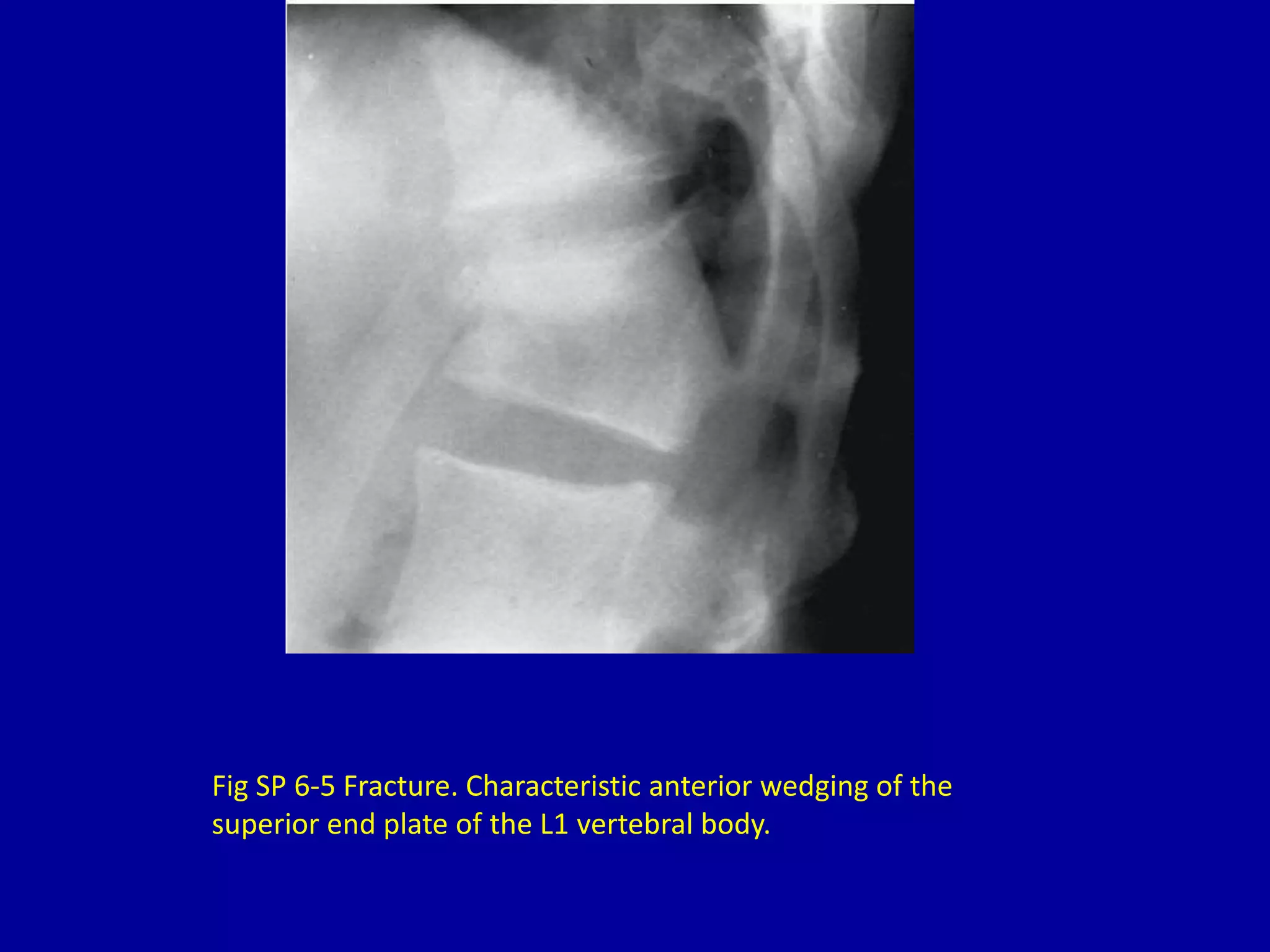
Fig SP 6-5 Fracture. Characteristic anterior wedging of the
superior end plate of the L1 vertebral body.
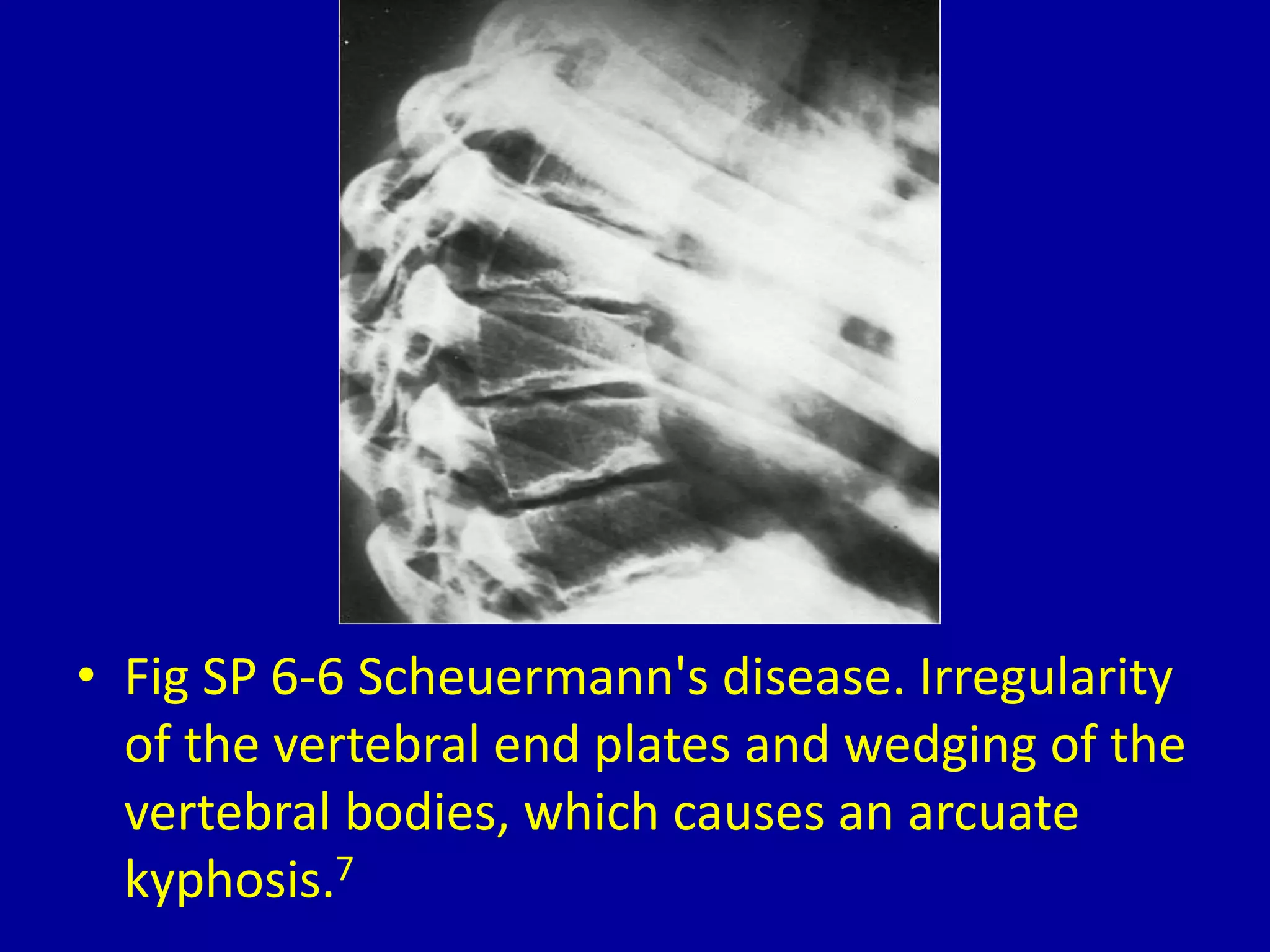
• Fig SP 6-6 Scheuermann's disease. Irregularity
of the vertebral end plates and wedging of the
vertebral bodies, which causes an arcuate
kyphosis.7
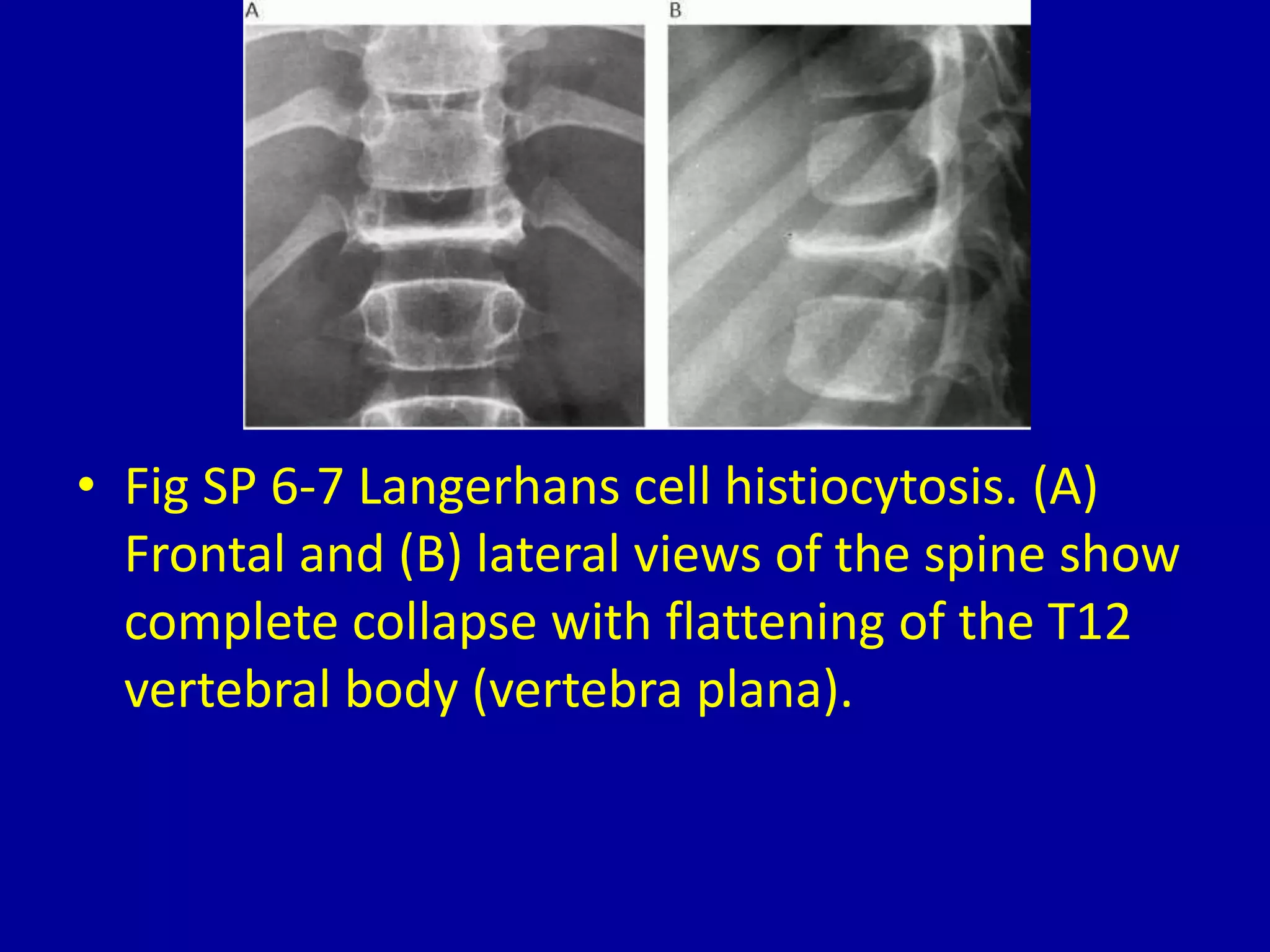
• Fig SP 6-7 Langerhans cell histiocytosis. (A)
Frontal and (B) lateral views of the spine show
complete collapse with flattening of the T12
vertebral body (vertebra plana).
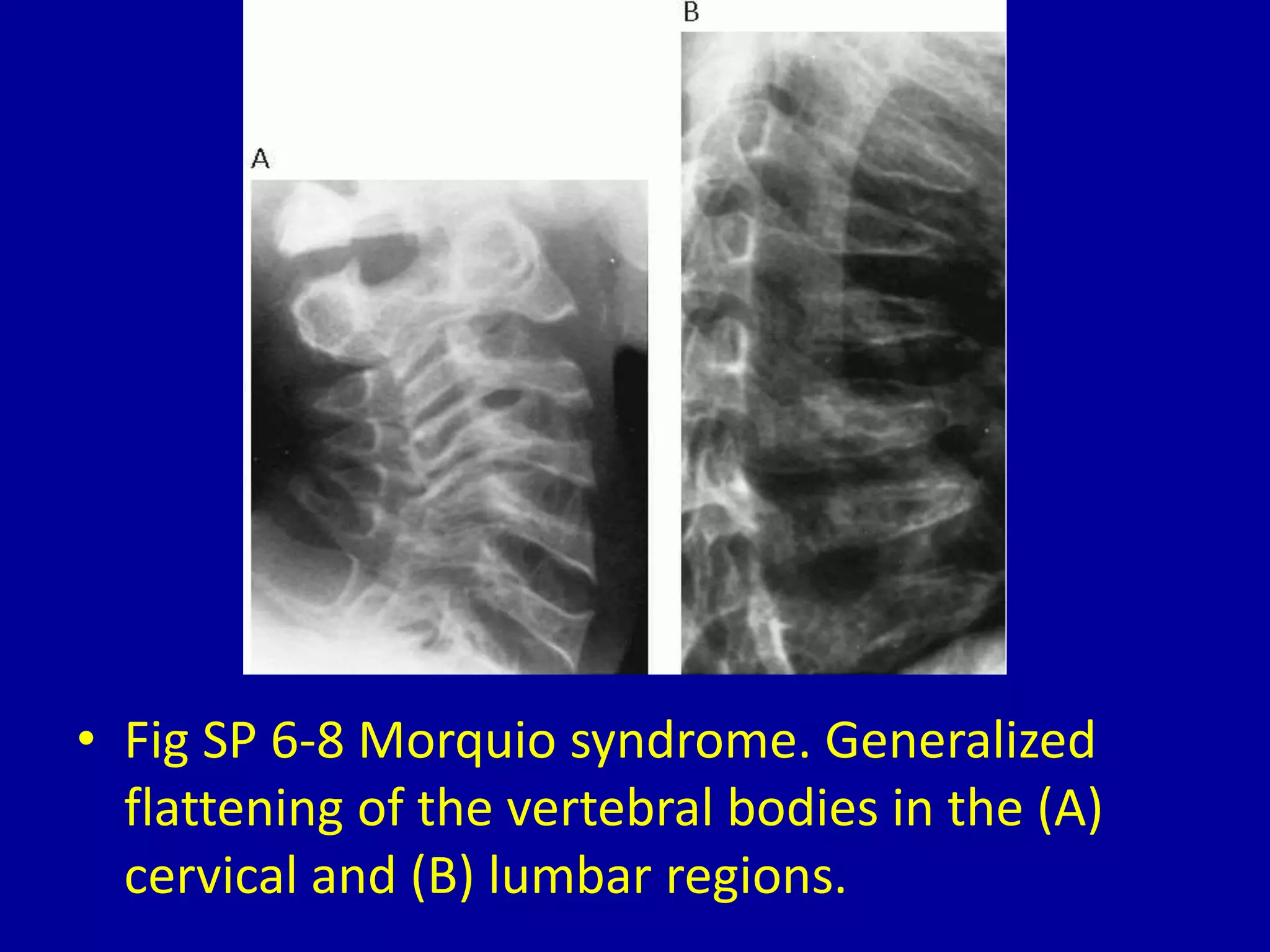
• Fig SP 6-8 Morquio syndrome. Generalized
flattening of the vertebral bodies in the (A)
cervical and (B) lumbar regions.
• Fig SP 6-9 Spondyloepiphyseal dysplasia.
Generalized flattening of the vertebral bodies
(platyspondyly).
• Fig SP 6-10 Sickle cell anemia. (A) Biconcave
indentations on both the superior and inferior
margins of the soft vertebral bodies produce
the characteristic “fish vertebrae.” (B)
Localized step-like central depressions of
multiple vertebral end plates.
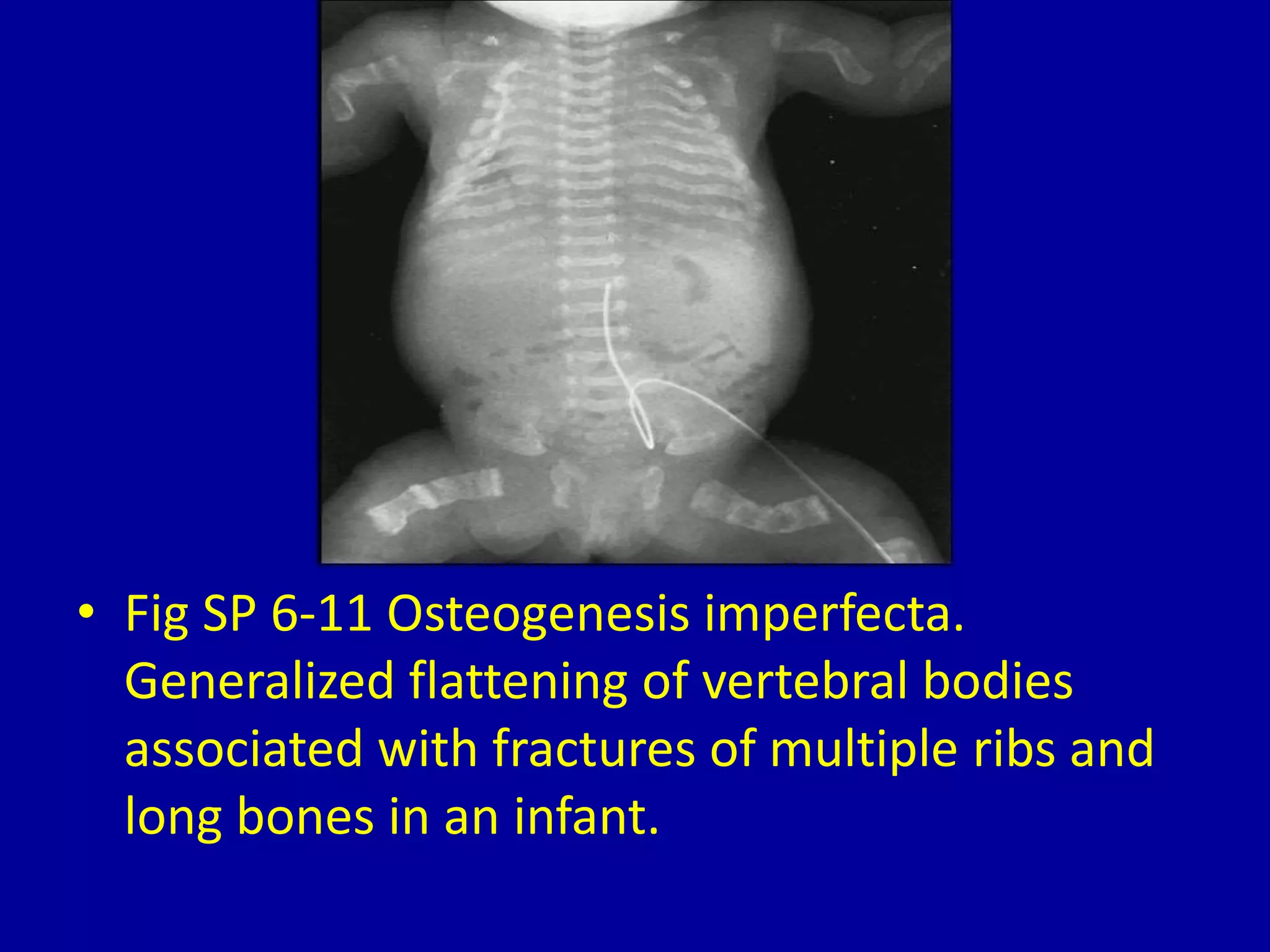
• Fig SP 6-11 Osteogenesis imperfecta.
Generalized flattening of vertebral bodies
associated with fractures of multiple ribs and
long bones in an infant.
6 loss of height of one or more

6 loss of height of one or more

  • 1.
    6Loss of Heightof One or More Vertebral Bodies
  • 2.
    CLINICAL IMAGAGING AN ATLASOF DIFFERENTIAL DAIGNOSIS EISENBERG DR. Muhammad Bin Zulfiqar PGR-FCPS III SIMS/SHL
  • 3.
    • Fig SP6-1 Severe osteoporosis. (A) Lateral and (B) frontal views of the thoracolumbar spine show striking demineralization and compression of multiple vertebral bodies in a 14½-year-old girl treated with steroids for 5 years for chronic glomerulonephritis. The height age of the girl was only 9 years at this time.6
  • 4.
    • Fig SP6-2 Multiple myeloma. The diffuse myelomatous infiltration causes generalized demineralization of the vertebral bodies and a compression fracture of L2.
  • 5.
    • Fig SP6-3 Tuberculous osteomyelitis of the thoracic spine. (A) Initial film demonstrates vertebral collapse and anterior wedging of adjacent midthoracic vertebrae (arrow). The residual intervertebral disk space can barely be seen. (B) Several months later, there is virtual fusion of the collapsed vertebral bodies, producing a characteristic sharp kyphotic angulation (gibbous deformity).
  • 6.
    • Fig SP6-4 Brucellosis. (A) Frontal plain film of the lower thoracic spine demonstrates loss of height of the T11 and T12 vertebral bodies with destruction of the end plates and swelling of the paravertebral soft tissues (arrows). (B) A lateral tomogram of the lower thoracic spine demonstrates cortical destruction with sclerosis of the inferior end plate of T11 and the superior end plate of T12 (arrows). There is a mild degree of anterior wedging. The overall radiographic appearance is indistinguishable from that of tuberculous spondylitis.
  • 7.
    Fig SP 6-5Fracture. Characteristic anterior wedging of the superior end plate of the L1 vertebral body.
  • 8.
    • Fig SP6-6 Scheuermann's disease. Irregularity of the vertebral end plates and wedging of the vertebral bodies, which causes an arcuate kyphosis.7
  • 9.
    • Fig SP6-7 Langerhans cell histiocytosis. (A) Frontal and (B) lateral views of the spine show complete collapse with flattening of the T12 vertebral body (vertebra plana).
  • 10.
    • Fig SP6-8 Morquio syndrome. Generalized flattening of the vertebral bodies in the (A) cervical and (B) lumbar regions.
  • 11.
    • Fig SP6-9 Spondyloepiphyseal dysplasia. Generalized flattening of the vertebral bodies (platyspondyly).
  • 12.
    • Fig SP6-10 Sickle cell anemia. (A) Biconcave indentations on both the superior and inferior margins of the soft vertebral bodies produce the characteristic “fish vertebrae.” (B) Localized step-like central depressions of multiple vertebral end plates.
  • 13.
    • Fig SP6-11 Osteogenesis imperfecta. Generalized flattening of vertebral bodies associated with fractures of multiple ribs and long bones in an infant.