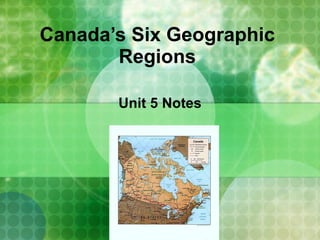
Canada’s Six Geographic Regions Unit 5 Notes
Physical Characteristics Stretches from Atlantic to Pacific and bordered to the north by Arctic Ocean and to the south by the United States. Most of the 30 million people live in: Toronto, Ontario; Montreal, Quebec; Vancouver, British Columbia; and Ottawa, Ontario. Most of the population lives within 200 miles of the US/Canada border because of the warmer climate Physical Features: mountains, prairies, islands, tundra, lakes, and rivers.   Ottawa, Ontario
Natural Resources Minerals: Large exporter of minerals. Forests: Makes up 1/3 of Canada. Provides lumber, pulp, and paper. Fish: Fisheries in Atlantic and Pacific. Lakes and Rivers: Produce hydroelectric power. Soil: Canada has excellent farmland.
1. Atlantic Canada Made up of Newfoundland, Nova Scotia, New Brunswick, and Price Edward Island. Also called Maritime Provinces. Fishing is important here, but overfishing has caused problems. Overfishing  occurs when too many fish are caught that there are not enough to breed more.
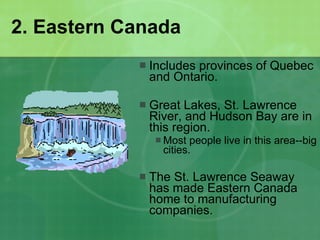
2. Eastern Canada Includes provinces of Quebec and Ontario. Great Lakes, St. Lawrence River, and Hudson Bay are in this region. Most people live in this area--big cities. The St. Lawrence Seaway has made Eastern Canada home to manufacturing companies.
3. Prairie Provinces Includes Manitoba, Saskatchewan, and eastern Alberta. Great for farming! (Almost all Canada’s agriculture happens here) Biggest petroleum (oil) producer in Canada.
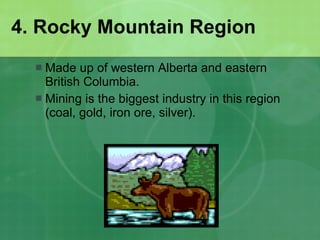
4. Rocky Mountain Region Made up of western Alberta and eastern British Columbia. Mining is the biggest industry in this region (coal, gold, iron ore, silver).
5. Pacific Coast Located between the Rocky Mountains and Gulf of Alaska in British Columbia. The nice weather brings people to Vancouver, Canada’s third largest city. Timber (logging), fishing, and mining are important industries. Overfishing has caused the fish population to decline.
6. Arctic Region Includes Canada’s three territories: Yukon, the Northwest Territories, and Nunavut. Most of Canada’s Inuit (indigenous people) live in this region. Tundra – land stays frozen all year. Covered by the Canadian Shield, which makes mining a HUGE industry (coal, gold, silver, iron ore).

6 Geographic Regions

  • 1.
    Canada’s Six GeographicRegions Unit 5 Notes
  • 2.
    Physical Characteristics Stretchesfrom Atlantic to Pacific and bordered to the north by Arctic Ocean and to the south by the United States. Most of the 30 million people live in: Toronto, Ontario; Montreal, Quebec; Vancouver, British Columbia; and Ottawa, Ontario. Most of the population lives within 200 miles of the US/Canada border because of the warmer climate Physical Features: mountains, prairies, islands, tundra, lakes, and rivers. Ottawa, Ontario
  • 3.
    Natural Resources Minerals:Large exporter of minerals. Forests: Makes up 1/3 of Canada. Provides lumber, pulp, and paper. Fish: Fisheries in Atlantic and Pacific. Lakes and Rivers: Produce hydroelectric power. Soil: Canada has excellent farmland.
  • 4.
    1. Atlantic CanadaMade up of Newfoundland, Nova Scotia, New Brunswick, and Price Edward Island. Also called Maritime Provinces. Fishing is important here, but overfishing has caused problems. Overfishing occurs when too many fish are caught that there are not enough to breed more.
  • 5.
    2. Eastern CanadaIncludes provinces of Quebec and Ontario. Great Lakes, St. Lawrence River, and Hudson Bay are in this region. Most people live in this area--big cities. The St. Lawrence Seaway has made Eastern Canada home to manufacturing companies.
  • 6.
    3. Prairie ProvincesIncludes Manitoba, Saskatchewan, and eastern Alberta. Great for farming! (Almost all Canada’s agriculture happens here) Biggest petroleum (oil) producer in Canada.
  • 7.
    4. Rocky MountainRegion Made up of western Alberta and eastern British Columbia. Mining is the biggest industry in this region (coal, gold, iron ore, silver).
  • 8.
    5. Pacific CoastLocated between the Rocky Mountains and Gulf of Alaska in British Columbia. The nice weather brings people to Vancouver, Canada’s third largest city. Timber (logging), fishing, and mining are important industries. Overfishing has caused the fish population to decline.
  • 9.
    6. Arctic RegionIncludes Canada’s three territories: Yukon, the Northwest Territories, and Nunavut. Most of Canada’s Inuit (indigenous people) live in this region. Tundra – land stays frozen all year. Covered by the Canadian Shield, which makes mining a HUGE industry (coal, gold, silver, iron ore).