Warm Up What Physical Feature in Canada do you think is the most important?  Why?
Essential Question How does location, climate, access to water and resources affect where Canadians choose to live and work?
Canada’s Natural Resources and Physical Features
I can  explain the impact of location, climate, distribution of resources, and population distribution on Canada. I can  explain the environmental issues of Canada.
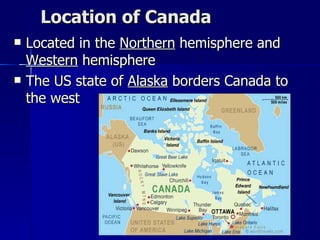
Location of Canada Located in the  Northern  hemisphere and  Western  hemisphere The US state of  Alaska  borders Canada to the west
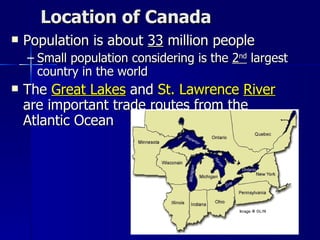
Location of Canada Population is about  33  million people Small population considering is the  2 nd  largest country in the world The  Great Lakes  and  St. Lawrence  River   are important trade routes from the Atlantic Ocean
 
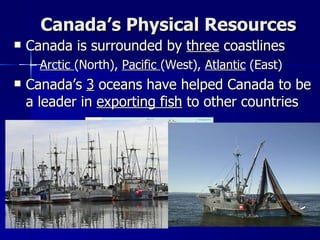
Canada’s Physical Resources Canada is surrounded by  three  coastlines Arctic  (North),  Pacific  (West),  Atlantic  (East) Canada’s  3  oceans have helped Canada to be a leader in  exporting fish  to other countries
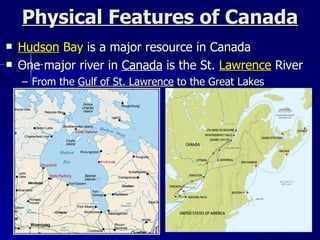
Physical Features of Canada Hudson  Bay  is a major resource in Canada One major river in  Canada  is the St.  Lawrence  River From the  Gulf of St. Lawrence  to the Great Lakes
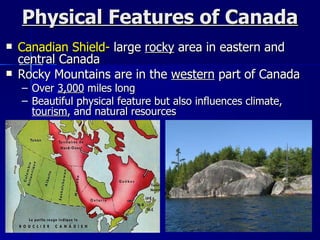
Physical Features of Canada Canadian Shield-  large  rocky  area in eastern and central Canada Rocky Mountains are in the  western  part of Canada Over  3,000  miles long Beautiful physical feature but also influences climate,  tourism , and natural resources
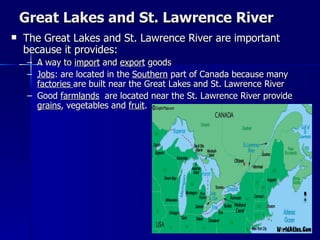
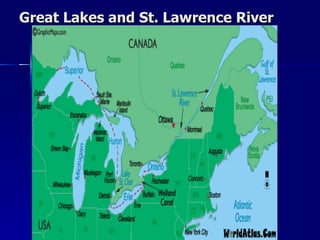
Great Lakes and St. Lawrence River The Great Lakes and St. Lawrence River are important because it provides: A way to  import  and  export  goods Jobs : are located in the  Southern  part of Canada because many  factories  are built near the Great Lakes and St. Lawrence River Good  farmlands   are located near the St. Lawrence River provide  grains , vegetables and  fruit .
Great Lakes and St. Lawrence River
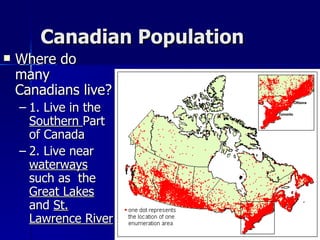
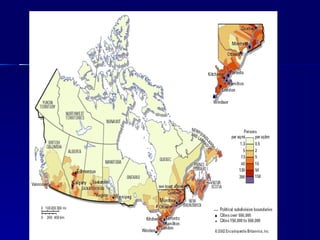
Canadian Population Where do many Canadians live? 1. Live in the  Southern  Part of Canada 2. Live near  waterways  such as  the  Great Lakes  and  St. Lawrence River
 
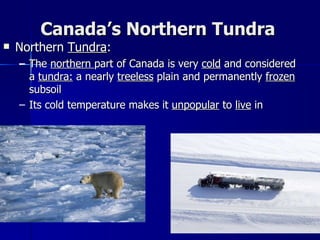
Canada’s Northern Tundra Northern  Tundra : The  northern  part of Canada is very  cold  and considered a  tundra:  a nearly  treeless  plain and permanently  frozen  subsoil Its cold temperature makes it  unpopular  to  live  in
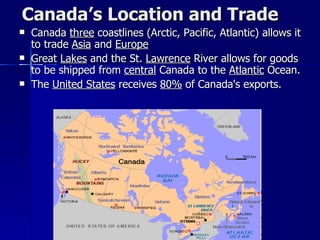
Canada’s Location and Trade Canada  three  coastlines (Arctic, Pacific, Atlantic) allows it to trade  Asia  and  Europe Great  Lakes  and the St.  Lawrence  River allows for goods to be shipped from  central  Canada to the  Atlantic  Ocean. The  United States  receives  80%  of Canada's exports.
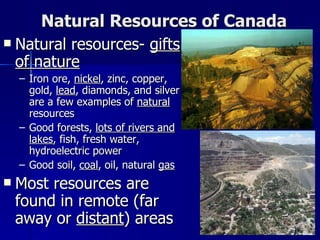
Natural Resources of Canada Natural resources-  gifts of nature Iron ore,  nickel , zinc, copper, gold,  lead , diamonds, and silver are a few examples of  natural  resources Good forests,  lots of rivers and lakes , fish, fresh water, hydroelectric power Good soil,  coal , oil, natural  gas Most resources are found in remote (far away or  distant ) areas
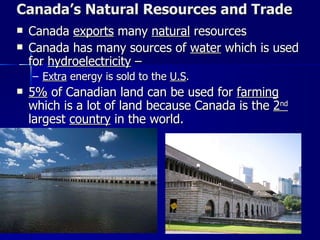
Canada’s Natural Resources and Trade Canada  exports  many  natural  resources Canada has many sources of  water  which is used for  hydroelectricity  –  Extra  energy is sold to the  U.S .  5%  of Canadian land can be used for  farming  which is a lot of land because Canada is the  2 nd  largest  country  in the world.
Canadian Climate The climate of Canada  limits  the location of the population Southern  region is much like the northern United States with warm  summers  and cold winters
Warm Up What part of Canada would you most like to visit? Why?
Canadian Climate Central and southern Canada has a long  growing  season and are an important sources of canola,  wheat  and other grains Pacific  region has cool summers and mild winters but can receive  100 inches  of rain a year
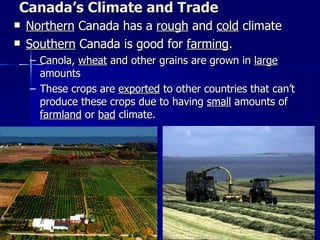
Canada’s Climate and Trade Northern  Canada has a  rough  and  cold  climate Southern  Canada is good for  farming . Canola,  wheat  and other grains are grown in  large  amounts  These crops are  exported  to other countries that can’t produce these crops due to having  small  amounts of  farmland  or  bad  climate.
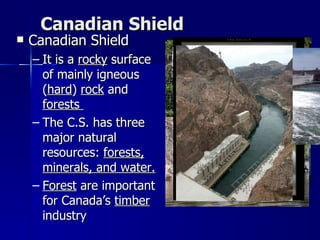
Canadian Shield Canadian Shield It is a  rocky  surface of mainly igneous ( hard )  rock  and  forests  The C.S. has three major natural resources:  forests, minerals, and water. Forest  are important for Canada’s  timber  industry
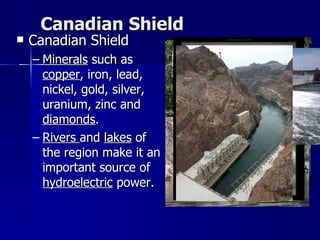
Canadian Shield Canadian Shield Minerals  such as  copper , iron, lead, nickel, gold, silver, uranium, zinc and  diamonds .  Rivers  and  lakes  of the region make it an important source of  hydroelectric  power.
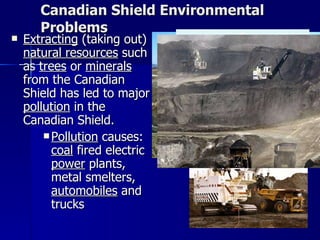
Canadian Shield Environmental Problems Extracting  (taking out)  natural resources  such as  trees  or  minerals  from the Canadian Shield has led to major  pollution  in the Canadian Shield.  Pollution  causes:  coal  fired electric  power  plants, metal smelters,  automobiles  and trucks
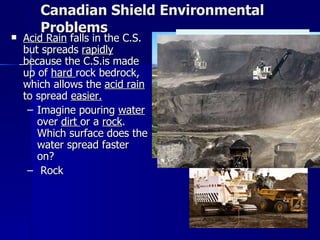
Canadian Shield Environmental Problems Acid Rain  falls in the C.S. but spreads  rapidly  because the C.S.is made up of  hard  rock bedrock, which allows the  acid rain  to spread  easier.   Imagine pouring  water  over  dirt  or a  rock . Which surface does the water spread faster on? Rock
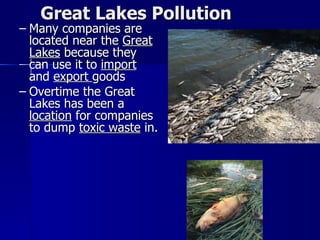
Great Lakes Pollution Many companies are located near the  Great Lakes  because they can use it to  import  and  export  goods Overtime the Great Lakes has been a  location  for companies to dump  toxic waste  in.
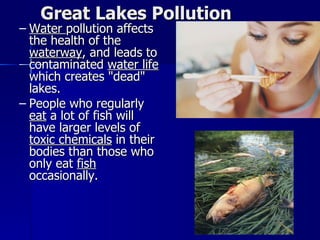
Great Lakes Pollution Water  pollution affects the health of the  waterway , and leads to contaminated  water life  which creates "dead" lakes.  People who regularly  eat  a lot of fish will have larger levels of  toxic chemicals  in their bodies than those who only eat  fish  occasionally.
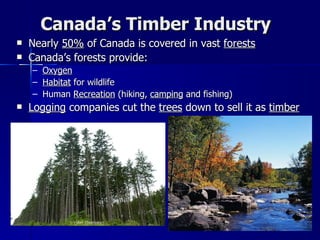
Canada’s Timber Industry Nearly  50%  of Canada is covered in vast  forests Canada’s forests provide: Oxygen Habitat  for wildlife Human  Recreation  (hiking,  camping  and fishing) Logging  companies cut the  trees  down to sell it as  timber
Canada’s Timber Industry Logging  companies cut the trees down to sell it as timber Environmental  Groups/Government Intervention: Force Logging companies to plant  small  trees and seeds Reduce  the daily amount of trees being  cut

Canada physical features natural resources and climate 1011

  • 1.
    Warm Up WhatPhysical Feature in Canada do you think is the most important? Why?
  • 2.
    Essential Question Howdoes location, climate, access to water and resources affect where Canadians choose to live and work?
  • 3.
    Canada’s Natural Resourcesand Physical Features
  • 4.
    I can explain the impact of location, climate, distribution of resources, and population distribution on Canada. I can explain the environmental issues of Canada.
  • 5.
    Location of CanadaLocated in the Northern hemisphere and Western hemisphere The US state of Alaska borders Canada to the west
  • 6.
    Location of CanadaPopulation is about 33 million people Small population considering is the 2 nd largest country in the world The Great Lakes and St. Lawrence River are important trade routes from the Atlantic Ocean
  • 7.
  • 8.
    Canada’s Physical ResourcesCanada is surrounded by three coastlines Arctic (North), Pacific (West), Atlantic (East) Canada’s 3 oceans have helped Canada to be a leader in exporting fish to other countries
  • 9.
    Physical Features ofCanada Hudson Bay is a major resource in Canada One major river in Canada is the St. Lawrence River From the Gulf of St. Lawrence to the Great Lakes
  • 10.
    Physical Features ofCanada Canadian Shield- large rocky area in eastern and central Canada Rocky Mountains are in the western part of Canada Over 3,000 miles long Beautiful physical feature but also influences climate, tourism , and natural resources
  • 11.
    Great Lakes andSt. Lawrence River The Great Lakes and St. Lawrence River are important because it provides: A way to import and export goods Jobs : are located in the Southern part of Canada because many factories are built near the Great Lakes and St. Lawrence River Good farmlands are located near the St. Lawrence River provide grains , vegetables and fruit .
  • 12.
    Great Lakes andSt. Lawrence River
  • 13.
    Canadian Population Wheredo many Canadians live? 1. Live in the Southern Part of Canada 2. Live near waterways such as the Great Lakes and St. Lawrence River
  • 14.
  • 15.
    Canada’s Northern TundraNorthern Tundra : The northern part of Canada is very cold and considered a tundra: a nearly treeless plain and permanently frozen subsoil Its cold temperature makes it unpopular to live in
  • 16.
    Canada’s Location andTrade Canada three coastlines (Arctic, Pacific, Atlantic) allows it to trade Asia and Europe Great Lakes and the St. Lawrence River allows for goods to be shipped from central Canada to the Atlantic Ocean. The United States receives 80% of Canada's exports.
  • 17.
    Natural Resources ofCanada Natural resources- gifts of nature Iron ore, nickel , zinc, copper, gold, lead , diamonds, and silver are a few examples of natural resources Good forests, lots of rivers and lakes , fish, fresh water, hydroelectric power Good soil, coal , oil, natural gas Most resources are found in remote (far away or distant ) areas
  • 18.
    Canada’s Natural Resourcesand Trade Canada exports many natural resources Canada has many sources of water which is used for hydroelectricity – Extra energy is sold to the U.S . 5% of Canadian land can be used for farming which is a lot of land because Canada is the 2 nd largest country in the world.
  • 19.
    Canadian Climate Theclimate of Canada limits the location of the population Southern region is much like the northern United States with warm summers and cold winters
  • 20.
    Warm Up Whatpart of Canada would you most like to visit? Why?
  • 21.
    Canadian Climate Centraland southern Canada has a long growing season and are an important sources of canola, wheat and other grains Pacific region has cool summers and mild winters but can receive 100 inches of rain a year
  • 22.
    Canada’s Climate andTrade Northern Canada has a rough and cold climate Southern Canada is good for farming . Canola, wheat and other grains are grown in large amounts These crops are exported to other countries that can’t produce these crops due to having small amounts of farmland or bad climate.
  • 23.
    Canadian Shield CanadianShield It is a rocky surface of mainly igneous ( hard ) rock and forests The C.S. has three major natural resources: forests, minerals, and water. Forest are important for Canada’s timber industry
  • 24.
    Canadian Shield CanadianShield Minerals such as copper , iron, lead, nickel, gold, silver, uranium, zinc and diamonds . Rivers and lakes of the region make it an important source of hydroelectric power.
  • 25.
    Canadian Shield EnvironmentalProblems Extracting (taking out) natural resources such as trees or minerals from the Canadian Shield has led to major pollution in the Canadian Shield. Pollution causes: coal fired electric power plants, metal smelters, automobiles and trucks
  • 26.
    Canadian Shield EnvironmentalProblems Acid Rain falls in the C.S. but spreads rapidly because the C.S.is made up of hard rock bedrock, which allows the acid rain to spread easier. Imagine pouring water over dirt or a rock . Which surface does the water spread faster on? Rock
  • 27.
    Great Lakes PollutionMany companies are located near the Great Lakes because they can use it to import and export goods Overtime the Great Lakes has been a location for companies to dump toxic waste in.
  • 28.
    Great Lakes PollutionWater pollution affects the health of the waterway , and leads to contaminated water life which creates "dead" lakes. People who regularly eat a lot of fish will have larger levels of toxic chemicals in their bodies than those who only eat fish occasionally.
  • 29.
    Canada’s Timber IndustryNearly 50% of Canada is covered in vast forests Canada’s forests provide: Oxygen Habitat for wildlife Human Recreation (hiking, camping and fishing) Logging companies cut the trees down to sell it as timber
  • 30.
    Canada’s Timber IndustryLogging companies cut the trees down to sell it as timber Environmental Groups/Government Intervention: Force Logging companies to plant small trees and seeds Reduce the daily amount of trees being cut