Principles and Methods of
Epidemiology
RDM 205
Rural Health and Well-being
Dr. Rajeev Kumar,
M.S.W., (TISS, Mumbai), M.Phil., (CIP, Ranchi), U.G.C- J.R.F.,
Ph.D., (IIT Kharagpur)
“ I kept six honest serving men;
they taught me all I know. Their
names are what, why, when,
how, where, and who.”
What is Epidemiology?
 As defined by John M. Last (1988)
“ Epidemiology is the study of the
distribution and determinants of health
related states or events in specified
populations, and the applications of
this study to control of health related
problems”
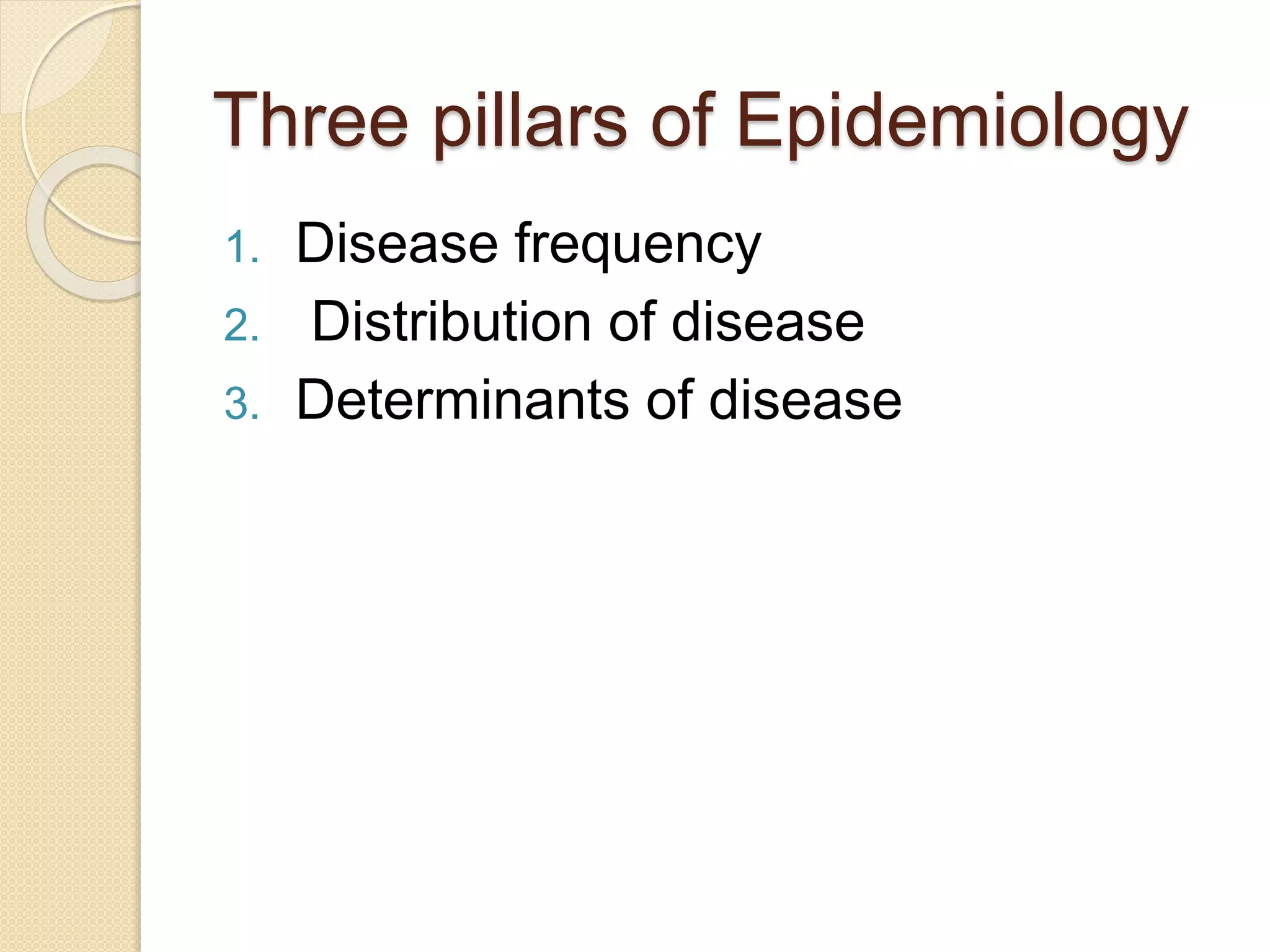
Three pillars of Epidemiology
1. Disease frequency
2. Distribution of disease
3. Determinants of disease
Disease frequency
 Epidemiology is the measurement of
frequency of disease, disability or
death and summarizing this
information in form of rates and ratio.
(details will be discussed later)
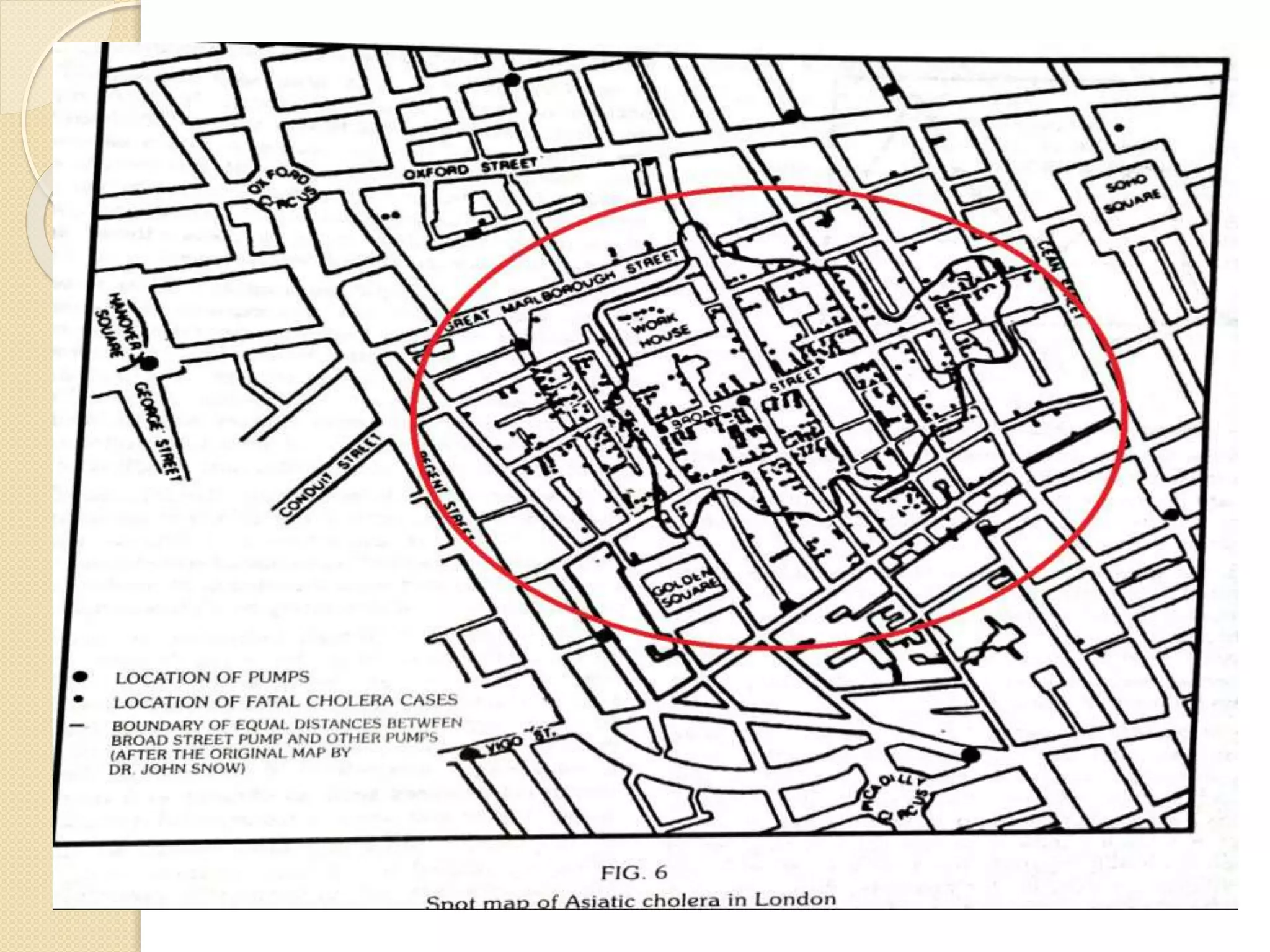
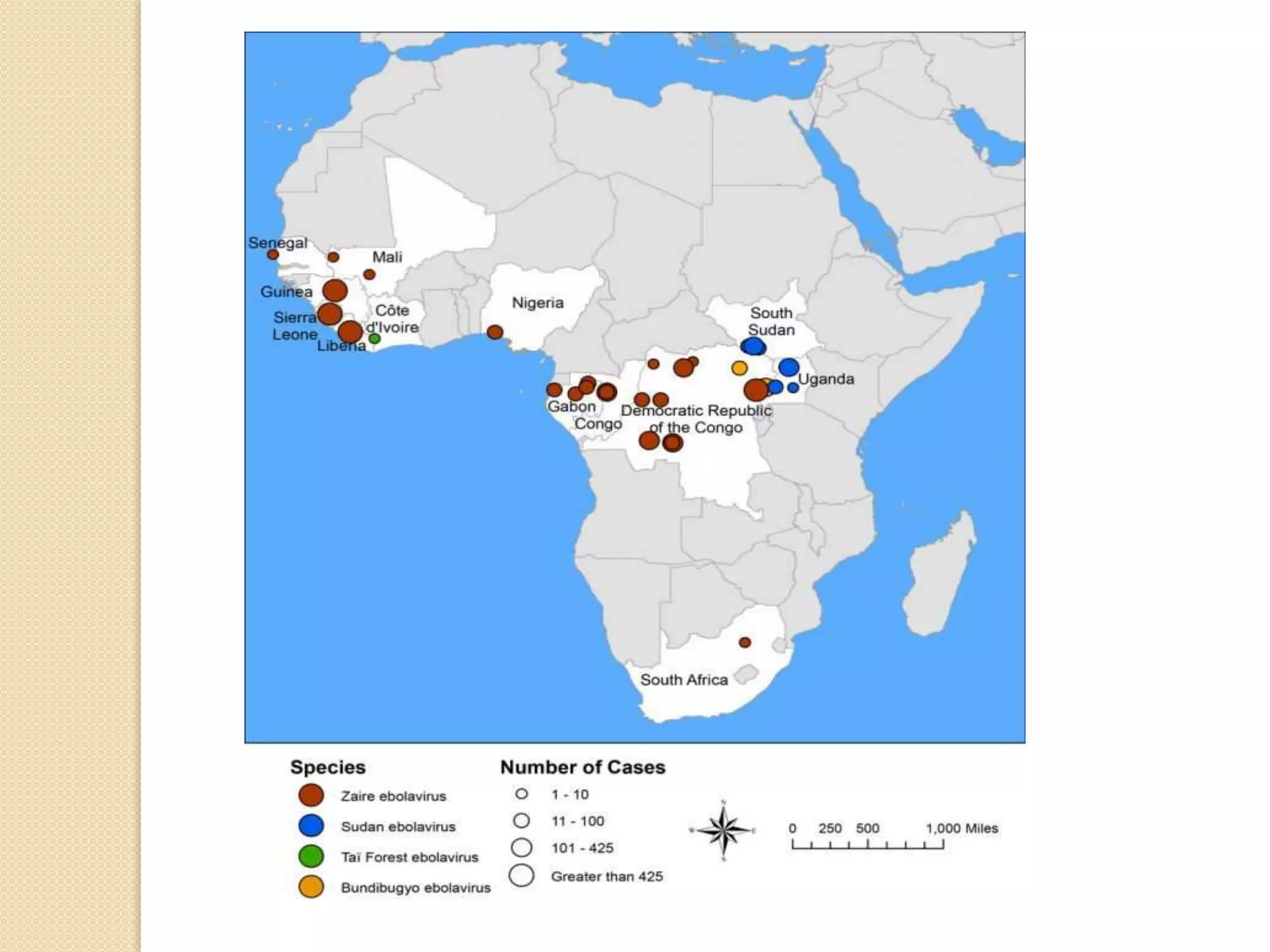
Distribution of disease
 Disease or health related matter are
not uniformly distributed in human
population.
 Those are distributed in patterns in
community, and epidemiology address
those variations or patterns.
 This aspect is known as descriptive
epidemiology
Determinates of disease
 It identify the underlying causes ( or
risk factors).
 This is the real substance of
epidemiology
Aims of epidemiology
1. It describes the distribution and
magnitude of health and disease
problems in human population
2. To identify the aetiological factor (risk
factors) in the pathogenesis of
disease
3. To prove the data essential to the
planning, implementation and
evaluation of services for the
prevention, control, and treatment of
disease and to setting up of priorities
among those services
Epidemiology approach
1. Asking questions
2. Making comparisons
(A). Asking questions ( activity
based on given article)
 What is the event / problem?
 What is the magnitude ?
 Where did it happen?
 When did it happen?
 Who are affected?
 Why did it happen?
(B). Questions related to health
action ( activity based on given
article)
 What can be done to reduce the problem

and its consequence?
 How it can be prevented in the future ?
 What action should be taken by the
communities? By the health service? By
other sectors? Where and for whom
these activities be carried out ?
 What resources are required?
 How far the activities to be organized ?
Making comparisons
 There may be comparisons of two or
more groups
 There may be comparisons between
communities or regions or genders
 Before comparison, we need to
consider the comparability
 As is control and cohort studies ( will
be discussed later)
Basic measurements in
epidemiology
 Measurement of mortality
 Measurement of morbidity
 Measurement of disability
 measurement of presence, absence or
distribution of the characteristics or attributes
of the diseases
 Measurement of medical needs, health care
facilities utilization
 Measurement of the presence, absence or
distribution of the environmental and other
factors suspected of causing the disease.
 Measurement of demographic variables
Types of variables
 Variate: any piece of information
referring to the patients or disease, it
is of two types (1) discrete (2)
continuous
 Circumstance: Any factor in the
environment that might be suspected
of causing a disease ( air pollution,
polluted water)
Tools of measurement
 Rates
 Ratio
 Proportion
Rates
 Suppose there were 500 deaths from
traffic accidents in Ranchi..
 These are just number....
 It conveys no meaning to
epidemiologist
 It is not comparable with road
accidents deaths with another city
 Then what ????
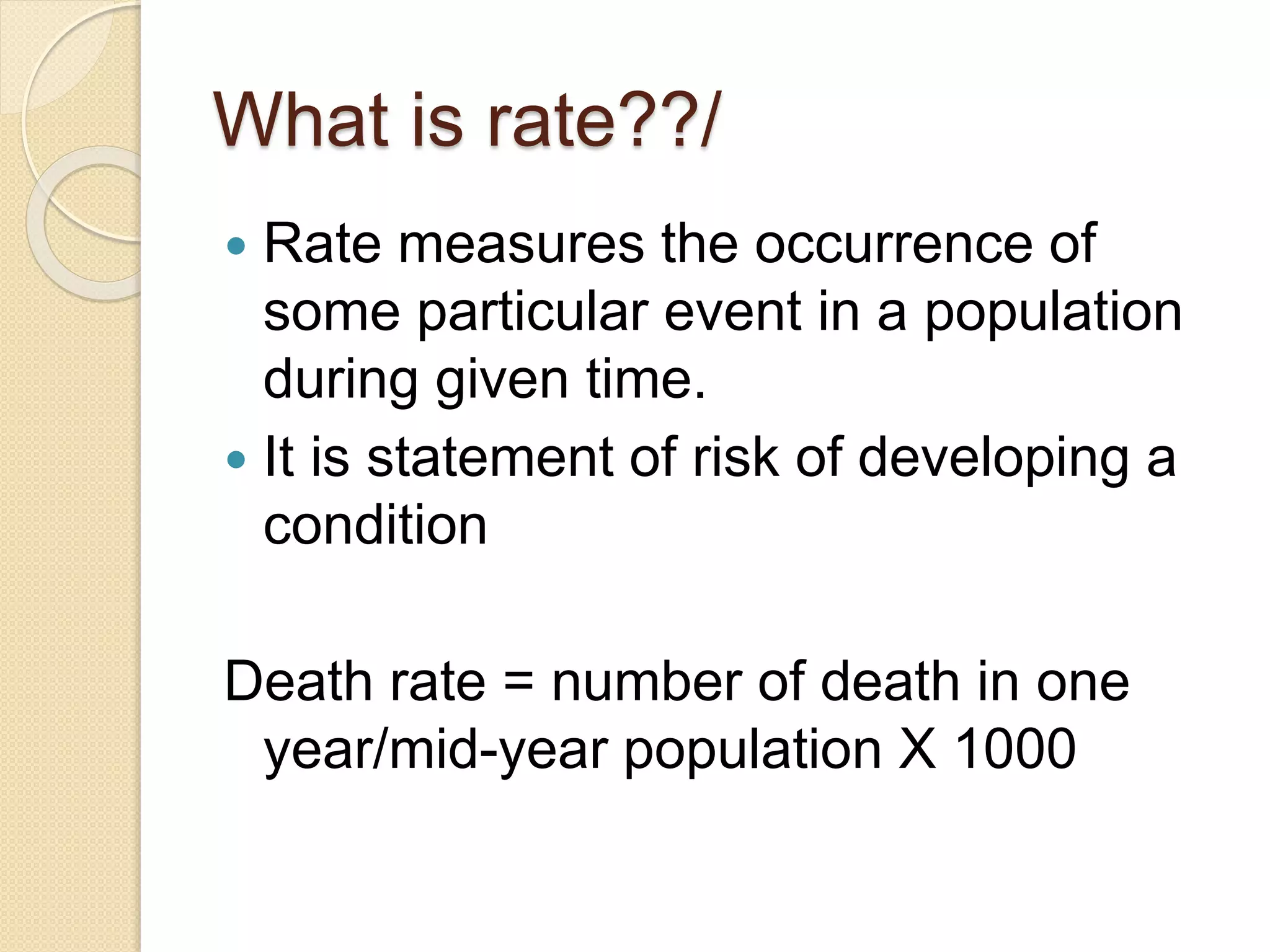
What is rate??/
 Rate measures the occurrence of
some particular event in a population
during given time.
 It is statement of risk of developing a
condition
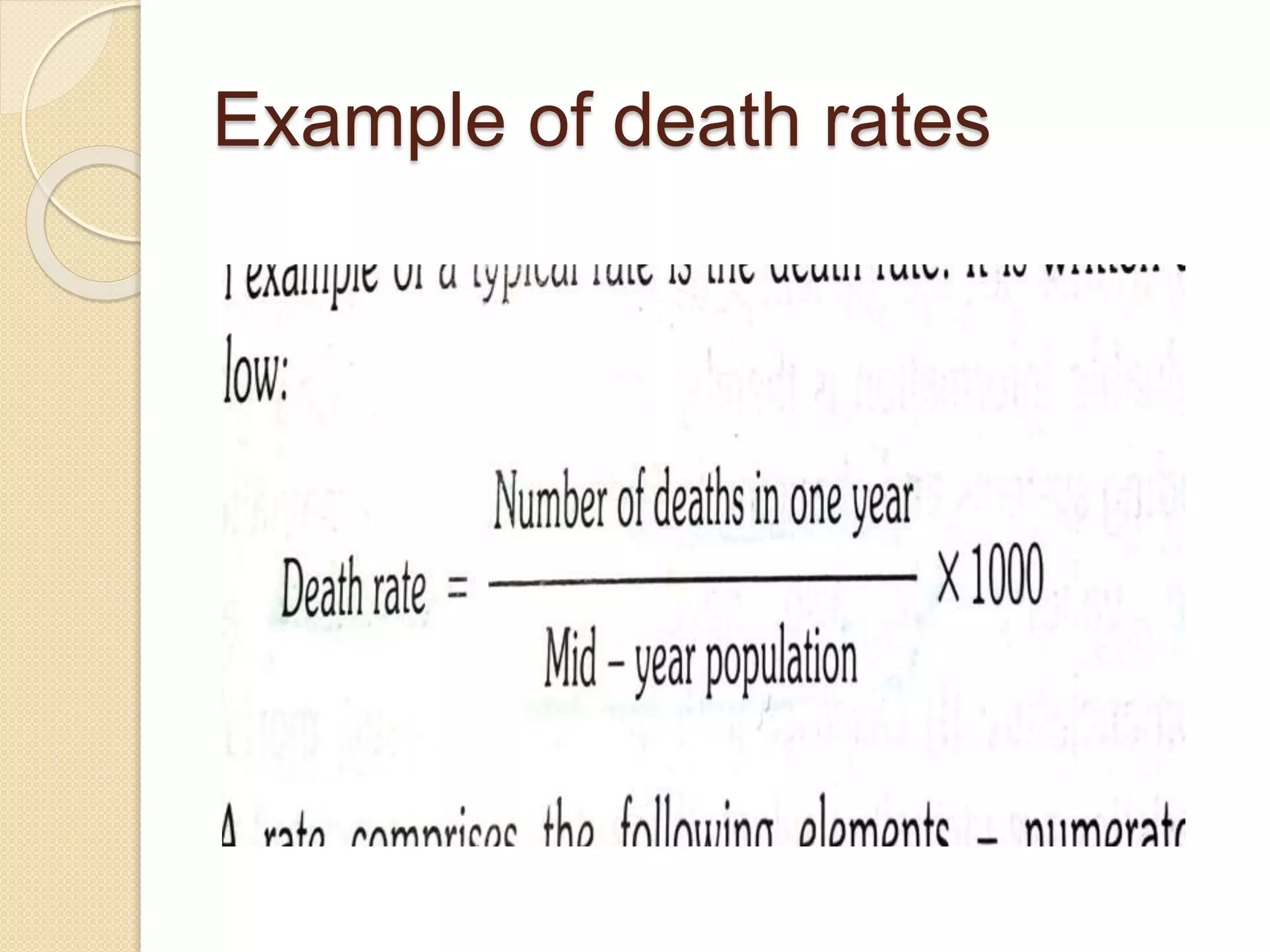
Death rate = number of death in one
year/mid-year population X 1000
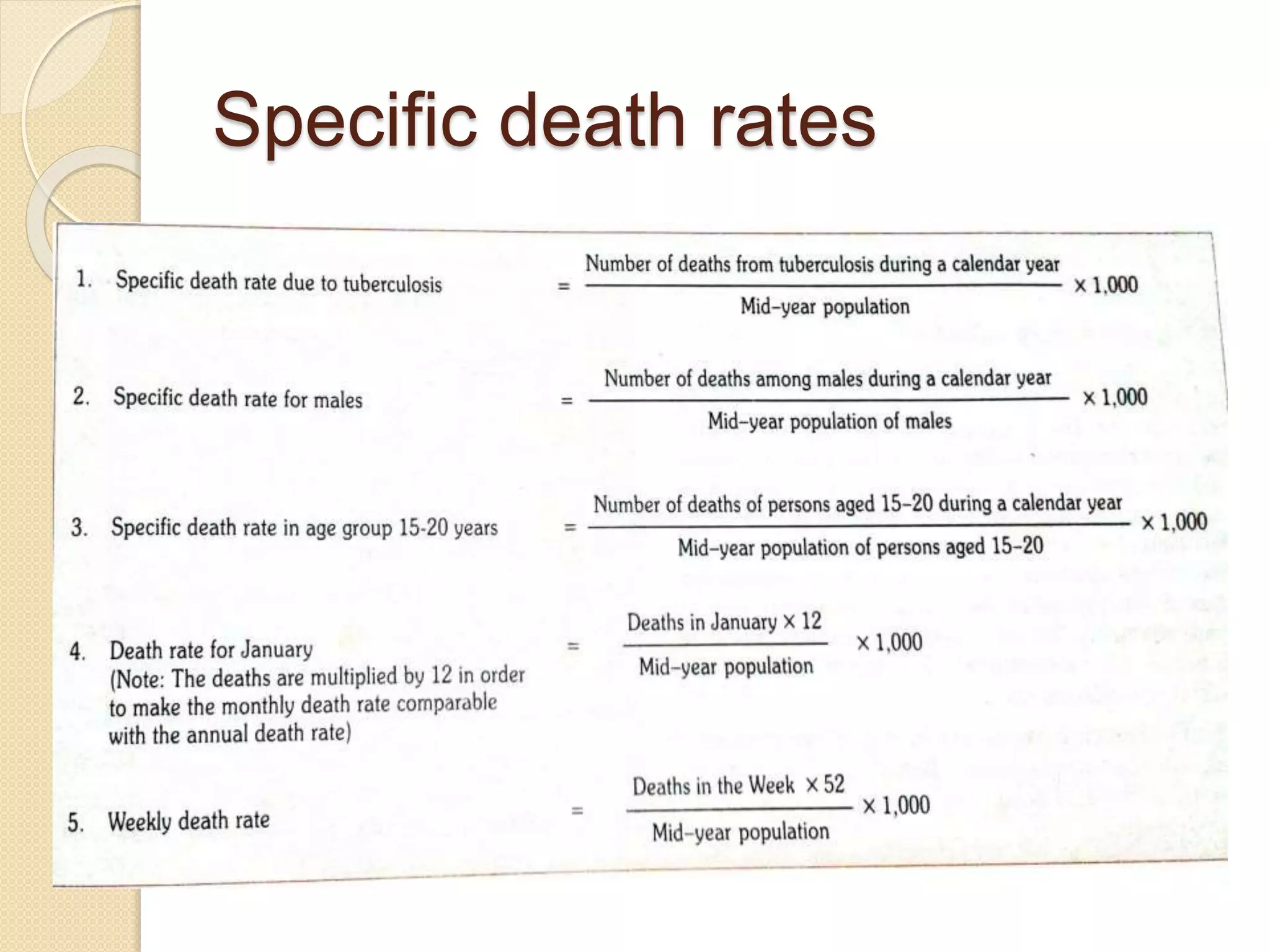
Example of death rates
Specific death rates
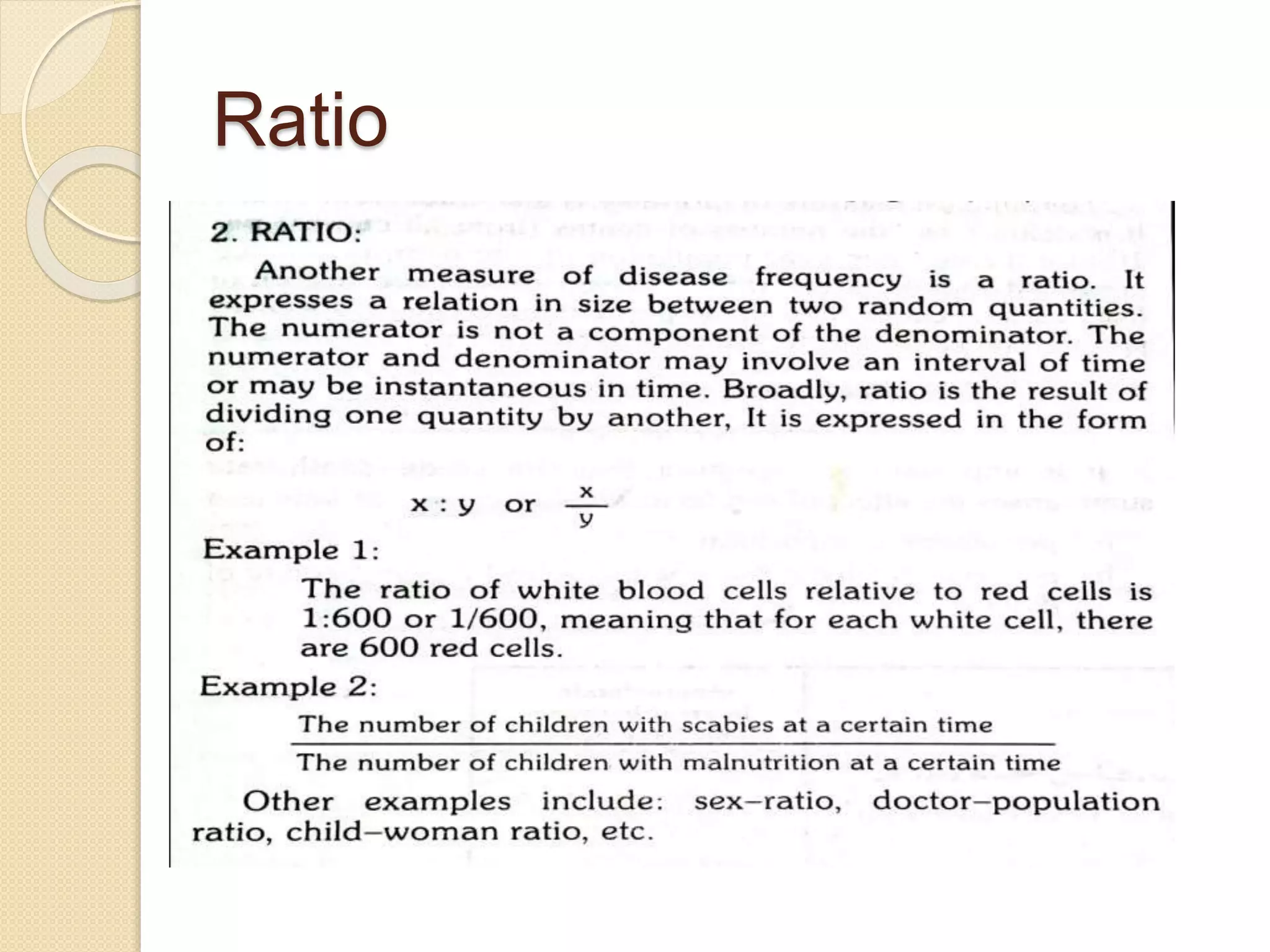
Ratio
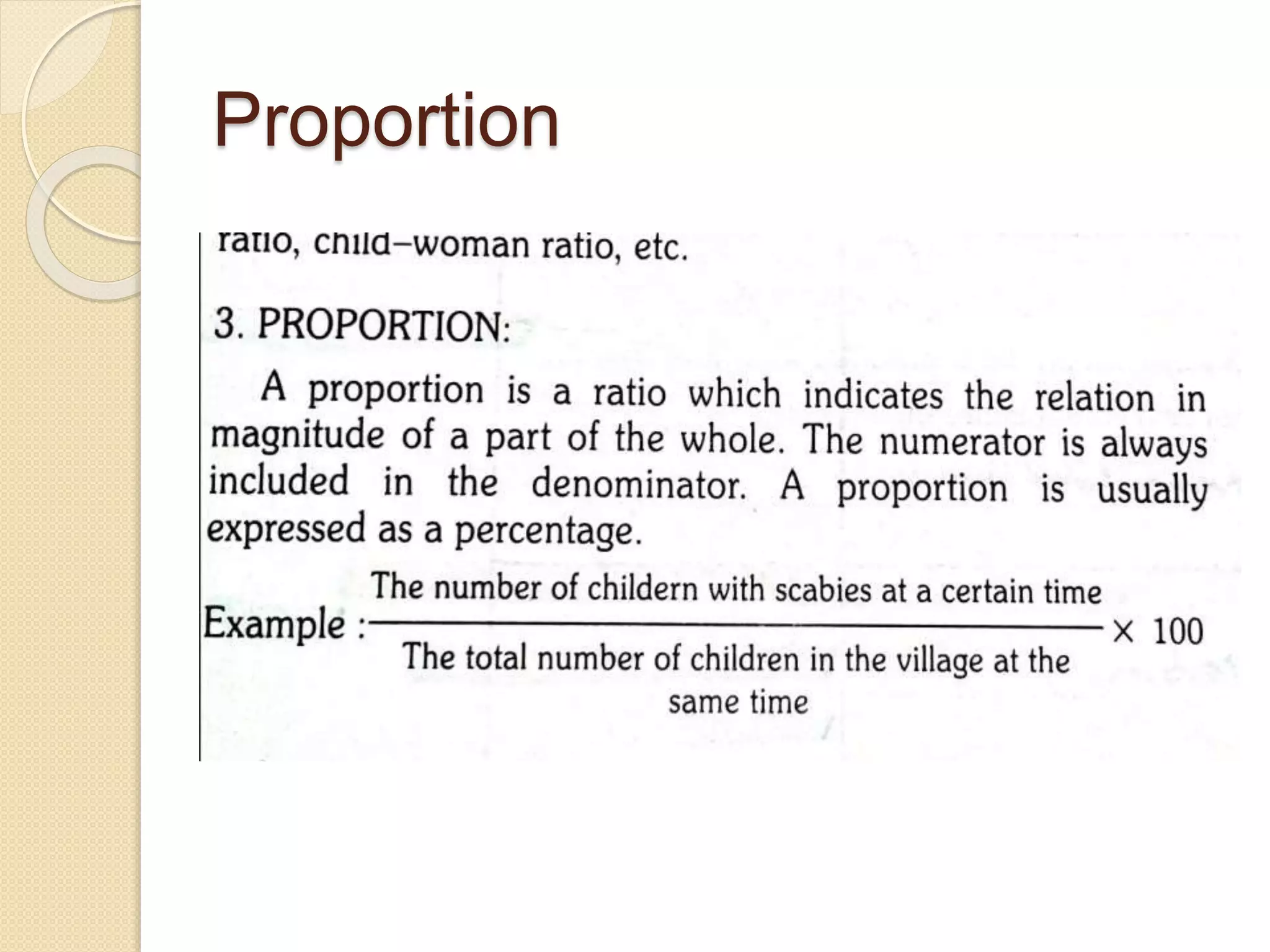
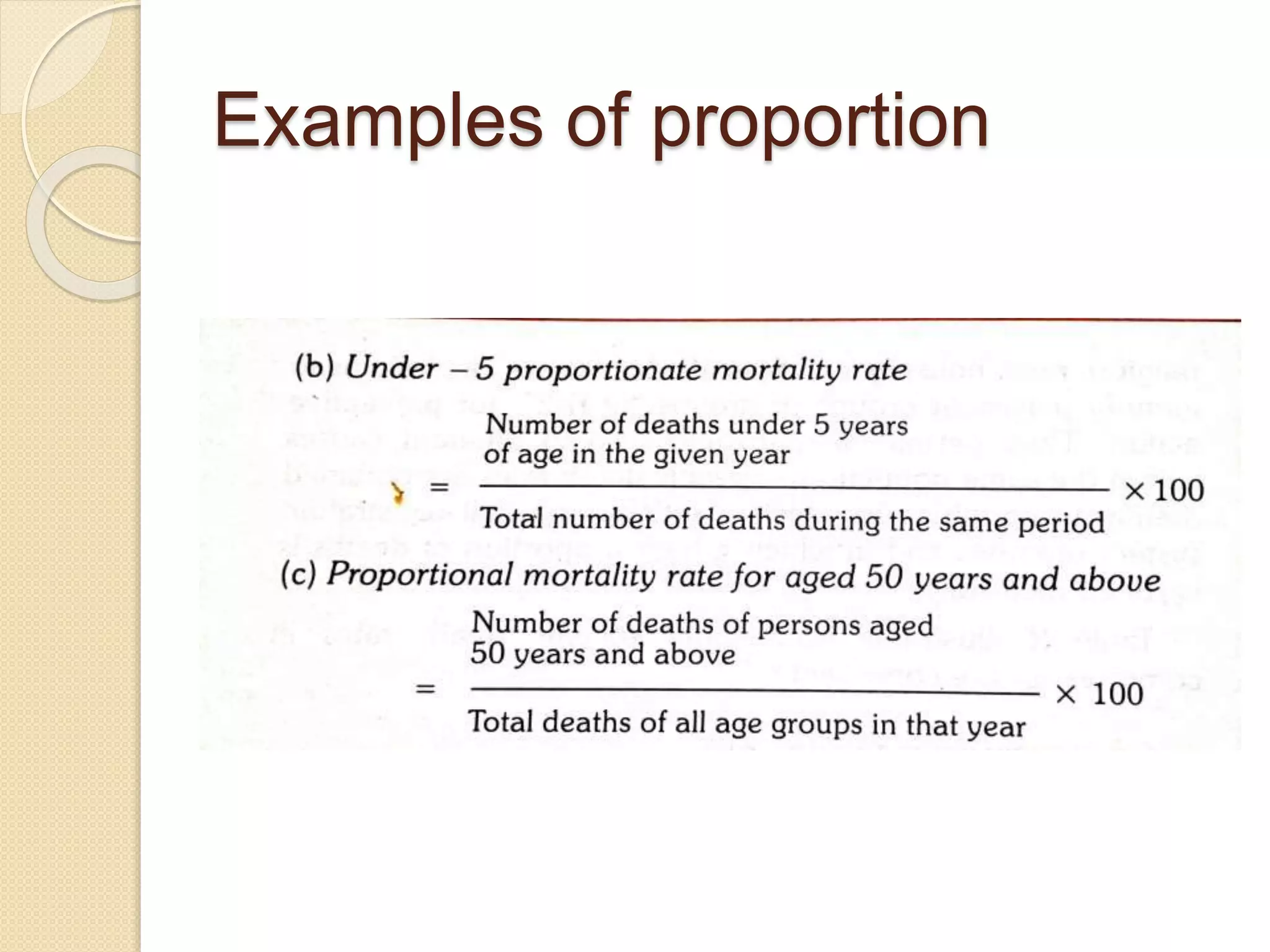
Proportion
Examples of proportion
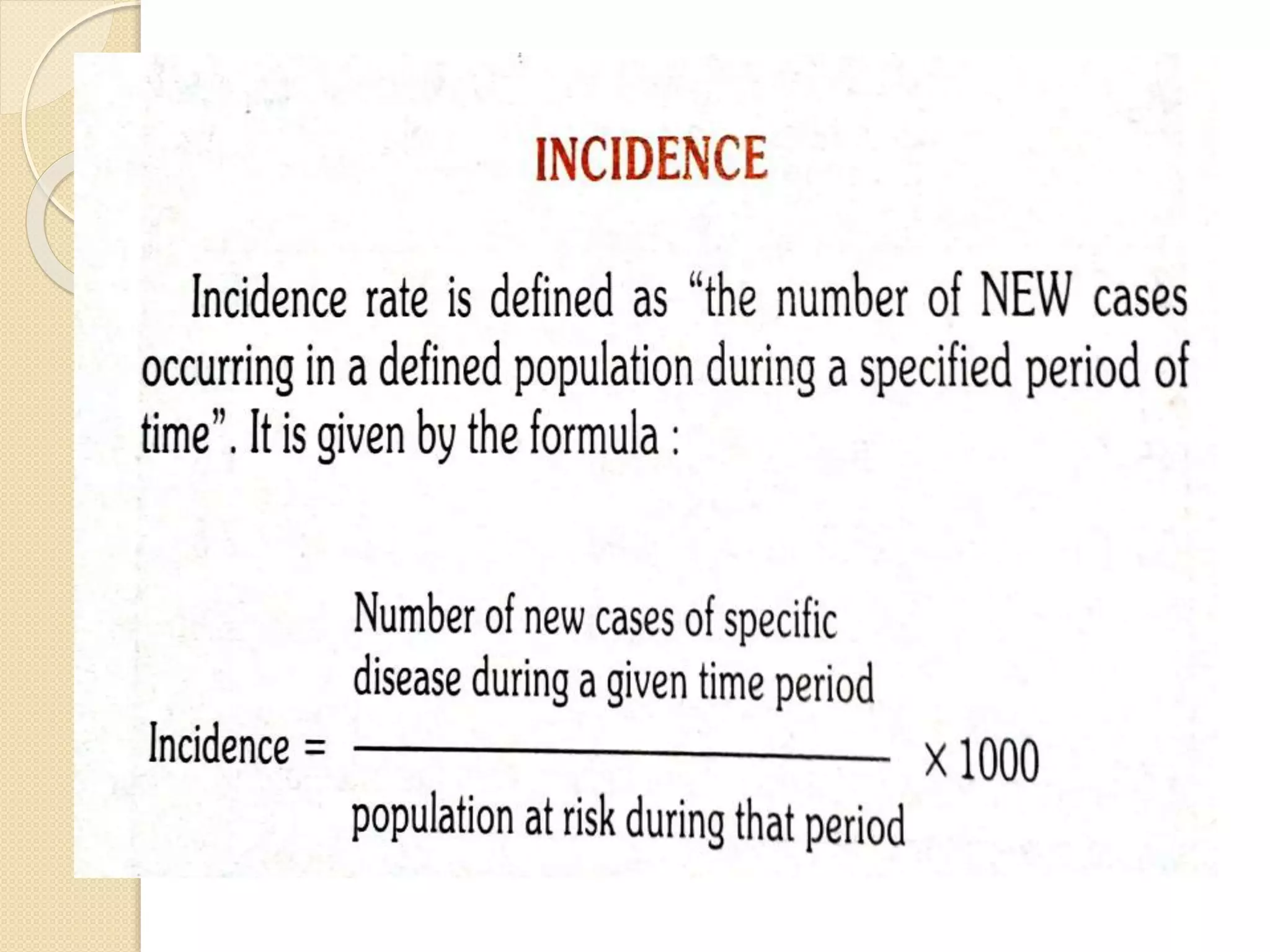
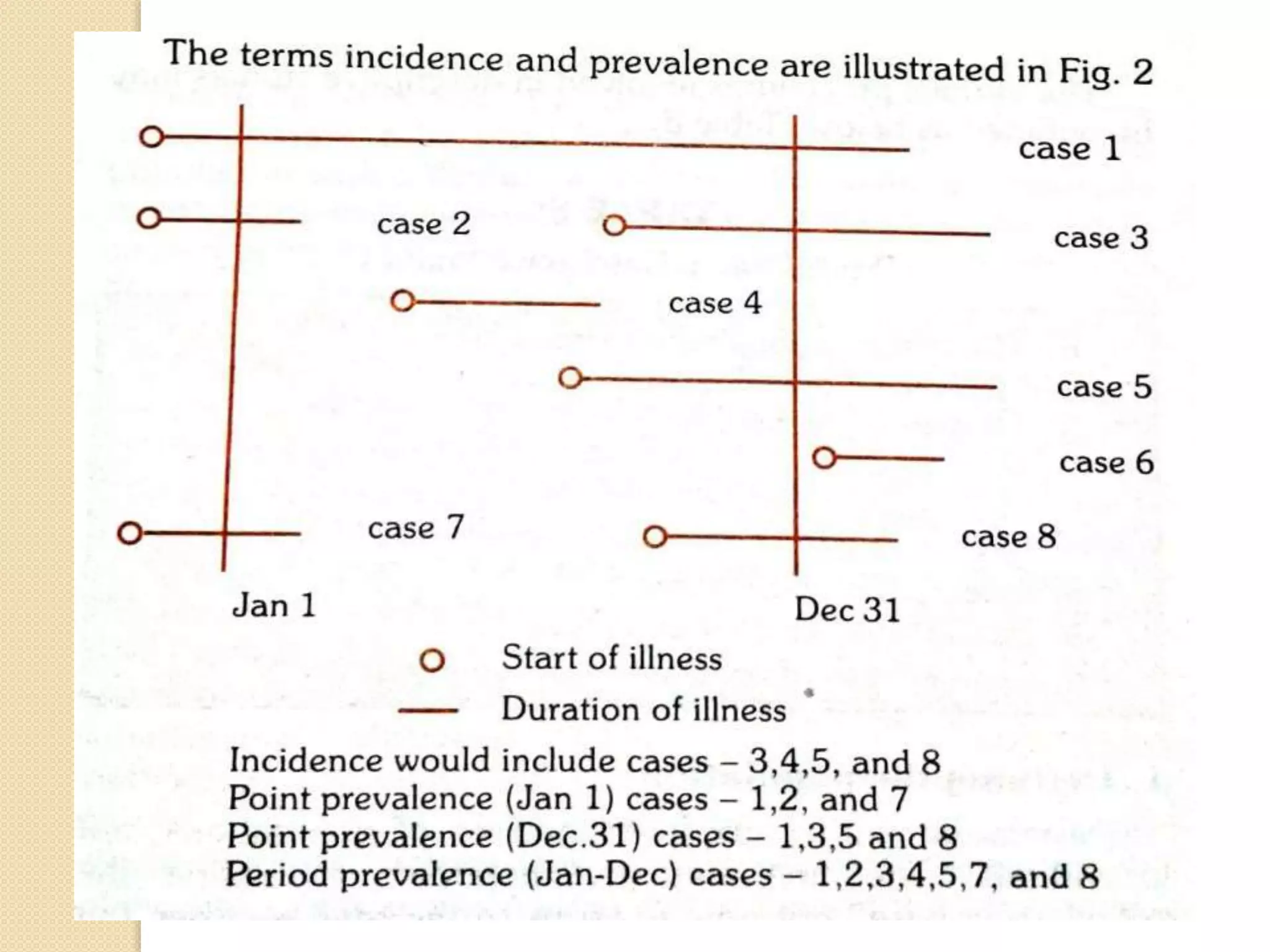
incidence
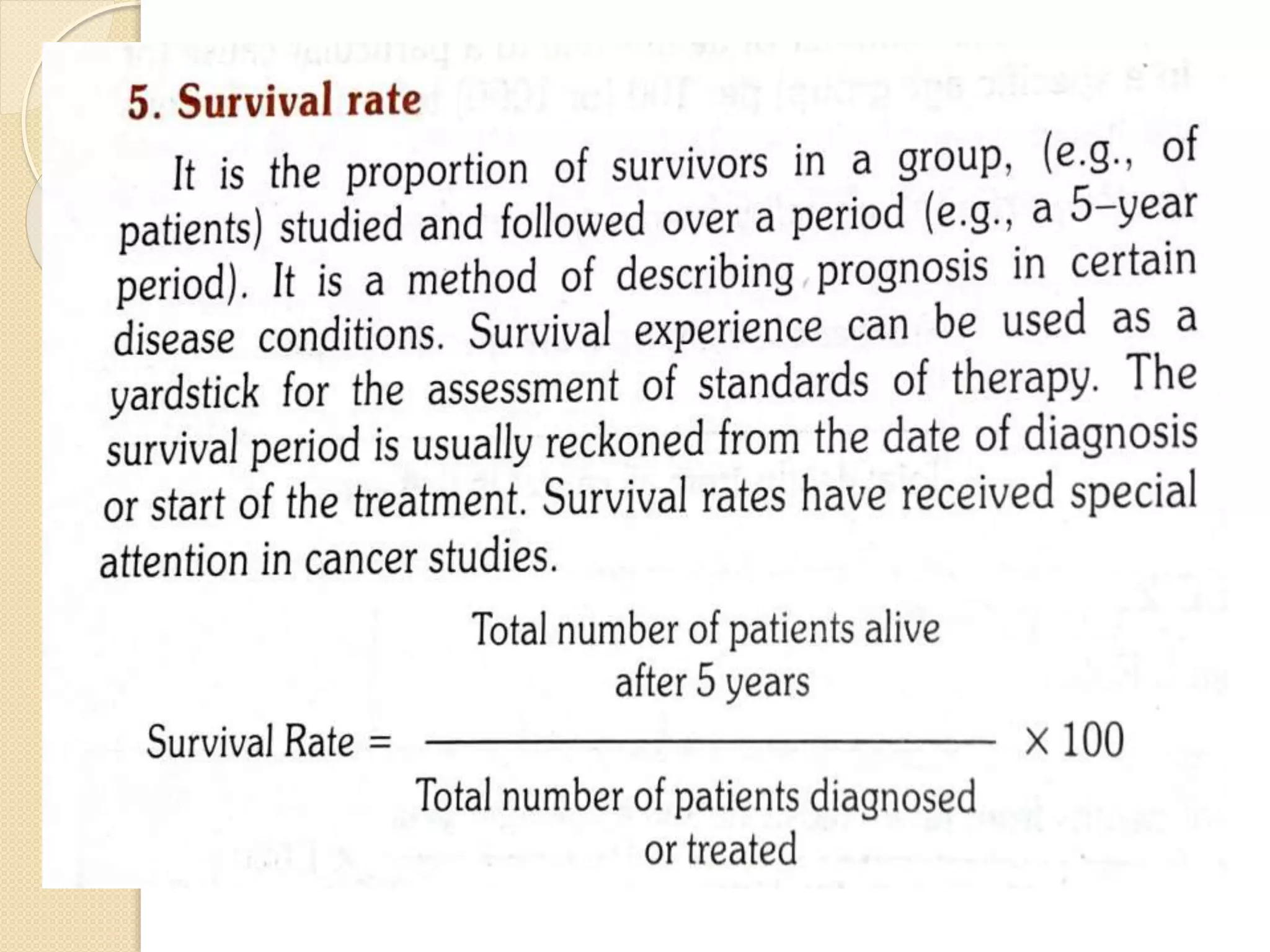
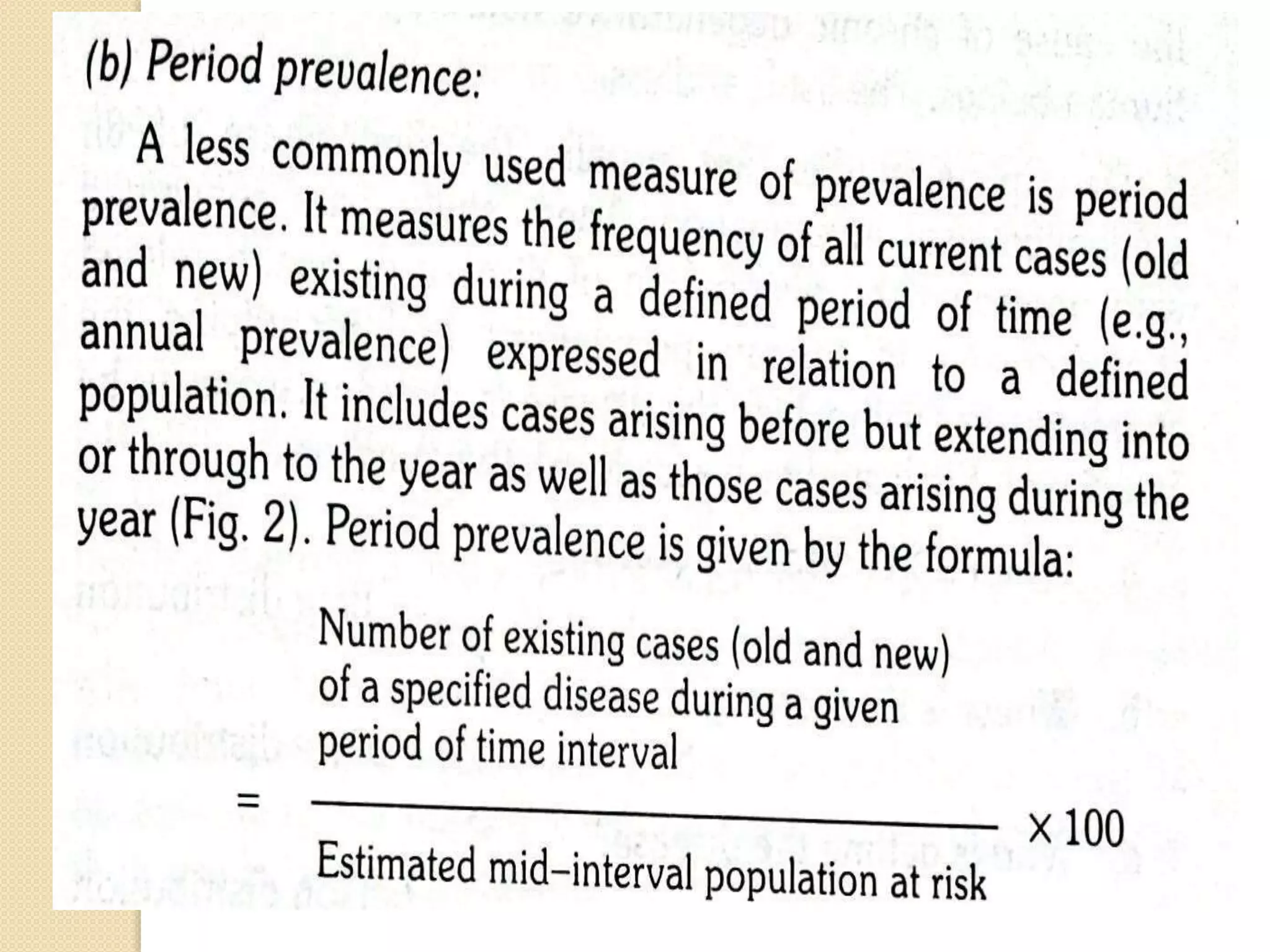
Prevalence
 It refers specifically to all current
cases (old and new) existing at a
given point of time, over a period in a
given population
 It is of two types:
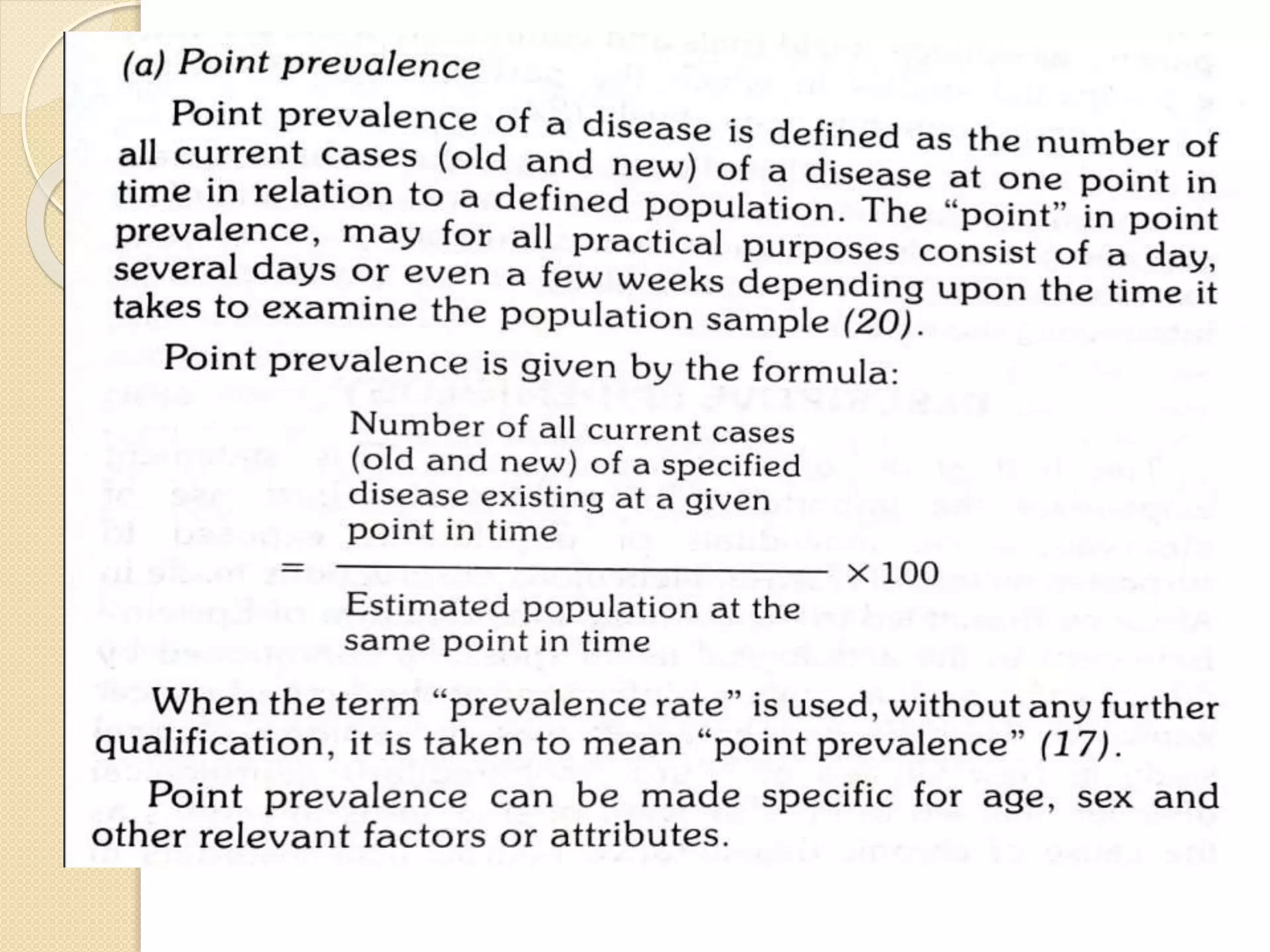
 1. Point prevalence
 2. period prevalence
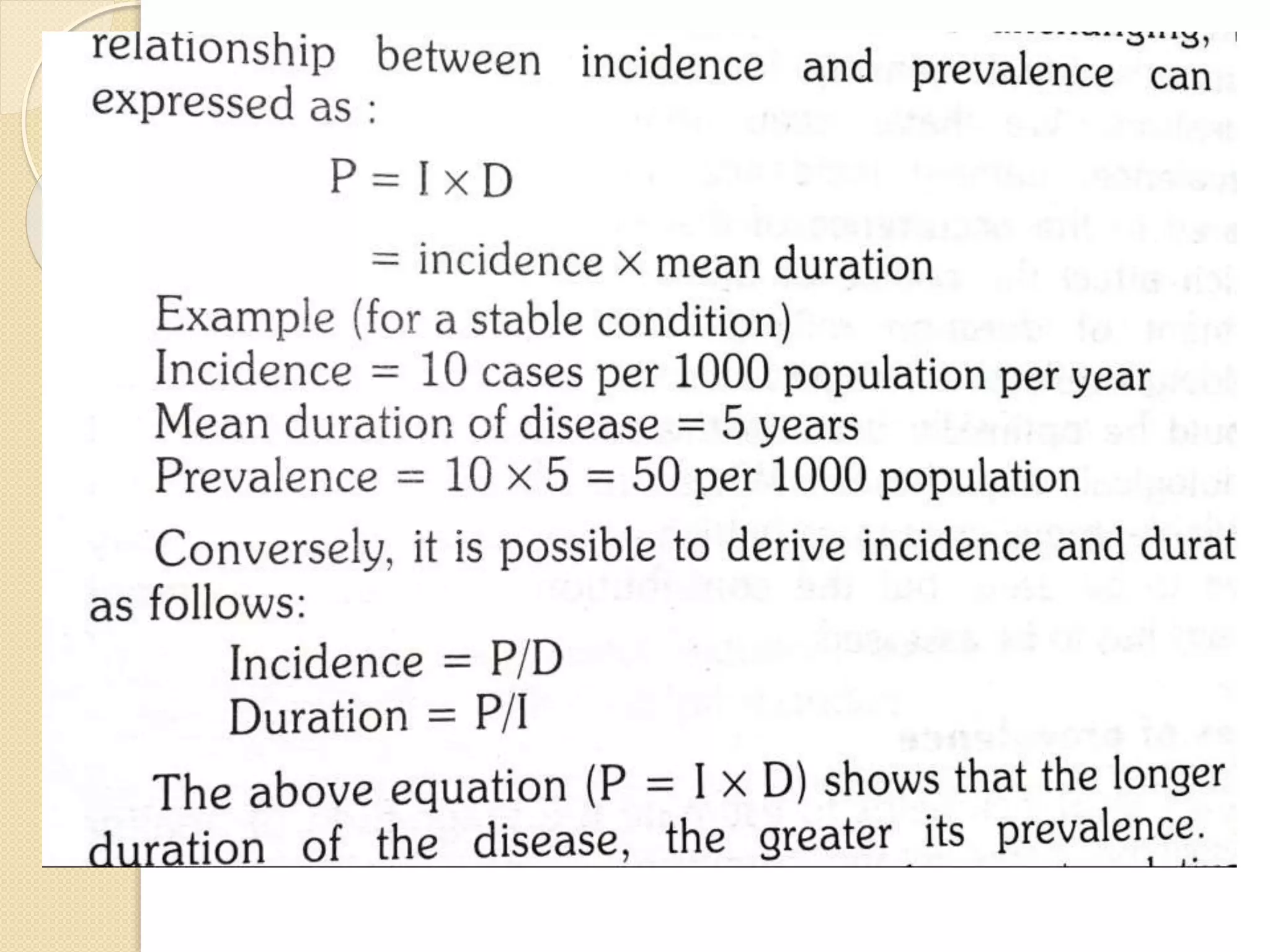
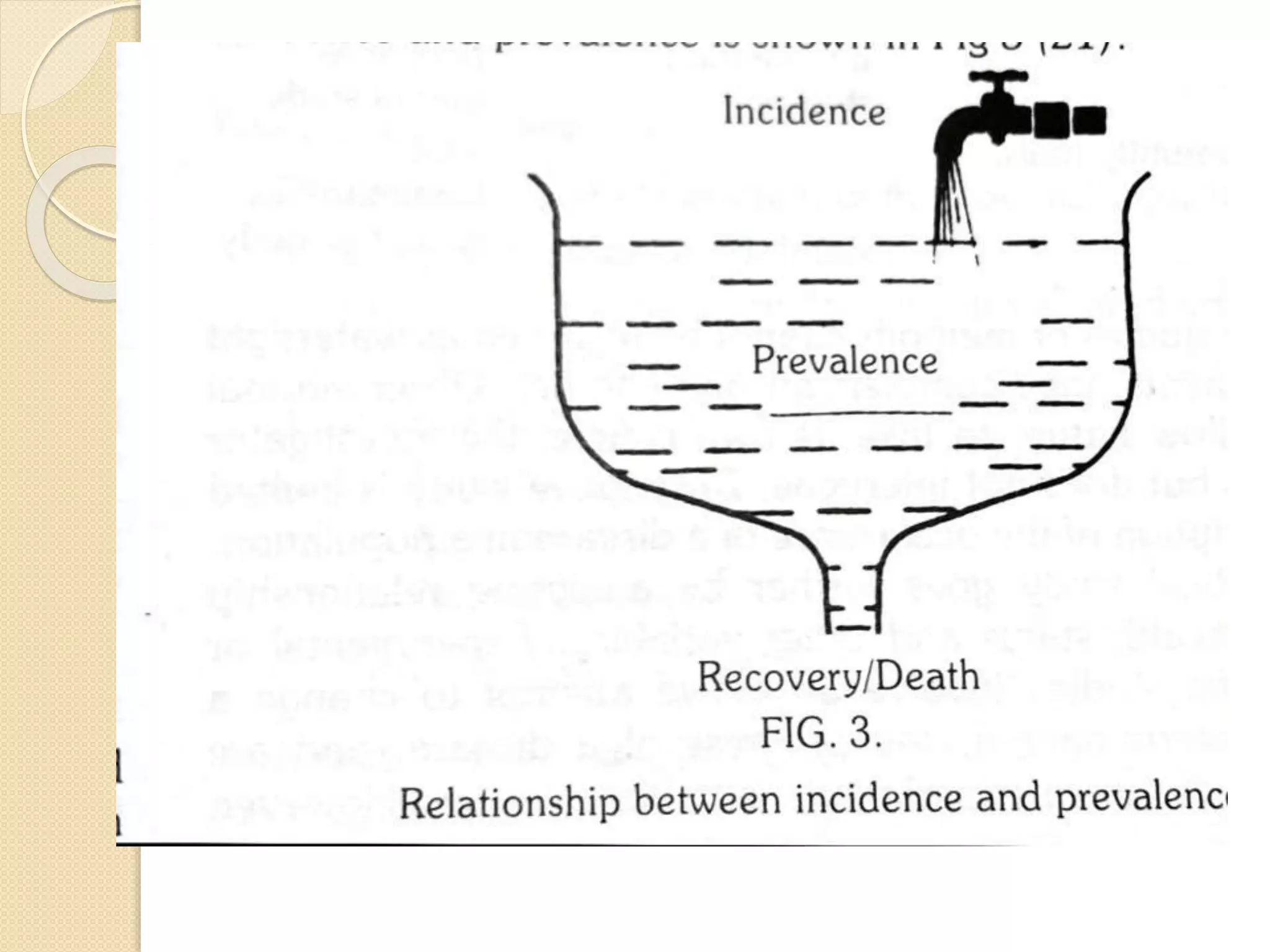
Relationship between prevalence
and incidence
Epidemiological methods
 observational studies
 Experimental studies
Observational studies
 Cross-sectional studies
 Case control
 Cohort studies
 Longitudinal studies
 Types of cohort
Experimental studies
 Randomized control trial
Description of experimental
studies
 Dependent variable
 Independent variables
 Mediators /moderators variables
 What is randomization?
 What is control?
 What is blind?
 How many types of blind?
 Why there is blind?
Discussion and queries ???
Keep learning !!!

5.principles and methods of epidemiology

  • 1.
    Principles and Methodsof Epidemiology RDM 205 Rural Health and Well-being Dr. Rajeev Kumar, M.S.W., (TISS, Mumbai), M.Phil., (CIP, Ranchi), U.G.C- J.R.F., Ph.D., (IIT Kharagpur)
  • 2.
    “ I keptsix honest serving men; they taught me all I know. Their names are what, why, when, how, where, and who.”
  • 3.
    What is Epidemiology? As defined by John M. Last (1988) “ Epidemiology is the study of the distribution and determinants of health related states or events in specified populations, and the applications of this study to control of health related problems”
  • 7.
    Three pillars ofEpidemiology 1. Disease frequency 2. Distribution of disease 3. Determinants of disease
  • 8.
    Disease frequency  Epidemiologyis the measurement of frequency of disease, disability or death and summarizing this information in form of rates and ratio. (details will be discussed later)
  • 9.
    Distribution of disease Disease or health related matter are not uniformly distributed in human population.  Those are distributed in patterns in community, and epidemiology address those variations or patterns.  This aspect is known as descriptive epidemiology
  • 10.
    Determinates of disease It identify the underlying causes ( or risk factors).  This is the real substance of epidemiology
  • 11.
    Aims of epidemiology 1.It describes the distribution and magnitude of health and disease problems in human population 2. To identify the aetiological factor (risk factors) in the pathogenesis of disease 3. To prove the data essential to the planning, implementation and evaluation of services for the prevention, control, and treatment of disease and to setting up of priorities among those services
  • 12.
    Epidemiology approach 1. Askingquestions 2. Making comparisons
  • 13.
    (A). Asking questions( activity based on given article)  What is the event / problem?  What is the magnitude ?  Where did it happen?  When did it happen?  Who are affected?  Why did it happen?
  • 14.
    (B). Questions relatedto health action ( activity based on given article)  What can be done to reduce the problem and its consequence?  How it can be prevented in the future ?  What action should be taken by the communities? By the health service? By other sectors? Where and for whom these activities be carried out ?  What resources are required?  How far the activities to be organized ?
  • 15.
    Making comparisons  Theremay be comparisons of two or more groups  There may be comparisons between communities or regions or genders  Before comparison, we need to consider the comparability  As is control and cohort studies ( will be discussed later)
  • 16.
    Basic measurements in epidemiology Measurement of mortality  Measurement of morbidity  Measurement of disability  measurement of presence, absence or distribution of the characteristics or attributes of the diseases  Measurement of medical needs, health care facilities utilization  Measurement of the presence, absence or distribution of the environmental and other factors suspected of causing the disease.  Measurement of demographic variables
  • 17.
    Types of variables Variate: any piece of information referring to the patients or disease, it is of two types (1) discrete (2) continuous  Circumstance: Any factor in the environment that might be suspected of causing a disease ( air pollution, polluted water)
  • 18.
    Tools of measurement Rates  Ratio  Proportion
  • 19.
    Rates  Suppose therewere 500 deaths from traffic accidents in Ranchi..  These are just number....  It conveys no meaning to epidemiologist  It is not comparable with road accidents deaths with another city  Then what ????
  • 20.
    What is rate??/ Rate measures the occurrence of some particular event in a population during given time.  It is statement of risk of developing a condition Death rate = number of death in one year/mid-year population X 1000
  • 21.
  • 22.
  • 24.
  • 25.
  • 26.
  • 27.
  • 28.
    Prevalence  It refersspecifically to all current cases (old and new) existing at a given point of time, over a period in a given population  It is of two types:  1. Point prevalence  2. period prevalence
  • 32.
  • 34.
    Epidemiological methods  observationalstudies  Experimental studies
  • 35.
    Observational studies  Cross-sectionalstudies  Case control  Cohort studies  Longitudinal studies  Types of cohort
  • 36.
  • 37.
    Description of experimental studies Dependent variable  Independent variables  Mediators /moderators variables  What is randomization?  What is control?  What is blind?  How many types of blind?  Why there is blind?
  • 38.
    Discussion and queries??? Keep learning !!!