Innovating Together
An introduction to
Infusion Pump Testing
Rigel Medical, Seaward Group USA,
6304 Benjamin Road, Suite 506,
Tampa, Florida, 33634, United States
Tel: 813-886-2775 Email: enquiry@rigelmedical.com
Web: rigelmedical.com/usa
Version 1.0 - 2014
Part of
1
Contents
Foreword 2
1 Introduction 2
2 Introduction and History of Infusion 3
2.1 Infusion Circuit 5
3 Types of Infusion 5
3.1 Elastomeric Pumps 6
3.2 Gravity Controllers 7
3.3 Syringe Drivers 7
3.4 Volumetric Pump 8
3.5 Patient Controlled Analgesia (PCA) Pump 8
3.6 Ambulatory Pumps 9
4 Infusion Characteristics 9
5 Problems Associated with Infusion 10
5.1 Air Embolism 11
5.2 Free Flow or Siphonage 11
5.3 Occlusion 11
5.4 Bolus 12
5.5 Vein Closing After Infusion 12
5.6 Infiltration or Tissuing 12
6 Testing Infusion Devices 13
6.1 Introduction 13
6.2 Volume/Flow Rate 14
6.2.1 Cylinders and Burette 14
6.2.2 Weighing Scales 15
6.2.3 Vernier Calipers/Dial Gauges 16
6.2.4 Electronic Devices 16
6.3 Occlusion and Alarm Pressure 17
6.3.1 Analogue Pressure/Force Gauge 17
6.3.2 Digital Pressure Meter 18
6.3.3 Electronic/Automatic Devices 19
6.4 PCA 19
6.4.1 Electronic/Automatic Analyzers 19
6.5 Trumpet Curve 19
7 Multi-Flo 21
7.1 Introduction 21
7.2 Testing Infusion Devices 22
with the Multi-Flo
7.2.1 Syringe Driver Connection 22
7.2.2 Volumetric Pump Connection 22
7.2.3 Volume/Flow 22
7.2.4 Occlusion 23
7.2.5 PCA 24
8 Conclusion 24
9 References 25
Innovating Together
Double your
test capacity
Save time, save money
Innovating Together
Introducing the NEW Rigel Multi-Flo Infusion Pump Analyzer
The only multi-channel infusion pump tester that provides
instant flow rate, volume and pressure measurements
for unbeatable speed and accuracy.
Visit www.seaward-groupusa.com/multi-flo to find out more
Or call 813-886-2775
Part of
FREE Guide
to Infusion
Pump Testing
For your free copy visit
www.seaward-groupusa.com/multi-flo
1 Introduction
It is estimated that 80% of hospitalised patients
receive intravenous (IV) therapy and infusion
devices are used extensively in clinical settings
and patients’ homes as an essential tool for
providing perioperative care, critical care and
pain management. The infusion of fluids uses a
variety of designs providing the ability to feed,
hydrate, medicate or replace blood loss [1-4].
An infusion system is the process by which an
infusion device delivers fluids, nutrition and
medication to a patient in a predetermined and
consistent manner. They are capable of
delivering medication such as insulin or
2 3
rigelmedical.com/usa
hormones, antibiotics, chemotherapy drugs, pain
relief and can even be used for feeding (Fig. 1) [5].
An infusion pump is an electronic device used to
control the administration of intravenous fluids to
deliver measured amounts at careful and
regulated rates. They often incorporate a
mechanism or structure that mediate active
transport across a biological membrane, using
needles, where it has the best, most immediate
effect. Occasionally subcutaneous, epidural or
enteral methods are used but the amount of fluid
is restricted, to as low as 3ml for subcutaneous
methods [5, 6].
Infusion pumps have been widely used in clinical
practice, such as in infusion IV therapy to infuse
fluids, medication or nutrients into patient’s
circulatory system and can produce quite high
but controlled pressure so as to inject controlled
amount of fluids, however, pressure values vary
with different pumps [7].
2 Introduction and History of Infusion
The prescription and administration of
medication is an imprecise art as many dosages,
for instance paracetamol, are not based on body
weight and have only a maximum daily limit
independent of size or weight of the user. On the
other hand, treatment delivered through infusion
directly into the bloodstream needs to be
accurately controlled and often includes
calculations based on the patient’s physical
condition (Fig. 2).
Infusion pumps can administer fluids in cases
where other methods would be impractical or
unreliable. For example, they can administer
fluids at flow rates of 0.1 mL/hr (Alaris and
CME™) which would be too small for a drip;
provide medication at predetermined intervals
(i.e. every minute); provide repeated boluses
requested by the patient up to maximum per
hour (i.e. patient-controlled analgesia); and
administer fluids where volumes vary by the time
of day and also for extended durations.
Although attempts at intravenous medicine date
back to 1492, developments gained momentum
in the 17th century with the first IV infusion device
invented by Christopher Wren in 1658. However,
developments were halted until the 19th century
due to restrictions on IV infusion following deaths
associated with blood transfusion after the first
successful transfusion in 1665. During the 19th
century the key elements of IV transfusion, which
are still observed today, were established; a slow
infusion process, awareness and prevention of
risks from air embolism, and avoiding volume
overload.
Innovating Together
Foreword
This booklet is written as a guideline for people involved in testing medical infusion devices.
All reasonable care has been taken to ensure that the information, reference figures and data are
accurate and have been taken from the latest versions of various standards, guidance notes and
recognised “best practices” to establish the recommended testing requirements. Rigel Medical, their
agents and distributors, accept no responsibility for any error or omissions within this booklet or for
any misinterpretations by the user.
For clarification on any part of this booklet please contact Rigel Medical before operating any test
instrument.
No part of this publication shall be deemed to form, or be part of any contract for training or equipment
unless specifically referred to as an inclusion within such contract.
Rigel Medical assumes that the readers of this booklet are electronically and technically competent and
therefore does not accept any liability arising form accidents or fatalities directly or indirectly from the
tests described in this booklet.
Authors: Katherine Summers MEng and John Backes MA.
Figure 1: Infusion device
Figure 2: Intravenous (IV) therapy
One of the major developments in infusion
pumps was the invention in the early 1970s of a
wearable pump now known as the ambulatory
pump by Dean Kamen, which enabled patient
mobility during treatment [5].
There are many different types of infusion pumps,
which are used for a variety of purposes and in a
variety of environments; from simple gravity
controllers which use a clamping action to vary
the flow with the force of gravity, volumetric
pumps which employ a linear peristaltic pumping
mechanism and syringe pumps which work by
pushing a plunger at a predetermined rate [4].
Occlusion is an obstruction or closure of a
passageway or vessel. A blockage in infusion
devices causes pressure to build up which can
reduce the flow and cause harm to the patient.
Most infusion pumps have a pre-determined
occlusion pressure threshold See 5.3 [7], where
an alarm activates once the pressure exceeds
this limit. If the occlusion pressure alarm is set
too high, the harmful effects can be prolonged
prior to alarm. Therefore testing the occlusion
pressure is crucial to infusion pump safety.
Infusion pumps must be periodically tested by
qualified personnel to determine whether they
are functioning properly [7]. There is a wide range
of methods used to test the performance and
accuracy of infusion devices which vary in
procedure and equipment. However, the primary
aim is to accurately measure the delivery volume
and flow rate of the infusion device, check
occlusion alarms and determine that it is safe for
use.
Figure 3: Infusion circuit
4 5
rigelmedical.com/usa
An equally important point to testing infusion
devices is not necessarily the accuracy of the
Device Under Test (DUT) but how easy the test
equipment is to operate, how simple it is to
setup, if it can be left to run unattended and to
ensure it produces the required information
which is meaningful and easy to interpret.
Therefore many users are moving away from
basic measurements, such as weighing scales
and burettes where continuous user input is
required to ensure accuracy and moving towards
automatic flow analyzers which record real time
results graphically, such as the Multi-Flo from
Rigel Medical.
2.1 Infusion Circuit
IVs are most often administered through bottles
or bags of fluid that come premixed and range in
standard sizes from 50 to 1000ml. The bag is
hung from an IV pole and the IV tubing is
attached to the bottom of the bag (Fig. 3). The IV
tubing contains the drip chamber which is where
measurements to calculate speed of a manual IV
are taken. The drip chamber must always be half
full to allow drops to be measured but also to
prevent air from entering the tubing. The roller
clamp is used to control the rate at which the IV
fluid infuses. It can squeeze the tubing tightly,
making it narrow and reduce the flow rate or it
can loosen its pinch on the tubing to allow fluid
to flow at a faster rate. Roller clamps should be
closed before attaching the IV fluid to ensure no
air gets into the tubing [6].
The safe range of daily fluid intake will vary based
on the patient's condition, size and age. Several
diseases such as heart failure, kidney failure, and
diabetes, for example, in a normal healthy adult,
would require a total fluid intake (coming from IV
fluids and/or fluids that they drink) of
approximately 35-50ml/kg body weight/day.
Also, IV administration is faster than any other
method of administration because it goes directly
into the blood, so it may be used when rapid
action for treatment is necessary [6].
3 Types of Infusion
There is a variety of different types of infusion devices
which all have individual procedures and mechanisms.
However, they share an aim to provide accurate
infusion at a predetermined rate over a set period of
time. Infusion pumps in general use positive pumping
actions which provide an accurate flow of fluids or
drugs and all infusion pumps have commonalities
including the alarm systems and the control panel etc.
Pumps are designed for a variety of clinical
applications and their performance characteristics
vary depending on the delivery volume, long & short-
term accuracy and speed of the desired infusion.
The Medicines and Healthcare Products Regulatory
Agency (MHRA) have produced three categories in
accordance with the potential infusion risks to aid
selecting the most appropriate pumps for specific
requirements (Table 1 overleaf).
The reliability of medical devices such as infusion
pumps is extremely important because these
devices are being used on patients who are likely
to be in a critical condition [8]. Therefore, they
incorporate warnings and alarms such as air in tube,
excessive pressure, incorrect syringe size, loading
problems, occlusion and also low battery warnings.
Innovating Together
Table 1: MHRA Categories of Infusion
There are five main types of infusion with the
simplest device type being gravity controllers, which
employ a clamping action to vary the flow of liquid
due to the force of gravity. More complex systems
use a positive pumping action for infusion; a simple
version being an elastomeric pump which has a
balloon reservoir that contracts to deliver fluid at
a constant rate. Volumetric pumps may employ a
linear peristaltic pumping mechanism applied to the
infusion tubing or use a special cassette. Syringe
pumps work by pushing the plunger of a
disposable syringe along at a predetermined rate.
The type of pump used is dependent on the
patient’s needs such as the required volume and
the speed of the desired infusion [4].
3.1 Elastomeric Pumps
Elastomeric pumps, also called balloon pumps,
are commonly used to administer liquid drugs
such as local anesthetics or antibiotics. Fluid is
held in a stretchable balloon reservoir and
pressure from the elastic walls drive the fluid
delivery with relatively consistent pressure until
near the end of the infusion, which then spikes
resulting in increased flow rate. The flow
restrictor, usually a glass capillary or steel
cannula, is molded into the tubing or situated
within the reservoir to control the accuracy of the
flow rate (Fig. 4).
Elastomeric pumps run independently without
any electronics and are not gravity driven which
makes them maintenance free and typically
single-use. They are known for their reliability and
accurate flow rate and drugs can be delivered
6 7
rigelmedical.com/usa
over a long period of time, up to seven days,
making it ideal for outpatients or patients that
require mobility. However, the pump’s placement
either above or below the patient will affect the
flow rate.
Figure 4: Elastomeric Pump
3.2 Gravity Controllers
For gravity controlled pumps the IV bag is
situated higher than the patient’s heart and fluid
is gravity fed towards the patient using a roller
clamp to control the flow. Timing how fast the
drops fall through the tube drip chamber enables
a flow rate to be determined and the greater the
bag height, the quicker the flow rate in milliliters
per drop (mL/drop). Each 300mm increase in
height of the IV bag, produces approximately
25mmHg of pressure. This method of infusion is
often used in Emergency Rooms, by paramedics
in ambulances and by athletic trainers [4].
3.3 Syringe Drivers
Syringe drivers utilise an electronically controlled,
electric motor to slowly depress the plastic syringe
piston/plunger to drive the fluid into the patient at
a predetermined rate. The electronics control the
speed (flow rate), distance (volume infused) and
the force (pressure) that the syringe plunger is
pushed (Fig. 5). The operator must use the correct
model and size of syringe, ensure it is correctly
positioned and frequently monitor the delivery to
maintain the expected drug dosage up to100ml of
fluid at flow rates between 0.1 to 100mL/hr.
Innovating Together
Therapy
Category
Therapy Description Patient Group Critical Performance Parameters
A Drugs with narrow
therapeutic margin
Drugs with short half-life
Any infusion given to
neonates
Any
Any
Neonates
Good long-term accuracy
Good short-term accuracy
Rapid alarm after occlusion
Small occlusion bolus
Able to detect very small air embolus (volumetric pumps only)
Small flow rate increments
Good bolus accuracy
Rapid start up time
B Drugs, other than those
with a short half-life
TPN Fluid maintenance
Transfusions
Diamorphine
Any except neonates
Volume sensitive except neonates
Any except neonates
Good long-term accuracy
Alarm after occlusion
Small occlusion bolus
Able to detect small embolus (volumetric pumps only)
Small flow rate increments
Bolus accuracy
C TPN Fluid maintenance
Transfusions
Any except volume sensitive or
neonates
Long-term accuracy
Alarm after occlusion
Small occlusion bolus
Able to detect air embolus (volumetric pumps only)
Incremental flow rates
Figure 5: Syringe pump
Syringe drivers are the preferred choice for lower
volumes and low flow rates and can infuse small
volumes of fluid over an extended period of time
while maintaining a constant rate. However,
users should be aware that the flow delivered at
the start of any infusion might be less than the
predetermined value due to mechanical slack
which must be taken up before a steady flow rate
is achieved. At low flows it can be some time
before any fluid is delivered to the patient.
3.4 Volumetric Pump
The volumetric infusion pump is the most
sophisticated type of pump which forces fluid into
the patient’s vein under pressure and resistance [6].
The IV bag is situated higher than the pump and
patient and the pump utilises a linear peristaltic
action or uses a special cassette, known as a
piston cassette, to control the infusion fluid. A set of
rollers pinch the flexible tubing to push the fluid
towards the patient (Fig. 6). Volumetric pumps are
used to administer up to 1000mL of fluid at flow
rates between 0.1 to 1000mL/hr. However, this
type of pump is not considered accurately
appropriate for the delivery of fluids at a rate lower
than 5mL/hr.
Peristaltic action is a continuous rippling wave
motion which can be linear or rotary. The Baxter
Colleague™ pumps use a linear peristaltic pumping
action and the rotary peristaltic action is most
commonly used in feeding and Patient Controlled
Analgesic (PCA) pumps.
Cassette type pumps have a plunger mechanism
built into the tubing set where the stepper motor
drives the motion. The cassette also has a valve
which is timed to only open when the plunger is
pumping. This valve can sometimes be used as a
free-flow mechanism. The Ivion Kids pumps used
this type of pumping mechanism as do some PCA
pumps.
Figure 6: Volumetric pump
3.5 Patient Controlled Analgesia (PCA) Pump
A PCA pump is a type of syringe driver that allows
the patient, within specified limits, to control their
own drug delivery through a patient hand control,
which when pressed, delivers a pre-set amount of
analgesic drug, known as a Bolus (Fig. 7). After
the delivery of the bolus the pump will return to
the normal basal flow rate and refuse to deliver
another bolus until a defined time has passed,
known as the lockout time, thus limiting the
number of boluses allowed. The bolus size and
lockout time, along with the constant basal drug
infusion rate are pre-programmed by the clinician.
Figure 7: Patient controlled analgesia
(PCA) pump
8 9
rigelmedical.com/usa
3.6 Ambulatory Pumps
Ambulatory pumps are small, light, battery
powered syringe or cassette mechanisms which
are designed to be portable or wearable giving
the patient freedom to move when receiving
treatment. This allows for medication to be
administered on an outpatient basis, especially
for those who need round the clock injections
(Fig. 8) [5].
Most ambulatory pumps have minimum alarms,
which mean that patients and carers need to
closely monitor the infusion. Consideration also
has to be given for the hazards a portable device
is exposed to e.g. knocks, fluids, electro-
magnetic interference etc. In general, critical
drugs which require a constant flow should not
be administered using ambulatory pumps.
Figure 8: Ambulatory pump
4 Infusion Characteristics
In an infusion system, the pump uses pressure to
overcome the resistance to flow to deliver infusion.
The greater the resistance in the IV circuit the
higher the pressure is required to deliver the
prescribed flow. Resistance arises due to filters,
anti-siphon and anti-reflux valves, administration
set, in particular the cannula, the internal diameter
and potential kinking of tubing. This along with
viscous solutions and syringe/cassette stiction
can accumulate the pressure [7]. The pressure
available is related to the height, that the bag or
bottle of fluid is situated above the patient's heart,
with increased height produces increased
pressure. Therefore infusion devices must be
capable of delivering infusions at pressures
between 100 and 750mmHg (2 to 15PSI) to
overcome any internal or external resistance to the
flow of fluid.
The patient’s venous system contains pressure
and therefore the IV infusion device must be
proven to be compatible with pressures found in
the body. To deliver simple electrolytes into an
adult intravenous site at 100mL/hr the pressures
associated with resistance are summarised below
(Table 2).
Table 2: Resistances within the body
to infusion
Innovating Together
Point of Resistance Pressure (mmHg)
Maximum adult venous pressure 30
Filter 10
Cannula 100
Administration set 1
Total = 141
Figure 9: Fluid delivery pattern for
volumetric, syringe and ambulatory pumps
The pattern of fluid delivery is dependent on the
type of pump used. The typical flow patterns for
volumetric, syringe and ambulatory pumps at a
flow rate of 1mL/hr (Fig. 9). Each pump delivers
fluid accurately at 5% of the set flow rate over long
periods. However, only the syringe pump delivers
fluid accurately over very short periods of time.
5 Problems Associated with Infusion
Millions of infusion devices are used in hospitals
and in the community every year. The vast
majority of infusions are delivered safely.
However, incidents with infusion devices
continue to dominate adverse incident reports
with at least 1000 incidents investigated by the
MHRA between 2005 and 2010 in the UK alone
[4, 10]. In the past five years, the FDA has
received more than 56,000 reports of adverse
events associated with the use of infusion
pumps. Those events have included serious
injuries and more than 500 deaths. Between
2005 and 2009, 87 infusion pump recalls were
conducted to address identified safety concerns,
according to FDA data [14]. The majority of
problems relate to over-infusion of drugs, either
due to user error with dosage and patient data,
product design and engineering or software
malfunction. In many fatal incidents no fault has
been determined with the infusion device which
suggests that user error is a contributing factor
whereas, in practice it seems that syringe pumps
produce the most significant problems
compared to other methods of delivery [4, 8].
Genuine infusion pump malfunctions rarely
occur, except when a pump has been
mishandled, dropped or damaged. However,
faulty or mismatched batches of administration
sets can causes problems. Prompt reporting of
damaged pumps, suspect administration sets or
unexplainable alarms can lead to safety checks
and investigations which improve the overall drug
infusion safety [8].
There are many dangers when using infusion
devices which need to be minimised for patient
safety and therefore most infusion devices
incorporate detecting warnings and alarm
systems including: air in tube, excessive
upstream pressure and both up and downstream
occlusions, syringe empty / nearly empty and
also low battery signals.
10 11
rigelmedical.com/usa
A careful set-up procedure will prevent the
majority of errors; however, major problems can
still occur after the onset of an infusion. This is
particularly the case when patient care is
transferred to different staff or clinical area. A
proper hand-over with complete documentation
is necessary. Good communication such as a
checklist, is the most important factor in reducing
infusion risks and increasing compliance with
correct procedures [9].
5.1 Air Embolism
The problems of air entrapment are restricted to
volumetric pumps and therefore IV pumps are
recommended to have a means of detecting and
preventing air in the tubing using either a photo
detector or ultrasonic sensor which is capable of
detecting single bubbles of about 0.1mL. Many
systems of administration employ a drip chamber,
which prevents air from entering the blood stream,
known as an air embolism [9].
The ultrasonic air detection system responds to
any air in its pathway and if tubing is not correctly
attached it may give a false alarm. Also, solutions
which are prone to froth can activate the sensor.
False alarms are at best a nuisance as air in the
tubing can be dangerous to the patient if it gets into
the blood as approximately 3-8mL of air per kg can
cause cardiac arrest, that’s about 210-560mL for a
70kg patient. Even if there appears to be no air in
the line, the action of pumping can often draw air
out of the solution and this can accumulate into
significant sized bubbles or if there is a leak in the
upstream line, air can be drawn into the line. Air
entrainment can be prevented by the intrinsic
design of the pump or by using an air detector.
5.2 Free Flow or Siphonage
If the pump is higher than 300mm above the
patient's heart, and the roller clamp is fully open
on a basic gravity infusion set-up this will allow
free-flow or siphonage which allows all the fluid
and any air in the infusion bag to infuse into the
patient. Siphonage should not occur if the
administration set for the appropriate infusion
device is loaded correctly and the following
simple precautions have been taken:
I The tubing, syringe or cassettes are correctly
loaded.
I The pump door is closed.
I Syringe pumps should be placed at the level of
the patient with the syringe securely located in
the mechanism and with an anti-siphon valve
in the line.
I The absence of free-flow can also be checked
by opening the roller-clamp before connecting
to the patient.
Confirmation that the roller clamp is secure
before removing the administration set from the
pump is essential as this is a primary means of
occluding (causing a blockage) in the line. If the
administration set is fitted with a flow-stop
mechanism, this should not be solely relied upon
and the roller clamp should still be used [7, 9].
5.3 Occlusion
An infusion pump attempts to maintain sufficient
pressure on the fluid to cause it to flow at the set
rate and detects resistance to flow, allowing the
pump to increase the pumping pressure to
maintain the set flow rate. Any occlusion or
blockage can result in patient harm caused by
Innovating Together
increased pressure in the line and an interruption
to the therapy. This is typically due to a partial or
complete block in the delivery tubing e.g. kinks in
the tube, clamp or tab closed; or in the cannula
e.g. clotted off or a change in position. Occlusion
can cause an interruption to the delivery and
effectiveness of the therapy. Therefore, occlusion
alarms are used to indicate when the pump is
unable to sustain the set flow rate or when
pressure in the line increases, which is usually a
stall sensor on the IV pump stepper motor or a
pressure transducer within the line. Any blockage
can cause the pressure in the line to increase
which causes the tubing to expand and if the
pump detects an unacceptably high pressure,
known as the occlusion limit, the pump’s
occlusion alarm will sound. Adult alarm settings
should be approximately 150mmHg above
working pressure and therefore a default setting
of 300mmHg is standard [7].
5.4 Bolus
A syringe that is placed into a pump whilst
connected to the patient is highly likely to deliver
an infusion bolus. Syringes should always be
inserted into pump mechanisms before being
attached to patients and the infusion line should
be temporarily disconnected. Even if the infusion
set is left connected to the syringe driver or
volumetric pump during transfers, large
alterations in the device height relative to the
patient may lead to over or under-infusion
because of tubing compliance [7].
Once occlusion is cleared a sudden bolus will
infuse into the patient, which is the additional
fluid generated in the line during the occlusion.
This will cause a momentary raise in the fluid’s
concentration. The higher the occlusion alarm/
pressure limit is set, the longer IV related
problems are allowed to develop before the
alarm alerts staff of any issue and resulting in a
larger bolus. Flow rate also affects alarm
response time as higher flow rates result in more
rapid alarm response than lower flow rates.
To prevent this bolus occurring, the pressure in the
system should be reduced by temporarily opening
the system to air or disengaging the clamp on the
syringe plunger. Modern syringe drivers have an
automatic ‘back-off’ facility when occlusion is
detected which briefly draws back the plunger
thus reducing the size of any bolus [7, 9].
5.5 Vein Closing After Infusion
All IV pumps have a ‘keep vein open’ (KVO)
function which occurs when the time or volume
to be infused is reached and prevents the
infusion needle from clogging by continuing to
infuse a flow between 1 and 5mL/hr, which is
always a rate lower than the set infusion rate [7,
9].
5.6 Infiltration or Tissuing
Infiltration or tissuing is the leakage of fluids as a
result of improper infusion and can be caused by
punctures of vein wall, dislodgement of
catheter/needle cannula, inappropriate venous site,
improper cannula size or excessive delivery rate.
Infiltrations can occur at pressure greater than
100mmHg and pumps deliver infusions at
pressures of 750mmHg (15PSI) to overcome
fluid resistance which makes them capable of
12 13
rigelmedical.com/usa
producing extra-vascular patient damage. To
minimise this risk infusion pumps have adjustable
pumping/occlusion pressure settings (normally
technical settings), newer units incorporate user
settings.
A balance is required between setting the
pumping pressure to overcome all baseline and
intermittent resistance whilst preventing the
possibility of tissuing. Setting the pressure low, at
best causes nuisance occlusion alarms.
6 Testing Infusion Devices
6.1 Introduction
Optimal infusion is the ability of a device to reliably
deliver the prescribed dosage and volume to the
patient, at a pressure which overcomes all
baseline and intermittent resistance, whilst
causing no harm to the patient [10]. The reliability
of infusion pumps is extremely important because
these devices are used for patients who could
be in a critical condition; also due to incidents
associated with infusion devices there is a need to
adequately validate the accuracy and
performance of such devices [7].
All tests carried out should mimic real life
settings, as close as possible, which are carried
out by nursing staff when the system was initially
set up. Hence, testing should reflect what the
manufacturer recommends ensuring that the
equipment is working within its specification. The
user should always use the specification for
reference when taking measurements and/or use
the test equipment recommended or specified
by the manufacturer.
There is a variety of methods currently used to
test infusion devices and determine their
performance accuracy. They vary in procedure
and equipment but fundamentally, the aim is to
measure the accuracy of the delivery volume and
flow rate over a range of time periods, typically
between 10 minutes and 1 hour.
Common flow measuring principles:
1. Volumetric - Flow calculated after a certain
volume has been delivered. The greater the
volume over a certain time, the greater the
flow.
2. Mass - Flow is calculated based on
temperature difference between two points
within the sensor, the greater the temperature
difference the lower the flow.
3. Bubble tracking - Flow calculated based on
the displacement of an inserted airbubble
into the flow sensor part. The greater the
displacement, the greater the flow.
4. Pressure based - Flow is regulated within the
flow sensor to a set line pressure. The greater
the potential pressure built-up in the line, the
greater the flow rate.
5. Displacement of syringe plunger - Flow rate is
calculated based on volume displaced by the
syringe plunger over time. The syringe type
and volume are required to provide an
accurate calculation.
Occlusion and alarm pressures and also bolus
delivery must also be tested to maintain the
Innovating Together
performance of the infusion device especially in
PCA devices where the bolus is self-medicated.
A visual inspection and electrical safety test
should also be considered to make sure all
aspects of patient safety and instrument reliability
are covered during the test procedure.
When looking at the accuracy of an infusion
system the system must be looked at as a whole,
and not just the pump or driver individually as the
inaccuracies within the measuring device need to
be added to the accuracy limits of the DUT. Even
though the infusion device itself may only have a
small percentage error; taking into account all
possible inaccuracies of the syringe used and
other external equipment, including the tubing
set, could increase the inaccuracy to 10%. For
example, the diameter, length and elasticity of
the tubing can provide greater inaccuracies than
the pump itself, especially over time as the
material’s properties change. Due to these
inaccuracies it is generally accepted that the
testing method and equipment used must be an
order of magnitude of 1/10th more accurate than
the device being tested [8].
6.2 Volume/Flow Rate
The most commonly used methods for measuring
volume or flow rate are direct volumetric; using
either graduated cylinders or burettes; and,
derived mass measurement using a measurement
vessel and weighing scales. When using these
methods it is recommended that only distilled
water be used to measure the total volume
delivered as the weight in grams is equivalent to
the weight in milliliters.
6.2.1 Cylinders and Burette
When using a direct volumetric method the
estimated time is calculated prior to testing by
first determining the rate per minute and then the
desired volume over the rate per minute, to
determine the time to reach the volume.
For example: q=V/t
When testing a pump with a flow rate of
240mL/hr, the rate per minute = 240/60= 4mL
per minute. If the desired measurement volume is
20mL, the desired volume/ rate per minute =
20/4 = 5 minutes. So, it would take 5 minutes to
reach 20mL of volume with a flow rate of 240mL/hr.
The pump is set to run at the desired flow rate
and the amount delivered into the measuring
device is measured and the total time recorded,
often using a stopwatch. The results are then
used to determine the accuracy of the system
and the average rate can be calculated as a total
volume over total time (mL/hr).
Some technicians produce test rigs which
include a connection between the stopwatch
and the pump so that when the pump finishes
delivering fluid the stopwatch automatically
stops. Otherwise the user must continuously
monitor the test to record the volume at the
desired time.
Reading the volume from a measuring cylinder
accurately is difficult as the eye must be in line
with the lower level of the surface of the water,
known as the meniscus, and the measuring
cylinder must be placed on a level surface [12].
14 15
rigelmedical.com/usa
Also when using a measuring cylinder the unit
graduations must be considered which provides
a degree of inaccuracies e.g. a 100mL cylinder
with 1mL graduation will therefore only be
accurate to ± 0.5mL. The total capacity of the
cylinder must be considered not just the volume
filled (Fig. 10a).
Figure 10(a):
Measuring cylinder 10(b): burette
Burettes are calibrated, marked in divisions, and
are usually more accurate than measuring
cylinders. The amount of liquid that is tapped
from a burette can simply be read from the
burette by checking the level of the meniscus
(Fig. 10b). A burette is particularly suitable for
measuring volumes less than 50mL with a
tolerance of 0.1cm3 [14]. Uncertainty in the
measurement of a 50mL burette is 0.1mL
therefore ± 0.2%. Adding this error to the typical
acceptable tolerances for a syringe driver of 2%
will give the total inaccuracy of ± 2.2%. The total
inaccuracy needs to be checked against that of
the manufacturer’s recommended limits to make
sure that it is within allowable tolerances.
6.2.2 Weighing Scales
One of the most accurate and simplest methods
to measure volume and flow rate is to use scales
to determine the weight or mass of the infused
liquid (Fig. 11). Scales can be calibrated to
provide extremely accurate results and are useful
for measuring volumes as the weight of the
empty cylinder can be "zeroed out" (tared) hence
the results are a direct reading of the weight of
the fluid volume delivered based on the
assumption that 1g is equivalent to 1mL of fluid
(derived mass method).
Figure 11: Weighing scales
Innovating Together
The pump is set to deliver a specific volume at a
specified rate and the vessel is re-weighed at the
end of the test. A stopwatch would be required
to record the time. This method requires user
input to monitor the time and to maintain
accuracy. A percentage error can be calculated
from the figures obtained.
6.2.3 Vernier Calipers/Dial Gauges
Vernier calipers and dial gauges give a direct
reading of the distance measured with high
accuracy and precision. They are functionally
identical, with varying ways of reading the result.
Calipers are comprised of two jaws, one
attached to a fixed scale and the other attached
to a sliding scale. In order to measure an object’s
width, the object is simply placed between the
caliper’s jaws and then the distance between the
jaws is read to an accuracy of 0.05mm (Fig. 12a)
[11].
Dial gauges are a precision measurement
capable of producing extremely fine
measurement increments up to 0.001mm. The
measurement inputs are transferred to the gauge
via a plunger or hinged lever and are available
with either an analogue needle and dial indicators
or digital liquid crystal displays (LCDs) (Fig. 12b)
[10].
These methods are used to check the plungers
travel accuracy. Some pumps such as the Alaris
(Carefusion) pumps come with a dedicated test
set that uses a linear test gear and a stop watch
to determine how far the plunger moves to check
incremental and overall time of delivery.
Figure 12(a):
Vernier calipers 12(b): dial guage
6.2.4 Electronic Devices
Automated analyzers allow the user to set up a test
and the test will run unassisted thus allowing the
user to move away from the device during testing.
Electronic analyzers provide real-time records of
the delivery rate and volume allowing for
continuous infusion device testing without constant
supervision. Analyzers provide continuous spot
readings which can then be graphed to provide
quick to read results; where problems and
anomalies are easily visible. Electronic calibrated
analyzers provide automation for batch and
multi-channel testing with some analyzers having
up to 4 independent channels which can run
simultaneously, reducing overall test time while
maintaining a good degree of accuracy and
minimising user input and any errors associated.
16 17
rigelmedical.com/usa
These devices work by timing how long a small
internal volume takes to fill and therefore
measures the volumetric accuracy of the infusion
device where accuracy is determined by the
measuring chamber accuracy and its resolution is
determined by the chamber volume. It provides
the user with a method to obtain a quick check as
to whether a pump is generally working. You can
test it over a range of flow-rates and time periods
with consistant accuracy [9]
6.3 Occlusion and Alarm Pressure
Occlusion is the interruption or ineffective therapy
of infusion due to a blockage, momentary
closure or obstruction of the passageway.
Occlusion sensors can detect both upstream
and downstream restrictions and the
downstream occlusion sensor sensitivity can be
adjusted to suit the needs of the patient/hospital
through the pump configurations.
Dynamic monitoring systems provide the ability
to monitor downstream pressure or resistance
allowing for rapid detection of full or partial
blockages. To prevent nuisance alarms and
interruptions to therapy the initial occlusion
pressure needs to be set above the systems
normal running pressure.
Occlusion alarms are used to indicate when the
pump is unable to sustain the set flow rate and
therefore pressure in the line begins to increase.
This is typically due to a partial or complete block
in the delivery tubing e.g. kinks in the tube, clamp
or tab closed; or blockage signs in the cannula
e.g. clotted off or a change in position.
6.3.1 Analog Pressure/Force Gauge
Gauge pressure sensors measure the pressure
relative to the atmospheric pressure which
surrounds it. The term pressure gauge usually
refers to a self-contained indicator that used
flexible elements as sensors which converted the
detected pressure change into the mechanical
motion of the flexible element which then rotates
a pointer in front of a dial, see (Fig. 13). In these
early mechanical pressure sensors, a Bourdon
tube, a diaphragm, or a bellows element
detected the process pressure and caused a
corresponding movement.
Automatic control systems have since evolved
and the free end of a Bourdon tube (bellows or
diaphragm) no longer has to be connected to a
local pointer, but served to convert a process
pressure into a transmitted (electrical or
pneumatic) signal. At first, the mechanical linkage
was connected to a pneumatic pressure
transmitter, which usually generated a 3-15psig
output signal for transmission over distances of
several hundred feet, or even farther with booster
repeaters. Later, as solid state electronics
matured and transmission distances increased,
pressure transmitters became electronic. The
early designs generated DC voltage outputs (10-
50mV; 1-5V; 0-100mV), but later were
standardized as 4-20mA DC current output
signals. [12].
Innovating Together
Figure 13: Force dial gauge
A force gauge can be used where the occlusion
pressure is measured in kgF and for a set
occlusion pressure ‘level’, the manufacturer
should state that the pump should alarm when a
certain amount of force in KgF is applied to the
plunger, see (Fig. 13), with stated limits.
6.3.2 Digital Pressure Meter
Digital pressure meters (Fig. 14) are accurate and
can be used to carry out the occlusion testing
where the pressure is increased by the pressure
meter until the alarm is activated. The pressure of
the meter at which the alarm sounded is
recorded and compared to the alarm pressure
set on the infusion device to determine accuracy.
This method produces good, accurate and
repeatable results, however it lacks the ability to
produce a report so all results are recorded
manually.
18 19
rigelmedical.com/usa
6.3.3 Electronic/Automatic Devices
Electronic devices will use a pressure meter to
increase the pressure in the infusion device
which is intended to pass the occlusion limit and
set off the occlusion alarm.
With manual occlusion pumps, often the user
must indicate on the analyzer when the alarm is
activated to record the occlusion pressure at
alarm. Some modern infusion devices have an
auto rewind function where the pump
mechanism reverses when occlusion is
observed. This is to try and reduce any ill effects
caused by the increased pressure in the line.
Automatic analyzers will display the maximum
occlusion pressure at which auto rewind occurs
without the need for user input.
6.4 PCA
A PCA test is to check the bolus which can be
administered by the patient and to make sure
that the correct volume and also lockout time are
working so that the patient cannot over infuse
medication to themselves. To test the lockout
facilities on PCA pumps, a time is set; e.g. 5
minutes and then a bolus is demanded and then
subsequent demands are made periodically to
establish when the next bolus is permitted. This
should be then repeated at a variety of volumes
such as 0.1, 1.0 and 5.0mL target bolus volumes
to maintain consistency [12].
6.4.1 Electronic/Automatic Analyzers
With electronic infusion analyzers the user will set
up the initial basal flow rate and the bolus
volumes to be delivered. The infusion will begin at
the set flow rate and when bolus is activated the
analyzer will measure the change in flow rate and
record the bolus over time, often producing a
real-time graphical display of the increased
volume and flow rate until the desired bolus is
infused and the flow returns to the basal rate.
Boluses can then be repeated to make sure the
lockout time on the infusion device does not
allow for repeat boluses within a specific time.
Often five boluses are delivered and the average
taken to determine the performance accuracy of
the pump.
6.5 Trumpet Curve
Trumpet curves show the accuracy performance of
an infusion device at set intervals in the second
hour of infusion and during the final hour of infusion
as required by IEC 60601-2-24. The trumpet curve
indicates the maximum percentage deviation, both
positive and negative, from the expected flow rate
relative to the time interval, known as the
observation window. For example; for one hour the
overall deviation may be -2%, whereas over an
interval of two minutes the deviations can vary
between +7 and -10% (Fig. 15) [13].
Initially the pump needs a period of time to ‘warm
up’, this is often referred to as the settling in
period where the flow rate can vary as the
infusion settles. The flow rate of infusion devices
is defined as settled after one hour of infusion
and the majority of pumps have a stated
accuracy of ± 3% of the set flow rate after this
one hour settling period. Therefore, trumpet
curves are produced during the second and
occasionally the final hour of testing to determine
whether the manufactures specified performance
accuracy is met [13].
Innovating Together
Figure 14: Digital pressure meter
Figure 15: Example of a trumpet curve
Some manufacturers have begun to include
trumpet curves in their user manuals. The graph
has developed its name as it looks like a trumpet
which converges to the right side. Time units are
positioned on the x axis and percentage on the y
axis (Fig. 15). These Ep (max) and Ep (min)
curves represent the maximum positive and
negative percentage deviation from the expected
dose for a given observation window during the
infusion.
As the accuracy of a medical device also
depends on the set flow rate, often a range of
curves are included. The user can then correlate
the half-life of the administered fluid with the
observation interval to determine the suitability of
the pump for a particular application.
However, in general terms, the longer the time
interval, the more accurate the dose [13].
20 21
rigelmedical.com/usa
7 Multi-Flo
7.1 Introduction
The market defining Rigel Multi-Flo Infusion
Pump Analyzer is a portable instrument to
accurately and swiftly verify the performance of
all infusion devices.
Accurate and fast measurement of flow (from
10µL to 1500 mL/hr), pressure, PCA (bolus) and
total volume ensure all requirements are tested
according to IEC 60601-2-24 during the
manufacturing, design and performance test
stages.
On-board memory stores test data and allows
fast transfer to the PC for traceability. Fast and
error-free asset information can be directly
entered into the Multi-Flo via a compact
Bluetooth barcode scanner or an optional USB
keyboard.
An upgraded and enhanced version of Rigel’s
Med-eBase software provides the ability to
create test templates, custom test certificates
and the ability to control and configure the Multi-
Flo infusion pump analyzer from a computer.
Remote control allows the user to create
definable tests and test sequences. The Multi-Flo
can then run automatic tests from the built
in sequences or create custom and/or
manufacturer specific test sequences using
Med-eBase software.
Figure 16: Four Channel
Multi-Flo Infusion Analyzer
PC control provides real time results on the PC
screen and can be stored against the device
under test (asset number) in the database.
The results can be viewed in real-time and after
the test is completed.
Innovating Together
7.2 Testing Infusion Devices with the Multi-Flo
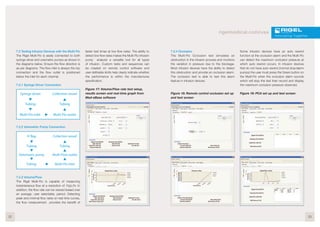
The Rigel Multi-Flo is easily connected to both
syringe driver and volumetric pumps as shown in
the diagrams below. Ensure the flow direction is
as per diagrams. The flow inlet is always the top
connection and the flow outlet is positioned
below the inlet for each channel.
7.2.1 Syringe Driver Connection
7.2.2 Volumetric Pump Connection
7.2.3 Volume/Flow
The Rigel Multi-Flo is capable of measuring
instantaneous flow at a resolution of 10µL/hr. In
addition, the flow rate can be viewed based over
an average, user selectable, period. Detecting
peak and minimal flow rates on real time curves,
the flow measurement provides the benefit of
faster test times at low flow rates. The ability to
detect low flow rates makes the Multi-Flo infusion
pump analyzer a versatile tool for all types
of infusion. Custom tests and sequences can
be created on remote control software and
user-definable limits help clearly indicate whether
the performance is within the manufactures
specification.
Figure 17: Volume/Flow rate test setup,
results screen and real-time graph from
Med-eBase software
22 23
rigelmedical.com/usa
Innovating Together
Syringe driver
Tubing
Multi-Flo inlet Multi-Flo outlet
Tubing
Collection vessel
IV Bag
Tubing
Tubing Multi-Flo inlet
Tubing
Collection vessel
Volumetric pump Multi-Flow outlet
7.2.4 Occlusion
The Multi-Flo Occlusion test simulates an
obstruction in the infusion process and monitors
the variation in pressure due to the blockage.
Most infusion devices have the ability to detect
this obstruction and provide an occlusion alarm.
The occlusion test is able to test this alarm
feature in infusion devices.
Figure 18: Remote control occlusion set up
and test screen
Some infusion devices have an auto rewind
function at the occlusion alarm and the Multi-Flo
can detect the maximum occlusion pressure at
which auto rewind occurs. In infusion devices
that do not have auto rewind (normal stop/alarm
pumps) the user must press the Green button on
the Multi-Flo when the occlusion alarm sounds
which will stop the test then record and display
the maximum occlusion pressure observed.
Figure 19: PCA set up and test screen
7.2.5 PCA
The PCA test determines the additional volume
delivered on top of the basal flow rate set by the
user. The additional volume, sometimes referred to
as bolus, is an indication of the correct safety
settings of an infusion device. The user needs to
enter the basal flow as the basal flow rate setting is
used to determine the additional volume being
delivered i.e. the bolus.
8 Conclusion
Whatever method chosen, whether it is with a
burette (direct volumetric measurement), weighing
scales (derived mass measurement) or automatic
analyzers, the most important consideration is that
the method provides reliable and accurate results.
Direct volume measurements are techniques which
provide a good degree of accuracy without the
need to worry about the design or performance
accuracy of another piece of equipment. However,
they are very labor intensive and require continuous
user input.
Electronic, automated devices combine the various
manual test methods with the ease-of-use of one
analyzer that offers the ability to conduct the most
important aspects of infusion device performance
accuracy analysis with little user input and the ability
to test multiple infusion devices simultaneously.
The volume of fluid delivered is used to measure the
system’s volumetric accuracy and other tests
determine the performance accuracy of the device
to maintain safety for staff and patients who will use
the equipment. Most manufacturers specify system
accuracy under stated test conditions including the
infusion set, temperature of test, rates, etc. this
indicates that there are a number of elements that
can affect the accuracy and therefore the device
under test must be used within the recommended
specification to maintain the given limits of accuracy.
Most adverse incidents are eventually identified as
user error. Designing for usability can contribute to
minimizing user error. Work has been initiated to
develop a formal ergonomic testing procedure for
application to all devices. At present, user
instructions are assessed for clarity and readability,
conciseness, and indexing. Procedures for using
the device are systematically worked through on the
bench after other testing is completed. Any
hazardous potential misuse is noted. For all
available alarms, the reliability, readability of text
displayed, the alarm tone quality, the positioning of
alarm lights, and methods of silencing alarms are
tested as part of the ergonomic assessment of the
device [12].
The technological advances in infusion pumps
during the past forty years have transformed the
treatment of patients in hospitals, as well as
afforded the ability to infuse fluids on a outpatient
basis or in a home environment and enable
patients to receive treatment while going about
our daily lives [5].
Therefore, measuring performance accuracy needs
to keep pace with the changing and advancing
technology of new pumps, which can infuse very
low volumes and for extended periods, to be able to
evaluate them in terms of volume/flow rate,
occlusion and bolus measurements.
24 25
rigelmedical.com/usa
Innovating Together
9 References
1. NHS, National Patient Safety Agency. (2004). Improving infusion device safety. Safer Practice Notice.
Issue 1; 20 May 2004.
2. Meier, B. (2010). F.D.A. Steps Up Oversight of Infusion Pumps.
Available: http://www.nytimes.com/2010/04/24/business/24pump.html?_r=2&.
Last accessed 27th August 2013.
3. Rosenthal, D. (2006). History of IV therapy.
Available: http://workplacenurses.com/id39.html.
Last accessed 25th August 2013.
4. MHRA. (2010). Infusion Systems Device Bulletin. Safeguarding public health.
5. David Ostendarp. (2010). A Brief History of Infusion Pumps.
Available: http://www.articleonlinedirectory.com/322515/a-brief-history-of-infusion-pumps.html .
Last accessed 25th August 2013.
6. Wladis, C. (2012). Lecture 6: Introduction to IVs.
Available: http://www.cwladis.com/math104/lecture6.php.
Last accessed 28th August 2013.
7. Zhang, P et al. (2009). Design of occlusion pressure testing system for infusion pump. Biomedical
Science and Engineering. 2 (6), 431-434.
8. Davis, W. (2010). Infusion Device. Available: http://www.ebme.co.uk/arts/infusion/inf_train.php. Last
accessed 27th August 2013.
9. Keay, S and Challander, C. (2004). The Safe Use of Infusion Devices. Anaesthesia, Critical Care &
Pain. 4 (3), 81-85.
10. Paul Scott. (2013). What Is a Dial Gauge?
Available: http://www.wisegeek.com/what-is-a-dial-gauge.htm.
Last accessed 25th August 2013.
11. How to use Vernier Calipers.
Available: http://www.physics.ncsu.edu/courses/pylabs/caliperHowTo.pdf
Last accessed 25th August 2013.
12. Bath Institute of Medical Engineering. (2005). Test Methods and Protocols.
Available: http://www.bath.ac.uk/bime/evalcentre/publications/protocols.pdf.
Last accessed 28th August 2013.
13. Ferrari, R and Beech, D. R. (1995). 1. Infusion Pumps: Guidelines and Pitfalls. Australian Prescriber.
18, 49-51.
14. U.S Food and Drug Administration. (2010) FDA Launches Initiative to Reduce Infusion Pump Risks
Available: http://www.fda.gov/NewsEvents/Newsroom/PressAnnouncements/ucm209042.htm
Last accessed 19th May 2014.

Guide to Infusion Pump Testing USA by Rigel Medical

  • 1.
    Innovating Together An introductionto Infusion Pump Testing Rigel Medical, Seaward Group USA, 6304 Benjamin Road, Suite 506, Tampa, Florida, 33634, United States Tel: 813-886-2775 Email: enquiry@rigelmedical.com Web: rigelmedical.com/usa Version 1.0 - 2014 Part of
  • 2.
    1 Contents Foreword 2 1 Introduction2 2 Introduction and History of Infusion 3 2.1 Infusion Circuit 5 3 Types of Infusion 5 3.1 Elastomeric Pumps 6 3.2 Gravity Controllers 7 3.3 Syringe Drivers 7 3.4 Volumetric Pump 8 3.5 Patient Controlled Analgesia (PCA) Pump 8 3.6 Ambulatory Pumps 9 4 Infusion Characteristics 9 5 Problems Associated with Infusion 10 5.1 Air Embolism 11 5.2 Free Flow or Siphonage 11 5.3 Occlusion 11 5.4 Bolus 12 5.5 Vein Closing After Infusion 12 5.6 Infiltration or Tissuing 12 6 Testing Infusion Devices 13 6.1 Introduction 13 6.2 Volume/Flow Rate 14 6.2.1 Cylinders and Burette 14 6.2.2 Weighing Scales 15 6.2.3 Vernier Calipers/Dial Gauges 16 6.2.4 Electronic Devices 16 6.3 Occlusion and Alarm Pressure 17 6.3.1 Analogue Pressure/Force Gauge 17 6.3.2 Digital Pressure Meter 18 6.3.3 Electronic/Automatic Devices 19 6.4 PCA 19 6.4.1 Electronic/Automatic Analyzers 19 6.5 Trumpet Curve 19 7 Multi-Flo 21 7.1 Introduction 21 7.2 Testing Infusion Devices 22 with the Multi-Flo 7.2.1 Syringe Driver Connection 22 7.2.2 Volumetric Pump Connection 22 7.2.3 Volume/Flow 22 7.2.4 Occlusion 23 7.2.5 PCA 24 8 Conclusion 24 9 References 25 Innovating Together Double your test capacity Save time, save money Innovating Together Introducing the NEW Rigel Multi-Flo Infusion Pump Analyzer The only multi-channel infusion pump tester that provides instant flow rate, volume and pressure measurements for unbeatable speed and accuracy. Visit www.seaward-groupusa.com/multi-flo to find out more Or call 813-886-2775 Part of FREE Guide to Infusion Pump Testing For your free copy visit www.seaward-groupusa.com/multi-flo
  • 3.
    1 Introduction It isestimated that 80% of hospitalised patients receive intravenous (IV) therapy and infusion devices are used extensively in clinical settings and patients’ homes as an essential tool for providing perioperative care, critical care and pain management. The infusion of fluids uses a variety of designs providing the ability to feed, hydrate, medicate or replace blood loss [1-4]. An infusion system is the process by which an infusion device delivers fluids, nutrition and medication to a patient in a predetermined and consistent manner. They are capable of delivering medication such as insulin or 2 3 rigelmedical.com/usa hormones, antibiotics, chemotherapy drugs, pain relief and can even be used for feeding (Fig. 1) [5]. An infusion pump is an electronic device used to control the administration of intravenous fluids to deliver measured amounts at careful and regulated rates. They often incorporate a mechanism or structure that mediate active transport across a biological membrane, using needles, where it has the best, most immediate effect. Occasionally subcutaneous, epidural or enteral methods are used but the amount of fluid is restricted, to as low as 3ml for subcutaneous methods [5, 6]. Infusion pumps have been widely used in clinical practice, such as in infusion IV therapy to infuse fluids, medication or nutrients into patient’s circulatory system and can produce quite high but controlled pressure so as to inject controlled amount of fluids, however, pressure values vary with different pumps [7]. 2 Introduction and History of Infusion The prescription and administration of medication is an imprecise art as many dosages, for instance paracetamol, are not based on body weight and have only a maximum daily limit independent of size or weight of the user. On the other hand, treatment delivered through infusion directly into the bloodstream needs to be accurately controlled and often includes calculations based on the patient’s physical condition (Fig. 2). Infusion pumps can administer fluids in cases where other methods would be impractical or unreliable. For example, they can administer fluids at flow rates of 0.1 mL/hr (Alaris and CME™) which would be too small for a drip; provide medication at predetermined intervals (i.e. every minute); provide repeated boluses requested by the patient up to maximum per hour (i.e. patient-controlled analgesia); and administer fluids where volumes vary by the time of day and also for extended durations. Although attempts at intravenous medicine date back to 1492, developments gained momentum in the 17th century with the first IV infusion device invented by Christopher Wren in 1658. However, developments were halted until the 19th century due to restrictions on IV infusion following deaths associated with blood transfusion after the first successful transfusion in 1665. During the 19th century the key elements of IV transfusion, which are still observed today, were established; a slow infusion process, awareness and prevention of risks from air embolism, and avoiding volume overload. Innovating Together Foreword This booklet is written as a guideline for people involved in testing medical infusion devices. All reasonable care has been taken to ensure that the information, reference figures and data are accurate and have been taken from the latest versions of various standards, guidance notes and recognised “best practices” to establish the recommended testing requirements. Rigel Medical, their agents and distributors, accept no responsibility for any error or omissions within this booklet or for any misinterpretations by the user. For clarification on any part of this booklet please contact Rigel Medical before operating any test instrument. No part of this publication shall be deemed to form, or be part of any contract for training or equipment unless specifically referred to as an inclusion within such contract. Rigel Medical assumes that the readers of this booklet are electronically and technically competent and therefore does not accept any liability arising form accidents or fatalities directly or indirectly from the tests described in this booklet. Authors: Katherine Summers MEng and John Backes MA. Figure 1: Infusion device Figure 2: Intravenous (IV) therapy
  • 4.
    One of themajor developments in infusion pumps was the invention in the early 1970s of a wearable pump now known as the ambulatory pump by Dean Kamen, which enabled patient mobility during treatment [5]. There are many different types of infusion pumps, which are used for a variety of purposes and in a variety of environments; from simple gravity controllers which use a clamping action to vary the flow with the force of gravity, volumetric pumps which employ a linear peristaltic pumping mechanism and syringe pumps which work by pushing a plunger at a predetermined rate [4]. Occlusion is an obstruction or closure of a passageway or vessel. A blockage in infusion devices causes pressure to build up which can reduce the flow and cause harm to the patient. Most infusion pumps have a pre-determined occlusion pressure threshold See 5.3 [7], where an alarm activates once the pressure exceeds this limit. If the occlusion pressure alarm is set too high, the harmful effects can be prolonged prior to alarm. Therefore testing the occlusion pressure is crucial to infusion pump safety. Infusion pumps must be periodically tested by qualified personnel to determine whether they are functioning properly [7]. There is a wide range of methods used to test the performance and accuracy of infusion devices which vary in procedure and equipment. However, the primary aim is to accurately measure the delivery volume and flow rate of the infusion device, check occlusion alarms and determine that it is safe for use. Figure 3: Infusion circuit 4 5 rigelmedical.com/usa An equally important point to testing infusion devices is not necessarily the accuracy of the Device Under Test (DUT) but how easy the test equipment is to operate, how simple it is to setup, if it can be left to run unattended and to ensure it produces the required information which is meaningful and easy to interpret. Therefore many users are moving away from basic measurements, such as weighing scales and burettes where continuous user input is required to ensure accuracy and moving towards automatic flow analyzers which record real time results graphically, such as the Multi-Flo from Rigel Medical. 2.1 Infusion Circuit IVs are most often administered through bottles or bags of fluid that come premixed and range in standard sizes from 50 to 1000ml. The bag is hung from an IV pole and the IV tubing is attached to the bottom of the bag (Fig. 3). The IV tubing contains the drip chamber which is where measurements to calculate speed of a manual IV are taken. The drip chamber must always be half full to allow drops to be measured but also to prevent air from entering the tubing. The roller clamp is used to control the rate at which the IV fluid infuses. It can squeeze the tubing tightly, making it narrow and reduce the flow rate or it can loosen its pinch on the tubing to allow fluid to flow at a faster rate. Roller clamps should be closed before attaching the IV fluid to ensure no air gets into the tubing [6]. The safe range of daily fluid intake will vary based on the patient's condition, size and age. Several diseases such as heart failure, kidney failure, and diabetes, for example, in a normal healthy adult, would require a total fluid intake (coming from IV fluids and/or fluids that they drink) of approximately 35-50ml/kg body weight/day. Also, IV administration is faster than any other method of administration because it goes directly into the blood, so it may be used when rapid action for treatment is necessary [6]. 3 Types of Infusion There is a variety of different types of infusion devices which all have individual procedures and mechanisms. However, they share an aim to provide accurate infusion at a predetermined rate over a set period of time. Infusion pumps in general use positive pumping actions which provide an accurate flow of fluids or drugs and all infusion pumps have commonalities including the alarm systems and the control panel etc. Pumps are designed for a variety of clinical applications and their performance characteristics vary depending on the delivery volume, long & short- term accuracy and speed of the desired infusion. The Medicines and Healthcare Products Regulatory Agency (MHRA) have produced three categories in accordance with the potential infusion risks to aid selecting the most appropriate pumps for specific requirements (Table 1 overleaf). The reliability of medical devices such as infusion pumps is extremely important because these devices are being used on patients who are likely to be in a critical condition [8]. Therefore, they incorporate warnings and alarms such as air in tube, excessive pressure, incorrect syringe size, loading problems, occlusion and also low battery warnings. Innovating Together
  • 5.
    Table 1: MHRACategories of Infusion There are five main types of infusion with the simplest device type being gravity controllers, which employ a clamping action to vary the flow of liquid due to the force of gravity. More complex systems use a positive pumping action for infusion; a simple version being an elastomeric pump which has a balloon reservoir that contracts to deliver fluid at a constant rate. Volumetric pumps may employ a linear peristaltic pumping mechanism applied to the infusion tubing or use a special cassette. Syringe pumps work by pushing the plunger of a disposable syringe along at a predetermined rate. The type of pump used is dependent on the patient’s needs such as the required volume and the speed of the desired infusion [4]. 3.1 Elastomeric Pumps Elastomeric pumps, also called balloon pumps, are commonly used to administer liquid drugs such as local anesthetics or antibiotics. Fluid is held in a stretchable balloon reservoir and pressure from the elastic walls drive the fluid delivery with relatively consistent pressure until near the end of the infusion, which then spikes resulting in increased flow rate. The flow restrictor, usually a glass capillary or steel cannula, is molded into the tubing or situated within the reservoir to control the accuracy of the flow rate (Fig. 4). Elastomeric pumps run independently without any electronics and are not gravity driven which makes them maintenance free and typically single-use. They are known for their reliability and accurate flow rate and drugs can be delivered 6 7 rigelmedical.com/usa over a long period of time, up to seven days, making it ideal for outpatients or patients that require mobility. However, the pump’s placement either above or below the patient will affect the flow rate. Figure 4: Elastomeric Pump 3.2 Gravity Controllers For gravity controlled pumps the IV bag is situated higher than the patient’s heart and fluid is gravity fed towards the patient using a roller clamp to control the flow. Timing how fast the drops fall through the tube drip chamber enables a flow rate to be determined and the greater the bag height, the quicker the flow rate in milliliters per drop (mL/drop). Each 300mm increase in height of the IV bag, produces approximately 25mmHg of pressure. This method of infusion is often used in Emergency Rooms, by paramedics in ambulances and by athletic trainers [4]. 3.3 Syringe Drivers Syringe drivers utilise an electronically controlled, electric motor to slowly depress the plastic syringe piston/plunger to drive the fluid into the patient at a predetermined rate. The electronics control the speed (flow rate), distance (volume infused) and the force (pressure) that the syringe plunger is pushed (Fig. 5). The operator must use the correct model and size of syringe, ensure it is correctly positioned and frequently monitor the delivery to maintain the expected drug dosage up to100ml of fluid at flow rates between 0.1 to 100mL/hr. Innovating Together Therapy Category Therapy Description Patient Group Critical Performance Parameters A Drugs with narrow therapeutic margin Drugs with short half-life Any infusion given to neonates Any Any Neonates Good long-term accuracy Good short-term accuracy Rapid alarm after occlusion Small occlusion bolus Able to detect very small air embolus (volumetric pumps only) Small flow rate increments Good bolus accuracy Rapid start up time B Drugs, other than those with a short half-life TPN Fluid maintenance Transfusions Diamorphine Any except neonates Volume sensitive except neonates Any except neonates Good long-term accuracy Alarm after occlusion Small occlusion bolus Able to detect small embolus (volumetric pumps only) Small flow rate increments Bolus accuracy C TPN Fluid maintenance Transfusions Any except volume sensitive or neonates Long-term accuracy Alarm after occlusion Small occlusion bolus Able to detect air embolus (volumetric pumps only) Incremental flow rates Figure 5: Syringe pump
  • 6.
    Syringe drivers arethe preferred choice for lower volumes and low flow rates and can infuse small volumes of fluid over an extended period of time while maintaining a constant rate. However, users should be aware that the flow delivered at the start of any infusion might be less than the predetermined value due to mechanical slack which must be taken up before a steady flow rate is achieved. At low flows it can be some time before any fluid is delivered to the patient. 3.4 Volumetric Pump The volumetric infusion pump is the most sophisticated type of pump which forces fluid into the patient’s vein under pressure and resistance [6]. The IV bag is situated higher than the pump and patient and the pump utilises a linear peristaltic action or uses a special cassette, known as a piston cassette, to control the infusion fluid. A set of rollers pinch the flexible tubing to push the fluid towards the patient (Fig. 6). Volumetric pumps are used to administer up to 1000mL of fluid at flow rates between 0.1 to 1000mL/hr. However, this type of pump is not considered accurately appropriate for the delivery of fluids at a rate lower than 5mL/hr. Peristaltic action is a continuous rippling wave motion which can be linear or rotary. The Baxter Colleague™ pumps use a linear peristaltic pumping action and the rotary peristaltic action is most commonly used in feeding and Patient Controlled Analgesic (PCA) pumps. Cassette type pumps have a plunger mechanism built into the tubing set where the stepper motor drives the motion. The cassette also has a valve which is timed to only open when the plunger is pumping. This valve can sometimes be used as a free-flow mechanism. The Ivion Kids pumps used this type of pumping mechanism as do some PCA pumps. Figure 6: Volumetric pump 3.5 Patient Controlled Analgesia (PCA) Pump A PCA pump is a type of syringe driver that allows the patient, within specified limits, to control their own drug delivery through a patient hand control, which when pressed, delivers a pre-set amount of analgesic drug, known as a Bolus (Fig. 7). After the delivery of the bolus the pump will return to the normal basal flow rate and refuse to deliver another bolus until a defined time has passed, known as the lockout time, thus limiting the number of boluses allowed. The bolus size and lockout time, along with the constant basal drug infusion rate are pre-programmed by the clinician. Figure 7: Patient controlled analgesia (PCA) pump 8 9 rigelmedical.com/usa 3.6 Ambulatory Pumps Ambulatory pumps are small, light, battery powered syringe or cassette mechanisms which are designed to be portable or wearable giving the patient freedom to move when receiving treatment. This allows for medication to be administered on an outpatient basis, especially for those who need round the clock injections (Fig. 8) [5]. Most ambulatory pumps have minimum alarms, which mean that patients and carers need to closely monitor the infusion. Consideration also has to be given for the hazards a portable device is exposed to e.g. knocks, fluids, electro- magnetic interference etc. In general, critical drugs which require a constant flow should not be administered using ambulatory pumps. Figure 8: Ambulatory pump 4 Infusion Characteristics In an infusion system, the pump uses pressure to overcome the resistance to flow to deliver infusion. The greater the resistance in the IV circuit the higher the pressure is required to deliver the prescribed flow. Resistance arises due to filters, anti-siphon and anti-reflux valves, administration set, in particular the cannula, the internal diameter and potential kinking of tubing. This along with viscous solutions and syringe/cassette stiction can accumulate the pressure [7]. The pressure available is related to the height, that the bag or bottle of fluid is situated above the patient's heart, with increased height produces increased pressure. Therefore infusion devices must be capable of delivering infusions at pressures between 100 and 750mmHg (2 to 15PSI) to overcome any internal or external resistance to the flow of fluid. The patient’s venous system contains pressure and therefore the IV infusion device must be proven to be compatible with pressures found in the body. To deliver simple electrolytes into an adult intravenous site at 100mL/hr the pressures associated with resistance are summarised below (Table 2). Table 2: Resistances within the body to infusion Innovating Together Point of Resistance Pressure (mmHg) Maximum adult venous pressure 30 Filter 10 Cannula 100 Administration set 1 Total = 141
  • 7.
    Figure 9: Fluiddelivery pattern for volumetric, syringe and ambulatory pumps The pattern of fluid delivery is dependent on the type of pump used. The typical flow patterns for volumetric, syringe and ambulatory pumps at a flow rate of 1mL/hr (Fig. 9). Each pump delivers fluid accurately at 5% of the set flow rate over long periods. However, only the syringe pump delivers fluid accurately over very short periods of time. 5 Problems Associated with Infusion Millions of infusion devices are used in hospitals and in the community every year. The vast majority of infusions are delivered safely. However, incidents with infusion devices continue to dominate adverse incident reports with at least 1000 incidents investigated by the MHRA between 2005 and 2010 in the UK alone [4, 10]. In the past five years, the FDA has received more than 56,000 reports of adverse events associated with the use of infusion pumps. Those events have included serious injuries and more than 500 deaths. Between 2005 and 2009, 87 infusion pump recalls were conducted to address identified safety concerns, according to FDA data [14]. The majority of problems relate to over-infusion of drugs, either due to user error with dosage and patient data, product design and engineering or software malfunction. In many fatal incidents no fault has been determined with the infusion device which suggests that user error is a contributing factor whereas, in practice it seems that syringe pumps produce the most significant problems compared to other methods of delivery [4, 8]. Genuine infusion pump malfunctions rarely occur, except when a pump has been mishandled, dropped or damaged. However, faulty or mismatched batches of administration sets can causes problems. Prompt reporting of damaged pumps, suspect administration sets or unexplainable alarms can lead to safety checks and investigations which improve the overall drug infusion safety [8]. There are many dangers when using infusion devices which need to be minimised for patient safety and therefore most infusion devices incorporate detecting warnings and alarm systems including: air in tube, excessive upstream pressure and both up and downstream occlusions, syringe empty / nearly empty and also low battery signals. 10 11 rigelmedical.com/usa A careful set-up procedure will prevent the majority of errors; however, major problems can still occur after the onset of an infusion. This is particularly the case when patient care is transferred to different staff or clinical area. A proper hand-over with complete documentation is necessary. Good communication such as a checklist, is the most important factor in reducing infusion risks and increasing compliance with correct procedures [9]. 5.1 Air Embolism The problems of air entrapment are restricted to volumetric pumps and therefore IV pumps are recommended to have a means of detecting and preventing air in the tubing using either a photo detector or ultrasonic sensor which is capable of detecting single bubbles of about 0.1mL. Many systems of administration employ a drip chamber, which prevents air from entering the blood stream, known as an air embolism [9]. The ultrasonic air detection system responds to any air in its pathway and if tubing is not correctly attached it may give a false alarm. Also, solutions which are prone to froth can activate the sensor. False alarms are at best a nuisance as air in the tubing can be dangerous to the patient if it gets into the blood as approximately 3-8mL of air per kg can cause cardiac arrest, that’s about 210-560mL for a 70kg patient. Even if there appears to be no air in the line, the action of pumping can often draw air out of the solution and this can accumulate into significant sized bubbles or if there is a leak in the upstream line, air can be drawn into the line. Air entrainment can be prevented by the intrinsic design of the pump or by using an air detector. 5.2 Free Flow or Siphonage If the pump is higher than 300mm above the patient's heart, and the roller clamp is fully open on a basic gravity infusion set-up this will allow free-flow or siphonage which allows all the fluid and any air in the infusion bag to infuse into the patient. Siphonage should not occur if the administration set for the appropriate infusion device is loaded correctly and the following simple precautions have been taken: I The tubing, syringe or cassettes are correctly loaded. I The pump door is closed. I Syringe pumps should be placed at the level of the patient with the syringe securely located in the mechanism and with an anti-siphon valve in the line. I The absence of free-flow can also be checked by opening the roller-clamp before connecting to the patient. Confirmation that the roller clamp is secure before removing the administration set from the pump is essential as this is a primary means of occluding (causing a blockage) in the line. If the administration set is fitted with a flow-stop mechanism, this should not be solely relied upon and the roller clamp should still be used [7, 9]. 5.3 Occlusion An infusion pump attempts to maintain sufficient pressure on the fluid to cause it to flow at the set rate and detects resistance to flow, allowing the pump to increase the pumping pressure to maintain the set flow rate. Any occlusion or blockage can result in patient harm caused by Innovating Together
  • 8.
    increased pressure inthe line and an interruption to the therapy. This is typically due to a partial or complete block in the delivery tubing e.g. kinks in the tube, clamp or tab closed; or in the cannula e.g. clotted off or a change in position. Occlusion can cause an interruption to the delivery and effectiveness of the therapy. Therefore, occlusion alarms are used to indicate when the pump is unable to sustain the set flow rate or when pressure in the line increases, which is usually a stall sensor on the IV pump stepper motor or a pressure transducer within the line. Any blockage can cause the pressure in the line to increase which causes the tubing to expand and if the pump detects an unacceptably high pressure, known as the occlusion limit, the pump’s occlusion alarm will sound. Adult alarm settings should be approximately 150mmHg above working pressure and therefore a default setting of 300mmHg is standard [7]. 5.4 Bolus A syringe that is placed into a pump whilst connected to the patient is highly likely to deliver an infusion bolus. Syringes should always be inserted into pump mechanisms before being attached to patients and the infusion line should be temporarily disconnected. Even if the infusion set is left connected to the syringe driver or volumetric pump during transfers, large alterations in the device height relative to the patient may lead to over or under-infusion because of tubing compliance [7]. Once occlusion is cleared a sudden bolus will infuse into the patient, which is the additional fluid generated in the line during the occlusion. This will cause a momentary raise in the fluid’s concentration. The higher the occlusion alarm/ pressure limit is set, the longer IV related problems are allowed to develop before the alarm alerts staff of any issue and resulting in a larger bolus. Flow rate also affects alarm response time as higher flow rates result in more rapid alarm response than lower flow rates. To prevent this bolus occurring, the pressure in the system should be reduced by temporarily opening the system to air or disengaging the clamp on the syringe plunger. Modern syringe drivers have an automatic ‘back-off’ facility when occlusion is detected which briefly draws back the plunger thus reducing the size of any bolus [7, 9]. 5.5 Vein Closing After Infusion All IV pumps have a ‘keep vein open’ (KVO) function which occurs when the time or volume to be infused is reached and prevents the infusion needle from clogging by continuing to infuse a flow between 1 and 5mL/hr, which is always a rate lower than the set infusion rate [7, 9]. 5.6 Infiltration or Tissuing Infiltration or tissuing is the leakage of fluids as a result of improper infusion and can be caused by punctures of vein wall, dislodgement of catheter/needle cannula, inappropriate venous site, improper cannula size or excessive delivery rate. Infiltrations can occur at pressure greater than 100mmHg and pumps deliver infusions at pressures of 750mmHg (15PSI) to overcome fluid resistance which makes them capable of 12 13 rigelmedical.com/usa producing extra-vascular patient damage. To minimise this risk infusion pumps have adjustable pumping/occlusion pressure settings (normally technical settings), newer units incorporate user settings. A balance is required between setting the pumping pressure to overcome all baseline and intermittent resistance whilst preventing the possibility of tissuing. Setting the pressure low, at best causes nuisance occlusion alarms. 6 Testing Infusion Devices 6.1 Introduction Optimal infusion is the ability of a device to reliably deliver the prescribed dosage and volume to the patient, at a pressure which overcomes all baseline and intermittent resistance, whilst causing no harm to the patient [10]. The reliability of infusion pumps is extremely important because these devices are used for patients who could be in a critical condition; also due to incidents associated with infusion devices there is a need to adequately validate the accuracy and performance of such devices [7]. All tests carried out should mimic real life settings, as close as possible, which are carried out by nursing staff when the system was initially set up. Hence, testing should reflect what the manufacturer recommends ensuring that the equipment is working within its specification. The user should always use the specification for reference when taking measurements and/or use the test equipment recommended or specified by the manufacturer. There is a variety of methods currently used to test infusion devices and determine their performance accuracy. They vary in procedure and equipment but fundamentally, the aim is to measure the accuracy of the delivery volume and flow rate over a range of time periods, typically between 10 minutes and 1 hour. Common flow measuring principles: 1. Volumetric - Flow calculated after a certain volume has been delivered. The greater the volume over a certain time, the greater the flow. 2. Mass - Flow is calculated based on temperature difference between two points within the sensor, the greater the temperature difference the lower the flow. 3. Bubble tracking - Flow calculated based on the displacement of an inserted airbubble into the flow sensor part. The greater the displacement, the greater the flow. 4. Pressure based - Flow is regulated within the flow sensor to a set line pressure. The greater the potential pressure built-up in the line, the greater the flow rate. 5. Displacement of syringe plunger - Flow rate is calculated based on volume displaced by the syringe plunger over time. The syringe type and volume are required to provide an accurate calculation. Occlusion and alarm pressures and also bolus delivery must also be tested to maintain the Innovating Together
  • 9.
    performance of theinfusion device especially in PCA devices where the bolus is self-medicated. A visual inspection and electrical safety test should also be considered to make sure all aspects of patient safety and instrument reliability are covered during the test procedure. When looking at the accuracy of an infusion system the system must be looked at as a whole, and not just the pump or driver individually as the inaccuracies within the measuring device need to be added to the accuracy limits of the DUT. Even though the infusion device itself may only have a small percentage error; taking into account all possible inaccuracies of the syringe used and other external equipment, including the tubing set, could increase the inaccuracy to 10%. For example, the diameter, length and elasticity of the tubing can provide greater inaccuracies than the pump itself, especially over time as the material’s properties change. Due to these inaccuracies it is generally accepted that the testing method and equipment used must be an order of magnitude of 1/10th more accurate than the device being tested [8]. 6.2 Volume/Flow Rate The most commonly used methods for measuring volume or flow rate are direct volumetric; using either graduated cylinders or burettes; and, derived mass measurement using a measurement vessel and weighing scales. When using these methods it is recommended that only distilled water be used to measure the total volume delivered as the weight in grams is equivalent to the weight in milliliters. 6.2.1 Cylinders and Burette When using a direct volumetric method the estimated time is calculated prior to testing by first determining the rate per minute and then the desired volume over the rate per minute, to determine the time to reach the volume. For example: q=V/t When testing a pump with a flow rate of 240mL/hr, the rate per minute = 240/60= 4mL per minute. If the desired measurement volume is 20mL, the desired volume/ rate per minute = 20/4 = 5 minutes. So, it would take 5 minutes to reach 20mL of volume with a flow rate of 240mL/hr. The pump is set to run at the desired flow rate and the amount delivered into the measuring device is measured and the total time recorded, often using a stopwatch. The results are then used to determine the accuracy of the system and the average rate can be calculated as a total volume over total time (mL/hr). Some technicians produce test rigs which include a connection between the stopwatch and the pump so that when the pump finishes delivering fluid the stopwatch automatically stops. Otherwise the user must continuously monitor the test to record the volume at the desired time. Reading the volume from a measuring cylinder accurately is difficult as the eye must be in line with the lower level of the surface of the water, known as the meniscus, and the measuring cylinder must be placed on a level surface [12]. 14 15 rigelmedical.com/usa Also when using a measuring cylinder the unit graduations must be considered which provides a degree of inaccuracies e.g. a 100mL cylinder with 1mL graduation will therefore only be accurate to ± 0.5mL. The total capacity of the cylinder must be considered not just the volume filled (Fig. 10a). Figure 10(a): Measuring cylinder 10(b): burette Burettes are calibrated, marked in divisions, and are usually more accurate than measuring cylinders. The amount of liquid that is tapped from a burette can simply be read from the burette by checking the level of the meniscus (Fig. 10b). A burette is particularly suitable for measuring volumes less than 50mL with a tolerance of 0.1cm3 [14]. Uncertainty in the measurement of a 50mL burette is 0.1mL therefore ± 0.2%. Adding this error to the typical acceptable tolerances for a syringe driver of 2% will give the total inaccuracy of ± 2.2%. The total inaccuracy needs to be checked against that of the manufacturer’s recommended limits to make sure that it is within allowable tolerances. 6.2.2 Weighing Scales One of the most accurate and simplest methods to measure volume and flow rate is to use scales to determine the weight or mass of the infused liquid (Fig. 11). Scales can be calibrated to provide extremely accurate results and are useful for measuring volumes as the weight of the empty cylinder can be "zeroed out" (tared) hence the results are a direct reading of the weight of the fluid volume delivered based on the assumption that 1g is equivalent to 1mL of fluid (derived mass method). Figure 11: Weighing scales Innovating Together
  • 10.
    The pump isset to deliver a specific volume at a specified rate and the vessel is re-weighed at the end of the test. A stopwatch would be required to record the time. This method requires user input to monitor the time and to maintain accuracy. A percentage error can be calculated from the figures obtained. 6.2.3 Vernier Calipers/Dial Gauges Vernier calipers and dial gauges give a direct reading of the distance measured with high accuracy and precision. They are functionally identical, with varying ways of reading the result. Calipers are comprised of two jaws, one attached to a fixed scale and the other attached to a sliding scale. In order to measure an object’s width, the object is simply placed between the caliper’s jaws and then the distance between the jaws is read to an accuracy of 0.05mm (Fig. 12a) [11]. Dial gauges are a precision measurement capable of producing extremely fine measurement increments up to 0.001mm. The measurement inputs are transferred to the gauge via a plunger or hinged lever and are available with either an analogue needle and dial indicators or digital liquid crystal displays (LCDs) (Fig. 12b) [10]. These methods are used to check the plungers travel accuracy. Some pumps such as the Alaris (Carefusion) pumps come with a dedicated test set that uses a linear test gear and a stop watch to determine how far the plunger moves to check incremental and overall time of delivery. Figure 12(a): Vernier calipers 12(b): dial guage 6.2.4 Electronic Devices Automated analyzers allow the user to set up a test and the test will run unassisted thus allowing the user to move away from the device during testing. Electronic analyzers provide real-time records of the delivery rate and volume allowing for continuous infusion device testing without constant supervision. Analyzers provide continuous spot readings which can then be graphed to provide quick to read results; where problems and anomalies are easily visible. Electronic calibrated analyzers provide automation for batch and multi-channel testing with some analyzers having up to 4 independent channels which can run simultaneously, reducing overall test time while maintaining a good degree of accuracy and minimising user input and any errors associated. 16 17 rigelmedical.com/usa These devices work by timing how long a small internal volume takes to fill and therefore measures the volumetric accuracy of the infusion device where accuracy is determined by the measuring chamber accuracy and its resolution is determined by the chamber volume. It provides the user with a method to obtain a quick check as to whether a pump is generally working. You can test it over a range of flow-rates and time periods with consistant accuracy [9] 6.3 Occlusion and Alarm Pressure Occlusion is the interruption or ineffective therapy of infusion due to a blockage, momentary closure or obstruction of the passageway. Occlusion sensors can detect both upstream and downstream restrictions and the downstream occlusion sensor sensitivity can be adjusted to suit the needs of the patient/hospital through the pump configurations. Dynamic monitoring systems provide the ability to monitor downstream pressure or resistance allowing for rapid detection of full or partial blockages. To prevent nuisance alarms and interruptions to therapy the initial occlusion pressure needs to be set above the systems normal running pressure. Occlusion alarms are used to indicate when the pump is unable to sustain the set flow rate and therefore pressure in the line begins to increase. This is typically due to a partial or complete block in the delivery tubing e.g. kinks in the tube, clamp or tab closed; or blockage signs in the cannula e.g. clotted off or a change in position. 6.3.1 Analog Pressure/Force Gauge Gauge pressure sensors measure the pressure relative to the atmospheric pressure which surrounds it. The term pressure gauge usually refers to a self-contained indicator that used flexible elements as sensors which converted the detected pressure change into the mechanical motion of the flexible element which then rotates a pointer in front of a dial, see (Fig. 13). In these early mechanical pressure sensors, a Bourdon tube, a diaphragm, or a bellows element detected the process pressure and caused a corresponding movement. Automatic control systems have since evolved and the free end of a Bourdon tube (bellows or diaphragm) no longer has to be connected to a local pointer, but served to convert a process pressure into a transmitted (electrical or pneumatic) signal. At first, the mechanical linkage was connected to a pneumatic pressure transmitter, which usually generated a 3-15psig output signal for transmission over distances of several hundred feet, or even farther with booster repeaters. Later, as solid state electronics matured and transmission distances increased, pressure transmitters became electronic. The early designs generated DC voltage outputs (10- 50mV; 1-5V; 0-100mV), but later were standardized as 4-20mA DC current output signals. [12]. Innovating Together
  • 11.
    Figure 13: Forcedial gauge A force gauge can be used where the occlusion pressure is measured in kgF and for a set occlusion pressure ‘level’, the manufacturer should state that the pump should alarm when a certain amount of force in KgF is applied to the plunger, see (Fig. 13), with stated limits. 6.3.2 Digital Pressure Meter Digital pressure meters (Fig. 14) are accurate and can be used to carry out the occlusion testing where the pressure is increased by the pressure meter until the alarm is activated. The pressure of the meter at which the alarm sounded is recorded and compared to the alarm pressure set on the infusion device to determine accuracy. This method produces good, accurate and repeatable results, however it lacks the ability to produce a report so all results are recorded manually. 18 19 rigelmedical.com/usa 6.3.3 Electronic/Automatic Devices Electronic devices will use a pressure meter to increase the pressure in the infusion device which is intended to pass the occlusion limit and set off the occlusion alarm. With manual occlusion pumps, often the user must indicate on the analyzer when the alarm is activated to record the occlusion pressure at alarm. Some modern infusion devices have an auto rewind function where the pump mechanism reverses when occlusion is observed. This is to try and reduce any ill effects caused by the increased pressure in the line. Automatic analyzers will display the maximum occlusion pressure at which auto rewind occurs without the need for user input. 6.4 PCA A PCA test is to check the bolus which can be administered by the patient and to make sure that the correct volume and also lockout time are working so that the patient cannot over infuse medication to themselves. To test the lockout facilities on PCA pumps, a time is set; e.g. 5 minutes and then a bolus is demanded and then subsequent demands are made periodically to establish when the next bolus is permitted. This should be then repeated at a variety of volumes such as 0.1, 1.0 and 5.0mL target bolus volumes to maintain consistency [12]. 6.4.1 Electronic/Automatic Analyzers With electronic infusion analyzers the user will set up the initial basal flow rate and the bolus volumes to be delivered. The infusion will begin at the set flow rate and when bolus is activated the analyzer will measure the change in flow rate and record the bolus over time, often producing a real-time graphical display of the increased volume and flow rate until the desired bolus is infused and the flow returns to the basal rate. Boluses can then be repeated to make sure the lockout time on the infusion device does not allow for repeat boluses within a specific time. Often five boluses are delivered and the average taken to determine the performance accuracy of the pump. 6.5 Trumpet Curve Trumpet curves show the accuracy performance of an infusion device at set intervals in the second hour of infusion and during the final hour of infusion as required by IEC 60601-2-24. The trumpet curve indicates the maximum percentage deviation, both positive and negative, from the expected flow rate relative to the time interval, known as the observation window. For example; for one hour the overall deviation may be -2%, whereas over an interval of two minutes the deviations can vary between +7 and -10% (Fig. 15) [13]. Initially the pump needs a period of time to ‘warm up’, this is often referred to as the settling in period where the flow rate can vary as the infusion settles. The flow rate of infusion devices is defined as settled after one hour of infusion and the majority of pumps have a stated accuracy of ± 3% of the set flow rate after this one hour settling period. Therefore, trumpet curves are produced during the second and occasionally the final hour of testing to determine whether the manufactures specified performance accuracy is met [13]. Innovating Together Figure 14: Digital pressure meter
  • 12.
    Figure 15: Exampleof a trumpet curve Some manufacturers have begun to include trumpet curves in their user manuals. The graph has developed its name as it looks like a trumpet which converges to the right side. Time units are positioned on the x axis and percentage on the y axis (Fig. 15). These Ep (max) and Ep (min) curves represent the maximum positive and negative percentage deviation from the expected dose for a given observation window during the infusion. As the accuracy of a medical device also depends on the set flow rate, often a range of curves are included. The user can then correlate the half-life of the administered fluid with the observation interval to determine the suitability of the pump for a particular application. However, in general terms, the longer the time interval, the more accurate the dose [13]. 20 21 rigelmedical.com/usa 7 Multi-Flo 7.1 Introduction The market defining Rigel Multi-Flo Infusion Pump Analyzer is a portable instrument to accurately and swiftly verify the performance of all infusion devices. Accurate and fast measurement of flow (from 10µL to 1500 mL/hr), pressure, PCA (bolus) and total volume ensure all requirements are tested according to IEC 60601-2-24 during the manufacturing, design and performance test stages. On-board memory stores test data and allows fast transfer to the PC for traceability. Fast and error-free asset information can be directly entered into the Multi-Flo via a compact Bluetooth barcode scanner or an optional USB keyboard. An upgraded and enhanced version of Rigel’s Med-eBase software provides the ability to create test templates, custom test certificates and the ability to control and configure the Multi- Flo infusion pump analyzer from a computer. Remote control allows the user to create definable tests and test sequences. The Multi-Flo can then run automatic tests from the built in sequences or create custom and/or manufacturer specific test sequences using Med-eBase software. Figure 16: Four Channel Multi-Flo Infusion Analyzer PC control provides real time results on the PC screen and can be stored against the device under test (asset number) in the database. The results can be viewed in real-time and after the test is completed. Innovating Together
  • 13.
    7.2 Testing InfusionDevices with the Multi-Flo The Rigel Multi-Flo is easily connected to both syringe driver and volumetric pumps as shown in the diagrams below. Ensure the flow direction is as per diagrams. The flow inlet is always the top connection and the flow outlet is positioned below the inlet for each channel. 7.2.1 Syringe Driver Connection 7.2.2 Volumetric Pump Connection 7.2.3 Volume/Flow The Rigel Multi-Flo is capable of measuring instantaneous flow at a resolution of 10µL/hr. In addition, the flow rate can be viewed based over an average, user selectable, period. Detecting peak and minimal flow rates on real time curves, the flow measurement provides the benefit of faster test times at low flow rates. The ability to detect low flow rates makes the Multi-Flo infusion pump analyzer a versatile tool for all types of infusion. Custom tests and sequences can be created on remote control software and user-definable limits help clearly indicate whether the performance is within the manufactures specification. Figure 17: Volume/Flow rate test setup, results screen and real-time graph from Med-eBase software 22 23 rigelmedical.com/usa Innovating Together Syringe driver Tubing Multi-Flo inlet Multi-Flo outlet Tubing Collection vessel IV Bag Tubing Tubing Multi-Flo inlet Tubing Collection vessel Volumetric pump Multi-Flow outlet 7.2.4 Occlusion The Multi-Flo Occlusion test simulates an obstruction in the infusion process and monitors the variation in pressure due to the blockage. Most infusion devices have the ability to detect this obstruction and provide an occlusion alarm. The occlusion test is able to test this alarm feature in infusion devices. Figure 18: Remote control occlusion set up and test screen Some infusion devices have an auto rewind function at the occlusion alarm and the Multi-Flo can detect the maximum occlusion pressure at which auto rewind occurs. In infusion devices that do not have auto rewind (normal stop/alarm pumps) the user must press the Green button on the Multi-Flo when the occlusion alarm sounds which will stop the test then record and display the maximum occlusion pressure observed. Figure 19: PCA set up and test screen
  • 14.
    7.2.5 PCA The PCAtest determines the additional volume delivered on top of the basal flow rate set by the user. The additional volume, sometimes referred to as bolus, is an indication of the correct safety settings of an infusion device. The user needs to enter the basal flow as the basal flow rate setting is used to determine the additional volume being delivered i.e. the bolus. 8 Conclusion Whatever method chosen, whether it is with a burette (direct volumetric measurement), weighing scales (derived mass measurement) or automatic analyzers, the most important consideration is that the method provides reliable and accurate results. Direct volume measurements are techniques which provide a good degree of accuracy without the need to worry about the design or performance accuracy of another piece of equipment. However, they are very labor intensive and require continuous user input. Electronic, automated devices combine the various manual test methods with the ease-of-use of one analyzer that offers the ability to conduct the most important aspects of infusion device performance accuracy analysis with little user input and the ability to test multiple infusion devices simultaneously. The volume of fluid delivered is used to measure the system’s volumetric accuracy and other tests determine the performance accuracy of the device to maintain safety for staff and patients who will use the equipment. Most manufacturers specify system accuracy under stated test conditions including the infusion set, temperature of test, rates, etc. this indicates that there are a number of elements that can affect the accuracy and therefore the device under test must be used within the recommended specification to maintain the given limits of accuracy. Most adverse incidents are eventually identified as user error. Designing for usability can contribute to minimizing user error. Work has been initiated to develop a formal ergonomic testing procedure for application to all devices. At present, user instructions are assessed for clarity and readability, conciseness, and indexing. Procedures for using the device are systematically worked through on the bench after other testing is completed. Any hazardous potential misuse is noted. For all available alarms, the reliability, readability of text displayed, the alarm tone quality, the positioning of alarm lights, and methods of silencing alarms are tested as part of the ergonomic assessment of the device [12]. The technological advances in infusion pumps during the past forty years have transformed the treatment of patients in hospitals, as well as afforded the ability to infuse fluids on a outpatient basis or in a home environment and enable patients to receive treatment while going about our daily lives [5]. Therefore, measuring performance accuracy needs to keep pace with the changing and advancing technology of new pumps, which can infuse very low volumes and for extended periods, to be able to evaluate them in terms of volume/flow rate, occlusion and bolus measurements. 24 25 rigelmedical.com/usa Innovating Together 9 References 1. NHS, National Patient Safety Agency. (2004). Improving infusion device safety. Safer Practice Notice. Issue 1; 20 May 2004. 2. Meier, B. (2010). F.D.A. Steps Up Oversight of Infusion Pumps. Available: http://www.nytimes.com/2010/04/24/business/24pump.html?_r=2&. Last accessed 27th August 2013. 3. Rosenthal, D. (2006). History of IV therapy. Available: http://workplacenurses.com/id39.html. Last accessed 25th August 2013. 4. MHRA. (2010). Infusion Systems Device Bulletin. Safeguarding public health. 5. David Ostendarp. (2010). A Brief History of Infusion Pumps. Available: http://www.articleonlinedirectory.com/322515/a-brief-history-of-infusion-pumps.html . Last accessed 25th August 2013. 6. Wladis, C. (2012). Lecture 6: Introduction to IVs. Available: http://www.cwladis.com/math104/lecture6.php. Last accessed 28th August 2013. 7. Zhang, P et al. (2009). Design of occlusion pressure testing system for infusion pump. Biomedical Science and Engineering. 2 (6), 431-434. 8. Davis, W. (2010). Infusion Device. Available: http://www.ebme.co.uk/arts/infusion/inf_train.php. Last accessed 27th August 2013. 9. Keay, S and Challander, C. (2004). The Safe Use of Infusion Devices. Anaesthesia, Critical Care & Pain. 4 (3), 81-85. 10. Paul Scott. (2013). What Is a Dial Gauge? Available: http://www.wisegeek.com/what-is-a-dial-gauge.htm. Last accessed 25th August 2013. 11. How to use Vernier Calipers. Available: http://www.physics.ncsu.edu/courses/pylabs/caliperHowTo.pdf Last accessed 25th August 2013. 12. Bath Institute of Medical Engineering. (2005). Test Methods and Protocols. Available: http://www.bath.ac.uk/bime/evalcentre/publications/protocols.pdf. Last accessed 28th August 2013. 13. Ferrari, R and Beech, D. R. (1995). 1. Infusion Pumps: Guidelines and Pitfalls. Australian Prescriber. 18, 49-51. 14. U.S Food and Drug Administration. (2010) FDA Launches Initiative to Reduce Infusion Pump Risks Available: http://www.fda.gov/NewsEvents/Newsroom/PressAnnouncements/ucm209042.htm Last accessed 19th May 2014.