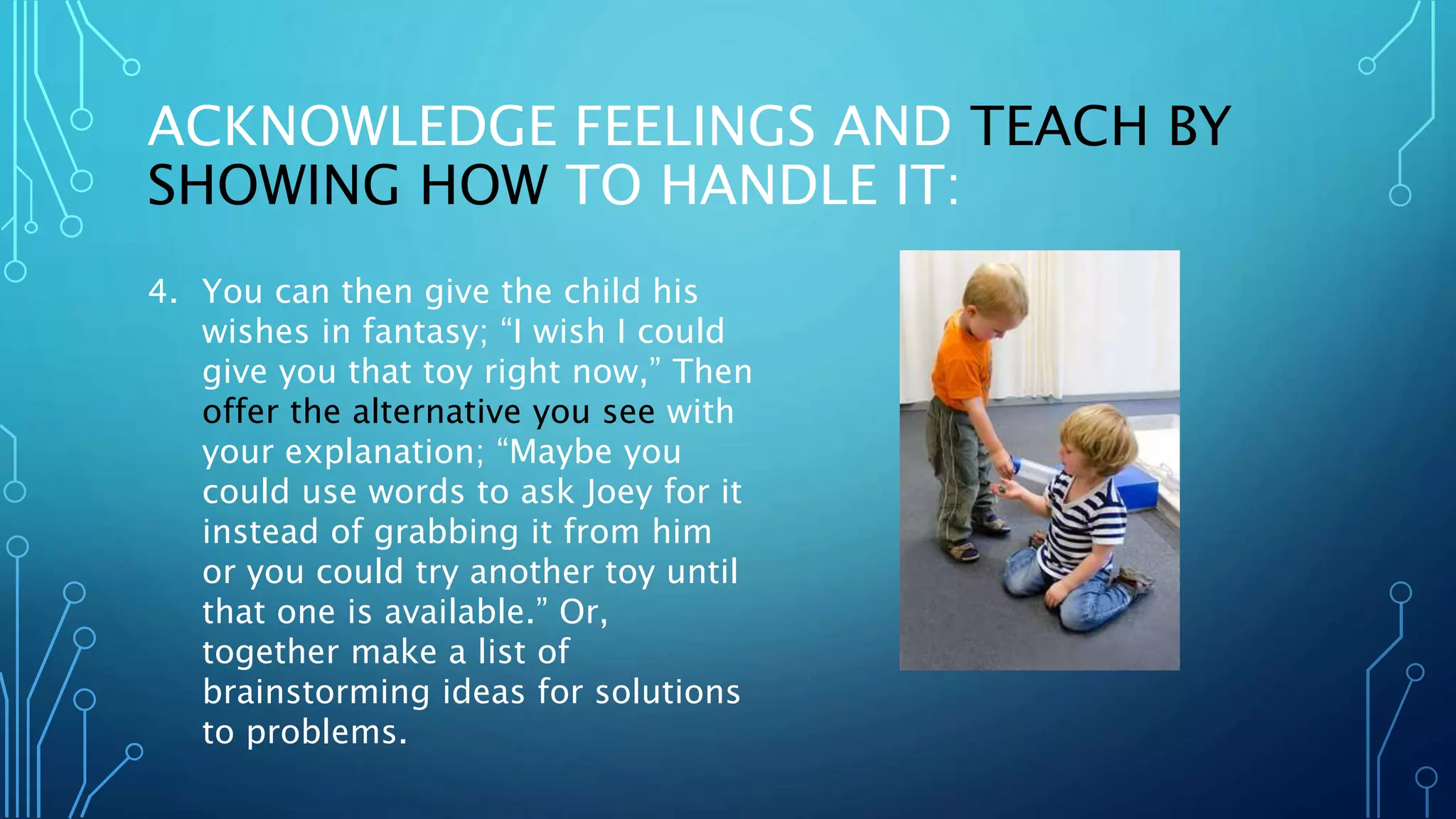
This book provides guidance on effective communication between parents and children. It teaches skills like active listening, acknowledging feelings without judgment, using creative problem-solving instead of punishment, and encouraging a child's autonomy. Readers are given examples and exercises to practice these skills, like naming a child's feelings in different scenarios, offering alternatives to problematic behaviors, and allowing choices rather than commands. The goal is for parents to respect their child's perspective, address issues respectfully, and strengthen the parent-child relationship through open communication.