
5 Keys to an Effective Ethics 
Training Program 
Christopher Bauer, PhD, CSP, CFS 
www.BauerEthicsSeminars.com
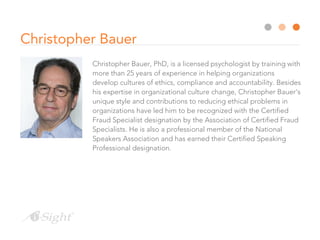
Christopher Bauer 
Christopher Bauer, PhD, is a licensed psychologist by training with 
more than 25 years of experience in helping organizations 
develop cultures of ethics, compliance and accountability. Besides 
his expertise in organizational culture change, Christopher Bauer's 
unique style and contributions to reducing ethical problems in 
organizations have led him to be recognized with the Certified 
Fraud Specialist designation by the Association of Certified Fraud 
Specialists. He is also a professional member of the National 
Speakers Association and has earned their Certified Speaking 
Professional designation.
What I Do For a Living 
And why that matters for 
this program
Grab a Pen & Paper 
Your instructions are…
Forget Kumbaya… 
Ethics training is more than a ‘feel-good’ exercise. 
Your company is likely losing 5-7% of your bottom 
line each year to ethics-related issues. 
Ethics training – done right – can recoup as much 
as half of those losses and possibly even more.
Key #1 
You can’t really train on 
ethics until…
…you actually know what 
ethics are and aren’t. 
You need to differentiate ethics from: 
compliance 
policies and procedures 
mission and vision
Next 
You need to get very clear about: 
what ethics do mean in your organization. 
behavioralize ethics. (What exactly do 
employees need to do and not do to bring your 
definition of ethics to life?)
Key #2 
Employees need to be able to 
“C” your ethics training.
To do the best job, your training 
needs to be: 
 Clear 
 Concise (without compromising clarity) 
 Comprehensive (without being overwhelming!)
Key #3 
Make it “E-zy”
If your goal is to make ethics user-friendly, 
it needs to be: 
Easily understood 
Easily applied 
Easily retained
Poll question #1
Oh, and um… 
Who actually gets ethics training in your 
organization? 
Remember, the integrity of your organization 
is being judged all day, every day on the 
basis of everybody’s behavior from the front 
lines up through senior management.
Questions so far? 
Bring ‘em on…
Key #4 
Make it practical!!!
If your ethics training isn’t practical, 
you’re sunk 
 Remember “easily applied”. 
 Provide not just information but easily applied ideas, tools, and 
resources. 
 If it sounds academic, you’ve probably lost them. 
 If it sounds preachy, you’ve probably lost them. 
 If it sounds too good to be true, you’ve probably lost them. 
 If it’s “for the good of the business” and not also clearly for their 
good, you’ve probably lost them.
Poll question #2
Key #5 
Provide a Live, Interactive 
Component.
The Three “C”s and three “E”s 
Don’t Mean… 
a dry, academic, un-applied program 
a PowerPoint presentation of 200 rules 
a lecture on “doing the right thing” 
a ten point multiple choice test you can’t fail. 
(Or, really, even one you can fail…) 
a one time dose of anything
Significant risks from missing the 
live, interactive piece… 
Live, interactive ‘eyes in the room’ allow: 
catching a lack of understanding of the ideas or how 
best to apply them 
informed conversations about barriers - whether real or 
perceived - that your employees see to implementing 
your training 
a whole lot more fun 
(PLEASE: No duds at the front of the room!)
Free Resources for You! 
Here’s an opportunity to request one or both of these 
free resources. 
Just select yes to add your email to the list to receive: 
Weekly Ethics Thought - newsletter 
Ethics/Values Self-Audit Tool - document
One Last Tool… 
Want to assure that you’re driving a culture of 
ethics, compliance, and accountability? 
A well-written, well-implemented values 
statement is the ticket.
A Values Statement Done Right: 
 tells every employee what the best way is to make a decision in 
the absence of an existing rule or guideline 
 helps every employee evaluate their actions – and the actions 
of those around them – as to whether or not they align with 
your most important, most persistent priorities 
 gets everyone on the same page as to what’s most important 
all day, every day in your organization
A Values Statement Done 
Wrong… 
…is a dangerous thing. 
The goal of a values statement is to get everyone 
on the same train. You’d better be sure you’re 
getting them on the right train… 
Need help getting yours done right? 
Please be in touch!
Questions? 
Here’s your last chance for the moment…
Thank-you for participating 
Christopher Bauer 
www.BauerEthicsSeminars.com 
www.ChristopherBauer.com 
or call (800) 884-8569 or (615) 385-3523 
Contact us at i-Sight 
Joe Gerard, Vice President Marketing and Sales 
j.gerard@i-sight.com

5 Keys to Effective Ethics Training

  • 1.
    5 Keys toan Effective Ethics Training Program Christopher Bauer, PhD, CSP, CFS www.BauerEthicsSeminars.com
  • 2.
    Christopher Bauer ChristopherBauer, PhD, is a licensed psychologist by training with more than 25 years of experience in helping organizations develop cultures of ethics, compliance and accountability. Besides his expertise in organizational culture change, Christopher Bauer's unique style and contributions to reducing ethical problems in organizations have led him to be recognized with the Certified Fraud Specialist designation by the Association of Certified Fraud Specialists. He is also a professional member of the National Speakers Association and has earned their Certified Speaking Professional designation.
  • 3.
    What I DoFor a Living And why that matters for this program
  • 4.
    Grab a Pen& Paper Your instructions are…
  • 5.
    Forget Kumbaya… Ethicstraining is more than a ‘feel-good’ exercise. Your company is likely losing 5-7% of your bottom line each year to ethics-related issues. Ethics training – done right – can recoup as much as half of those losses and possibly even more.
  • 6.
    Key #1 Youcan’t really train on ethics until…
  • 7.
    …you actually knowwhat ethics are and aren’t. You need to differentiate ethics from: compliance policies and procedures mission and vision
  • 8.
    Next You needto get very clear about: what ethics do mean in your organization. behavioralize ethics. (What exactly do employees need to do and not do to bring your definition of ethics to life?)
  • 9.
    Key #2 Employeesneed to be able to “C” your ethics training.
  • 10.
    To do thebest job, your training needs to be:  Clear  Concise (without compromising clarity)  Comprehensive (without being overwhelming!)
  • 11.
    Key #3 Makeit “E-zy”
  • 12.
    If your goalis to make ethics user-friendly, it needs to be: Easily understood Easily applied Easily retained
  • 13.
  • 14.
    Oh, and um… Who actually gets ethics training in your organization? Remember, the integrity of your organization is being judged all day, every day on the basis of everybody’s behavior from the front lines up through senior management.
  • 15.
    Questions so far? Bring ‘em on…
  • 16.
    Key #4 Makeit practical!!!
  • 17.
    If your ethicstraining isn’t practical, you’re sunk  Remember “easily applied”.  Provide not just information but easily applied ideas, tools, and resources.  If it sounds academic, you’ve probably lost them.  If it sounds preachy, you’ve probably lost them.  If it sounds too good to be true, you’ve probably lost them.  If it’s “for the good of the business” and not also clearly for their good, you’ve probably lost them.
  • 18.
  • 19.
    Key #5 Providea Live, Interactive Component.
  • 20.
    The Three “C”sand three “E”s Don’t Mean… a dry, academic, un-applied program a PowerPoint presentation of 200 rules a lecture on “doing the right thing” a ten point multiple choice test you can’t fail. (Or, really, even one you can fail…) a one time dose of anything
  • 21.
    Significant risks frommissing the live, interactive piece… Live, interactive ‘eyes in the room’ allow: catching a lack of understanding of the ideas or how best to apply them informed conversations about barriers - whether real or perceived - that your employees see to implementing your training a whole lot more fun (PLEASE: No duds at the front of the room!)
  • 22.
    Free Resources forYou! Here’s an opportunity to request one or both of these free resources. Just select yes to add your email to the list to receive: Weekly Ethics Thought - newsletter Ethics/Values Self-Audit Tool - document
  • 23.
    One Last Tool… Want to assure that you’re driving a culture of ethics, compliance, and accountability? A well-written, well-implemented values statement is the ticket.
  • 24.
    A Values StatementDone Right:  tells every employee what the best way is to make a decision in the absence of an existing rule or guideline  helps every employee evaluate their actions – and the actions of those around them – as to whether or not they align with your most important, most persistent priorities  gets everyone on the same page as to what’s most important all day, every day in your organization
  • 25.
    A Values StatementDone Wrong… …is a dangerous thing. The goal of a values statement is to get everyone on the same train. You’d better be sure you’re getting them on the right train… Need help getting yours done right? Please be in touch!
  • 26.
    Questions? Here’s yourlast chance for the moment…
  • 27.
    Thank-you for participating Christopher Bauer www.BauerEthicsSeminars.com www.ChristopherBauer.com or call (800) 884-8569 or (615) 385-3523 Contact us at i-Sight Joe Gerard, Vice President Marketing and Sales j.gerard@i-sight.com