Homeostasis
• Homeostasis (ho. -me.-o-STA. –sis) Greek
• Homeo means similar
• Stasis means state of standing
• Refers to the existence of a stable internal environment
Homeostasis
• Homeostasis is the existence and maintenance of a relatively constant
environment within the body
• To achieve homeostasis, the body must actively regulate conditions
that are constantly changing
• We are continuously exposed to new conditions
• These conditions are called variables because their values can change
Examples of physiological variables
• Core temperature
• Water and electrolyte concentrations
• pH (acidity or alkalinity) of body fluids
• Blood glucose levels
• Blood and tissue oxygen and carbon dioxide levels
• Blood pressure
Variable - body temperature
 Body temperature is a variable that can increase in a hot environment or
decrease in a cold one
 Homeostatic mechanisms, such as sweating or shivering, normally maintain
body temperature near an ideal normal value, or set point
Homeostasis
Homeostasis
Components of homeostasis control system
1. Receptor
2. Control center
3. Effector
The elements of a homeostatic control system
Homeostasis
• Negative feedback – reducing the amount of change (whole
mechanism is shut off)
• All are controlled by negative feedback mechanism
• Positive feedback – increasing the amount of change (reaction
continues at an even faster rate)
• Positive feedback is less common but important
Negative Feedback
• Most systems of the body are regulated by negative-feedback mechanisms,
which maintain homeostasis
• Negative means that any deviation from the set point is made smaller or is
resisted
• In a negative-feedback mechanism, the response to the original stimulus results
in deviation from the set point, becoming smaller
• Example of important negative-feedback mechanisms
• Maintaining normal body temperature
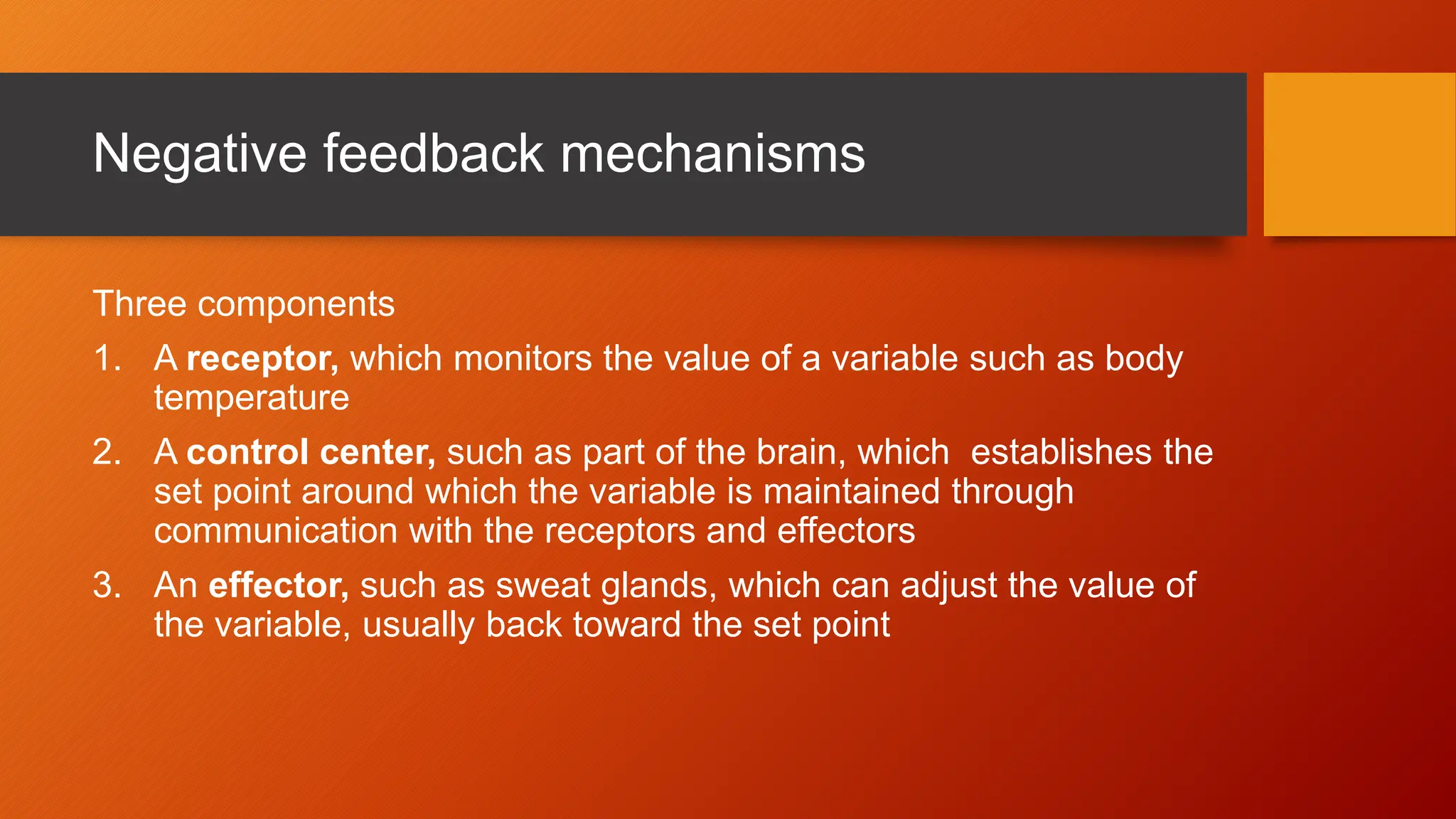
Negative feedback mechanisms
Three components
1. A receptor, which monitors the value of a variable such as body
temperature
2. A control center, such as part of the brain, which establishes the
set point around which the variable is maintained through
communication with the receptors and effectors
3. An effector, such as sweat glands, which can adjust the value of
the variable, usually back toward the set point
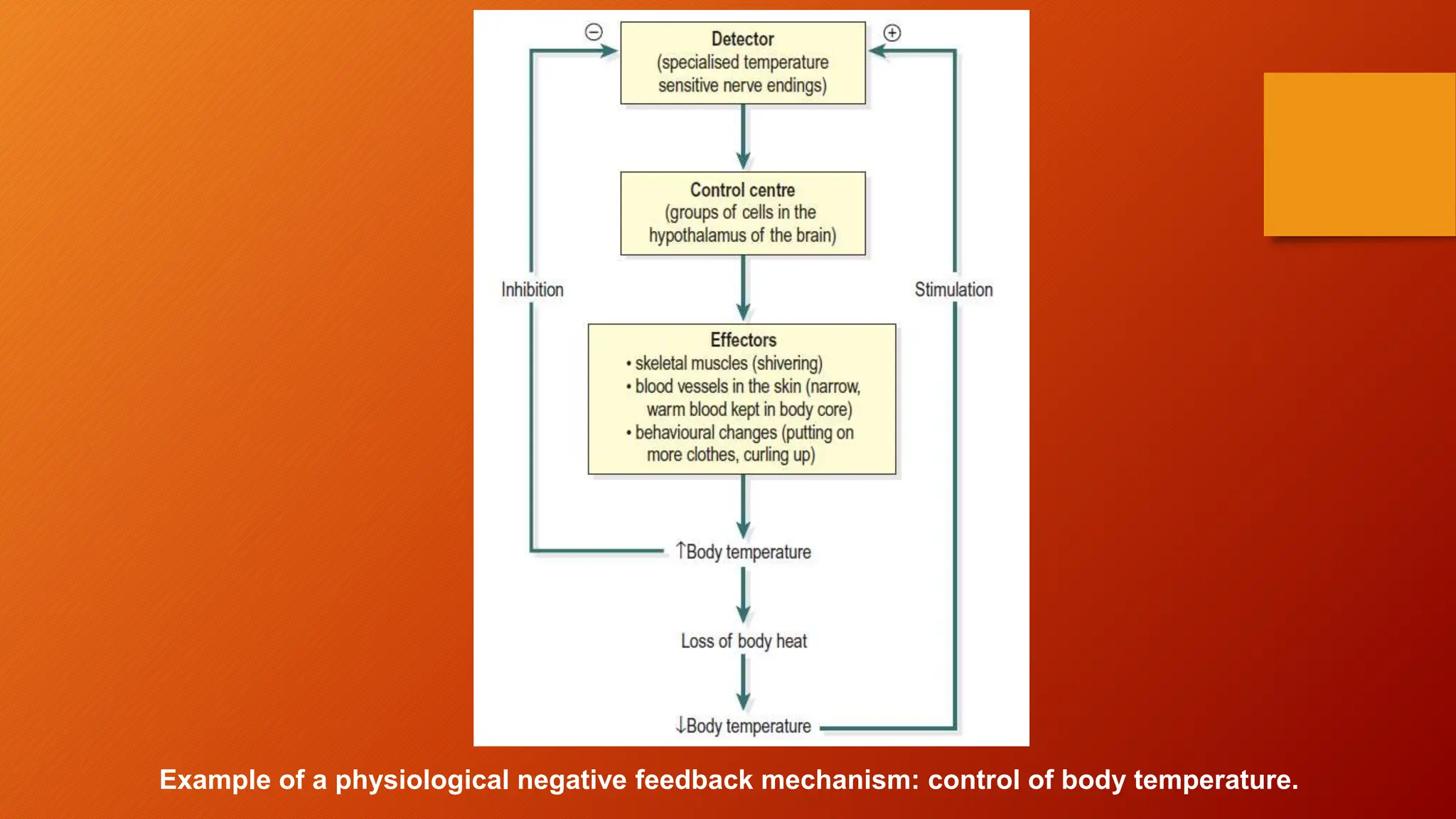
Negative-Feedback Mechanism: Body Temperature
Example of a physiological negative feedback mechanism: control of body temperature.
Negative feedback regulation of secretion of antidiuretic hormone (ADH)
Regulation of secretion of oxytocin through a positive feedback mechanism

5. Homeostasis.pptx

  • 1.
    Homeostasis • Homeostasis (ho.-me.-o-STA. –sis) Greek • Homeo means similar • Stasis means state of standing • Refers to the existence of a stable internal environment
  • 2.
    Homeostasis • Homeostasis isthe existence and maintenance of a relatively constant environment within the body • To achieve homeostasis, the body must actively regulate conditions that are constantly changing • We are continuously exposed to new conditions • These conditions are called variables because their values can change
  • 3.
    Examples of physiologicalvariables • Core temperature • Water and electrolyte concentrations • pH (acidity or alkalinity) of body fluids • Blood glucose levels • Blood and tissue oxygen and carbon dioxide levels • Blood pressure
  • 4.
    Variable - bodytemperature  Body temperature is a variable that can increase in a hot environment or decrease in a cold one  Homeostatic mechanisms, such as sweating or shivering, normally maintain body temperature near an ideal normal value, or set point Homeostasis
  • 5.
    Homeostasis Components of homeostasiscontrol system 1. Receptor 2. Control center 3. Effector
  • 6.
    The elements ofa homeostatic control system
  • 7.
    Homeostasis • Negative feedback– reducing the amount of change (whole mechanism is shut off) • All are controlled by negative feedback mechanism • Positive feedback – increasing the amount of change (reaction continues at an even faster rate) • Positive feedback is less common but important
  • 8.
    Negative Feedback • Mostsystems of the body are regulated by negative-feedback mechanisms, which maintain homeostasis • Negative means that any deviation from the set point is made smaller or is resisted • In a negative-feedback mechanism, the response to the original stimulus results in deviation from the set point, becoming smaller • Example of important negative-feedback mechanisms • Maintaining normal body temperature
  • 9.
    Negative feedback mechanisms Threecomponents 1. A receptor, which monitors the value of a variable such as body temperature 2. A control center, such as part of the brain, which establishes the set point around which the variable is maintained through communication with the receptors and effectors 3. An effector, such as sweat glands, which can adjust the value of the variable, usually back toward the set point
  • 10.
  • 11.
    Example of aphysiological negative feedback mechanism: control of body temperature.
  • 13.
    Negative feedback regulationof secretion of antidiuretic hormone (ADH)
  • 14.
    Regulation of secretionof oxytocin through a positive feedback mechanism