Download to read offline

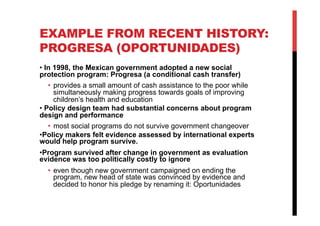
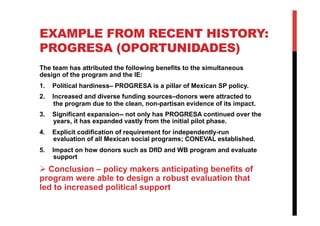
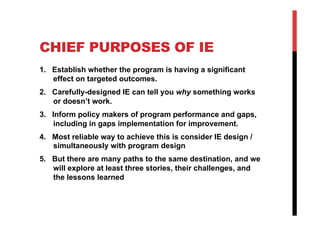
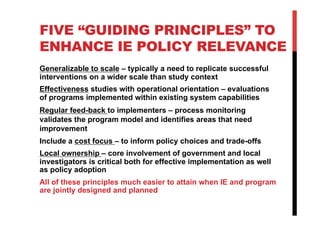
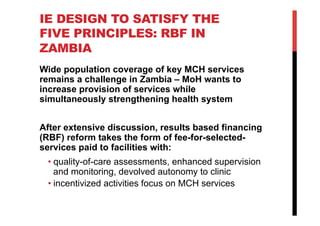
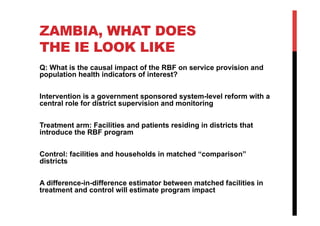
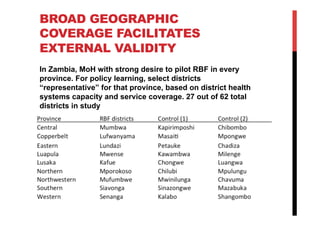

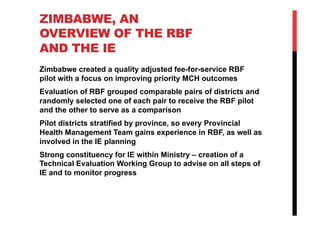
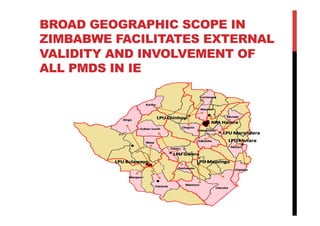
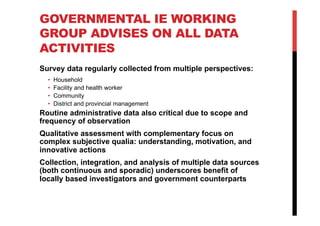
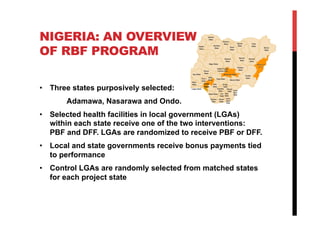

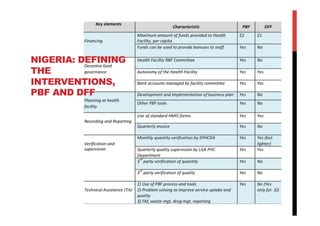

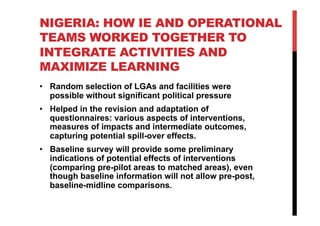

The document discusses the benefits of simultaneously designing social programs and impact evaluations through examples from Mexico, Nigeria, Zambia, and Zimbabwe. It notes that simultaneous design allows the evaluation to establish the causal impact of the program, inform improvements, ensure broad coverage for validity, and increase local ownership and political support. Close collaboration between operational and evaluation teams is emphasized, including jointly defining interventions, outcomes, and data collection to maximize learning.


![Hypothalamus short notes on location, function and disorders by Dr. Neha [PT]...](https://cdn.slidesharecdn.com/ss_thumbnails/hypothalamusbydr-260124142231-2b48143d-thumbnail.jpg?width=640&height=640&fit=bounds)
![Cells and Organs of immune system [Autosaved].pptx](https://cdn.slidesharecdn.com/ss_thumbnails/cellsandorgansofimmunesystemautosaved-260123152717-ea0cb261-thumbnail.jpg?width=640&height=640&fit=bounds)


