4S6             24/6/2010


      VITAMIN
Learning outcomes:
At the end of the lesson, you will be able to:
1) Explain the functions of vitamin in a diet to
   maintain health,
2) List the sources of vitamins in a diet,
3) Explain the effects of deficiency and
   overdose of vitamins to human body.
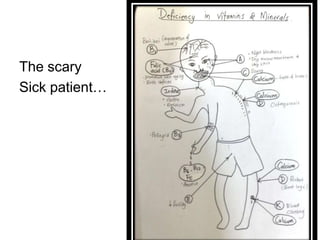
The scary
Sick patient…
Vitamin
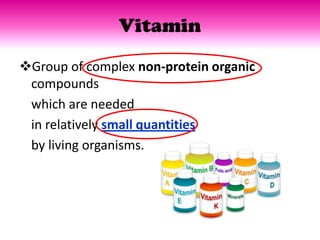
Group of complex non-protein organic
 compounds
 which are needed
 in relatively small quantities
 by living organisms.
Vitamin
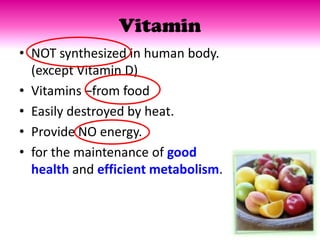
• NOT synthesized in human body.
  (except Vitamin D)
• Vitamins –from food
• Easily destroyed by heat.
• Provide NO energy.
• for the maintenance of good
  health and efficient metabolism.
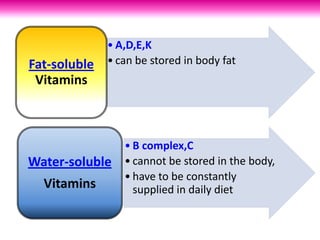
• A,D,E,K
Fat-soluble   • can be stored in body fat
 Vitamins


                 • B complex,C
Water-soluble    • cannot be stored in the body,
                 • have to be constantly
  Vitamins         supplied in daily diet
Refer to the worksheets
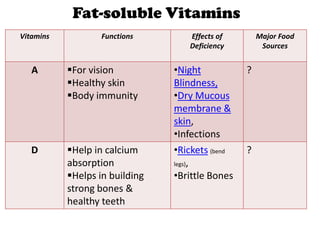
Fat-soluble Vitamins
Vitamins           Functions       Effects of        Major Food
                                   Deficiency         Sources


   A       For vision          •Night           ?
           Healthy skin        Blindness,
           Body immunity       •Dry Mucous
                                membrane &
                                skin,
                                •Infections
   D       Help in calcium     •Rickets (bend   ?
           absorption           legs),

           Helps in building   •Brittle Bones
           strong bones &
           healthy teeth
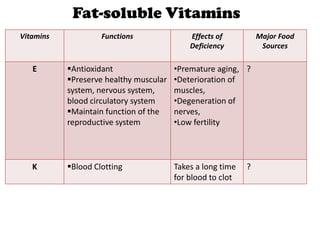
Fat-soluble Vitamins
Vitamins            Functions               Effects of          Major Food
                                            Deficiency           Sources

   E       Antioxidant                 •Premature aging, ?
           Preserve healthy muscular   •Deterioration of
           system, nervous system,      muscles,
           blood circulatory system     •Degeneration of
           Maintain function of the    nerves,
           reproductive system          •Low fertility


   K       Blood Clotting              Takes a long time   ?
                                        for blood to clot
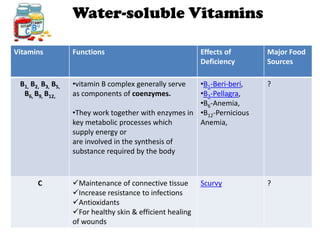
Water-soluble Vitamins

Vitamins           Functions                               Effects of    Major Food
                                                           Deficiency    Sources

 B1, B2, B3, B5,   •vitamin B complex generally serve  •B1-Beri-beri,    ?
  B6, B9, B12,     as components of coenzymes.         •B3-Pellagra,
                                                       •B6-Anemia,
                   •They work together with enzymes in •B12-Pernicious
                   key metabolic processes which       Anemia,
                   supply energy or
                   are involved in the synthesis of
                   substance required by the body


       C           Maintenance of connective tissue       Scurvy        ?
                   Increase resistance to infections
                   Antioxidants
                   For healthy skin & efficient healing
                   of wounds
Quiz
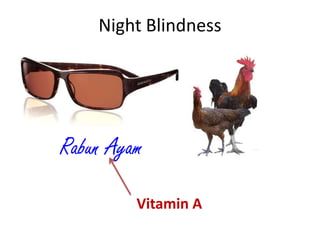
Night Blindness


Rabun Ayam

         Vitamin A
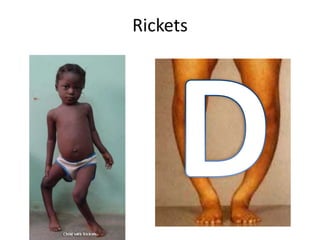
Rickets
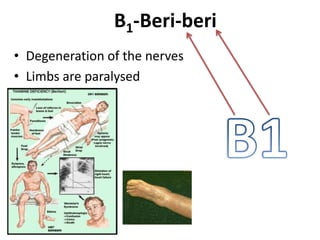
B1-Beri-beri
• Degeneration of the nerves
• Limbs are paralysed
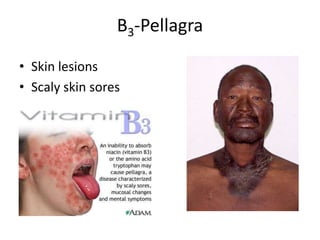
B3-Pellagra

• Skin lesions
• Scaly skin sores
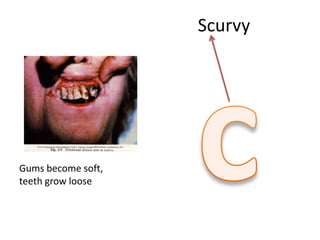
Scurvy


Gums become soft,
teeth grow loose

4s6 c nutrition (vitamin)

  • 1.
    4S6 24/6/2010 VITAMIN
  • 2.
    Learning outcomes: At theend of the lesson, you will be able to: 1) Explain the functions of vitamin in a diet to maintain health, 2) List the sources of vitamins in a diet, 3) Explain the effects of deficiency and overdose of vitamins to human body.
  • 3.
  • 4.
    Vitamin Group of complexnon-protein organic compounds which are needed in relatively small quantities by living organisms.
  • 5.
    Vitamin • NOT synthesizedin human body. (except Vitamin D) • Vitamins –from food • Easily destroyed by heat. • Provide NO energy. • for the maintenance of good health and efficient metabolism.
  • 6.
    • A,D,E,K Fat-soluble • can be stored in body fat Vitamins • B complex,C Water-soluble • cannot be stored in the body, • have to be constantly Vitamins supplied in daily diet
  • 7.
    Refer to theworksheets
  • 8.
    Fat-soluble Vitamins Vitamins Functions Effects of Major Food Deficiency Sources A For vision •Night ? Healthy skin Blindness, Body immunity •Dry Mucous membrane & skin, •Infections D Help in calcium •Rickets (bend ? absorption legs), Helps in building •Brittle Bones strong bones & healthy teeth
  • 9.
    Fat-soluble Vitamins Vitamins Functions Effects of Major Food Deficiency Sources E Antioxidant •Premature aging, ? Preserve healthy muscular •Deterioration of system, nervous system, muscles, blood circulatory system •Degeneration of Maintain function of the nerves, reproductive system •Low fertility K Blood Clotting Takes a long time ? for blood to clot
  • 10.
    Water-soluble Vitamins Vitamins Functions Effects of Major Food Deficiency Sources B1, B2, B3, B5, •vitamin B complex generally serve •B1-Beri-beri, ? B6, B9, B12, as components of coenzymes. •B3-Pellagra, •B6-Anemia, •They work together with enzymes in •B12-Pernicious key metabolic processes which Anemia, supply energy or are involved in the synthesis of substance required by the body C Maintenance of connective tissue Scurvy ? Increase resistance to infections Antioxidants For healthy skin & efficient healing of wounds
  • 11.
  • 12.
  • 13.
  • 14.
    B1-Beri-beri • Degeneration ofthe nerves • Limbs are paralysed
  • 15.
  • 16.