Quality Culture in
   Organizations
REFERENCES
Total Quality Management by Besterfield et al
Quality Planning and Analysis by Juran and Gryna
The Management and Control of Quality by Evans and
Lindsay
Elements of Quality Culture
 Leadership
 Customer Focus
 Human Resource Management
 Factual Approach to Decision Making
 Process Management
 Continuous Improvement
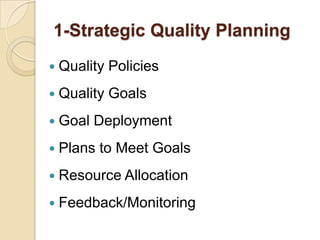
1-Strategic Quality Planning
 Quality   Policies
 Quality   Goals
 Goal   Deployment
 Plans   to Meet Goals
 Resource Allocation

 Feedback/Monitoring
2-Customer Focus
 Who is customer?
 Quality Dimensions
    ◦   Performance
    ◦   Features
    ◦   Service
    ◦   Warranty
    ◦   Price
    ◦   Repute
 Customer Feedback (Methods)
 Service Quality
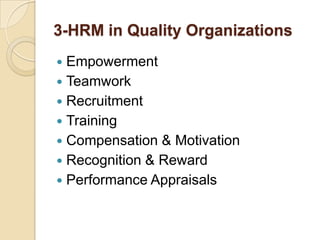
3-HRM in Quality Organizations
 Empowerment
 Teamwork
 Recruitment
 Training
 Compensation & Motivation
 Recognition & Reward
 Performance Appraisals
4-Supplier Relationship Management

   Partnering
   Long Term Commitment
   Supplier Selection
   Certification
   Rating (Score Cards)
5-Factual Approach to Decision
Making
   Performance Measurement
   Choice of Performance Measures
   Quality Cost Analysis
    ◦ Prevention
    ◦ Appraisal
    ◦ Internal Failure
    ◦ External Failure
6-Process Management
Major Processes
  Sub-Process 1                     Sub-Process 2


                                                Many people think of what
                                                they do as a set of activities
                                                that they do repeatedly. To
                  Activities                    create a more effective
                                                approach, their thoughts have
                                                to transform from activity
                                                thinking to process thinking.

                                              We all perform tasks at various
                               1. Obtain …    levels and are therefore quite
                   Tasks       2. Add …       familiar with this concept.
                               3. Move to …
7-Continuous Improvement
 5 Ways to Improve
1. Reduce resource input
2. Reduce errors
3. Meet or exceed expectations of
   customers
4. Make the process Safer
5. Make the process more satisfying for
   the people doing it
Continuous Improvement
 Contd
Types of Problems
 Compliance (Specified by standards),
  Unstructured (Not specified by standards),
  Efficiency (from operations viewpoint),
  Process Design, Product Design
Improvement Strategies
 Refine
 Repair
 Renovate
 Reinvent
4.quality culture

4.quality culture

  • 1.
    Quality Culture in Organizations REFERENCES Total Quality Management by Besterfield et al Quality Planning and Analysis by Juran and Gryna The Management and Control of Quality by Evans and Lindsay
  • 2.
    Elements of QualityCulture  Leadership  Customer Focus  Human Resource Management  Factual Approach to Decision Making  Process Management  Continuous Improvement
  • 3.
    1-Strategic Quality Planning Quality Policies  Quality Goals  Goal Deployment  Plans to Meet Goals  Resource Allocation  Feedback/Monitoring
  • 4.
    2-Customer Focus  Whois customer?  Quality Dimensions ◦ Performance ◦ Features ◦ Service ◦ Warranty ◦ Price ◦ Repute  Customer Feedback (Methods)  Service Quality
  • 5.
    3-HRM in QualityOrganizations  Empowerment  Teamwork  Recruitment  Training  Compensation & Motivation  Recognition & Reward  Performance Appraisals
  • 6.
    4-Supplier Relationship Management  Partnering  Long Term Commitment  Supplier Selection  Certification  Rating (Score Cards)
  • 7.
    5-Factual Approach toDecision Making  Performance Measurement  Choice of Performance Measures  Quality Cost Analysis ◦ Prevention ◦ Appraisal ◦ Internal Failure ◦ External Failure
  • 8.
    6-Process Management Major Processes Sub-Process 1 Sub-Process 2 Many people think of what they do as a set of activities that they do repeatedly. To Activities create a more effective approach, their thoughts have to transform from activity thinking to process thinking. We all perform tasks at various 1. Obtain … levels and are therefore quite Tasks 2. Add … familiar with this concept. 3. Move to …
  • 9.
    7-Continuous Improvement  5Ways to Improve 1. Reduce resource input 2. Reduce errors 3. Meet or exceed expectations of customers 4. Make the process Safer 5. Make the process more satisfying for the people doing it
  • 10.
    Continuous Improvement Contd Typesof Problems  Compliance (Specified by standards), Unstructured (Not specified by standards), Efficiency (from operations viewpoint), Process Design, Product Design Improvement Strategies  Refine  Repair  Renovate  Reinvent