Chapter 3 The Global Marketing Environment PRINCIPLES OF MARKETING Eighth Edition Philip Kotler and Gary Armstrong
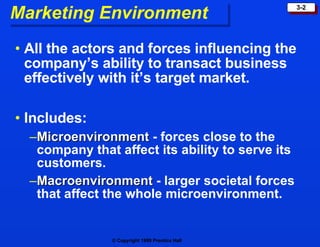
Marketing Environment All the actors and forces influencing the company’s ability to transact business effectively with it’s target market. Includes: Microenvironment  - forces close to the company that affect its ability to serve its  customers. Macroenvironment  - larger societal forces that affect the whole microenvironment.
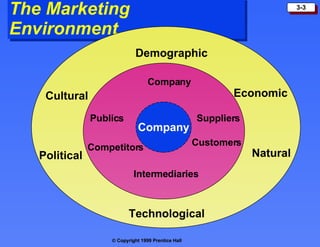
The Marketing Environment Company Demographic Economic Natural Technological Political Cultural Company Customers Intermediaries Suppliers Competitors Publics
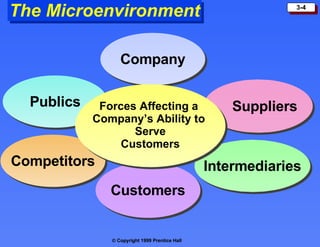
The Microenvironment Company Customers Publics Suppliers Competitors Intermediaries Forces Affecting a  Company’s Ability to  Serve Customers
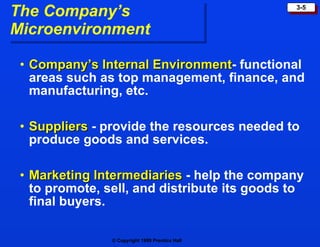
The Company’s  Microenvironment Company’s Internal Environment - functional areas such as top management, finance, and manufacturing, etc. Suppliers   - provide the resources needed to produce goods and services. Marketing Intermediaries   - help the company to promote, sell, and distribute its goods to final buyers.
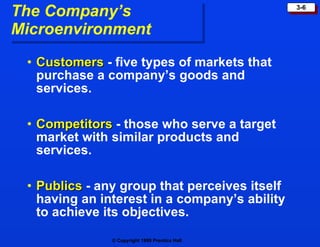
The Company’s  Microenvironment Customers   -   five types of markets that purchase a company’s goods and services. Competitors  - those who serve a target market with similar products and services. Publics  - any group that perceives itself having an interest in a company’s ability to achieve its objectives.
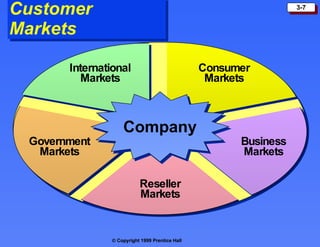
Customer Markets Company Consumer Markets International Markets Government Markets Business Markets Reseller Markets
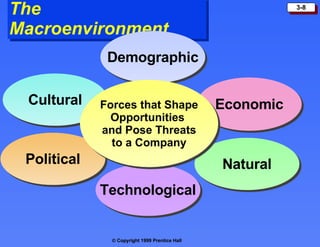
The Macroenvironment Demographic Technological Cultural Economic Political Natural Forces that Shape Opportunities  and Pose Threats to a Company
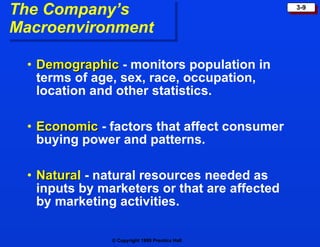
The Company’s  Macroenvironment Demographic  - monitors population in terms of age, sex, race, occupation, location and other statistics. Economic   - factors that affect consumer buying power and patterns. Natura l  - natural resources needed as inputs by marketers or that are affected by marketing activities.
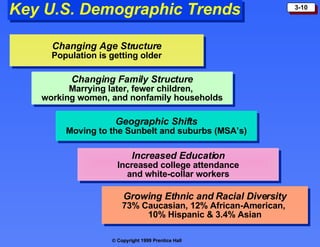
Key U.S. Demographic Trends Changing Age Structure Population is getting older Changing Family Structure Marrying later, fewer children,  working women, and nonfamily households Geographic Shifts Moving to the Sunbelt and suburbs (MSA’s) Increased Education Increased college attendance and white-collar workers Growing Ethnic and Racial Diversity 73% Caucasian, 12% African-American,  10% Hispanic & 3.4% Asian
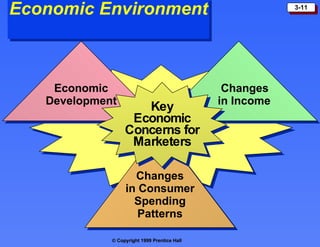
Economic Environment Changes in Consumer Spending Patterns Economic Development Changes in Income Key Economic Concerns for Marketers
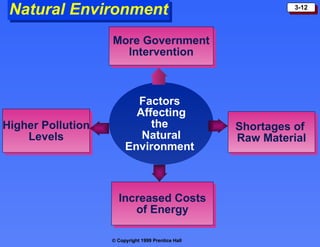
Natural Environment Factors  Affecting the  Natural Environment  More Government Intervention Shortages of  Raw Material Increased Costs of Energy Higher Pollution Levels
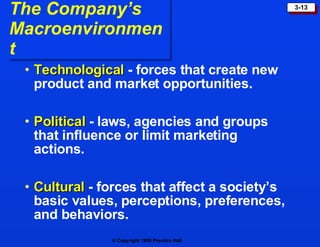
The Company’s Macroenvironment Technological  - forces that create new product and market opportunities. Political  - laws, agencies and groups that influence or limit marketing actions. Cultural  - forces that affect a society’s basic values, perceptions, preferences, and behaviors.
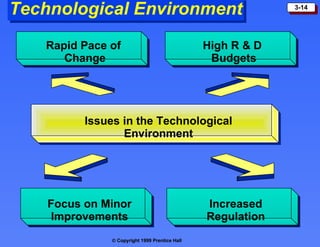
Technological Environment Rapid Pace of  Change High R & D  Budgets Focus on Minor Improvements Increased Regulation Issues in the Technological Environment
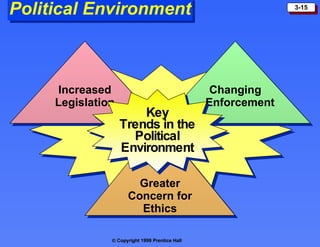
Political Environment Greater Concern for Ethics Increased Legislation Changing Enforcement Key Trends in the Political Environment
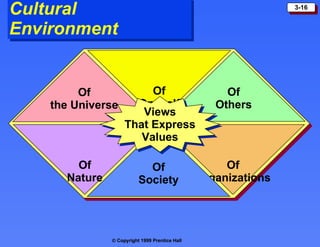
Cultural Environment Of Organizations Of Nature Of Oneself Of Society Of the Universe Of Others Views That Express Values
Responding to the  Marketing Environment Environmental Management Perspective  Taking a   proactive   approach to managing the microenvironment and the macroenvironment to affect changes that are favorable for the company. How? Hire lobbyists , run “advertorials”, file law suits and complaints, and form agreements.

Lec3

  • 1.
    Chapter 3 TheGlobal Marketing Environment PRINCIPLES OF MARKETING Eighth Edition Philip Kotler and Gary Armstrong
  • 2.
    Marketing Environment Allthe actors and forces influencing the company’s ability to transact business effectively with it’s target market. Includes: Microenvironment - forces close to the company that affect its ability to serve its customers. Macroenvironment - larger societal forces that affect the whole microenvironment.
  • 3.
    The Marketing EnvironmentCompany Demographic Economic Natural Technological Political Cultural Company Customers Intermediaries Suppliers Competitors Publics
  • 4.
    The Microenvironment CompanyCustomers Publics Suppliers Competitors Intermediaries Forces Affecting a Company’s Ability to Serve Customers
  • 5.
    The Company’s Microenvironment Company’s Internal Environment - functional areas such as top management, finance, and manufacturing, etc. Suppliers - provide the resources needed to produce goods and services. Marketing Intermediaries - help the company to promote, sell, and distribute its goods to final buyers.
  • 6.
    The Company’s Microenvironment Customers - five types of markets that purchase a company’s goods and services. Competitors - those who serve a target market with similar products and services. Publics - any group that perceives itself having an interest in a company’s ability to achieve its objectives.
  • 7.
    Customer Markets CompanyConsumer Markets International Markets Government Markets Business Markets Reseller Markets
  • 8.
    The Macroenvironment DemographicTechnological Cultural Economic Political Natural Forces that Shape Opportunities and Pose Threats to a Company
  • 9.
    The Company’s Macroenvironment Demographic - monitors population in terms of age, sex, race, occupation, location and other statistics. Economic - factors that affect consumer buying power and patterns. Natura l - natural resources needed as inputs by marketers or that are affected by marketing activities.
  • 10.
    Key U.S. DemographicTrends Changing Age Structure Population is getting older Changing Family Structure Marrying later, fewer children, working women, and nonfamily households Geographic Shifts Moving to the Sunbelt and suburbs (MSA’s) Increased Education Increased college attendance and white-collar workers Growing Ethnic and Racial Diversity 73% Caucasian, 12% African-American, 10% Hispanic & 3.4% Asian
  • 11.
    Economic Environment Changesin Consumer Spending Patterns Economic Development Changes in Income Key Economic Concerns for Marketers
  • 12.
    Natural Environment Factors Affecting the Natural Environment More Government Intervention Shortages of Raw Material Increased Costs of Energy Higher Pollution Levels
  • 13.
    The Company’s MacroenvironmentTechnological - forces that create new product and market opportunities. Political - laws, agencies and groups that influence or limit marketing actions. Cultural - forces that affect a society’s basic values, perceptions, preferences, and behaviors.
  • 14.
    Technological Environment RapidPace of Change High R & D Budgets Focus on Minor Improvements Increased Regulation Issues in the Technological Environment
  • 15.
    Political Environment GreaterConcern for Ethics Increased Legislation Changing Enforcement Key Trends in the Political Environment
  • 16.
    Cultural Environment OfOrganizations Of Nature Of Oneself Of Society Of the Universe Of Others Views That Express Values
  • 17.
    Responding to the Marketing Environment Environmental Management Perspective Taking a proactive approach to managing the microenvironment and the macroenvironment to affect changes that are favorable for the company. How? Hire lobbyists , run “advertorials”, file law suits and complaints, and form agreements.