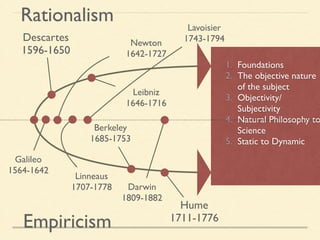
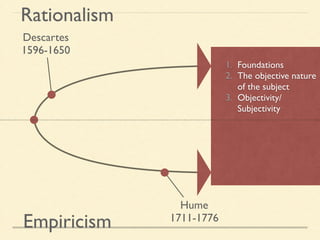
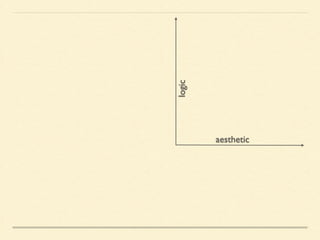
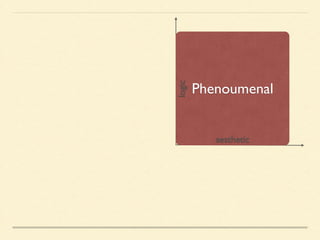
1. The document discusses the concepts of objectivity and subjectivity in aesthetics from several philosophical perspectives including rationalism, empiricism, and Kantian philosophy.
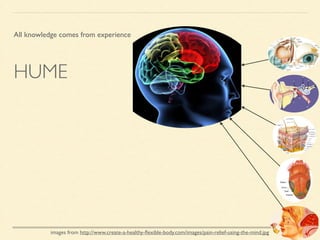
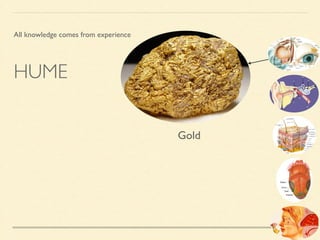
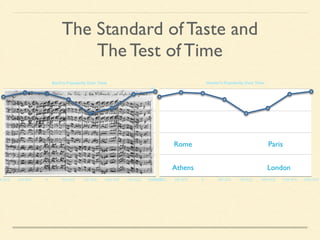
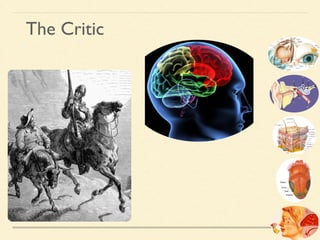
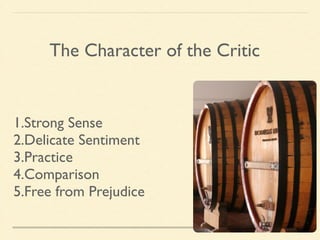
2. It examines David Hume's views on taste and the role of the critic in making judgments about beauty. For Hume, all knowledge comes from experience.
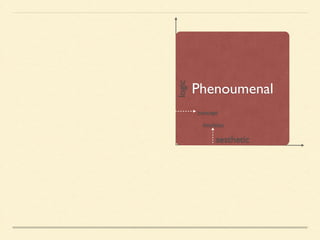
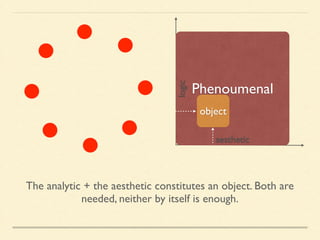
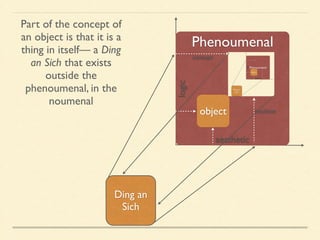
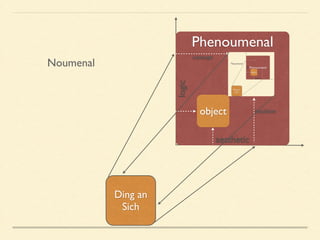
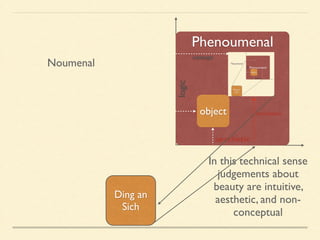
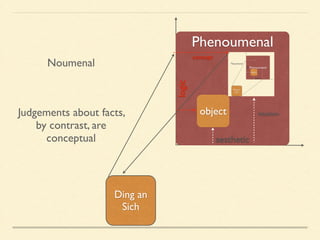
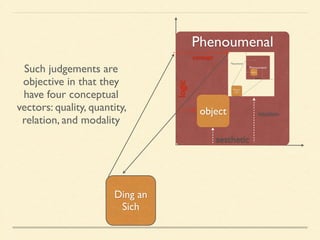
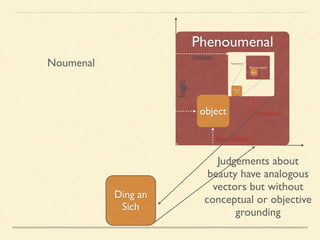
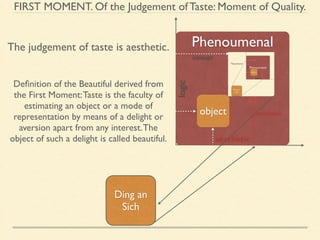
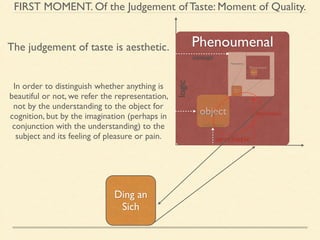
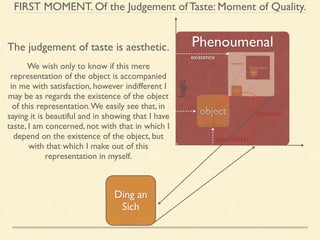
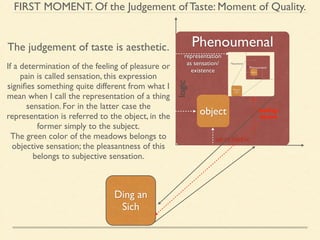
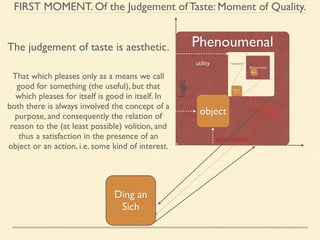
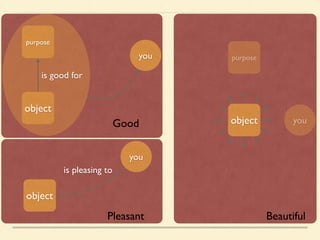
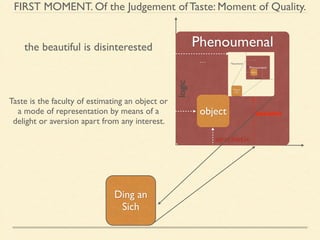
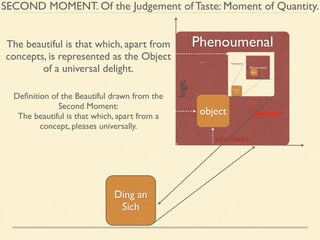
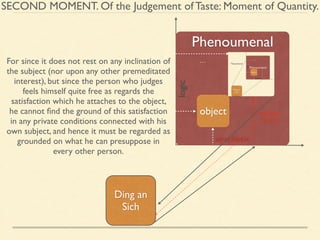
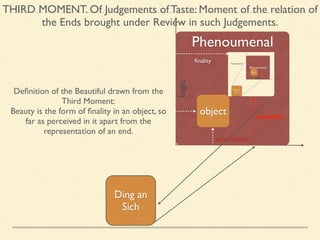
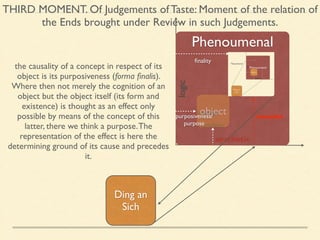
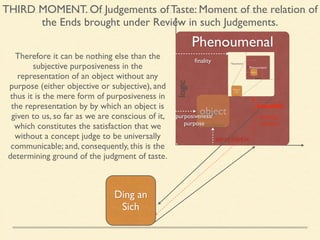
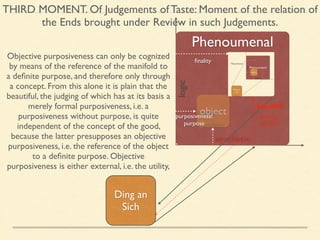
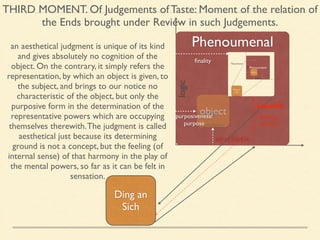
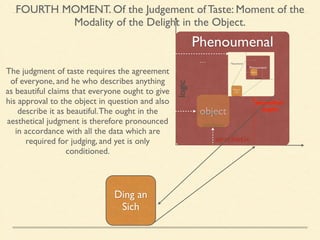
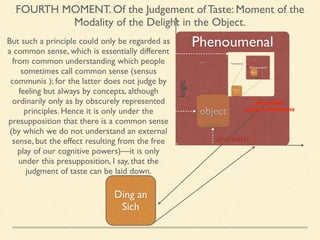
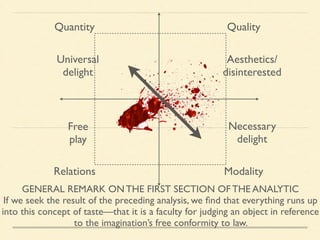
3. Immanuel Kant's theory of aesthetics holds that judgments of beauty are intuitive rather than conceptual, and concern "free play of the imagination" rather than objective qualities of the object. Beauty involves a sense of purposiveness or "finality" apart from any real purpose.