Critical Thinking is a charitable inquiry into a
claim or line of reasoning to determine its truth,
consistency, and soundness.
Basic Questions for
Basic Inquiries
-How to live?
-What is [real]?
-How do you know?
Ethics, the branch of philosophy that aAempts
to answer the question How to live?
Metaphysics, the branch of philosophy that
aAempts to answer the question What is [real]?
Epistemology, the branch of philosophy that
aAempts to answer the question How do you know?
Philosophy is the aAempt to answer, critically, the
epistemological, metaphysical, and ethical questions.
Critically:
i. Principle of Charity—for any claim give
it the strongest possible interpretation.
ii. Principle of Sufficient Reason—for any
claim give reasons why it is true or not
true.
Issue Questions, yes-or-no questions.
Topic or Theme Questions, open ended questions.
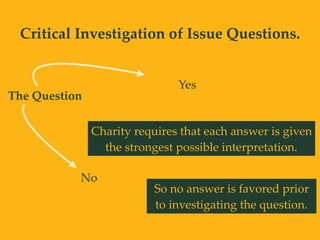
Critical Investigation of Issue Questions.
The Question
Yes
No
Charity requires that each answer is given
the strongest possible interpretation.
So no answer is favored prior
to investigating the question.
The Question
Reasons for Yes and against No
Reasons for No and against Yes
While Reason requires
justification for each answer.
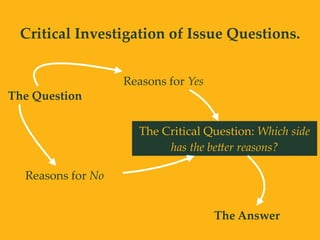
Critical Investigation of Issue Questions.
The Question
Reasons for Yes
Reasons for No
The Critical Question: Which side
has the be;er reasons?
The Answer
Critical Investigation of Issue Questions.
Is the cosmos
composed of water?
Water can take on the forms of all
other states of maAer.
As it turns out, water itself is
composed of hydrogen and oxygen
Which side has the beAer reasons?
No
Critical Investigation of Issue Questions.
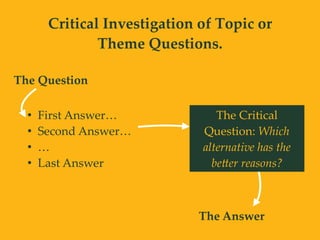
Critical Investigation of Topic or
Theme Questions.
The Question
The Critical
Question: Which
alternative has the
be;er reasons?
The Answer
• First Answer…
• Second Answer…
• …
• Last Answer
Charitable Investigation of Topic or
Theme Questions.
Which form of government is best?
Which alternative
has the beAer
reasons?
Democracy….
• Democracy because…
• Dictatorship because…
• …
• Oligarchy because.…
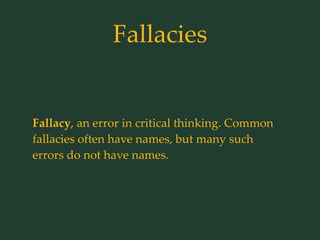
Fallacies
Fallacy, an error in critical thinking. Common
fallacies often have names, but many such
errors do not have names.
Fallacy
Favoritism, choosing lines of reasoning which
favor an outcome. This flouts the Principle of
Charity and includes favoring the truth (or
falsehood) of a claim or investigating only one
side of an issue question. Common forms
include wishful thinking, tu quoque, and
cognitive biases such as confirmation bias,
poisoning the well, and stereotyping.
Fallacy
Rationalization, proffering the mere
appearance of reason instead of real reasons.
This flouts the Principle of Sufficient Reason.
Common forms include ad hominem aAacks,
red herrings, and appeals to things other than
reason, such as force, popularity, and emotion.
Fallacy
Bad Questions, asking questions ill suited for
reasoning charitably. Common forms are
leading questions, begging the question, loaded
questions, and framing effects.

CT 001 questions & principles

  • 1.
    Critical Thinking isa charitable inquiry into a claim or line of reasoning to determine its truth, consistency, and soundness.
  • 2.
    Basic Questions for BasicInquiries -How to live? -What is [real]? -How do you know?
  • 3.
    Ethics, the branchof philosophy that aAempts to answer the question How to live?
  • 4.
    Metaphysics, the branchof philosophy that aAempts to answer the question What is [real]?
  • 5.
    Epistemology, the branchof philosophy that aAempts to answer the question How do you know?
  • 6.
    Philosophy is theaAempt to answer, critically, the epistemological, metaphysical, and ethical questions.
  • 7.
    Critically: i. Principle ofCharity—for any claim give it the strongest possible interpretation. ii. Principle of Sufficient Reason—for any claim give reasons why it is true or not true.
  • 8.
  • 9.
    Topic or ThemeQuestions, open ended questions.
  • 10.
    Critical Investigation ofIssue Questions. The Question Yes No Charity requires that each answer is given the strongest possible interpretation. So no answer is favored prior to investigating the question.
  • 11.
    The Question Reasons forYes and against No Reasons for No and against Yes While Reason requires justification for each answer. Critical Investigation of Issue Questions.
  • 12.
    The Question Reasons forYes Reasons for No The Critical Question: Which side has the be;er reasons? The Answer Critical Investigation of Issue Questions.
  • 13.
    Is the cosmos composedof water? Water can take on the forms of all other states of maAer. As it turns out, water itself is composed of hydrogen and oxygen Which side has the beAer reasons? No Critical Investigation of Issue Questions.
  • 14.
    Critical Investigation ofTopic or Theme Questions. The Question The Critical Question: Which alternative has the be;er reasons? The Answer • First Answer… • Second Answer… • … • Last Answer
  • 15.
    Charitable Investigation ofTopic or Theme Questions. Which form of government is best? Which alternative has the beAer reasons? Democracy…. • Democracy because… • Dictatorship because… • … • Oligarchy because.…
  • 16.
    Fallacies Fallacy, an errorin critical thinking. Common fallacies often have names, but many such errors do not have names.
  • 17.
    Fallacy Favoritism, choosing linesof reasoning which favor an outcome. This flouts the Principle of Charity and includes favoring the truth (or falsehood) of a claim or investigating only one side of an issue question. Common forms include wishful thinking, tu quoque, and cognitive biases such as confirmation bias, poisoning the well, and stereotyping.
  • 18.
    Fallacy Rationalization, proffering themere appearance of reason instead of real reasons. This flouts the Principle of Sufficient Reason. Common forms include ad hominem aAacks, red herrings, and appeals to things other than reason, such as force, popularity, and emotion.
  • 19.
    Fallacy Bad Questions, askingquestions ill suited for reasoning charitably. Common forms are leading questions, begging the question, loaded questions, and framing effects.