Jan 2017
Client Workshops for SAP Projects
Agenda
 What are SAP Workshops? Introduction
 When are SAP Workshops conducted? Which Phase?
 SAP’s Activate Methodology & Mapping to ADM Distributed Agile Methodology?,
 Client’s Enterprise Structure
 Client’s Business process Model, Process Groups and BPML
 Workshop Schedule
 Entry Exit Criteria - Deliverables expected
 Case Study & Conclusion
What are SAP Workshops? Introduction
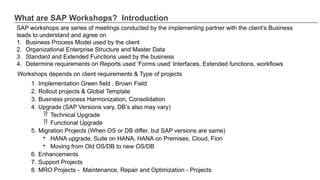
SAP workshops are series of meetings conducted by the implementing partner with the client’s Business
leads to understand and agree on
1. Business Process Model used by the client
2. Organizational Enterprise Structure and Master Data
3. Standard and Extended Functions used by the business
4. Determine requirements on Reports used ‘Forms used’ Interfaces, Extended functions, workflows
Workshops depends on client requirements & Type of projects
1. Implementation Green field , Brown Field
2. Rollout projects & Global Template
3. Business process Harmonization, Consolidation
4. Upgrade (SAP Versions vary, DB’s also may vary)
 Technical Upgrade
 Functional Upgrade
5. Migration Projects (When OS or DB differ, but SAP versions are same)
• HANA upgrade, Suite on HANA, HANA on Premises, Cloud, Fiori
• Moving from Old OS/DB to new OS/DB
6. Enhancements
7. Support Projects
8. MRO Projects - Maintenance, Repair and Optimization - Projects
SAP Workshops – Phases & Outcomes
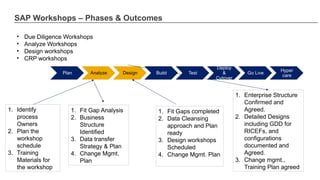
• Due Diligence Workshops
• Analyze Workshops
• Design workshops
• CRP workshops
Plan Analyze Design Build Test
Deploy
&
Cutover
Go Live
Hyper
care
1. Identify
process
Owners
2. Plan the
workshop
schedule
3. Training
Materials for
the workshop
1. Fit Gap Analysis
2. Business
Structure
Identified
3. Data transfer
Strategy & Plan
4. Change Mgmt.
Plan
1. Fit Gaps completed
2. Data Cleansing
approach and Plan
ready
3. Design workshops
Scheduled
4. Change Mgmt. Plan
1. Enterprise Structure
Confirmed and
Agreed.
2. Detailed Designs
including GDD for
RICEFs, and
configurations
documented and
Agreed.
3. Change mgmt.,
Training Plan agreed
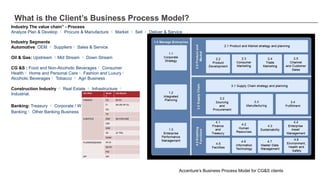
What is the Client’s Business Process Model?
Industry The value chain” - Process
Analyze Plan & Develop  Procure & Manufacture  Market  Sell  Deliver & Service
Accenture’s Business Process Model for CG&S clients
Industry Segments
Automotive: OEM  Suppliers Sales & Service
Oil & Gas: Upstream Mid Stream  Down Stream
CG &S : Food and Non-Alcoholic Beverages Consumer
Health Home and Personal Care Fashion and Luxury
Alcoholic Beverages Tobacco  Agri Business
Construction Industry  Real Estate  Infrastructure 
Industrial.
Banking: Treasury  Corporate / Wholesale Banking Retail
Banking Other Banking Business
Deciding Client’s Legal Entities (Companies)
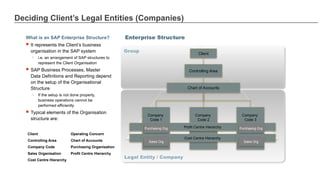
What is an SAP Enterprise Structure?
 It represents the Client’s business
organisation in the SAP system
o i.e. an arrangement of SAP structures to
represent the Client Organisation
 SAP Business Processes, Master
Data Definitions and Reporting depend
on the setup of the Organisational
Structure
o If the setup is not done properly,
business operations cannot be
performed efficiently
 Typical elements of the Organisation
structure are:
Enterprise Structure
Company Code Purchasing Organisation
Controlling Area Chart of Accounts
Client Operating Concern
Profit Centre Hierarchy
Sales Organisation
Cost Centre Hierarchy
Group
Legal Entity / Company
Company
Code 2
Profit Centre Hierarchy
Controlling Area
Chart of Accounts
Cost Centre Hierarchy
Company
Code 1
Company
Code 3
Client
Purchasing Org
Sales Org
Purchasing Org
Sales Org
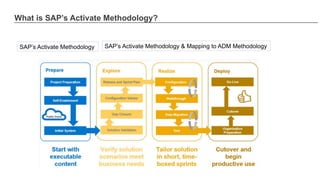
What is SAP’s Activate Methodology?
SAP’s Activate Methodology SAP’s Activate Methodology & Mapping to ADM Methodology
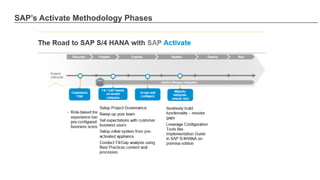
SAP’s Activate Methodology Phases
Copyright © 2016 Accenture All rights reserved. 9
INTERNAL USE ONLY
Activate vs ADM
Phases Mapping
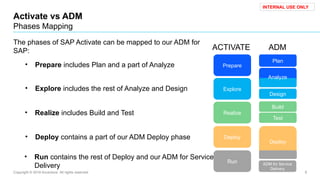
The phases of SAP Activate can be mapped to our ADM for
SAP:
Prepare
Explore
Realize
Deploy
Run
Design
Build
Test
Deploy
Plan
Analyze
ADM for Service
Delivery
ACTIVATE ADM
• Prepare includes Plan and a part of Analyze
• Explore includes the rest of Analyze and Design
• Realize includes Build and Test
• Deploy contains a part of our ADM Deploy phase
• Run contains the rest of Deploy and our ADM for Service
Delivery
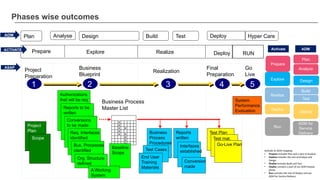
Phases wise outcomes
1 2 3 4 5
Project
Plan
Scope
Authorizations
that will be req
Reports to be
written
Conversions
to be made
Req. Interfaces
identified
Bus. Processes
identified
Org. Structure
defined
Reports
written
Interfaces
established
Conversion
made
Business
Process
Procedures
Test Cases
End User
Training
Materials
Test Plan
Test mat.
Go-Live Plan
x
x
x
x
x
x
x
x
x
x
System
Performance
Evaluation
Baseline
Scope
Business Process
Master List
Business
Blueprint
A Working
System
Realization
Final
Preparation
Project
Preparation
Go
Live
Explore Realize Deploy
Prepare
Prepare
Explore
Realize
Deploy
Run
Design
Build
Test
Deploy
Plan
Analyze
ADM for
Service
Delivery
ACTIVATE Activate ADM
ADM Build Test
Plan Analyse Design Deploy Hyper Care
ASAP
Activate to ADM mapping
• Prepare includes Plan and a part of Analyze
• Explore includes the rest of Analyze and
Design
• Realize includes Build and Test
• Deploy contains a part of our ADM Deploy
phase
• Run contains the rest of Deploy and our
ADM for Service Delivery
RUN
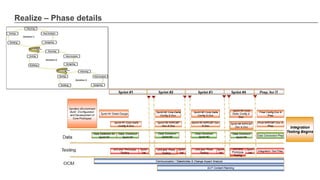
Realize – Phase details
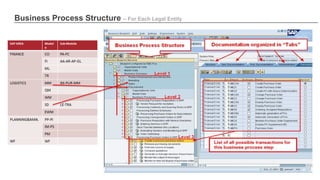
Business Process Structure – For Each Legal Entity
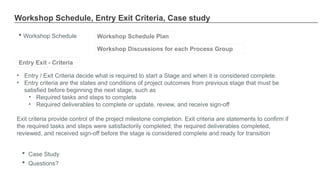
Workshop Schedule, Entry Exit Criteria, Case study
 Workshop Schedule Workshop Schedule Plan
Workshop Discussions for each Process Group
• Entry / Exit Criteria decide what is required to start a Stage and when it is considered complete.
• Entry criteria are the states and conditions of project outcomes from previous stage that must be
satisfied before beginning the next stage, such as
• Required tasks and steps to complete
• Required deliverables to complete or update, review, and receive sign-off
Exit criteria provide control of the project milestone completion. Exit criteria are statements to confirm if
the required tasks and steps were satisfactorily completed; the required deliverables completed,
reviewed, and received sign-off before the stage is considered complete and ready for transition
Entry Exit - Criteria
 Case Study
 Questions?
Thank You
Thank You

412533622-1-Client-Workshops-for-SAP-Projects.pptx

  • 1.
    Jan 2017 Client Workshopsfor SAP Projects
  • 2.
    Agenda  What areSAP Workshops? Introduction  When are SAP Workshops conducted? Which Phase?  SAP’s Activate Methodology & Mapping to ADM Distributed Agile Methodology?,  Client’s Enterprise Structure  Client’s Business process Model, Process Groups and BPML  Workshop Schedule  Entry Exit Criteria - Deliverables expected  Case Study & Conclusion
  • 3.
    What are SAPWorkshops? Introduction SAP workshops are series of meetings conducted by the implementing partner with the client’s Business leads to understand and agree on 1. Business Process Model used by the client 2. Organizational Enterprise Structure and Master Data 3. Standard and Extended Functions used by the business 4. Determine requirements on Reports used ‘Forms used’ Interfaces, Extended functions, workflows Workshops depends on client requirements & Type of projects 1. Implementation Green field , Brown Field 2. Rollout projects & Global Template 3. Business process Harmonization, Consolidation 4. Upgrade (SAP Versions vary, DB’s also may vary)  Technical Upgrade  Functional Upgrade 5. Migration Projects (When OS or DB differ, but SAP versions are same) • HANA upgrade, Suite on HANA, HANA on Premises, Cloud, Fiori • Moving from Old OS/DB to new OS/DB 6. Enhancements 7. Support Projects 8. MRO Projects - Maintenance, Repair and Optimization - Projects
  • 4.
    SAP Workshops –Phases & Outcomes • Due Diligence Workshops • Analyze Workshops • Design workshops • CRP workshops Plan Analyze Design Build Test Deploy & Cutover Go Live Hyper care 1. Identify process Owners 2. Plan the workshop schedule 3. Training Materials for the workshop 1. Fit Gap Analysis 2. Business Structure Identified 3. Data transfer Strategy & Plan 4. Change Mgmt. Plan 1. Fit Gaps completed 2. Data Cleansing approach and Plan ready 3. Design workshops Scheduled 4. Change Mgmt. Plan 1. Enterprise Structure Confirmed and Agreed. 2. Detailed Designs including GDD for RICEFs, and configurations documented and Agreed. 3. Change mgmt., Training Plan agreed
  • 5.
    What is theClient’s Business Process Model? Industry The value chain” - Process Analyze Plan & Develop  Procure & Manufacture  Market  Sell  Deliver & Service Accenture’s Business Process Model for CG&S clients Industry Segments Automotive: OEM  Suppliers Sales & Service Oil & Gas: Upstream Mid Stream  Down Stream CG &S : Food and Non-Alcoholic Beverages Consumer Health Home and Personal Care Fashion and Luxury Alcoholic Beverages Tobacco  Agri Business Construction Industry  Real Estate  Infrastructure  Industrial. Banking: Treasury  Corporate / Wholesale Banking Retail Banking Other Banking Business
  • 6.
    Deciding Client’s LegalEntities (Companies) What is an SAP Enterprise Structure?  It represents the Client’s business organisation in the SAP system o i.e. an arrangement of SAP structures to represent the Client Organisation  SAP Business Processes, Master Data Definitions and Reporting depend on the setup of the Organisational Structure o If the setup is not done properly, business operations cannot be performed efficiently  Typical elements of the Organisation structure are: Enterprise Structure Company Code Purchasing Organisation Controlling Area Chart of Accounts Client Operating Concern Profit Centre Hierarchy Sales Organisation Cost Centre Hierarchy Group Legal Entity / Company Company Code 2 Profit Centre Hierarchy Controlling Area Chart of Accounts Cost Centre Hierarchy Company Code 1 Company Code 3 Client Purchasing Org Sales Org Purchasing Org Sales Org
  • 7.
    What is SAP’sActivate Methodology? SAP’s Activate Methodology SAP’s Activate Methodology & Mapping to ADM Methodology
  • 8.
  • 9.
    Copyright © 2016Accenture All rights reserved. 9 INTERNAL USE ONLY Activate vs ADM Phases Mapping The phases of SAP Activate can be mapped to our ADM for SAP: Prepare Explore Realize Deploy Run Design Build Test Deploy Plan Analyze ADM for Service Delivery ACTIVATE ADM • Prepare includes Plan and a part of Analyze • Explore includes the rest of Analyze and Design • Realize includes Build and Test • Deploy contains a part of our ADM Deploy phase • Run contains the rest of Deploy and our ADM for Service Delivery
  • 10.
    Phases wise outcomes 12 3 4 5 Project Plan Scope Authorizations that will be req Reports to be written Conversions to be made Req. Interfaces identified Bus. Processes identified Org. Structure defined Reports written Interfaces established Conversion made Business Process Procedures Test Cases End User Training Materials Test Plan Test mat. Go-Live Plan x x x x x x x x x x System Performance Evaluation Baseline Scope Business Process Master List Business Blueprint A Working System Realization Final Preparation Project Preparation Go Live Explore Realize Deploy Prepare Prepare Explore Realize Deploy Run Design Build Test Deploy Plan Analyze ADM for Service Delivery ACTIVATE Activate ADM ADM Build Test Plan Analyse Design Deploy Hyper Care ASAP Activate to ADM mapping • Prepare includes Plan and a part of Analyze • Explore includes the rest of Analyze and Design • Realize includes Build and Test • Deploy contains a part of our ADM Deploy phase • Run contains the rest of Deploy and our ADM for Service Delivery RUN
  • 11.
  • 12.
    Business Process Structure– For Each Legal Entity
  • 13.
    Workshop Schedule, EntryExit Criteria, Case study  Workshop Schedule Workshop Schedule Plan Workshop Discussions for each Process Group • Entry / Exit Criteria decide what is required to start a Stage and when it is considered complete. • Entry criteria are the states and conditions of project outcomes from previous stage that must be satisfied before beginning the next stage, such as • Required tasks and steps to complete • Required deliverables to complete or update, review, and receive sign-off Exit criteria provide control of the project milestone completion. Exit criteria are statements to confirm if the required tasks and steps were satisfactorily completed; the required deliverables completed, reviewed, and received sign-off before the stage is considered complete and ready for transition Entry Exit - Criteria  Case Study  Questions?
  • 14.

Editor's Notes

  • #4 GDD - GAP Definition Document
  • #10 ASAP  ADM  Activate ASAP’s Project Prep  Plan & Analyze  Prepare (Activate) = Plan & Analyze ASAP’s Business Blue Print  Design  Explore (Activate) ASAP’s Realization  Build & Test  Realize (Activate) ASAP’s Final Prep  Deploy  Deploy (Activate) ASAP’s Post Go Live  Service Delivery  Run (Activate) Activate to ADM mapping Prepare includes Plan and a part of Analyze Explore includes the rest of Analyze and Design Realize includes Build and Test Deploy contains a part of our ADM Deploy phase Run contains the rest of Deploy and our ADM for Service Delivery