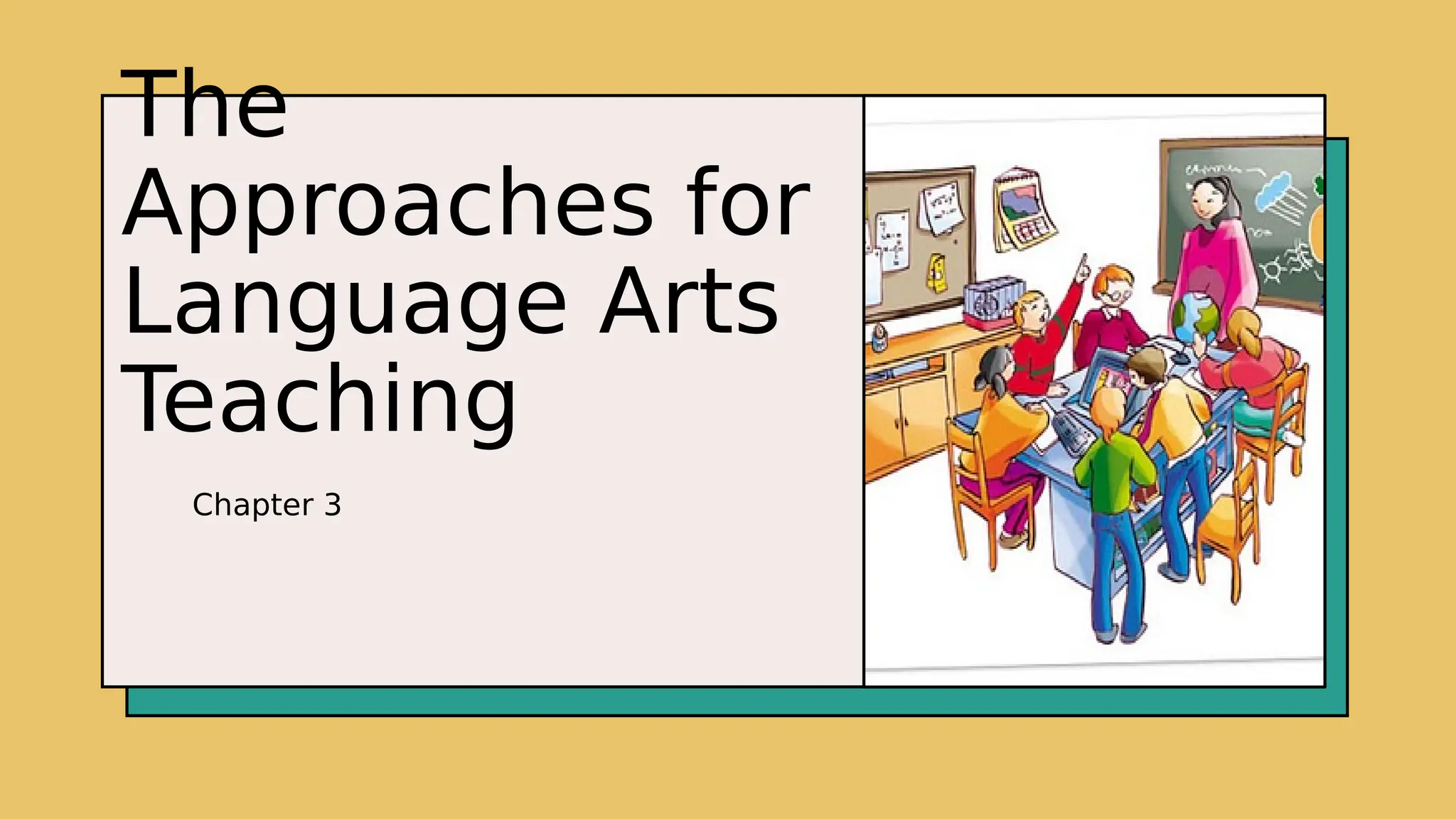
The
Approaches for
Language Arts
Teaching
Chapter 3
Objectives
2 Presentation title 20XX
•Give examples of approaches,
methodologies and techniques that can
be used in Language Arts .
•Select approaches strategies that support
learners’ understanding, participation,
engagement and achievement towards
promoting literacy skills and English
language fluency.
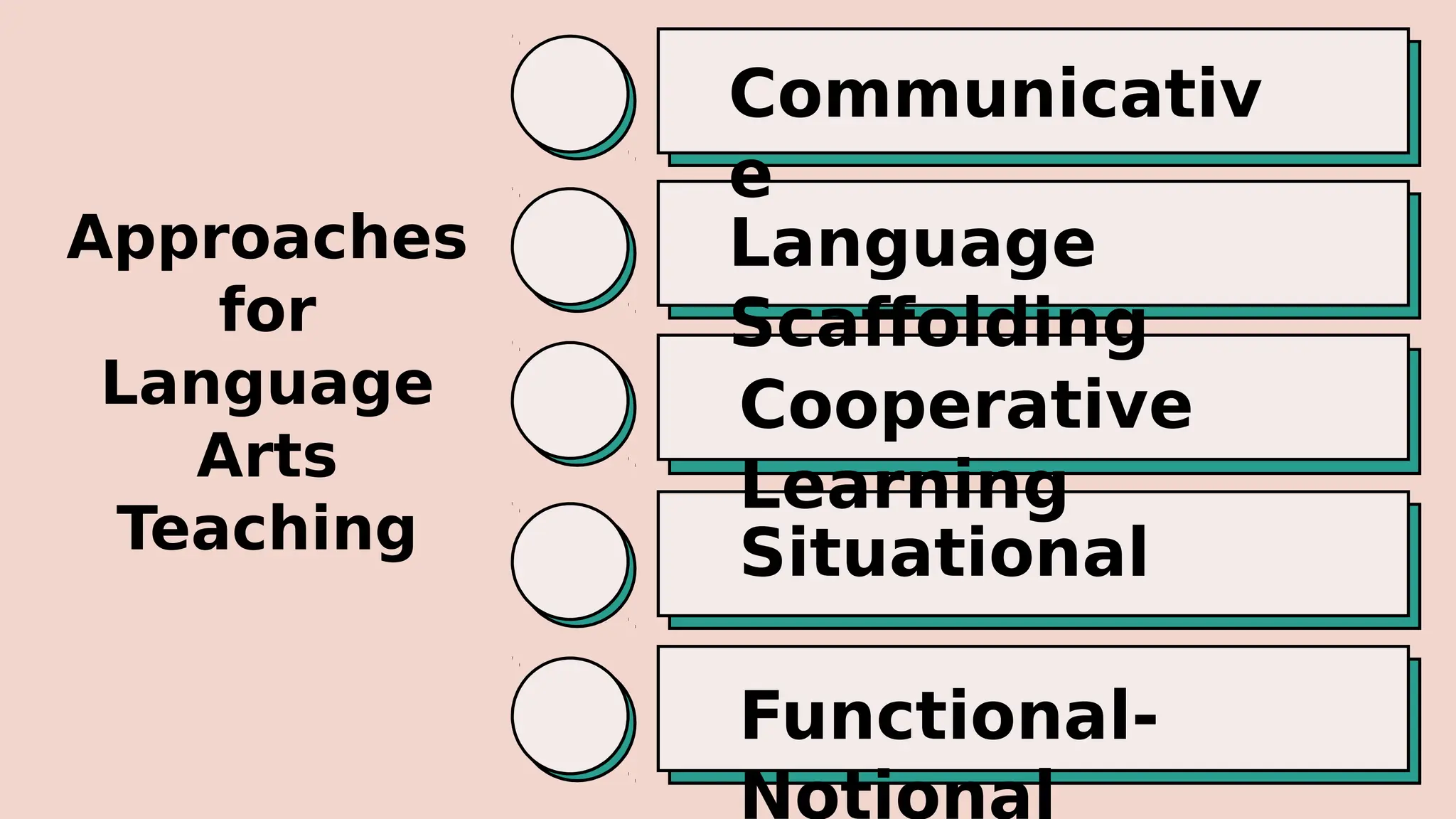
Communicativ
e
Approaches
for
Language
Arts
Teaching
Language
Scaffolding
Cooperative
Learning
Situational
Functional-
Notional
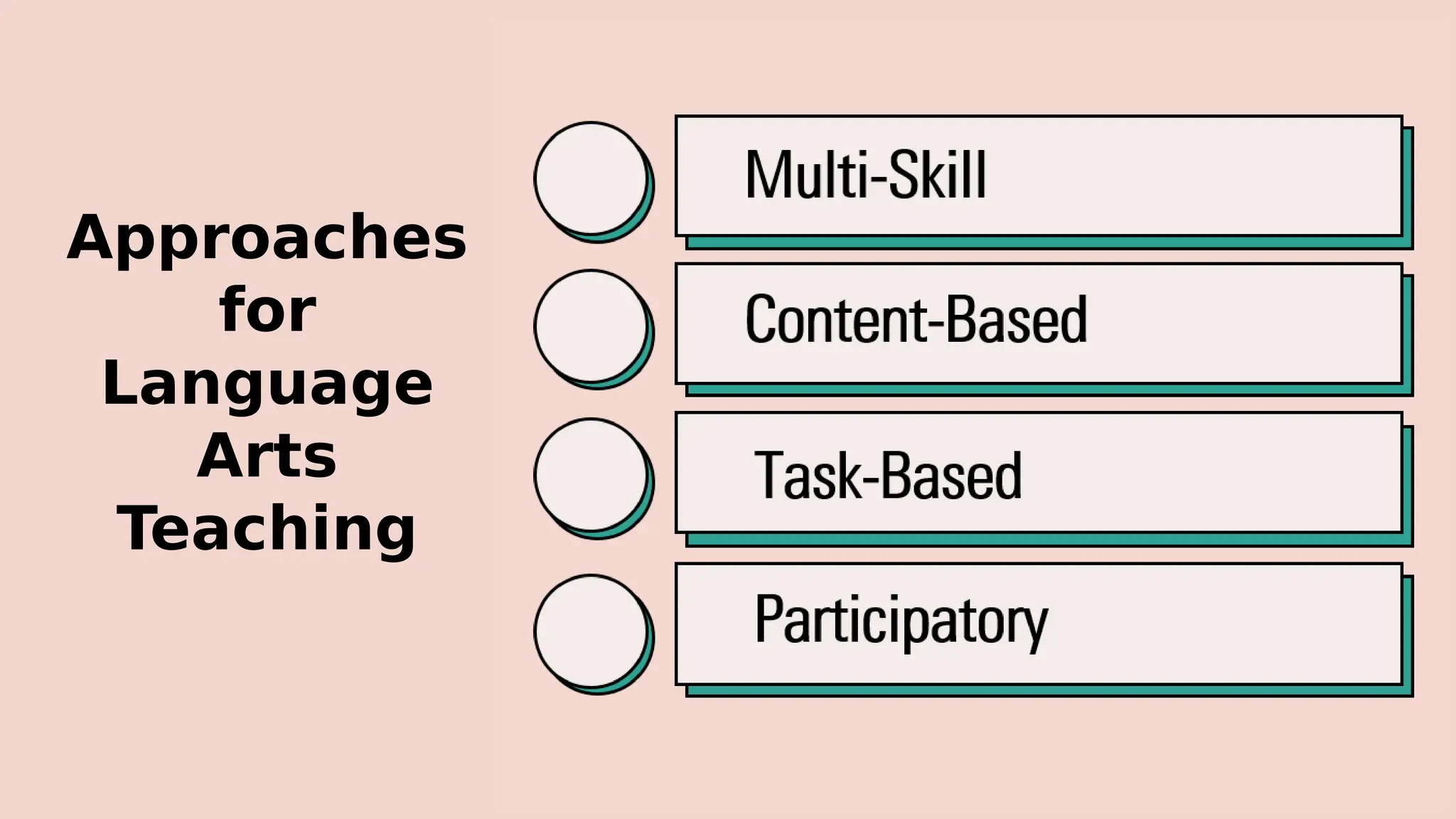
Multi-Skill
Approaches
for
Language
Arts
Teaching
Content-Based
Task-Based
Participatory
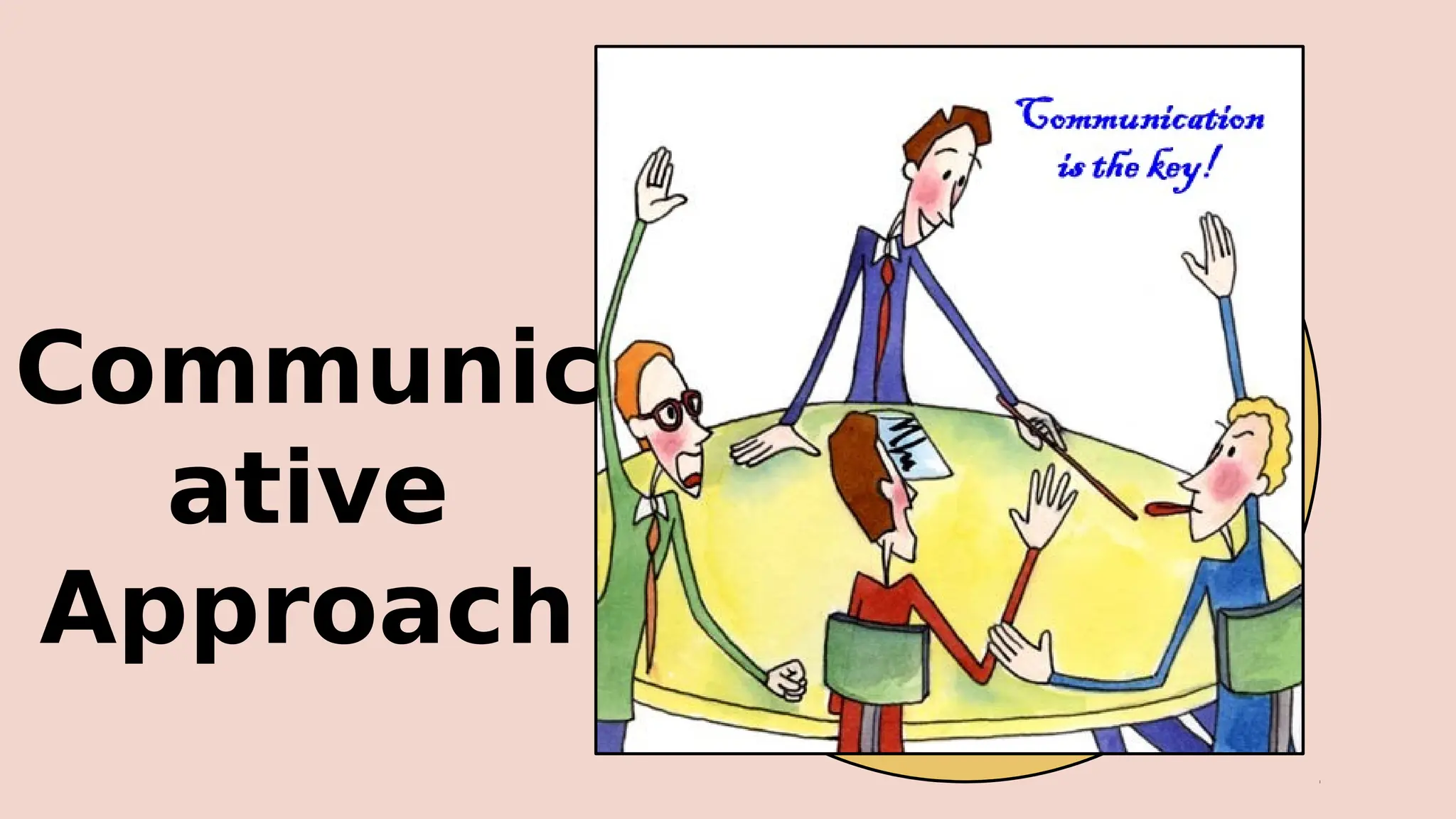
Communic
ative
Approach
Communicative Approach
Communicative Language
Teaching
Real
Communicatio
n
Language is
Communicati
on
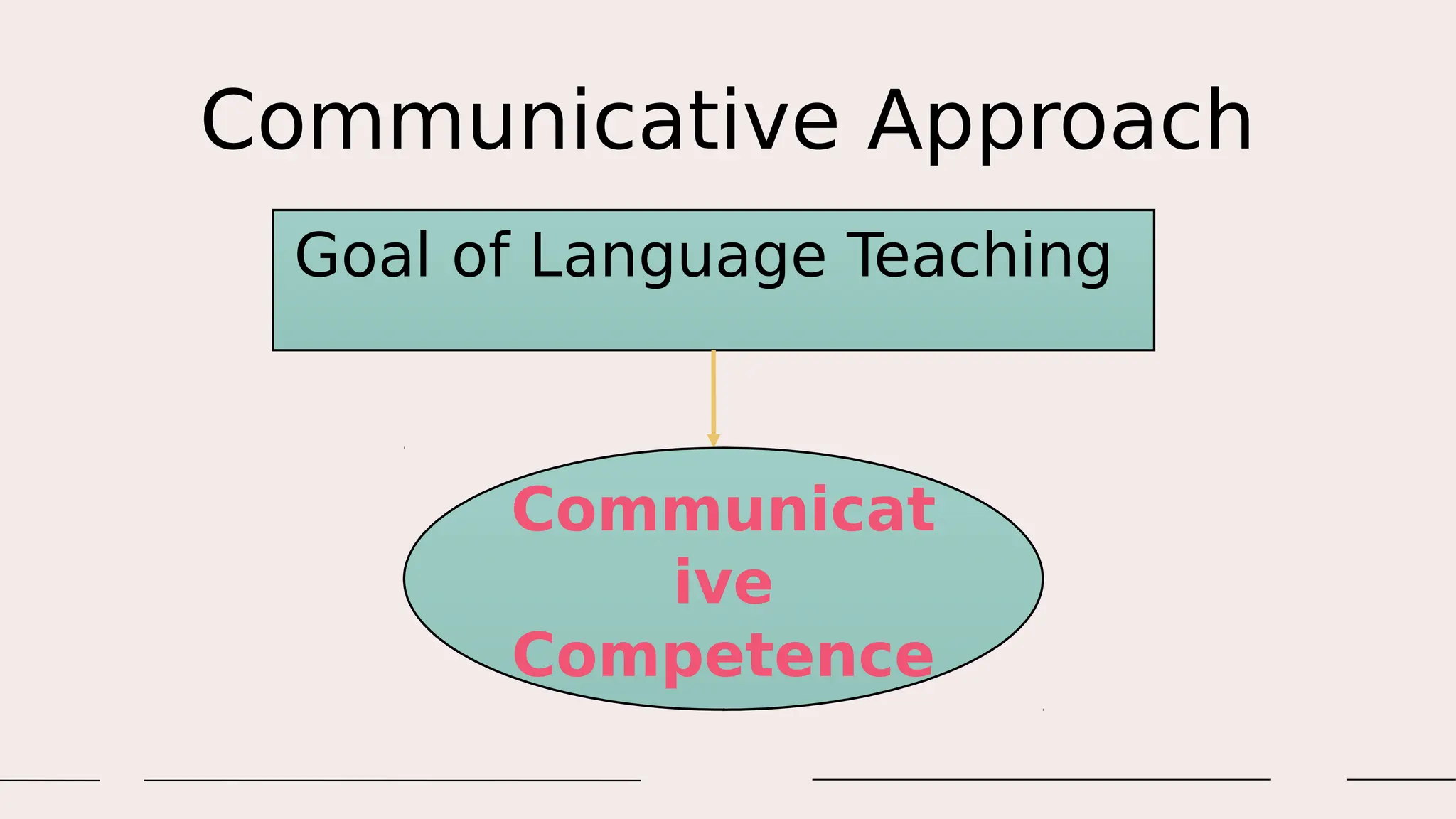
Communicative Approach
Goal of Language Teaching
Communicat
ive
Competence
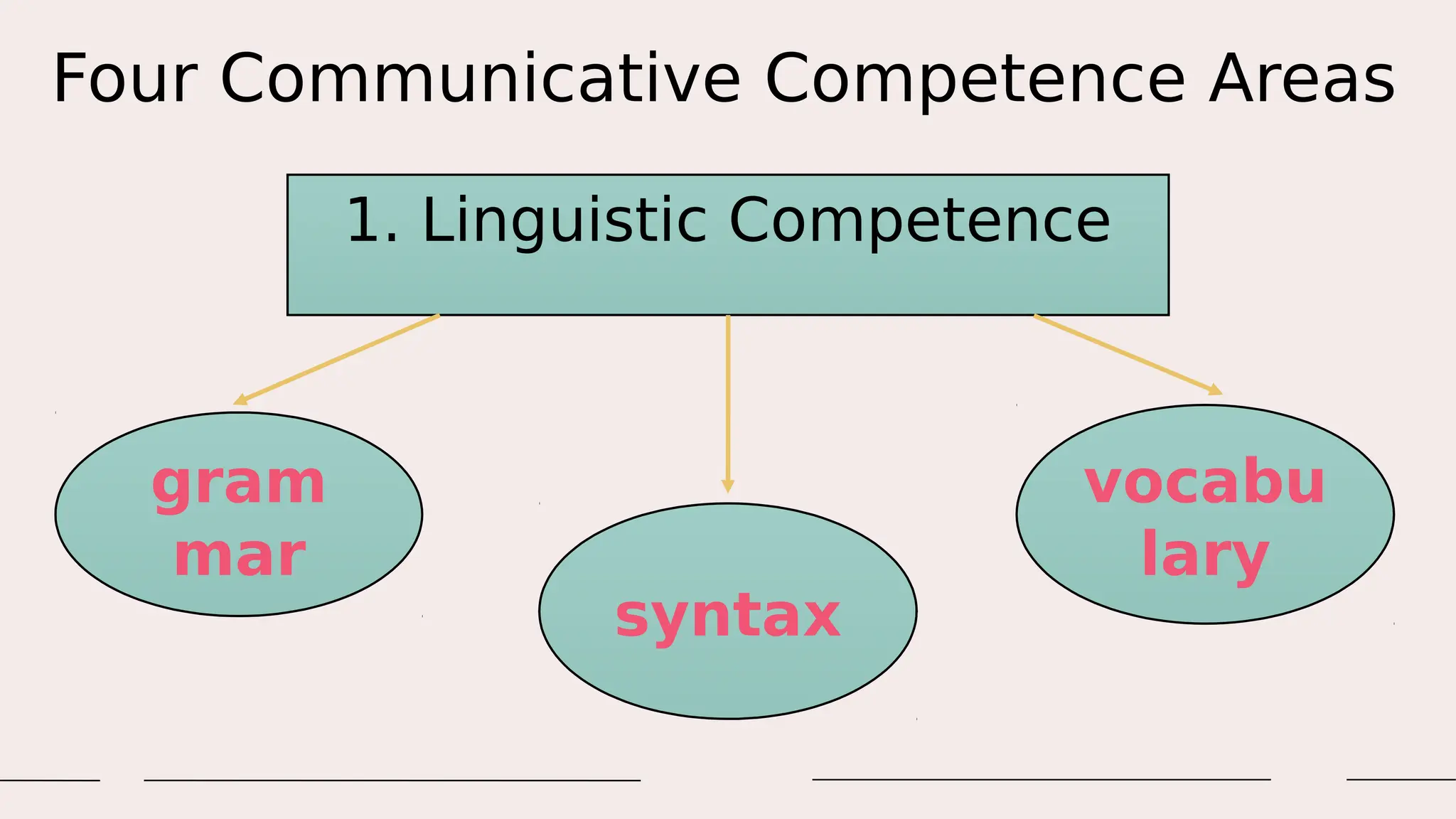
Four Communicative Competence Areas
1. Linguistic Competence
gram
mar
syntax
vocabu
lary
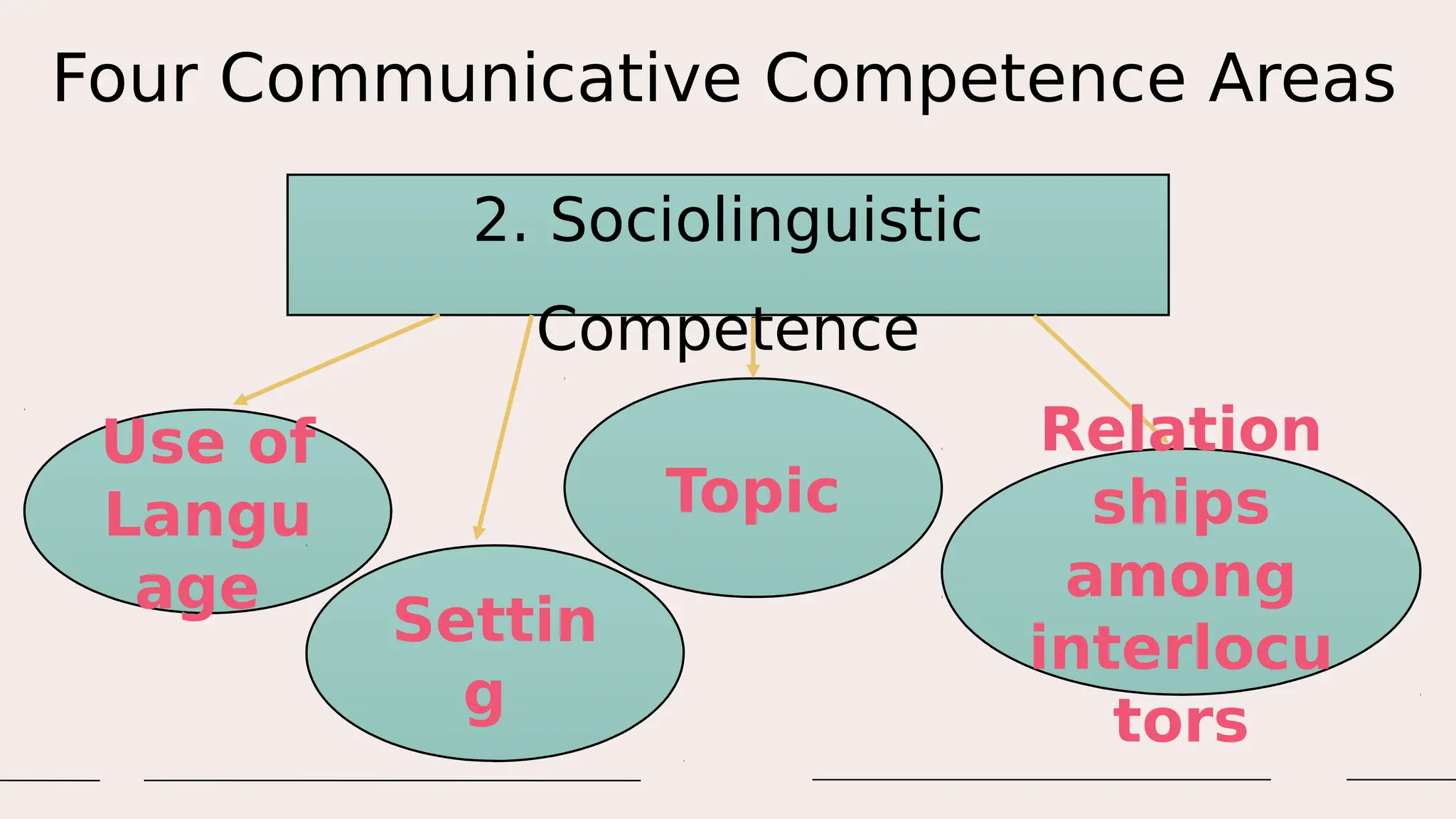
Four Communicative Competence Areas
2. Sociolinguistic
Competence
Use of
Langu
age
Settin
g
Topic
Relation
ships
among
interlocu
tors
Four Communicative Competence Areas
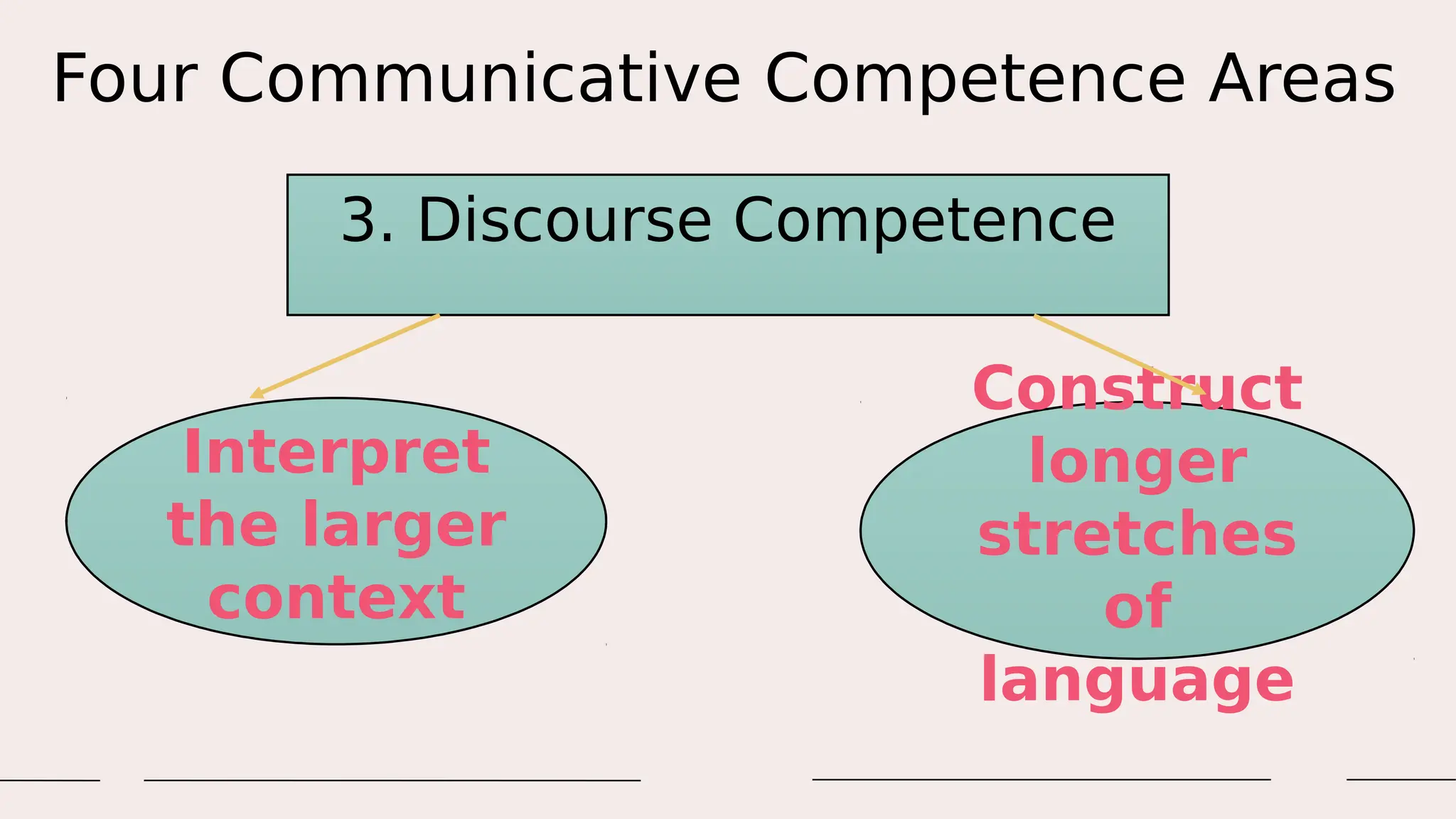
3. Discourse Competence
Interpret
the larger
context
Construct
longer
stretches
of
language
Four Communicative Competence Areas
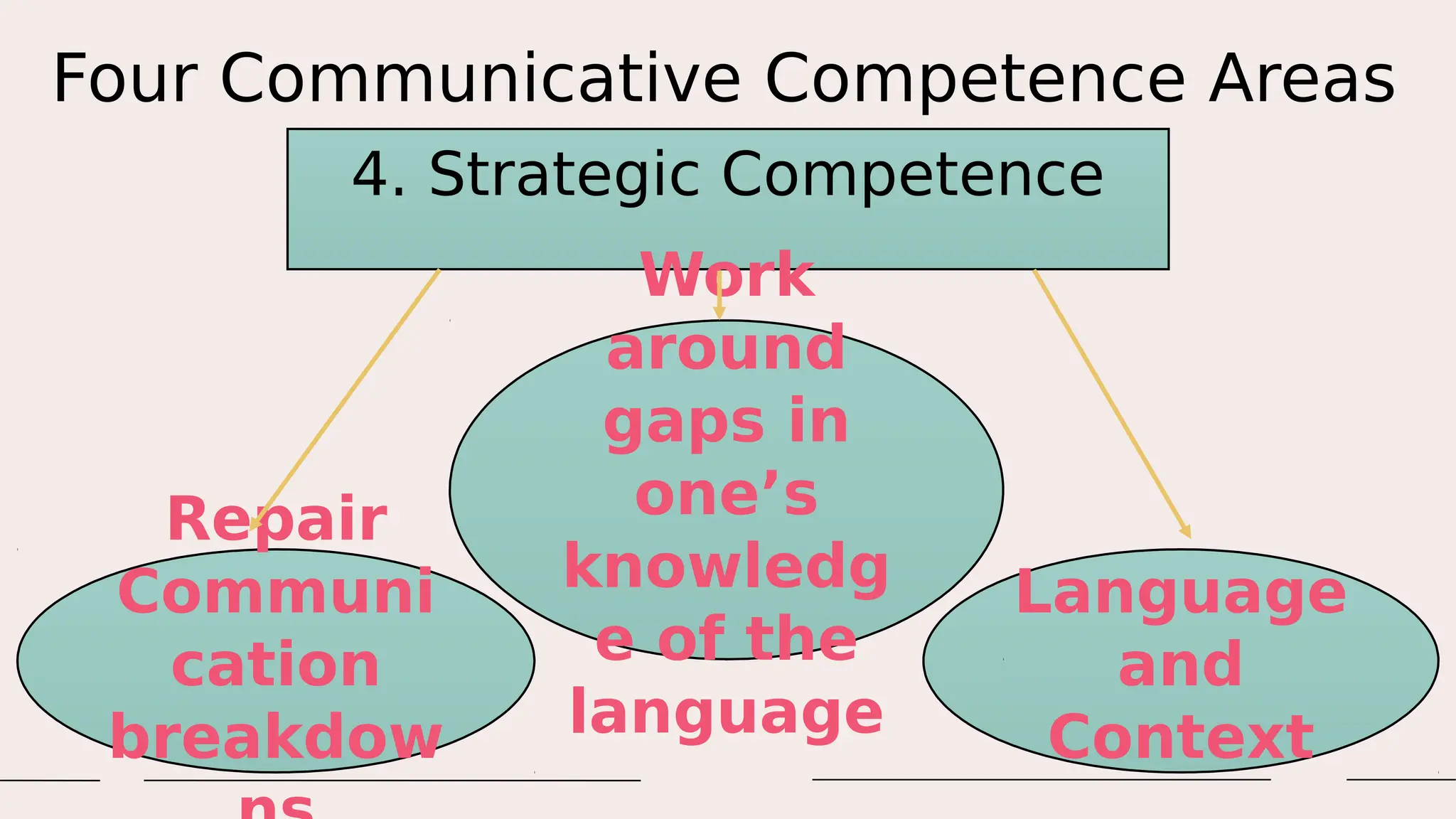
4. Strategic Competence
Repair
Communi
cation
breakdow
Language
and
Context
Work
around
gaps in
one’s
knowledg
e of the
language
Communicative Approach
Principles
Learn through using it to
communicate
Authentic and meaningful
communication
Integration of different language
skills
Creative construction and
involves trial and error
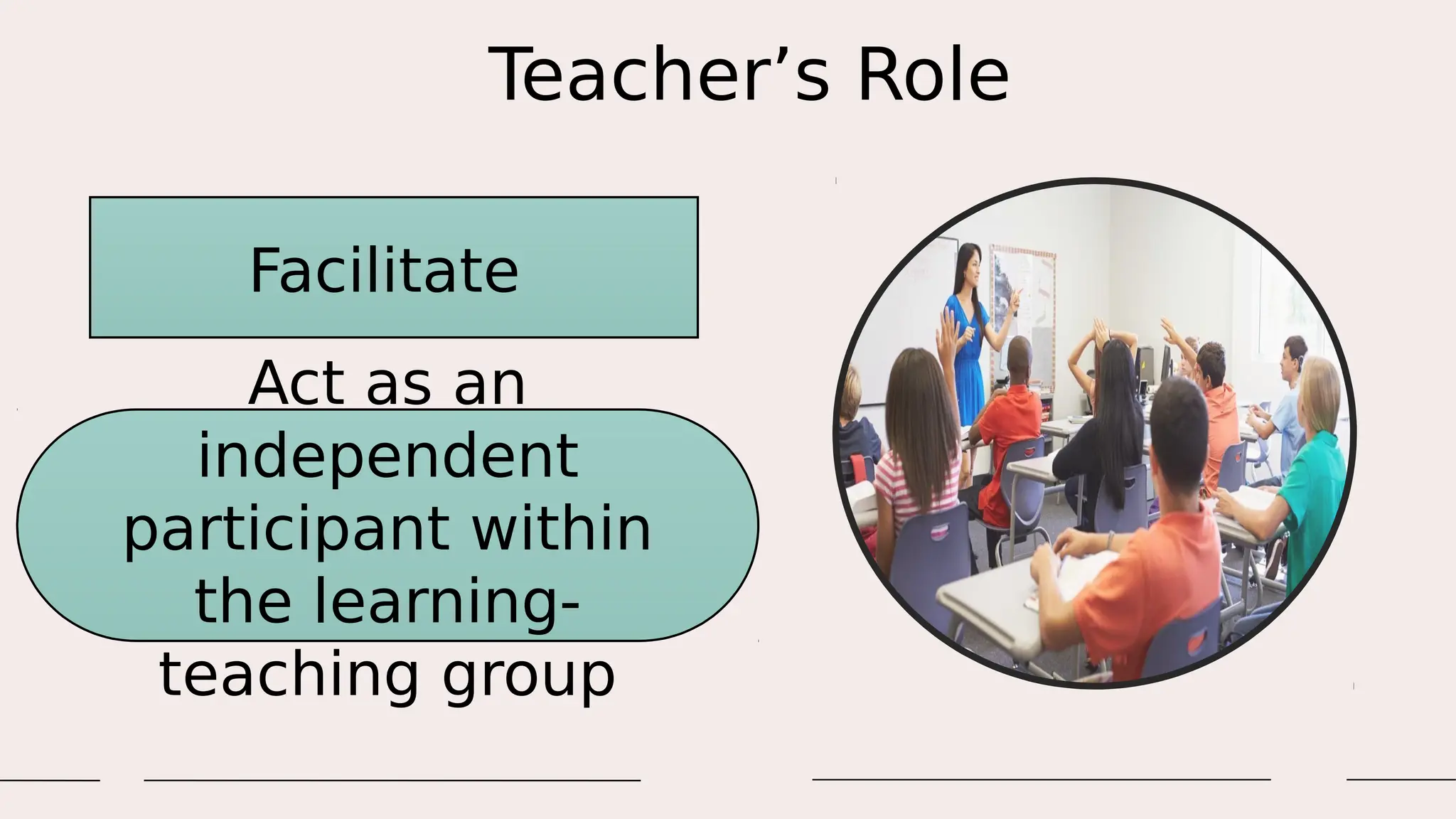
Teacher’s Role
Facilitate
Act as an
independent
participant within
the learning-
teaching group
Learner’s Responsibility
Participate
Comfortable with
listening to their
peers
Expected to take on greater
degree of responsibility for
their own learning
What does it mean in practical
terms?
Teacher-Student
Activities
Activities
Materials
Teacher-Student Interaction
Goal: Communicative
Competence
It is essential
that students
be given
opportunity
to practice
communicat
ing.
Communicati
ve classroom
teacher
talking time
(TTT) must
be kept to a
minimum.
Facilitate student communication
which is done through careful
selection of materials and
Two Categories of
Communication
Input Output
Rememb
er!
Interaction
should usually
be the student
to student and
should include
the teacher
only where
necessary.
During most
classroom
activities the
teacher will
monitor and
intervene
only where
necessary.
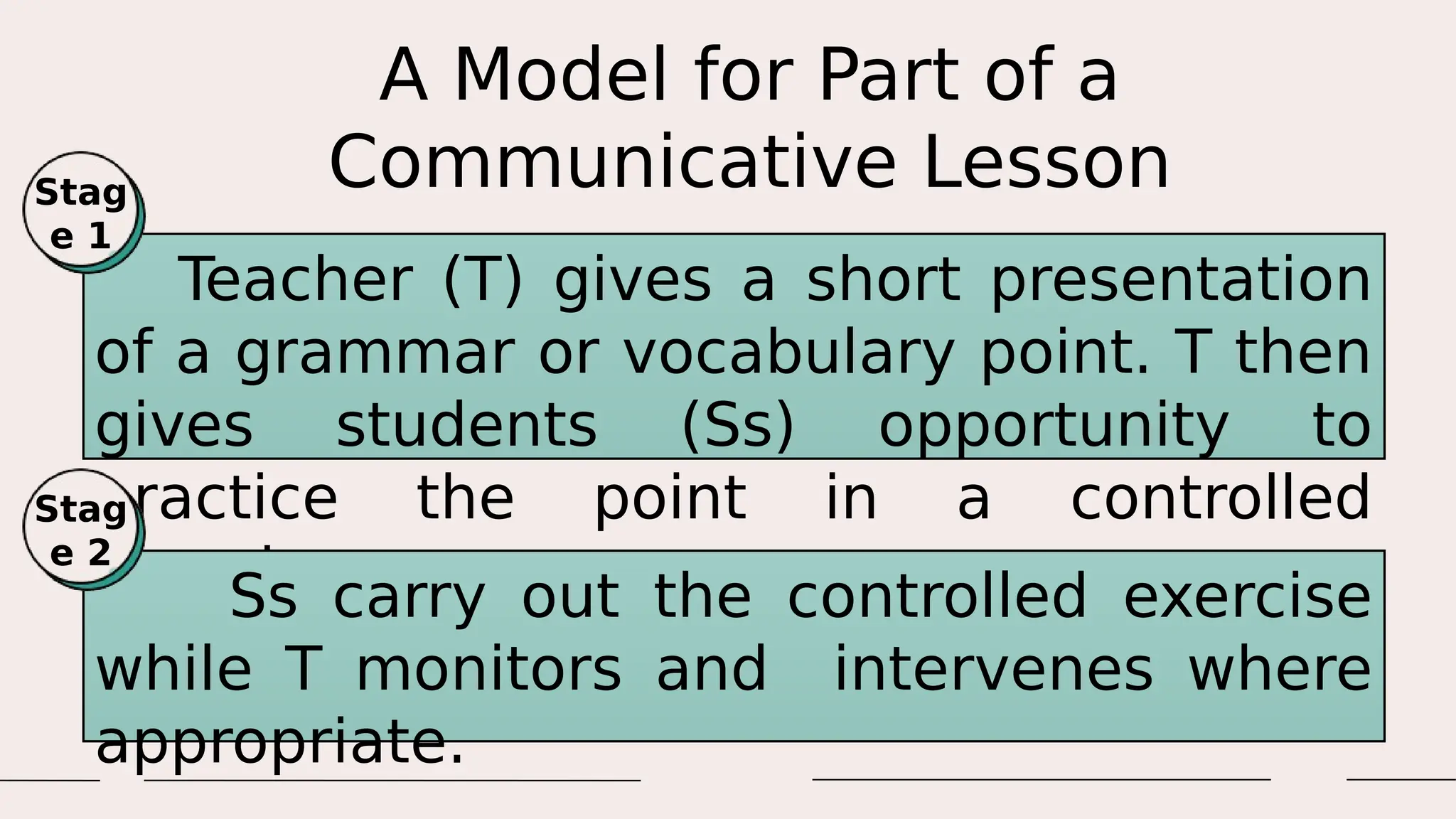
A Model for Part of a
Communicative Lesson
Teacher (T) gives a short presentation
of a grammar or vocabulary point. T then
gives students (Ss) opportunity to
practice the point in a controlled
exercise.
Stag
e 1
Ss carry out the controlled exercise
while T monitors and intervenes where
appropriate.
Stag
e 2
A Model for Part of a
Communicative Lesson
The Ss are asked to take part in an activity
designed to get them to produce the
vocabulary and grammar they have been
taught. T monitors and notes errors and
interesting points. T intervenes only when
asked or when absolutely necessary.
Stag
e 3
Feedback session, in which T feeds back in
a non-threatening way errors she/he noted
during the activity. Ss also have the
opportunity to clear up puzzling points.
Stag
e 4
Presentation-
Practice-
Production
Method (PPP)
Activities
Be carried out in
the target
language
Briefly discuss a
point in their
native tongue
Controversial issue
should not usually
be permitted
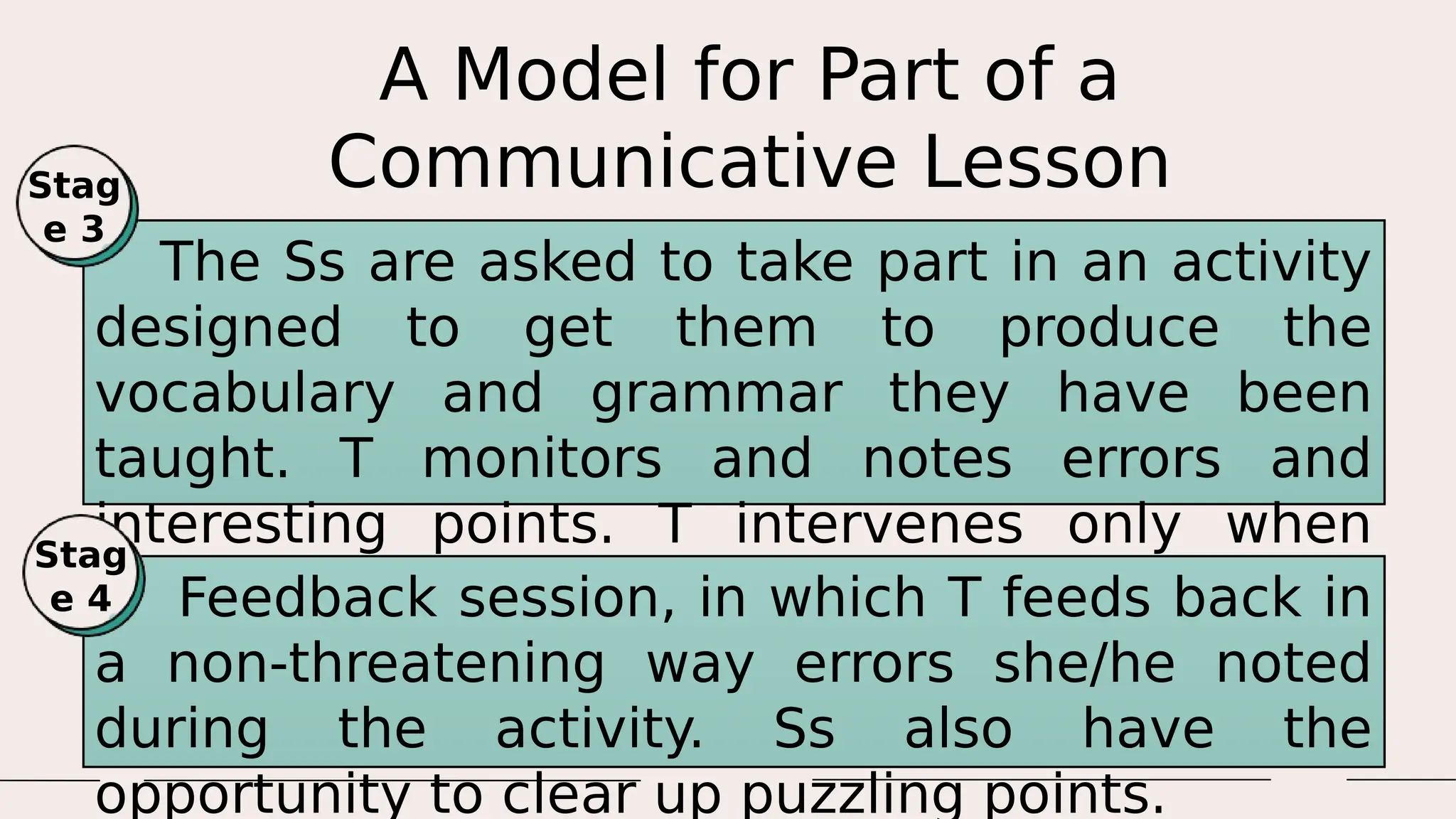
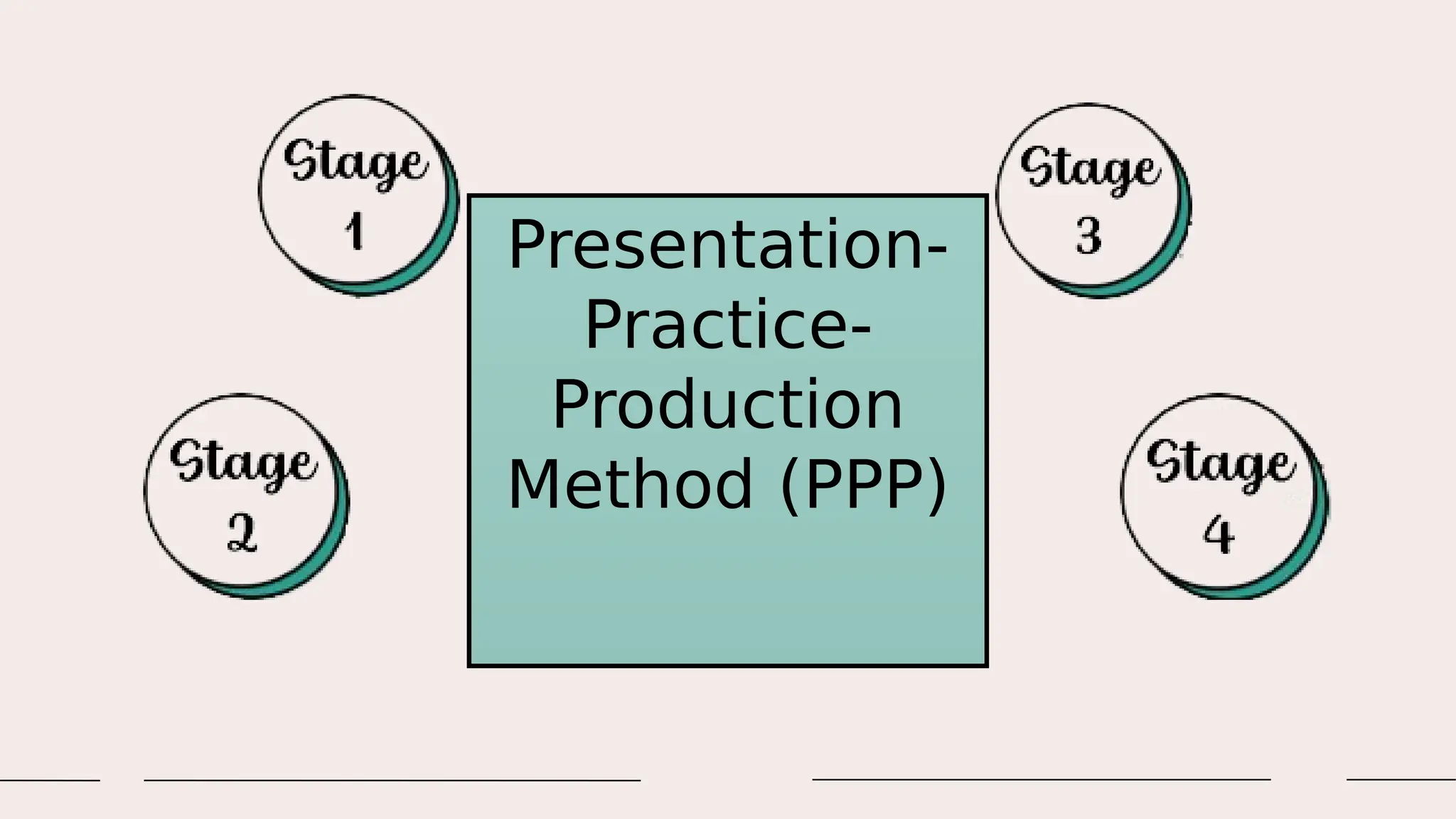
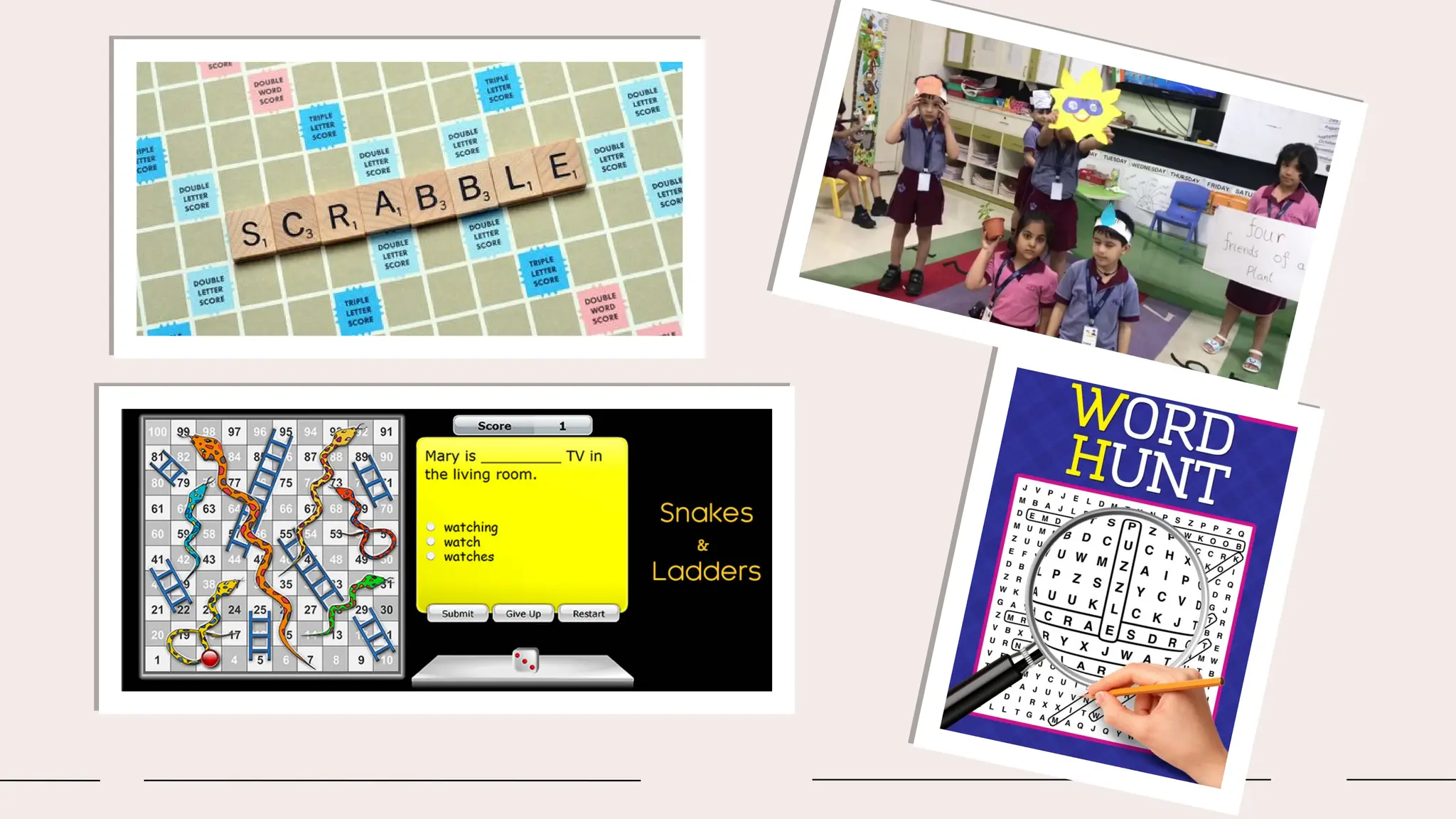
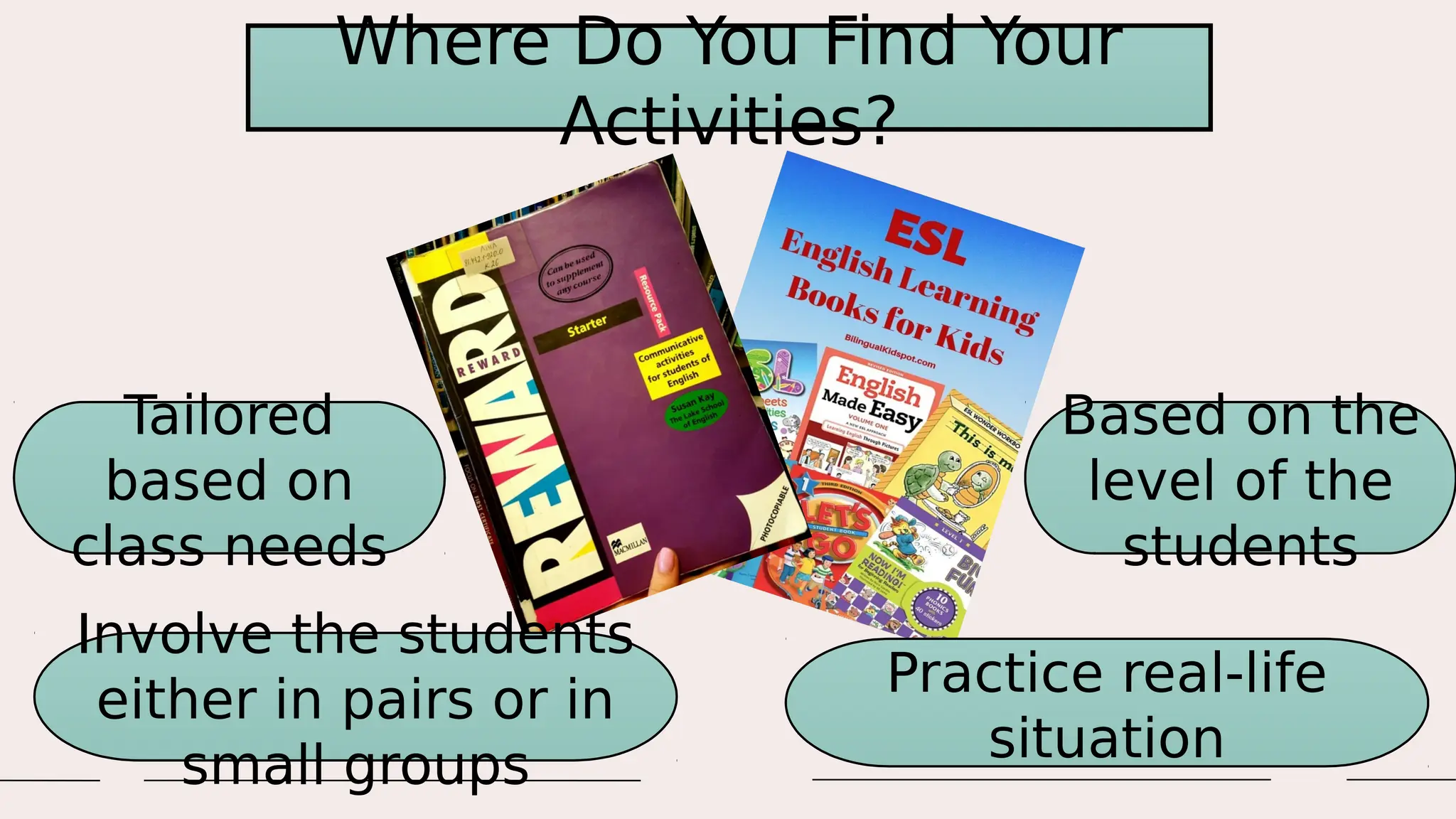
Types of
Activities
Games Role Plays
Simulations
Information
Gaps
Where Do You Find Your
Activities?
Tailored
based on
class needs
Based on the
level of the
students
Involve the students
either in pairs or in
small groups
Practice real-life
situation
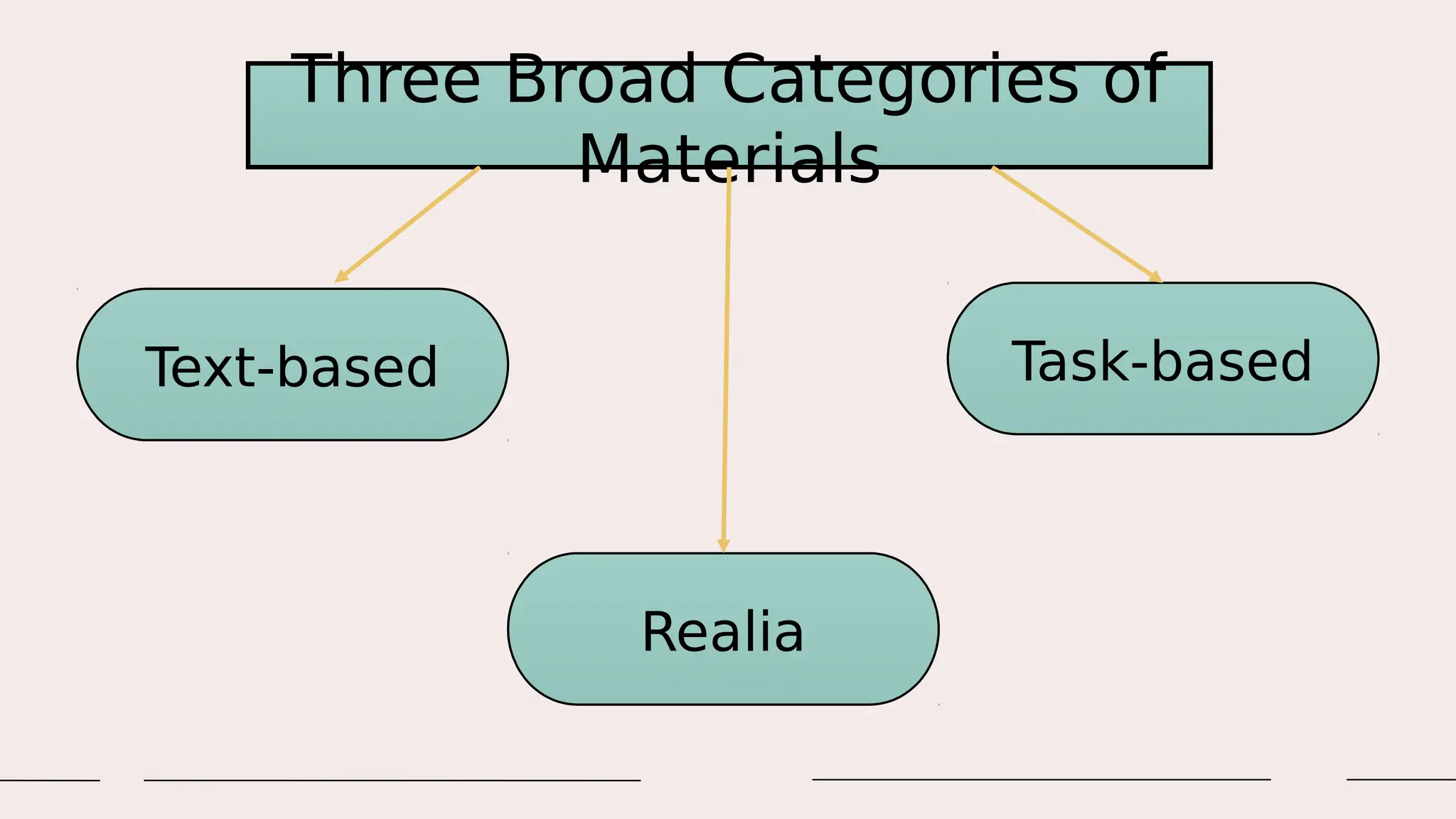
Three Broad Categories of
Materials
Text-based Task-based
Realia

4. The Approaches for Language Arts Teaching.pdf