Classification of Vegetable Crops
• There are four Main Methods of Classification
Based on:
• 1.Botanical relation
2. Based on Hardiness (Tolerance to low temp)
3. Parts Used for consumption
4. Methods of Culture
1. Botanical Classification:
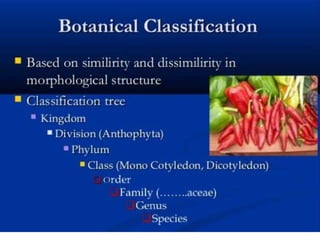
 This method of classification is based on botanical
relationships of crops in responding cytology, morphology,
taxonomy and cross ability.
 This is useful to breed for crop improvement and seed
producer for deciding isolation distance.
 It gives information on class, family, genus, species, variety
etc
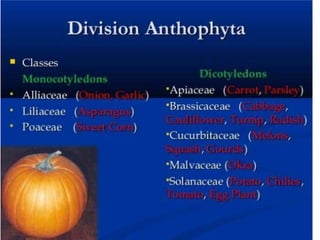
 Solanaceous family: Potato, brinjal and chili
 Cucurbitaceous family: Melons, gourds.
 Not useful to grower.
 Thus botanical classification is useful to breeder, seed
producer and to avoid confusion in common name.
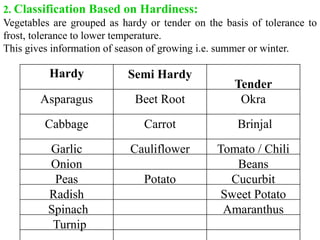
Hardy Semi Hardy
Tender
Asparagus Beet Root Okra
Cabbage Carrot Brinjal
Garlic Cauliflower Tomato / Chili
Onion Beans
Peas Potato Cucurbit
Radish Sweet Potato
Spinach Amaranthus
Turnip
2. Classification Based on Hardiness:
Vegetables are grouped as hardy or tender on the basis of tolerance to
frost, tolerance to lower temperature.
This gives information of season of growing i.e. summer or winter.
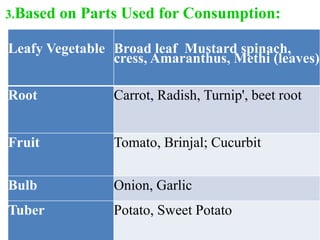
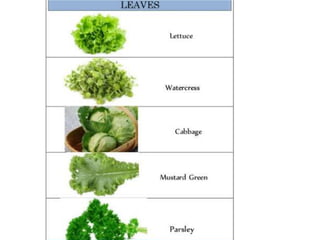
Leafy Vegetable Broad leaf Mustard spinach,
cress, Amaranthus, Methi (leaves)
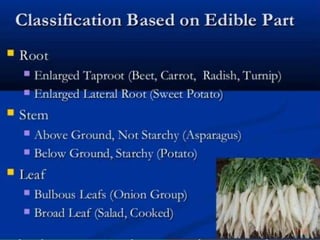
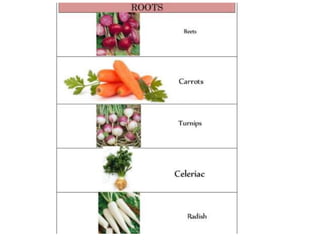
Root Carrot, Radish, Turnip', beet root
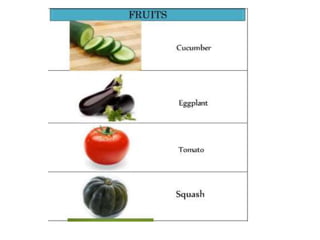
Fruit Tomato, Brinjal; Cucurbit
Bulb Onion, Garlic
Tuber Potato, Sweet Potato
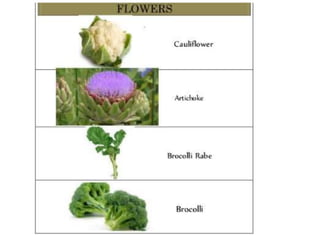
3.Based on Parts Used for Consumption:
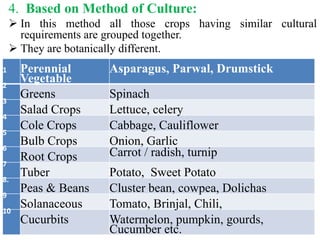
4. Based on Method of Culture:
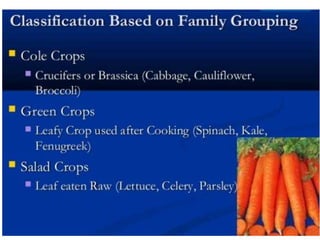
 In this method all those crops having similar cultural
requirements are grouped together.
 They are botanically different.
1 Perennial
Vegetable
Asparagus, Parwal, Drumstick
2
Greens Spinach
3
Salad Crops Lettuce, celery
4
Cole Crops Cabbage, Cauliflower
5
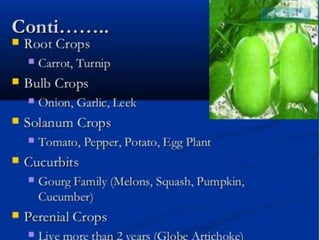
Bulb Crops Onion, Garlic
6
Root Crops Carrot / radish, turnip
7
Tuber Potato, Sweet Potato
8.
Peas & Beans Cluster bean, cowpea, Dolichas
9
Solanaceous Tomato, Brinjal, Chili,
10
Cucurbits Watermelon, pumpkin, gourds,
Cucumber etc.
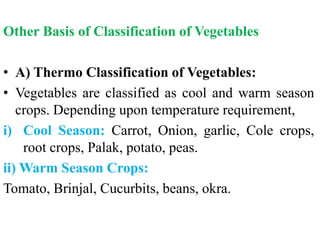
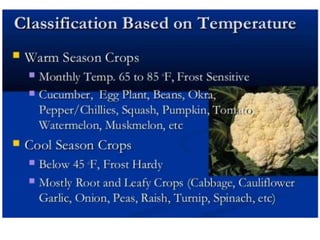
Other Basis of Classification of Vegetables
• A) Thermo Classification of Vegetables:
• Vegetables are classified as cool and warm season
crops. Depending upon temperature requirement,
i) Cool Season: Carrot, Onion, garlic, Cole crops,
root crops, Palak, potato, peas.
ii) Warm Season Crops:
Tomato, Brinjal, Cucurbits, beans, okra.
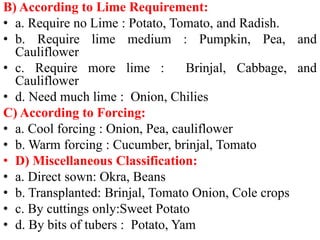
B) According to Lime Requirement:
• a. Require no Lime : Potato, Tomato, and Radish.
• b. Require lime medium : Pumpkin, Pea, and
Cauliflower
• c. Require more lime : Brinjal, Cabbage, and
Cauliflower
• d. Need much lime : Onion, Chilies
C) According to Forcing:
• a. Cool forcing : Onion, Pea, cauliflower
• b. Warm forcing : Cucumber, brinjal, Tomato
• D) Miscellaneous Classification:
• a. Direct sown: Okra, Beans
• b. Transplanted: Brinjal, Tomato Onion, Cole crops
• c. By cuttings only:Sweet Potato
• d. By bits of tubers : Potato, Yam
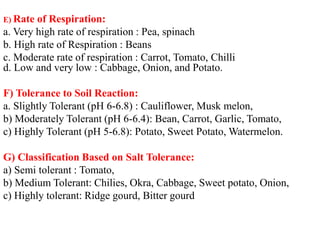
E) Rate of Respiration:
a. Very high rate of respiration : Pea, spinach
b. High rate of Respiration : Beans
c. Moderate rate of respiration : Carrot, Tomato, Chilli
d. Low and very low : Cabbage, Onion, and Potato.
F) Tolerance to Soil Reaction:
a. Slightly Tolerant (pH 6-6.8) : Cauliflower, Musk melon,
b) Moderately Tolerant (pH 6-6.4): Bean, Carrot, Garlic, Tomato,
c) Highly Tolerant (pH 5-6.8): Potato, Sweet Potato, Watermelon.
G) Classification Based on Salt Tolerance:
a) Semi tolerant : Tomato,
b) Medium Tolerant: Chilies, Okra, Cabbage, Sweet potato, Onion,
c) Highly tolerant: Ridge gourd, Bitter gourd
4. Classification of vegetables crops.pptx

4. Classification of vegetables crops.pptx

  • 3.
    Classification of VegetableCrops • There are four Main Methods of Classification Based on: • 1.Botanical relation 2. Based on Hardiness (Tolerance to low temp) 3. Parts Used for consumption 4. Methods of Culture
  • 4.
    1. Botanical Classification: This method of classification is based on botanical relationships of crops in responding cytology, morphology, taxonomy and cross ability.  This is useful to breed for crop improvement and seed producer for deciding isolation distance.  It gives information on class, family, genus, species, variety etc  Solanaceous family: Potato, brinjal and chili  Cucurbitaceous family: Melons, gourds.  Not useful to grower.  Thus botanical classification is useful to breeder, seed producer and to avoid confusion in common name.
  • 7.
    Hardy Semi Hardy Tender AsparagusBeet Root Okra Cabbage Carrot Brinjal Garlic Cauliflower Tomato / Chili Onion Beans Peas Potato Cucurbit Radish Sweet Potato Spinach Amaranthus Turnip 2. Classification Based on Hardiness: Vegetables are grouped as hardy or tender on the basis of tolerance to frost, tolerance to lower temperature. This gives information of season of growing i.e. summer or winter.
  • 8.
    Leafy Vegetable Broadleaf Mustard spinach, cress, Amaranthus, Methi (leaves) Root Carrot, Radish, Turnip', beet root Fruit Tomato, Brinjal; Cucurbit Bulb Onion, Garlic Tuber Potato, Sweet Potato 3.Based on Parts Used for Consumption:
  • 11.
    4. Based onMethod of Culture:  In this method all those crops having similar cultural requirements are grouped together.  They are botanically different. 1 Perennial Vegetable Asparagus, Parwal, Drumstick 2 Greens Spinach 3 Salad Crops Lettuce, celery 4 Cole Crops Cabbage, Cauliflower 5 Bulb Crops Onion, Garlic 6 Root Crops Carrot / radish, turnip 7 Tuber Potato, Sweet Potato 8. Peas & Beans Cluster bean, cowpea, Dolichas 9 Solanaceous Tomato, Brinjal, Chili, 10 Cucurbits Watermelon, pumpkin, gourds, Cucumber etc.
  • 15.
    Other Basis ofClassification of Vegetables • A) Thermo Classification of Vegetables: • Vegetables are classified as cool and warm season crops. Depending upon temperature requirement, i) Cool Season: Carrot, Onion, garlic, Cole crops, root crops, Palak, potato, peas. ii) Warm Season Crops: Tomato, Brinjal, Cucurbits, beans, okra.
  • 17.
    B) According toLime Requirement: • a. Require no Lime : Potato, Tomato, and Radish. • b. Require lime medium : Pumpkin, Pea, and Cauliflower • c. Require more lime : Brinjal, Cabbage, and Cauliflower • d. Need much lime : Onion, Chilies C) According to Forcing: • a. Cool forcing : Onion, Pea, cauliflower • b. Warm forcing : Cucumber, brinjal, Tomato • D) Miscellaneous Classification: • a. Direct sown: Okra, Beans • b. Transplanted: Brinjal, Tomato Onion, Cole crops • c. By cuttings only:Sweet Potato • d. By bits of tubers : Potato, Yam
  • 18.
    E) Rate ofRespiration: a. Very high rate of respiration : Pea, spinach b. High rate of Respiration : Beans c. Moderate rate of respiration : Carrot, Tomato, Chilli d. Low and very low : Cabbage, Onion, and Potato. F) Tolerance to Soil Reaction: a. Slightly Tolerant (pH 6-6.8) : Cauliflower, Musk melon, b) Moderately Tolerant (pH 6-6.4): Bean, Carrot, Garlic, Tomato, c) Highly Tolerant (pH 5-6.8): Potato, Sweet Potato, Watermelon. G) Classification Based on Salt Tolerance: a) Semi tolerant : Tomato, b) Medium Tolerant: Chilies, Okra, Cabbage, Sweet potato, Onion, c) Highly tolerant: Ridge gourd, Bitter gourd