By
Mohammad Azhar Hussain
14311A04H6
Printing
 Printing is a process for reproducing text and
images, typically with using ink or paper
using print press
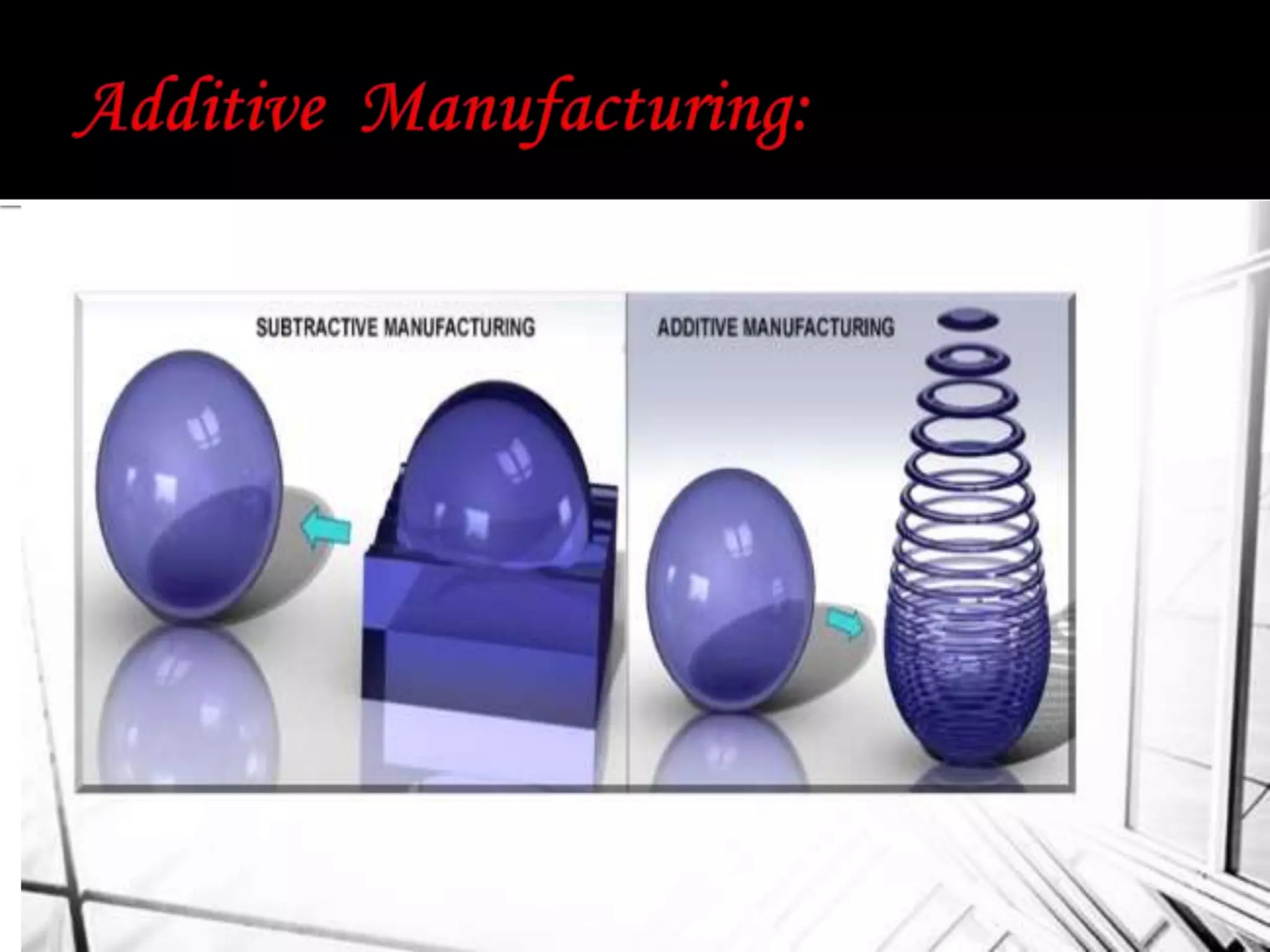
 It is also called as ‘Additive Manufacturing’
 It is a method of Additive Manufacturing that
adds material to an object layer by layer to
create the final product.
 It was developed in 1984
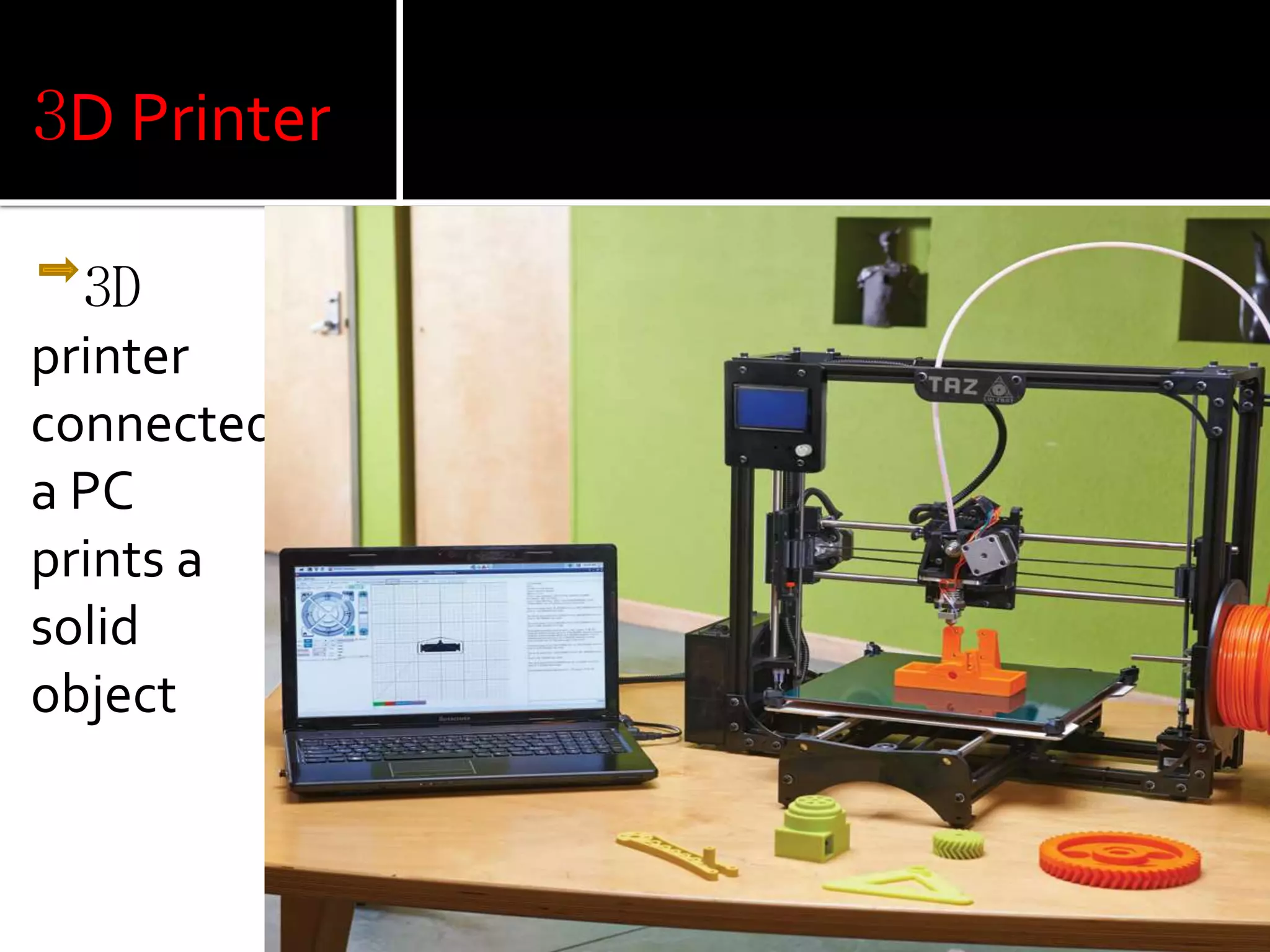
3D Printer
3D
printer
connected to
a PC
prints a
solid
object
 A 3D file is checked by software to see if it is
printable.
 The software then slices the file and sends it to a
machine.
 A plastic filament is fed through the printing head.
 The filament melted and the head then deposits it on
a build platform.
 The head moves around depositing the material so
that it makes up the bottom slice of the object.
 The head returns to its starting position and the build
platform is lowered.
 The head then builds the new layer on top of the first
and this is repeated until the object is done.
 When the model is finished,it is suspended in
the powder to cure
 At the end of the curing time,the machine
automatically removes the most of the
powder around the model by vacuum
pressure
 There are three main methods of 3D
Printing.
 1) Selective Laser Sintering (SLS)
 2).Stereolithography (SlA)
 3).Fused Deposition Modelling (FDM)
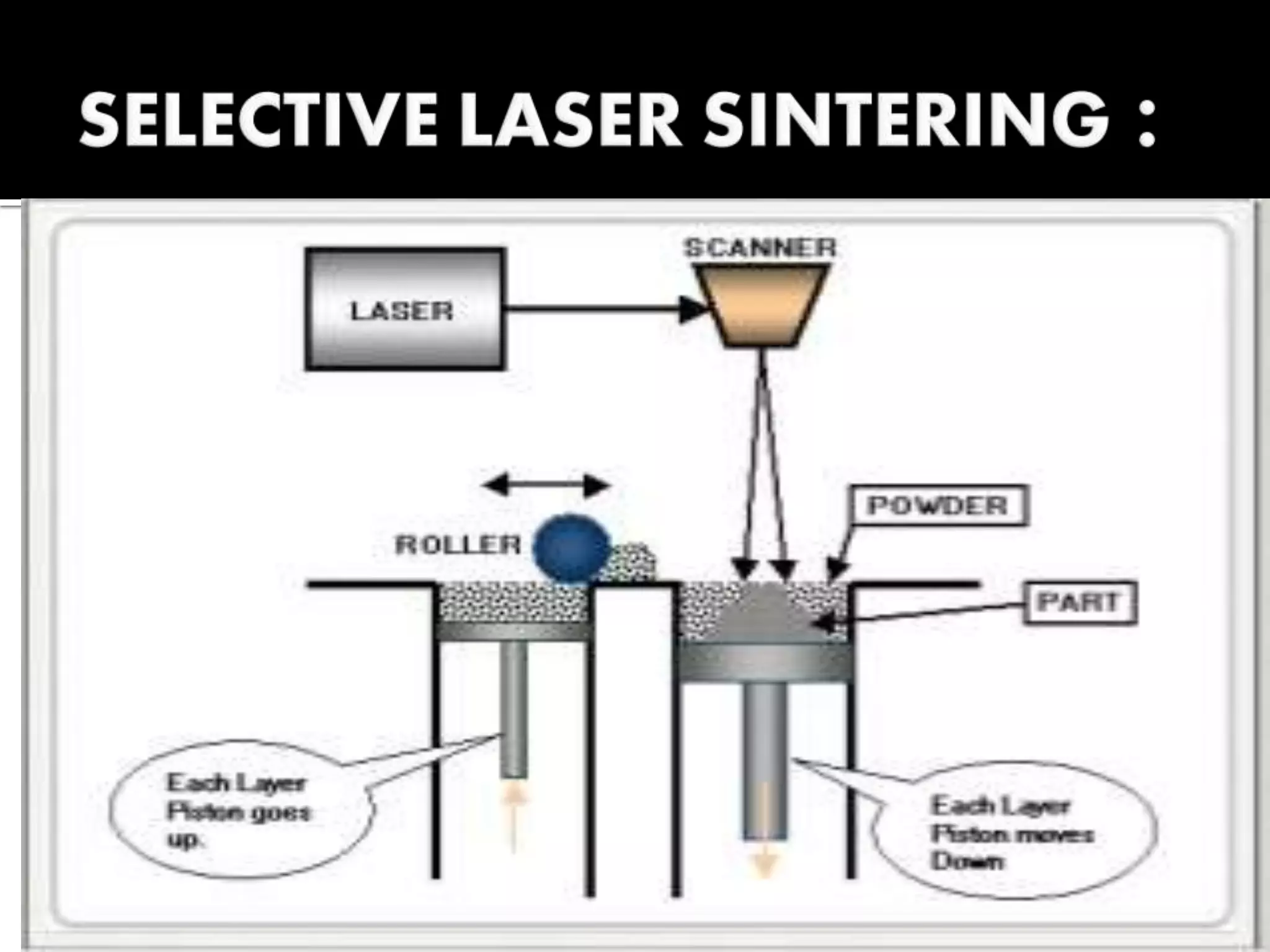
 Selective Laser Sintering (SLS) is an additive
manufacturing (AM) technique that uses
a LASER as the power source
to sinter powdered material (typically metal),
aiming the laser automatically at points in
space defined by a 3D model , binding the
material together to create a solid structure.
 LASER used in SLS is CO2 laser
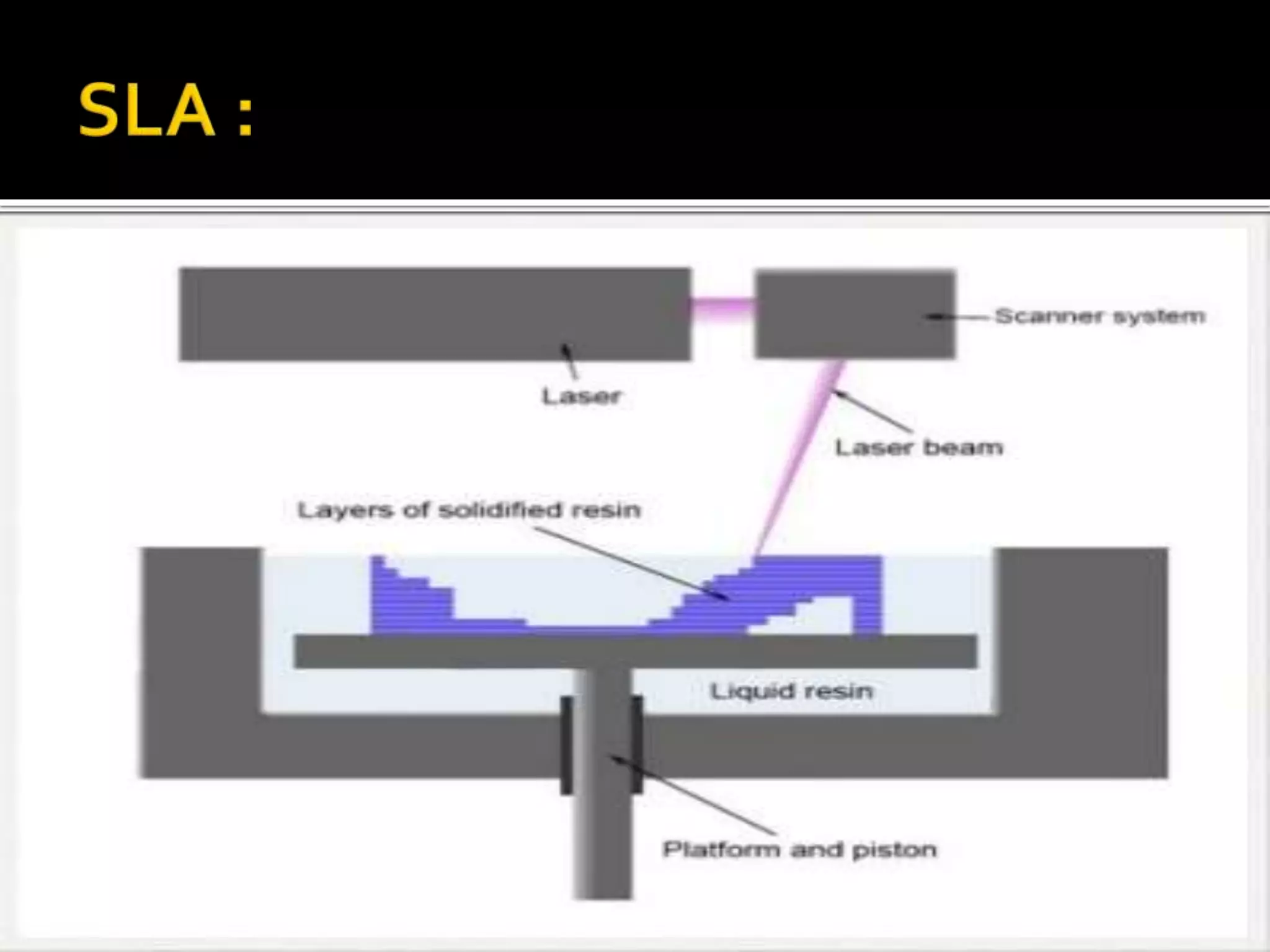
 Stereolithography is an additive manufacturing
process which employs a vat of liquid ultraviolet
curable photopolymer "resin" and an
ultraviolet laserto build parts' layers one at a
time. For each layer, the laser beam traces a
cross-section of the part pattern on the surface
of the liquid resin. Exposure to the ultraviolet
laser light cures and solidifies the pattern traced
on the resin and joins it to the layer below.
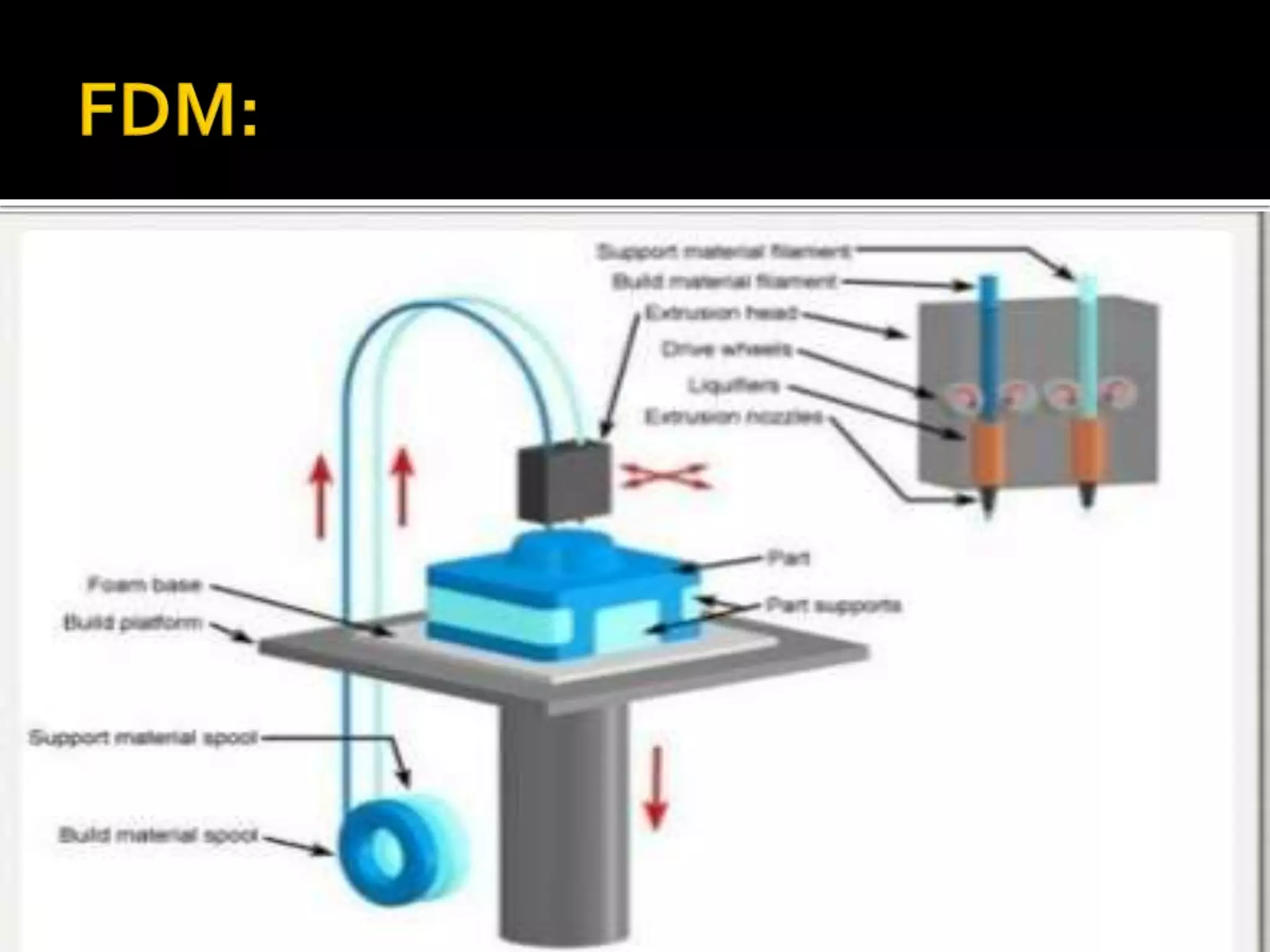
 A plastic filament or metal wire is unwound
from a coil and supplies material to
an extrusion nozzle which can turn the flow
on and off.There is typically a worm-drive
that pushes the filament into the nozzle at a
controlled rate
 ABS
 Poly carbonate(PC)
 Poly acetic acid(PLA)
 High density polyethylene(HDPE)
 Polyphenylsulfone(PPSU)
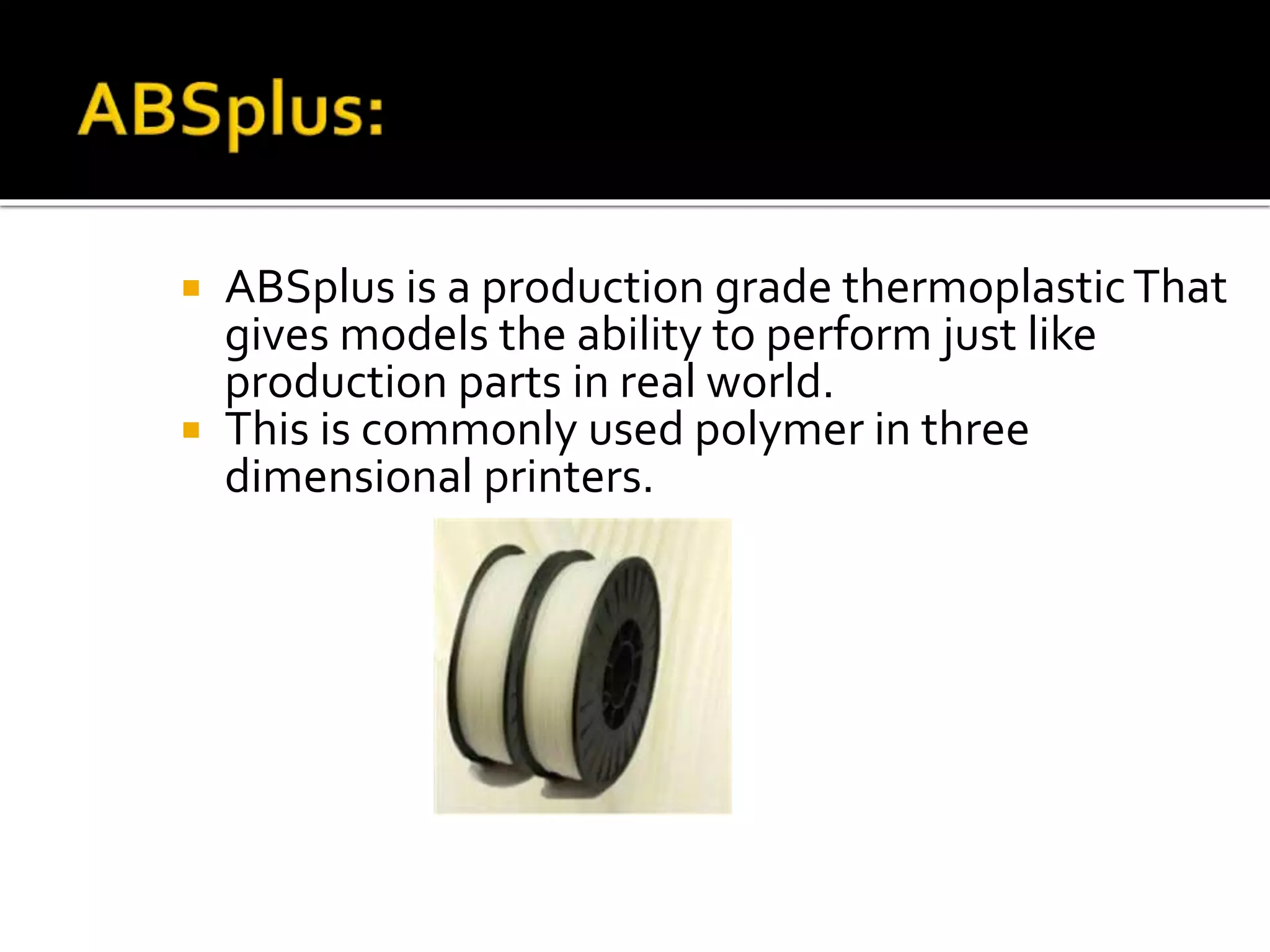
 ABSplus is a production grade thermoplasticThat
gives models the ability to perform just like
production parts in real world.
 This is commonly used polymer in three
dimensional printers.
ABS plus
 3D printing uses non-harmful chemicals
 3D printing generates almost no waste during
the process.
 It can be used for making replacement parts.
 The machines are too expensive and not
reliable.
 Materials are not strong enough.
 It is too hard to design for 3D printing.
 Machines are not fast enough.
3D printing ppt

3D printing ppt

  • 1.
  • 2.
     Printing isa process for reproducing text and images, typically with using ink or paper using print press
  • 3.
     It isalso called as ‘Additive Manufacturing’  It is a method of Additive Manufacturing that adds material to an object layer by layer to create the final product.  It was developed in 1984
  • 4.
    3D Printer 3D printer connected to aPC prints a solid object
  • 6.
     A 3Dfile is checked by software to see if it is printable.  The software then slices the file and sends it to a machine.  A plastic filament is fed through the printing head.  The filament melted and the head then deposits it on a build platform.  The head moves around depositing the material so that it makes up the bottom slice of the object.  The head returns to its starting position and the build platform is lowered.  The head then builds the new layer on top of the first and this is repeated until the object is done.
  • 7.
     When themodel is finished,it is suspended in the powder to cure  At the end of the curing time,the machine automatically removes the most of the powder around the model by vacuum pressure
  • 8.
     There arethree main methods of 3D Printing.  1) Selective Laser Sintering (SLS)  2).Stereolithography (SlA)  3).Fused Deposition Modelling (FDM)
  • 9.
     Selective LaserSintering (SLS) is an additive manufacturing (AM) technique that uses a LASER as the power source to sinter powdered material (typically metal), aiming the laser automatically at points in space defined by a 3D model , binding the material together to create a solid structure.  LASER used in SLS is CO2 laser
  • 11.
     Stereolithography isan additive manufacturing process which employs a vat of liquid ultraviolet curable photopolymer "resin" and an ultraviolet laserto build parts' layers one at a time. For each layer, the laser beam traces a cross-section of the part pattern on the surface of the liquid resin. Exposure to the ultraviolet laser light cures and solidifies the pattern traced on the resin and joins it to the layer below.
  • 13.
     A plasticfilament or metal wire is unwound from a coil and supplies material to an extrusion nozzle which can turn the flow on and off.There is typically a worm-drive that pushes the filament into the nozzle at a controlled rate
  • 15.
     ABS  Polycarbonate(PC)  Poly acetic acid(PLA)  High density polyethylene(HDPE)  Polyphenylsulfone(PPSU)
  • 16.
     ABSplus isa production grade thermoplasticThat gives models the ability to perform just like production parts in real world.  This is commonly used polymer in three dimensional printers. ABS plus
  • 17.
     3D printinguses non-harmful chemicals  3D printing generates almost no waste during the process.  It can be used for making replacement parts.
  • 20.
     The machinesare too expensive and not reliable.  Materials are not strong enough.  It is too hard to design for 3D printing.  Machines are not fast enough.