The 3D Printing
Transformation
History
Materials
Technology Overview
Additive Manufacturing Advantage
Areas of Impact on Society and Industry
Simon Lancaster
January 17, 2014
History
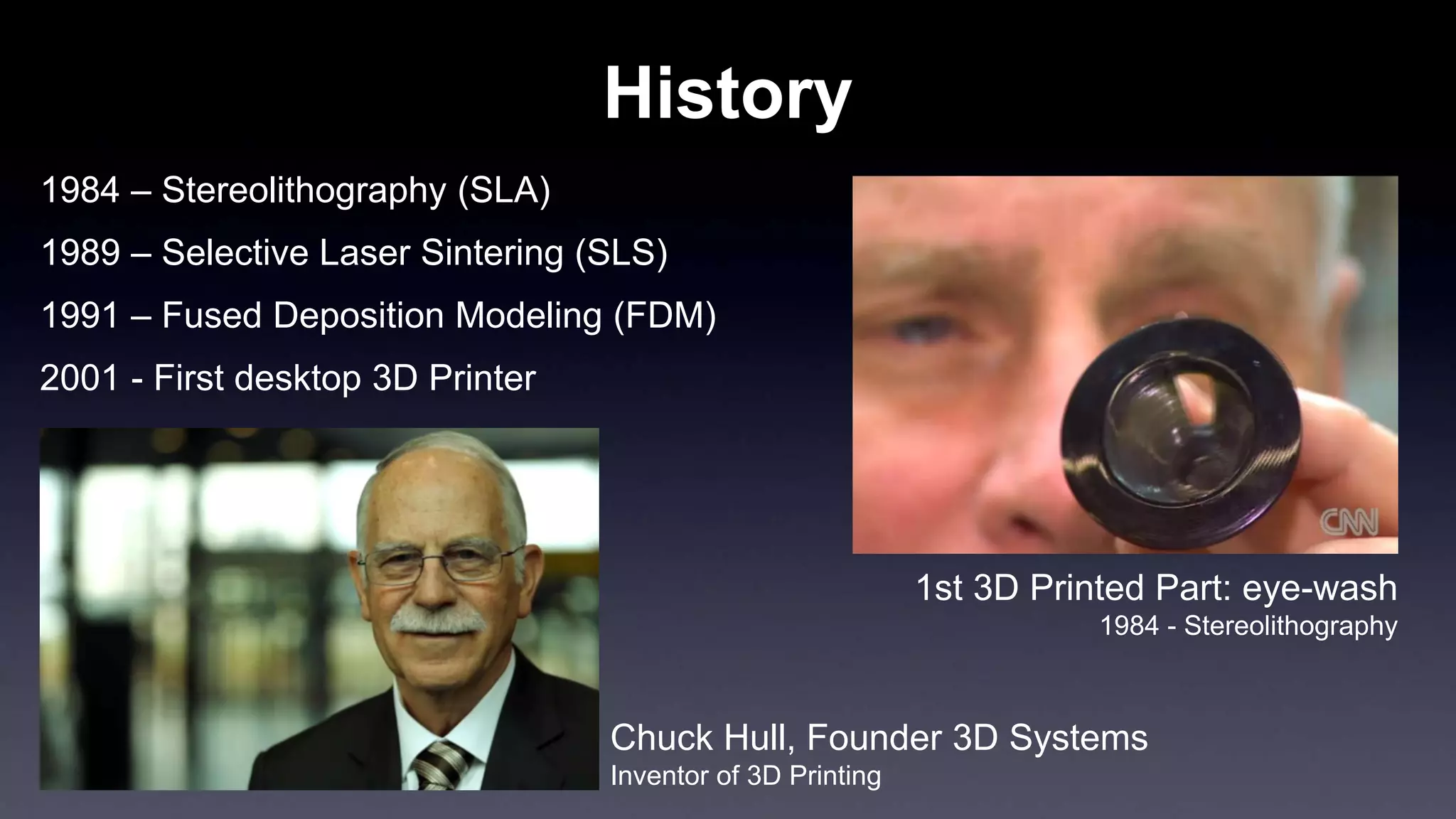
Chuck Hull, Founder 3D Systems
Inventor of 3D Printing
1st 3D Printed Part: eye-wash
1984 - Stereolithography
1984 – Stereolithography (SLA)
1989 – Selective Laser Sintering (SLS)
1991 – Fused Deposition Modeling (FDM)
2001 - First desktop 3D Printer
Materials
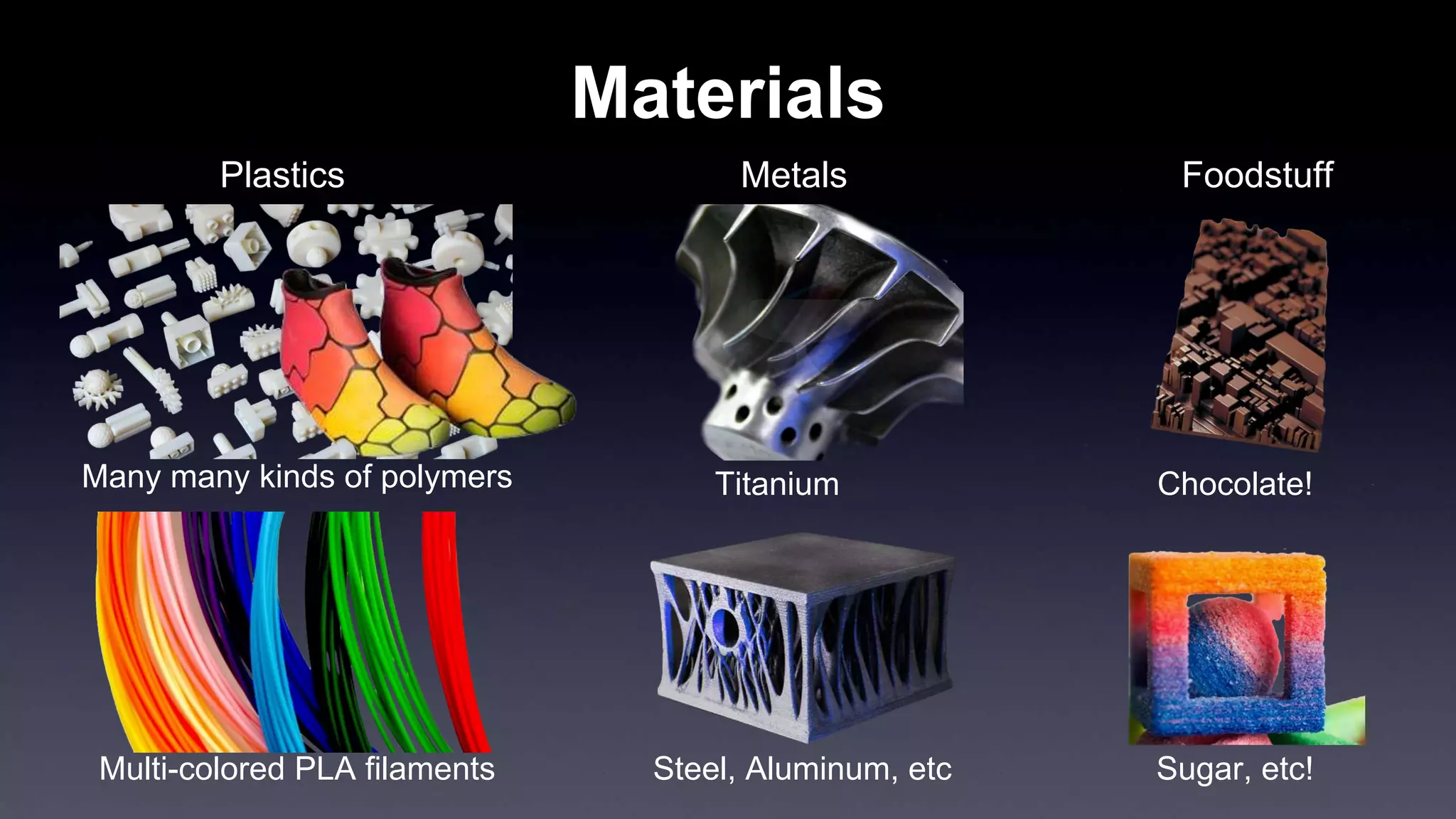
Many many kinds of polymers
Steel, Aluminum, etc
Titanium Chocolate!
Multi-colored PLA filaments Sugar, etc!
Plastics Metals Foodstuff
Hershey’s Chocolate Printer
Overview of Techs
Type Technologies Materials
Extrusion Fused deposition modeling (FDM)
Any material that can transition from solid to
liquid and back to solid
Wire Electron Beam Freeform Fabrication (EBF3) Almost any metal alloy
Granular
Direct metal laser sintering (DMLS) Almost any metal alloy
Selective laser melting (SLM)
Titanium alloys, Cobalt Chrome alloys,
Stainless Steel, Aluminium
Selective laser sintering (SLS)
Thermoplastics, metal powders, ceramic
powders
Laminated Laminated object manufacturing (LOM) Paper, metal foil, plastic film
Light
polymerisation
Stereolithography (SLA)
curable liquid photopolymerDigital Light Processing (DLP)
Inkjet/Polyjet
So how do all these techs work?
Many different types of 3D Printing, but in essence they all
“add” material layer by layer. Thus: Additive
Manufacturing.
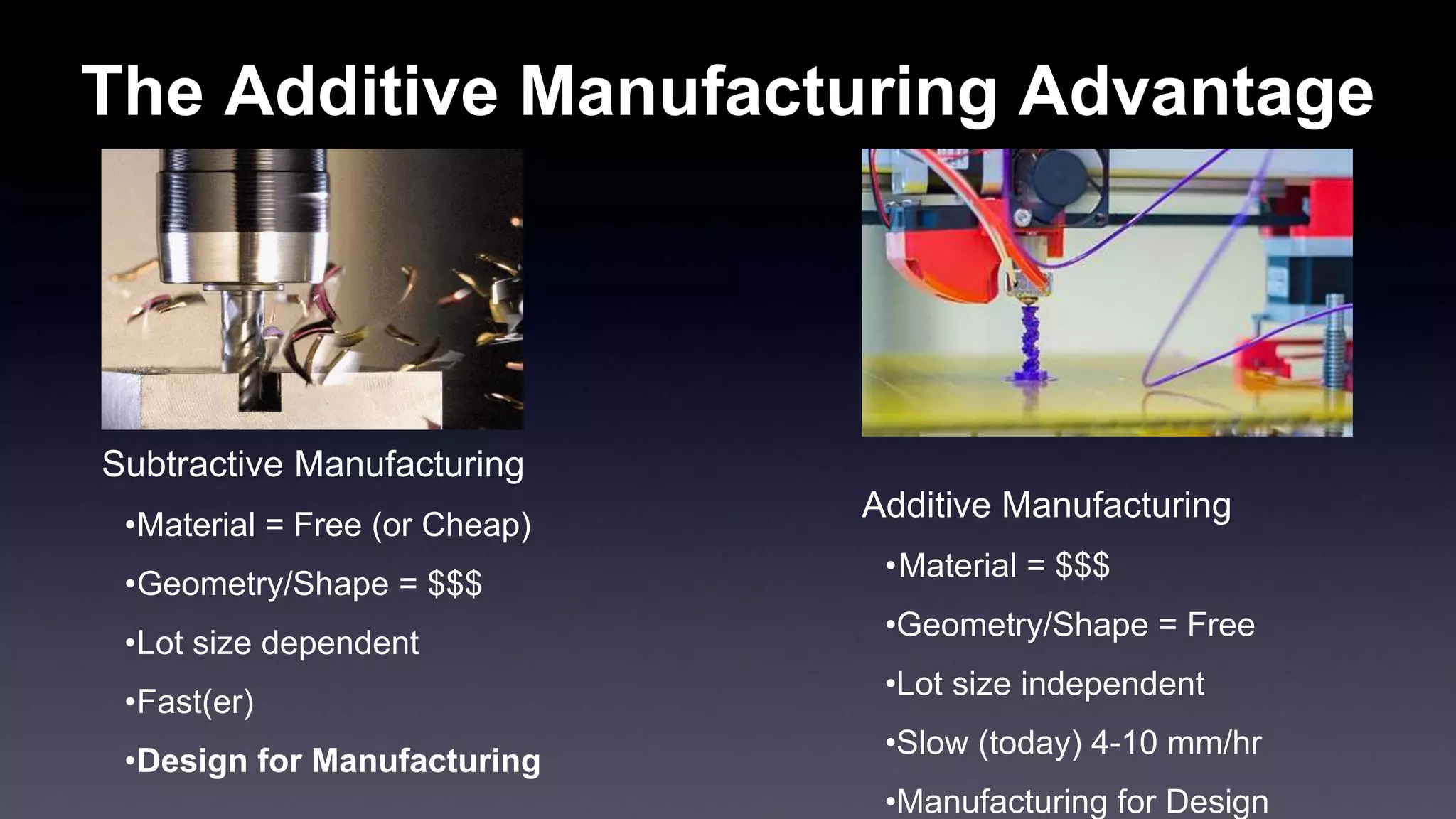
Subtractive Manufacturing
•Material = Free (or Cheap)
•Geometry/Shape = $$$
•Lot size dependent
•Fast(er)
•Design for Manufacturing
Additive Manufacturing
•Material = $$$
•Geometry/Shape = Free
•Lot size independent
•Slow (today) 4-10 mm/hr
•Manufacturing for Design
The Additive Manufacturing Advantage
Subtractive Manufacturing
•Material = Free (or Cheap)
•Geometry/Complexity = $$$
•Lot size dependent
•Fast(er)
•Design for Manufacturing
Additive Manufacturing
•Material = $$$
•Geometry/Complexity = Free
•Lot size independent
•Slow (today) 4-10 mm/hr
•Manufacturing for Design
3D Printing at It's Best
•Material = $$$
•Geometry/Complexity = Free
•Manufacturing for Design
→Minimize material: Hollow
→Crazy geometry: no problem
→No compromises on design
Klein Bottle Opener by Bathsheba
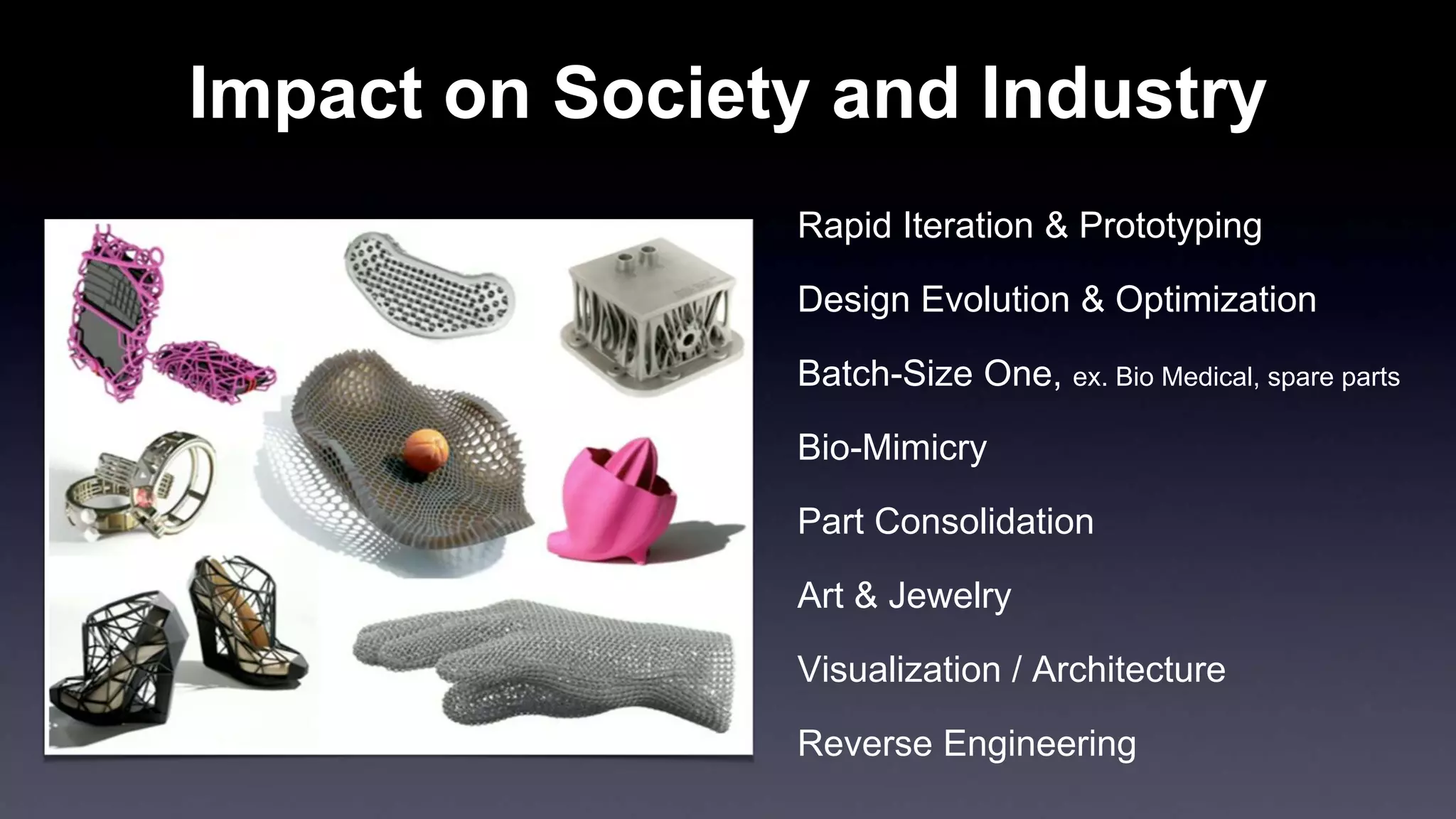
Impact on Society and Industry
Rapid Iteration & Prototyping
Design Evolution & Optimization
Batch-Size One, ex. Bio Medical, spare parts
Bio-Mimicry
Part Consolidation
Art & Jewelry
Visualization / Architecture
Reverse Engineering
Impact on Society and Industry
Rapid Iteration & Prototyping
Design Evolution
Batch-Size One, ex. Bio Medical, spare parts
Bio-Mimicry
Part Consolidation
Art & Jewelry
Visualization / Architecture
Reverse Engineering
Rapid Iteration & Prototyping
Extremely quick turn iterations allow for visualization, testing and feedback
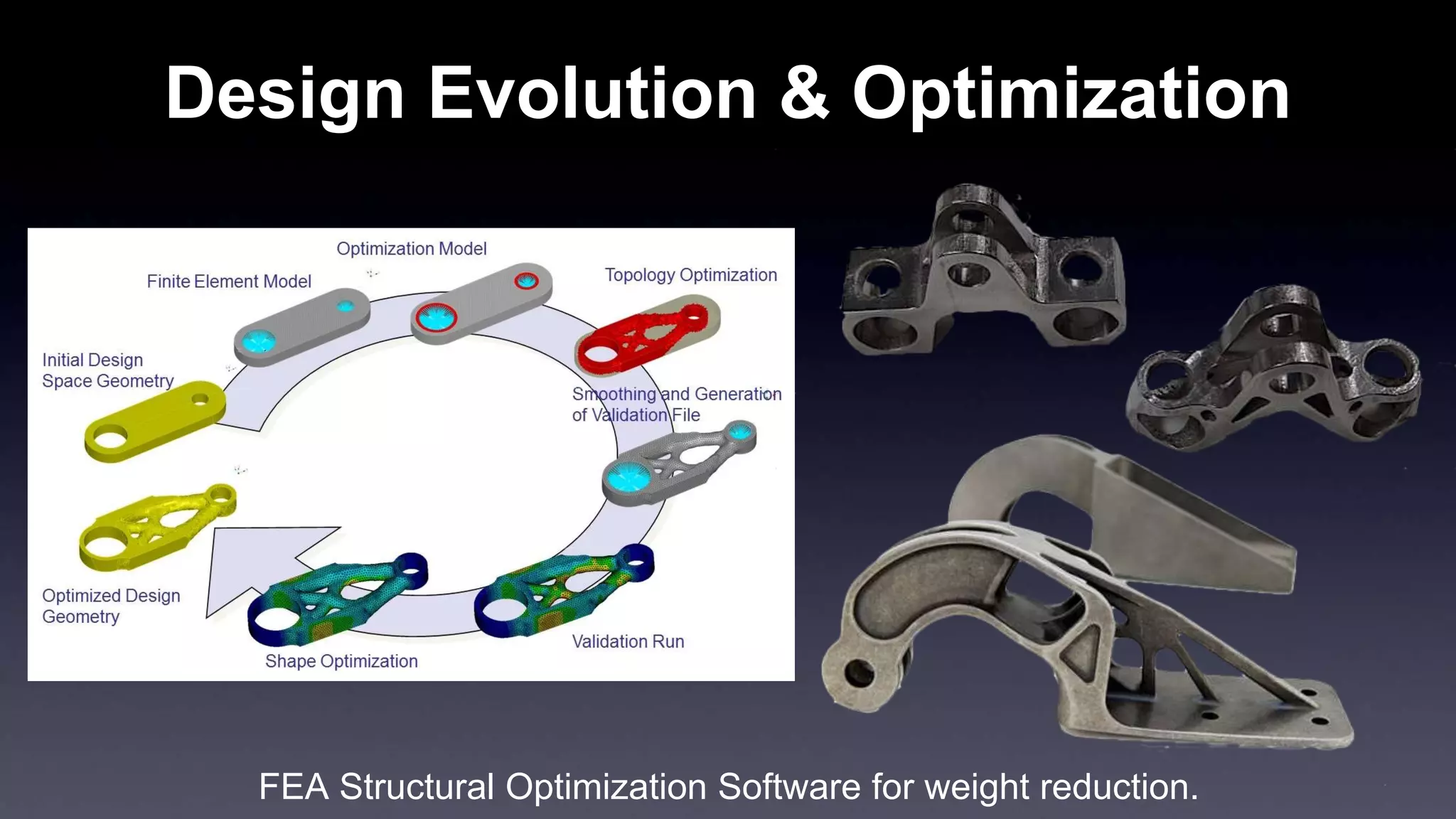
Design Evolution & Optimization
FEA Structural Optimization Software for weight reduction.
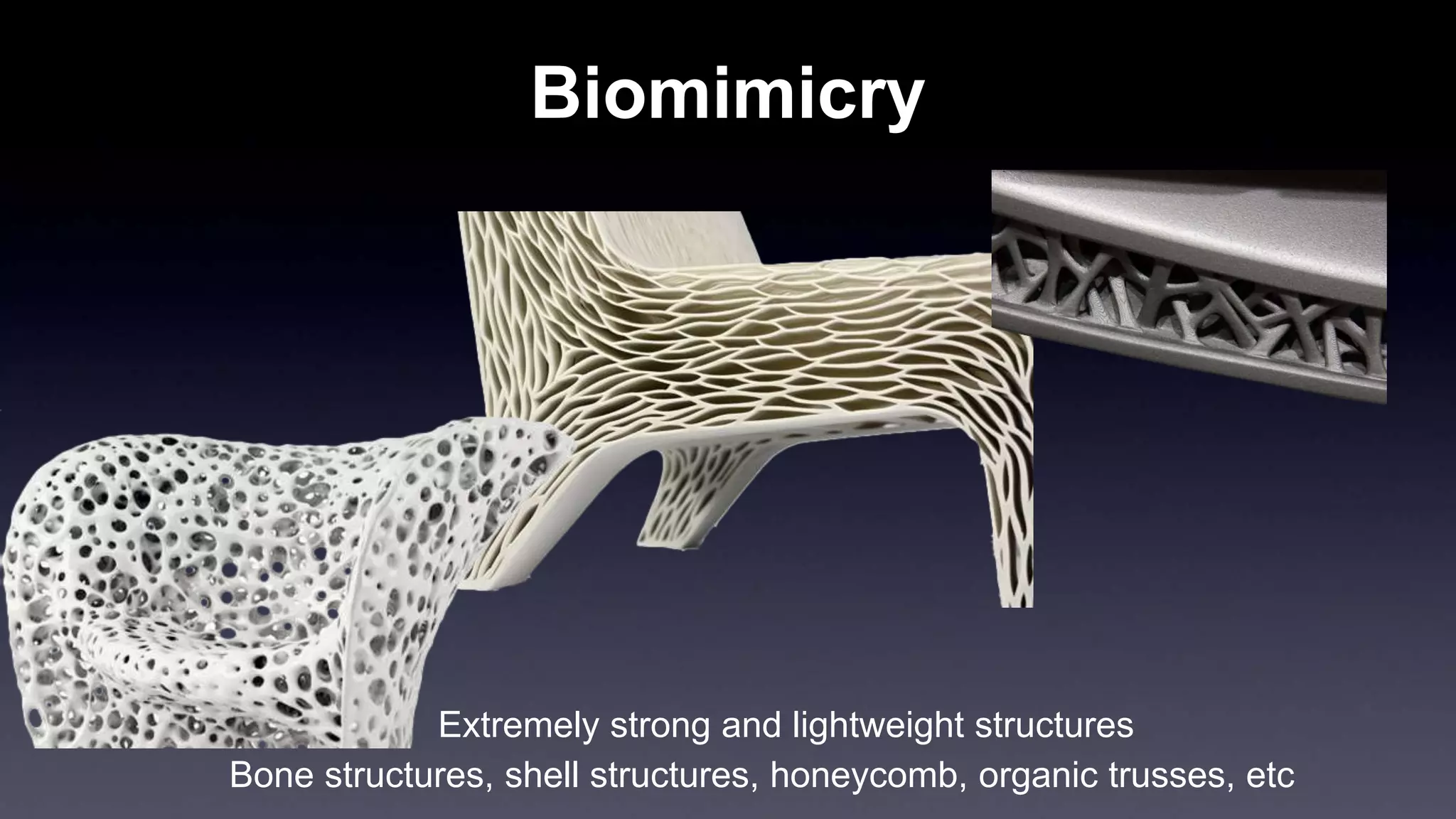
Biomimicry
Extremely strong and lightweight structures
Bone structures, shell structures, honeycomb, organic trusses, etc
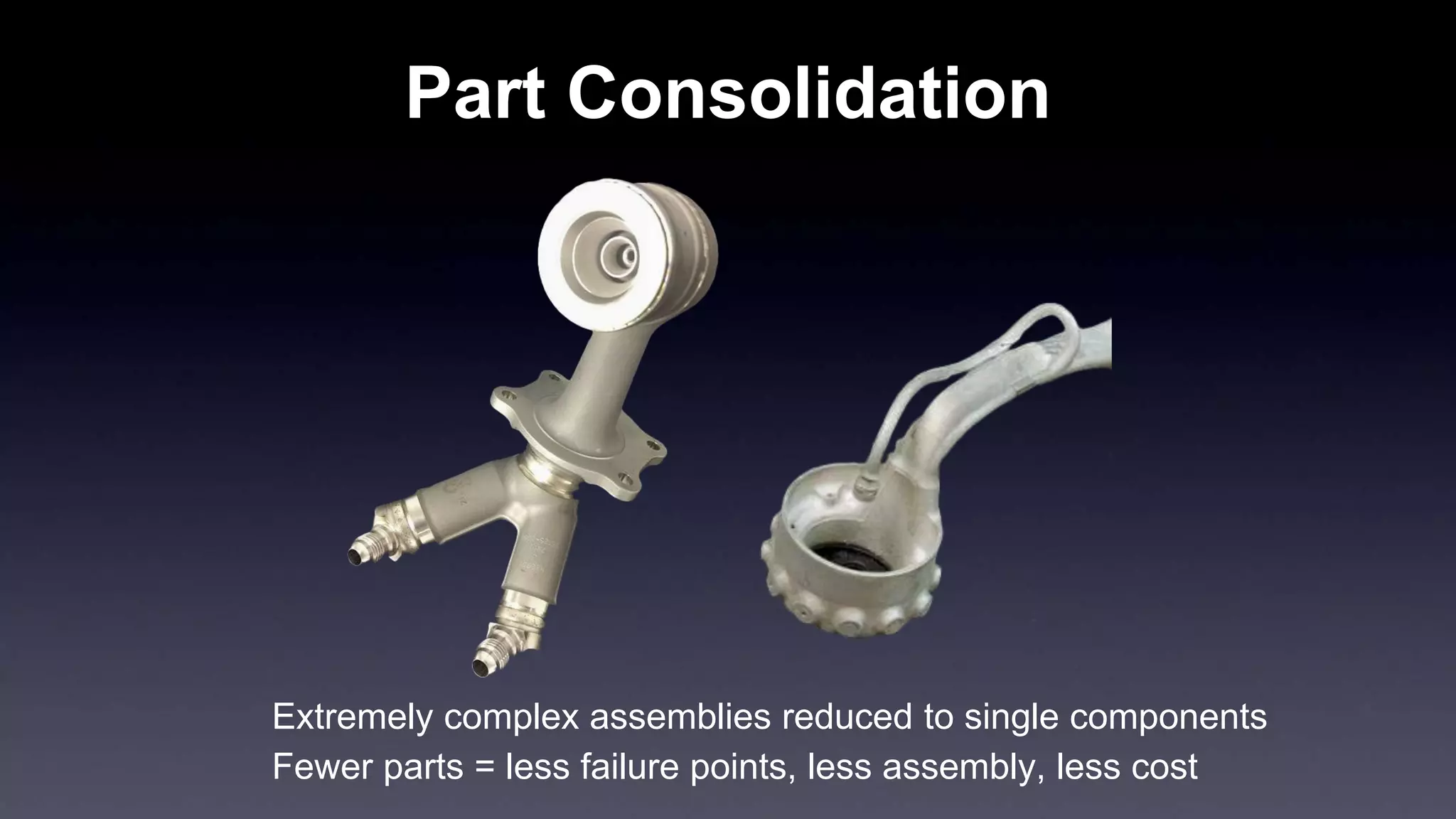
Part Consolidation
Fewer parts = less failure points, less assembly, less cost
Extremely complex assemblies reduced to single components

The 3D Printing Transformation

  • 1.
    The 3D Printing Transformation History Materials TechnologyOverview Additive Manufacturing Advantage Areas of Impact on Society and Industry Simon Lancaster January 17, 2014
  • 2.
    History Chuck Hull, Founder3D Systems Inventor of 3D Printing 1st 3D Printed Part: eye-wash 1984 - Stereolithography 1984 – Stereolithography (SLA) 1989 – Selective Laser Sintering (SLS) 1991 – Fused Deposition Modeling (FDM) 2001 - First desktop 3D Printer
  • 3.
    Materials Many many kindsof polymers Steel, Aluminum, etc Titanium Chocolate! Multi-colored PLA filaments Sugar, etc! Plastics Metals Foodstuff
  • 4.
  • 5.
    Overview of Techs TypeTechnologies Materials Extrusion Fused deposition modeling (FDM) Any material that can transition from solid to liquid and back to solid Wire Electron Beam Freeform Fabrication (EBF3) Almost any metal alloy Granular Direct metal laser sintering (DMLS) Almost any metal alloy Selective laser melting (SLM) Titanium alloys, Cobalt Chrome alloys, Stainless Steel, Aluminium Selective laser sintering (SLS) Thermoplastics, metal powders, ceramic powders Laminated Laminated object manufacturing (LOM) Paper, metal foil, plastic film Light polymerisation Stereolithography (SLA) curable liquid photopolymerDigital Light Processing (DLP) Inkjet/Polyjet
  • 6.
    So how doall these techs work? Many different types of 3D Printing, but in essence they all “add” material layer by layer. Thus: Additive Manufacturing.
  • 7.
    Subtractive Manufacturing •Material =Free (or Cheap) •Geometry/Shape = $$$ •Lot size dependent •Fast(er) •Design for Manufacturing Additive Manufacturing •Material = $$$ •Geometry/Shape = Free •Lot size independent •Slow (today) 4-10 mm/hr •Manufacturing for Design The Additive Manufacturing Advantage
  • 8.
    The Additive ManufacturingAdvantage Subtractive Manufacturing •Material = Free (or Cheap) •Geometry/Complexity = $$$ •Lot size dependent •Fast(er) •Design for Manufacturing Additive Manufacturing •Material = $$$ •Geometry/Complexity = Free •Lot size independent •Slow (today) 4-10 mm/hr •Manufacturing for Design
  • 9.
    3D Printing atIt's Best •Material = $$$ •Geometry/Complexity = Free •Manufacturing for Design →Minimize material: Hollow →Crazy geometry: no problem →No compromises on design Klein Bottle Opener by Bathsheba
  • 10.
    Impact on Societyand Industry Rapid Iteration & Prototyping Design Evolution & Optimization Batch-Size One, ex. Bio Medical, spare parts Bio-Mimicry Part Consolidation Art & Jewelry Visualization / Architecture Reverse Engineering
  • 11.
    Impact on Societyand Industry Rapid Iteration & Prototyping Design Evolution Batch-Size One, ex. Bio Medical, spare parts Bio-Mimicry Part Consolidation Art & Jewelry Visualization / Architecture Reverse Engineering
  • 12.
    Rapid Iteration &Prototyping Extremely quick turn iterations allow for visualization, testing and feedback
  • 13.
    Design Evolution &Optimization FEA Structural Optimization Software for weight reduction.
  • 14.
    Biomimicry Extremely strong andlightweight structures Bone structures, shell structures, honeycomb, organic trusses, etc
  • 15.
    Part Consolidation Fewer parts= less failure points, less assembly, less cost Extremely complex assemblies reduced to single components

Editor's Notes

  • #2 click to start music, click to stop music
  • #3 Humble inventor of 3D printing