Animation Film Making
Production of an Animation Film 
The production pipeline of a typical animated short 
or a movie can be divided into three stages : 
• pre-production 
• production 
• post-production. 
In this article i will be discussing these three key 
stages in detail.
1. Pre - Production of an Animation Film 
The first process in the animation pipeline, and also one 
of the most important. It begins with the main concepts 
which are initially turned into a full story, and then, once 
the story has been finalized, other things such as the 
script, shot sequence and camera angles are worked on. 
Some major components of pre production are 
• Story Boarding 
• Layouts 
• Model Sheets 
• Animatics
Story Boarding 
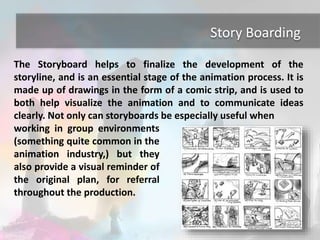
The Storyboard helps to finalize the development of the 
storyline, and is an essential stage of the animation process. It is 
made up of drawings in the form of a comic strip, and is used to 
both help visualize the animation and to communicate ideas 
clearly. Not only can storyboards be especially useful when 
working in group environments 
(something quite common in the 
animation industry,) but they 
also provide a visual reminder of 
the original plan, for referral 
throughout the production.
Layouts 
Once the storyboards have been approved, they are sent to the layout 
department which then works closely with the director to design the locations 
and costumes. With this done they begin to stage the scenes, showing the 
various characters’ positions throughout the course of each shot. 
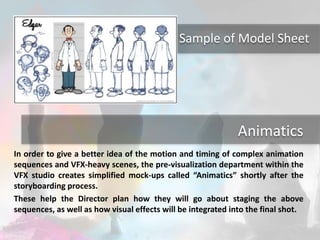
Model Sheets 
Model sheets are precisely drawn groups of pictures that show all of the 
possible expressions that a character can make, and all of the many different 
poses that they could adopt. These sheets are created in order to both 
accurately maintain character detail and to keep the designs of the characters 
uniform whilst different animators are working on them across several shots.
Sample of Model Sheet 
Animatics 
In order to give a better idea of the motion and timing of complex animation 
sequences and VFX-heavy scenes, the pre-visualization department within the 
VFX studio creates simplified mock-ups called “Animatics” shortly after the 
storyboarding process. 
These help the Director plan how they will go about staging the above 
sequences, as well as how visual effects will be integrated into the final shot.
2. Production of an Animation Film 
Now that the storyboard has been approved the project 
enters the production phase. It’s here that the actual 
work can start, based on the guidelines established 
during preproduction. 
Some major parts are 
• Layout 
• Modeling 
• Texturing 
• Lighting 
• Rigging 
• Animation
Layout 
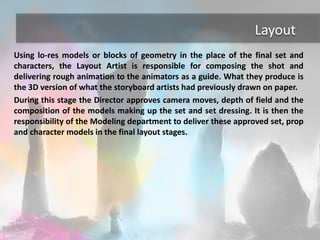
Using lo-res models or blocks of geometry in the place of the final set and 
characters, the Layout Artist is responsible for composing the shot and 
delivering rough animation to the animators as a guide. What they produce is 
the 3D version of what the storyboard artists had previously drawn on paper. 
During this stage the Director approves camera moves, depth of field and the 
composition of the models making up the set and set dressing. It is then the 
responsibility of the Modeling department to deliver these approved set, prop 
and character models in the final layout stages.
Modelling 
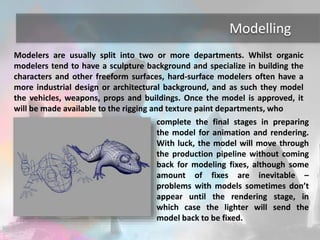
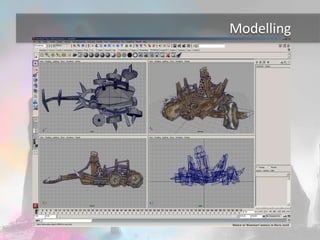
Modelers are usually split into two or more departments. Whilst organic 
modelers tend to have a sculpture background and specialize in building the 
characters and other freeform surfaces, hard-surface modelers often have a 
more industrial design or architectural background, and as such they model 
the vehicles, weapons, props and buildings. Once the model is approved, it 
will be made available to the rigging and texture paint departments, who 
complete the final stages in preparing 
the model for animation and rendering. 
With luck, the model will move through 
the production pipeline without coming 
back for modeling fixes, although some 
amount of fixes are inevitable – 
problems with models sometimes don’t 
appear until the rendering stage, in 
which case the lighter will send the 
model back to be fixed.
Modelling
Texturing 
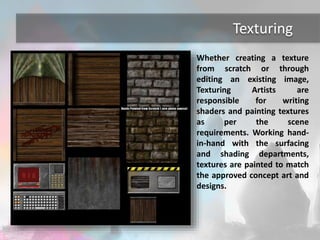
Whether creating a texture 
from scratch or through 
editing an existing image, 
Texturing Artists are 
responsible for writing 
shaders and painting textures 
as per the scene 
requirements. Working hand-in- 
hand with the surfacing 
and shading departments, 
textures are painted to match 
the approved concept art and 
designs.
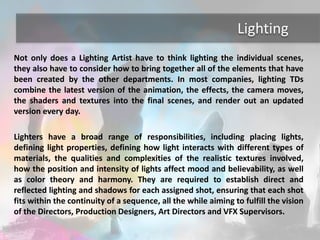
Lighting 
Not only does a Lighting Artist have to think lighting the individual scenes, 
they also have to consider how to bring together all of the elements that have 
been created by the other departments. In most companies, lighting TDs 
combine the latest version of the animation, the effects, the camera moves, 
the shaders and textures into the final scenes, and render out an updated 
version every day. 
Lighters have a broad range of responsibilities, including placing lights, 
defining light properties, defining how light interacts with different types of 
materials, the qualities and complexities of the realistic textures involved, 
how the position and intensity of lights affect mood and believability, as well 
as color theory and harmony. They are required to establish direct and 
reflected lighting and shadows for each assigned shot, ensuring that each shot 
fits within the continuity of a sequence, all the while aiming to fulfill the vision 
of the Directors, Production Designers, Art Directors and VFX Supervisors.
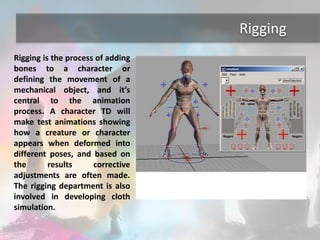
Rigging 
Rigging is the process of adding 
bones to a character or 
defining the movement of a 
mechanical object, and it’s 
central to the animation 
process. A character TD will 
make test animations showing 
how a creature or character 
appears when deformed into 
different poses, and based on 
the results corrective 
adjustments are often made. 
The rigging department is also 
involved in developing cloth 
simulation.
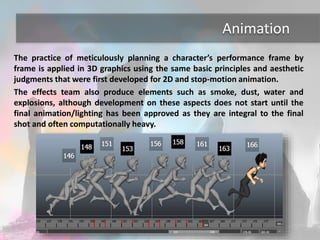
Animation 
The practice of meticulously planning a character’s performance frame by 
frame is applied in 3D graphics using the same basic principles and aesthetic 
judgments that were first developed for 2D and stop-motion animation. 
The effects team also produce elements such as smoke, dust, water and 
explosions, although development on these aspects does not start until the 
final animation/lighting has been approved as they are integral to the final 
shot and often computationally heavy.
3. Post - Production of an Animation Film 
Post-production is the third and final step in film creation, 
and it refers to the tasks that must be completed or executed 
after the filming or shooting ends. These include the editing 
of raw footage to cut scenes together, inserting transitional 
effects, working with voice and sound actors and dubbing to 
name just a few of the many post-production tasks. 
Overall, however, the three main phases of post-production 
are 
• compositing 
• sound editing 
• video editing
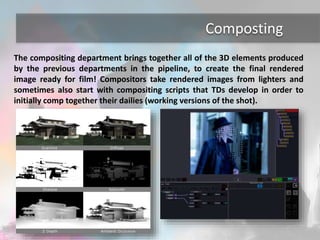
Composting 
The compositing department brings together all of the 3D elements produced 
by the previous departments in the pipeline, to create the final rendered 
image ready for film! Compositors take rendered images from lighters and 
sometimes also start with compositing scripts that TDs develop in order to 
initially comp together their dailies (working versions of the shot).
Sound Editing 
This department is responsible for selecting and assembling the sound 
recordings in preparation for the final sound mix, ensuring lip sync and adding 
all of the sound effects required for the final film. 
Video Editing 
Video editing is the process of manipulating and rearranging shots to create a 
seamless final product, and it is at this stage that any unwanted footage and 
scenes are removed. Editing is a crucial step in making sure the video flows in 
a way which achieves the initial goal. Other tasks include titling and adding 
any effects to the final video and text.
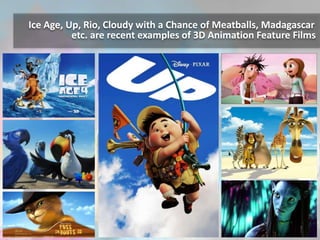
Ice Age, Up, Rio, Cloudy with a Chance of Meatballs, Madagascar 
etc. are recent examples of 3D Animation Feature Films
Animation Industry 
• The rapid advancement of technology has made 
computer animation available to the masses and the 
animation industry is one of the fastest growing 
industries. 
• The demand for animated entertainment has 
expanded with the increase in broadcasting hours by 
cable and satellite TV along with the growing 
popularity of the Internet. 
• Animated series/films can now be enjoyed not only 
by kids but the family on the whole.
Thank You 
Submitted By 
Name : Aakash Gupta 
Class : 7C-123(C2) 
Roll No. : 06914802710

3D animation film making

  • 1.
  • 2.
    Production of anAnimation Film The production pipeline of a typical animated short or a movie can be divided into three stages : • pre-production • production • post-production. In this article i will be discussing these three key stages in detail.
  • 3.
    1. Pre -Production of an Animation Film The first process in the animation pipeline, and also one of the most important. It begins with the main concepts which are initially turned into a full story, and then, once the story has been finalized, other things such as the script, shot sequence and camera angles are worked on. Some major components of pre production are • Story Boarding • Layouts • Model Sheets • Animatics
  • 4.
    Story Boarding TheStoryboard helps to finalize the development of the storyline, and is an essential stage of the animation process. It is made up of drawings in the form of a comic strip, and is used to both help visualize the animation and to communicate ideas clearly. Not only can storyboards be especially useful when working in group environments (something quite common in the animation industry,) but they also provide a visual reminder of the original plan, for referral throughout the production.
  • 5.
    Layouts Once thestoryboards have been approved, they are sent to the layout department which then works closely with the director to design the locations and costumes. With this done they begin to stage the scenes, showing the various characters’ positions throughout the course of each shot. Model Sheets Model sheets are precisely drawn groups of pictures that show all of the possible expressions that a character can make, and all of the many different poses that they could adopt. These sheets are created in order to both accurately maintain character detail and to keep the designs of the characters uniform whilst different animators are working on them across several shots.
  • 6.
    Sample of ModelSheet Animatics In order to give a better idea of the motion and timing of complex animation sequences and VFX-heavy scenes, the pre-visualization department within the VFX studio creates simplified mock-ups called “Animatics” shortly after the storyboarding process. These help the Director plan how they will go about staging the above sequences, as well as how visual effects will be integrated into the final shot.
  • 7.
    2. Production ofan Animation Film Now that the storyboard has been approved the project enters the production phase. It’s here that the actual work can start, based on the guidelines established during preproduction. Some major parts are • Layout • Modeling • Texturing • Lighting • Rigging • Animation
  • 8.
    Layout Using lo-resmodels or blocks of geometry in the place of the final set and characters, the Layout Artist is responsible for composing the shot and delivering rough animation to the animators as a guide. What they produce is the 3D version of what the storyboard artists had previously drawn on paper. During this stage the Director approves camera moves, depth of field and the composition of the models making up the set and set dressing. It is then the responsibility of the Modeling department to deliver these approved set, prop and character models in the final layout stages.
  • 9.
    Modelling Modelers areusually split into two or more departments. Whilst organic modelers tend to have a sculpture background and specialize in building the characters and other freeform surfaces, hard-surface modelers often have a more industrial design or architectural background, and as such they model the vehicles, weapons, props and buildings. Once the model is approved, it will be made available to the rigging and texture paint departments, who complete the final stages in preparing the model for animation and rendering. With luck, the model will move through the production pipeline without coming back for modeling fixes, although some amount of fixes are inevitable – problems with models sometimes don’t appear until the rendering stage, in which case the lighter will send the model back to be fixed.
  • 10.
  • 11.
    Texturing Whether creatinga texture from scratch or through editing an existing image, Texturing Artists are responsible for writing shaders and painting textures as per the scene requirements. Working hand-in- hand with the surfacing and shading departments, textures are painted to match the approved concept art and designs.
  • 12.
    Lighting Not onlydoes a Lighting Artist have to think lighting the individual scenes, they also have to consider how to bring together all of the elements that have been created by the other departments. In most companies, lighting TDs combine the latest version of the animation, the effects, the camera moves, the shaders and textures into the final scenes, and render out an updated version every day. Lighters have a broad range of responsibilities, including placing lights, defining light properties, defining how light interacts with different types of materials, the qualities and complexities of the realistic textures involved, how the position and intensity of lights affect mood and believability, as well as color theory and harmony. They are required to establish direct and reflected lighting and shadows for each assigned shot, ensuring that each shot fits within the continuity of a sequence, all the while aiming to fulfill the vision of the Directors, Production Designers, Art Directors and VFX Supervisors.
  • 13.
    Rigging Rigging isthe process of adding bones to a character or defining the movement of a mechanical object, and it’s central to the animation process. A character TD will make test animations showing how a creature or character appears when deformed into different poses, and based on the results corrective adjustments are often made. The rigging department is also involved in developing cloth simulation.
  • 14.
    Animation The practiceof meticulously planning a character’s performance frame by frame is applied in 3D graphics using the same basic principles and aesthetic judgments that were first developed for 2D and stop-motion animation. The effects team also produce elements such as smoke, dust, water and explosions, although development on these aspects does not start until the final animation/lighting has been approved as they are integral to the final shot and often computationally heavy.
  • 15.
    3. Post -Production of an Animation Film Post-production is the third and final step in film creation, and it refers to the tasks that must be completed or executed after the filming or shooting ends. These include the editing of raw footage to cut scenes together, inserting transitional effects, working with voice and sound actors and dubbing to name just a few of the many post-production tasks. Overall, however, the three main phases of post-production are • compositing • sound editing • video editing
  • 16.
    Composting The compositingdepartment brings together all of the 3D elements produced by the previous departments in the pipeline, to create the final rendered image ready for film! Compositors take rendered images from lighters and sometimes also start with compositing scripts that TDs develop in order to initially comp together their dailies (working versions of the shot).
  • 17.
    Sound Editing Thisdepartment is responsible for selecting and assembling the sound recordings in preparation for the final sound mix, ensuring lip sync and adding all of the sound effects required for the final film. Video Editing Video editing is the process of manipulating and rearranging shots to create a seamless final product, and it is at this stage that any unwanted footage and scenes are removed. Editing is a crucial step in making sure the video flows in a way which achieves the initial goal. Other tasks include titling and adding any effects to the final video and text.
  • 18.
    Ice Age, Up,Rio, Cloudy with a Chance of Meatballs, Madagascar etc. are recent examples of 3D Animation Feature Films
  • 19.
    Animation Industry •The rapid advancement of technology has made computer animation available to the masses and the animation industry is one of the fastest growing industries. • The demand for animated entertainment has expanded with the increase in broadcasting hours by cable and satellite TV along with the growing popularity of the Internet. • Animated series/films can now be enjoyed not only by kids but the family on the whole.
  • 20.
    Thank You SubmittedBy Name : Aakash Gupta Class : 7C-123(C2) Roll No. : 06914802710