Addis Ababa University
School of Pharmacy
Department of Pharmacology
Molecular Cell Biology
Presentation on Extracellular Matrix
Prepared by:
Birhanu Geta: GSR/3036/08
13:57 1
January 2016
Outline
Introduction about ECM
 Structural organization
Basal lamina & connective tissue
 Function
Main components of ECM
Glycosaminoglycan
 Structure & function
Fibrous proteins
 Structure & function
13:57 2
Objectives
At the end of this session you will be able to:
 Define what ECM is
 Identify the components of ECM
 Explain different functions of ECM
 Differentiate diseases associated with ECM
13:57 3
“Half of the secret of the cell is outside the
cell.”
13:57 4
Dr. Mina Bissell
Oct. 17, 2007
Erlanger Auditorium
Introduction
What Is The Extracellular Matrix???
A network of proteins & proteoglycans found out side the cell
Complex arrangement of molecules filling spaces b/n cells
Not an amorphous jelly or glue but highly organised structure
Diverse structures created by different amounts & organisation
of ECM components
e.g. bone vs cornea
ECM…
ECM is a local product for local cells
Cells secrete ECM that is finally assembled outside the cell
 Many ECMs built by fibroblasts: chondroblasts, osteoblasts
 Examples of ECM:
 basal lamina,
 connective tissue,
 cartilage, teeth, bone,
 plant/fungi cell walls, myelin sheath
1:57 PM 6
Structure of ECM
20/02/2023 7
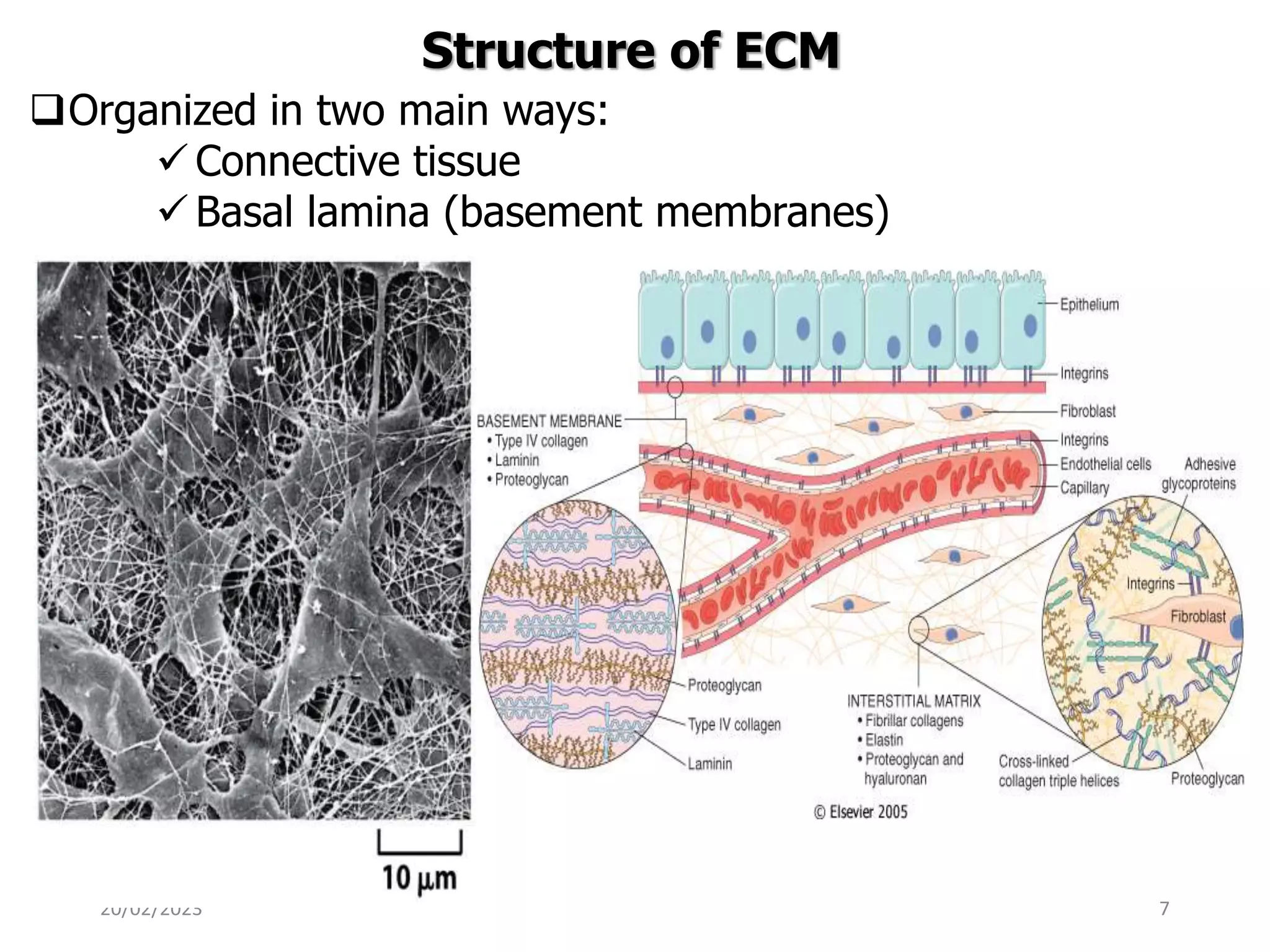
Organized in two main ways:
 Connective tissue
 Basal lamina (basement membranes)
Functions of ECM
Provide physical support(structural)
Regulate the behavior of the cells that touch it, inhabit it, or
crawl through its meshes: tissue architecture
Influence their survival, development, migration, proliferation,
shape, polarity & function
Basal lamina
 Thin: 4-120 nm thick
 Synthesized by cells on each side of it
 Underlie all epithelia & surround some non epithelial cell types
13:57 9
Functions of basal lamina
Critical role in the architecture of an organ
Mechanical connection between epithelia & underlying
connective tissue
Scaffold for tissue regeneration
 Selective filtration: Glomerulus
 Selective barrier to cell movement
 Spatial organization of the components of the neuromuscular
junction
13:57 10
Molecular structure of the basal lamina
1:57 PM 11
 Glycosaminoglycans: perlecan
 Fibrous proteins: Laminin, type IV collagen, nidogen
Laminin is a primary component of the basal lamina:
 Primary organizer of the sheet structure
 Composed of 3 chains held together by disulfide bonds
 Self-assembles through interactions of the head groups
13:57 12
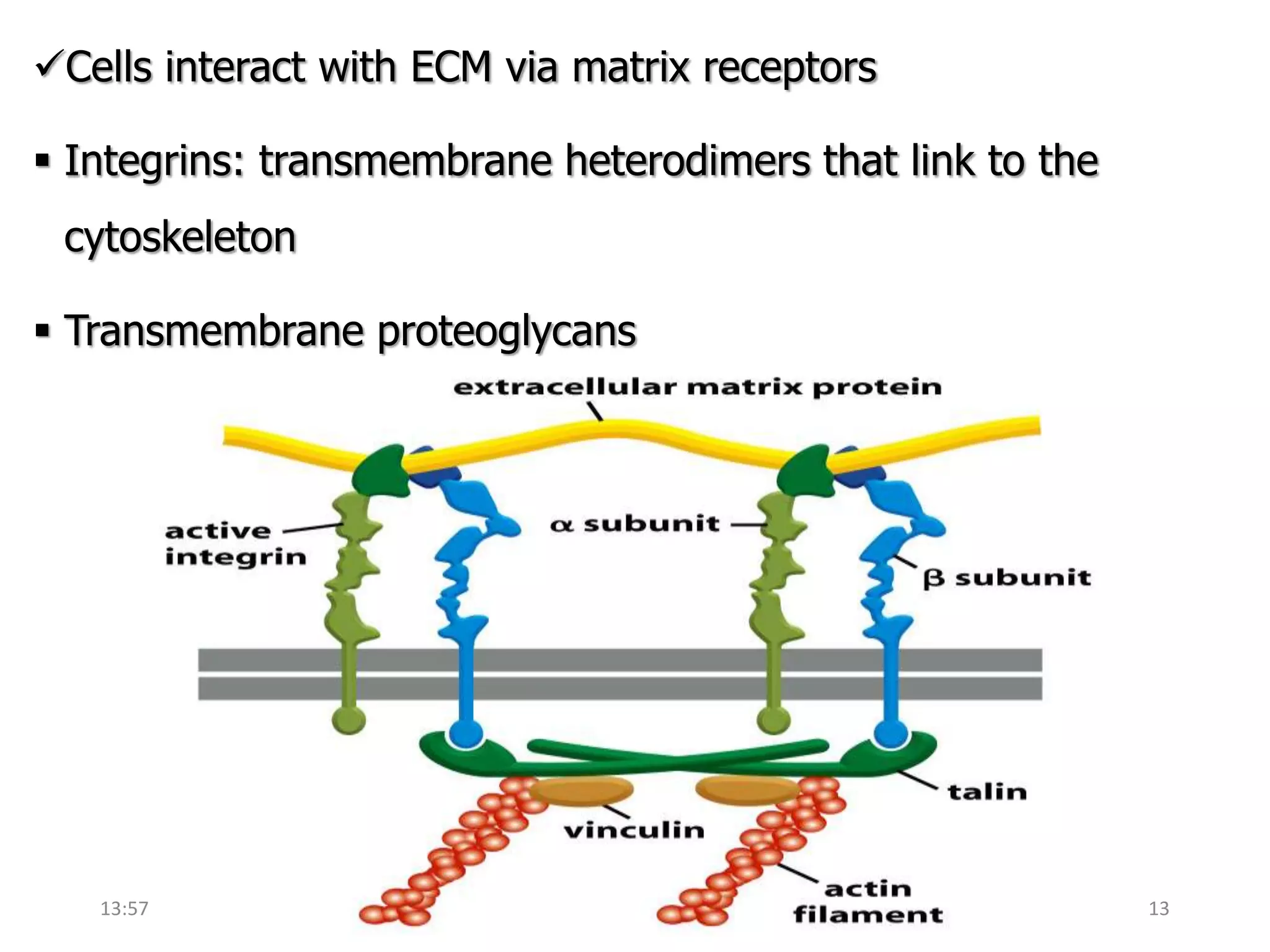
Cells interact with ECM via matrix receptors
 Integrins: transmembrane heterodimers that link to the
cytoskeleton
 Transmembrane proteoglycans
13:57 13
 Interaction of cells with ECM via integrins leads to a
variety of critical behaviors
13:57 14
13:57 15
Integrins involved in pathogenesis of other diseases
 Cancer: tumor progression
 Role in infectious diseases: can provide a means for viral
entry
 Autoimmune diseases: recruitment of leukocytes
Multiple sclerosis, Crohn’s disease
13:57 16
Connective tissue
1:57 PM 17
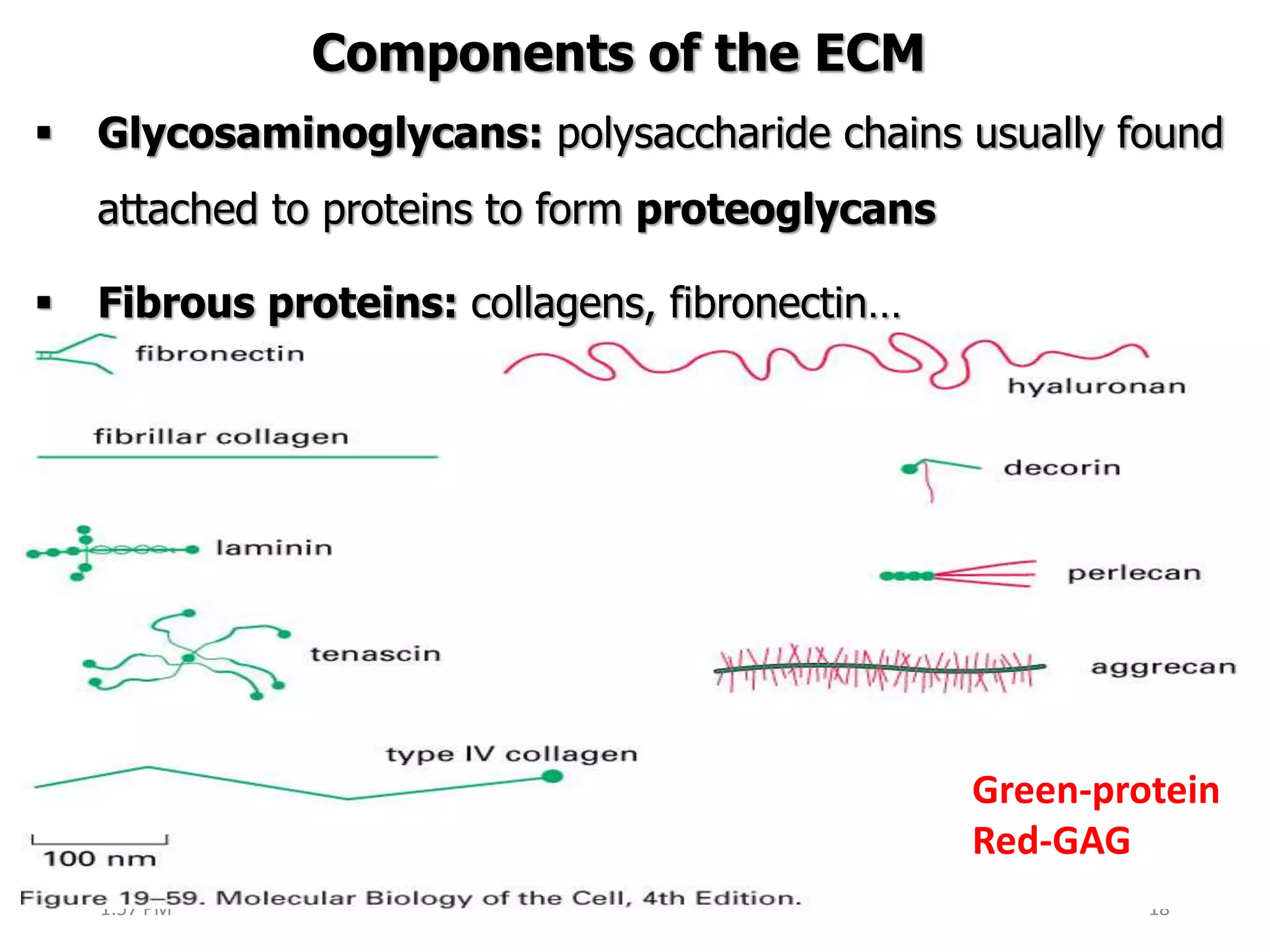
Components of the ECM
 Glycosaminoglycans: polysaccharide chains usually found
attached to proteins to form proteoglycans
 Fibrous proteins: collagens, fibronectin…
1:57 PM 18
Green-protein
Red-GAG
Components of ECM…
Glycosaminoglycans (GAGs)
 Un-branched acidic polysaccharides that consist of repeating
disaccharide units
 Contain always an amino sugar, which in most cases is
sulphated and
 A uronic acid (hexose in which the C-6 is oxidized to a
carboxyl group): glucuronic or iduronic
1:57 PM 19
GAGs…
 Too stiff to fold up into the compact globular structures
 Strongly hydrophilic, form gels even at very low concentration
 Negatively charged, attract clouds of cations (Na+) that
induce an osmotic movement of water
 These hydrated gels resist compression (useful for joints).
 Differ in physical properties e.g. Size, flexibility, hydration
 They occur in long strings, often attached to proteins
1:57 PM 20
GAGs…
 Include
Hyaluronan: joint
Chondroitin sulfate: tensile strength; aorta, tendon, ligament
Heparan sulfate: angiogenesis, coagulation, tumor
metastastasis, other developmental processes
Keratan sulfate: lacks uronic acid; found in cornea, cartilage,
bone
13:57 21
GAGs…
1:57 PM 22
GAGs…
1:57 PM 23
Hyaluronan/hyaluronic acid/hyaluronate
 Simplest GAG; major component of the ECM
 Regular repeating sequence of 25,000 disaccharide units
 No sulfated sugars
 Not linked to a core protein
 Found in variable amounts in all tissues and fluids
 Spun out directly from the cell surface by an enzyme
complex embedded in the plasma membrane.
13:57 24
Functions of hyaluronan
 Resisting compressive forces
 A space filler during embryonic development, where it can be
used to force a change in the shape of a structure, as a small
quantity expands with water to occupy a large volume
 Synthesized locally from the basal side of an epithelium can
deform the epithelium by creating a cell-free space beneath it,
into which cells subsequently migrate
 In the developing heart, helps to drive formation of the
valves and septa that separate the heart's chambers
13:57 25
 FDA approved HA for cosmetic use in humans – 2003
13:57 26
GAGs…
 Defects in the production of GAGs can affect many
different body systems.
 Deficiency in the synthesis of dermatan sulfate:
A rare genetic condition characterized by: short stature,
prematurely aged appearance, and generalized defects in
their skin, joints, muscles, and bones.
1:57 PM 27
Proteoglycans
 Made of both proteins and GAGs
 Differ in physical properties
 Synthesized in Golgi prior to secretion
 Have structural roles, can also bind to hormones e.g.,
inflammatory chemokines, FGF, TGFb to alter cell signaling
pathways
 Includes: decoran, aggrecan (the main component of
cartilage)
 Decorin “decorates” collagen fibrils
 Decorin knock-out mouse has irregular collagen fibril
formation
 skin – lax and fragile
 tendons have abnormal structure
1:57 PM 28
Aggrecan
 One of the largest macromolecules, consisting of a core
protein with GAGs attached to form a feather-like
appearance.
1:57 PM 29
Aggrecan…
 Has serine-rich core protein & chondroitin sulfate & keratan
sulfate chains
 Its core protein is very large but also binds many (different)
GAGs (shown in red)
1:57 PM 30
Aggrecan aggregates
 Aggrecan is the major glycoprotein of articular cartilage
 Provides hydrated gel structure that endows cartilage with
load-bearing properties
 Chondroskeletal morphogenesis during development
1:57 PM 31
Signaling roles of proteoglycans
Regulate the activities of secreted proteins; proteases
 Gels formed by GAG chains act as “sieves” that regulate
passage of molecules by size and charge
 Control assembly & degradation of components of ECM;
collagen
 Bind secreted signalling molecules: growth factors
Control diffusion, range of action, lifetime, modify signalling
activity
Cell-surface proteoglycans act as co-receptors
13:57 32
13:57 33
Collagen
 The major proteins of animal connective tissues
 Triple helical domain
 Repeated Gly - X - Y amino acid sequence, where X is often
proline and Y hydroxyproline
 <40 different collagen types containing polypeptides encoded
by 42 genes
13:57 34
13:57 35
Collagen Biosynthesis
 Synthesized as pro-collagen monomers (pro-a collagen)
 Extensive post-translational modification
 Route: membrane bound ribosomes  ER  GA  Secretory
vesicles
 During this journey protein are glycosylated or decorated with
long GAG chains: hydroxylation & glycosylation
 Prior to secretion they self- assemble into trimers
 Upon secretion the trimers are processed by proteolytic
enzymes then assemble into fibrils
1:57 PM 36
1:57 PM 37
1:57 PM 38
Collagen fibers
 Collagen proteins (trimers) are then cross-linked to
form collagen fibers (stiff, not very elastic)
1:57 PM 39
Fibril-associated collagens (types IX & XII) differ from fibrillar
collagens (types I, II, III, V & XI);
1. Short non-helical domains disrupt triple helix, which makes
the molecules more flexible than fibrillary collagens
2. Not cleaved after secretion, retain their propeptides
3. Do not aggregate with one another to form fibrils, bind in a
periodic manner to the surface of fibrils formed by the
fibrillar collagens
13:57 40
13:57 41
Collagen in disease
Vitamin C is necessary for proline hydroxlation:
 Defective pro-α chains fail to form triple helix
 Failure of collagen synthesis
13:57 42
Collagen in disease…
 Fibrotic diseases with accumulation of ECM
 Liver Chirrosis
 Lung Fibrosis
 Collagen synthesis is mainly regulated by the level of gene
activity.
 Some growth factors such as TGF-b signal to increase collagen
synthesis.
 Enzymes in the collagen synthesis are investigated as drug
targets to treat fibrotic diseases
13:57 43
Osteogenesis Imperfecta: Brittle bone disease (not to be
confused with osteoporosis)
 Mutation in one of type I collagen genes
 Weak bones fracture easily
 Glycine substitutions to another amino acid more severe than
mutations of X or Y in Gly - X - Y triplet
 Dominant negative effect of some mutations.
Mutations in Type II collagen: chondrodysplasias; abnormal
cartilage, which leads to bone and joint deformities.
13:57 44
 Type-I collagen diseases: Osteogenesis imperfecta:
Inherited diseases with mutations in collagen genes
13:57 45
Ehlers-Danlos syndrome
 Defect in synthesis or structure of fibrillar collagen
(mutations have been found in collagen types I, III, V)
 Skin hyperextensibility, joint laxity, fragile skin and blood
vessels, poor wound healing
13:57 46
Collagen VII defects cause blistering skin diseases
13:57 47
Elastin
Proteins can provide elastic
properties: elastin
Majorly found in:
 Lung
 Blood vessels
 Skin
1:57 PM 48
 Elastin: a highly hydrophobic protein (about 750 AAs long),
rich in non glycosylated proline & glycine, 50% of dry wt of
aorta
 Soluble tropoelastin: precursor, is secreted into the extracellular
space and assembled into elastic fibers
 Elastic fibers contain elastin & microfibrills (fibrillin)
 Mutation in elastin gene: narrowing of aorta, excessive
proliferation of smooth muscle
 Mutation in fibrillin gene: marfan syndrome; rupture of aorta,
affected individuals are unusually tall & lanky(Abrham Lincoln)
13:57 49
13:57 50
 Fibronectin is an extracellular protein that helps cells
attach to the matrix
13:57 51
Control of ECM
 Cells control the synthesis of ECM by;
 altering gene expression, co-translational import & secretion
 Degradation by;
 Secreting & activating or inactivating extracellular enzymes
 Two classes of proteases; matrix metalloproteases, which
depend on bound Ca2+ or Zn2+ for activity; & serine
proteases, have a highly reactive serine in their active site
 Collagenase: specific protease
 Cooperate to degrade collagen, laminin & fibronectin
1:57 PM 52
Matrix Metalloproteases
 Cells that need to migrate must first break down connections
to the ECM (e.g tissue repair, division, metastasis of tumors)
 Cells tightly control degradation of matrix to prevent collapse:
 Local activation: secreted as inactive form (e.g. plasminogen
is inactive, modified by plasminogen activators when required)
 Confinement by cell-surface receptors: urokinase type
pkasminogen activator(uPA), bound to receptors on the
growing tip of axons & the lading edge of migrating cells
 Secretion of inhibitors: tissue inhibitors of metalloproteases
(TIMPs), serine protease inhibitors (serpins)
1:57 PM 53
MMPs in disease:
 Extensive matrix degradation in e.g. in periodontitis,
rheumatoid arthritis
 Tumour cell invasion and metastasis:
Carcinoma breaks basement membrane & invades
surrounding stroma
 MMP inhibitors tested for therapeutic use
13:57 54
Summary
ECM structurally organized as basal lamina & connective tissue
Cell-matrix interactions important regulator of cell behaviour
Glycosaminoglycan & fibrous proteins are the main
components of ECM
Proteoglycans: decorin, aggrecan, heparin sulfate, condrotan
sulfate, keratan sulfate
Fibrous proteins: collagen, fibronectin, laminin
Matrix metalloproteinases degrade and re-model matrix
13:57 55
References
1. Alberts et al. Molecular Biology of the cell. 5th edition. 2008.
p1169-1195
2. Alberts et al. Molecular Biology of the cell. 4th edition. 2002.
p2767-2840
13:57 56

3-8-Extracellular matrix.pptx

  • 1.
    Addis Ababa University Schoolof Pharmacy Department of Pharmacology Molecular Cell Biology Presentation on Extracellular Matrix Prepared by: Birhanu Geta: GSR/3036/08 13:57 1 January 2016
  • 2.
    Outline Introduction about ECM Structural organization Basal lamina & connective tissue  Function Main components of ECM Glycosaminoglycan  Structure & function Fibrous proteins  Structure & function 13:57 2
  • 3.
    Objectives At the endof this session you will be able to:  Define what ECM is  Identify the components of ECM  Explain different functions of ECM  Differentiate diseases associated with ECM 13:57 3
  • 4.
    “Half of thesecret of the cell is outside the cell.” 13:57 4 Dr. Mina Bissell Oct. 17, 2007 Erlanger Auditorium
  • 5.
    Introduction What Is TheExtracellular Matrix??? A network of proteins & proteoglycans found out side the cell Complex arrangement of molecules filling spaces b/n cells Not an amorphous jelly or glue but highly organised structure Diverse structures created by different amounts & organisation of ECM components e.g. bone vs cornea
  • 6.
    ECM… ECM is alocal product for local cells Cells secrete ECM that is finally assembled outside the cell  Many ECMs built by fibroblasts: chondroblasts, osteoblasts  Examples of ECM:  basal lamina,  connective tissue,  cartilage, teeth, bone,  plant/fungi cell walls, myelin sheath 1:57 PM 6
  • 7.
    Structure of ECM 20/02/20237 Organized in two main ways:  Connective tissue  Basal lamina (basement membranes)
  • 8.
    Functions of ECM Providephysical support(structural) Regulate the behavior of the cells that touch it, inhabit it, or crawl through its meshes: tissue architecture Influence their survival, development, migration, proliferation, shape, polarity & function
  • 9.
    Basal lamina  Thin:4-120 nm thick  Synthesized by cells on each side of it  Underlie all epithelia & surround some non epithelial cell types 13:57 9
  • 10.
    Functions of basallamina Critical role in the architecture of an organ Mechanical connection between epithelia & underlying connective tissue Scaffold for tissue regeneration  Selective filtration: Glomerulus  Selective barrier to cell movement  Spatial organization of the components of the neuromuscular junction 13:57 10
  • 11.
    Molecular structure ofthe basal lamina 1:57 PM 11  Glycosaminoglycans: perlecan  Fibrous proteins: Laminin, type IV collagen, nidogen
  • 12.
    Laminin is aprimary component of the basal lamina:  Primary organizer of the sheet structure  Composed of 3 chains held together by disulfide bonds  Self-assembles through interactions of the head groups 13:57 12
  • 13.
    Cells interact withECM via matrix receptors  Integrins: transmembrane heterodimers that link to the cytoskeleton  Transmembrane proteoglycans 13:57 13
  • 14.
     Interaction ofcells with ECM via integrins leads to a variety of critical behaviors 13:57 14
  • 15.
  • 16.
    Integrins involved inpathogenesis of other diseases  Cancer: tumor progression  Role in infectious diseases: can provide a means for viral entry  Autoimmune diseases: recruitment of leukocytes Multiple sclerosis, Crohn’s disease 13:57 16
  • 17.
  • 18.
    Components of theECM  Glycosaminoglycans: polysaccharide chains usually found attached to proteins to form proteoglycans  Fibrous proteins: collagens, fibronectin… 1:57 PM 18 Green-protein Red-GAG
  • 19.
    Components of ECM… Glycosaminoglycans(GAGs)  Un-branched acidic polysaccharides that consist of repeating disaccharide units  Contain always an amino sugar, which in most cases is sulphated and  A uronic acid (hexose in which the C-6 is oxidized to a carboxyl group): glucuronic or iduronic 1:57 PM 19
  • 20.
    GAGs…  Too stiffto fold up into the compact globular structures  Strongly hydrophilic, form gels even at very low concentration  Negatively charged, attract clouds of cations (Na+) that induce an osmotic movement of water  These hydrated gels resist compression (useful for joints).  Differ in physical properties e.g. Size, flexibility, hydration  They occur in long strings, often attached to proteins 1:57 PM 20
  • 21.
    GAGs…  Include Hyaluronan: joint Chondroitinsulfate: tensile strength; aorta, tendon, ligament Heparan sulfate: angiogenesis, coagulation, tumor metastastasis, other developmental processes Keratan sulfate: lacks uronic acid; found in cornea, cartilage, bone 13:57 21
  • 22.
  • 23.
  • 24.
    Hyaluronan/hyaluronic acid/hyaluronate  SimplestGAG; major component of the ECM  Regular repeating sequence of 25,000 disaccharide units  No sulfated sugars  Not linked to a core protein  Found in variable amounts in all tissues and fluids  Spun out directly from the cell surface by an enzyme complex embedded in the plasma membrane. 13:57 24
  • 25.
    Functions of hyaluronan Resisting compressive forces  A space filler during embryonic development, where it can be used to force a change in the shape of a structure, as a small quantity expands with water to occupy a large volume  Synthesized locally from the basal side of an epithelium can deform the epithelium by creating a cell-free space beneath it, into which cells subsequently migrate  In the developing heart, helps to drive formation of the valves and septa that separate the heart's chambers 13:57 25
  • 26.
     FDA approvedHA for cosmetic use in humans – 2003 13:57 26
  • 27.
    GAGs…  Defects inthe production of GAGs can affect many different body systems.  Deficiency in the synthesis of dermatan sulfate: A rare genetic condition characterized by: short stature, prematurely aged appearance, and generalized defects in their skin, joints, muscles, and bones. 1:57 PM 27
  • 28.
    Proteoglycans  Made ofboth proteins and GAGs  Differ in physical properties  Synthesized in Golgi prior to secretion  Have structural roles, can also bind to hormones e.g., inflammatory chemokines, FGF, TGFb to alter cell signaling pathways  Includes: decoran, aggrecan (the main component of cartilage)  Decorin “decorates” collagen fibrils  Decorin knock-out mouse has irregular collagen fibril formation  skin – lax and fragile  tendons have abnormal structure 1:57 PM 28
  • 29.
    Aggrecan  One ofthe largest macromolecules, consisting of a core protein with GAGs attached to form a feather-like appearance. 1:57 PM 29
  • 30.
    Aggrecan…  Has serine-richcore protein & chondroitin sulfate & keratan sulfate chains  Its core protein is very large but also binds many (different) GAGs (shown in red) 1:57 PM 30
  • 31.
    Aggrecan aggregates  Aggrecanis the major glycoprotein of articular cartilage  Provides hydrated gel structure that endows cartilage with load-bearing properties  Chondroskeletal morphogenesis during development 1:57 PM 31
  • 32.
    Signaling roles ofproteoglycans Regulate the activities of secreted proteins; proteases  Gels formed by GAG chains act as “sieves” that regulate passage of molecules by size and charge  Control assembly & degradation of components of ECM; collagen  Bind secreted signalling molecules: growth factors Control diffusion, range of action, lifetime, modify signalling activity Cell-surface proteoglycans act as co-receptors 13:57 32
  • 33.
  • 34.
    Collagen  The majorproteins of animal connective tissues  Triple helical domain  Repeated Gly - X - Y amino acid sequence, where X is often proline and Y hydroxyproline  <40 different collagen types containing polypeptides encoded by 42 genes 13:57 34
  • 35.
  • 36.
    Collagen Biosynthesis  Synthesizedas pro-collagen monomers (pro-a collagen)  Extensive post-translational modification  Route: membrane bound ribosomes  ER  GA  Secretory vesicles  During this journey protein are glycosylated or decorated with long GAG chains: hydroxylation & glycosylation  Prior to secretion they self- assemble into trimers  Upon secretion the trimers are processed by proteolytic enzymes then assemble into fibrils 1:57 PM 36
  • 37.
  • 38.
  • 39.
    Collagen fibers  Collagenproteins (trimers) are then cross-linked to form collagen fibers (stiff, not very elastic) 1:57 PM 39
  • 40.
    Fibril-associated collagens (typesIX & XII) differ from fibrillar collagens (types I, II, III, V & XI); 1. Short non-helical domains disrupt triple helix, which makes the molecules more flexible than fibrillary collagens 2. Not cleaved after secretion, retain their propeptides 3. Do not aggregate with one another to form fibrils, bind in a periodic manner to the surface of fibrils formed by the fibrillar collagens 13:57 40
  • 41.
  • 42.
    Collagen in disease VitaminC is necessary for proline hydroxlation:  Defective pro-α chains fail to form triple helix  Failure of collagen synthesis 13:57 42
  • 43.
    Collagen in disease… Fibrotic diseases with accumulation of ECM  Liver Chirrosis  Lung Fibrosis  Collagen synthesis is mainly regulated by the level of gene activity.  Some growth factors such as TGF-b signal to increase collagen synthesis.  Enzymes in the collagen synthesis are investigated as drug targets to treat fibrotic diseases 13:57 43
  • 44.
    Osteogenesis Imperfecta: Brittlebone disease (not to be confused with osteoporosis)  Mutation in one of type I collagen genes  Weak bones fracture easily  Glycine substitutions to another amino acid more severe than mutations of X or Y in Gly - X - Y triplet  Dominant negative effect of some mutations. Mutations in Type II collagen: chondrodysplasias; abnormal cartilage, which leads to bone and joint deformities. 13:57 44
  • 45.
     Type-I collagendiseases: Osteogenesis imperfecta: Inherited diseases with mutations in collagen genes 13:57 45
  • 46.
    Ehlers-Danlos syndrome  Defectin synthesis or structure of fibrillar collagen (mutations have been found in collagen types I, III, V)  Skin hyperextensibility, joint laxity, fragile skin and blood vessels, poor wound healing 13:57 46
  • 47.
    Collagen VII defectscause blistering skin diseases 13:57 47
  • 48.
    Elastin Proteins can provideelastic properties: elastin Majorly found in:  Lung  Blood vessels  Skin 1:57 PM 48
  • 49.
     Elastin: ahighly hydrophobic protein (about 750 AAs long), rich in non glycosylated proline & glycine, 50% of dry wt of aorta  Soluble tropoelastin: precursor, is secreted into the extracellular space and assembled into elastic fibers  Elastic fibers contain elastin & microfibrills (fibrillin)  Mutation in elastin gene: narrowing of aorta, excessive proliferation of smooth muscle  Mutation in fibrillin gene: marfan syndrome; rupture of aorta, affected individuals are unusually tall & lanky(Abrham Lincoln) 13:57 49
  • 50.
  • 51.
     Fibronectin isan extracellular protein that helps cells attach to the matrix 13:57 51
  • 52.
    Control of ECM Cells control the synthesis of ECM by;  altering gene expression, co-translational import & secretion  Degradation by;  Secreting & activating or inactivating extracellular enzymes  Two classes of proteases; matrix metalloproteases, which depend on bound Ca2+ or Zn2+ for activity; & serine proteases, have a highly reactive serine in their active site  Collagenase: specific protease  Cooperate to degrade collagen, laminin & fibronectin 1:57 PM 52
  • 53.
    Matrix Metalloproteases  Cellsthat need to migrate must first break down connections to the ECM (e.g tissue repair, division, metastasis of tumors)  Cells tightly control degradation of matrix to prevent collapse:  Local activation: secreted as inactive form (e.g. plasminogen is inactive, modified by plasminogen activators when required)  Confinement by cell-surface receptors: urokinase type pkasminogen activator(uPA), bound to receptors on the growing tip of axons & the lading edge of migrating cells  Secretion of inhibitors: tissue inhibitors of metalloproteases (TIMPs), serine protease inhibitors (serpins) 1:57 PM 53
  • 54.
    MMPs in disease: Extensive matrix degradation in e.g. in periodontitis, rheumatoid arthritis  Tumour cell invasion and metastasis: Carcinoma breaks basement membrane & invades surrounding stroma  MMP inhibitors tested for therapeutic use 13:57 54
  • 55.
    Summary ECM structurally organizedas basal lamina & connective tissue Cell-matrix interactions important regulator of cell behaviour Glycosaminoglycan & fibrous proteins are the main components of ECM Proteoglycans: decorin, aggrecan, heparin sulfate, condrotan sulfate, keratan sulfate Fibrous proteins: collagen, fibronectin, laminin Matrix metalloproteinases degrade and re-model matrix 13:57 55
  • 56.
    References 1. Alberts etal. Molecular Biology of the cell. 5th edition. 2008. p1169-1195 2. Alberts et al. Molecular Biology of the cell. 4th edition. 2002. p2767-2840 13:57 56