Service guarantee
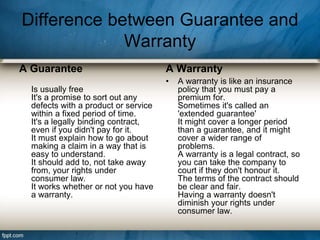
Difference between Guarantee and 
Warranty 
A Guarantee 
Is usually free 
It's a promise to sort out any 
defects with a product or service 
within a fixed period of time. 
It's a legally binding contract, 
even if you didn't pay for it. 
It must explain how to go about 
making a claim in a way that is 
easy to understand. 
It should add to, not take away 
from, your rights under 
consumer law. 
It works whether or not you have 
a warranty. 
A Warranty 
• A warranty is like an insurance 
policy that you must pay a 
premium for. 
Sometimes it's called an 
'extended guarantee' 
It might cover a longer period 
than a guarantee, and it might 
cover a wider range of 
problems. 
A warranty is a legal contract, so 
you can take the company to 
court if they don't honour it. 
The terms of the contract should 
be clear and fair. 
Having a warranty doesn't 
diminish your rights under 
consumer law.
Characteristics of an effective 
service guarantee 
• Unconditional guarantee – promise 
should be made without any 
conditions. 
• Guarantee should contain elements 
that are important to customer 
• Guarantee should be easy to 
understand and communicate 
• Easy to invoke and collect
examples 
• If clients are unhappy they do not pay for 
the services. 
• FedEx guarantees package delivery by a 
certain time 
• British Airways introduced a new seat 
design in first class, BA advertised 
“Comfort guaranteed – or you get 25000 
miles”.
When to use or not use a 
guarantee 
• A guarantee is not the right strategy when 
• Existing service quality in the firm is poor – 
the firm has to fix the quality problems first. 
• A guarantee does not fit the company’s 
image 
• If a company has a good reputation, then a 
formal guarantee is unnecessary. 
• Guaranteeing that early morning flights in 
winter (fog) 
• Potential for customers to cheat 
• Costs of the guarantee outweigh the benefits
• A guarantee is effective when the quality 
varies among competitors. 
• The first firm with a guarantee can 
distinguish itself from competitors.

37.service guarantee (2)

  • 1.
  • 2.
    Difference between Guaranteeand Warranty A Guarantee Is usually free It's a promise to sort out any defects with a product or service within a fixed period of time. It's a legally binding contract, even if you didn't pay for it. It must explain how to go about making a claim in a way that is easy to understand. It should add to, not take away from, your rights under consumer law. It works whether or not you have a warranty. A Warranty • A warranty is like an insurance policy that you must pay a premium for. Sometimes it's called an 'extended guarantee' It might cover a longer period than a guarantee, and it might cover a wider range of problems. A warranty is a legal contract, so you can take the company to court if they don't honour it. The terms of the contract should be clear and fair. Having a warranty doesn't diminish your rights under consumer law.
  • 3.
    Characteristics of aneffective service guarantee • Unconditional guarantee – promise should be made without any conditions. • Guarantee should contain elements that are important to customer • Guarantee should be easy to understand and communicate • Easy to invoke and collect
  • 4.
    examples • Ifclients are unhappy they do not pay for the services. • FedEx guarantees package delivery by a certain time • British Airways introduced a new seat design in first class, BA advertised “Comfort guaranteed – or you get 25000 miles”.
  • 5.
    When to useor not use a guarantee • A guarantee is not the right strategy when • Existing service quality in the firm is poor – the firm has to fix the quality problems first. • A guarantee does not fit the company’s image • If a company has a good reputation, then a formal guarantee is unnecessary. • Guaranteeing that early morning flights in winter (fog) • Potential for customers to cheat • Costs of the guarantee outweigh the benefits
  • 6.
    • A guaranteeis effective when the quality varies among competitors. • The first firm with a guarantee can distinguish itself from competitors.