1 
Customer Perceptions of Service 
(Chapter 5) 
 - Dwayne D. Gremler 
 Customer Satisfaction 
 influencing factors, outcomes 
 satisfaction and loyalty 
 Service Quality 
 dimensions 
 Service Encounters 
 types of encounters 
 sources of pleasure/displeasure 
 Strategies for Influencing Customer Perceptions
2 
 - Dwayne D. Gremler 
Two Types of Customers 
 External Customers 
 
 Internal Customers 

3 
 - Dwayne D. Gremler 
Customer Satisfaction 
 What is it? 
 
 Failure to meet needs and expectations usually 
results in dissatisfaction. 
 Satisfaction is thought to be
4 
 - Dwayne D. Gremler 
Customer Satisfaction 
 satisfaction is thought to be influenced by: 
 
 
 
 
 
 satisfaction can only be assessed following
5 
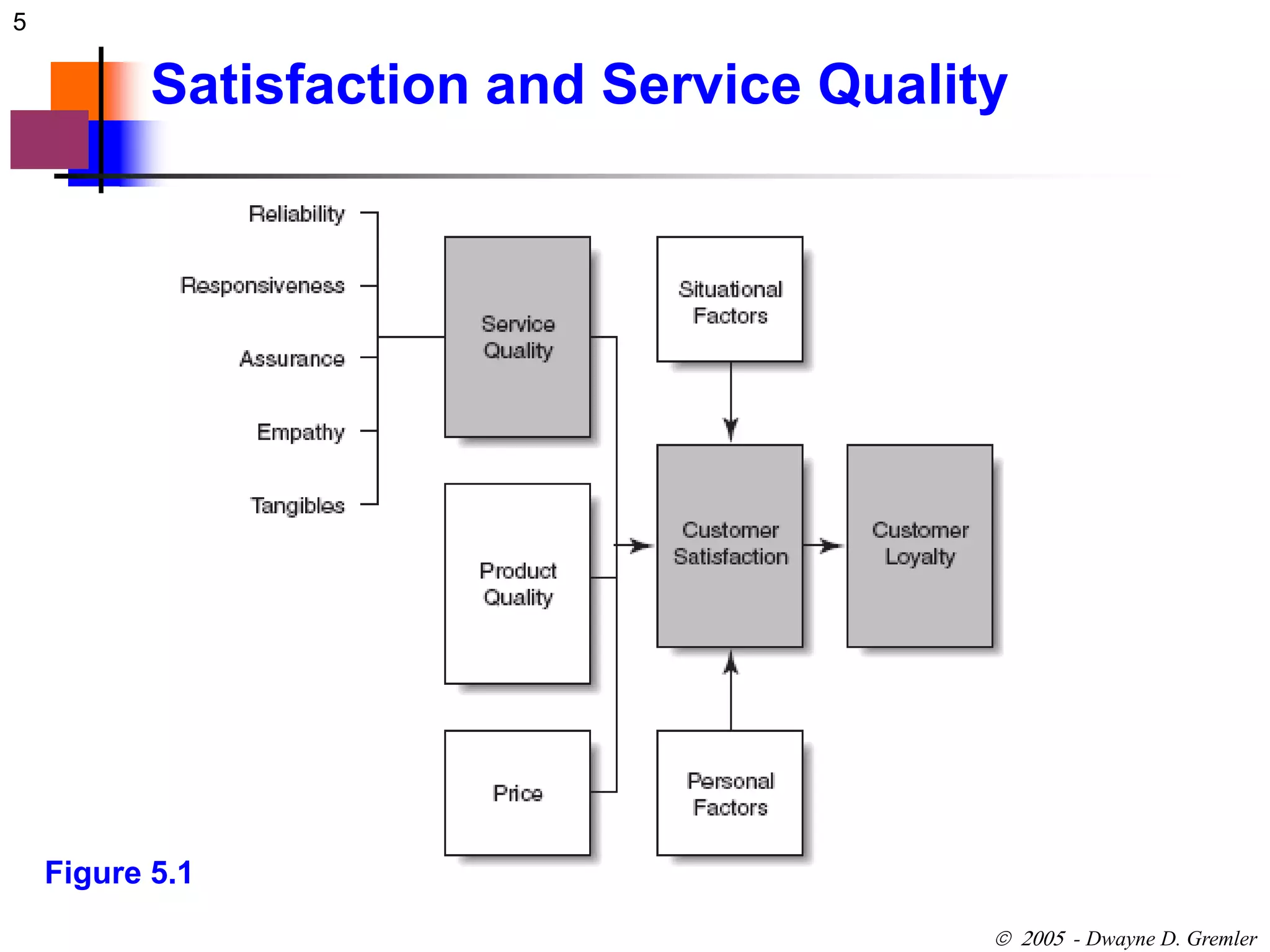
Satisfaction and Service Quality 
 - Dwayne D. Gremler 
Figure 5.1
6 
Outcomes of Customer Satisfaction 
 - Dwayne D. Gremler 
 
 

7 
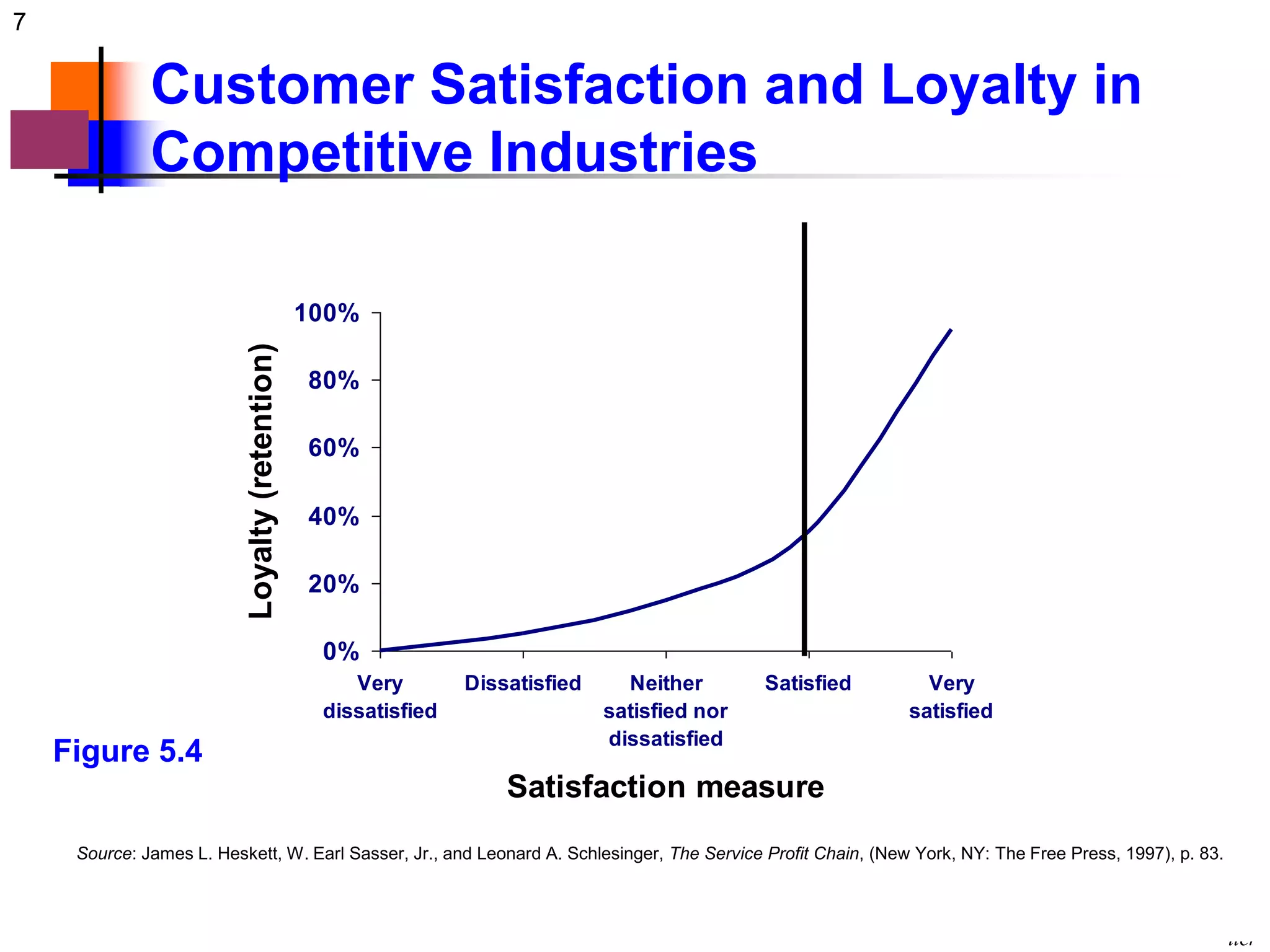
Customer Satisfaction and Loyalty in 
Competitive Industries 
 - Dwayne D. Gremler 
100% 
80% 
60% 
40% 
20% 
0% 
Very 
dissatisfied 
Dissatisfied Neither 
satisfied nor 
dissatisfied 
Satisfied Very 
satisfied 
Satisfaction measure 
Loyalty (retention) 
Figure 5.4 
Source: James L. Heskett, W. Earl Sasser, Jr., and Leonard A. Schlesinger, The Service Profit Chain, (New York, NY: The Free Press, 1997), p. 83.
8 
 - Dwayne D. Gremler 
Service Quality 
 is “the delivery of 
 
 
 service quality dimensions
9 
 - Dwayne D. Gremler 
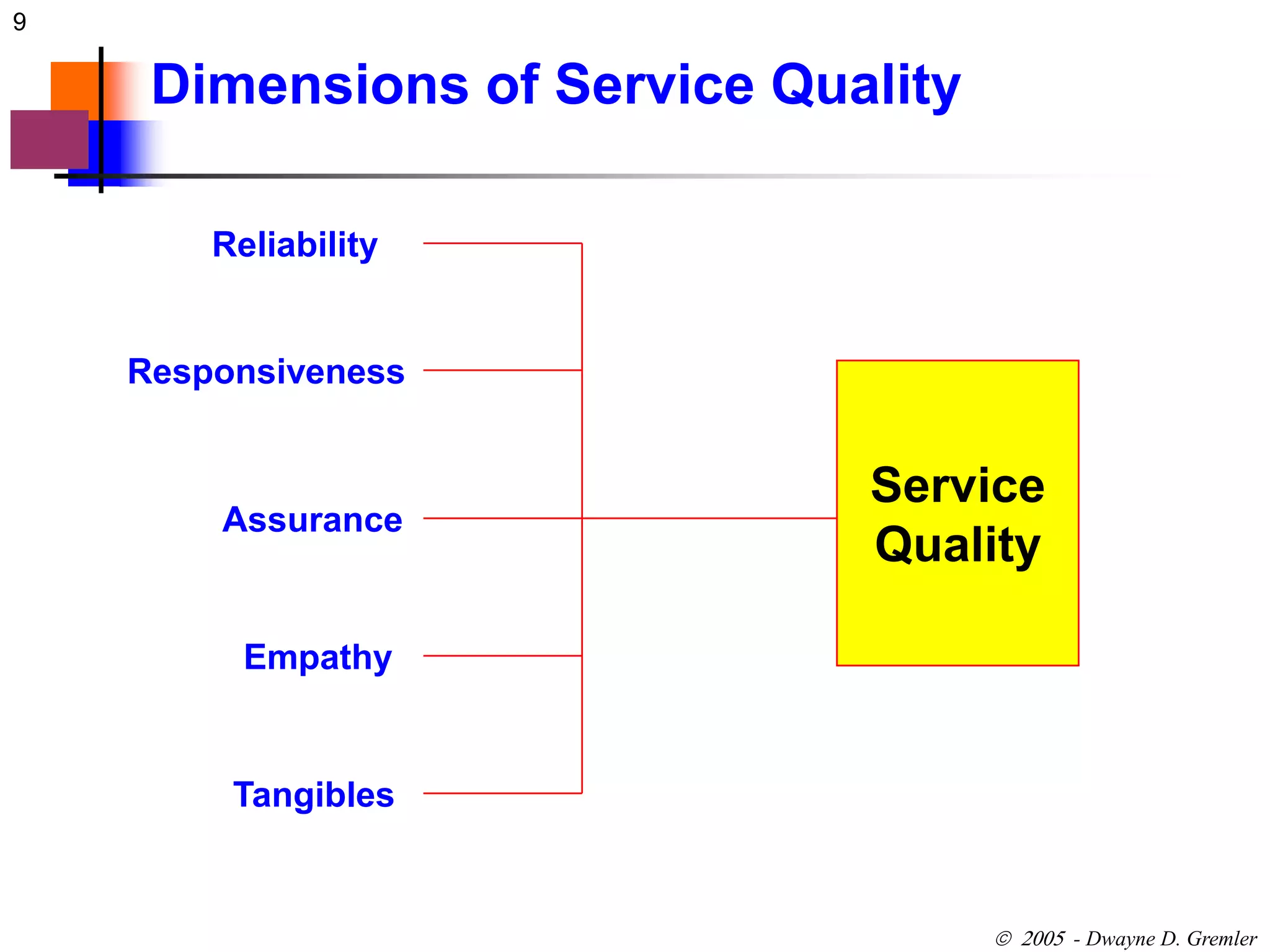
Dimensions of Service Quality 
Service 
Quality 
Reliability 
Responsiveness 
Assurance 
Empathy 
Tangibles
10 
 - Dwayne D. Gremler 
Service Quality Dimensions 
 reliability ( ) 
 
 responsiveness ( ) 
 
 assurance ( ) 
 
 empathy ( ) 
 
 tangibles ( ) 

11 
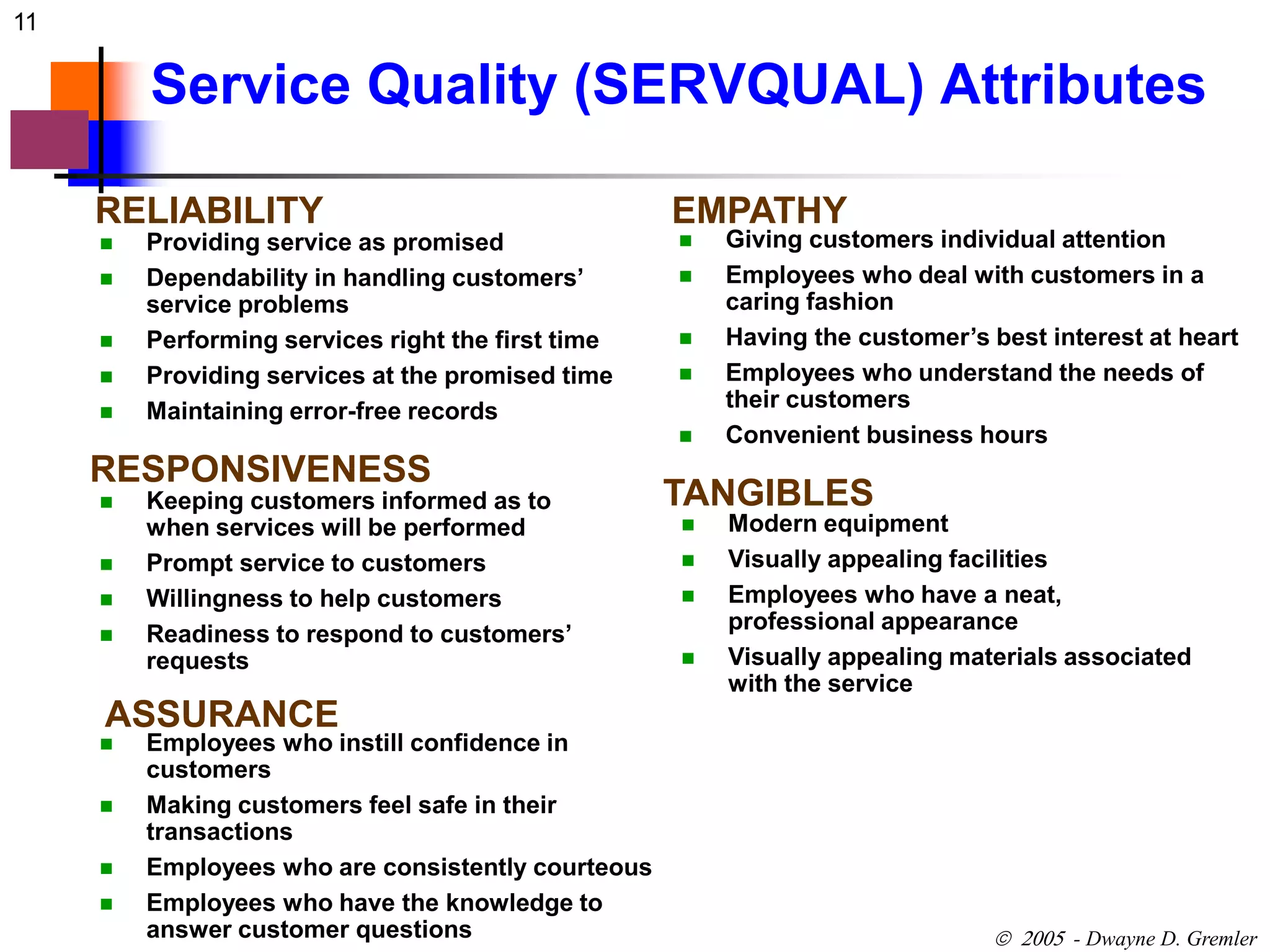
Service Quality (SERVQUAL) Attributes 
 - Dwayne D. Gremler 
RELIABILITY 
 Providing service as promised 
 Dependability in handling customers’ 
service problems 
 Performing services right the first time 
 Providing services at the promised time 
 Maintaining error-free records 
RESPONSIVENESS 
 Keeping customers informed as to 
when services will be performed 
 Prompt service to customers 
 Willingness to help customers 
 Readiness to respond to customers’ 
requests 
ASSURANCE 
 Employees who instill confidence in 
customers 
 Making customers feel safe in their 
transactions 
 Employees who are consistently courteous 
 Employees who have the knowledge to 
answer customer questions 
EMPATHY 
 Giving customers individual attention 
 Employees who deal with customers in a 
caring fashion 
 Having the customer’s best interest at heart 
 Employees who understand the needs of 
their customers 
 Convenient business hours 
TANGIBLES 
 Modern equipment 
 Visually appealing facilities 
 Employees who have a neat, 
professional appearance 
 Visually appealing materials associated 
with the service
12 
 - Dwayne D. Gremler 
The Service Encounter 
 is the “moment of truth” 
 
 
 types of encounters: 
 
 
 
 is an opportunity to: 
 build trust, reinforce quality, increase loyalty 
 sequential service encounter examples: 
 
 

13 
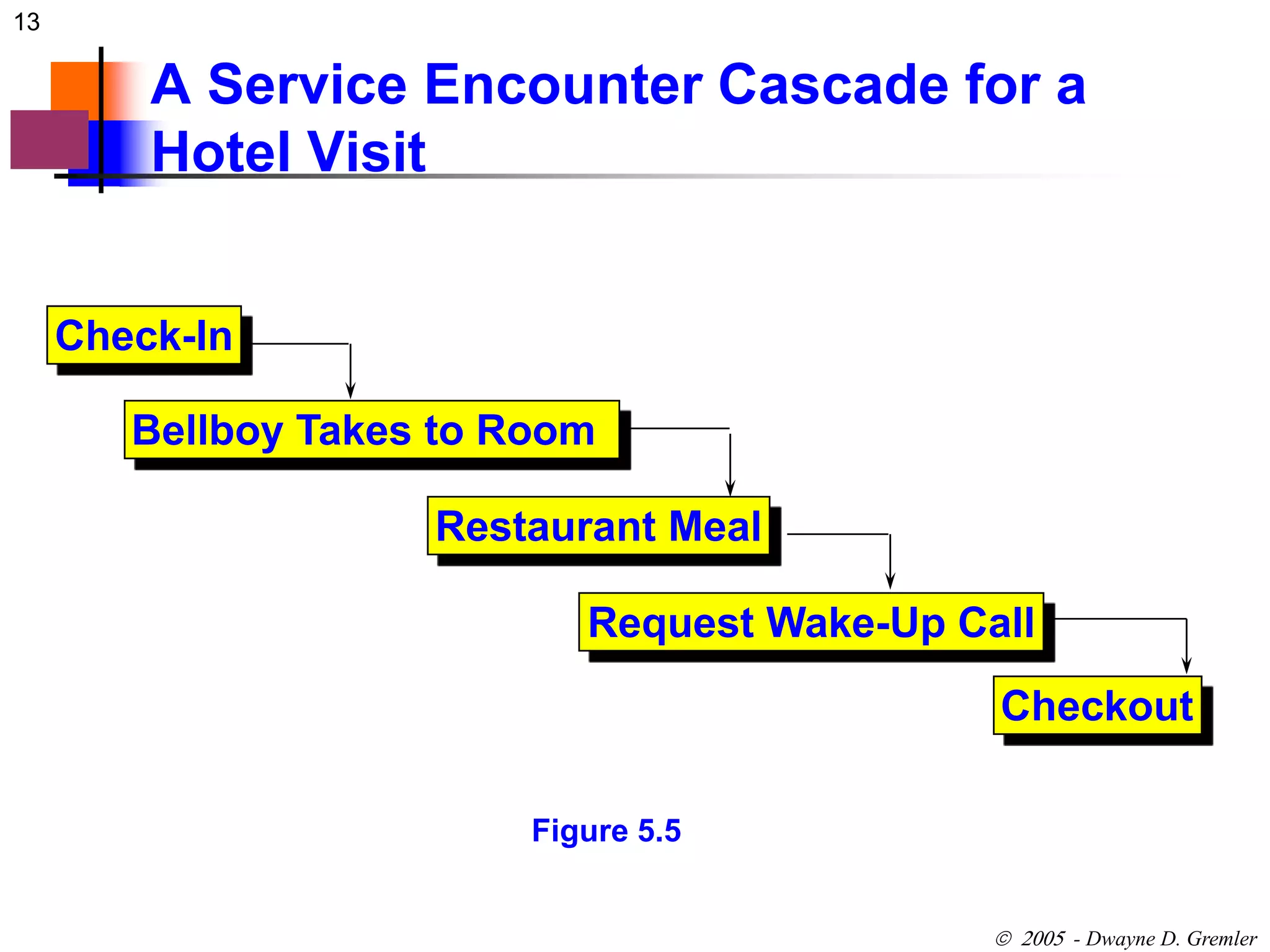
A Service Encounter Cascade for a 
Hotel Visit 
 - Dwayne D. Gremler 
Check-In 
Request Wake-Up Call 
Checkout 
Bellboy Takes to Room 
Restaurant Meal 
Figure 5.5
14 
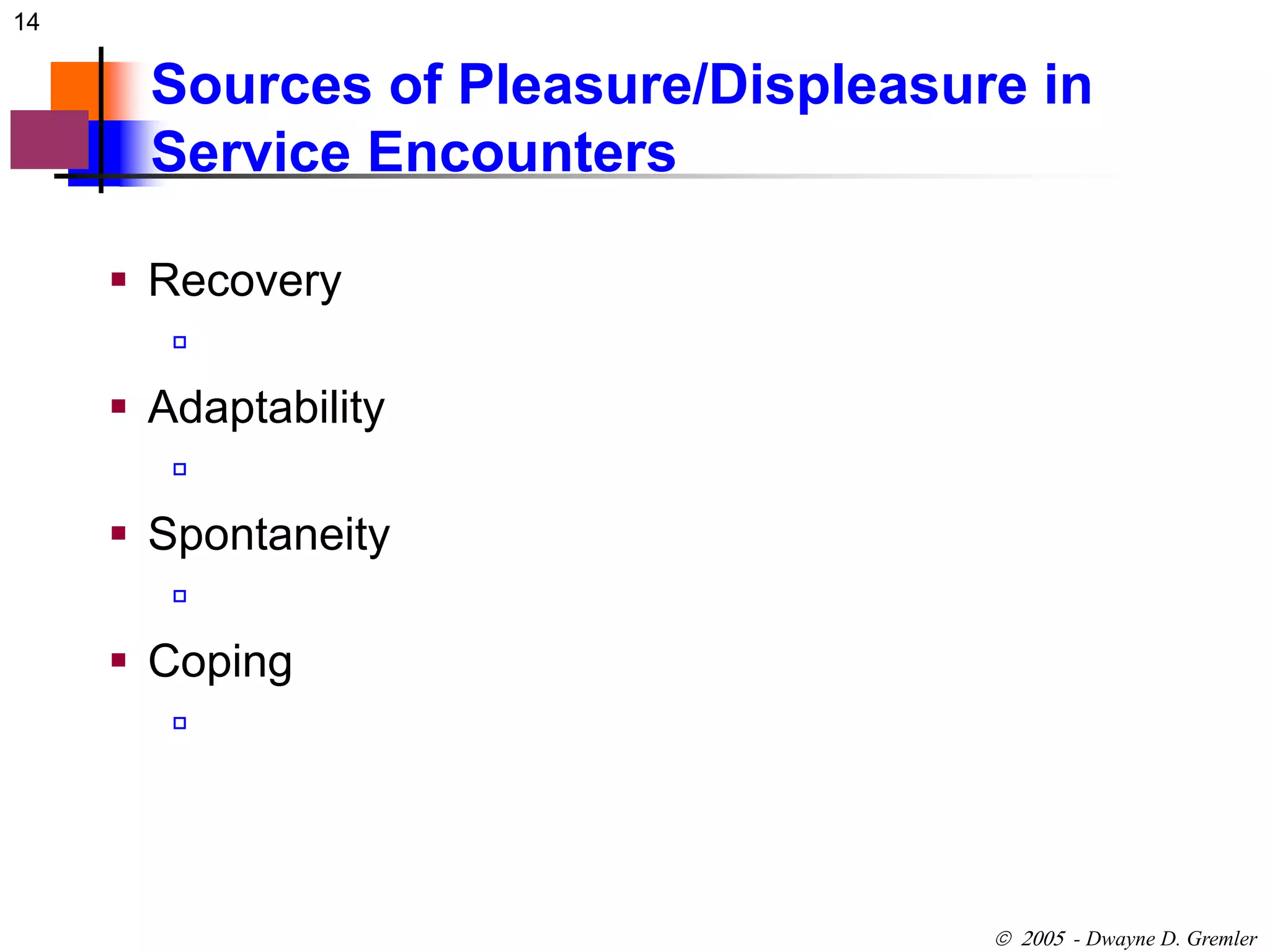
Sources of Pleasure/Displeasure in 
Service Encounters 
 - Dwayne D. Gremler 
 Recovery 
 
 Adaptability 
 
 Spontaneity 
 
 Coping 

15 
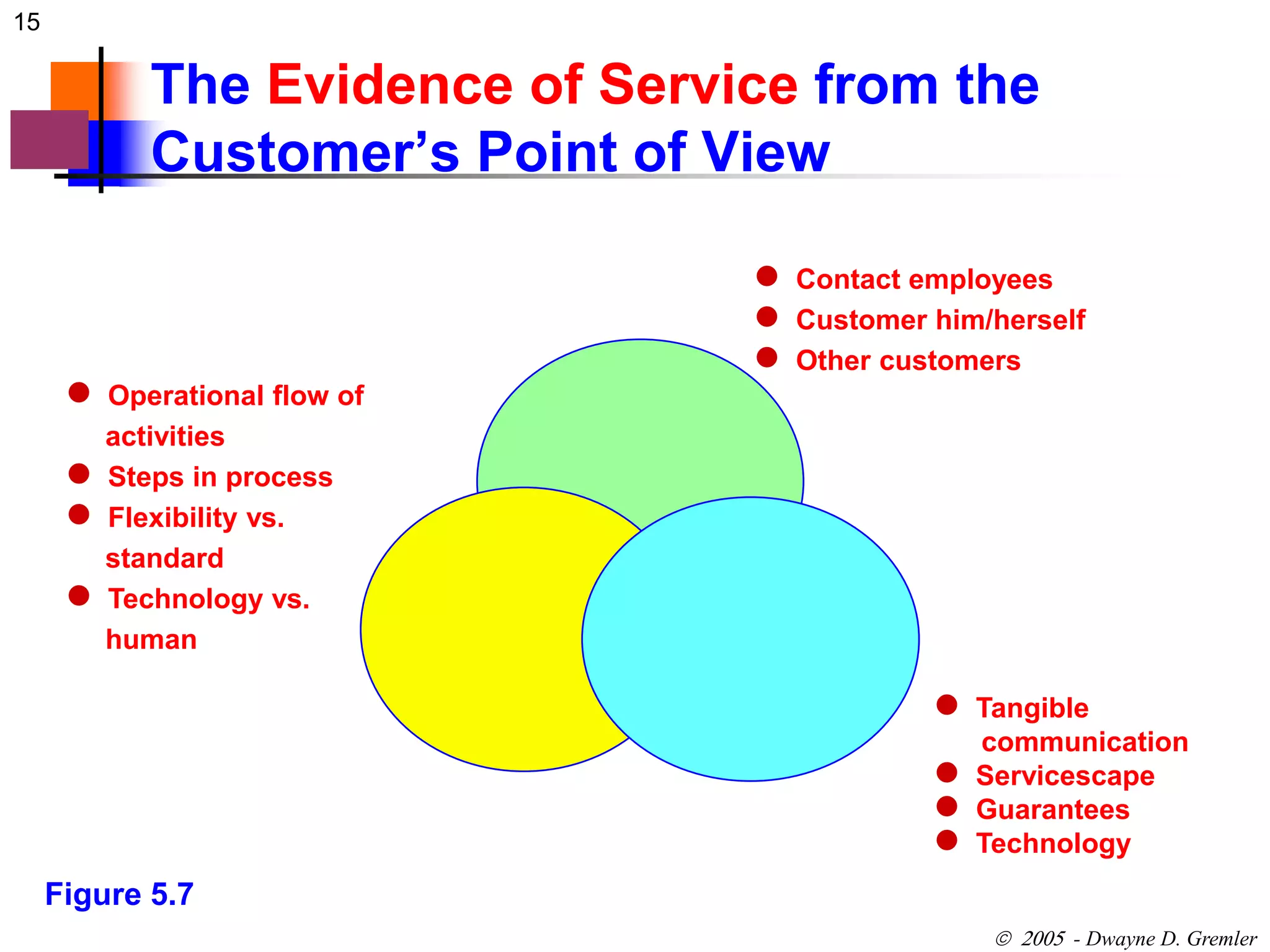
The Evidence of Service from the 
Customer’s Point of View 
 Contact employees 
 Customer him/herself 
 Other customers 
 - Dwayne D. Gremler 
 Operational flow of 
activities 
 Steps in process 
 Flexibility vs. 
standard 
 Technology vs. 
human 
 Tangible 
communication 
 Servicescape 
 Guarantees 
 Technology 
Figure 5.7
16 
Strategies for Influencing Customer 
Perceptions 
 - Dwayne D. Gremler 
 effective 
 emphasize 
 use the 
 assume ALL
17 
 - Dwayne D. Gremler 
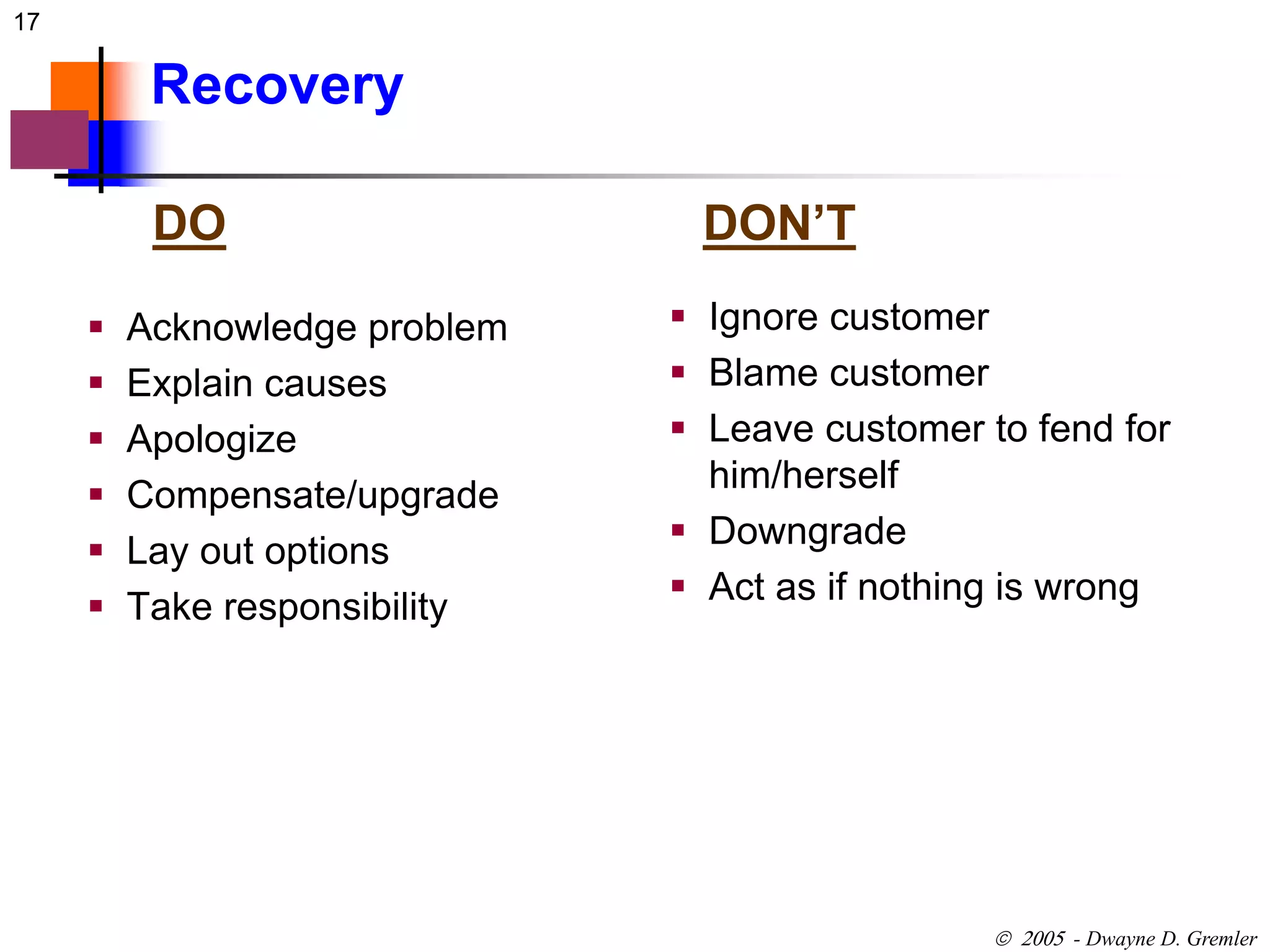
Recovery 
DO DON’T 
 Acknowledge problem 
 Explain causes 
 Apologize 
 Compensate/upgrade 
 Lay out options 
 Take responsibility 
 Ignore customer 
 Blame customer 
 Leave customer to fend for 
him/herself 
 Downgrade 
 Act as if nothing is wrong
18 
 - Dwayne D. Gremler 
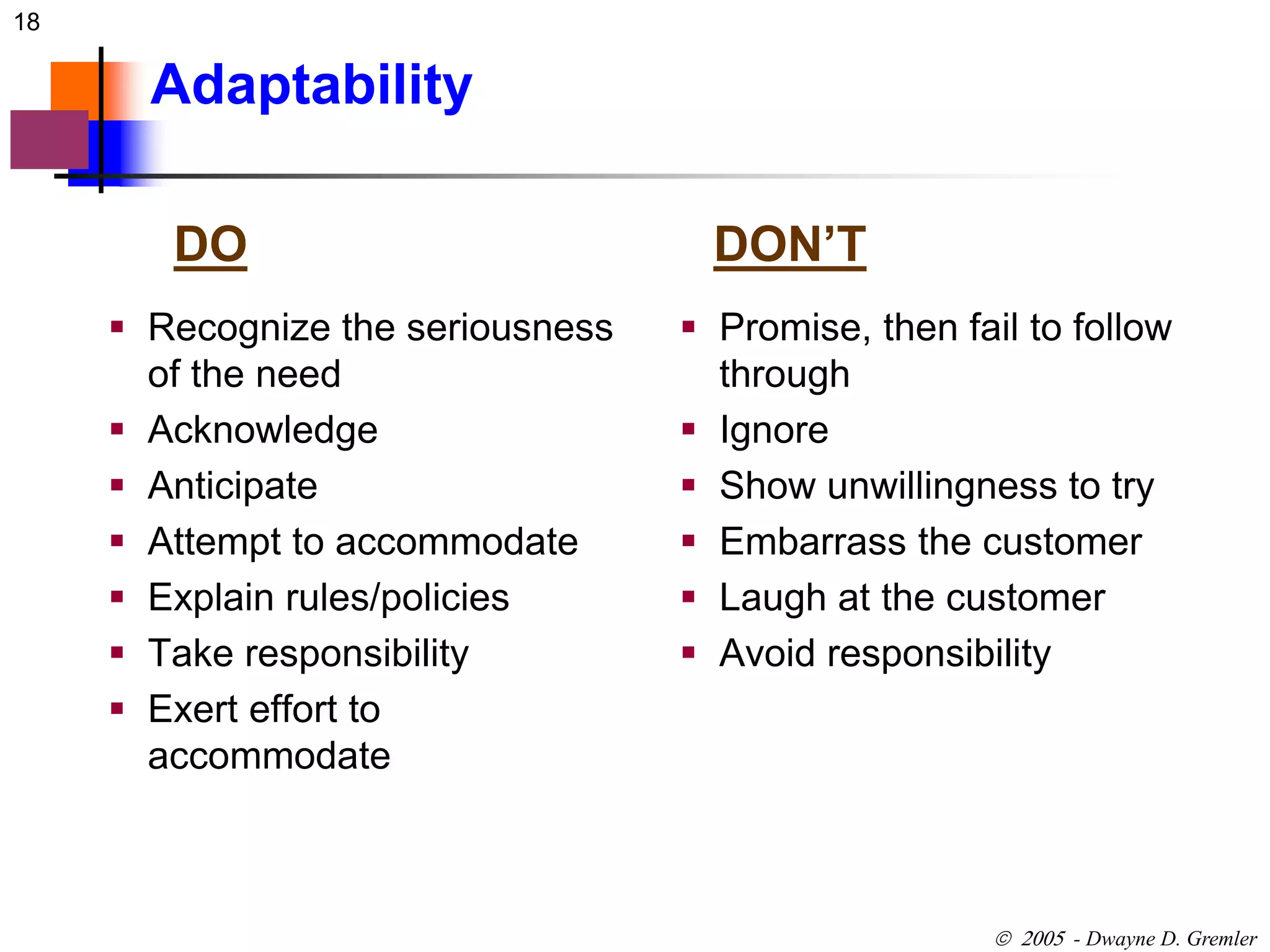
Adaptability 
DO DON’T 
 Recognize the seriousness 
of the need 
 Acknowledge 
 Anticipate 
 Attempt to accommodate 
 Explain rules/policies 
 Take responsibility 
 Exert effort to 
accommodate 
 Promise, then fail to follow 
through 
 Ignore 
 Show unwillingness to try 
 Embarrass the customer 
 Laugh at the customer 
 Avoid responsibility
19 
 - Dwayne D. Gremler 
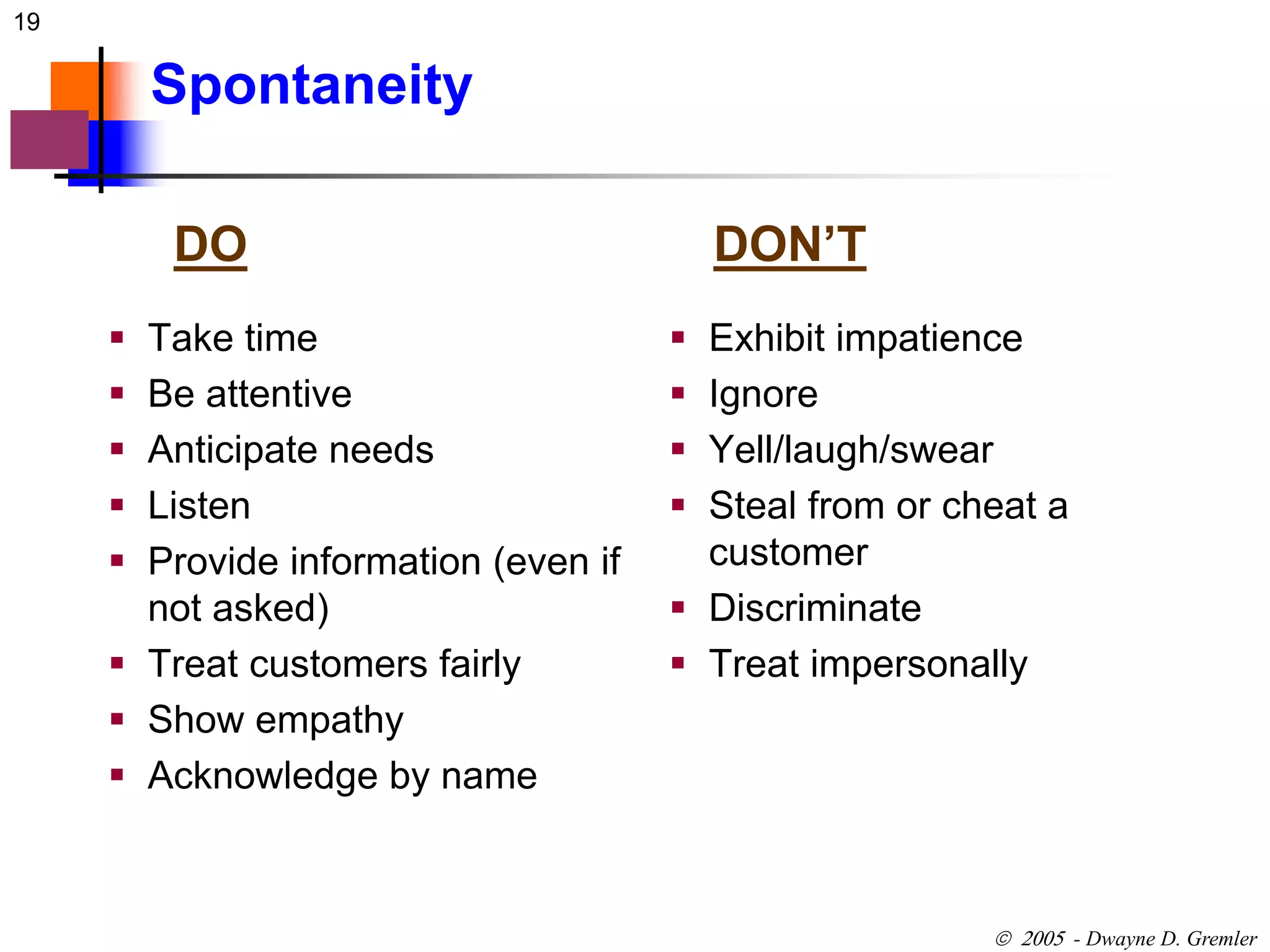
Spontaneity 
DO DON’T 
 Take time 
 Be attentive 
 Anticipate needs 
 Listen 
 Provide information (even if 
not asked) 
 Treat customers fairly 
 Show empathy 
 Acknowledge by name 
 Exhibit impatience 
 Ignore 
 Yell/laugh/swear 
 Steal from or cheat a 
customer 
 Discriminate 
 Treat impersonally
20 
 - Dwayne D. Gremler 
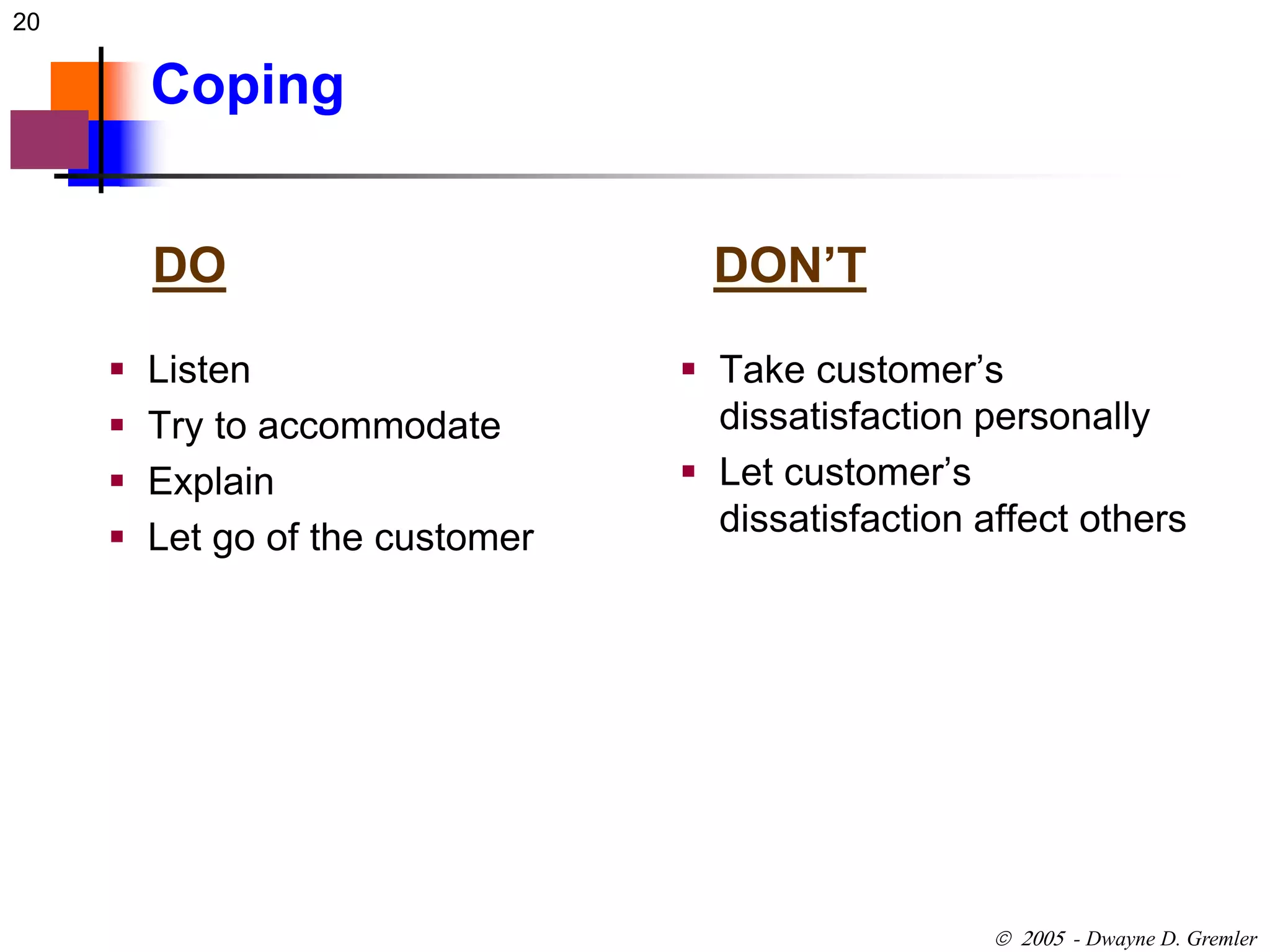
Coping 
DO DON’T 
 Listen 
 Try to accommodate 
 Explain 
 Let go of the customer 
 Take customer’s 
dissatisfaction personally 
 Let customer’s 
dissatisfaction affect others

405 ch05

  • 1.
    1 Customer Perceptionsof Service (Chapter 5)  - Dwayne D. Gremler  Customer Satisfaction  influencing factors, outcomes  satisfaction and loyalty  Service Quality  dimensions  Service Encounters  types of encounters  sources of pleasure/displeasure  Strategies for Influencing Customer Perceptions
  • 2.
    2  -Dwayne D. Gremler Two Types of Customers  External Customers   Internal Customers 
  • 3.
    3  -Dwayne D. Gremler Customer Satisfaction  What is it?   Failure to meet needs and expectations usually results in dissatisfaction.  Satisfaction is thought to be
  • 4.
    4  -Dwayne D. Gremler Customer Satisfaction  satisfaction is thought to be influenced by:       satisfaction can only be assessed following
  • 5.
    5 Satisfaction andService Quality  - Dwayne D. Gremler Figure 5.1
  • 6.
    6 Outcomes ofCustomer Satisfaction  - Dwayne D. Gremler   
  • 7.
    7 Customer Satisfactionand Loyalty in Competitive Industries  - Dwayne D. Gremler 100% 80% 60% 40% 20% 0% Very dissatisfied Dissatisfied Neither satisfied nor dissatisfied Satisfied Very satisfied Satisfaction measure Loyalty (retention) Figure 5.4 Source: James L. Heskett, W. Earl Sasser, Jr., and Leonard A. Schlesinger, The Service Profit Chain, (New York, NY: The Free Press, 1997), p. 83.
  • 8.
    8  -Dwayne D. Gremler Service Quality  is “the delivery of    service quality dimensions
  • 9.
    9  -Dwayne D. Gremler Dimensions of Service Quality Service Quality Reliability Responsiveness Assurance Empathy Tangibles
  • 10.
    10  -Dwayne D. Gremler Service Quality Dimensions  reliability ( )   responsiveness ( )   assurance ( )   empathy ( )   tangibles ( ) 
  • 11.
    11 Service Quality(SERVQUAL) Attributes  - Dwayne D. Gremler RELIABILITY  Providing service as promised  Dependability in handling customers’ service problems  Performing services right the first time  Providing services at the promised time  Maintaining error-free records RESPONSIVENESS  Keeping customers informed as to when services will be performed  Prompt service to customers  Willingness to help customers  Readiness to respond to customers’ requests ASSURANCE  Employees who instill confidence in customers  Making customers feel safe in their transactions  Employees who are consistently courteous  Employees who have the knowledge to answer customer questions EMPATHY  Giving customers individual attention  Employees who deal with customers in a caring fashion  Having the customer’s best interest at heart  Employees who understand the needs of their customers  Convenient business hours TANGIBLES  Modern equipment  Visually appealing facilities  Employees who have a neat, professional appearance  Visually appealing materials associated with the service
  • 12.
    12  -Dwayne D. Gremler The Service Encounter  is the “moment of truth”    types of encounters:     is an opportunity to:  build trust, reinforce quality, increase loyalty  sequential service encounter examples:   
  • 13.
    13 A ServiceEncounter Cascade for a Hotel Visit  - Dwayne D. Gremler Check-In Request Wake-Up Call Checkout Bellboy Takes to Room Restaurant Meal Figure 5.5
  • 14.
    14 Sources ofPleasure/Displeasure in Service Encounters  - Dwayne D. Gremler  Recovery   Adaptability   Spontaneity   Coping 
  • 15.
    15 The Evidenceof Service from the Customer’s Point of View  Contact employees  Customer him/herself  Other customers  - Dwayne D. Gremler  Operational flow of activities  Steps in process  Flexibility vs. standard  Technology vs. human  Tangible communication  Servicescape  Guarantees  Technology Figure 5.7
  • 16.
    16 Strategies forInfluencing Customer Perceptions  - Dwayne D. Gremler  effective  emphasize  use the  assume ALL
  • 17.
    17  -Dwayne D. Gremler Recovery DO DON’T  Acknowledge problem  Explain causes  Apologize  Compensate/upgrade  Lay out options  Take responsibility  Ignore customer  Blame customer  Leave customer to fend for him/herself  Downgrade  Act as if nothing is wrong
  • 18.
    18  -Dwayne D. Gremler Adaptability DO DON’T  Recognize the seriousness of the need  Acknowledge  Anticipate  Attempt to accommodate  Explain rules/policies  Take responsibility  Exert effort to accommodate  Promise, then fail to follow through  Ignore  Show unwillingness to try  Embarrass the customer  Laugh at the customer  Avoid responsibility
  • 19.
    19  -Dwayne D. Gremler Spontaneity DO DON’T  Take time  Be attentive  Anticipate needs  Listen  Provide information (even if not asked)  Treat customers fairly  Show empathy  Acknowledge by name  Exhibit impatience  Ignore  Yell/laugh/swear  Steal from or cheat a customer  Discriminate  Treat impersonally
  • 20.
    20  -Dwayne D. Gremler Coping DO DON’T  Listen  Try to accommodate  Explain  Let go of the customer  Take customer’s dissatisfaction personally  Let customer’s dissatisfaction affect others