3/20              A/B Day
LEQ: How do we show our stewardship for
the limited natural resources in our
hydrosphere?
1. Why would you rather have a lake house next to a
lake with low turbidity?
2. What would you want the pH of your drinking
   water to be?
3. What causes algal blooms?
4. What are bio-indicators used for?
5. Copy and complete: As the temperature of water
   increases, the amount of dissolved oxygen
   [increases/decreases].
Draw this in your notes:
Which one is which?!

Land and Water on Earth

Freshwater and Saltwater

Distribution of Freshwater
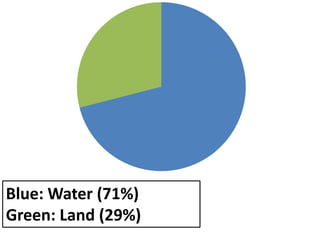
Blue: Water (71%)
Green: Land (29%)
Saltwater   F


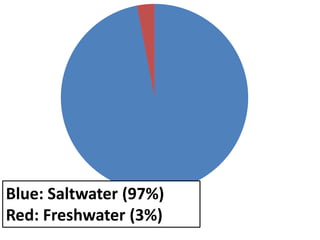
Blue: Saltwater (97%)
Red: Freshwater (3%)
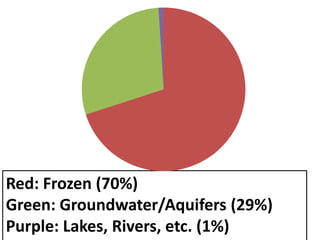
Red: Frozen (70%)
Green: Groundwater/Aquifers (29%)
Purple: Lakes, Rivers, etc. (1%)
Today’s LEQ: How do we show our
    stewardship for the limited natural
      resources in our hydrosphere?
By the end of today, you should be able to…

1. List three ways that we are being stewards for
  our environment
2. Explain two ways that we treat wastewater
3. Explain the trade-offs that we face by
  protecting our hydrosphere
Focus Vocabulary:
146. Stewardship
147. Wastewater Treatment Plant
148. Septic System
149. Water Quality Standards
150. Trade-Off
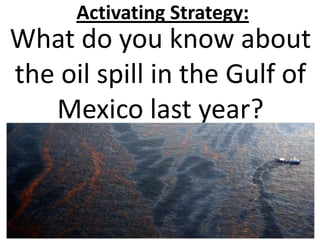
Activating Strategy:
What do you know about
the oil spill in the Gulf of
   Mexico last year?
Discovery Education:
Disaster in the Gulf: A Race against Time
CONTEXT CLUES:
“She is a steward for the environment. She
  makes sure that she recycles, conserves
  electricity, and teaches others about ways to
  care for the earth. ”

“He shows great stewardship for animals. He
  works at an animal shelter on the
  weekends, raises money for homeless dogs
  and cats, and helps pets get adopted into a
  good home.”       Stop and Jot: Write your own definition of
How could you be a
     steward for the
environment if there was
    another oil spill?
Ways YOU can be a steward for our
                 hydrosphere:
•   Turn off the water while brushing your
    teeth
•   Put a bottle of rocks in your toilet tank
    so that less water is used each flush
•   Only wash full loads of laundry
•   Take shorter showers
•   Only run your dishwasher when it is
    full
How do we show
our stewardship
     for the
 hydrosphere?
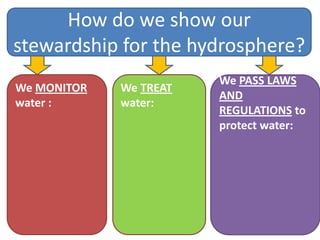
How do we show our
stewardship for the hydrosphere?
                        We PASS LAWS
We MONITOR   We TREAT
                        AND
water :      water:
                        REGULATIONS to
                        protect water:
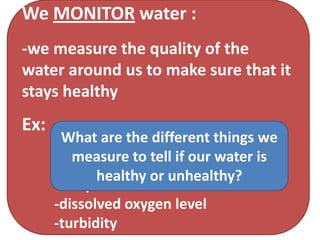
We MONITOR water :
-we measure the quality of the
water around us to make sure that it
stays healthy
Ex: -pH levels
     What are the different things we
    -bioindicators
       measure to tell if our water is
    -nitrate levels
           healthy or unhealthy?
    -temperature
    -dissolved oxygen level
    -turbidity
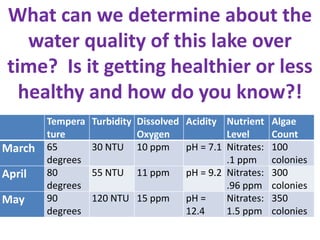
What can we determine about the
    water quality of this lake over
 time? Is it getting healthier or less
   healthy and how do you know?!
        Tempera   Turbidity Dissolved Acidity Nutrient     Algae
        ture                Oxygen             Level       Count
March   65        30 NTU 10 ppm       pH = 7.1 Nitrates:   100
        degrees                                .1 ppm      colonies
April   80        55 NTU 11 ppm       pH = 9.2 Nitrates:   300
        degrees                                .96 ppm     colonies
May     90        120 NTU 15 ppm      pH =     Nitrates:   350
        degrees                       12.4     1.5 ppm     colonies
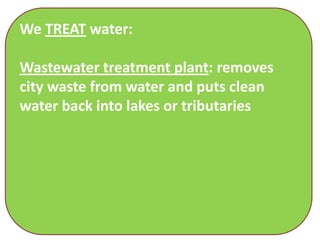
We TREAT water:

Wastewater treatment plant: removes
city waste from water and puts clean
water back into lakes or tributaries
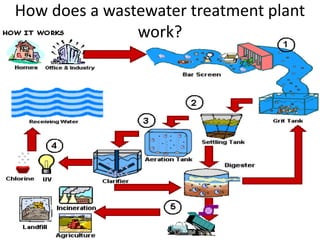
How does a wastewater treatment plant
               work?
Discovery Education:
The environmental impact of the toilet
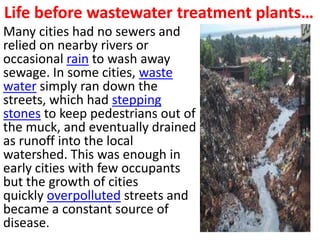
Life before wastewater treatment plants…
Many cities had no sewers and
relied on nearby rivers or
occasional rain to wash away
sewage. In some cities, waste
water simply ran down the
streets, which had stepping
stones to keep pedestrians out of
the muck, and eventually drained
as runoff into the local
watershed. This was enough in
early cities with few occupants
but the growth of cities
quickly overpolluted streets and
became a constant source of
disease.
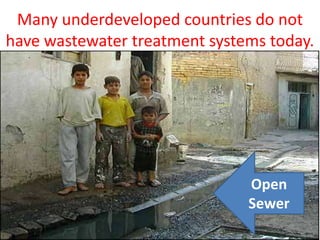
Many underdeveloped countries do not
have wastewater treatment systems today.


                               Open
                               Sewer
We TREAT water:

Wastewater treatment plant: removes
city waste from water and puts clean
water back into lakes or tributaries

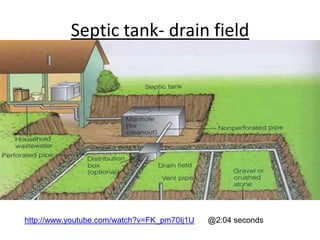
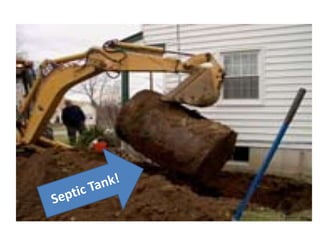
Septic system: removes waste from water
you use in your house
Septic tank- drain field


http://www.youtube.com/watch?v=FK_pm70Ij1U   @2:04 seconds
Why is it
important to
treat water?
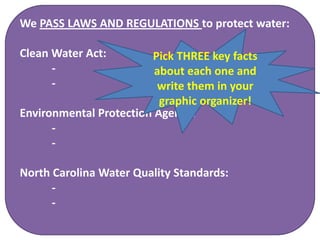
We PASS LAWS AND REGULATIONS to protect water:

Clean Water Act:        Pick THREE key facts
      -                  about each one and
      -                  write them in your
                          graphic organizer!
Environmental Protection Agency:
      -
      -

North Carolina Water Quality Standards:
      -
      -
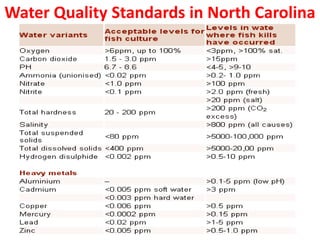
Water Quality Standards in North Carolina
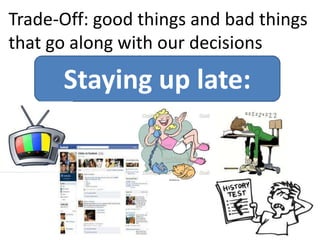
Trade-Off: good things and bad things
that go along with our decisions

      Staying up late:
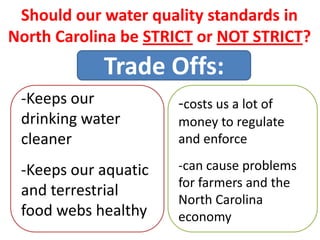
Should our water quality standards in
North Carolina be STRICT or NOT STRICT?
            Trade Offs:
 -Keeps our           -costs us a lot of
 drinking water       money to regulate
 cleaner              and enforce

 -Keeps our aquatic   -can cause problems
                      for farmers and the
 and terrestrial
                      North Carolina
 food webs healthy    economy
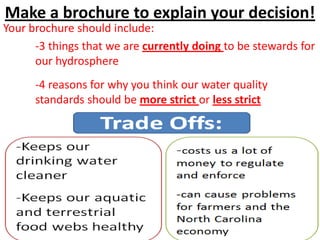
Make a brochure to explain your decision!
Your brochure should include:
      -3 things that we are currently doing to be stewards for
      our hydrosphere
      -4 reasons for why you think our water quality
      standards should be more strict or less strict
Summarizer:
Two students are having an argument.
Kesha says that we are doing everything
we can to be stewards for our
hydrosphere. Ron says that we are not
doing nearly enough. Write 5-7 sentences
to explain which student you think is
correct. Be sure to give at least 4 reasons
explaining WHY you chose this opinion.

3/20/12

  • 1.
    3/20 A/B Day LEQ: How do we show our stewardship for the limited natural resources in our hydrosphere? 1. Why would you rather have a lake house next to a lake with low turbidity? 2. What would you want the pH of your drinking water to be? 3. What causes algal blooms? 4. What are bio-indicators used for? 5. Copy and complete: As the temperature of water increases, the amount of dissolved oxygen [increases/decreases].
  • 2.
    Draw this inyour notes:
  • 3.
    Which one iswhich?! Land and Water on Earth Freshwater and Saltwater Distribution of Freshwater
  • 4.
  • 5.
    Saltwater F Blue: Saltwater (97%) Red: Freshwater (3%)
  • 6.
    Red: Frozen (70%) Green:Groundwater/Aquifers (29%) Purple: Lakes, Rivers, etc. (1%)
  • 7.
    Today’s LEQ: Howdo we show our stewardship for the limited natural resources in our hydrosphere? By the end of today, you should be able to… 1. List three ways that we are being stewards for our environment 2. Explain two ways that we treat wastewater 3. Explain the trade-offs that we face by protecting our hydrosphere
  • 8.
    Focus Vocabulary: 146. Stewardship 147.Wastewater Treatment Plant 148. Septic System 149. Water Quality Standards 150. Trade-Off
  • 9.
    Activating Strategy: What doyou know about the oil spill in the Gulf of Mexico last year?
  • 10.
    Discovery Education: Disaster inthe Gulf: A Race against Time
  • 11.
    CONTEXT CLUES: “She isa steward for the environment. She makes sure that she recycles, conserves electricity, and teaches others about ways to care for the earth. ” “He shows great stewardship for animals. He works at an animal shelter on the weekends, raises money for homeless dogs and cats, and helps pets get adopted into a good home.” Stop and Jot: Write your own definition of
  • 12.
    How could yoube a steward for the environment if there was another oil spill?
  • 13.
    Ways YOU canbe a steward for our hydrosphere: • Turn off the water while brushing your teeth • Put a bottle of rocks in your toilet tank so that less water is used each flush • Only wash full loads of laundry • Take shorter showers • Only run your dishwasher when it is full
  • 14.
    How do weshow our stewardship for the hydrosphere?
  • 15.
    How do weshow our stewardship for the hydrosphere? We PASS LAWS We MONITOR We TREAT AND water : water: REGULATIONS to protect water:
  • 16.
    We MONITOR water: -we measure the quality of the water around us to make sure that it stays healthy Ex: -pH levels What are the different things we -bioindicators measure to tell if our water is -nitrate levels healthy or unhealthy? -temperature -dissolved oxygen level -turbidity
  • 17.
    What can wedetermine about the water quality of this lake over time? Is it getting healthier or less healthy and how do you know?! Tempera Turbidity Dissolved Acidity Nutrient Algae ture Oxygen Level Count March 65 30 NTU 10 ppm pH = 7.1 Nitrates: 100 degrees .1 ppm colonies April 80 55 NTU 11 ppm pH = 9.2 Nitrates: 300 degrees .96 ppm colonies May 90 120 NTU 15 ppm pH = Nitrates: 350 degrees 12.4 1.5 ppm colonies
  • 18.
    We TREAT water: Wastewatertreatment plant: removes city waste from water and puts clean water back into lakes or tributaries
  • 19.
    How does awastewater treatment plant work?
  • 20.
  • 21.
    Life before wastewatertreatment plants… Many cities had no sewers and relied on nearby rivers or occasional rain to wash away sewage. In some cities, waste water simply ran down the streets, which had stepping stones to keep pedestrians out of the muck, and eventually drained as runoff into the local watershed. This was enough in early cities with few occupants but the growth of cities quickly overpolluted streets and became a constant source of disease.
  • 22.
    Many underdeveloped countriesdo not have wastewater treatment systems today. Open Sewer
  • 23.
    We TREAT water: Wastewatertreatment plant: removes city waste from water and puts clean water back into lakes or tributaries Septic system: removes waste from water you use in your house
  • 24.
    Septic tank- drainfield http://www.youtube.com/watch?v=FK_pm70Ij1U @2:04 seconds
  • 26.
    Why is it importantto treat water?
  • 27.
    We PASS LAWSAND REGULATIONS to protect water: Clean Water Act: Pick THREE key facts - about each one and - write them in your graphic organizer! Environmental Protection Agency: - - North Carolina Water Quality Standards: - -
  • 28.
    Water Quality Standardsin North Carolina
  • 29.
    Trade-Off: good thingsand bad things that go along with our decisions Staying up late:
  • 30.
    Should our waterquality standards in North Carolina be STRICT or NOT STRICT? Trade Offs: -Keeps our -costs us a lot of drinking water money to regulate cleaner and enforce -Keeps our aquatic -can cause problems for farmers and the and terrestrial North Carolina food webs healthy economy
  • 31.
    Make a brochureto explain your decision! Your brochure should include: -3 things that we are currently doing to be stewards for our hydrosphere -4 reasons for why you think our water quality standards should be more strict or less strict
  • 32.
    Summarizer: Two students arehaving an argument. Kesha says that we are doing everything we can to be stewards for our hydrosphere. Ron says that we are not doing nearly enough. Write 5-7 sentences to explain which student you think is correct. Be sure to give at least 4 reasons explaining WHY you chose this opinion.