3GPP , LTE and IMS VOLTE
By Nitin Gupta
›What is 3GPP ?
›3GPP Evolution
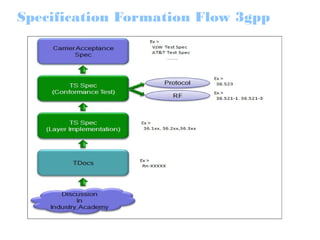
›3GPP Specification Formation Flow
›Basic 2G , 3G architecture
›LTE (Long Term Evolution )
›IMS (IP Multimedia Subsystem )
›VOLTE (Voice over LTE )
Agenda
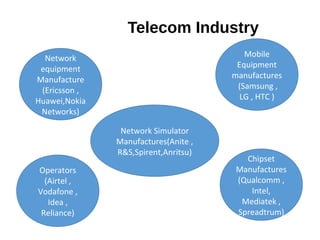
Telecom Industry
Network
equipment
Manufacture
(Ericsson ,
Huawei,Nokia
Networks)
Mobile
Equipment
manufactures
(Samsung ,
LG , HTC )
Network Simulator
Manufactures(Anite ,
R&S,Spirent,Anritsu)
Operators
(Airtel ,
Vodafone ,
Idea ,
Reliance)
Chipset
Manufactures
(Qualcomm ,
Intel,
Mediatek ,
Spreadtrum)
3GPP INTRODUCTION
› 3rd Generation Partnership Project (3GPP) unites [Seven] telecommunications
standard development organizations (ARIB, ATIS, CCSA, ETSI, TSDSI, TTA, TTC), known
as “Organizational Partners” and provides their members with a stable environment
to produce the Reports and Specifications that define 3GPP technologies.
3gpp and there organizational partners
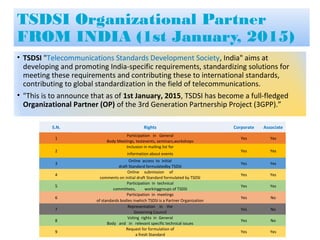
• TSDSI "Telecommunications Standards Development Society, India" aims at
developing and promoting India-specific requirements, standardizing solutions for
meeting these requirements and contributing these to international standards,
contributing to global standardization in the field of telecommunications.
• "This is to announce that as of 1st January, 2015, TSDSI has become a full-fledged
Organizational Partner (OP) of the 3rd Generation Partnership Project (3GPP).”
TSDSI Organizational Partner
FROM INDIA (1st January, 2015)
S.N. Rights Corporate Associate
1
Participation in General
Yes Yes
Body Meetings, testevents, seminars,workshops
2
Inclusion in mailing list for
Yes Yes
information about events
3
Online access to initial
Yes Yes
draft Standard formulatedby TSDSI
4
Online submission of
Yes Yes
comments on initial draft Standard formulated by TSDSI
5
Participation in technical
Yes Yes
committees, workinggroups of TSDSI
6
Participation in meetings
Yes No
of standards bodies inwhich TSDSI is a Partner Organization
7
Representation in the
Yes No
Governing Council
8
Voting rights in General
Yes No
Body and in relevant specific technical issues
9
Request for formulation of
Yes Yes
a fresh Standard
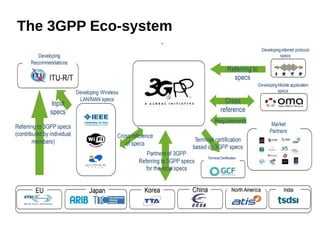
The 3GPP Eco-system
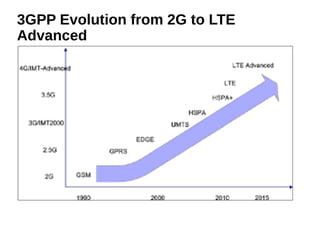
3GPP Evolution from 2G to LTE
Advanced
9
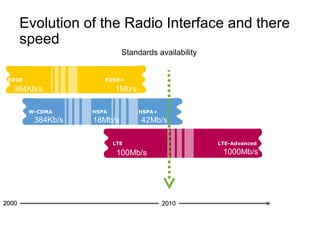
Evolution of the Radio Interface and there
speed
EDGE EDGE+
W-CDMA HSPA HSPA+
20002000
LTE LTE-Advanced
9
20102010
384Kb/s 1Mb/s
384Kb/s 42Mb/s18Mb/s
100Mb/s 1000Mb/s
Standards availability
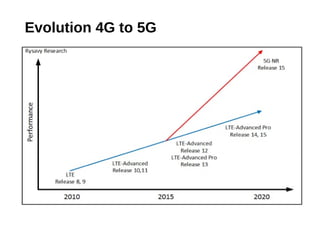
Evolution 4G to 5G
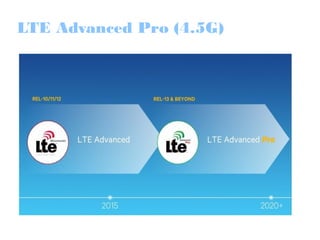
LTE Advanced Pro (4.5G)
Specification Formation Flow 3gpp
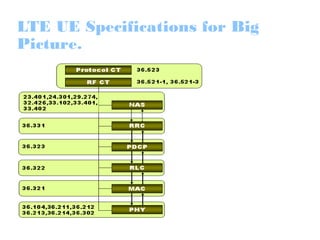
LTE UE Specifications for Big
Picture.
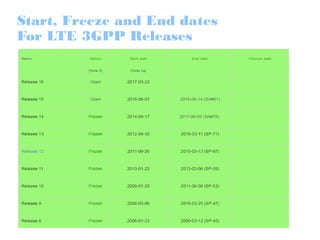
Start, Freeze and End dates
For LTE 3GPP Releases
LTE INTRODUCTION
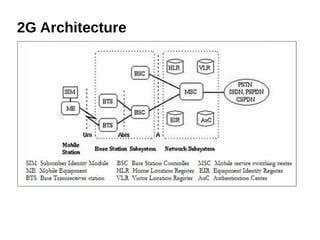
2G Architecture
• LTE stands for Long Term Evolution and it was started as a project in 2004
by telecommunication body known as the Third Generation Partnership
Project (3GPP).
• LTE evolved from an earlier 3GPP system known as the Universal Mobile
Telecommunication System (UMTS), which in turn evolved from the
Global System for Mobile Communications (GSM).
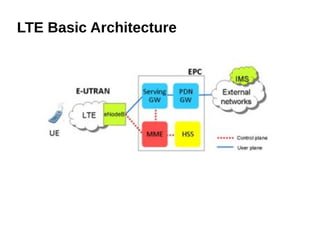
LTE
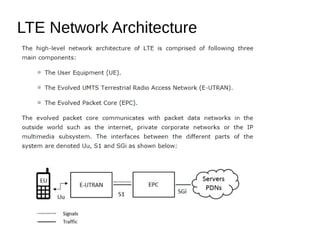
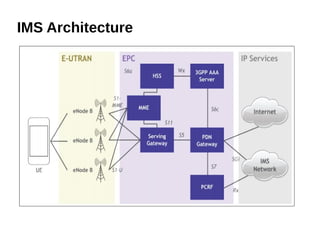
LTE Network Architecture
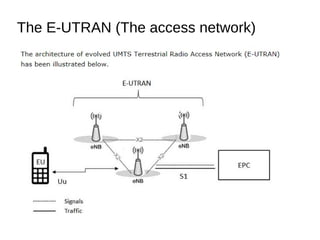
The E-UTRAN (The access network)
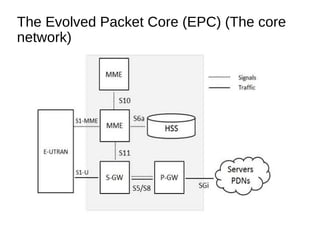
The Evolved Packet Core (EPC) (The core
network)
LTE Basic Architecture
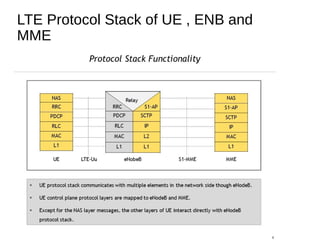
LTE Protocol Stack of UE , ENB and
MME
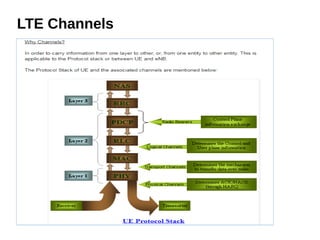
LTE Channels
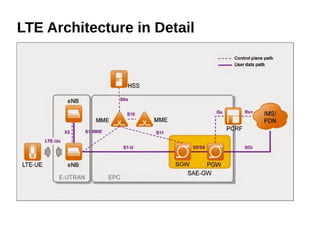
LTE Architecture in Detail
IMS
• IMS is one of 3GPP’s greatest success stories.
• Originally designed to evolve UMTS networks to deliver Internet Protocol
multimedia to mobile users.
• IMS has become the core component within 3G, cable TV and next
generation fixed telecoms networks.
• IMS specification began in 3GPP Release 5 as part of the core network
evolution from circuit-switching to packet-switching and was refined by
subsequent Releases 6 and 7.
IMS (IP-Multimedia Subsystem)
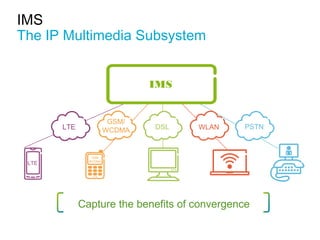
IMS
The IP Multimedia Subsystem
IMS
Capture the benefits of convergence
GSM/
WCDMA DSL WLAN PSTNLTE
LTE
GSM
WCDMA
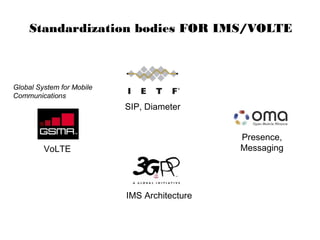
Standardization bodies FOR IMS/VOLTE
IMS Architecture
SIP, Diameter
Presence,
MessagingVoLTE
Global System for Mobile
Communications
IMS Architecture
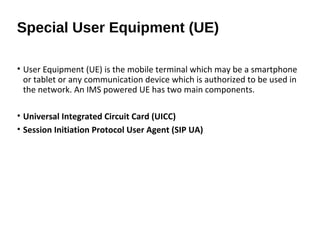
• User Equipment (UE) is the mobile terminal which may be a smartphone
or tablet or any communication device which is authorized to be used in
the network. An IMS powered UE has two main components.
• Universal Integrated Circuit Card (UICC)
• Session Initiation Protocol User Agent (SIP UA)
Special User Equipment (UE)
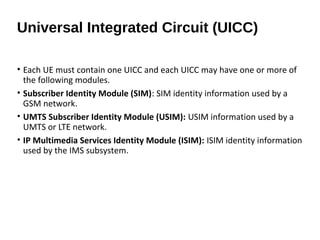
• Each UE must contain one UICC and each UICC may have one or more of
the following modules.
• Subscriber Identity Module (SIM): SIM identity information used by a
GSM network.
• UMTS Subscriber Identity Module (USIM): USIM information used by a
UMTS or LTE network.
• IP Multimedia Services Identity Module (ISIM): ISIM identity information
used by the IMS subsystem.
Universal Integrated Circuit (UICC)
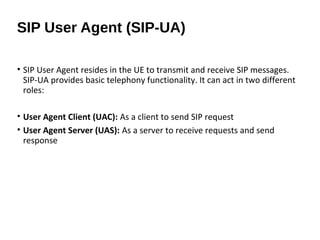
• SIP User Agent resides in the UE to transmit and receive SIP messages.
SIP-UA provides basic telephony functionality. It can act in two different
roles:
• User Agent Client (UAC): As a client to send SIP request
• User Agent Server (UAS): As a server to receive requests and send
response
SIP User Agent (SIP-UA)
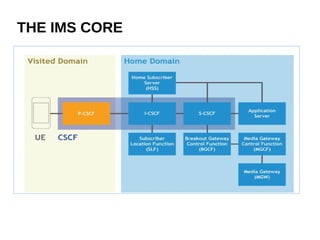
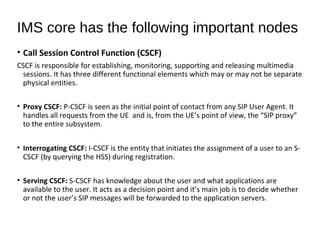
THE IMS CORE
• Call Session Control Function (CSCF)
CSCF is responsible for establishing, monitoring, supporting and releasing multimedia
sessions. It has three different functional elements which may or may not be separate
physical entities.
• Proxy CSCF: P-CSCF is seen as the initial point of contact from any SIP User Agent. It
handles all requests from the UE and is, from the UE’s point of view, the “SIP proxy”
to the entire subsystem.
• Interrogating CSCF: I-CSCF is the entity that initiates the assignment of a user to an S-
CSCF (by querying the HSS) during registration.
• Serving CSCF: S-CSCF has knowledge about the user and what applications are
available to the user. It acts as a decision point and it’s main job is to decide whether
or not the user’s SIP messages will be forwarded to the application servers.
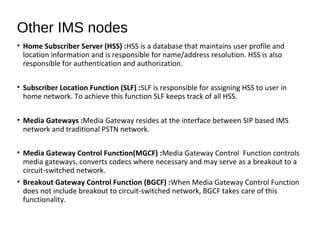
IMS core has the following important nodes
• Home Subscriber Server (HSS) :HSS is a database that maintains user profile and
location information and is responsible for name/address resolution. HSS is also
responsible for authentication and authorization.
• Subscriber Location Function (SLF) :SLF is responsible for assigning HSS to user in
home network. To achieve this function SLF keeps track of all HSS.
• Media Gateways :Media Gateway resides at the interface between SIP based IMS
network and traditional PSTN network.
• Media Gateway Control Function(MGCF) :Media Gateway Control Function controls
media gateways, converts codecs where necessary and may serve as a breakout to a
circuit-switched network.
• Breakout Gateway Control Function (BGCF) :When Media Gateway Control Function
does not include breakout to circuit-switched network, BGCF takes care of this
functionality.
Other IMS nodes
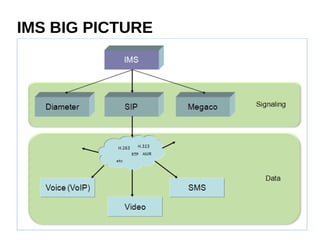
IMS BIG PICTURE
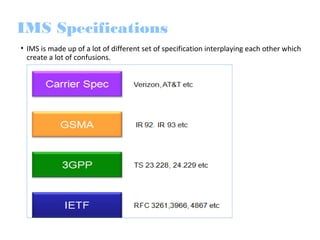
• IMS is made up of a lot of different set of specification interplaying each other which
create a lot of confusions.
IMS Specifications
VOLTE
VoLTE Architecture
VoLTE QOS
THANK YOU

3 gpp , lte and ims volte basics

  • 1.
    3GPP , LTEand IMS VOLTE By Nitin Gupta
  • 2.
    ›What is 3GPP? ›3GPP Evolution ›3GPP Specification Formation Flow ›Basic 2G , 3G architecture ›LTE (Long Term Evolution ) ›IMS (IP Multimedia Subsystem ) ›VOLTE (Voice over LTE ) Agenda
  • 3.
    Telecom Industry Network equipment Manufacture (Ericsson , Huawei,Nokia Networks) Mobile Equipment manufactures (Samsung, LG , HTC ) Network Simulator Manufactures(Anite , R&S,Spirent,Anritsu) Operators (Airtel , Vodafone , Idea , Reliance) Chipset Manufactures (Qualcomm , Intel, Mediatek , Spreadtrum)
  • 4.
  • 5.
    › 3rd GenerationPartnership Project (3GPP) unites [Seven] telecommunications standard development organizations (ARIB, ATIS, CCSA, ETSI, TSDSI, TTA, TTC), known as “Organizational Partners” and provides their members with a stable environment to produce the Reports and Specifications that define 3GPP technologies. 3gpp and there organizational partners
  • 6.
    • TSDSI "TelecommunicationsStandards Development Society, India" aims at developing and promoting India-specific requirements, standardizing solutions for meeting these requirements and contributing these to international standards, contributing to global standardization in the field of telecommunications. • "This is to announce that as of 1st January, 2015, TSDSI has become a full-fledged Organizational Partner (OP) of the 3rd Generation Partnership Project (3GPP).” TSDSI Organizational Partner FROM INDIA (1st January, 2015) S.N. Rights Corporate Associate 1 Participation in General Yes Yes Body Meetings, testevents, seminars,workshops 2 Inclusion in mailing list for Yes Yes information about events 3 Online access to initial Yes Yes draft Standard formulatedby TSDSI 4 Online submission of Yes Yes comments on initial draft Standard formulated by TSDSI 5 Participation in technical Yes Yes committees, workinggroups of TSDSI 6 Participation in meetings Yes No of standards bodies inwhich TSDSI is a Partner Organization 7 Representation in the Yes No Governing Council 8 Voting rights in General Yes No Body and in relevant specific technical issues 9 Request for formulation of Yes Yes a fresh Standard
  • 7.
  • 8.
    3GPP Evolution from2G to LTE Advanced
  • 9.
    9 Evolution of theRadio Interface and there speed EDGE EDGE+ W-CDMA HSPA HSPA+ 20002000 LTE LTE-Advanced 9 20102010 384Kb/s 1Mb/s 384Kb/s 42Mb/s18Mb/s 100Mb/s 1000Mb/s Standards availability
  • 10.
  • 11.
  • 12.
  • 13.
    LTE UE Specificationsfor Big Picture.
  • 14.
    Start, Freeze andEnd dates For LTE 3GPP Releases
  • 15.
  • 16.
  • 18.
    • LTE standsfor Long Term Evolution and it was started as a project in 2004 by telecommunication body known as the Third Generation Partnership Project (3GPP). • LTE evolved from an earlier 3GPP system known as the Universal Mobile Telecommunication System (UMTS), which in turn evolved from the Global System for Mobile Communications (GSM). LTE
  • 19.
  • 20.
    The E-UTRAN (Theaccess network)
  • 21.
    The Evolved PacketCore (EPC) (The core network)
  • 22.
  • 23.
    LTE Protocol Stackof UE , ENB and MME
  • 24.
  • 25.
  • 26.
  • 27.
    • IMS isone of 3GPP’s greatest success stories. • Originally designed to evolve UMTS networks to deliver Internet Protocol multimedia to mobile users. • IMS has become the core component within 3G, cable TV and next generation fixed telecoms networks. • IMS specification began in 3GPP Release 5 as part of the core network evolution from circuit-switching to packet-switching and was refined by subsequent Releases 6 and 7. IMS (IP-Multimedia Subsystem)
  • 28.
    IMS The IP MultimediaSubsystem IMS Capture the benefits of convergence GSM/ WCDMA DSL WLAN PSTNLTE LTE GSM WCDMA
  • 29.
    Standardization bodies FORIMS/VOLTE IMS Architecture SIP, Diameter Presence, MessagingVoLTE Global System for Mobile Communications
  • 30.
  • 31.
    • User Equipment(UE) is the mobile terminal which may be a smartphone or tablet or any communication device which is authorized to be used in the network. An IMS powered UE has two main components. • Universal Integrated Circuit Card (UICC) • Session Initiation Protocol User Agent (SIP UA) Special User Equipment (UE)
  • 32.
    • Each UEmust contain one UICC and each UICC may have one or more of the following modules. • Subscriber Identity Module (SIM): SIM identity information used by a GSM network. • UMTS Subscriber Identity Module (USIM): USIM information used by a UMTS or LTE network. • IP Multimedia Services Identity Module (ISIM): ISIM identity information used by the IMS subsystem. Universal Integrated Circuit (UICC)
  • 33.
    • SIP UserAgent resides in the UE to transmit and receive SIP messages. SIP-UA provides basic telephony functionality. It can act in two different roles: • User Agent Client (UAC): As a client to send SIP request • User Agent Server (UAS): As a server to receive requests and send response SIP User Agent (SIP-UA)
  • 34.
  • 35.
    • Call SessionControl Function (CSCF) CSCF is responsible for establishing, monitoring, supporting and releasing multimedia sessions. It has three different functional elements which may or may not be separate physical entities. • Proxy CSCF: P-CSCF is seen as the initial point of contact from any SIP User Agent. It handles all requests from the UE and is, from the UE’s point of view, the “SIP proxy” to the entire subsystem. • Interrogating CSCF: I-CSCF is the entity that initiates the assignment of a user to an S- CSCF (by querying the HSS) during registration. • Serving CSCF: S-CSCF has knowledge about the user and what applications are available to the user. It acts as a decision point and it’s main job is to decide whether or not the user’s SIP messages will be forwarded to the application servers. IMS core has the following important nodes
  • 36.
    • Home SubscriberServer (HSS) :HSS is a database that maintains user profile and location information and is responsible for name/address resolution. HSS is also responsible for authentication and authorization. • Subscriber Location Function (SLF) :SLF is responsible for assigning HSS to user in home network. To achieve this function SLF keeps track of all HSS. • Media Gateways :Media Gateway resides at the interface between SIP based IMS network and traditional PSTN network. • Media Gateway Control Function(MGCF) :Media Gateway Control Function controls media gateways, converts codecs where necessary and may serve as a breakout to a circuit-switched network. • Breakout Gateway Control Function (BGCF) :When Media Gateway Control Function does not include breakout to circuit-switched network, BGCF takes care of this functionality. Other IMS nodes
  • 37.
  • 38.
    • IMS ismade up of a lot of different set of specification interplaying each other which create a lot of confusions. IMS Specifications
  • 39.
  • 40.
  • 41.
  • 42.

Editor's Notes

  • #30 IMS is an architecture suitable for any IP based packet system. It’s a service engine, providing multimedia services over any access. It can be used on various terminals, over fixed or mobile access. The main driver for IMS is Voice over LTE, or VoLTE. IMS has been chosen as the service engine for providing voice services over LTE. This is needed, since LTE has no built-in voice service.
  • #31 The 3GPP is the standards organization responsible for the development of the IMS Architecture. Node functions, protocols and interfaces are specified in 3GPP’s Technical Specifications and Reports. The two main protocols used in IMS are SIP and Diameter. They are developed by IETF. The main focus of IETF is the evolution of the Internet architecture and the smooth operation of the Internet. OMA support the creation of interoperable end-to-end mobile services. In IMS, OMA has developed the specifications for Instant Messaging and Presence. The standards organization GSMA is focused on driving the growth of the mobile communications industry. In IMS, they are working on specifications for Voice over LTE.
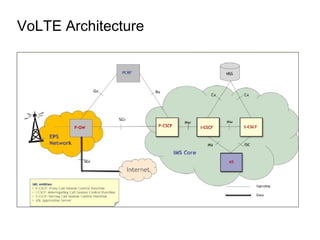
  • #42 In the LTE/EPC standard there is no Circuit Switched (CS) domain. This means that the telephony service (voice, video and SMS) has to be implemented as a packet service. LTE/EPC as a technology gives rise to the possibility for many different solutions to provide the telephony service. However, the only standardized service engine to provide the telephony service over LTE is IMS/MMTel. The picture above shows the involved nodes and interfaces in the Ericsson implementation of the VoLTE architecture, using IMS/MMTel as the service engine. As we can see, VoLTE is built up of IMS together with EPS, the evolved packet system, and EPS is built up of E-UTRAN and the EPC, evolved packet core.
  • #43 In the LTE/EPC standard there is no Circuit Switched (CS) domain. This means that the telephony service (voice, video and SMS) has to be implemented as a packet service. LTE/EPC as a technology gives rise to the possibility for many different solutions to provide the telephony service. However, the only standardized service engine to provide the telephony service over LTE is IMS/MMTel. The picture above shows the involved nodes and interfaces in the Ericsson implementation of the VoLTE architecture, using IMS/MMTel as the service engine. As we can see, VoLTE is built up of IMS together with EPS, the evolved packet system, and EPS is built up of E-UTRAN and the EPC, evolved packet core.