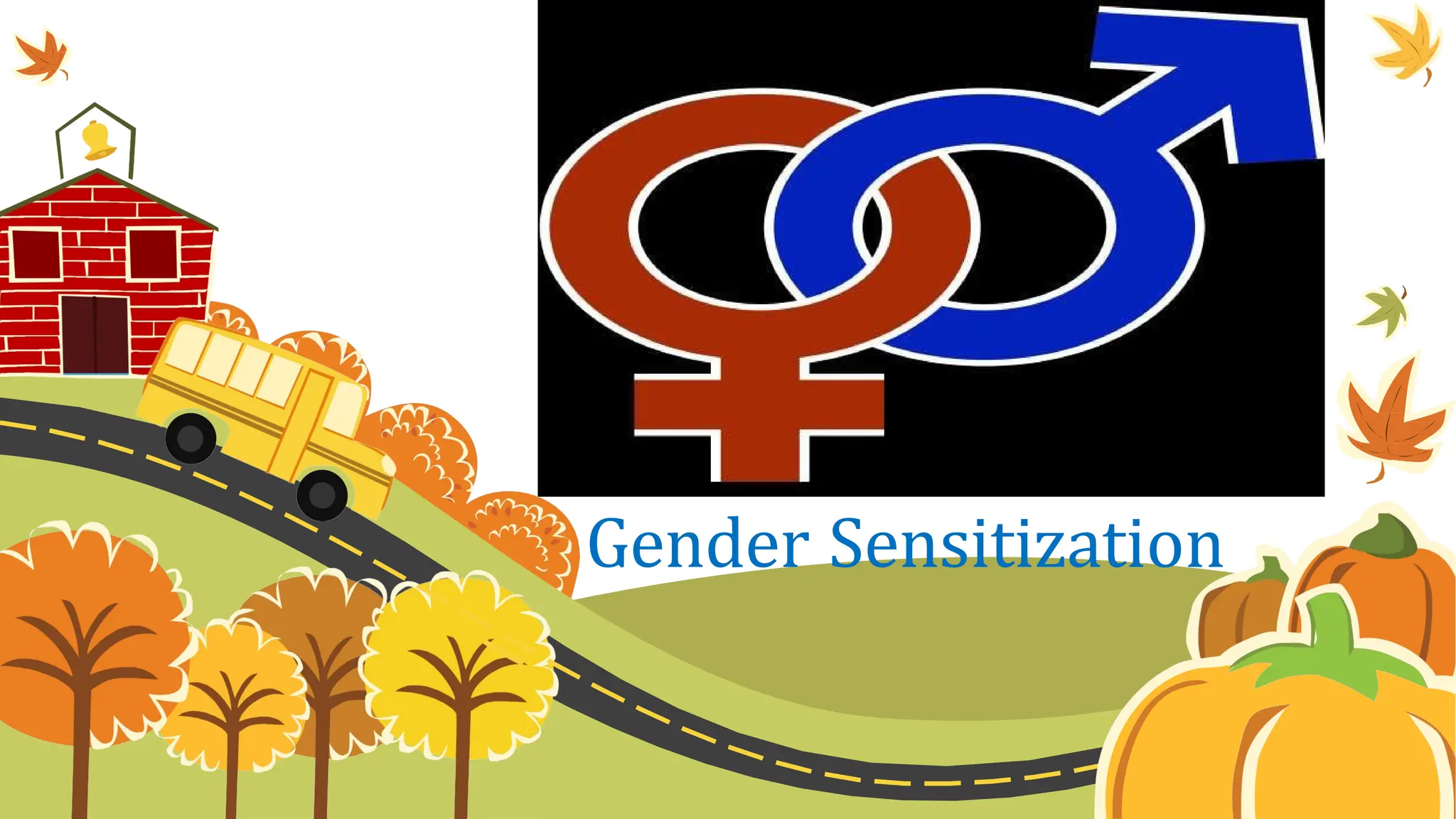
Gender Sensitization
Gender
Sensitization
• Explain the meaning of gender
• Develop gender literacy among teachers/students
• Understand gender relations and gender issues in
classroom/school
• Explain roles of schools in promoting gender
equality
among students.
• Develop positive attitude towards gender.
SEX AND GENDER
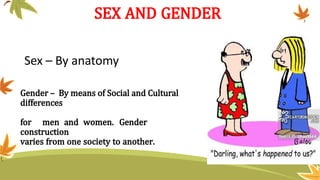
Gender – By means of Social and Cultural
differences
for men and women. Gender
construction
varies from one society to another.
Sex – By anatomy
•Male and Female are sex categories
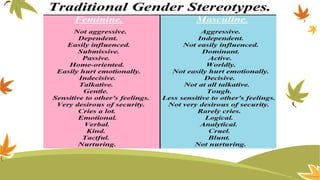
Masculine and Feminine
are gender categories.
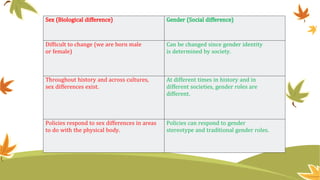
Sex (Biological difference) Gender (Social difference)
Difficult to change (we are born male
or female)
Can be changed since gender identity
is determined by society.
Throughout history and across cultures,
sex differences exist.
At different times in history and in
different societies, gender roles are
different.
Policies respond to sex differences in areas
to do with the physical body.
Policies can respond to gender
stereotype and traditional gender roles.
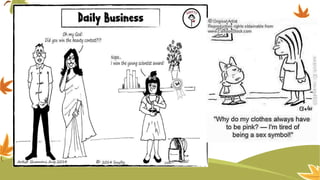
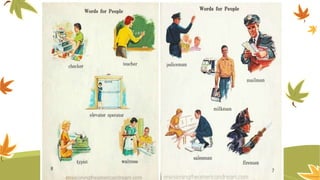
Change the way we speak
3. Gender Sensitisation -selected.ppt.pptx

3. Gender Sensitisation -selected.ppt.pptx

  • 1.
  • 2.
    Gender Sensitization • Explain themeaning of gender • Develop gender literacy among teachers/students • Understand gender relations and gender issues in classroom/school • Explain roles of schools in promoting gender equality among students. • Develop positive attitude towards gender.
  • 3.
    SEX AND GENDER Gender– By means of Social and Cultural differences for men and women. Gender construction varies from one society to another. Sex – By anatomy
  • 4.
    •Male and Femaleare sex categories Masculine and Feminine are gender categories.
  • 5.
    Sex (Biological difference)Gender (Social difference) Difficult to change (we are born male or female) Can be changed since gender identity is determined by society. Throughout history and across cultures, sex differences exist. At different times in history and in different societies, gender roles are different. Policies respond to sex differences in areas to do with the physical body. Policies can respond to gender stereotype and traditional gender roles.
  • 10.