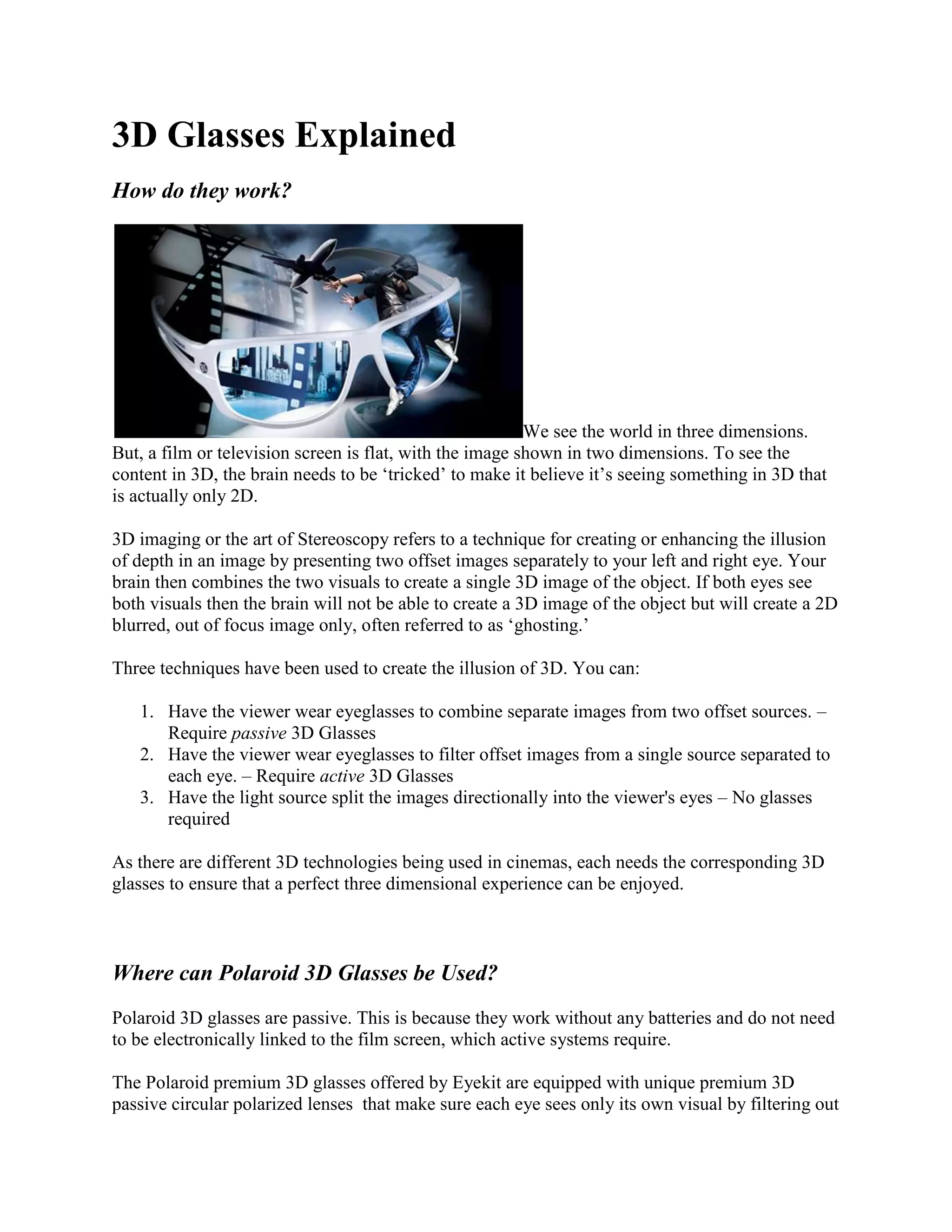
3D imaging works by presenting two offset images separately to the left and right eye. The brain then combines these images into a single 3D perception. There are three main techniques for achieving this: 1) using glasses to separate images from two offset sources, 2) using glasses to filter images from a single source to each eye, and 3) using directional light sources to separate images to each eye without glasses. Polaroid 3D glasses use circular polarization to filter images to each eye from a single source, making them suitable for use with cinema, TV, and other technologies that employ this standard, but not for outdoor use or as sunglasses. Normal TVs cannot display the offset images needed for 3D.