
Name: Gohil Namrata R.
Year: 2013-14
Roll No.: 20
M.A. Part: 1
Sem.:2
Submitted To: S.B. Gardi,
Department of English,
Maharaja Krishnakumarsinhji-
Bhavnagar University.
Gujarat(India).
- Northrop Frye
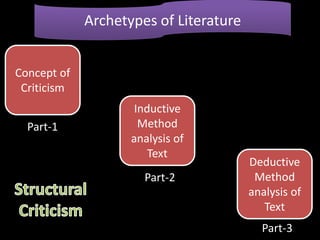
Archetypes of Literature
Concept of
Criticism
Inductive
Method
analysis of
Text
Deductive
Method
analysis of
Text
Part-1
Part-2
Part-3
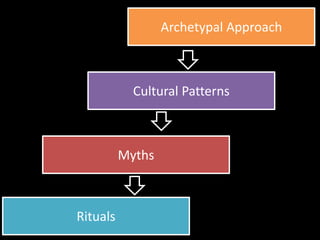
Cultural Patterns
Archetypal Approach
Myths
Rituals
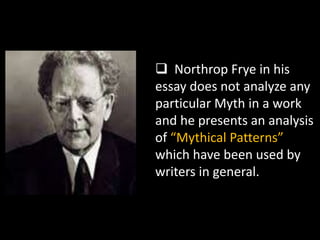
 Northrop Frye in his
essay does not analyze any
particular Myth in a work
and he presents an analysis
of “Mythical Patterns”
which have been used by
writers in general.
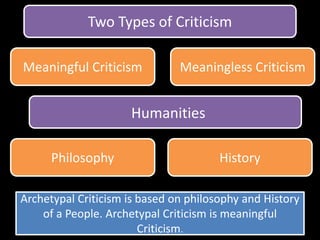
Two Types of Criticism
Meaningful Criticism Meaningless Criticism
Humanities
Philosophy History
Archetypal Criticism is based on philosophy and History
of a People. Archetypal Criticism is meaningful
Criticism.
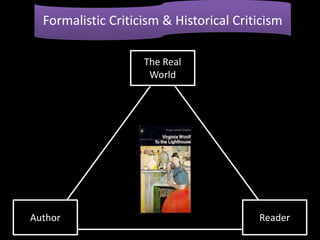
Formalistic Criticism & Historical Criticism
The Real
World
Author Reader
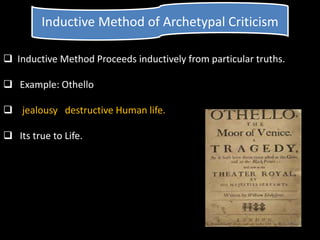
Inductive Method of Archetypal Criticism
 Inductive Method Proceeds inductively from particular truths.
 Example: Othello
 jealousy destructive Human life.
 Its true to Life.
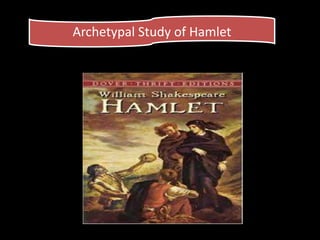
Archetypal Study of Hamlet
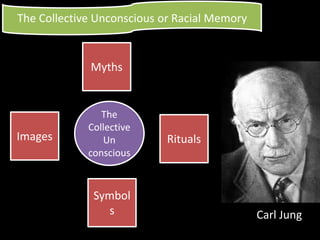
The Collective Unconscious or Racial Memory
Images Rituals
Symbol
s
Myths
The
Collective
Un
conscious
Carl Jung
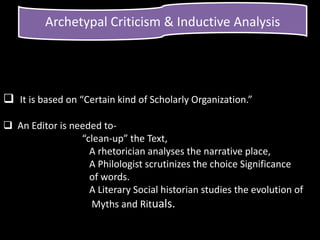
Archetypal Criticism & Inductive Analysis
 It is based on “Certain kind of Scholarly Organization.”
 An Editor is needed to-
“clean-up” the Text,
A rhetorician analyses the narrative place,
A Philologist scrutinizes the choice Significance
of words.
A Literary Social historian studies the evolution of
Myths and Rituals.
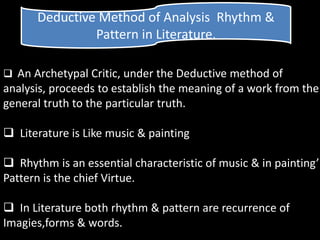
Deductive Method of Analysis Rhythm &
Pattern in Literature.
 An Archetypal Critic, under the Deductive method of
analysis, proceeds to establish the meaning of a work from the
general truth to the particular truth.
 Literature is Like music & painting
 Rhythm is an essential characteristic of music & in painting’
Pattern is the chief Virtue.
 In Literature both rhythm & pattern are recurrence of
Imagies,forms & words.
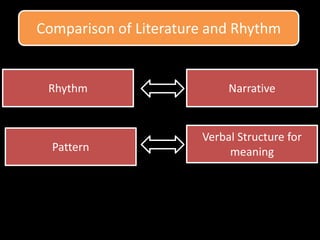
Comparison of Literature and Rhythm
NarrativeRhythm
Pattern
Verbal Structure for
meaning
Inductive and Deductive Methods of Archetypal Criticism

Inductive and Deductive Methods of Archetypal Criticism

  • 1.
    Name: Gohil NamrataR. Year: 2013-14 Roll No.: 20 M.A. Part: 1 Sem.:2 Submitted To: S.B. Gardi, Department of English, Maharaja Krishnakumarsinhji- Bhavnagar University. Gujarat(India).
  • 2.
  • 3.
    Archetypes of Literature Conceptof Criticism Inductive Method analysis of Text Deductive Method analysis of Text Part-1 Part-2 Part-3
  • 4.
  • 5.
     Northrop Fryein his essay does not analyze any particular Myth in a work and he presents an analysis of “Mythical Patterns” which have been used by writers in general.
  • 6.
    Two Types ofCriticism Meaningful Criticism Meaningless Criticism Humanities Philosophy History Archetypal Criticism is based on philosophy and History of a People. Archetypal Criticism is meaningful Criticism.
  • 7.
    Formalistic Criticism &Historical Criticism The Real World Author Reader
  • 8.
    Inductive Method ofArchetypal Criticism  Inductive Method Proceeds inductively from particular truths.  Example: Othello  jealousy destructive Human life.  Its true to Life.
  • 9.
  • 10.
    The Collective Unconsciousor Racial Memory Images Rituals Symbol s Myths The Collective Un conscious Carl Jung
  • 11.
    Archetypal Criticism &Inductive Analysis  It is based on “Certain kind of Scholarly Organization.”  An Editor is needed to- “clean-up” the Text, A rhetorician analyses the narrative place, A Philologist scrutinizes the choice Significance of words. A Literary Social historian studies the evolution of Myths and Rituals.
  • 12.
    Deductive Method ofAnalysis Rhythm & Pattern in Literature.  An Archetypal Critic, under the Deductive method of analysis, proceeds to establish the meaning of a work from the general truth to the particular truth.  Literature is Like music & painting  Rhythm is an essential characteristic of music & in painting’ Pattern is the chief Virtue.  In Literature both rhythm & pattern are recurrence of Imagies,forms & words.
  • 13.
    Comparison of Literatureand Rhythm NarrativeRhythm Pattern Verbal Structure for meaning