Prevention and management for
Perioperative Stroke
Boohwi Hong
koho0127@gmail.com
2020. 8.
• Brain infarction of ischemic or hemorrhagic etiology that
occurs during surgery or within 30 days after surgery
Definition of Perioperative stroke
Contents
J Neurosurg Anesthesiol 2014;26:273–285
J Neurosurg Anesthesiol 2020;32:210–226
•PREOPERATIVE
•Preoperative Evaluation & Informed Consent
•Timing of Elective Surgery After Stroke
•Anticoagulant and Antiplatelet Drugs
•Preoperative Beta-blockers and Statins
Contents
•INTRAOPERATIVE
•Anesthetic technique
•Blood pressure management
•Ventilation strategy
•Hemorrhage/blood transfusion
•Glycemic management
•Intraoperative beta-blockade
•POSTOPERATIVE
•Team
•Assessing Stroke
•Interventions
•Supportive Care
• 0.1% incidence
• 8 fold increased mortality
• American College of Surgeons National Surgical Quality
Improvement Program (ACS NSQIP)
Anesthesiology 2011; 114:1289–96
Mortality of Periop Stroke
Mashour Model
JAMA Cardiol. 2017;2(2):181-187.
Rates of periop events
0.52%
0.77%
Covert stroke = Silent stroke
• NeuroVISION study
• 2014 ~2017,. 1114 participants
• 7 % had a perioperative covert stroke
• Cognitive decline 1 year after surgery
• OR 1.98, RD increase 13%
• Perioperative delirium
• HR 2.24, RD increase 6%
• Overt stroke or transient ischaemic attack
• HR 4·13, RD increase 3%
Lancet. 2019;394:1022–1029.
Anesthesiology 2011; 115:879 –90
JAMA Neurol. 2015;72:749–755
Longer waiting & intervention time
Lower use of thrombolysis
Longer length of stay
More dead or disabled at discharge
Less discharged home
Standardized approach ensuring access to
rapid acute stroke care
Periop vs Non-op stroke
PREOPERATIVE
GUIDELINES
• Large vessel (anterior&middle),
• cardioembolic etiology
• 25-30% unknown etiology
• Limited cerebrovascular reserve
• Hypoxic-ischemic injury
Stroke Pathophysiology and Etiology
Vasodilatory reserve
Stroke. 2018;49:2011–2018.
• Cerebrovascular vulnerability
• No standard system
• Cerebrovascular reserve test ?
• Transcranial Doppler ?
• EEG pattern ?
• Identifying patients at high risk
• Clinical risk factors, Comorbidity-based risk factors
• Advanced age, Prior cerebrovascular disease, Renal failure
Preoperative Risk Evaluation
2018
2016
2014
2013
2011
2009
Risk models predicting stroke
Stroke. 2019;50:2002-2006
MICA (Myocardial Infarction or Cardiac Arrest)
• 5 predictors
• Gupta Perioperative Risk for
MICA
• Incidence >1% should be discussed
• Perioperative stroke education and counseling
Informed Consent
• Impaired cerebrovascular autoregulation and chemoregulation for months
• Increased oxygen extraction
• Compromised cerebral blood flow
• Inadequate cerebral perfusion
• Physiological vulnerabilities may lead to increased perioperative stroke risk
• 2014 guide 1 to 3 months
Timing of Elective Surgery After Stroke
2014
2020
JAMA. 2014;312(3):269-277
Danish nationwide data
2005-2011
481,183 surgeries
JAMA. 2014;312(3):269-277
JAMA. 2014;312:1930–1931
• Atrial fibrillation
• Bridging necessary ?
• High risk pt. excluded
• Direct oral anticoagulation agents
• Dabigatran (thrombin inhibitor)
• ~xaban (factor Xa inhibitor)
• Short, predictable half-life
• Shorter interruption period
N Engl J Med. 2015;373:823–833.
Anticoagulant and Antiplatelet Drugs
Direct oral anticoagulants: 1-3 d stop, no
bridging therapy
Warfarin: 5 d stop, bridging (moderate-to-high
risk pt. only)
• Bridging anticoagulation is reserved for patients with
moderate-to-high thromboembolic risk
J Am Coll Surg. 2018
Bleeding risk
• Invasiveness of surgery
• Comorbidity
• Previous surgery, trauma, family history,
and current antithrombotic medications
• HAS-BLED score
• ≥ 3 indicates “high bleeding risk”
• (5.8% yearly risk)
• Predictor of bleeding events during
bridging
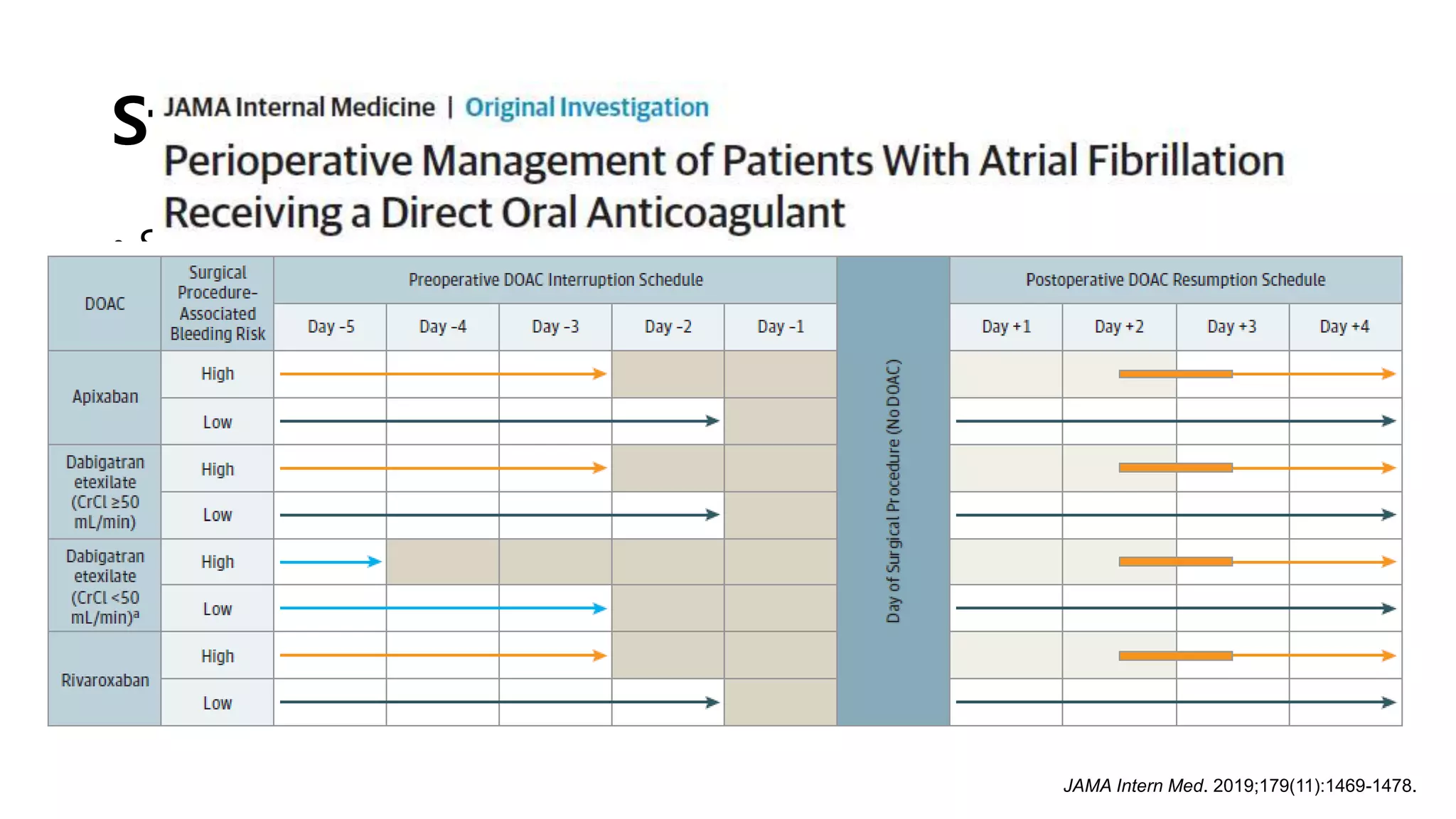
Standardized clinical protocol
• Stroke vs major bleeding
• Minimal interruption window
• DOAC : No requirement for heparin bridging.
• The 30-day postoperative rates of major bleeding were less
than 2%, and the rates of stroke were less than 1%.
JAMA Intern Med. 2019;179(11):1469-1478.
International Journal of Cardiology 258 (2018) 59–67
Aspirin
International Journal of Cardiology 258 (2018) 59–67
Aspirin
Bridging data
Am Heart J 2018;195:108-14
• Aspirin reduced the risk of
• Mortality (5.5%)
• Nonfatal MI (5.9%)
Ann Intern Med. 2018;168:237-244
Aspirin
* POISE 2 trial
Aspirin did not prevent death and nonfatal MI
but did increase the risk for major bleeding
• 9 RCT
• Prevents nonfatal MI
• Increases risks of stroke, death, hypotension, and bradycardia.
• Increased risk of nonfatal stroke (RR = 1.86, 95% CI: 1.09-3.16).
• POISE Trial
• Beta-blocker–naive patients
• Extended-release metoprolol
• Relative high dose
Beta-blockers
Circulation. 2014;130:2246–2264
Chronic beta-blocker ?
JAMA Intern Med. 2015;175(12):1923-1931.
Cardiovascular death was
higher in β-blockers
(0.90% vs 0.45%; P < .001)
Nonfatal stroke
(0.23% vs 0.21%; P = .68)
Nonfatal acute MI
(0.18% vs 0.17%; P = .81).
Chronic beta-blocker?
European Heart Journal (2017) 38, 2421–2428
Subtype ?
• Previous coronary revascularization
• No adjusted increased risk of stroke in those on prior beta-
blocker therapy
• Taiwanese nationwide data
• DM ~ CHD  Cardioprotective beta-blocker ?
• Initiation time (>30 and ≤30 days preoperatively)
• >30 days
• Decreased risk of in-hospital mortality (OR 0.72, 95% CI 0.65–0.78)
• 30-day mortality (OR 0.72, 95% CI 0.66–0.78)
• Preoperative beta-blocker use and risk of stroke (OR 1.33, 95% CI 0.94–1.88)
J Am Heart Assoc. 2017;6:e004392
statin
• statin use was associated with
• decreased adjusted mortality across multiple cohorts
• studied.
• 오탁규 선생님 논문…
Statin
Ann Surg 2019
Statin
JAMA Intern Med. 2017;177:231–242.
Ann Med. 2018;50:402–409.
Statin Meta
12 RCT
4707 pt.
INTRAOPERATIVE
GUIDELINES
Anesthetic Technique: mixed results
• General
• vs
• Epidural or Spinal anesthesia
J Vasc Surg 2019;69:1874-9
General VS Regional
• Vaginal reconstructive surgery
• 37,426 women who underwent vaginal reconstructive surgery
• 30 day
GA VS RA
Int Urogynecol J. 2020;31:181–189
Anesthesiology 2013; 118:1046-58
2010 to 2012
ACS NSQIP
20,936 patients
J Bone Joint Surg Am. 2015;97:455-61
• spinal or
epidural
J Bone Joint Surg Am. 2015;97:186-93
• CABG
• Stroke high risk patients
N Engl J Med 2019; 380:1214-1225
VA VS TIVA
• Mortality
• AKI
• MI
• ? CNS
Anesthesiology 2015; 123:307-19
Hypotension & other outcomes
Anesthesiology 2018; 129:440-7
Intraoperative hypotension & Stroke
in cardiac surgery
Anesth Analg 2016;123:933–9
Noncardiac surgical population
• 48241, 2002-2009
• Time spent with MAP > 30% below baseline
• Postoperative stroke (OR = 1.013/min hypotension, 99.9% CI:
1.000-1.025)
• Effect size is of unclear clinical significance
• Routine intraoperative blood pressures (ie, MAPs ≥60 to
70mmHg) are unlikely to be a major driver of overt
perioperative stroke. Anesthesiology 2012; 116:658–64
• Rare
• 24,701 patients
• Only 1 case of a postoperative neurocognitive deficit
• (overall incidence, 0.004%).
• Case report: 6 patients with a catastrophic neurocognitive
complication after shoulder surgery in the BCP.
• Intraoperative cerebral desaturation (0%-100%; mean, 41.1%)
Am J Orthop (Belle Mead NJ). 2016;45:E63–E68
Neurocognitive deficits and cerebral
desaturation after shoulder surgery
• Position Lateral vs Beach chair
• MAP and rSco2 High correlation = Diminished cerebral
autoregulation (cerebral oximetry index (COx) )
• No differences in composite cognitive outcomes or serum
ischemic biomarkers
Anesth Analg 2015;120:176–85
Diminished cerebral autoregulation
in the beach chair
• Limited data between
intraoperative PaCO2 or EtCO2
and cerebrovascular reserve
• Vasodilatory reserve
• Hypocapnia 30mmHg
• Hypercapnia
• Steal phenomenon
• Hypoxic-ischemic injury
• Hypotension + vasodilatory
reserve X
Maintain Normocapnia
• Hemorrhage and anemia  cerebral hypoxic-ischemic injury
• Transfusion itself may increase stroke risk
• Red blood cell aggregation
• Thrombogenic potential
• Impaired microcirculation
Relative risk for 30-day mortality and stroke J Vasc Surg. 2013
Retrospective, Scarce derailed data, Baseline imbalance
Hemorrhage and Blood Transfusion
• Reduce blood loss and transfusion
• CRASH-3
• Within 3 h of Traumatic brain injury
• Head injury-related death
• Only mild-to-moderate injury
Lancet. 2019;394:1713–1723
Tranexamic acid
• 9.0 g/dL
• Reduced CO +
• beta2-mediated
cerebrovascular vasodilatation
Blue Metoprolol (β1/β2 =2.3)
Green atenolol (β1/β2 = 4.7)
Red bisoprolol (β1/β2 = 13.5)
Anesthesiology 2013; 119:777-87
Transfusion threshold & beta-blocker
• Poor glycemic control is a strong predictor of postoperative
morbidity and mortality
• Perioperative stroke is more likely to be associated with an
elevated fasting blood sugar than nonoperative Stroke
J Vasc Surg 2019;69:1219-26
Glycemic control
• 1151 acute ischemic stroke patients who were hyperglycemic
at admission
• 90-day modified Rankin Scale score (disability score)
• 80-179mg/dL vs 80-130mg/dL
• 2014. 60-180 mg/dL (opinion based)
• 2020
• Metoprolol, as a relatively nonselective beta1-antagonist
• β1/β2 =2.3
• Perioperative stroke (OR = 3.3, 95% CI: 1.4-7.8, P =0.003)
• No collinearity with hypotension
Anesthesiology 2013; 119:1340-6
Intraoperative Beta-blockade
• HR 10%
• Reduced CO +
• Beta2-mediated cerebrovascular
vasodilatation
• Reduce brain tissue oxygenation
J Appl Physiol 111: 1125–1133, 2011.
POSTOPERATIVE
GUIDELINES
• Rapid recognition
• Communication
• Timely management
• Organized protocol
• Higher efficiency
• Rapid therapeutic intervention
• Reliable communication
Team, Networks, and Triage
British Journal of Anaesthesia, 116 (3): 328–38 (2016)
Assessing Stroke
No perioperative stroke assessment scales
hat satisfy all such criteria.
mNIHSS (modified National Institutes of Health Stroke Scale)
2019 Guidelines for Management of AIS. Stroke. 2019;50:e344–e418
modified Rankin Scale
• Ordinal, 7-point global disability scale
JAMA. 2019;322(4):326-335
Intensive vs Standard Treatment of Hyperglycemia
Baseline
NIHSS
score
Proportion of participants with acute increases in mNIHSS scores
• First 3 postoperative days.
• 20% to 30% incidence
• Overt stroke (0.1 -1.9%)
• Covert stroke (7%)
• false positives
• low positive predictive
value
Front Neurol. 2019;10:560.
Routine clinical screening for stroke is
not recommended
• Glial fibrillary acid protein
• S-100β, neuron-specific enolase
• Matrix metalloproteinase-9
• Electroencephalographic slow-wave activity
• Oscillatory asymmetry
• Transcranial Doppler
• ?
Biochemical and neurophysiological methods
• Ischemic or hemorrhagic origin
• Correlate neurological deficit with radiologic findings
• Targeted assessments that focus on large-vessel pathology
• (1) distinct, robust pattern of neurological deficits
• (2) availability of effective neurointerventional therapies
(thrombectomy)
Immediate CT or MRI
• Recombinant tissue plasminogen activator (rtPA) or
mechanical thrombectomy
• Risk/benefit balance
• rtPA remains the standard therapy
• ? Perioperative state (bleeding ? )
Acute Interventions for Ischemic Stroke
Stroke. 2016;47:581-641.
Intracranial or
spinal surgery within 3 months
ACC 2019 February 34(1):86-91
rtPA
Immediate post op
VS
Delayed post op
Drainage ?
Transfusion ?
off-label use of tPA in periop stroke
• 134 patients
• recent surgery within 10 days 37 %,
• 64% had major surgery
• Nine patients (7%) developed surgical site hemorrhage after
IVT, of whom 4 (3%) were serious, but none was fatal
• Intracranial hemorrhage occurred in 9.7% and was
asymptomatic in all cases
Stroke. 2017;48:3034-3039
• Reduced disability at
90 days
• Reduce disability by
at least one level on
mRS for one patient
was 2.6 (NNT)
• Time window ?
HERMES (Highly Effective Reperfusion evaluated in Multiple Endovascular Stroke Trials)
collaboration.
Endovascular thrombectomy
Lancet 2016; 387: 1723–31
• Late endovascular therapy based on perfusion imaging, even
with intervention time windows up to 24 hours.
N Engl J Med 2018;378:11-21.
N Engl J Med 2018;378:708-18.
Intervention timing
N Engl J Med 2018;378:11-21.
DAWN
DEFUSE 3 trials
• Cardiac monitoring for at least the first 24 hours
• (Myocardial ischemia and cardiac arrhythmia)
• Hypertension (stress response to surgery, pain, and nausea, hypervolemia, full
bladder, response to hypoxia)
• Systolic blood pressure is usually treated only if it is >220mmHg, and diastolic
pressure is treated only if it is >120mmHg
• rtPA (intravenous or intra-arterial), systolic blood pressure >180mmHg and
diastolic pressure >105mmHg
Supportive Care for Acute Ischemic Stroke Patients
• SBP 130mmHg
Journal of Internal Medicine 2004; 255: 257–265
BP & mortality U-shaped pattern
Stroke. 2019;50:e344–e418.
9 month
Wafarin 5 d, bridging
(mo~high risk)
NOAC 1-3 d (No bridging)
Normocapnia
Glucose 80-180
Routine screening X
Emergency imaging
Thrombectomy
감사합니다
Boohwi Hong
koho0127@gmail.com

2020 ksnacc perioperative stroke

  • 1.
    Prevention and managementfor Perioperative Stroke Boohwi Hong koho0127@gmail.com 2020. 8.
  • 2.
    • Brain infarctionof ischemic or hemorrhagic etiology that occurs during surgery or within 30 days after surgery Definition of Perioperative stroke
  • 3.
    Contents J Neurosurg Anesthesiol2014;26:273–285 J Neurosurg Anesthesiol 2020;32:210–226
  • 4.
    •PREOPERATIVE •Preoperative Evaluation &Informed Consent •Timing of Elective Surgery After Stroke •Anticoagulant and Antiplatelet Drugs •Preoperative Beta-blockers and Statins Contents •INTRAOPERATIVE •Anesthetic technique •Blood pressure management •Ventilation strategy •Hemorrhage/blood transfusion •Glycemic management •Intraoperative beta-blockade •POSTOPERATIVE •Team •Assessing Stroke •Interventions •Supportive Care
  • 5.
    • 0.1% incidence •8 fold increased mortality • American College of Surgeons National Surgical Quality Improvement Program (ACS NSQIP) Anesthesiology 2011; 114:1289–96 Mortality of Periop Stroke Mashour Model
  • 6.
    JAMA Cardiol. 2017;2(2):181-187. Ratesof periop events 0.52% 0.77%
  • 7.
    Covert stroke =Silent stroke • NeuroVISION study • 2014 ~2017,. 1114 participants • 7 % had a perioperative covert stroke • Cognitive decline 1 year after surgery • OR 1.98, RD increase 13% • Perioperative delirium • HR 2.24, RD increase 6% • Overt stroke or transient ischaemic attack • HR 4·13, RD increase 3% Lancet. 2019;394:1022–1029.
  • 8.
  • 9.
    JAMA Neurol. 2015;72:749–755 Longerwaiting & intervention time Lower use of thrombolysis Longer length of stay More dead or disabled at discharge Less discharged home Standardized approach ensuring access to rapid acute stroke care Periop vs Non-op stroke
  • 10.
  • 11.
    • Large vessel(anterior&middle), • cardioembolic etiology • 25-30% unknown etiology • Limited cerebrovascular reserve • Hypoxic-ischemic injury Stroke Pathophysiology and Etiology
  • 12.
  • 13.
    • Cerebrovascular vulnerability •No standard system • Cerebrovascular reserve test ? • Transcranial Doppler ? • EEG pattern ? • Identifying patients at high risk • Clinical risk factors, Comorbidity-based risk factors • Advanced age, Prior cerebrovascular disease, Renal failure Preoperative Risk Evaluation
  • 14.
  • 15.
    Risk models predictingstroke Stroke. 2019;50:2002-2006
  • 17.
    MICA (Myocardial Infarctionor Cardiac Arrest) • 5 predictors • Gupta Perioperative Risk for MICA
  • 18.
    • Incidence >1%should be discussed • Perioperative stroke education and counseling Informed Consent
  • 19.
    • Impaired cerebrovascularautoregulation and chemoregulation for months • Increased oxygen extraction • Compromised cerebral blood flow • Inadequate cerebral perfusion • Physiological vulnerabilities may lead to increased perioperative stroke risk • 2014 guide 1 to 3 months Timing of Elective Surgery After Stroke 2014 2020
  • 20.
    JAMA. 2014;312(3):269-277 Danish nationwidedata 2005-2011 481,183 surgeries
  • 21.
  • 22.
  • 23.
    • Atrial fibrillation •Bridging necessary ? • High risk pt. excluded • Direct oral anticoagulation agents • Dabigatran (thrombin inhibitor) • ~xaban (factor Xa inhibitor) • Short, predictable half-life • Shorter interruption period N Engl J Med. 2015;373:823–833. Anticoagulant and Antiplatelet Drugs
  • 24.
    Direct oral anticoagulants:1-3 d stop, no bridging therapy Warfarin: 5 d stop, bridging (moderate-to-high risk pt. only)
  • 25.
    • Bridging anticoagulationis reserved for patients with moderate-to-high thromboembolic risk J Am Coll Surg. 2018
  • 27.
    Bleeding risk • Invasivenessof surgery • Comorbidity • Previous surgery, trauma, family history, and current antithrombotic medications • HAS-BLED score • ≥ 3 indicates “high bleeding risk” • (5.8% yearly risk) • Predictor of bleeding events during bridging
  • 28.
    Standardized clinical protocol •Stroke vs major bleeding • Minimal interruption window • DOAC : No requirement for heparin bridging. • The 30-day postoperative rates of major bleeding were less than 2%, and the rates of stroke were less than 1%. JAMA Intern Med. 2019;179(11):1469-1478.
  • 29.
    International Journal ofCardiology 258 (2018) 59–67 Aspirin
  • 30.
    International Journal ofCardiology 258 (2018) 59–67 Aspirin
  • 31.
    Bridging data Am HeartJ 2018;195:108-14
  • 32.
    • Aspirin reducedthe risk of • Mortality (5.5%) • Nonfatal MI (5.9%) Ann Intern Med. 2018;168:237-244 Aspirin * POISE 2 trial Aspirin did not prevent death and nonfatal MI but did increase the risk for major bleeding
  • 33.
    • 9 RCT •Prevents nonfatal MI • Increases risks of stroke, death, hypotension, and bradycardia. • Increased risk of nonfatal stroke (RR = 1.86, 95% CI: 1.09-3.16). • POISE Trial • Beta-blocker–naive patients • Extended-release metoprolol • Relative high dose Beta-blockers Circulation. 2014;130:2246–2264
  • 34.
    Chronic beta-blocker ? JAMAIntern Med. 2015;175(12):1923-1931. Cardiovascular death was higher in β-blockers (0.90% vs 0.45%; P < .001) Nonfatal stroke (0.23% vs 0.21%; P = .68) Nonfatal acute MI (0.18% vs 0.17%; P = .81). Chronic beta-blocker?
  • 35.
    European Heart Journal(2017) 38, 2421–2428 Subtype ?
  • 36.
    • Previous coronaryrevascularization • No adjusted increased risk of stroke in those on prior beta- blocker therapy
  • 37.
    • Taiwanese nationwidedata • DM ~ CHD  Cardioprotective beta-blocker ? • Initiation time (>30 and ≤30 days preoperatively) • >30 days • Decreased risk of in-hospital mortality (OR 0.72, 95% CI 0.65–0.78) • 30-day mortality (OR 0.72, 95% CI 0.66–0.78) • Preoperative beta-blocker use and risk of stroke (OR 1.33, 95% CI 0.94–1.88) J Am Heart Assoc. 2017;6:e004392
  • 38.
    statin • statin usewas associated with • decreased adjusted mortality across multiple cohorts • studied. • 오탁규 선생님 논문… Statin Ann Surg 2019
  • 39.
    Statin JAMA Intern Med.2017;177:231–242.
  • 40.
  • 41.
  • 42.
    Anesthetic Technique: mixedresults • General • vs • Epidural or Spinal anesthesia J Vasc Surg 2019;69:1874-9 General VS Regional
  • 43.
    • Vaginal reconstructivesurgery • 37,426 women who underwent vaginal reconstructive surgery • 30 day GA VS RA Int Urogynecol J. 2020;31:181–189
  • 44.
  • 45.
    2010 to 2012 ACSNSQIP 20,936 patients J Bone Joint Surg Am. 2015;97:455-61
  • 46.
    • spinal or epidural JBone Joint Surg Am. 2015;97:186-93
  • 47.
    • CABG • Strokehigh risk patients N Engl J Med 2019; 380:1214-1225 VA VS TIVA
  • 48.
    • Mortality • AKI •MI • ? CNS Anesthesiology 2015; 123:307-19 Hypotension & other outcomes
  • 49.
    Anesthesiology 2018; 129:440-7 Intraoperativehypotension & Stroke in cardiac surgery
  • 50.
  • 51.
    • 48241, 2002-2009 •Time spent with MAP > 30% below baseline • Postoperative stroke (OR = 1.013/min hypotension, 99.9% CI: 1.000-1.025) • Effect size is of unclear clinical significance • Routine intraoperative blood pressures (ie, MAPs ≥60 to 70mmHg) are unlikely to be a major driver of overt perioperative stroke. Anesthesiology 2012; 116:658–64
  • 52.
    • Rare • 24,701patients • Only 1 case of a postoperative neurocognitive deficit • (overall incidence, 0.004%). • Case report: 6 patients with a catastrophic neurocognitive complication after shoulder surgery in the BCP. • Intraoperative cerebral desaturation (0%-100%; mean, 41.1%) Am J Orthop (Belle Mead NJ). 2016;45:E63–E68 Neurocognitive deficits and cerebral desaturation after shoulder surgery
  • 53.
    • Position Lateralvs Beach chair • MAP and rSco2 High correlation = Diminished cerebral autoregulation (cerebral oximetry index (COx) ) • No differences in composite cognitive outcomes or serum ischemic biomarkers Anesth Analg 2015;120:176–85 Diminished cerebral autoregulation in the beach chair
  • 54.
    • Limited databetween intraoperative PaCO2 or EtCO2 and cerebrovascular reserve • Vasodilatory reserve • Hypocapnia 30mmHg • Hypercapnia • Steal phenomenon • Hypoxic-ischemic injury • Hypotension + vasodilatory reserve X Maintain Normocapnia
  • 55.
    • Hemorrhage andanemia  cerebral hypoxic-ischemic injury • Transfusion itself may increase stroke risk • Red blood cell aggregation • Thrombogenic potential • Impaired microcirculation Relative risk for 30-day mortality and stroke J Vasc Surg. 2013 Retrospective, Scarce derailed data, Baseline imbalance Hemorrhage and Blood Transfusion
  • 56.
    • Reduce bloodloss and transfusion • CRASH-3 • Within 3 h of Traumatic brain injury • Head injury-related death • Only mild-to-moderate injury Lancet. 2019;394:1713–1723 Tranexamic acid
  • 57.
    • 9.0 g/dL •Reduced CO + • beta2-mediated cerebrovascular vasodilatation Blue Metoprolol (β1/β2 =2.3) Green atenolol (β1/β2 = 4.7) Red bisoprolol (β1/β2 = 13.5) Anesthesiology 2013; 119:777-87 Transfusion threshold & beta-blocker
  • 58.
    • Poor glycemiccontrol is a strong predictor of postoperative morbidity and mortality • Perioperative stroke is more likely to be associated with an elevated fasting blood sugar than nonoperative Stroke J Vasc Surg 2019;69:1219-26 Glycemic control
  • 59.
    • 1151 acuteischemic stroke patients who were hyperglycemic at admission • 90-day modified Rankin Scale score (disability score) • 80-179mg/dL vs 80-130mg/dL
  • 60.
    • 2014. 60-180mg/dL (opinion based) • 2020
  • 61.
    • Metoprolol, asa relatively nonselective beta1-antagonist • β1/β2 =2.3 • Perioperative stroke (OR = 3.3, 95% CI: 1.4-7.8, P =0.003) • No collinearity with hypotension Anesthesiology 2013; 119:1340-6 Intraoperative Beta-blockade
  • 62.
    • HR 10% •Reduced CO + • Beta2-mediated cerebrovascular vasodilatation • Reduce brain tissue oxygenation J Appl Physiol 111: 1125–1133, 2011.
  • 63.
  • 64.
    • Rapid recognition •Communication • Timely management • Organized protocol • Higher efficiency • Rapid therapeutic intervention • Reliable communication Team, Networks, and Triage
  • 65.
    British Journal ofAnaesthesia, 116 (3): 328–38 (2016) Assessing Stroke No perioperative stroke assessment scales hat satisfy all such criteria.
  • 66.
    mNIHSS (modified NationalInstitutes of Health Stroke Scale) 2019 Guidelines for Management of AIS. Stroke. 2019;50:e344–e418
  • 67.
    modified Rankin Scale •Ordinal, 7-point global disability scale
  • 68.
    JAMA. 2019;322(4):326-335 Intensive vsStandard Treatment of Hyperglycemia Baseline NIHSS score
  • 69.
    Proportion of participantswith acute increases in mNIHSS scores • First 3 postoperative days. • 20% to 30% incidence • Overt stroke (0.1 -1.9%) • Covert stroke (7%) • false positives • low positive predictive value Front Neurol. 2019;10:560. Routine clinical screening for stroke is not recommended
  • 70.
    • Glial fibrillaryacid protein • S-100β, neuron-specific enolase • Matrix metalloproteinase-9 • Electroencephalographic slow-wave activity • Oscillatory asymmetry • Transcranial Doppler • ? Biochemical and neurophysiological methods
  • 71.
    • Ischemic orhemorrhagic origin • Correlate neurological deficit with radiologic findings • Targeted assessments that focus on large-vessel pathology • (1) distinct, robust pattern of neurological deficits • (2) availability of effective neurointerventional therapies (thrombectomy) Immediate CT or MRI
  • 72.
    • Recombinant tissueplasminogen activator (rtPA) or mechanical thrombectomy • Risk/benefit balance • rtPA remains the standard therapy • ? Perioperative state (bleeding ? ) Acute Interventions for Ischemic Stroke
  • 73.
  • 74.
    ACC 2019 February34(1):86-91 rtPA Immediate post op VS Delayed post op Drainage ? Transfusion ?
  • 75.
    off-label use oftPA in periop stroke • 134 patients • recent surgery within 10 days 37 %, • 64% had major surgery • Nine patients (7%) developed surgical site hemorrhage after IVT, of whom 4 (3%) were serious, but none was fatal • Intracranial hemorrhage occurred in 9.7% and was asymptomatic in all cases Stroke. 2017;48:3034-3039
  • 76.
    • Reduced disabilityat 90 days • Reduce disability by at least one level on mRS for one patient was 2.6 (NNT) • Time window ? HERMES (Highly Effective Reperfusion evaluated in Multiple Endovascular Stroke Trials) collaboration. Endovascular thrombectomy Lancet 2016; 387: 1723–31
  • 77.
    • Late endovasculartherapy based on perfusion imaging, even with intervention time windows up to 24 hours. N Engl J Med 2018;378:11-21. N Engl J Med 2018;378:708-18. Intervention timing N Engl J Med 2018;378:11-21. DAWN DEFUSE 3 trials
  • 78.
    • Cardiac monitoringfor at least the first 24 hours • (Myocardial ischemia and cardiac arrhythmia) • Hypertension (stress response to surgery, pain, and nausea, hypervolemia, full bladder, response to hypoxia) • Systolic blood pressure is usually treated only if it is >220mmHg, and diastolic pressure is treated only if it is >120mmHg • rtPA (intravenous or intra-arterial), systolic blood pressure >180mmHg and diastolic pressure >105mmHg Supportive Care for Acute Ischemic Stroke Patients
  • 79.
    • SBP 130mmHg Journalof Internal Medicine 2004; 255: 257–265 BP & mortality U-shaped pattern
  • 80.
  • 81.
    9 month Wafarin 5d, bridging (mo~high risk) NOAC 1-3 d (No bridging) Normocapnia Glucose 80-180 Routine screening X Emergency imaging Thrombectomy
  • 82.

Editor's Notes

  • #39 혈액 속 지질을 강하시키는 것 이외에 statin들은 pleiotropic effects 전신의 염증반응을 경감시키고, 혈관 내피세포의 기능 이상과 혈소판의 과민성을 완화