Information Literacy 1
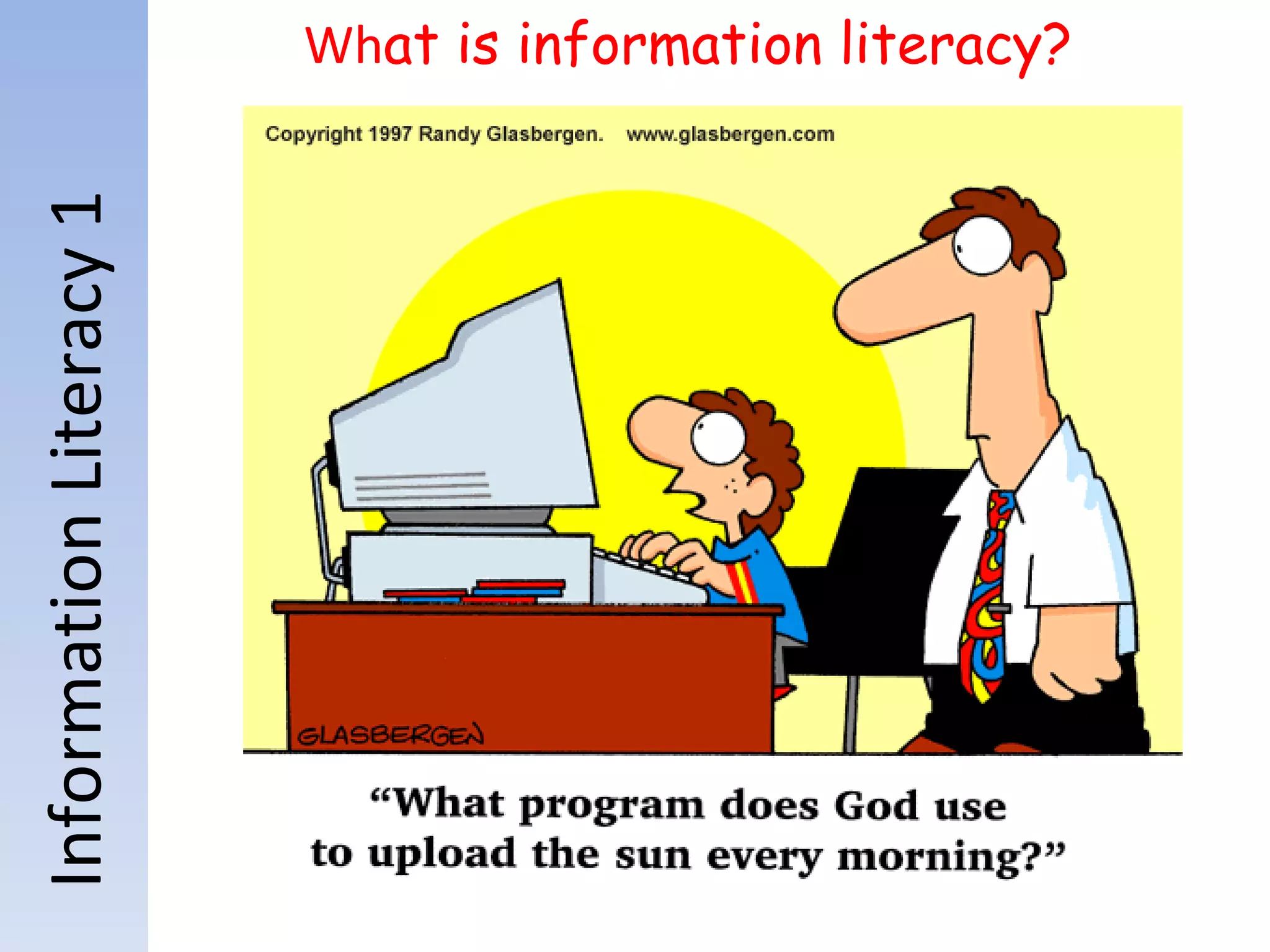
Information Literacy 1 What is information literacy?
Information Literacy 1 What is information literacy? Wh at is information literacy?
Information Literacy 1 Information literacy is the ability to   identify   what  information is needed;  [WHAT] understand   how  the information is organized;  [HOW]   identify  the  best sources  of information for a given need;  [WHERE]   locate  those  sources ;  [WHERE] evaluate  the sources  critically ;  [WHY/ HOW]  and  share  that  information .  [FOR WHOM] It is the knowledge of commonly used research techniques. (From: the University of Idaho)  http://www.webs.uidaho.edu/info_literacy/ Note: Information literacy is  NOT  computer skills.  What is information literacy?
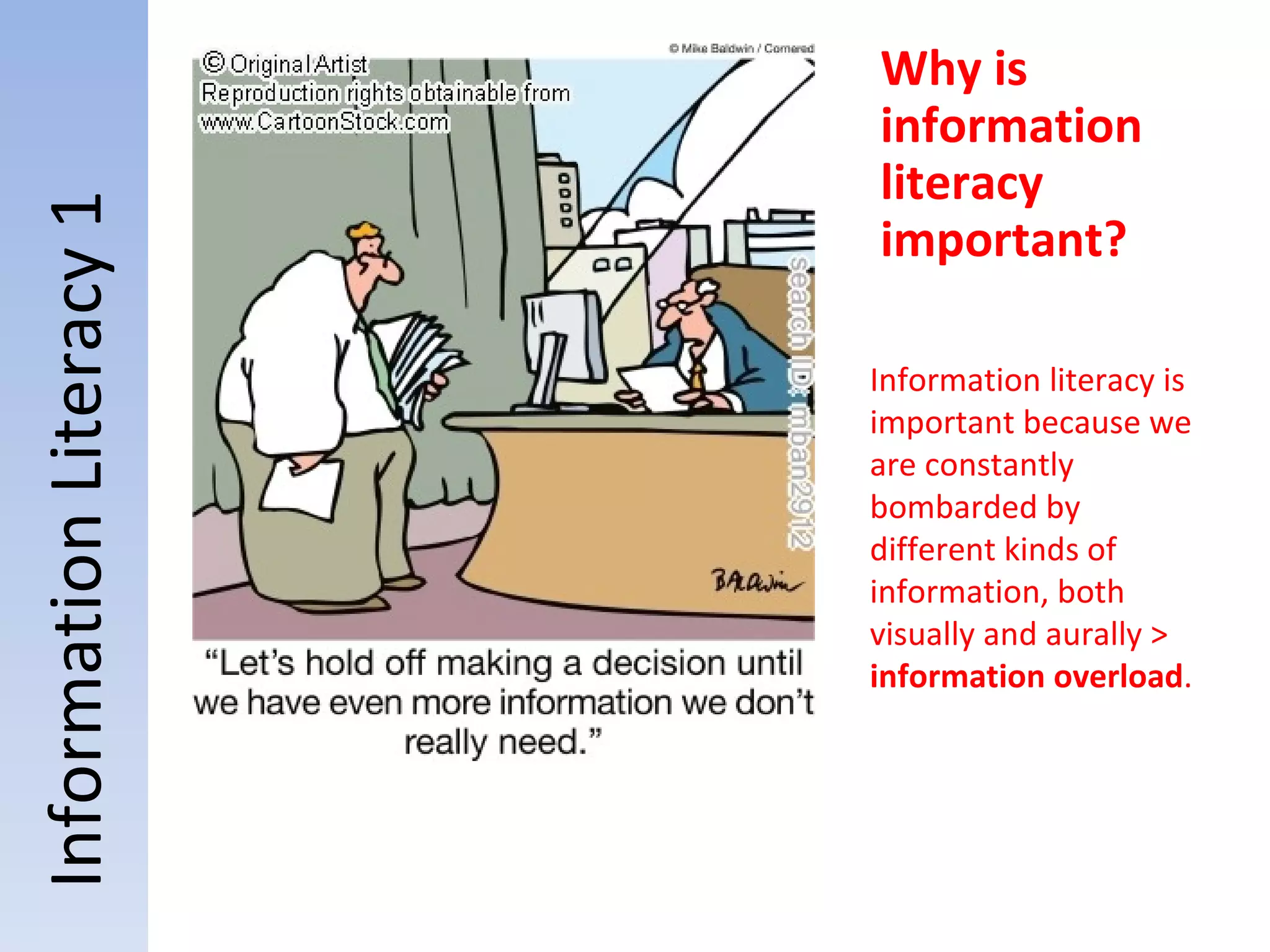
Information Literacy 1   Why is information literacy important? Information literacy is important because we are constantly bombarded by different kinds of information, both visually and aurally >  information overload .
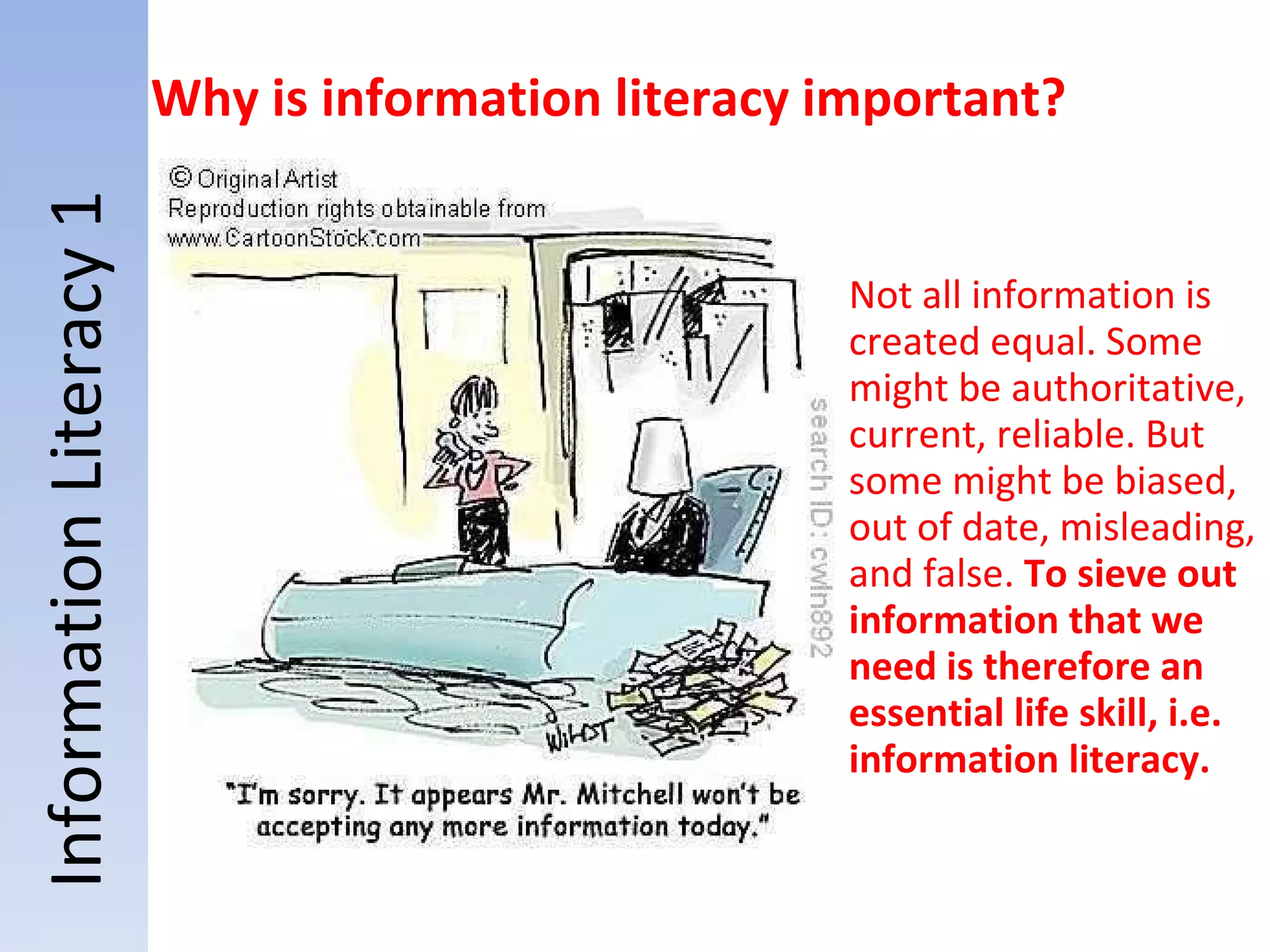
Not all information is created equal. Some might be authoritative, current, reliable. But some might be biased, out of date, misleading, and false.  To sieve out information that we need is therefore an essential life skill, i.e. information literacy.   Information Literacy 1 Why is information literacy important?
Information Literacy 1 Information is usually organised and categorised according to    Genre classifications  (e.g. non-fiction vs. fiction) Genres/ Text types  (e.g. thriller vs. romance; newspaper feature article vs. factual recount of a catastrophe) Subject classifications  (e.g. history vs. geography; biology vs. physics) Format or Media Type  (e.g. CD, DVD, Print or Broadcast) But it can also be categorised by the  ORDER IN WHICH it is produced  (i.e. who produces it and who the major audience is), e.g. Popular vs Scholarly information. (From: the University of Idaho)  http://www.webs.uidaho.edu/info_literacy/ How is information organised?
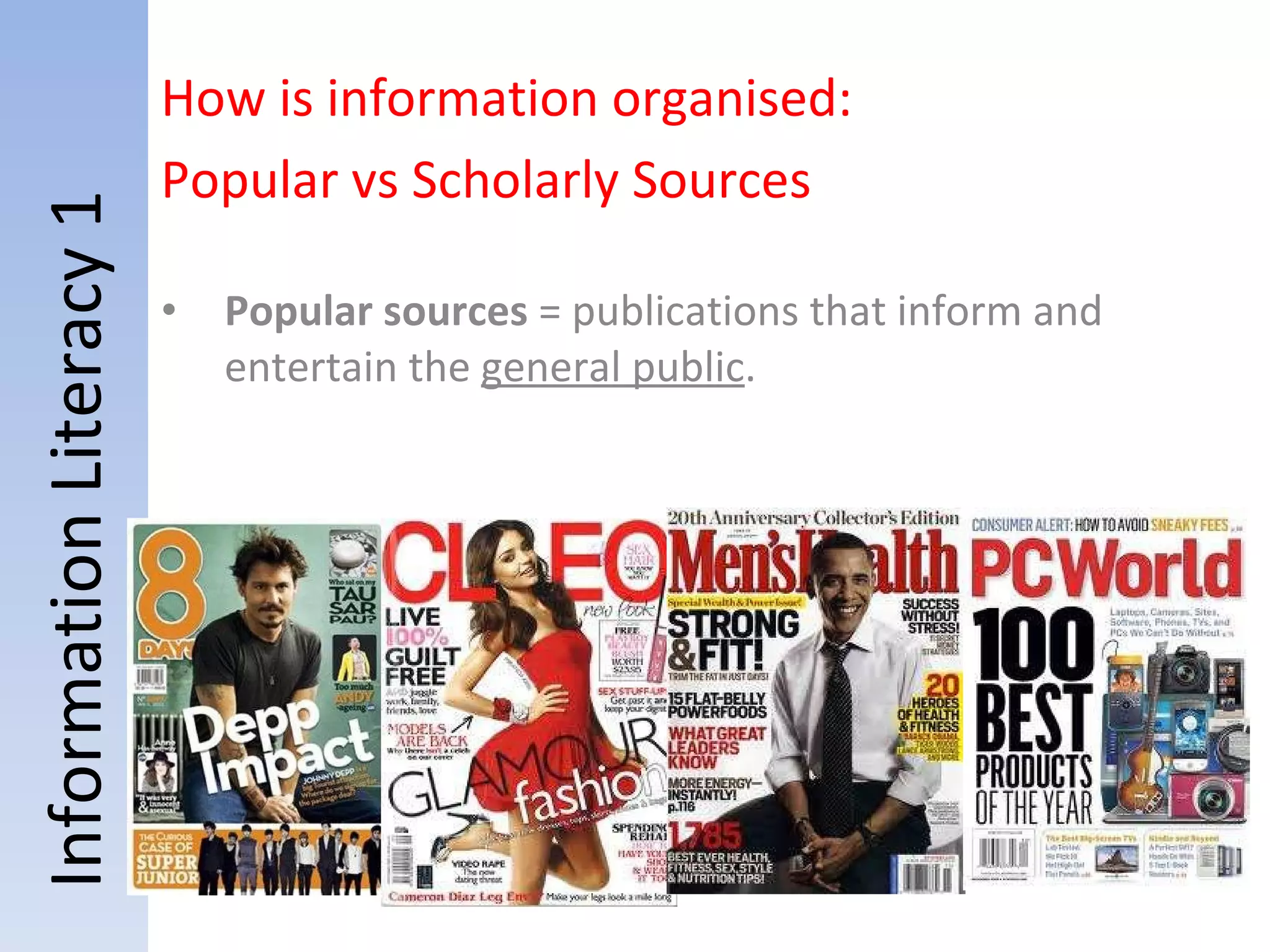
Information Literacy 1 Popular sources  = publications that inform and entertain the  general public .  How is information organised:  Popular vs Scholarly Sources
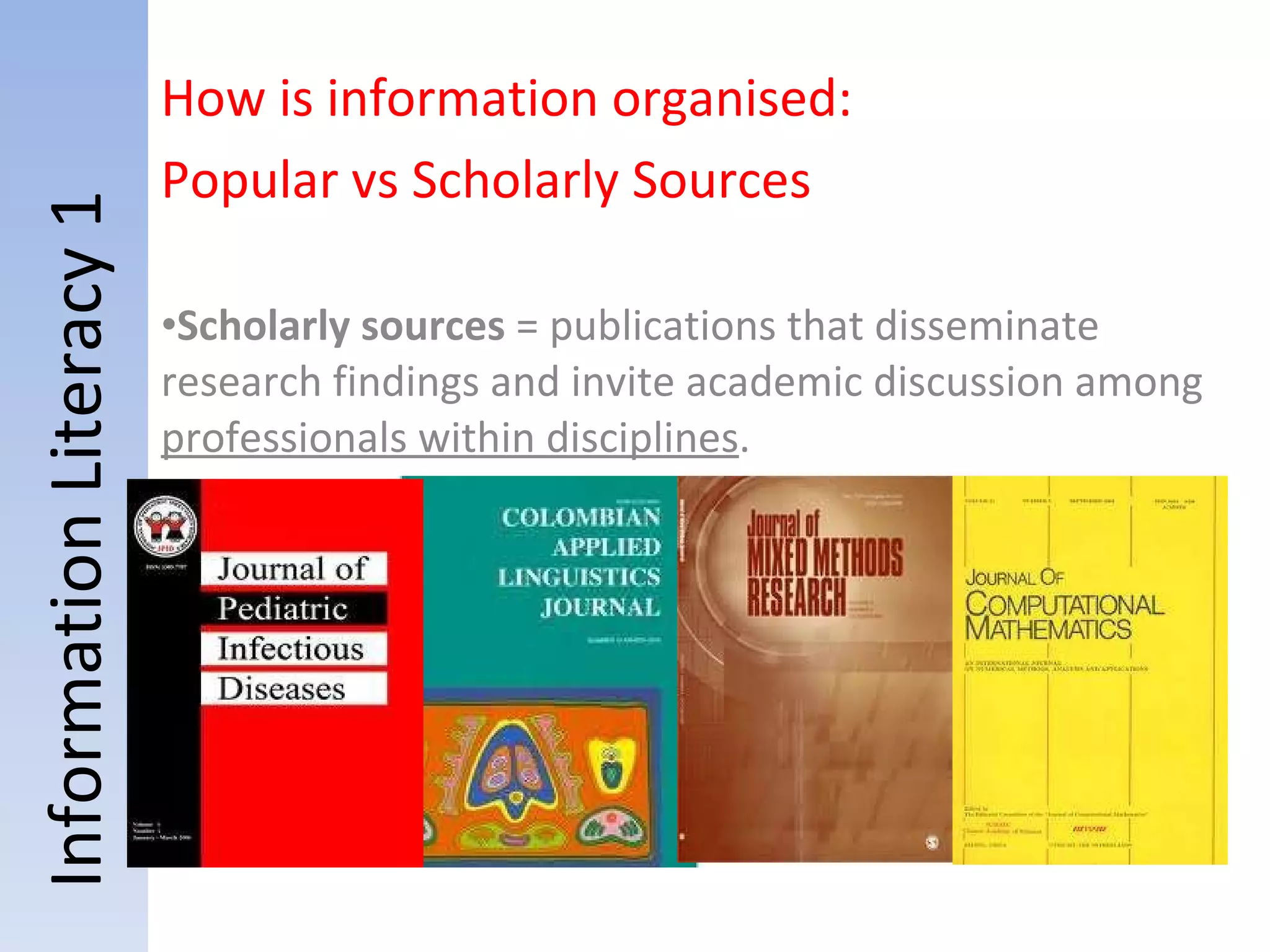
Information Literacy 1 Scholarly sources  = publications that disseminate research findings and invite academic discussion among  professionals within disciplines . How is information organised:  Popular vs Scholarly Sources
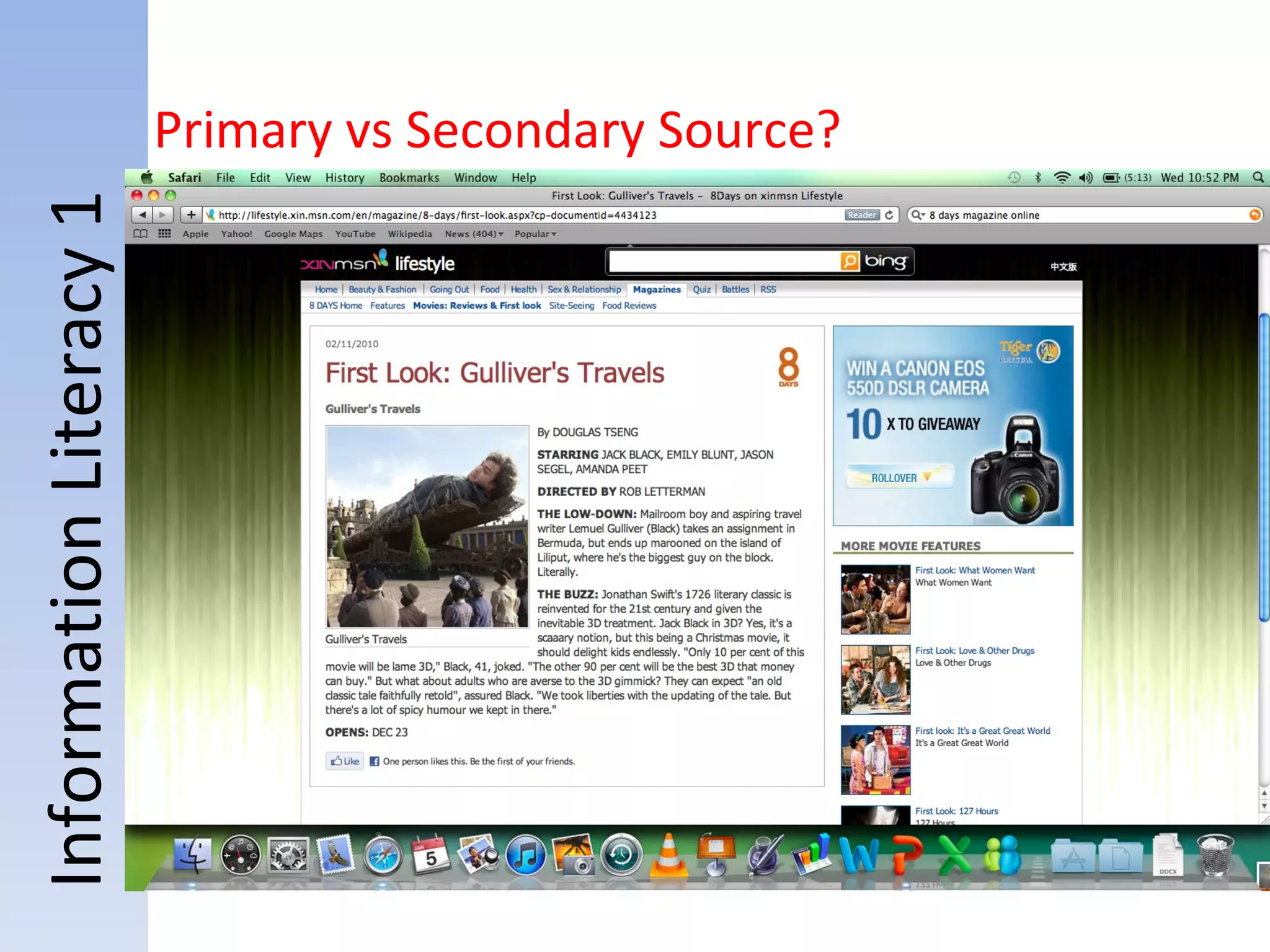
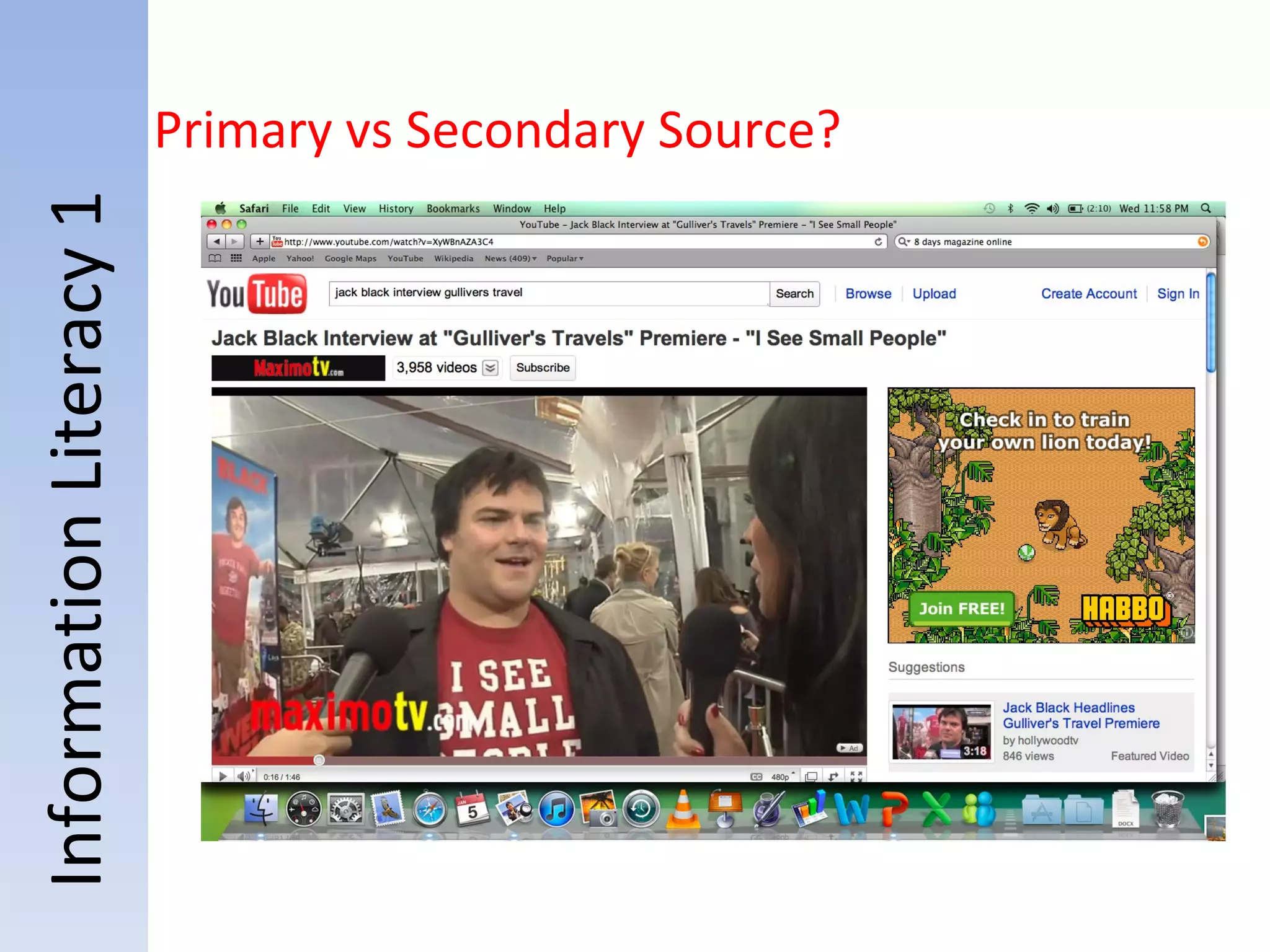
Information Literacy 1 A  primary source  refers to an original object or document. It is the raw-material that is often considered first-hand information. It can be found in:   eyewitness accounts results of an experiment statistical data legal documents interviews From: Ithaca College Library http://www.ithacalibrary.com/sp/subjects/primary Primary vs Secondary Sources
Information Literacy 1 A  secondary source  usually refers to something written about a primary source. It can include:   comments on the original material interpretations on the original material summary/ synopsis/ abstract of the original material discussions about the original material Note: If I tell you something, I am the primary source. If you tell someone else what I told you, you are the secondary source. From: Ithaca College Library http://www.ithacalibrary.com/sp/subjects/primary Primary vs Secondary Sources
Information Literacy 1 Primary vs Secondary Source?
Information Literacy 1 Question Why is it important to use primary sources? Why is it important to use scholarly sources? Which are your best resources for research? Primary sources Scholarly sources
Information Literacy 1 For a piece of research to qualify as ‘academic research’, it must be: Credible Useful Reliable Relevant Why use these resources for research? Primary sources Scholarly sources
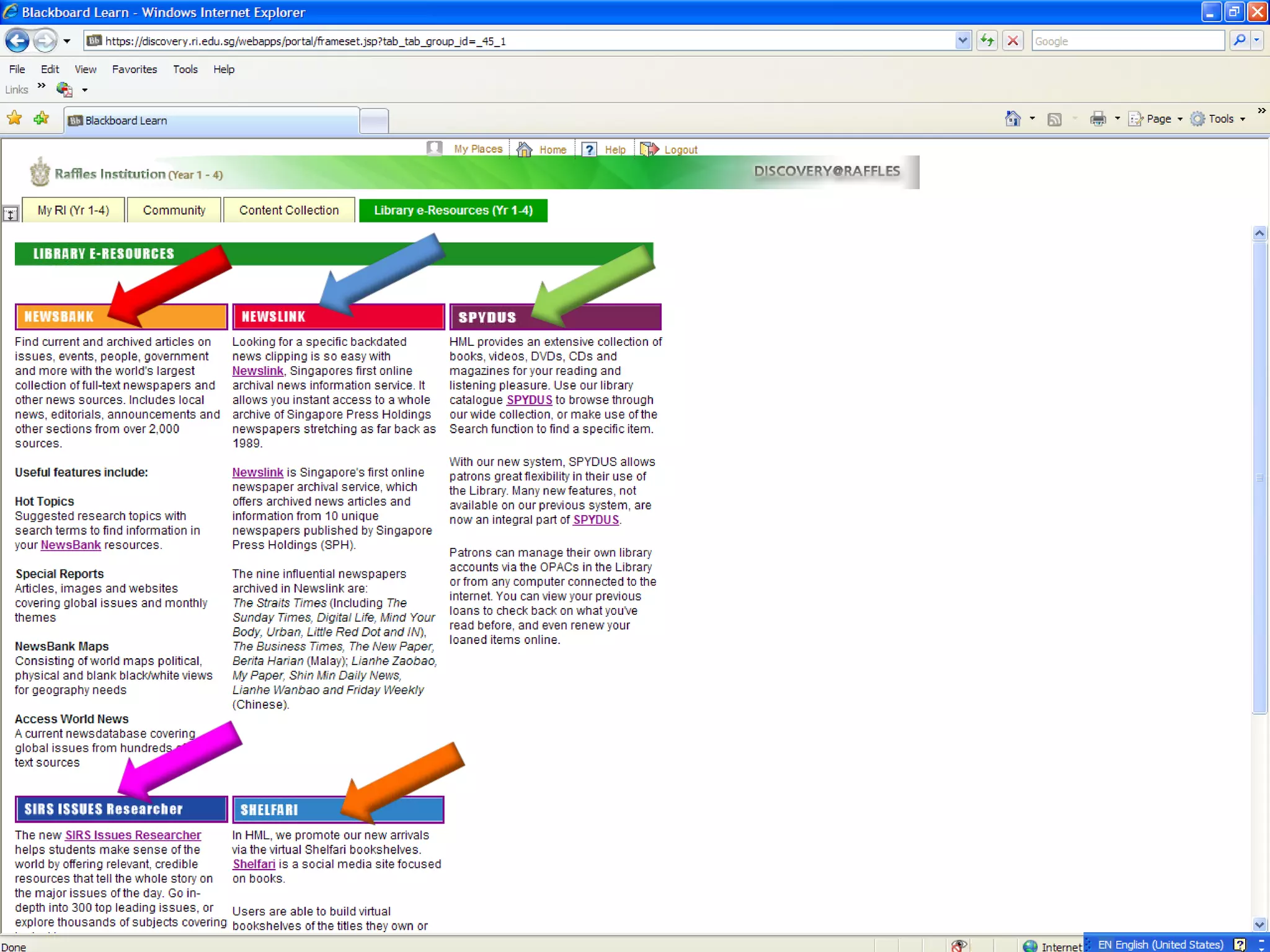
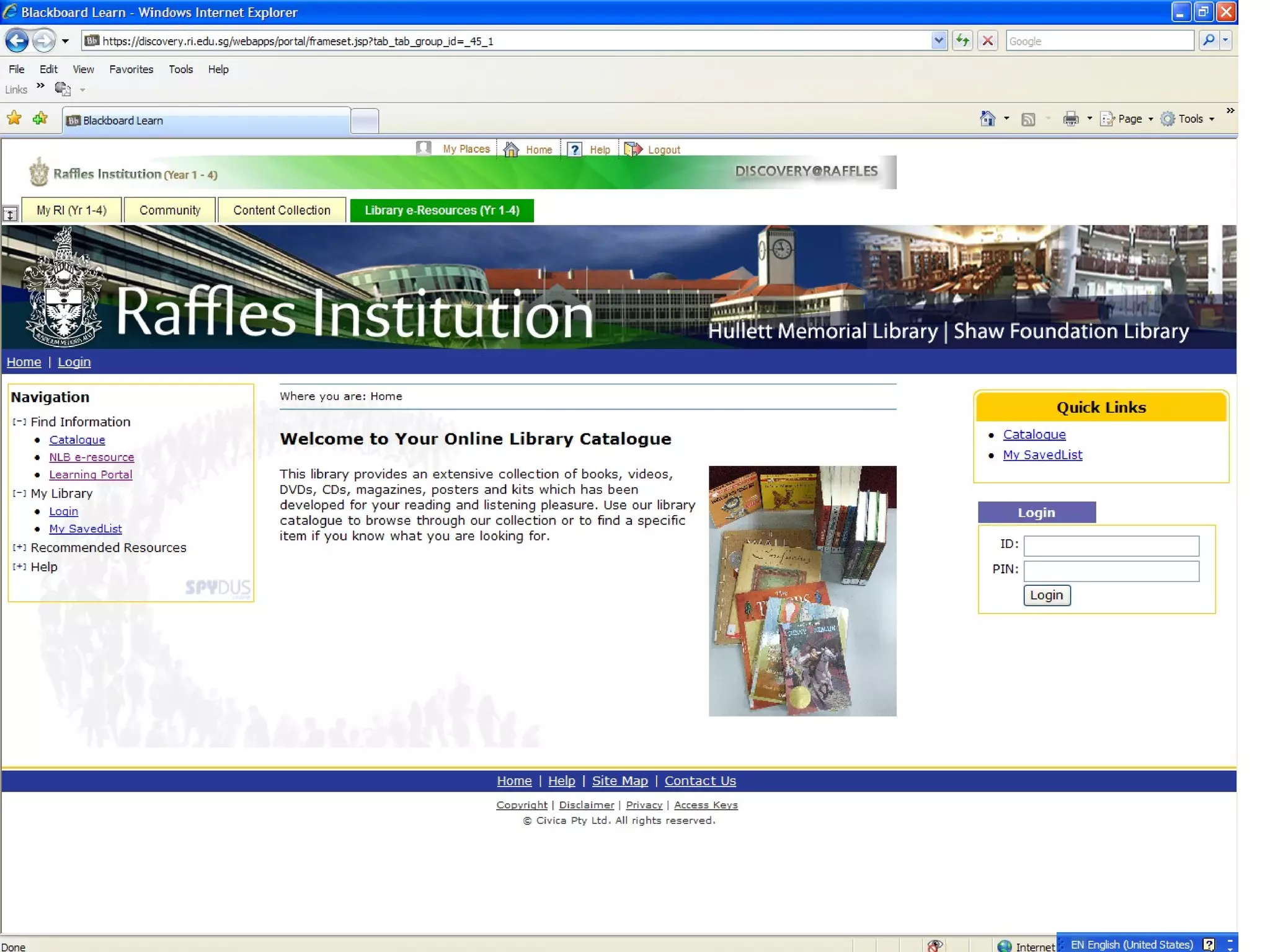
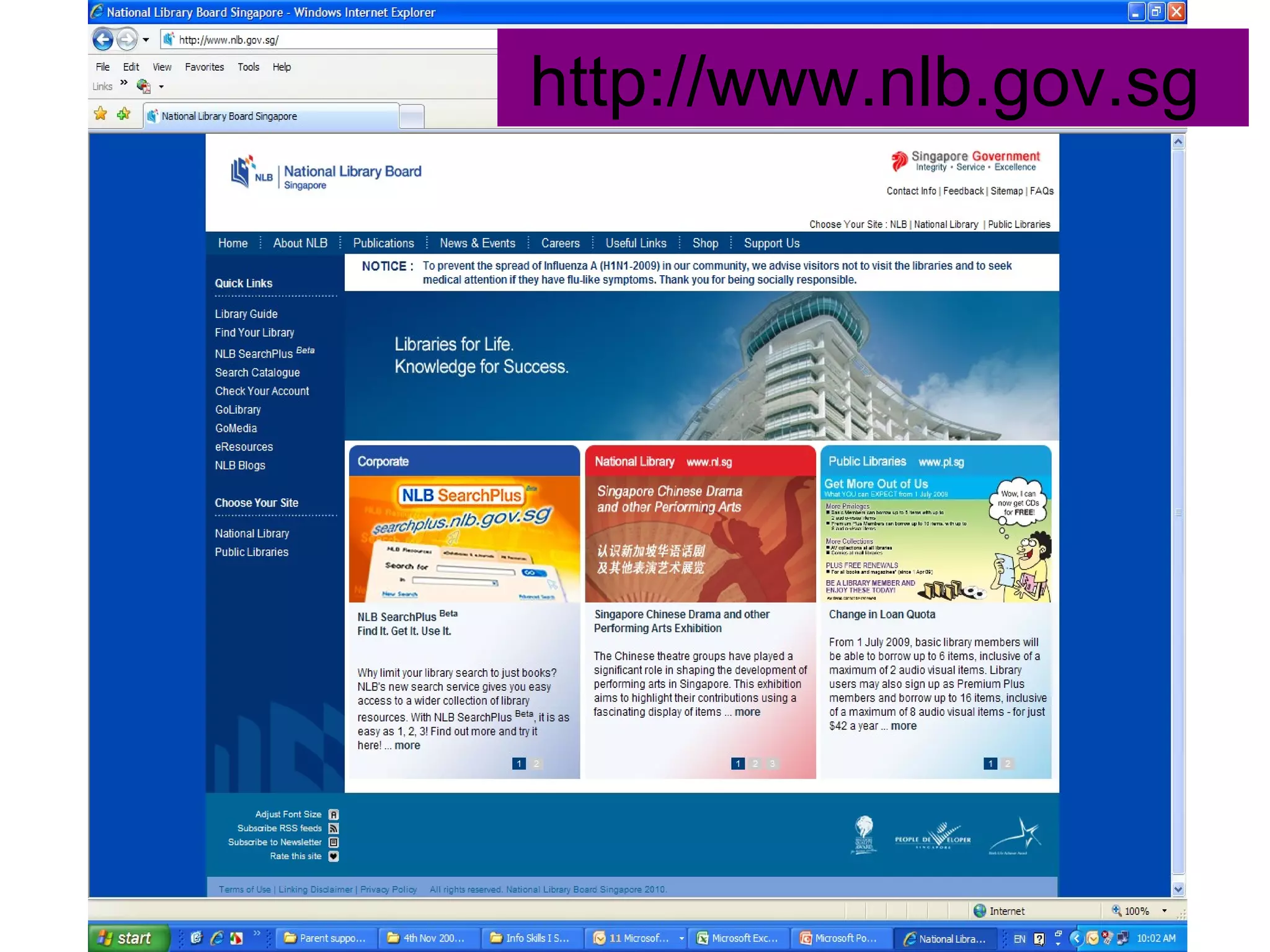
Information Literacy 1 Where do we look for the best resources? PRINT  Hullett Memorial Library National Library Newspapers ELECTRONIC  NLB E-Resources (www.nlb.gov.sg) SIRS Researcher (via RE Portal) Newslink (via RE Portal) Youtube
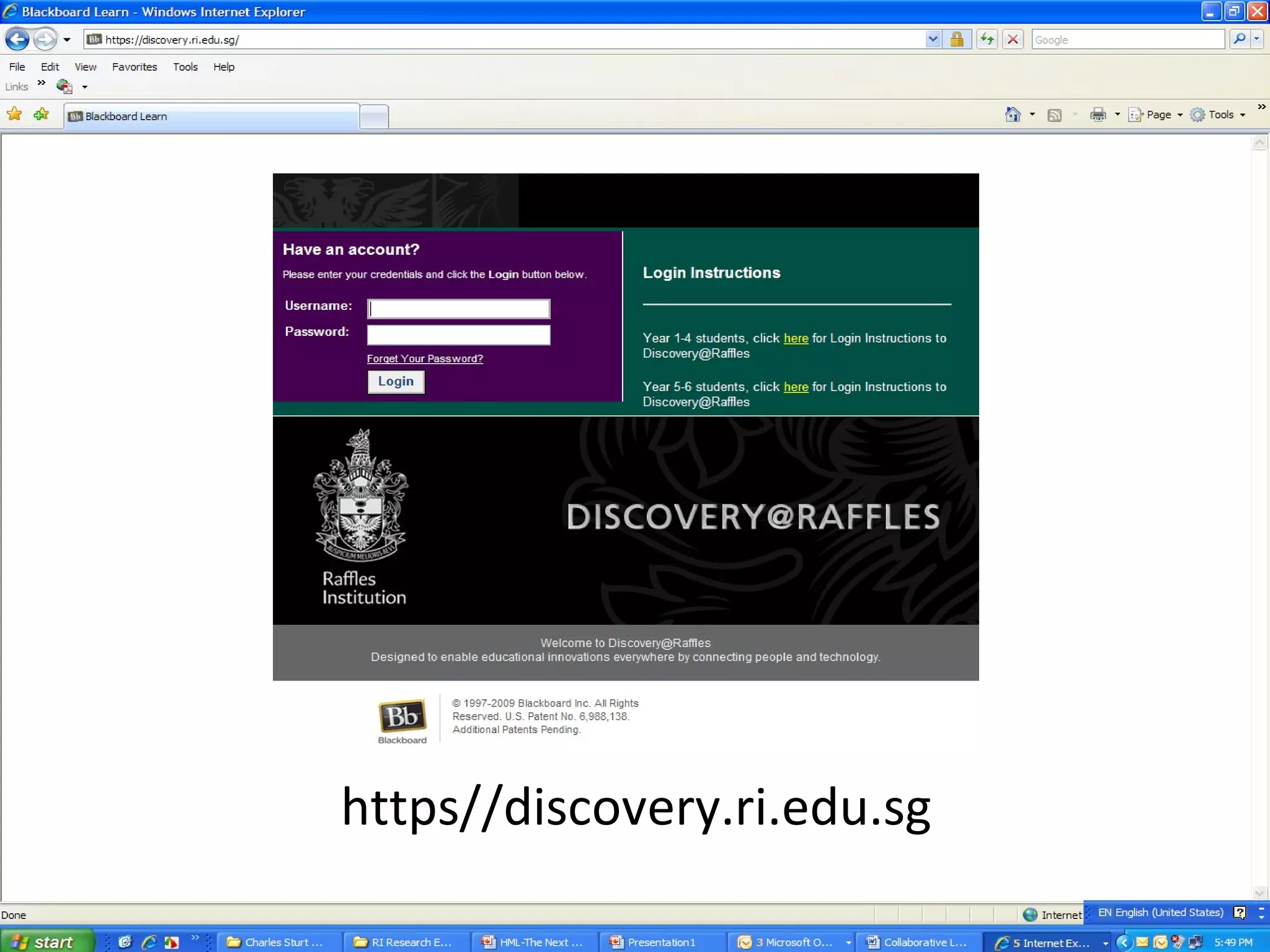
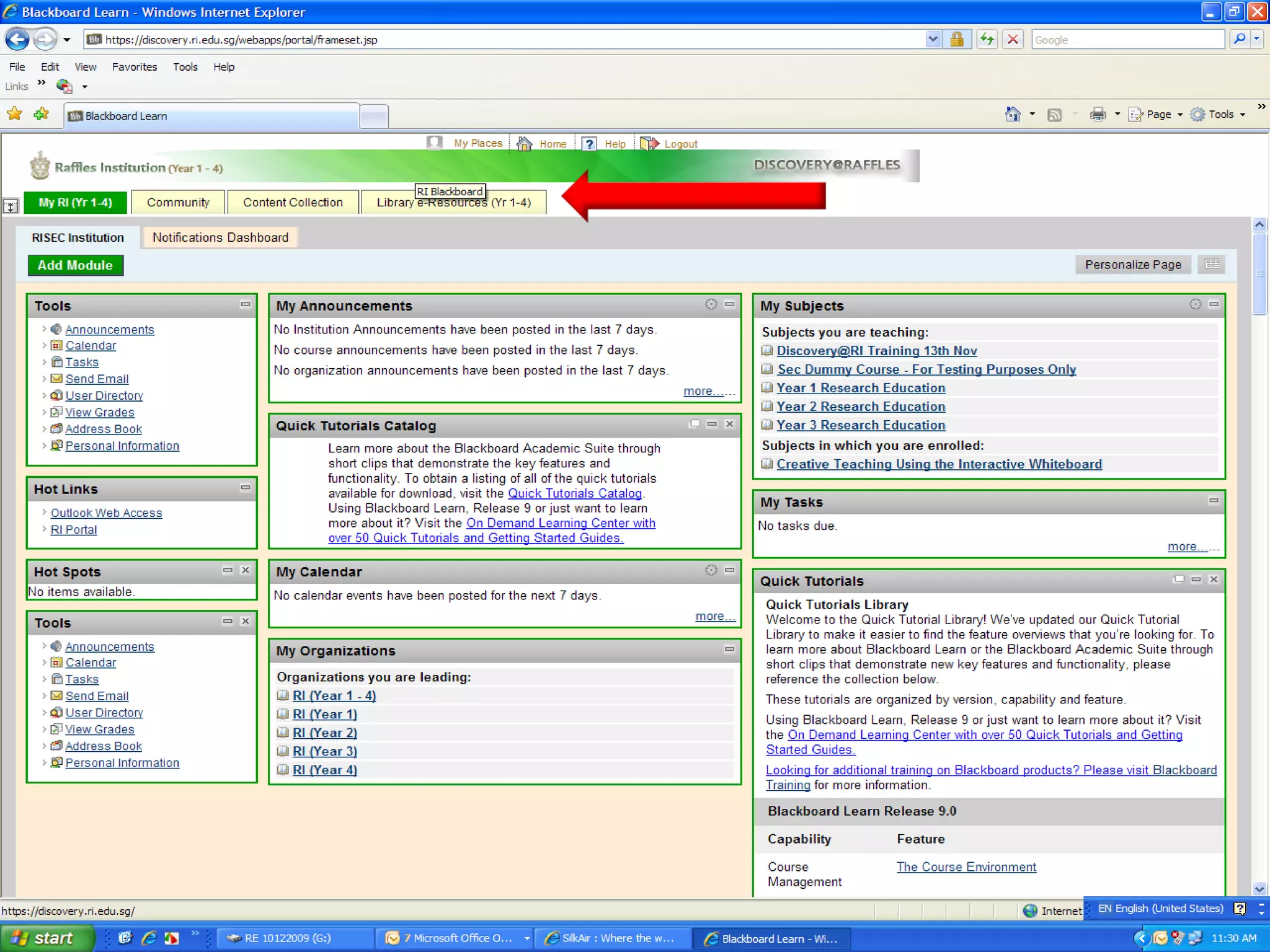
Information Literacy 1 Where do we look for the best resources? ELECTRONIC  NLB E-Resources (www.nlb.gov.sg) SIRS Researcher (via RI Discovery) Newslink (via RI Discovery)
https//discovery.ri.edu.sg
 
 
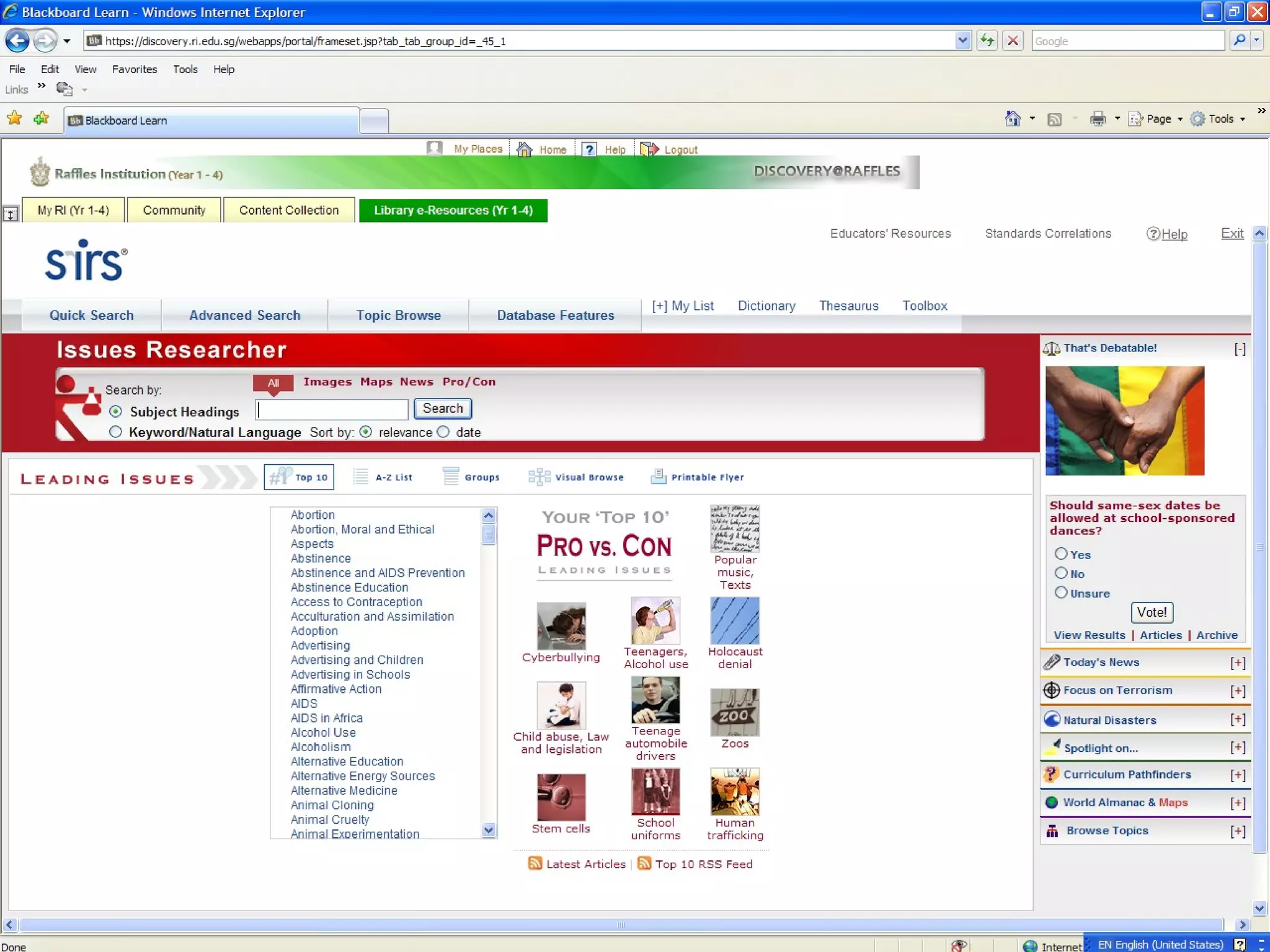
Information Literacy 1 SIRS Issues Researcher SIRS has been the leader in social issues coverage for more than 35 years. 
 Controversial Issues such as  abortion,  capital punishment,  immigration,  and gun control; and current issues such as the  global financial crisis,  mass media,  privacy rights for teenagers,  alternative education,  climate change,  and same-sex marriage. 

Thousands of highly targeted documents, primary source documents, websites, and multimedia (including 13,000+ research-quality images) represent viewpoints from the pros and cons, to everything in-between. 

 Every SIRS Leading Issue: Offers introductory overview for context including Terms to Know, Perspectives, and links for Further Research. Reviews the issue's pro/con viewpoints with Essential Questions, answers, and resources for each viewpoint. Provides relevant, full-text documents and multimedia resources, updated daily. Offers sample activity templates for student essays, research papers, debates, and a Research Guide for the Critical Thinker. Links to new collaborative aids, like social bookmarking and note organizers, to discuss and share ideas, then create, present, and mash-up your ideas in Web 2.0-style. Promotes critical thinking and inquiry-based learning.
 
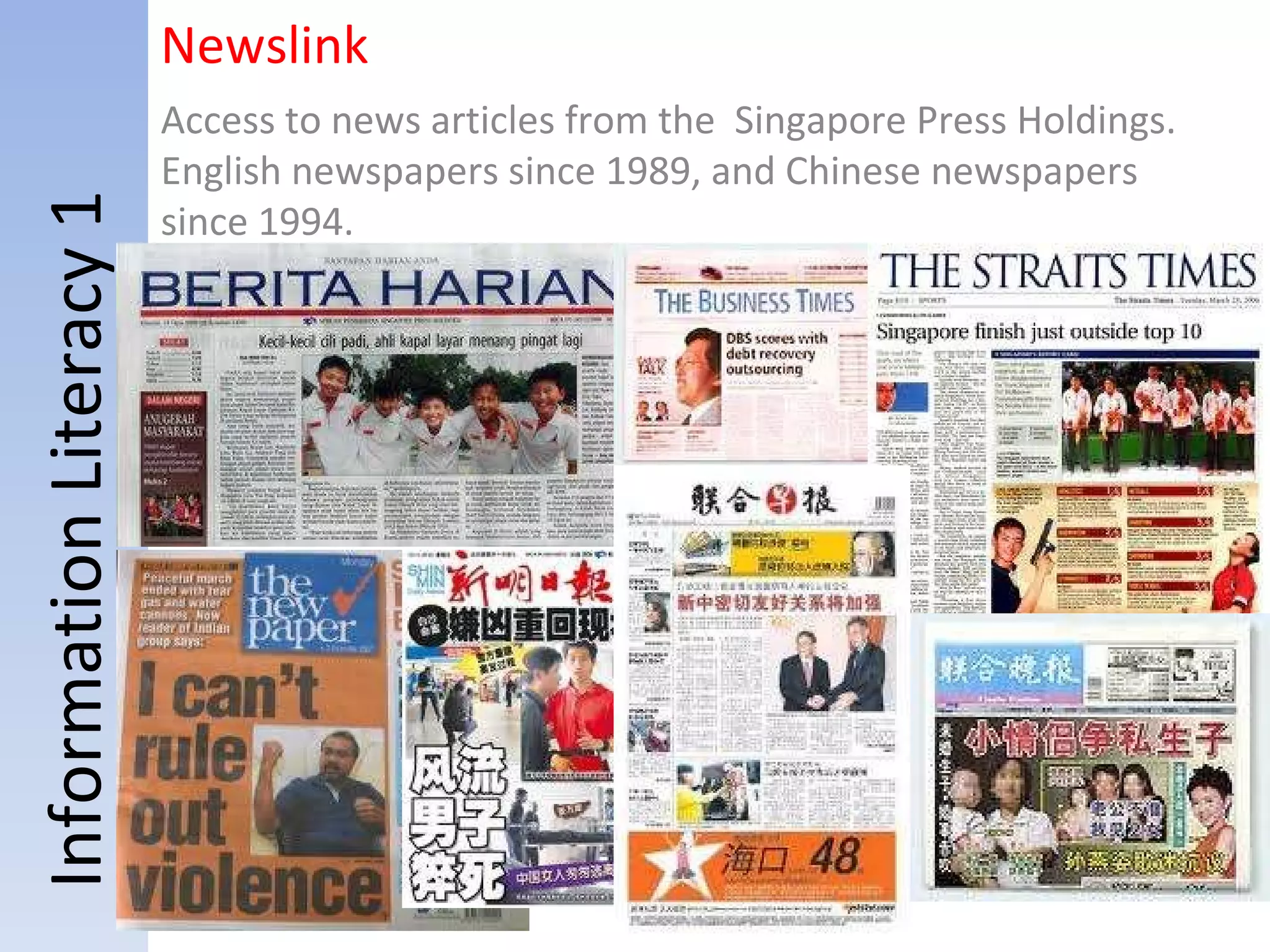
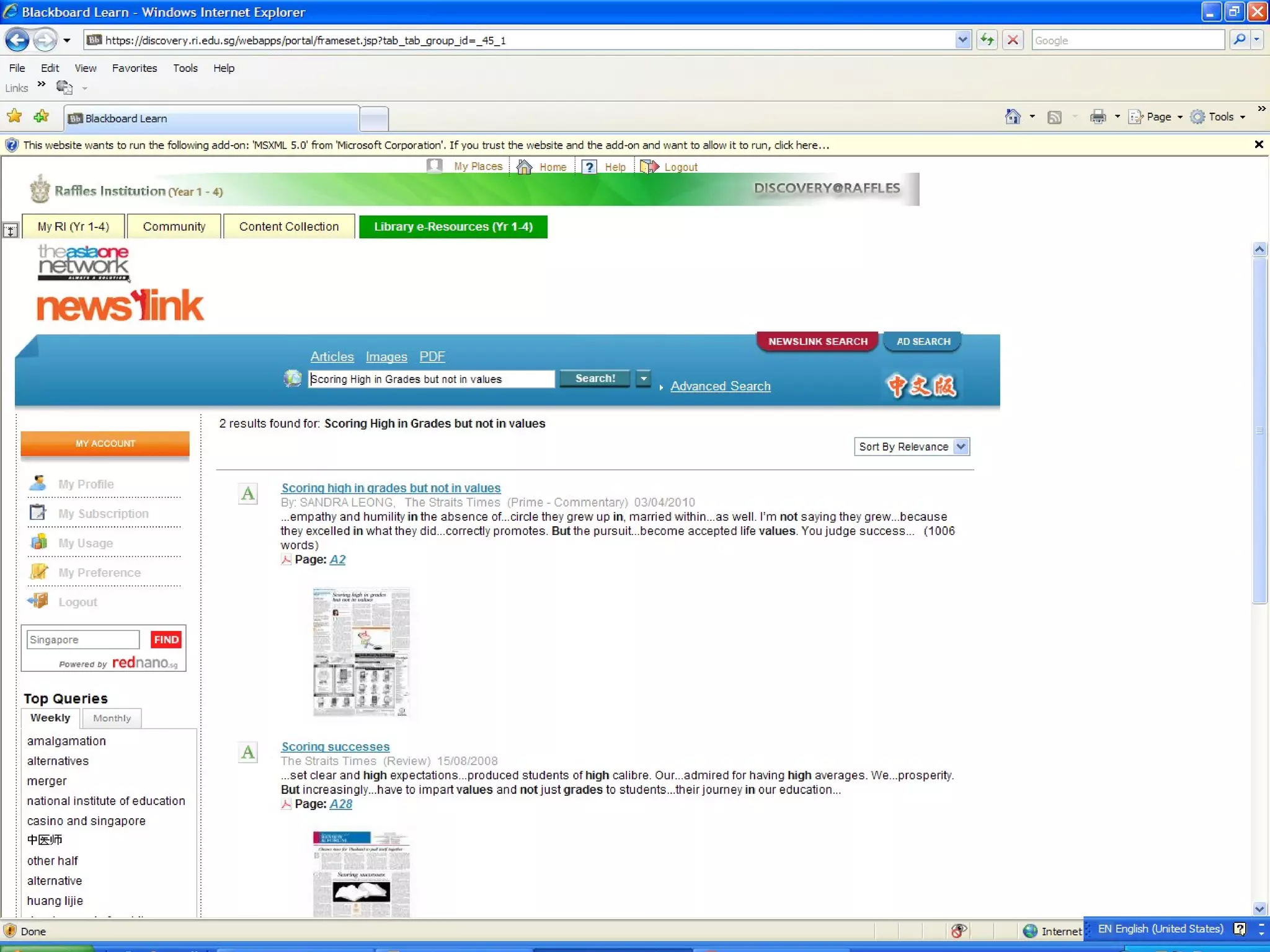
Information Literacy 1 Newslink Access to news articles from the  Singapore Press Holdings. English newspapers since 1989, and Chinese newspapers since 1994.
 
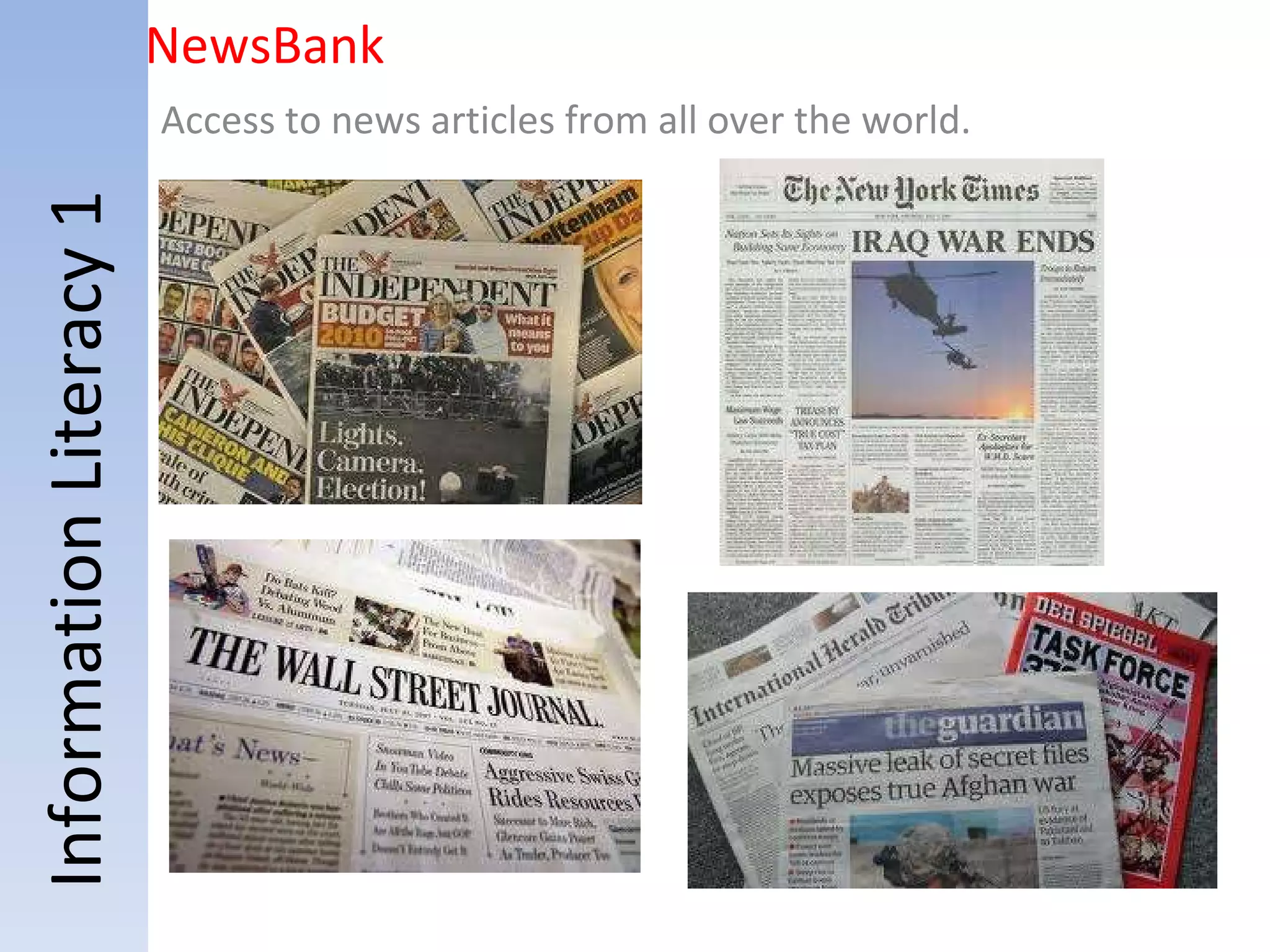
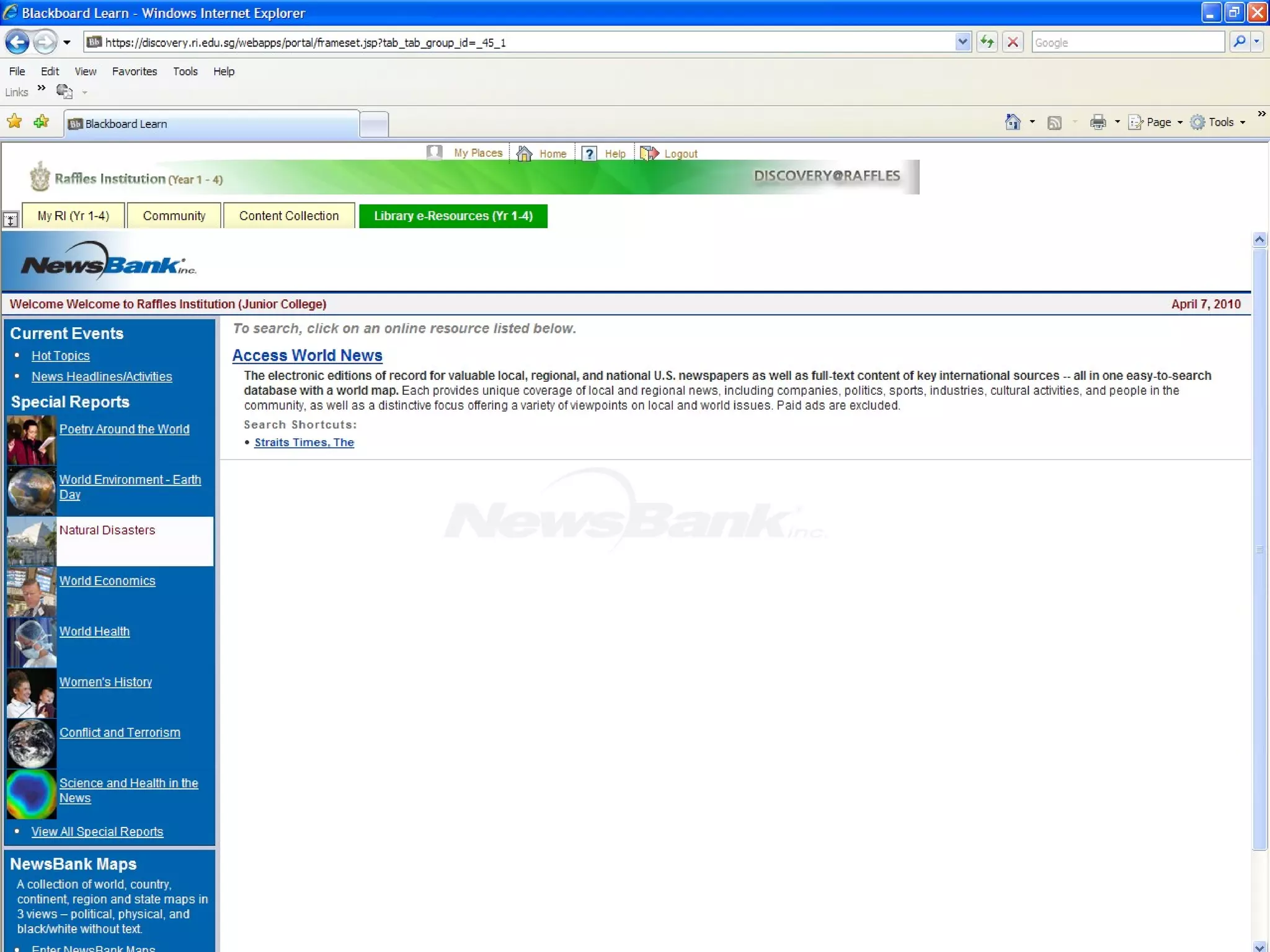
Information Literacy 1 NewsBank Access to news articles from all over the world.
 
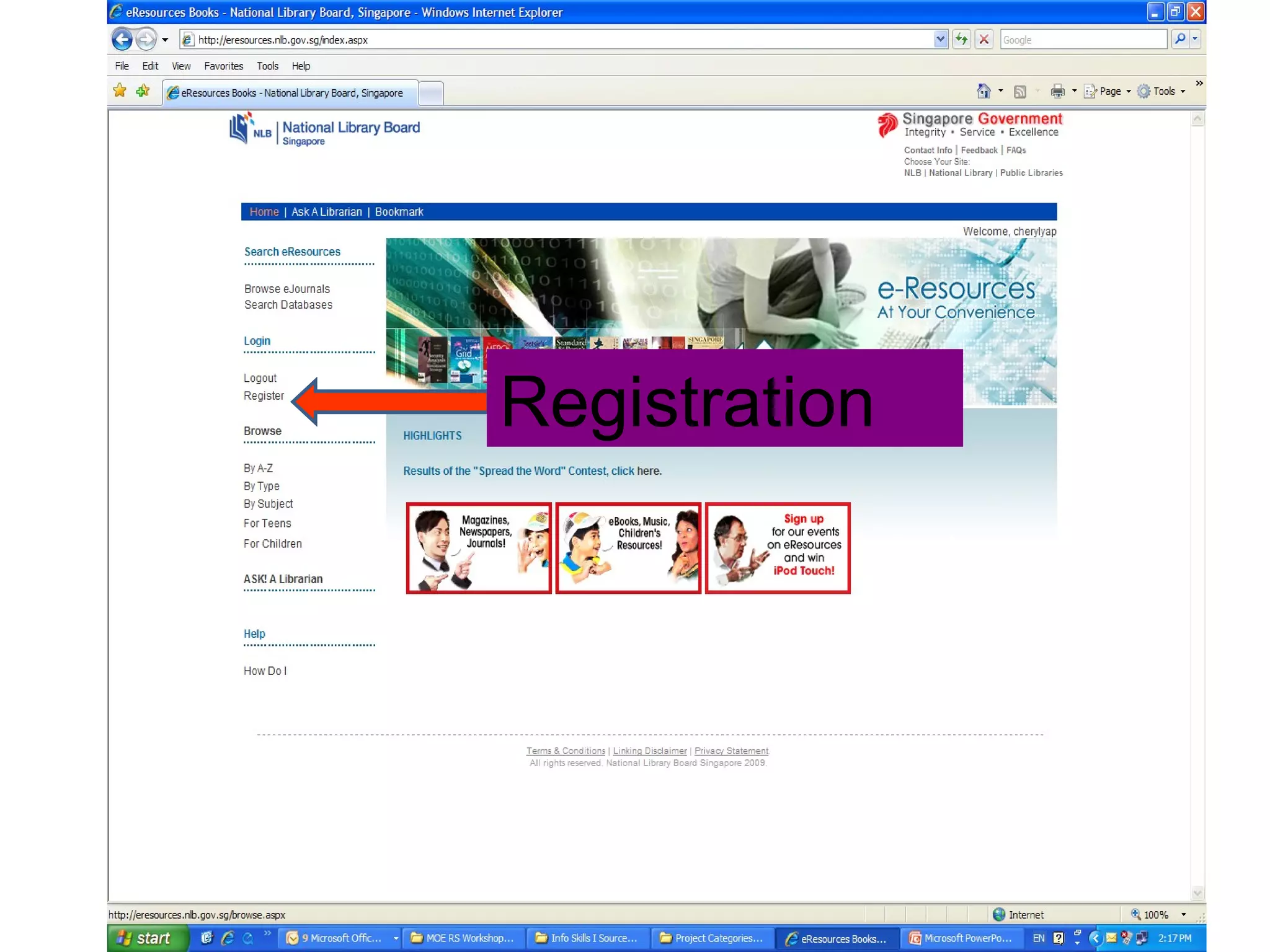
Information Literacy 1 National Library Board E-Resources Access to databases which are gateways to academic journals. Commonly used databases are ProQuest, and JSTOR.
 
http://www.nlb.gov.sg
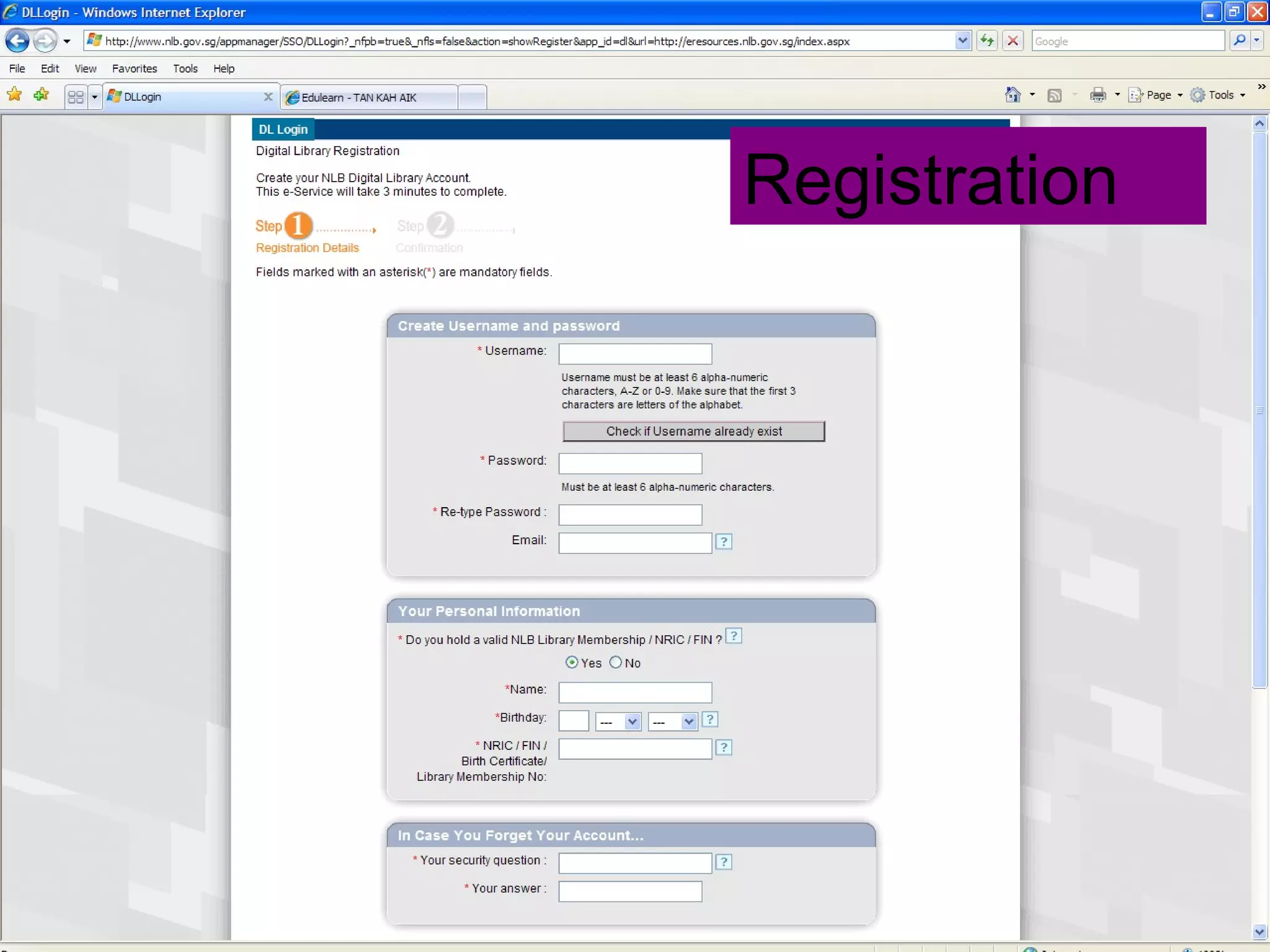
Registration
Registration
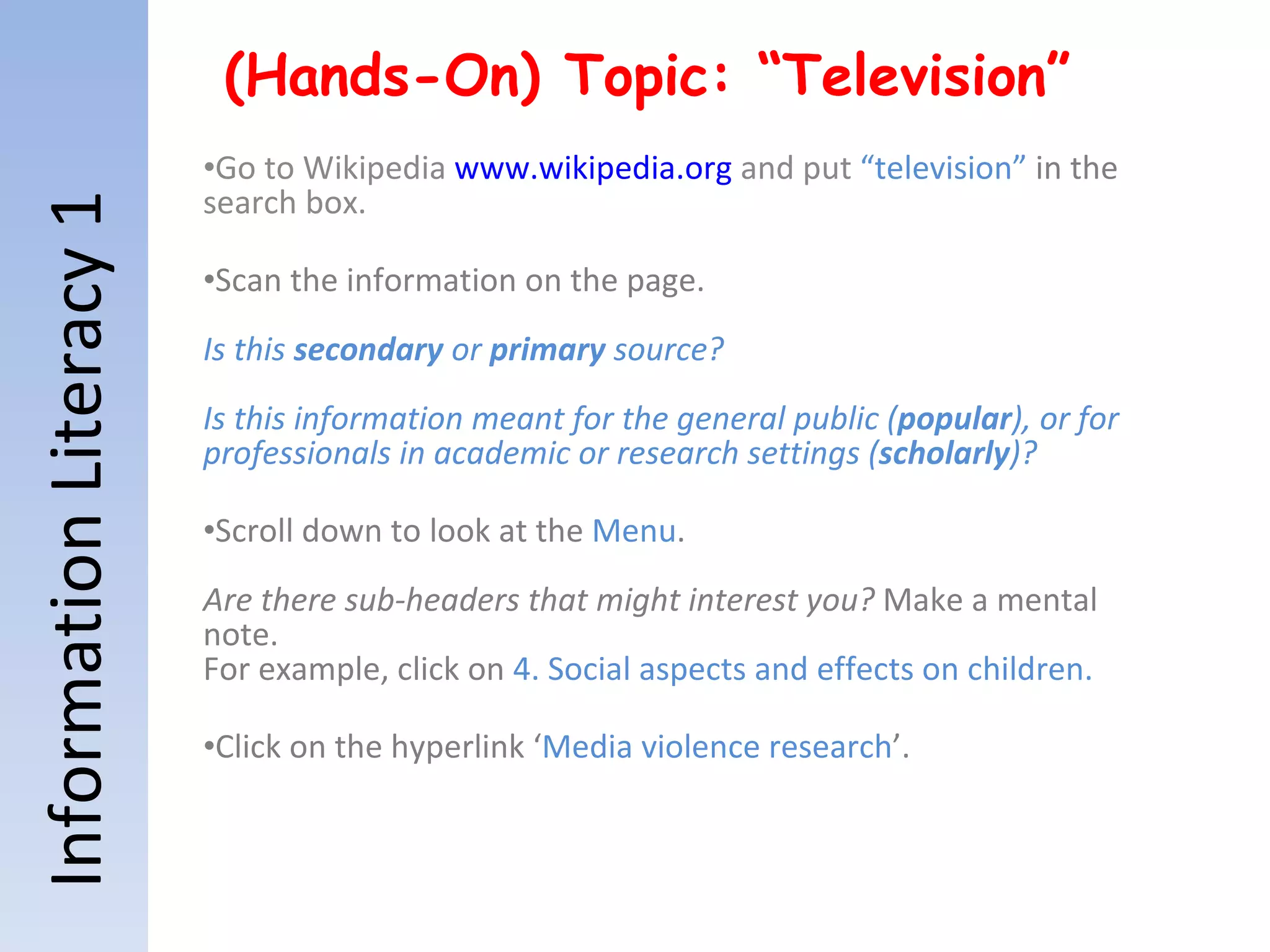
Information Literacy 1 (Hands-On) Topic: “Television” Go to Wikipedia  www.wikipedia.org  and put  “television”  in the  search box.  Scan the information on the page. Is this  secondary  or  primary  source? Is this information meant for the general public ( popular ), or for professionals in academic or research settings ( scholarly )? Scroll down to look at the  Menu .  Are there sub-headers that might interest you?  Make a mental note. For example, click on  4. Social aspects and effects on children. Click on the hyperlink ‘ Media violence research ’.
Information Literacy 1 (Hands-On) Topic: “Television” 5. Read the first paragraph: Research into the media and violence examines whether a link between consuming  media  violence and subsequent aggressive and  violent  behavior exists. Although some  social scientists  support this link, [1]  methodological and theoretical problems with the existing literature limit interpretation of findings in this area. There is concern among some scholars that media researchers may have exaggerated effects (Ferguson & Kilburn, 2009; Freedman, 2002; Pinker 2002; Savage, 2004). Let’s analyse this short paragraph.
Information Literacy 1 (Hands-On) Topic: “Television” 5. Read the first paragraph: Research into the media and violence examines whether a link between consuming  media  violence and subsequent aggressive and  violent  behavior exists. Although some  social scientists  support this link, [1]  methodological and theoretical problems with the existing literature limit interpretation of findings in this area. There is concern among some scholars that media researchers may have exaggerated effects (Ferguson & Kilburn, 2009; Freedman, 2002; Pinker 2002; Savage, 2004).
Information Literacy 1 (Hands-On) Topic: “Television” 5. Read the first paragraph: Research into the media and violence examines whether a link between consuming  media  violence and subsequent aggressive and  violent  behavior exists. Although some  social scientists  support this link, [1]  methodological and theoretical problems with the existing literature limit interpretation of findings in this area. There is concern among some scholars that media researchers may have exaggerated effects (Ferguson & Kilburn, 2009; Freedman, 2002; Pinker 2002; Savage, 2004). Secondary source?
Information Literacy 1 (Hands-On) Topic: “Television” 5. Read the first paragraph: Research into the media and violence examines whether a link between consuming  media  violence and subsequent aggressive and  violent  behavior exists. Although some  social scientists  support this link, [1]  methodological and theoretical problems with the existing literature limit interpretation of findings in this area. There is concern among some scholars that media researchers may have exaggerated effects (Ferguson & Kilburn, 2009; Freedman, 2002; Pinker 2002; Savage, 2004). Primary sources?
Information Literacy 1 (Hands-On) Topic: “Television” 5. Read the first paragraph: Research into the media and violence examines whether a link between consuming  media  violence and subsequent aggressive and  violent  behavior exists. Although some  social scientists  support this link, [1]  methodological and theoretical problems with the existing literature limit interpretation of findings in this area. There is concern among some scholars that media researchers may have exaggerated effects (Ferguson & Kilburn, 2009; Freedman, 2002; Pinker 2002; Savage, 2004). Primary sources? Probably yes. But which are the more scholarly ones?
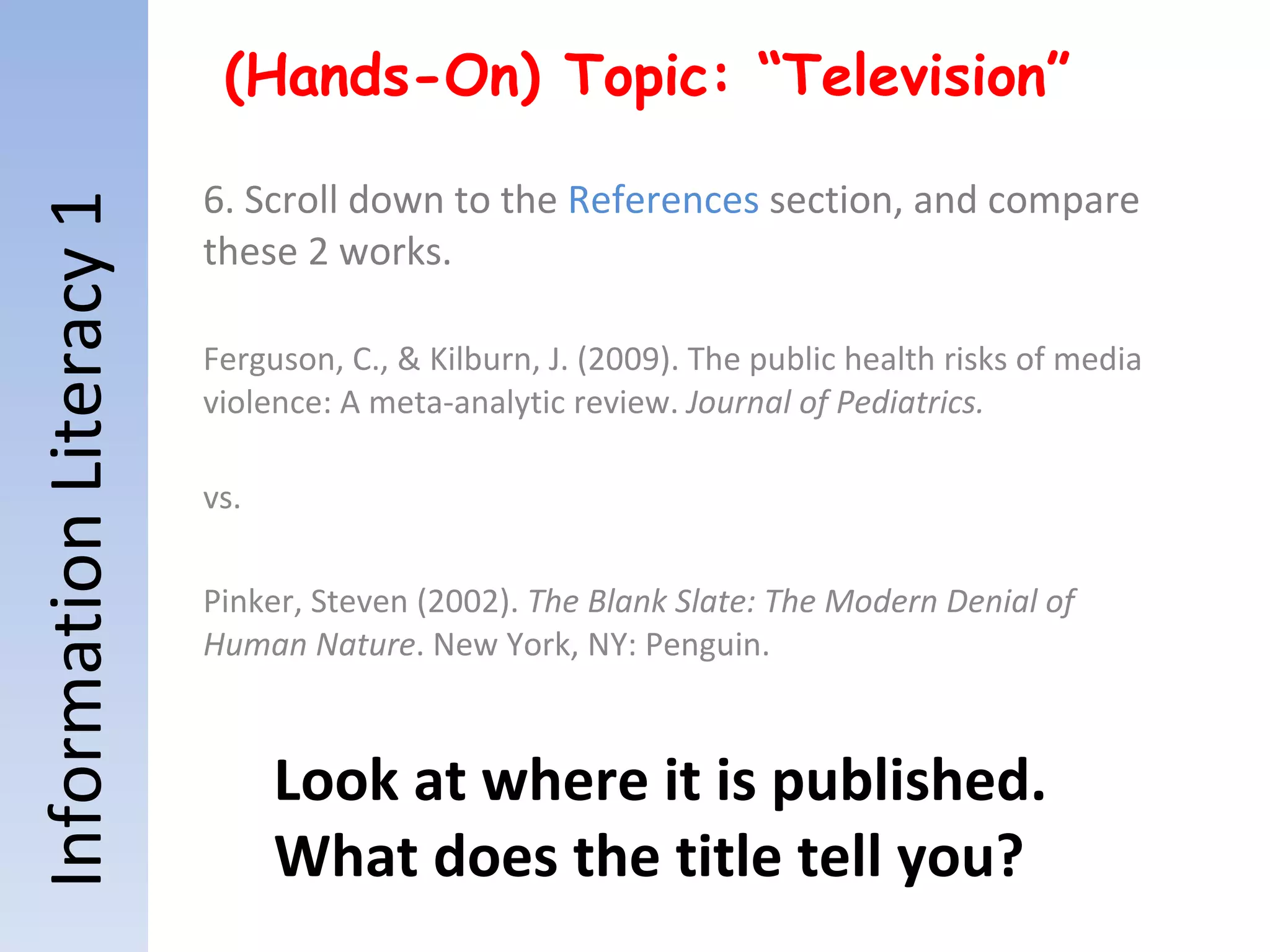
Information Literacy 1 (Hands-On) Topic: “Television” 6. Scroll down to the  References  section, and compare these 2 works. Ferguson, C., & Kilburn, J. (2009). The public health risks of media violence: A meta-analytic review.  Journal of Pediatrics. vs. Pinker, Steven (2002).  The Blank Slate: The Modern Denial of Human Nature . New York, NY: Penguin. Look at where it is published.  What does the title tell you?
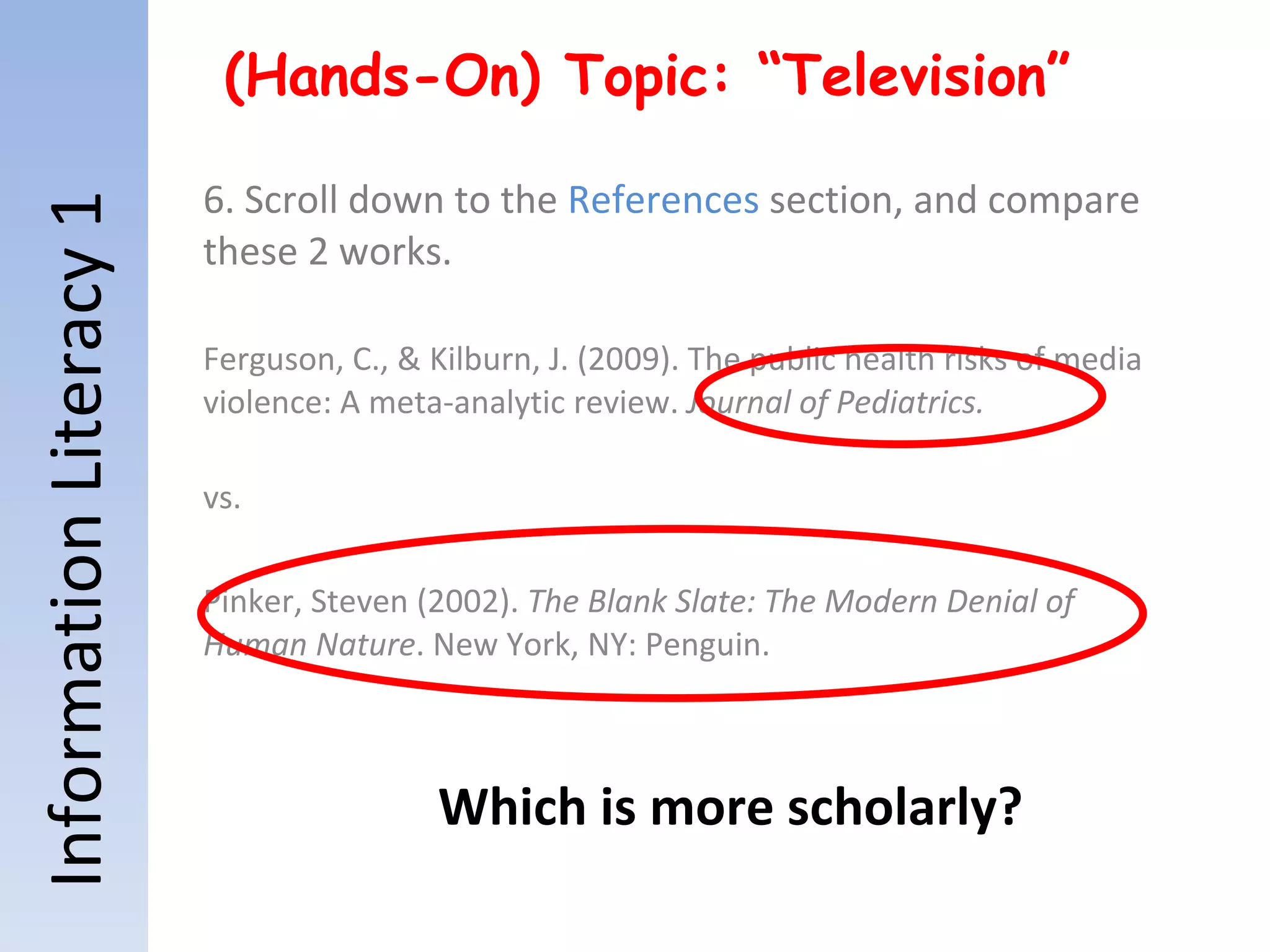
Information Literacy 1 (Hands-On) Topic: “Television” 6. Scroll down to the  References  section, and compare these 2 works. Ferguson, C., & Kilburn, J. (2009). The public health risks of media violence: A meta-analytic review.  Journal of Pediatrics. vs. Pinker, Steven (2002).  The Blank Slate: The Modern Denial of Human Nature . New York, NY: Penguin. Which is more scholarly?
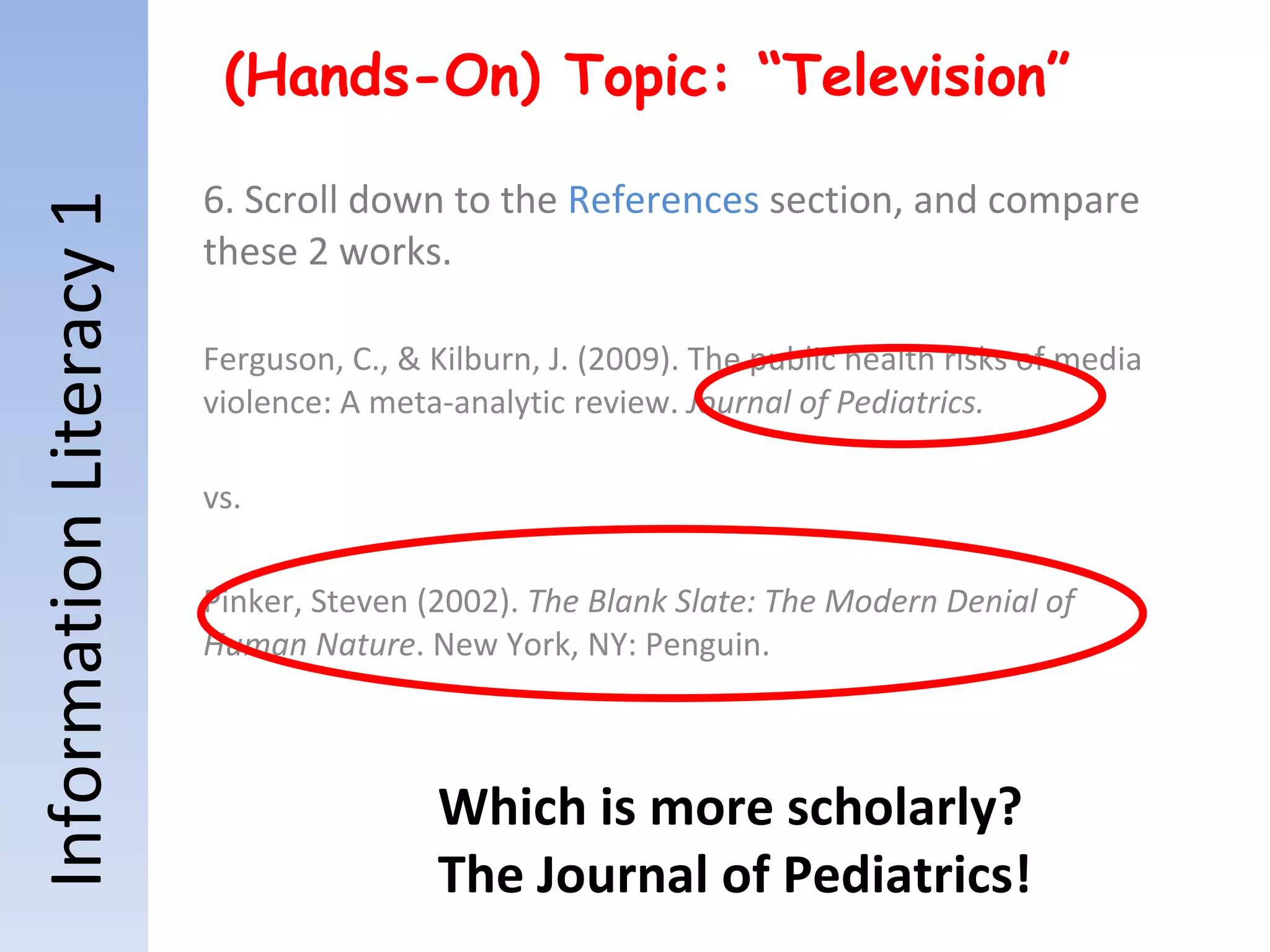
Information Literacy 1 (Hands-On) Topic: “Television” 6. Scroll down to the  References  section, and compare these 2 works. Ferguson, C., & Kilburn, J. (2009). The public health risks of media violence: A meta-analytic review.  Journal of Pediatrics. vs. Pinker, Steven (2002).  The Blank Slate: The Modern Denial of Human Nature . New York, NY: Penguin. Which is more scholarly? The Journal of Pediatrics!
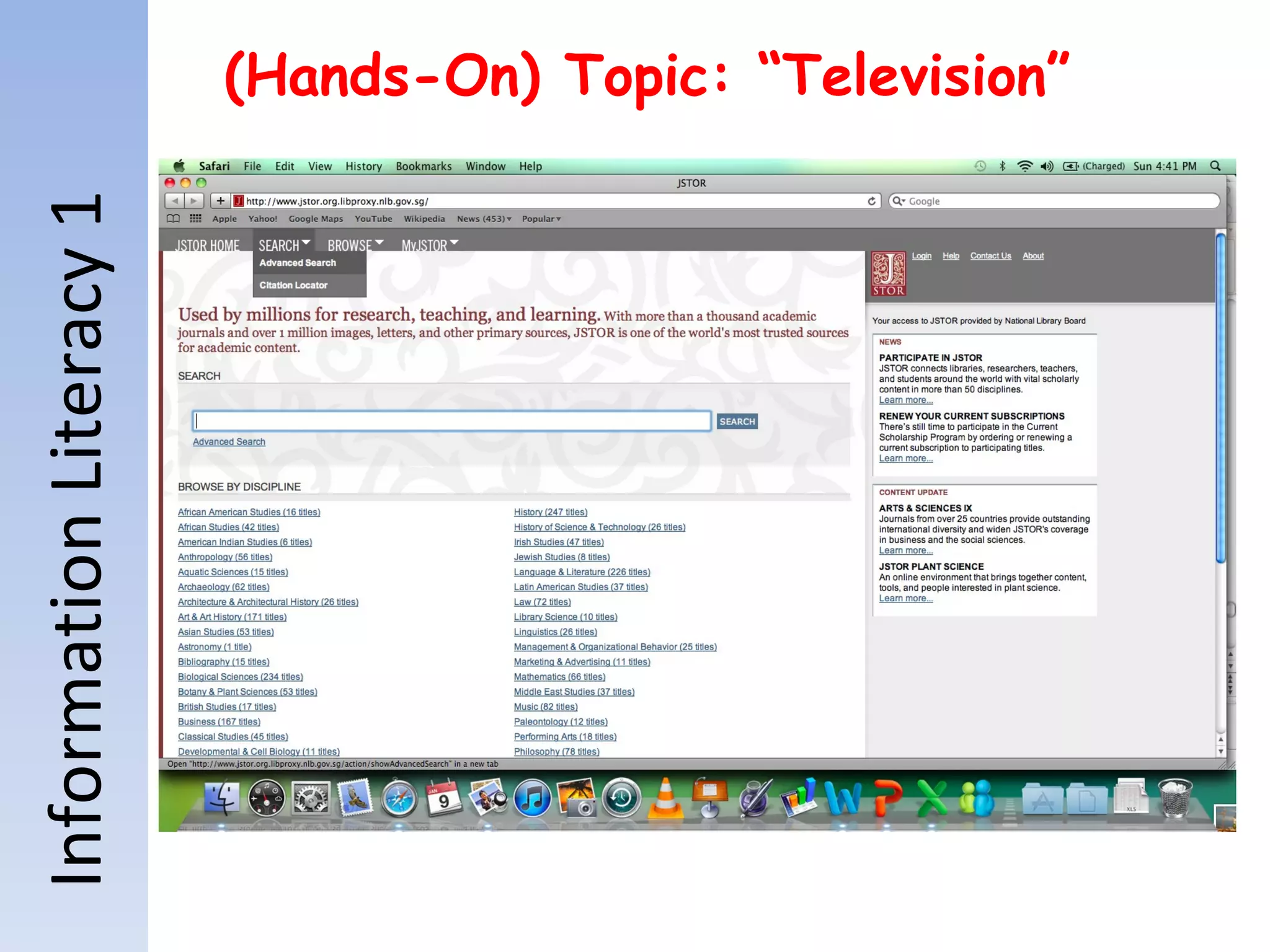
Information Literacy 1 (Hands-On) Topic: “Television” 7.  Now, look for keywords in the titles in the  References  section, and search for other scholarly articles in JSTOR. 8. Go to NLB E-Resources > e-journals > JSTOR > Advanced Search
Information Literacy 1 (Hands-On) Topic: “Television”
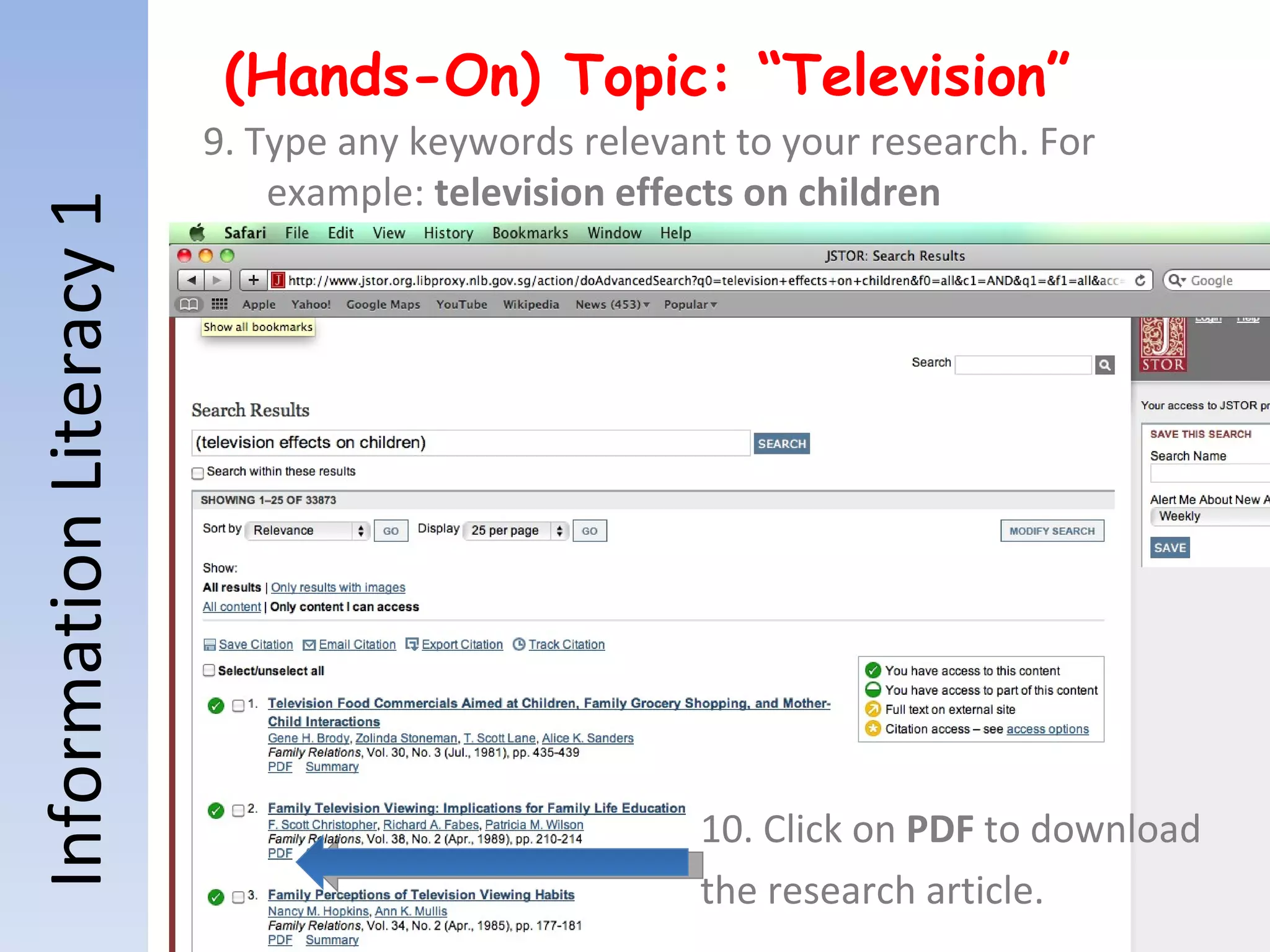
Information Literacy 1 (Hands-On) Topic: “Television” 9. Type any keywords relevant to your research. For example:  television effects on children 10. Click on  PDF  to download  the research article.
Information Literacy 1 (Hands-On) Topic: “Television” 10. Read the article. Is it useful? 11. Look for more articles with different keyword searches. 12. Take time to surf for useful articles now.  (Approximately 10 minutes)
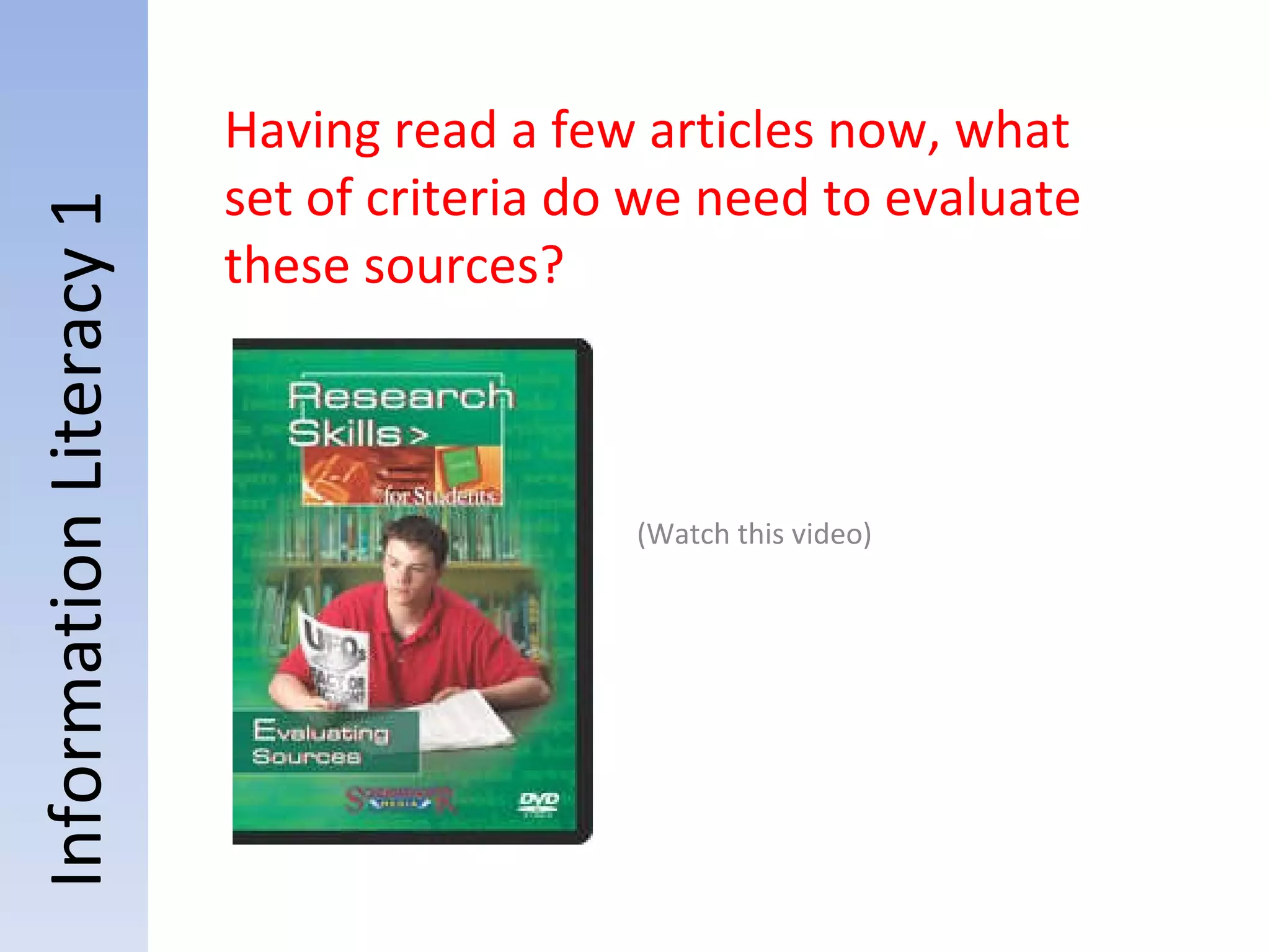
Information Literacy 1 Having read a few articles now, what set of criteria do we need to evaluate these sources? (Watch this video)
Information Literacy 1 What set of criteria do we need to evaluate sources? CARRDSS, a mnemonic device, can be a useful tool: Credibility Accuracy Reliability Relevance Date Source Scope and Purpose To be covered in  Information Literacy 2  lecture.
Information Literacy 1  What did we learn today?

2012 information literacy 1 final

  • 1.
  • 2.
    Information Literacy 1What is information literacy?
  • 3.
    Information Literacy 1What is information literacy?
  • 4.
    Information Literacy 1What is information literacy?
  • 5.
    Information Literacy 1What is information literacy? Wh at is information literacy?
  • 6.
    Information Literacy 1Information literacy is the ability to identify what information is needed; [WHAT] understand how the information is organized; [HOW] identify the best sources of information for a given need; [WHERE] locate those sources ; [WHERE] evaluate the sources critically ; [WHY/ HOW] and share that information . [FOR WHOM] It is the knowledge of commonly used research techniques. (From: the University of Idaho) http://www.webs.uidaho.edu/info_literacy/ Note: Information literacy is NOT computer skills. What is information literacy?
  • 7.
    Information Literacy 1 Why is information literacy important? Information literacy is important because we are constantly bombarded by different kinds of information, both visually and aurally > information overload .
  • 8.
    Not all informationis created equal. Some might be authoritative, current, reliable. But some might be biased, out of date, misleading, and false. To sieve out information that we need is therefore an essential life skill, i.e. information literacy. Information Literacy 1 Why is information literacy important?
  • 9.
    Information Literacy 1Information is usually organised and categorised according to Genre classifications (e.g. non-fiction vs. fiction) Genres/ Text types (e.g. thriller vs. romance; newspaper feature article vs. factual recount of a catastrophe) Subject classifications (e.g. history vs. geography; biology vs. physics) Format or Media Type (e.g. CD, DVD, Print or Broadcast) But it can also be categorised by the ORDER IN WHICH it is produced (i.e. who produces it and who the major audience is), e.g. Popular vs Scholarly information. (From: the University of Idaho) http://www.webs.uidaho.edu/info_literacy/ How is information organised?
  • 10.
    Information Literacy 1Popular sources = publications that inform and entertain the general public . How is information organised: Popular vs Scholarly Sources
  • 11.
    Information Literacy 1Scholarly sources = publications that disseminate research findings and invite academic discussion among professionals within disciplines . How is information organised: Popular vs Scholarly Sources
  • 12.
    Information Literacy 1A primary source refers to an original object or document. It is the raw-material that is often considered first-hand information. It can be found in: eyewitness accounts results of an experiment statistical data legal documents interviews From: Ithaca College Library http://www.ithacalibrary.com/sp/subjects/primary Primary vs Secondary Sources
  • 13.
    Information Literacy 1A secondary source usually refers to something written about a primary source. It can include: comments on the original material interpretations on the original material summary/ synopsis/ abstract of the original material discussions about the original material Note: If I tell you something, I am the primary source. If you tell someone else what I told you, you are the secondary source. From: Ithaca College Library http://www.ithacalibrary.com/sp/subjects/primary Primary vs Secondary Sources
  • 14.
    Information Literacy 1Primary vs Secondary Source?
  • 15.
    Information Literacy 1Primary vs Secondary Source?
  • 16.
    Information Literacy 1Question Why is it important to use primary sources? Why is it important to use scholarly sources? Which are your best resources for research? Primary sources Scholarly sources
  • 17.
    Information Literacy 1For a piece of research to qualify as ‘academic research’, it must be: Credible Useful Reliable Relevant Why use these resources for research? Primary sources Scholarly sources
  • 18.
    Information Literacy 1Where do we look for the best resources? PRINT Hullett Memorial Library National Library Newspapers ELECTRONIC NLB E-Resources (www.nlb.gov.sg) SIRS Researcher (via RE Portal) Newslink (via RE Portal) Youtube
  • 19.
    Information Literacy 1Where do we look for the best resources? ELECTRONIC NLB E-Resources (www.nlb.gov.sg) SIRS Researcher (via RI Discovery) Newslink (via RI Discovery)
  • 20.
  • 21.
  • 22.
  • 23.
    Information Literacy 1SIRS Issues Researcher SIRS has been the leader in social issues coverage for more than 35 years. 
 Controversial Issues such as abortion, capital punishment, immigration, and gun control; and current issues such as the global financial crisis, mass media, privacy rights for teenagers, alternative education, climate change, and same-sex marriage. 

Thousands of highly targeted documents, primary source documents, websites, and multimedia (including 13,000+ research-quality images) represent viewpoints from the pros and cons, to everything in-between. 

 Every SIRS Leading Issue: Offers introductory overview for context including Terms to Know, Perspectives, and links for Further Research. Reviews the issue's pro/con viewpoints with Essential Questions, answers, and resources for each viewpoint. Provides relevant, full-text documents and multimedia resources, updated daily. Offers sample activity templates for student essays, research papers, debates, and a Research Guide for the Critical Thinker. Links to new collaborative aids, like social bookmarking and note organizers, to discuss and share ideas, then create, present, and mash-up your ideas in Web 2.0-style. Promotes critical thinking and inquiry-based learning.
  • 24.
  • 25.
    Information Literacy 1Newslink Access to news articles from the Singapore Press Holdings. English newspapers since 1989, and Chinese newspapers since 1994.
  • 26.
  • 27.
    Information Literacy 1NewsBank Access to news articles from all over the world.
  • 28.
  • 29.
    Information Literacy 1National Library Board E-Resources Access to databases which are gateways to academic journals. Commonly used databases are ProQuest, and JSTOR.
  • 30.
  • 31.
  • 32.
  • 33.
  • 34.
    Information Literacy 1(Hands-On) Topic: “Television” Go to Wikipedia www.wikipedia.org and put “television” in the search box. Scan the information on the page. Is this secondary or primary source? Is this information meant for the general public ( popular ), or for professionals in academic or research settings ( scholarly )? Scroll down to look at the Menu . Are there sub-headers that might interest you? Make a mental note. For example, click on 4. Social aspects and effects on children. Click on the hyperlink ‘ Media violence research ’.
  • 35.
    Information Literacy 1(Hands-On) Topic: “Television” 5. Read the first paragraph: Research into the media and violence examines whether a link between consuming media violence and subsequent aggressive and violent behavior exists. Although some social scientists support this link, [1] methodological and theoretical problems with the existing literature limit interpretation of findings in this area. There is concern among some scholars that media researchers may have exaggerated effects (Ferguson & Kilburn, 2009; Freedman, 2002; Pinker 2002; Savage, 2004). Let’s analyse this short paragraph.
  • 36.
    Information Literacy 1(Hands-On) Topic: “Television” 5. Read the first paragraph: Research into the media and violence examines whether a link between consuming media violence and subsequent aggressive and violent behavior exists. Although some social scientists support this link, [1] methodological and theoretical problems with the existing literature limit interpretation of findings in this area. There is concern among some scholars that media researchers may have exaggerated effects (Ferguson & Kilburn, 2009; Freedman, 2002; Pinker 2002; Savage, 2004).
  • 37.
    Information Literacy 1(Hands-On) Topic: “Television” 5. Read the first paragraph: Research into the media and violence examines whether a link between consuming media violence and subsequent aggressive and violent behavior exists. Although some social scientists support this link, [1] methodological and theoretical problems with the existing literature limit interpretation of findings in this area. There is concern among some scholars that media researchers may have exaggerated effects (Ferguson & Kilburn, 2009; Freedman, 2002; Pinker 2002; Savage, 2004). Secondary source?
  • 38.
    Information Literacy 1(Hands-On) Topic: “Television” 5. Read the first paragraph: Research into the media and violence examines whether a link between consuming media violence and subsequent aggressive and violent behavior exists. Although some social scientists support this link, [1] methodological and theoretical problems with the existing literature limit interpretation of findings in this area. There is concern among some scholars that media researchers may have exaggerated effects (Ferguson & Kilburn, 2009; Freedman, 2002; Pinker 2002; Savage, 2004). Primary sources?
  • 39.
    Information Literacy 1(Hands-On) Topic: “Television” 5. Read the first paragraph: Research into the media and violence examines whether a link between consuming media violence and subsequent aggressive and violent behavior exists. Although some social scientists support this link, [1] methodological and theoretical problems with the existing literature limit interpretation of findings in this area. There is concern among some scholars that media researchers may have exaggerated effects (Ferguson & Kilburn, 2009; Freedman, 2002; Pinker 2002; Savage, 2004). Primary sources? Probably yes. But which are the more scholarly ones?
  • 40.
    Information Literacy 1(Hands-On) Topic: “Television” 6. Scroll down to the References section, and compare these 2 works. Ferguson, C., & Kilburn, J. (2009). The public health risks of media violence: A meta-analytic review. Journal of Pediatrics. vs. Pinker, Steven (2002). The Blank Slate: The Modern Denial of Human Nature . New York, NY: Penguin. Look at where it is published. What does the title tell you?
  • 41.
    Information Literacy 1(Hands-On) Topic: “Television” 6. Scroll down to the References section, and compare these 2 works. Ferguson, C., & Kilburn, J. (2009). The public health risks of media violence: A meta-analytic review. Journal of Pediatrics. vs. Pinker, Steven (2002). The Blank Slate: The Modern Denial of Human Nature . New York, NY: Penguin. Which is more scholarly?
  • 42.
    Information Literacy 1(Hands-On) Topic: “Television” 6. Scroll down to the References section, and compare these 2 works. Ferguson, C., & Kilburn, J. (2009). The public health risks of media violence: A meta-analytic review. Journal of Pediatrics. vs. Pinker, Steven (2002). The Blank Slate: The Modern Denial of Human Nature . New York, NY: Penguin. Which is more scholarly? The Journal of Pediatrics!
  • 43.
    Information Literacy 1(Hands-On) Topic: “Television” 7. Now, look for keywords in the titles in the References section, and search for other scholarly articles in JSTOR. 8. Go to NLB E-Resources > e-journals > JSTOR > Advanced Search
  • 44.
    Information Literacy 1(Hands-On) Topic: “Television”
  • 45.
    Information Literacy 1(Hands-On) Topic: “Television” 9. Type any keywords relevant to your research. For example: television effects on children 10. Click on PDF to download the research article.
  • 46.
    Information Literacy 1(Hands-On) Topic: “Television” 10. Read the article. Is it useful? 11. Look for more articles with different keyword searches. 12. Take time to surf for useful articles now. (Approximately 10 minutes)
  • 47.
    Information Literacy 1Having read a few articles now, what set of criteria do we need to evaluate these sources? (Watch this video)
  • 48.
    Information Literacy 1What set of criteria do we need to evaluate sources? CARRDSS, a mnemonic device, can be a useful tool: Credibility Accuracy Reliability Relevance Date Source Scope and Purpose To be covered in Information Literacy 2 lecture.
  • 49.
    Information Literacy 1 What did we learn today?