Hello K.U I.D!
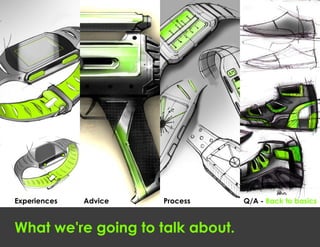
Experiences   Advice   Process    Q/A - Back to basics


What we're going to talk about.
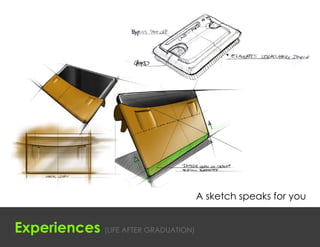
A sketch speaks for you


Experiences (LIFE AFTER GRADUATION)
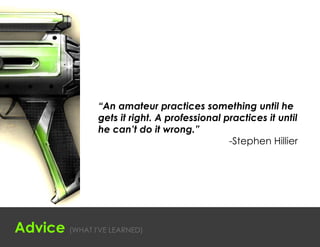
“An amateur practices something until he
                gets it right. A professional practices it until
                he can’t do it wrong.”
                									 -Stephen Hillier


Advice (WHAT I'VE LEARNED)
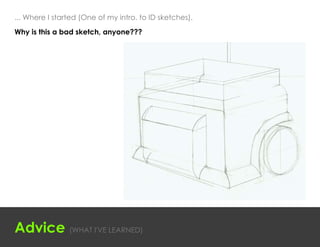
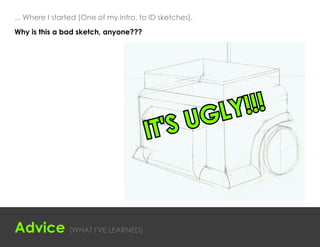
... Where I started (One of my intro. to ID sketches).
Why is this a bad sketch, anyone???


Advice (WHAT I'VE LEARNED)
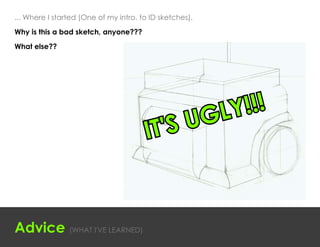
... Where I started (One of my intro. to ID sketches).
Why is this a bad sketch, anyone???


                                                         G LY !!!
                                       IT' SU


Advice (WHAT I'VE LEARNED)
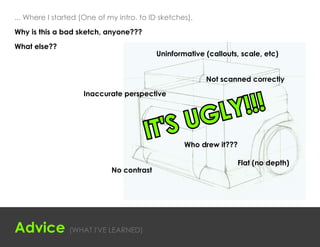
... Where I started (One of my intro. to ID sketches).
Why is this a bad sketch, anyone???

What else??


                                                         G LY !!!
                                       IT' SU


Advice (WHAT I'VE LEARNED)
... Where I started (One of my intro. to ID sketches).

Why is this a bad sketch, anyone???

What else??
                                           Uninformative (callouts, scale, etc)


                                                         Not scanned correctly


                                                              !!!
                    Inaccurate perspective


                                                         G LY
                                       IT' SU
                                                   Who drew it???

                                                                  Flat (no depth)
                             No contrast


Advice (WHAT I'VE LEARNED)
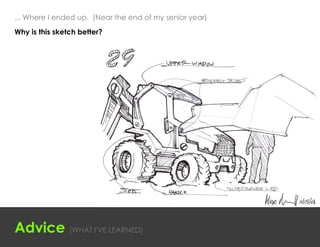
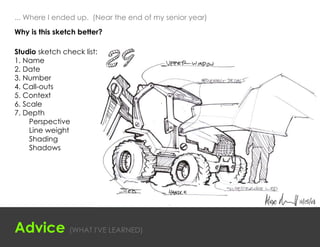
... Where I ended up. (Near the end of my senior year)

Why is this sketch better?


Advice (WHAT I'VE LEARNED)
... Where I ended up. (Near the end of my senior year)

Why is this sketch better?

Studio sketch check list:
1. Name
2. Date
3. Number
4. Call-outs
5. Context
6. Scale
7. Depth
	    Perspective
	    Line weight
	    Shading
	    Shadows


Advice (WHAT I'VE LEARNED)
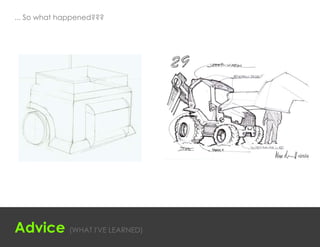
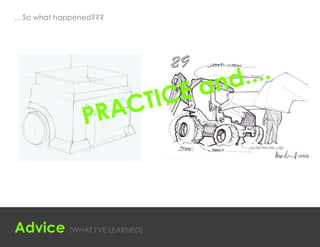
... So what happened???


Advice (WHAT I'VE LEARNED)
... So what happened???


                                    a nd ....
                          C TI CE
                 P RA


Advice (WHAT I'VE LEARNED)
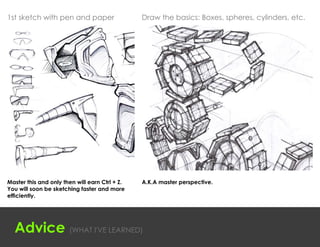
1st sketch with pen and paper                   Draw the basics: Boxes, spheres, cylinders, etc.


Master this and only then will earn Ctrl + Z.   A.K.A master perspective.
You will soon be sketching faster and more
efficiently.


  Advice (WHAT I'VE LEARNED)
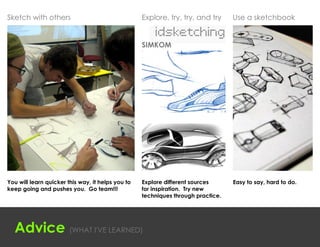
Sketch with others                                 Explore, try, try, and try     Use a sketchbook


                                                   SIMKOM


You will learn quicker this way, it helps you to   Explore different sources      Easy to say, hard to do.
keep going and pushes you. Go team!!!              for inspiration. Try new
                                                   techniques through practice.


  Advice (WHAT I'VE LEARNED)
Process


  My favorite way to draw...
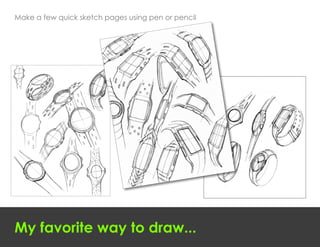
Make a few quick sketch pages using pen or pencil


My favorite way to draw...
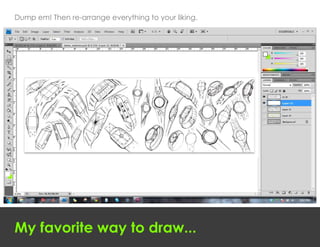
Dump em! Then re-arrange everything to your liking.


My favorite way to draw...
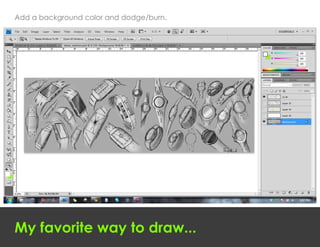
Add a background color and dodge/burn.


My favorite way to draw...
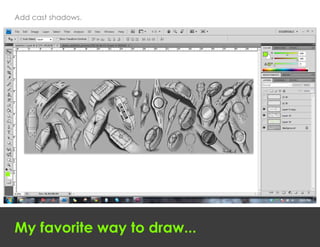
Add cast shadows.


My favorite way to draw...
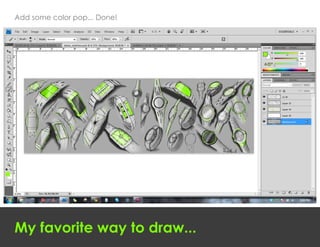
Add some color pop... Done!


My favorite way to draw...
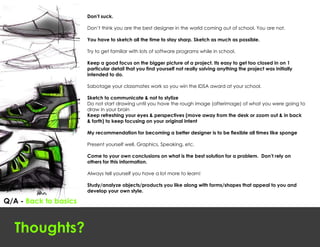
Don’t suck.

                       Don’t think you are the best designer in the world coming out of school. You are not.

                       You have to sketch all the time to stay sharp. Sketch as much as possible.

                       Try to get familiar with lots of software programs while in school.

                       Keep a good focus on the bigger picture of a project. Its easy to get too closed in on 1
                       particular detail that you find yourself not really solving anything the project was initially
                       intended to do.

                       Sabotage your classmates work so you win the IDSA award at your school.

                       Sketch to communicate & not to stylize
                       Do not start drawing until you have the rough image (afterimage) of what you were going to
                       draw in your brain
                       Keep refreshing your eyes & perspectives (move away from the desk or zoom out & in back
                       & forth) to keep focusing on your original intent

                       My recommendation for becoming a better designer is to be flexible all times like sponge

                       Present yourself well. Graphics, Speaking, etc.

                       Come to your own conclusions on what is the best solution for a problem. Don’t rely on
                       others for this information.

                       Always tell yourself you have a lot more to learn!

                       Study/analyze objects/products you like along with forms/shapes that appeal to you and
                       develop your own style.

Q/A - Back to basics


  Thoughts?

2012 04 28 ku pres

  • 1.
  • 2.
    Experiences Advice Process Q/A - Back to basics What we're going to talk about.
  • 3.
    A sketch speaksfor you Experiences (LIFE AFTER GRADUATION)
  • 4.
    “An amateur practicessomething until he gets it right. A professional practices it until he can’t do it wrong.” -Stephen Hillier Advice (WHAT I'VE LEARNED)
  • 5.
    ... Where Istarted (One of my intro. to ID sketches). Why is this a bad sketch, anyone??? Advice (WHAT I'VE LEARNED)
  • 6.
    ... Where Istarted (One of my intro. to ID sketches). Why is this a bad sketch, anyone??? G LY !!! IT' SU Advice (WHAT I'VE LEARNED)
  • 7.
    ... Where Istarted (One of my intro. to ID sketches). Why is this a bad sketch, anyone??? What else?? G LY !!! IT' SU Advice (WHAT I'VE LEARNED)
  • 8.
    ... Where Istarted (One of my intro. to ID sketches). Why is this a bad sketch, anyone??? What else?? Uninformative (callouts, scale, etc) Not scanned correctly !!! Inaccurate perspective G LY IT' SU Who drew it??? Flat (no depth) No contrast Advice (WHAT I'VE LEARNED)
  • 9.
    ... Where Iended up. (Near the end of my senior year) Why is this sketch better? Advice (WHAT I'VE LEARNED)
  • 10.
    ... Where Iended up. (Near the end of my senior year) Why is this sketch better? Studio sketch check list: 1. Name 2. Date 3. Number 4. Call-outs 5. Context 6. Scale 7. Depth Perspective Line weight Shading Shadows Advice (WHAT I'VE LEARNED)
  • 11.
    ... So whathappened??? Advice (WHAT I'VE LEARNED)
  • 12.
    ... So whathappened??? a nd .... C TI CE P RA Advice (WHAT I'VE LEARNED)
  • 13.
    1st sketch withpen and paper Draw the basics: Boxes, spheres, cylinders, etc. Master this and only then will earn Ctrl + Z. A.K.A master perspective. You will soon be sketching faster and more efficiently. Advice (WHAT I'VE LEARNED)
  • 14.
    Sketch with others Explore, try, try, and try Use a sketchbook SIMKOM You will learn quicker this way, it helps you to Explore different sources Easy to say, hard to do. keep going and pushes you. Go team!!! for inspiration. Try new techniques through practice. Advice (WHAT I'VE LEARNED)
  • 15.
    Process Myfavorite way to draw...
  • 16.
    Make a fewquick sketch pages using pen or pencil My favorite way to draw...
  • 17.
    Dump em! Thenre-arrange everything to your liking. My favorite way to draw...
  • 18.
    Add a backgroundcolor and dodge/burn. My favorite way to draw...
  • 19.
    Add cast shadows. Myfavorite way to draw...
  • 20.
    Add some colorpop... Done! My favorite way to draw...
  • 21.
    Don’t suck. Don’t think you are the best designer in the world coming out of school. You are not. You have to sketch all the time to stay sharp. Sketch as much as possible. Try to get familiar with lots of software programs while in school. Keep a good focus on the bigger picture of a project. Its easy to get too closed in on 1 particular detail that you find yourself not really solving anything the project was initially intended to do. Sabotage your classmates work so you win the IDSA award at your school. Sketch to communicate & not to stylize Do not start drawing until you have the rough image (afterimage) of what you were going to draw in your brain Keep refreshing your eyes & perspectives (move away from the desk or zoom out & in back & forth) to keep focusing on your original intent My recommendation for becoming a better designer is to be flexible all times like sponge Present yourself well. Graphics, Speaking, etc. Come to your own conclusions on what is the best solution for a problem. Don’t rely on others for this information. Always tell yourself you have a lot more to learn! Study/analyze objects/products you like along with forms/shapes that appeal to you and develop your own style. Q/A - Back to basics Thoughts?