The Geneva
Convention and the
treatment of
prisoners of war
(POWs) during
World War II.
VUS.11d
What was the purpose of the
Geneva Convention?
 A meeting in 1929 the Geneva
Convention dealt with the
Treatment of Prisoners of War
and the document was signed by
47 governments.
 The Geneva Convention
attempted to ensure the humane
treatment of prisoners of war by
establishing rules to be followed
by all nations.
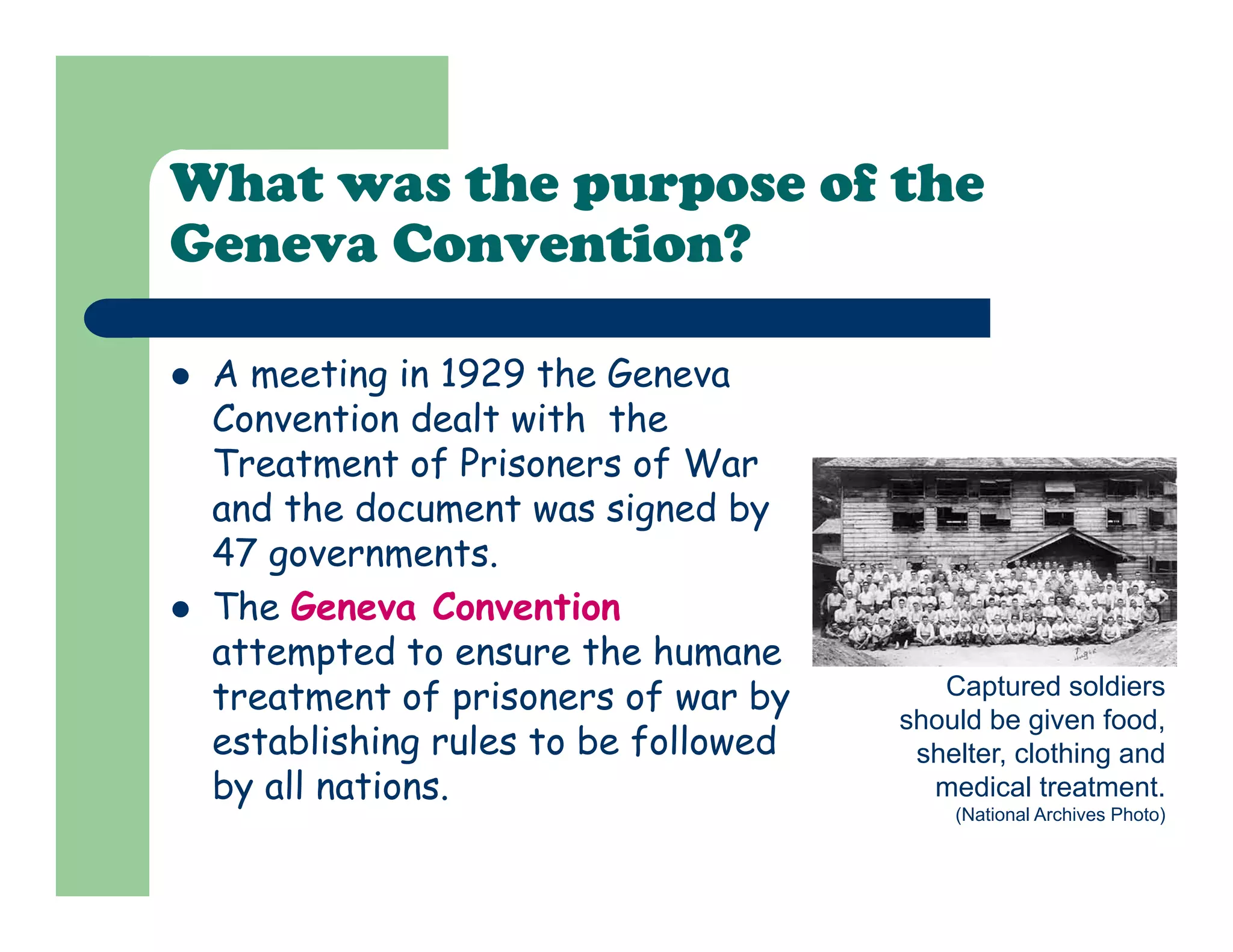
Captured soldiers
should be given food,
shelter, clothing and
medical treatment.
(National Archives Photo)
How did the treatment of
prisoners differ?
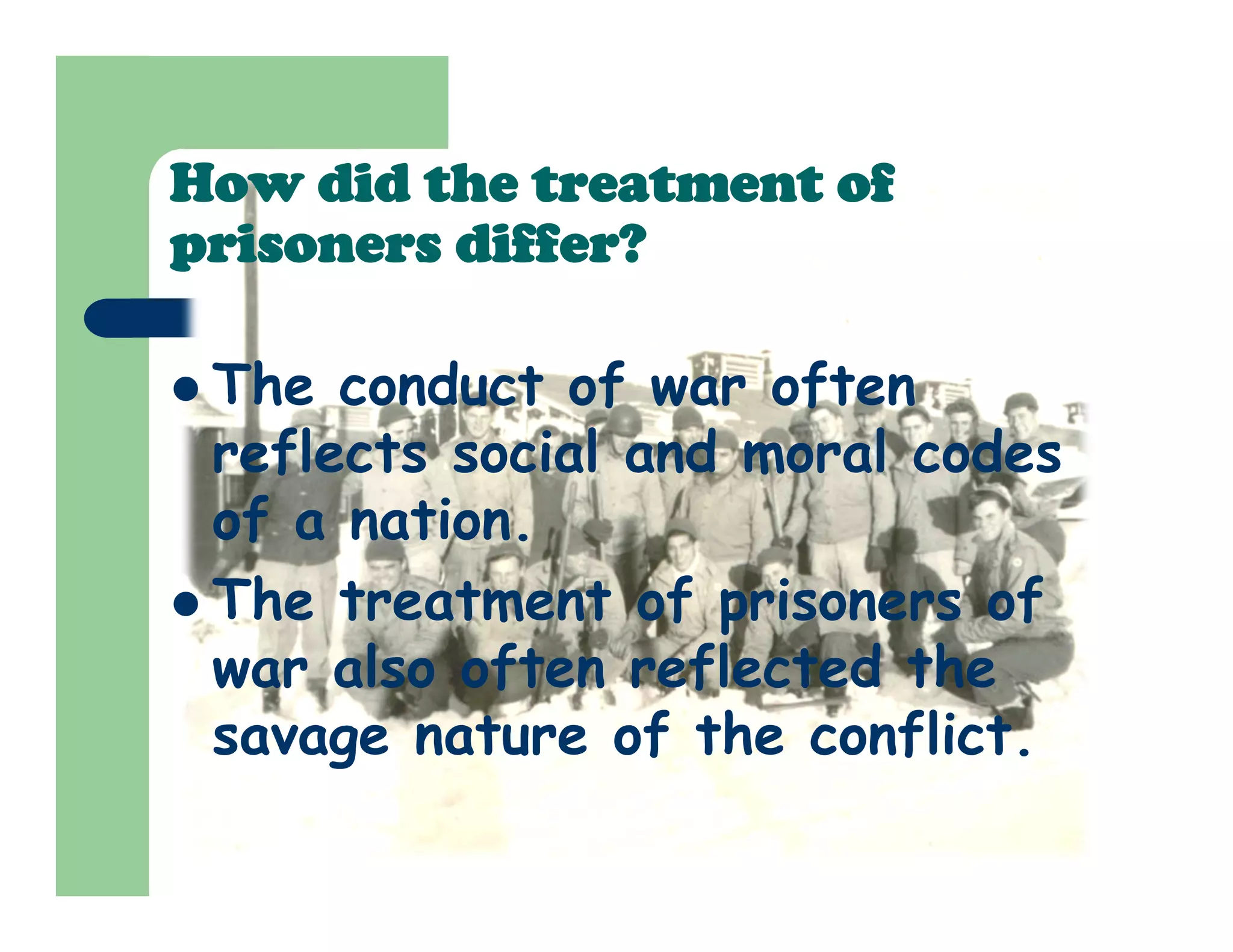
 The conduct of war often
reflects social and moral codes
of a nation.
 The treatment of prisoners of
war also often reflected the
savage nature of the conflict.
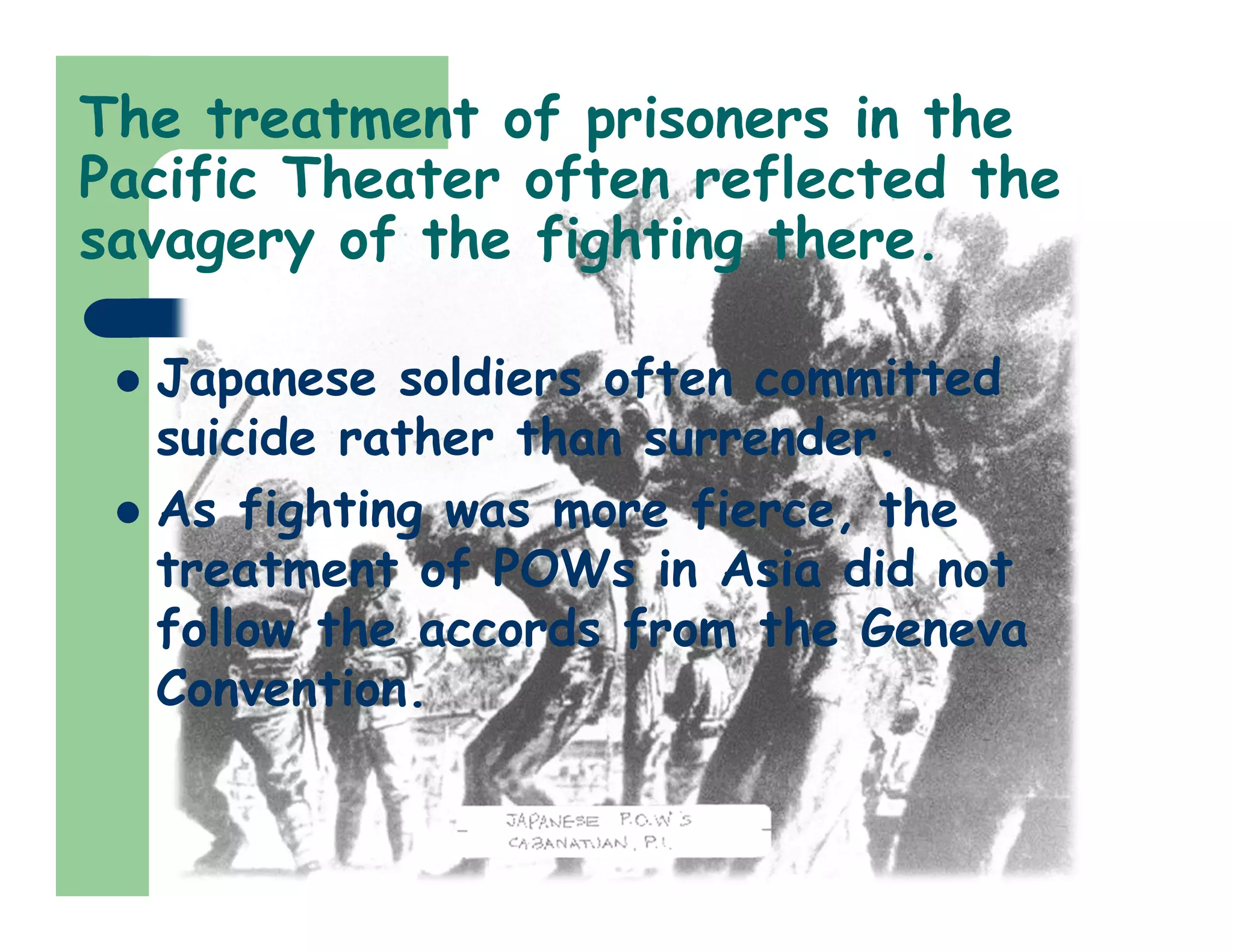
The treatment of prisoners in the
Pacific Theater often reflected the
savagery of the fighting there.
 Japanese soldiers often committed
suicide rather than surrender.
 As fighting was more fierce, the
treatment of POWs in Asia did not
follow the accords from the Geneva
Convention.
 American
POWs suffered
brutal treatment by
Japanese after the
surrender of the
Philippines.Nearly 70,000 American and Filipino soldiers
were forced to surrender to the Japanese at
Bataan in 1942. These troops were then
marched through intense heat to a camp over
60 miles away. Somewhere between 5,000
and 11,000 soldiers died due to the lack of
food and water.
Bataan Death
March:
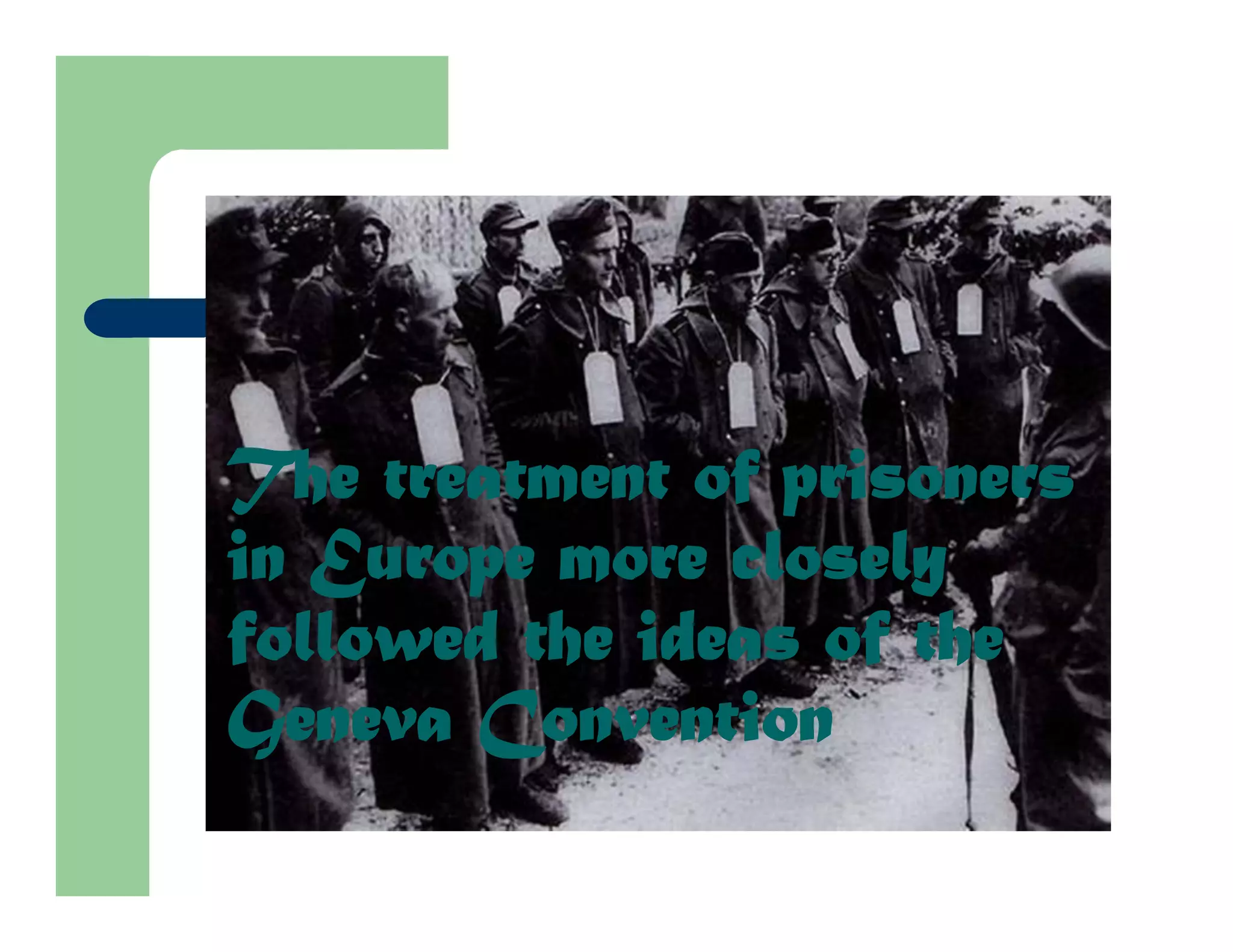
The treatment of prisoners
in Europe more closely
followed the ideas of the
Geneva Convention

2008vus11d pows

  • 1.
    The Geneva Convention andthe treatment of prisoners of war (POWs) during World War II. VUS.11d
  • 2.
    What was thepurpose of the Geneva Convention?  A meeting in 1929 the Geneva Convention dealt with the Treatment of Prisoners of War and the document was signed by 47 governments.  The Geneva Convention attempted to ensure the humane treatment of prisoners of war by establishing rules to be followed by all nations. Captured soldiers should be given food, shelter, clothing and medical treatment. (National Archives Photo)
  • 3.
    How did thetreatment of prisoners differ?  The conduct of war often reflects social and moral codes of a nation.  The treatment of prisoners of war also often reflected the savage nature of the conflict.
  • 4.
    The treatment ofprisoners in the Pacific Theater often reflected the savagery of the fighting there.  Japanese soldiers often committed suicide rather than surrender.  As fighting was more fierce, the treatment of POWs in Asia did not follow the accords from the Geneva Convention.
  • 5.
     American POWs suffered brutaltreatment by Japanese after the surrender of the Philippines.Nearly 70,000 American and Filipino soldiers were forced to surrender to the Japanese at Bataan in 1942. These troops were then marched through intense heat to a camp over 60 miles away. Somewhere between 5,000 and 11,000 soldiers died due to the lack of food and water. Bataan Death March:
  • 6.
    The treatment ofprisoners in Europe more closely followed the ideas of the Geneva Convention