1
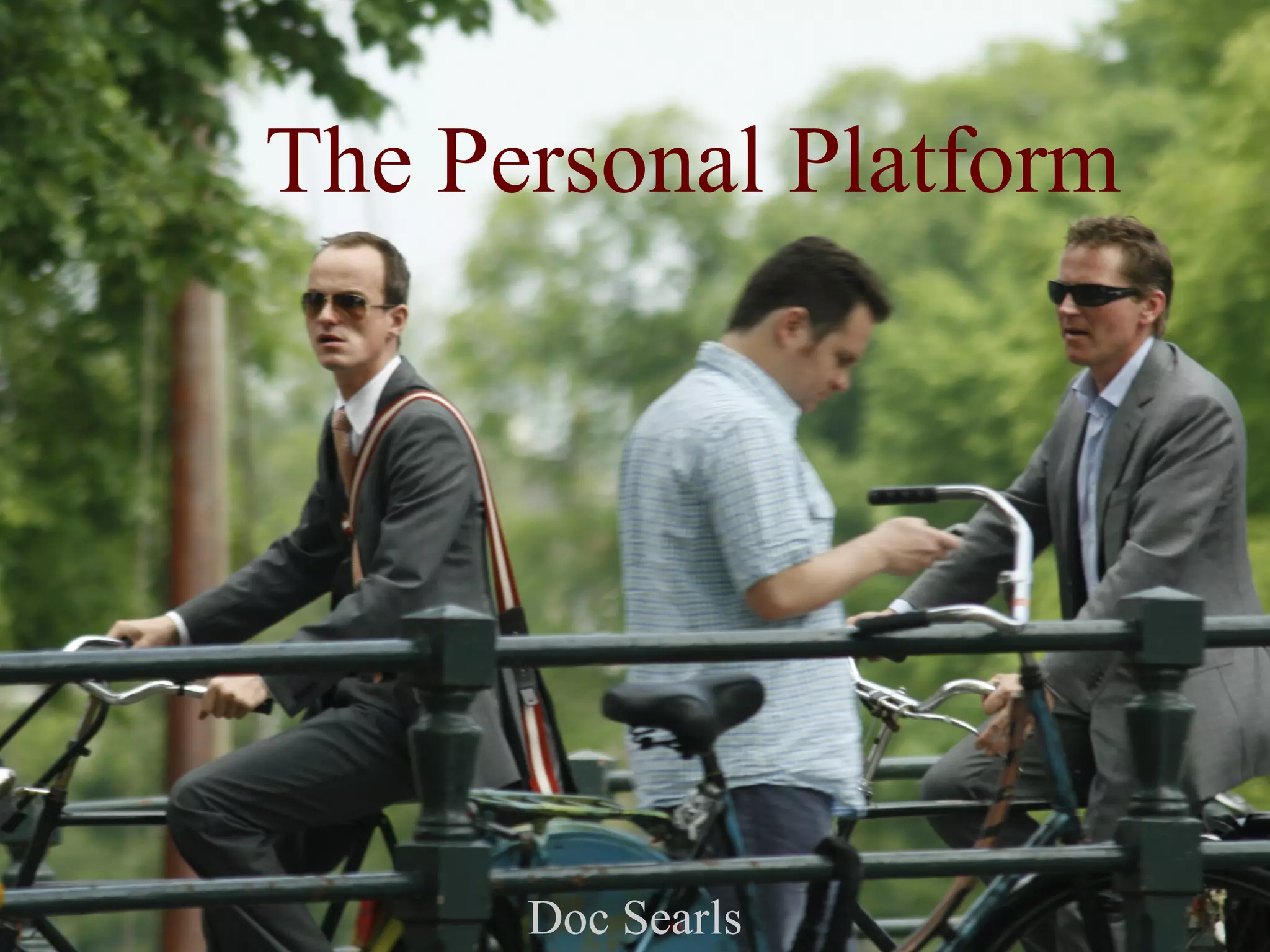
The Personal Platform
Doc Searls
2
Thesis: A free customer is more
valuable than a captive one.
Problem is, we still think the opposite way.
3
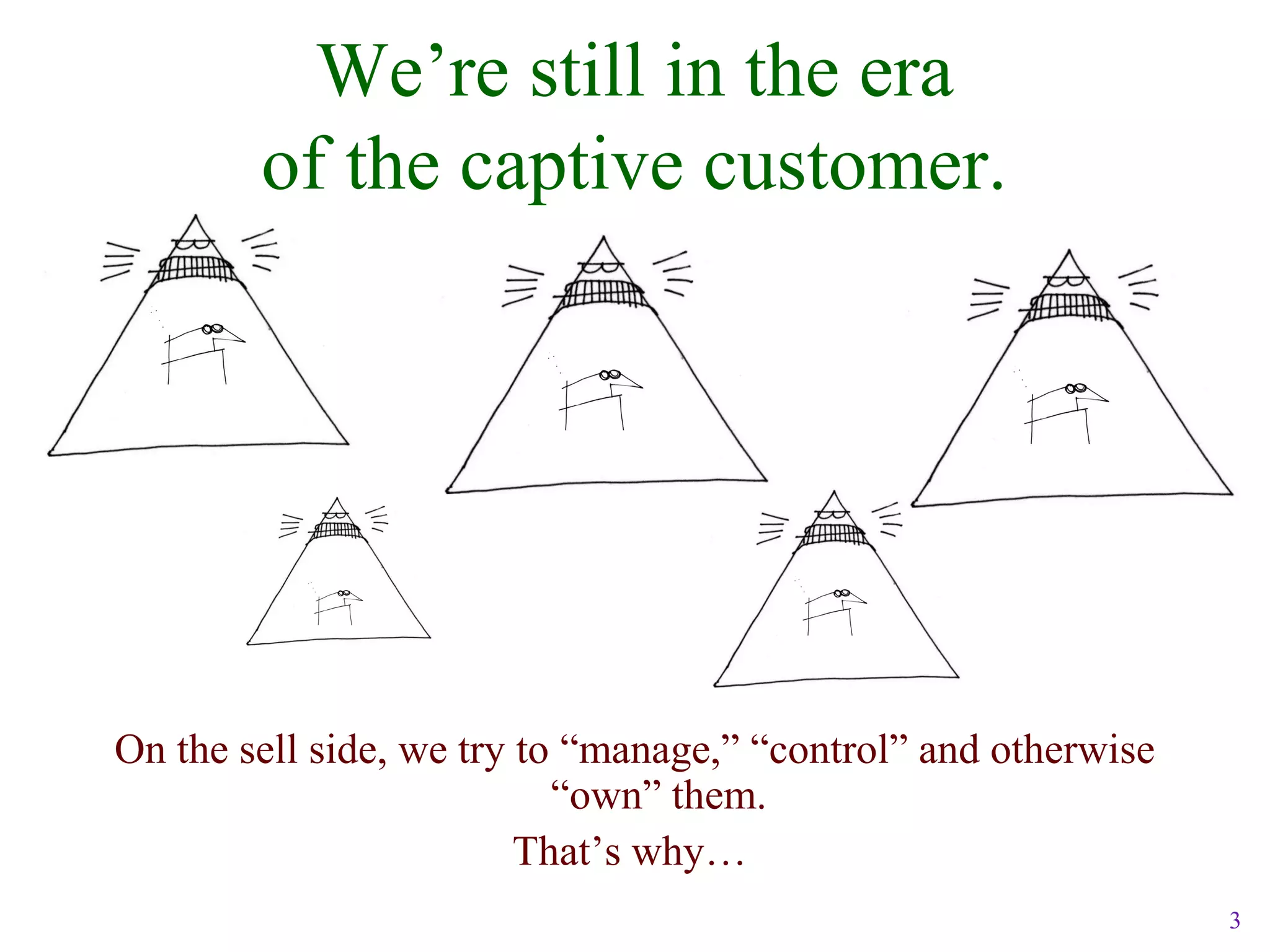
We’re still in the era
of the captive customer.
On the sell side, we try to “manage,” “control” and otherwise
“own” them.
That’s why…
4
We’ve come to think a “free market”
is “your choice of silo.”
Slaves, choose your captors!
5
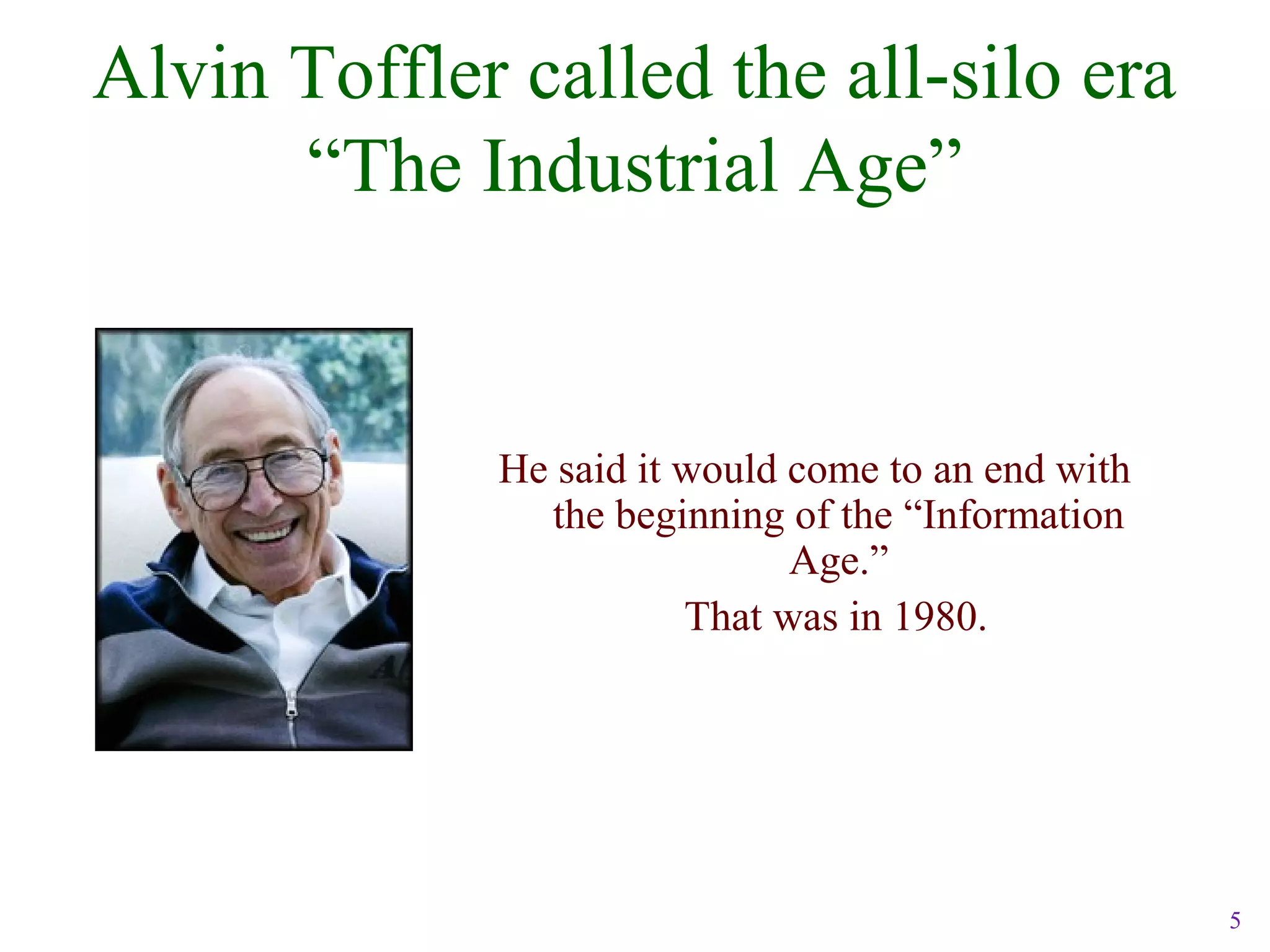
Alvin Toffler called the all-silo era
“The Industrial Age”
He said it would come to an end with
the beginning of the “Information
Age.”
That was in 1980.
6
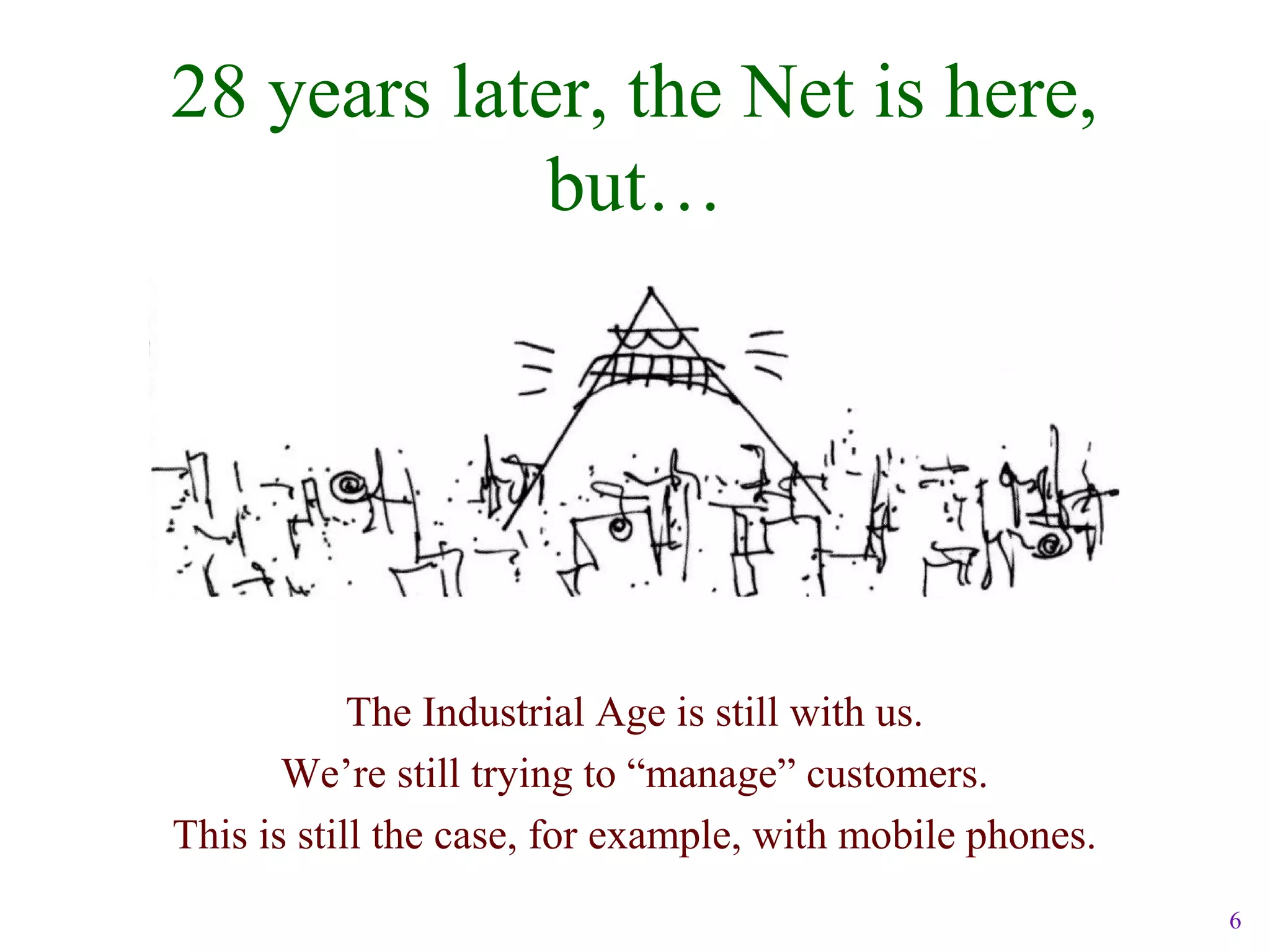
28 years later, the Net is here,
but…
The Industrial Age is still with us.
We’re still trying to “manage” customers.
This is still the case, for example, with mobile phones.
7
What’s new is still old.
Mobile telephony is fine.
Mobile anything is not.
Yet.
8
If you want mobile-anything, you
need a generative platform.
Generativity happens
when the platform is the
opposite of a silo.
It runs on anything, and
supports anything.
PCs are generative.
The Net is generative.
The iPhone is not.
Yet.
Meanwhile, why not?
9
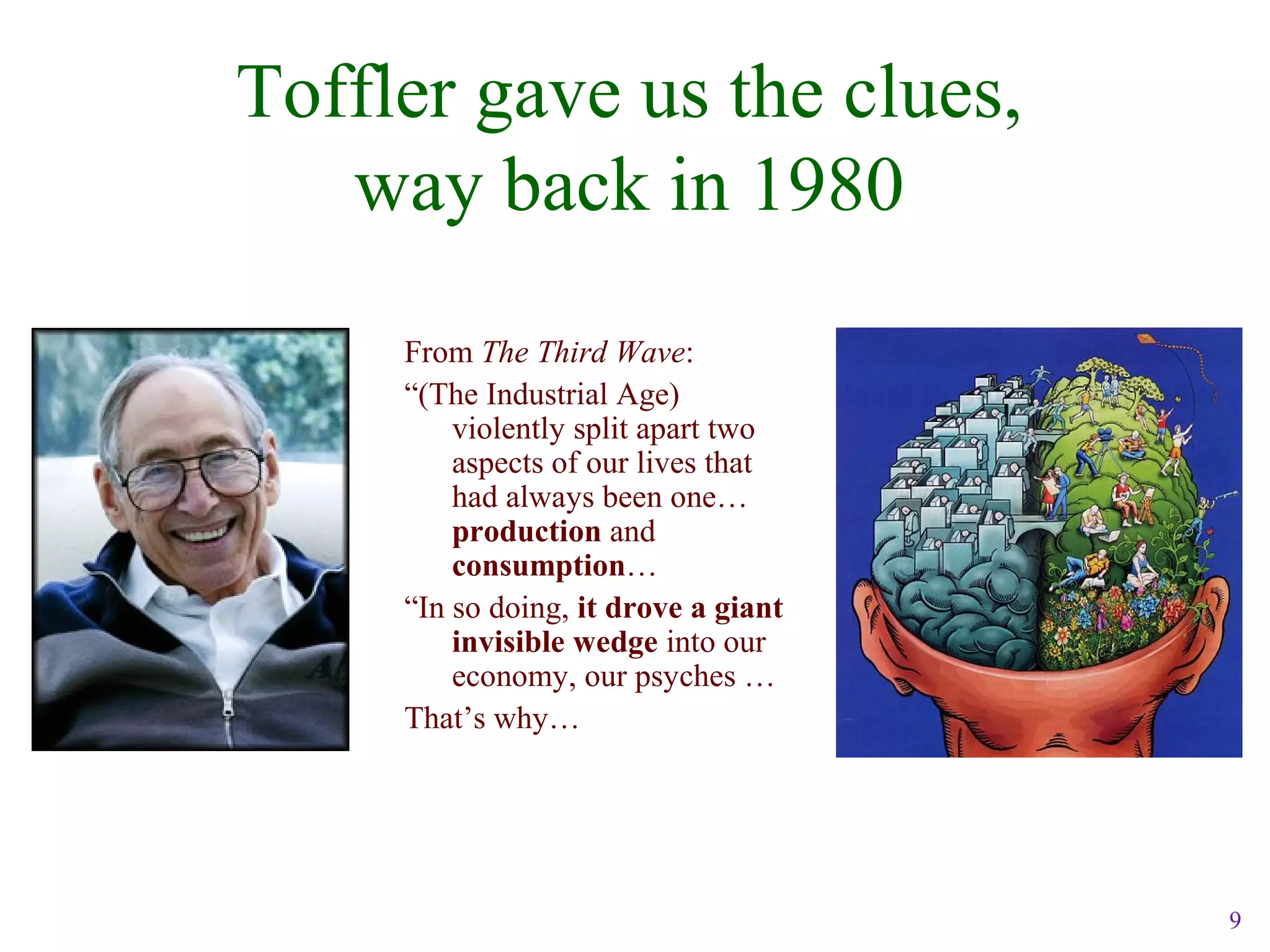
Toffler gave us the clues,
way back in 1980
From The Third Wave:
“(The Industrial Age)
violently split apart two
aspects of our lives that
had always been one…
production and
consumption…
“In so doing, it drove a giant
invisible wedge into our
economy, our psyches …
That’s why…
10
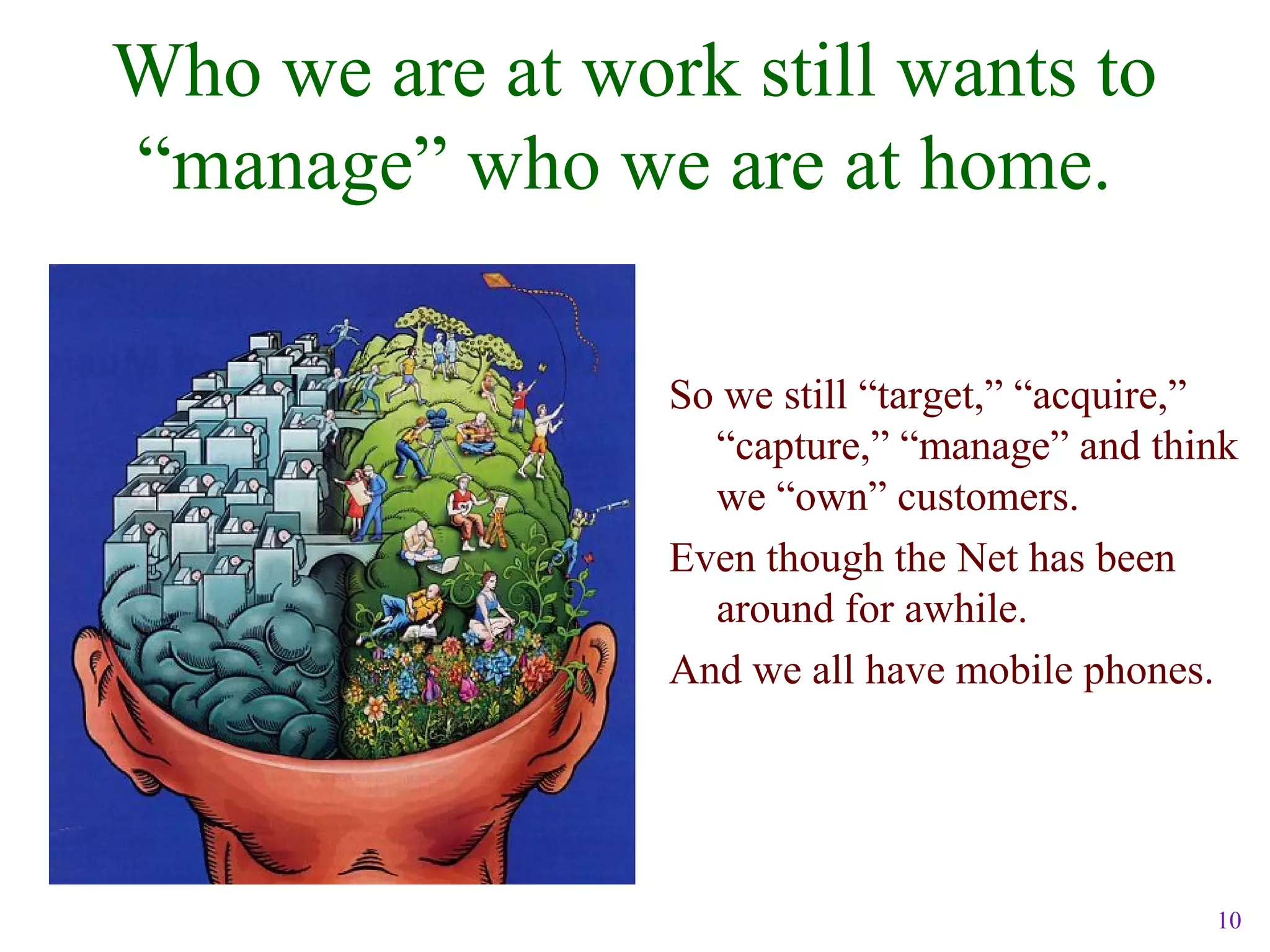
Who we are at work still wants to
“manage” who we are at home.
So we still “target,” “acquire,”
“capture,” “manage” and think
we “own” customers.
Even though the Net has been
around for awhile.
And we all have mobile phones.
11
You see it in our CRM systems.
But here’s
the cool
thing…
12
Humans are generative.
They run on whatever
they want.
And anything can run
on them.
Well, not yet.
It will when they’re
enabled.
How can we make customers platforms and not just eyeballs?
13
What we need is VRM:
Vendor Relationship Management.
With VRM, we get to manage our relationships with
vendors.
We get to set our terms.
We get to help vendors in ways CRM systems still
can’t… yet.
We get to help CRM actually relate.
For example…
VRMVRM CRMCRM
14
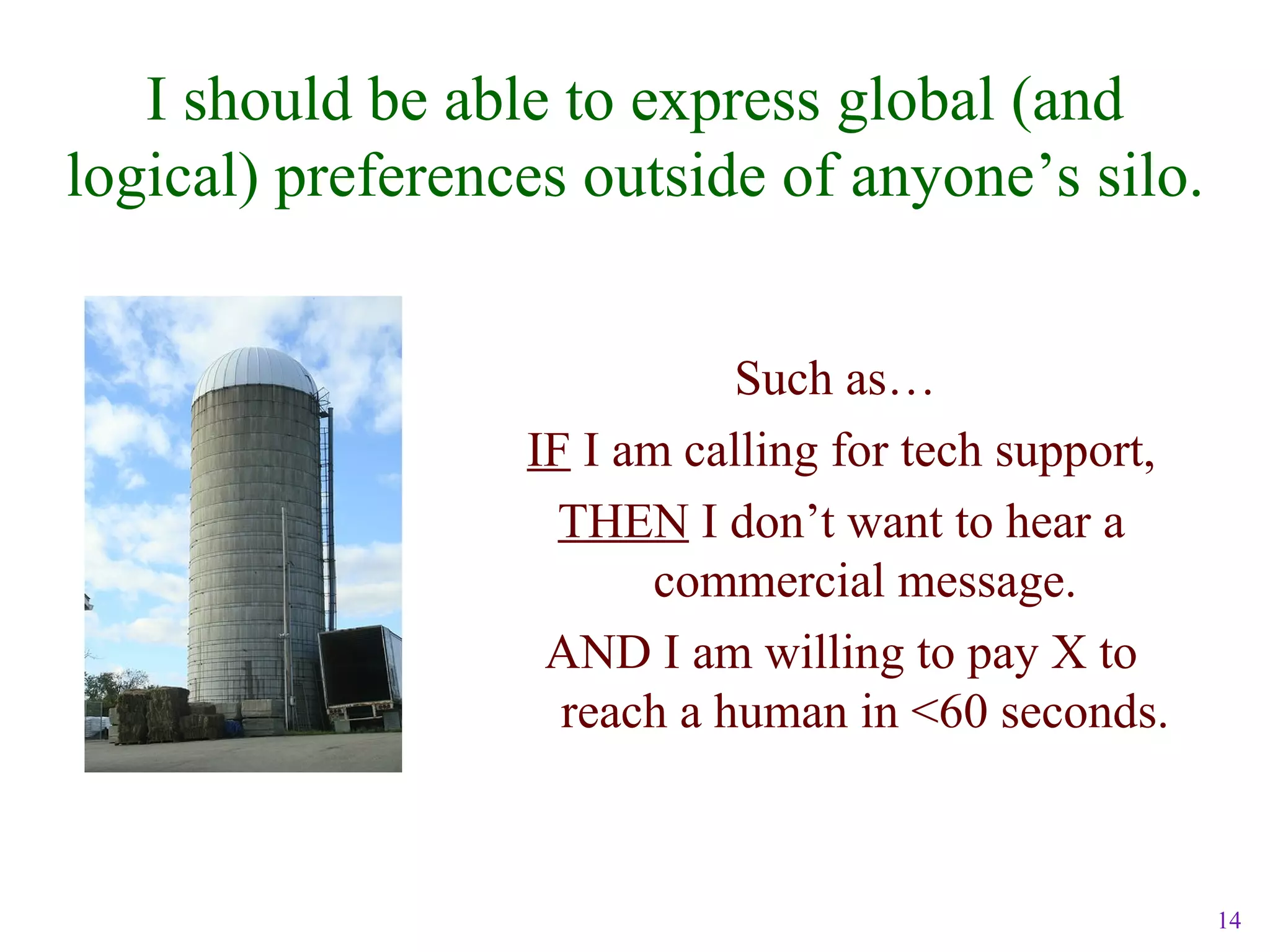
I should be able to express global (and
logical) preferences outside of anyone’s silo.
Such as…
IF I am calling for tech support,
THEN I don’t want to hear a
commercial message.
AND I am willing to pay X to
reach a human in <60 seconds.
15
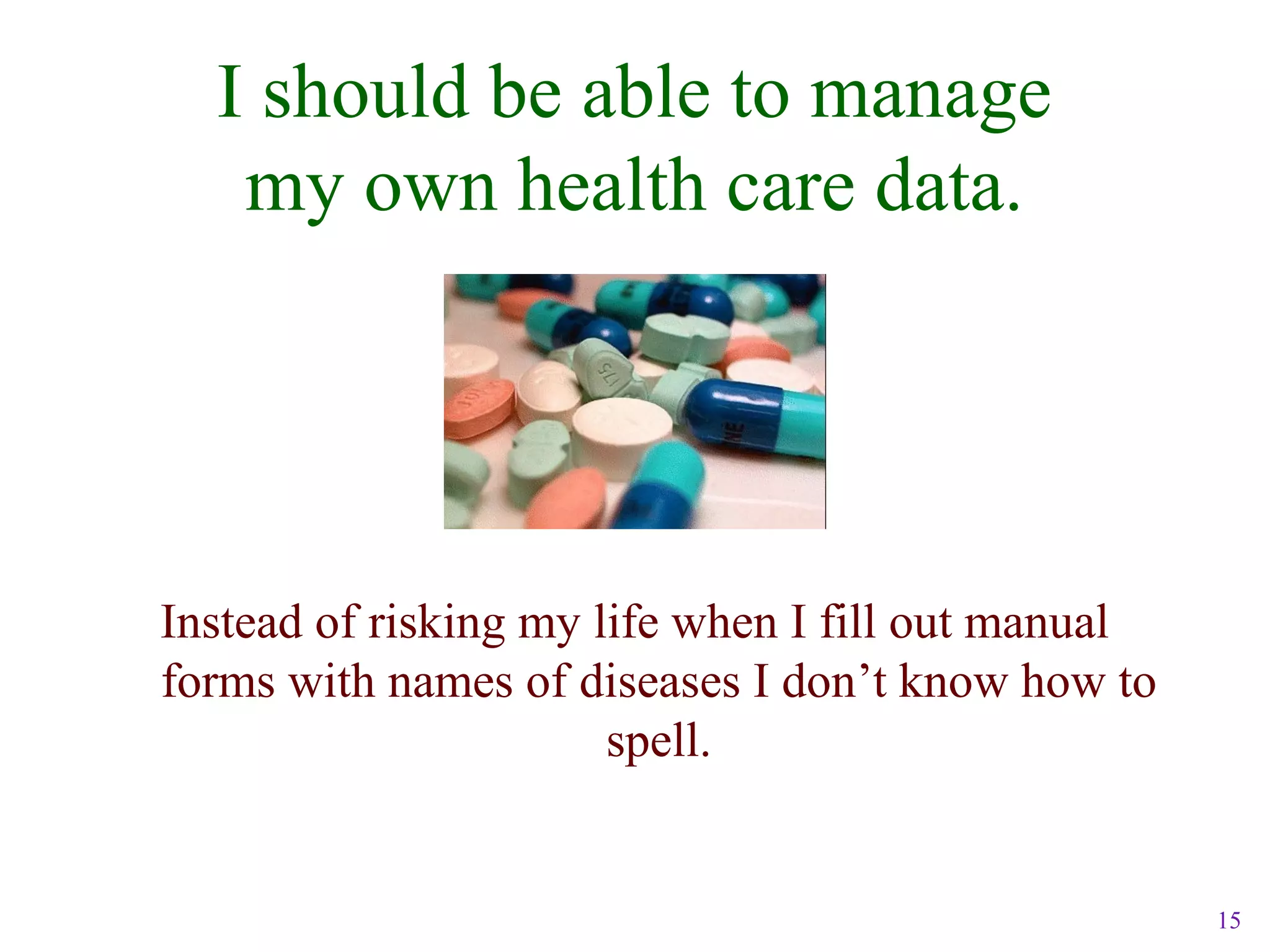
I should be able to manage
my own health care data.
Instead of risking my life when I fill out manual
forms with names of diseases I don’t know how to
spell.
16
I should be able to issue an “intentcast”
to whole markets, on the fly.
For example, send a message saying I need a 200w 220->110 converter
in Amsterdam on a Sunday afternoon…
— without going into a silo, or giving any more than the required information…
— which mainly consists of being trustworthy and having money to spend.
17
Mobile is where
VRM is going to take off.
Because it’s
finally getting
generative.
18
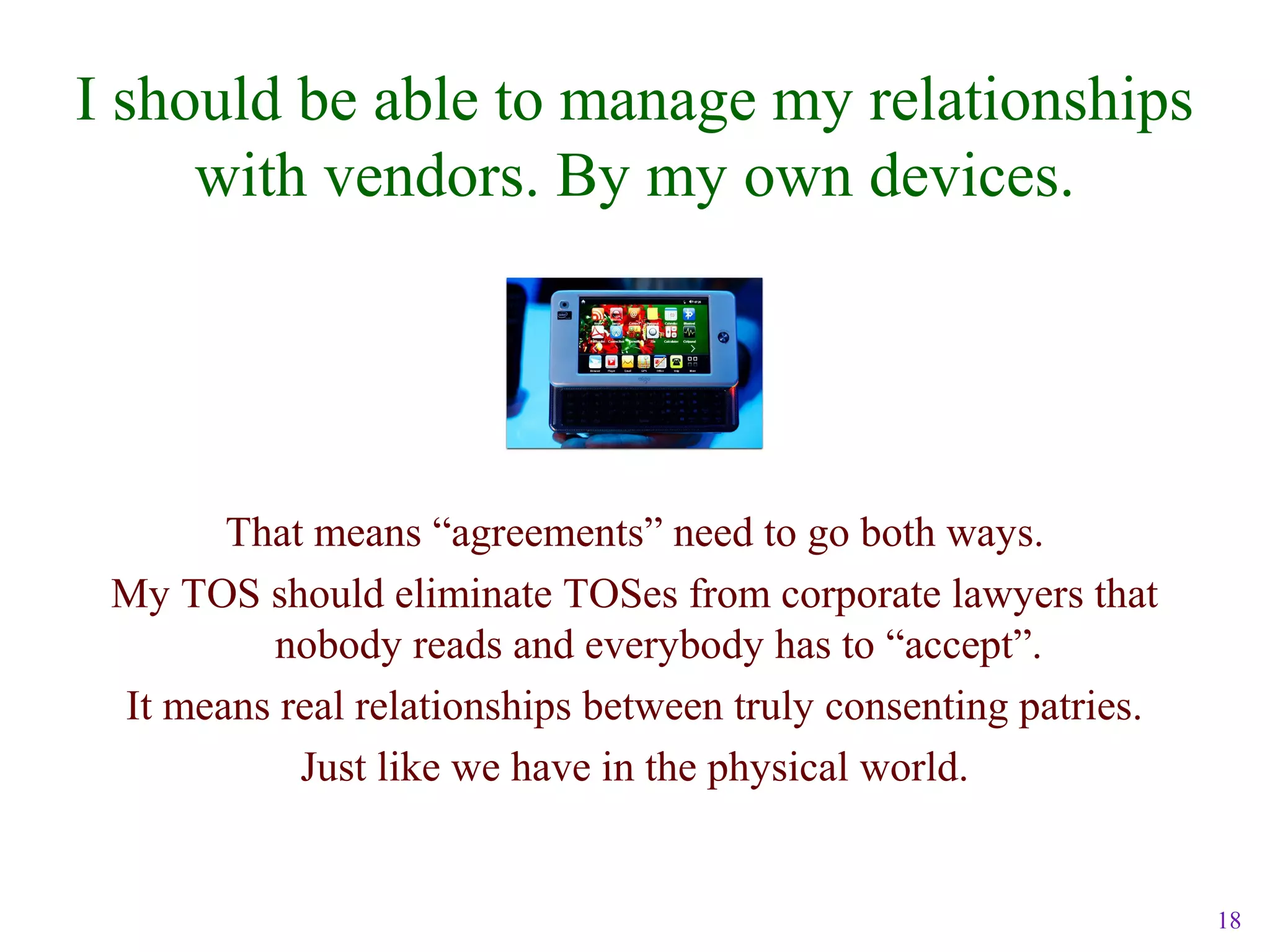
I should be able to manage my relationships
with vendors. By my own devices.
That means “agreements” need to go both ways.
My TOS should eliminate TOSes from corporate lawyers that
nobody reads and everybody has to “accept”.
It means real relationships between truly consenting patries.
Just like we have in the physical world.
19
Our first project is a new business model
for free media.
(that isn’t advertising)
Free media include…
Non-commercial broadcasting
Blogs, podcasts
Music…
Anything that’s either free on purpose or too easy to “steal”
CRMCRMVRMVRM
20
Our first tool is the r-button:
a symbol of VRM+CRM
It says,
“I want to pay…
what I want.” And/or,
“I want to relate…
on my terms…
and not just yours.”
“This is my code’s way
of letting your code know that.
Even if you’re not listening. Yet.”
Its how VRM meets CRM.
CRMCRMVRMVRM
21
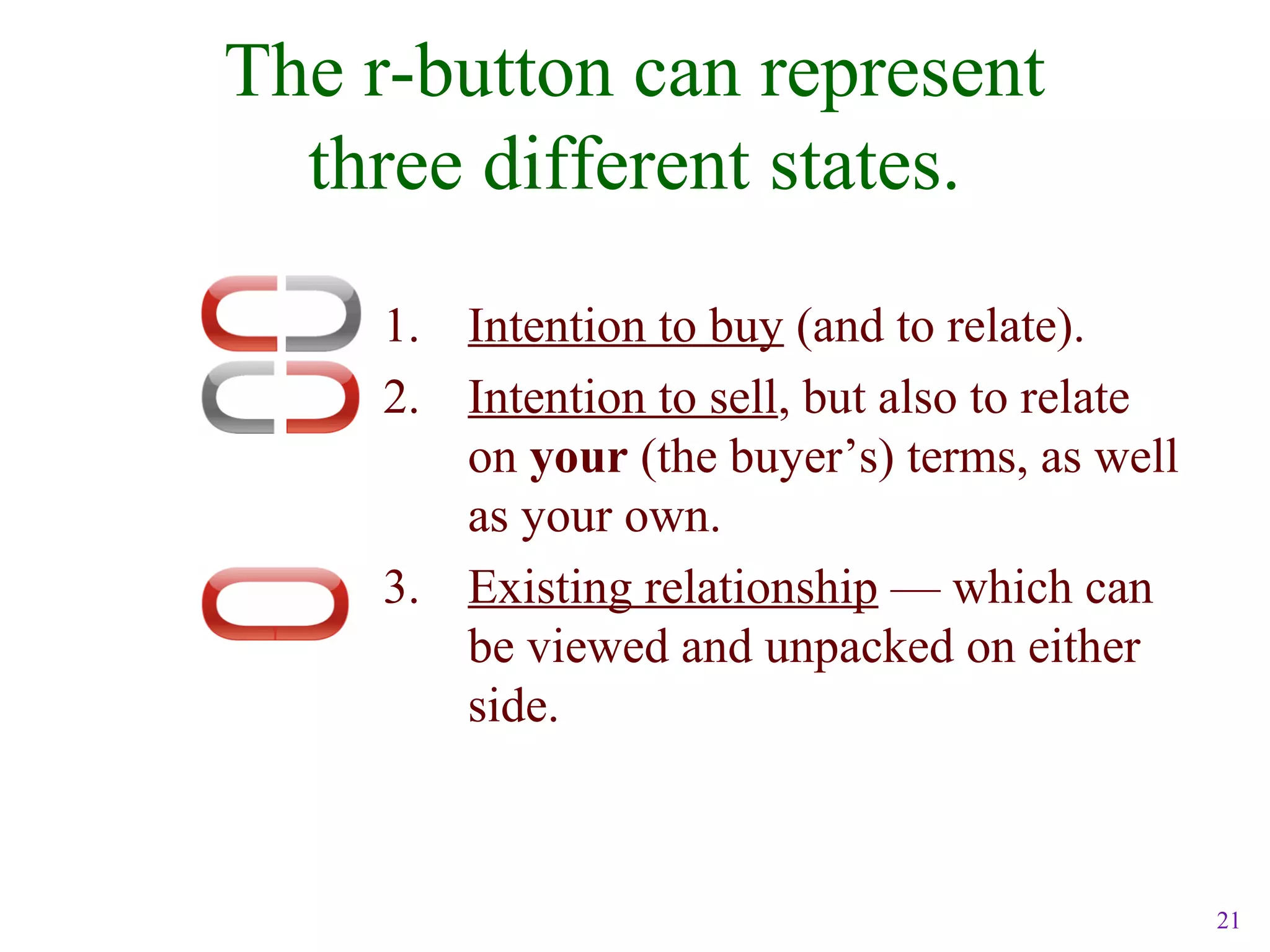
The r-button can represent
three different states.
1. Intention to buy (and to relate).
2. Intention to sell, but also to relate
on your (the buyer’s) terms, as well
as your own.
3. Existing relationship — which can
be viewed and unpacked on either
side.
22
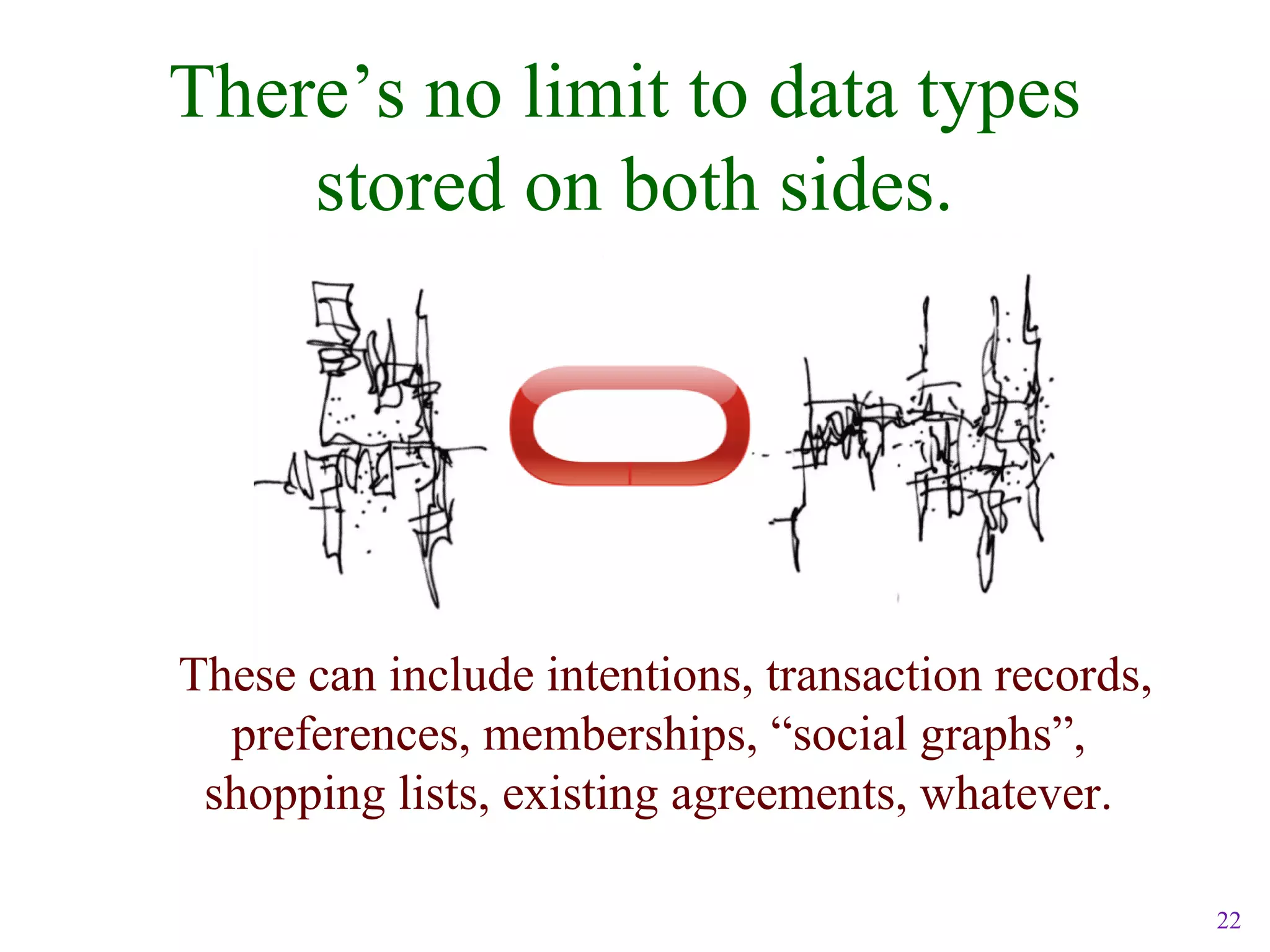
There’s no limit to data types
stored on both sides.
These can include intentions, transaction records,
preferences, memberships, “social graphs”,
shopping lists, existing agreements, whatever.
23
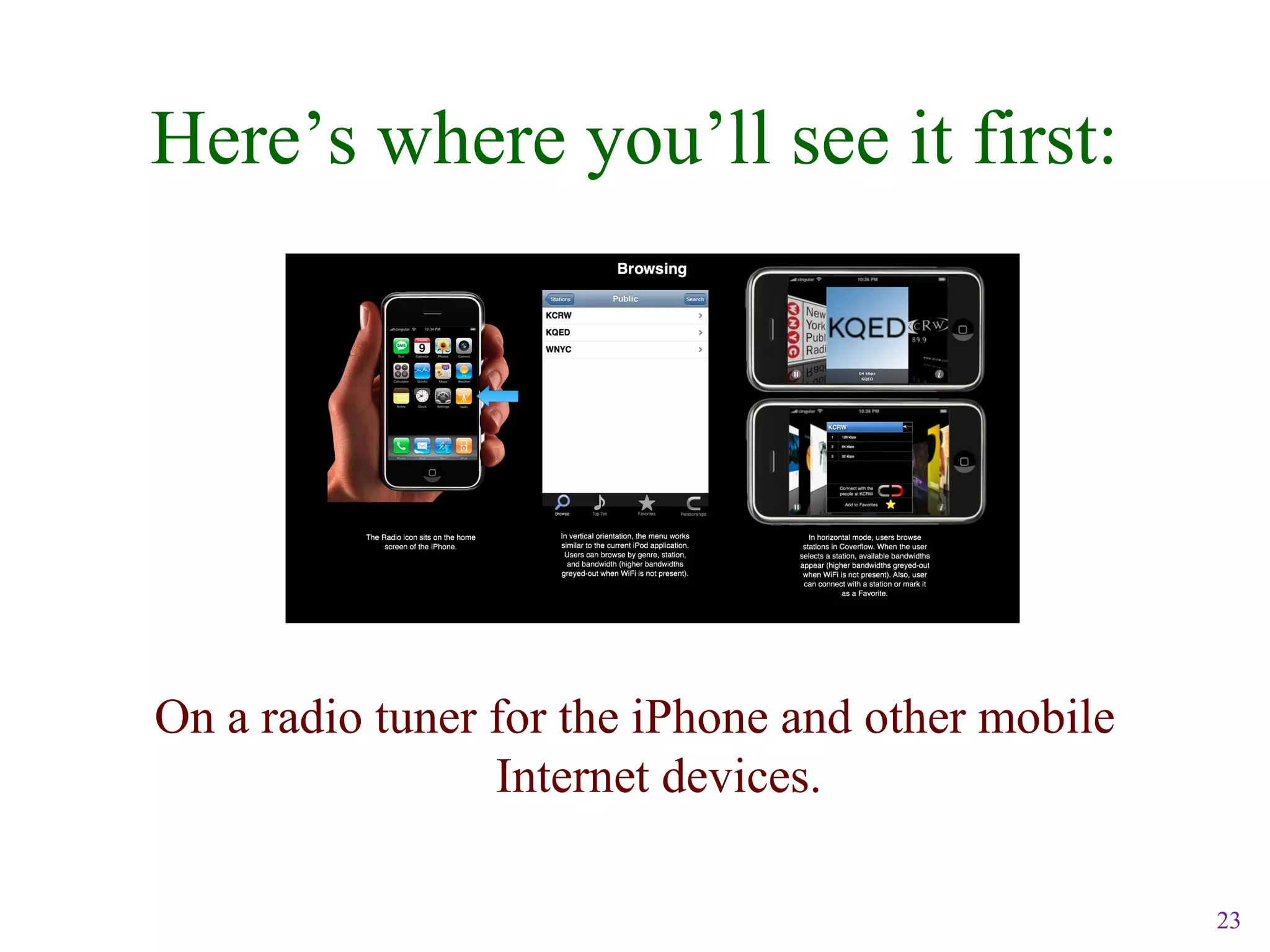
Here’s where you’ll see it first:
On a radio tuner for the iPhone and other mobile
Internet devices.
24
That provides a new business
model for media.
Starting with noncommercial sources.
And growing to include everything.
Starting with the music business, probably.
25
VRM makes customers into platforms.
It gives customers an API, or a set of APIs.
You can program goods and services
— based on what customers actually want, and are in control of.
26
Contact jive:
http://projectvrm.org
doc@searls.com.

2008 06 02_mobilemonday_timesfont1

  • 1.
  • 2.
    2 Thesis: A freecustomer is more valuable than a captive one. Problem is, we still think the opposite way.
  • 3.
    3 We’re still inthe era of the captive customer. On the sell side, we try to “manage,” “control” and otherwise “own” them. That’s why…
  • 4.
    4 We’ve come tothink a “free market” is “your choice of silo.” Slaves, choose your captors!
  • 5.
    5 Alvin Toffler calledthe all-silo era “The Industrial Age” He said it would come to an end with the beginning of the “Information Age.” That was in 1980.
  • 6.
    6 28 years later,the Net is here, but… The Industrial Age is still with us. We’re still trying to “manage” customers. This is still the case, for example, with mobile phones.
  • 7.
    7 What’s new isstill old. Mobile telephony is fine. Mobile anything is not. Yet.
  • 8.
    8 If you wantmobile-anything, you need a generative platform. Generativity happens when the platform is the opposite of a silo. It runs on anything, and supports anything. PCs are generative. The Net is generative. The iPhone is not. Yet. Meanwhile, why not?
  • 9.
    9 Toffler gave usthe clues, way back in 1980 From The Third Wave: “(The Industrial Age) violently split apart two aspects of our lives that had always been one… production and consumption… “In so doing, it drove a giant invisible wedge into our economy, our psyches … That’s why…
  • 10.
    10 Who we areat work still wants to “manage” who we are at home. So we still “target,” “acquire,” “capture,” “manage” and think we “own” customers. Even though the Net has been around for awhile. And we all have mobile phones.
  • 11.
    11 You see itin our CRM systems. But here’s the cool thing…
  • 12.
    12 Humans are generative. Theyrun on whatever they want. And anything can run on them. Well, not yet. It will when they’re enabled. How can we make customers platforms and not just eyeballs?
  • 13.
    13 What we needis VRM: Vendor Relationship Management. With VRM, we get to manage our relationships with vendors. We get to set our terms. We get to help vendors in ways CRM systems still can’t… yet. We get to help CRM actually relate. For example… VRMVRM CRMCRM
  • 14.
    14 I should beable to express global (and logical) preferences outside of anyone’s silo. Such as… IF I am calling for tech support, THEN I don’t want to hear a commercial message. AND I am willing to pay X to reach a human in <60 seconds.
  • 15.
    15 I should beable to manage my own health care data. Instead of risking my life when I fill out manual forms with names of diseases I don’t know how to spell.
  • 16.
    16 I should beable to issue an “intentcast” to whole markets, on the fly. For example, send a message saying I need a 200w 220->110 converter in Amsterdam on a Sunday afternoon… — without going into a silo, or giving any more than the required information… — which mainly consists of being trustworthy and having money to spend.
  • 17.
    17 Mobile is where VRMis going to take off. Because it’s finally getting generative.
  • 18.
    18 I should beable to manage my relationships with vendors. By my own devices. That means “agreements” need to go both ways. My TOS should eliminate TOSes from corporate lawyers that nobody reads and everybody has to “accept”. It means real relationships between truly consenting patries. Just like we have in the physical world.
  • 19.
    19 Our first projectis a new business model for free media. (that isn’t advertising) Free media include… Non-commercial broadcasting Blogs, podcasts Music… Anything that’s either free on purpose or too easy to “steal” CRMCRMVRMVRM
  • 20.
    20 Our first toolis the r-button: a symbol of VRM+CRM It says, “I want to pay… what I want.” And/or, “I want to relate… on my terms… and not just yours.” “This is my code’s way of letting your code know that. Even if you’re not listening. Yet.” Its how VRM meets CRM. CRMCRMVRMVRM
  • 21.
    21 The r-button canrepresent three different states. 1. Intention to buy (and to relate). 2. Intention to sell, but also to relate on your (the buyer’s) terms, as well as your own. 3. Existing relationship — which can be viewed and unpacked on either side.
  • 22.
    22 There’s no limitto data types stored on both sides. These can include intentions, transaction records, preferences, memberships, “social graphs”, shopping lists, existing agreements, whatever.
  • 23.
    23 Here’s where you’llsee it first: On a radio tuner for the iPhone and other mobile Internet devices.
  • 24.
    24 That provides anew business model for media. Starting with noncommercial sources. And growing to include everything. Starting with the music business, probably.
  • 25.
    25 VRM makes customersinto platforms. It gives customers an API, or a set of APIs. You can program goods and services — based on what customers actually want, and are in control of.
  • 26.

Editor's Notes

  • #26 We still have platforms in mature ecosystems. The difference is that platforms are IN the environment. Not under it. Hugh MacLeod, the artist who did these visuals for us, calls this “ modulcar capitalism existing on a commodity bedrock. ” Speaking of capitalist modules, Google has a platform for advertising. Amazon has a platform for selling books. eBay has a platform for online retailing. None of those platforms would exist without cheap and easily assembled open souce infrastructural building material. Nor would they exist without the Net. Their environment — the one in which they thrive — is the Net. Unlike their ancestors, they didn ’ t need to build a silo from the ground up. The ground was already there. This opens up vast new territories for all kinds of businesses and business modles, in addition to the familiar ones I just mentioned. A few examples…