Exploring Art
Chapter 1 – Art in Focus
Mr. Mulligan
What is Art?
 The arts are a basic form of human
communication.
 The visual arts, music, literature, and poetry
may be considered the means by which
people, past and present, express
themselves in unique sights and sounds that
capture the interest, imagination and
appreciation of others.
Visual Arts
 Scholars have tried
to establish the
qualities that
identify an object as
a work of art.
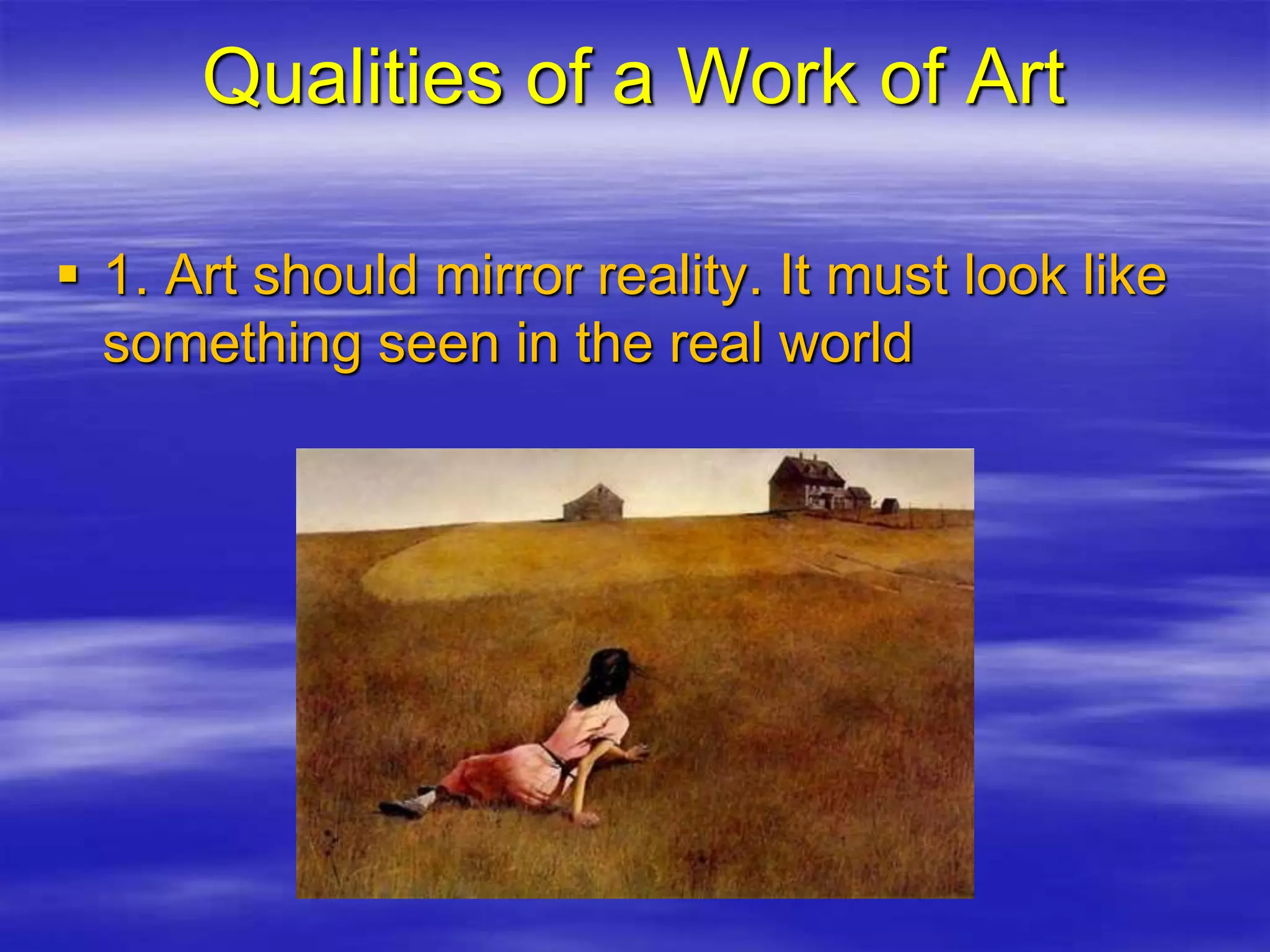
Qualities of a Work of Art
 1. Art should mirror reality. It must look like
something seen in the real world
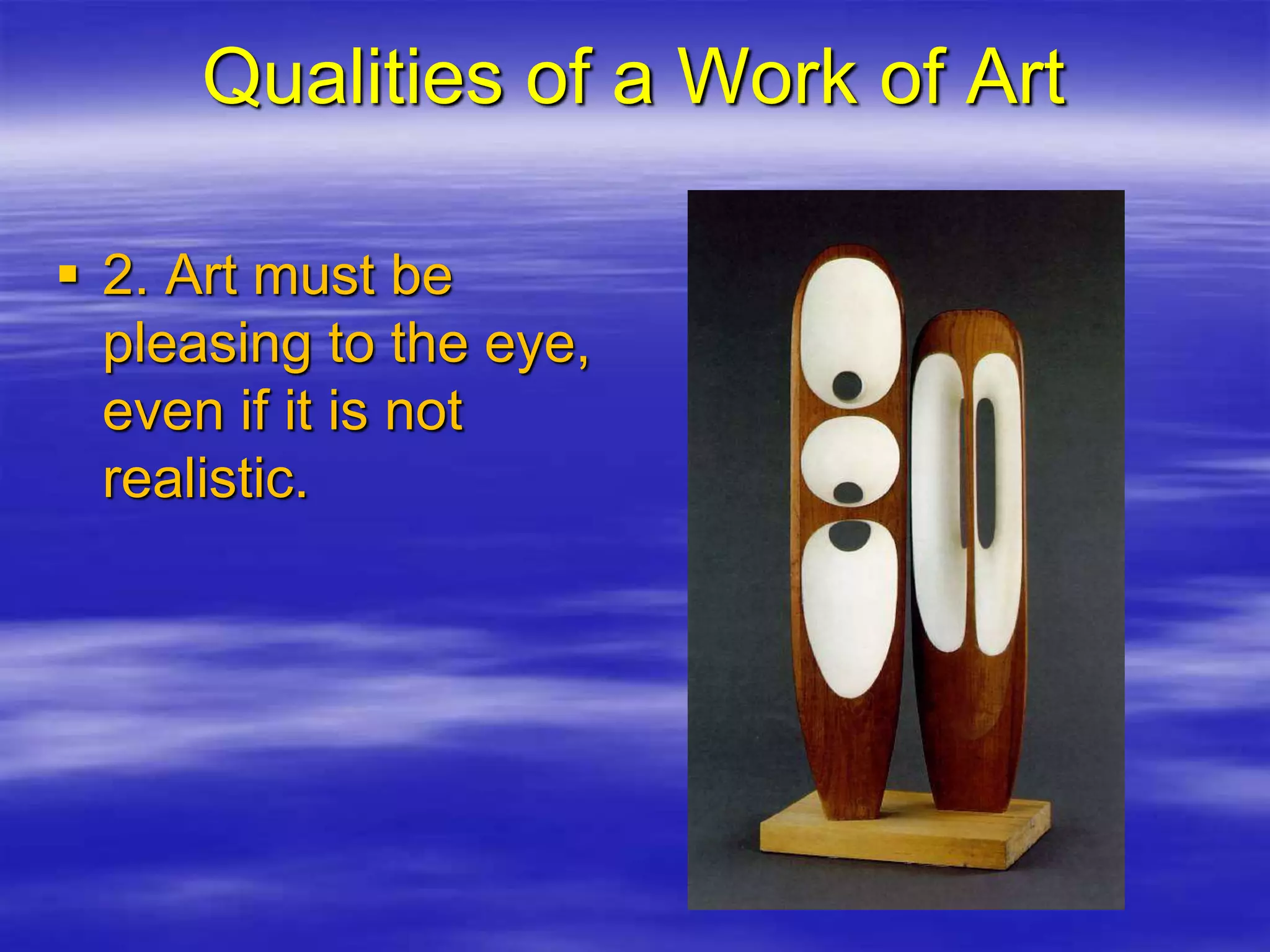
 2. Art must be
pleasing to the eye,
even if it is not
realistic.
Qualities of a Work of Art
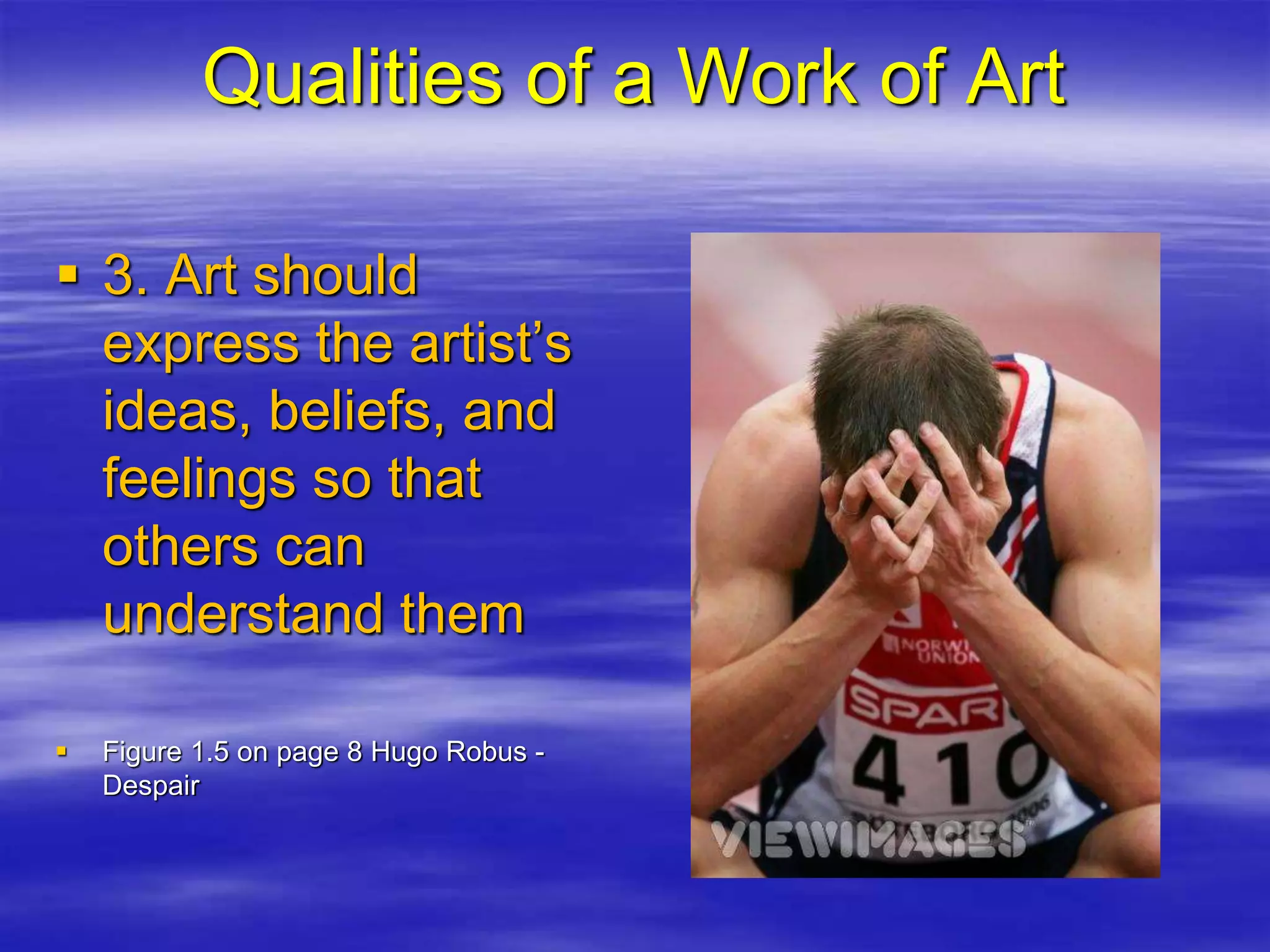
 3. Art should
express the artist’s
ideas, beliefs, and
feelings so that
others can
understand them
 Figure 1.5 on page 8 Hugo Robus -
Despair
Qualities of a Work of Art
Various Forms of art
 Two primary forms art fine arts and applied
arts.
 Fine Arts- refers to painting, sculpting, and
architecture, arts which have no practical
function, valued on their visual pleasure they
provide or their success in communicating
ideas or feelings.
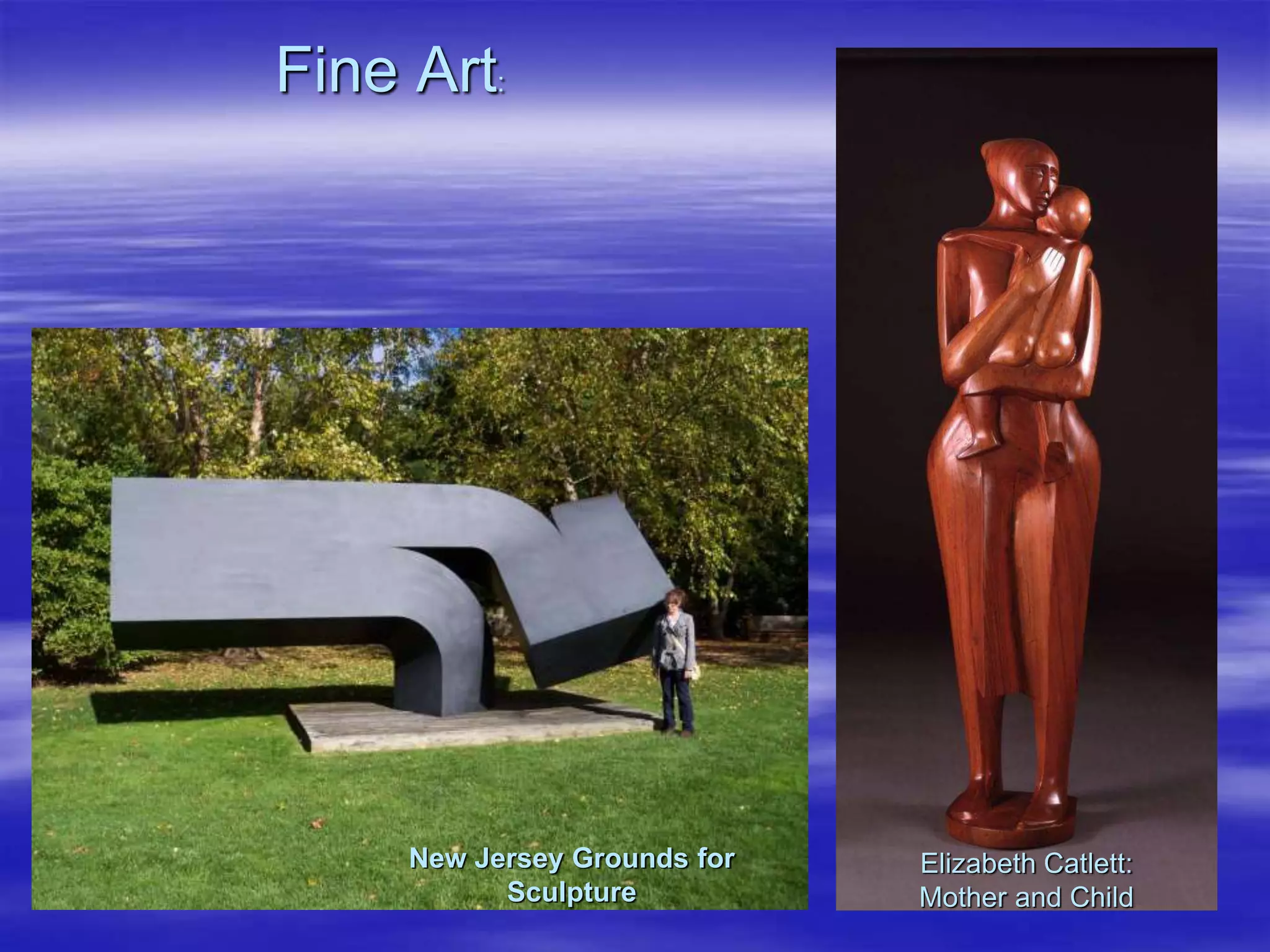
New Jersey Grounds for
Sculpture
Fine Art:
Elizabeth Catlett:
Mother and Child
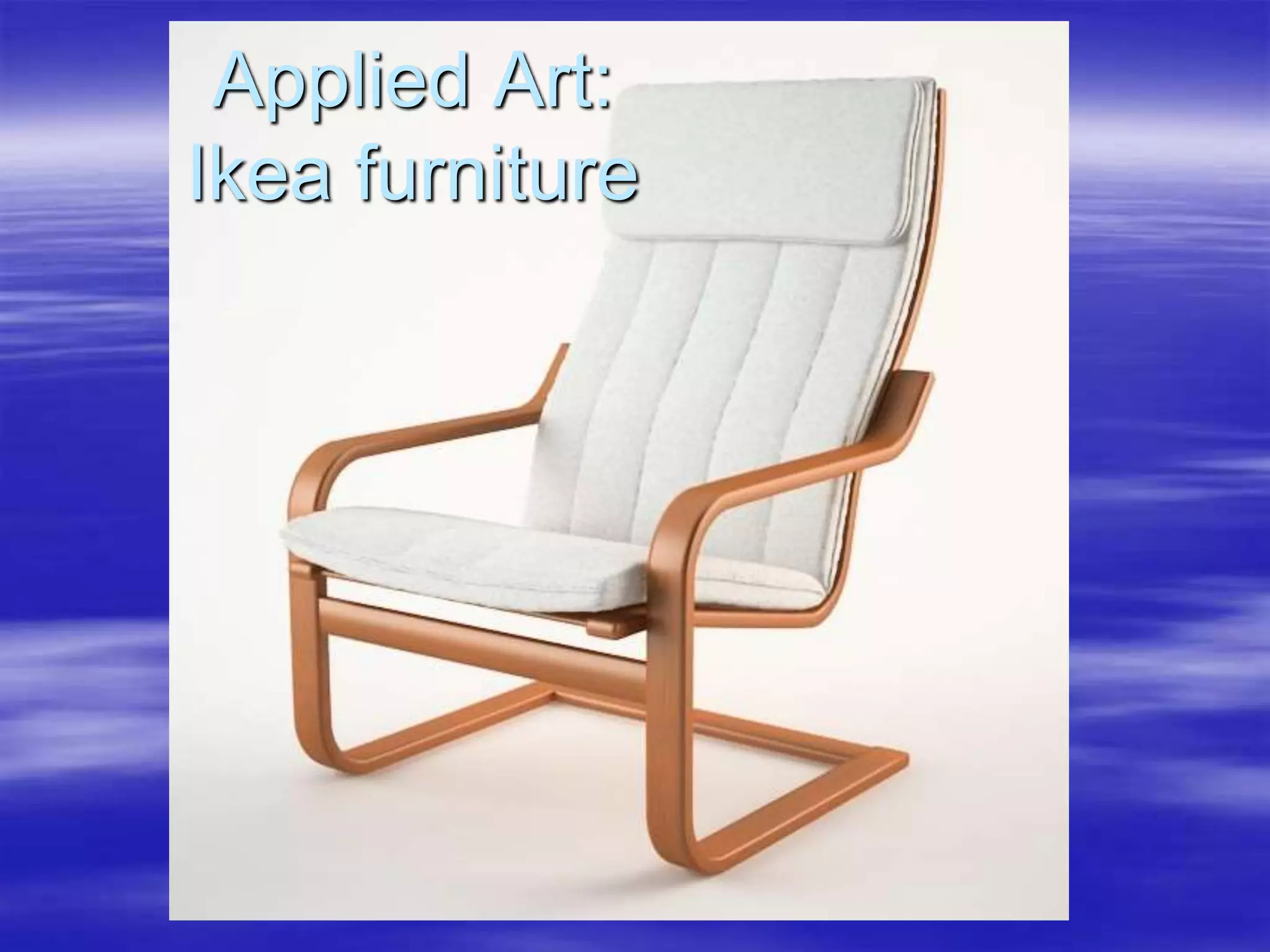
 Applied Art – the design or decoration of
functional objects to make them pleasing to
the eye.
 Made either by hand or machine
 Intended primarily to serve a useful function
 Artisans, designers and craftspeople
Various Forms of art
Applied Art:
Ikea furniture
Why Art is Created
 Aesthetics
 Simply for its visual appeal and the
pleasure it brings
 Morals/Ethics
 Depict people and behaviors that reflect
morality
 Spirituality
 Enables people to connect with the
spiritual world
 History
 Provide valuable information about
people, places and events
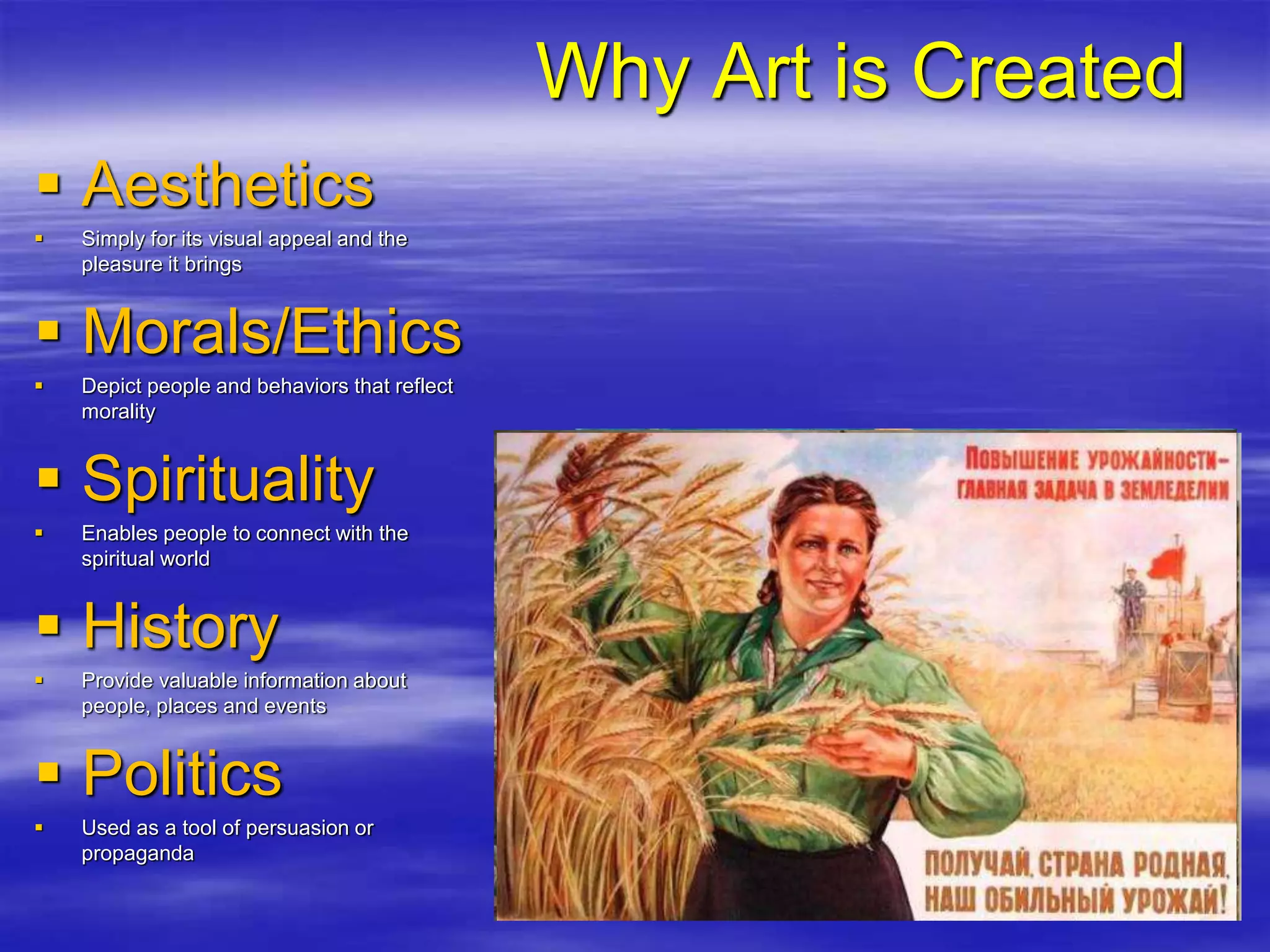
 Politics
 Used as a tool of persuasion or
propaganda
Why Artists Create
 Wealth?
 Titian earned huge commissions and lived like a prince
 while Rembrandt ended his last days bankrupt
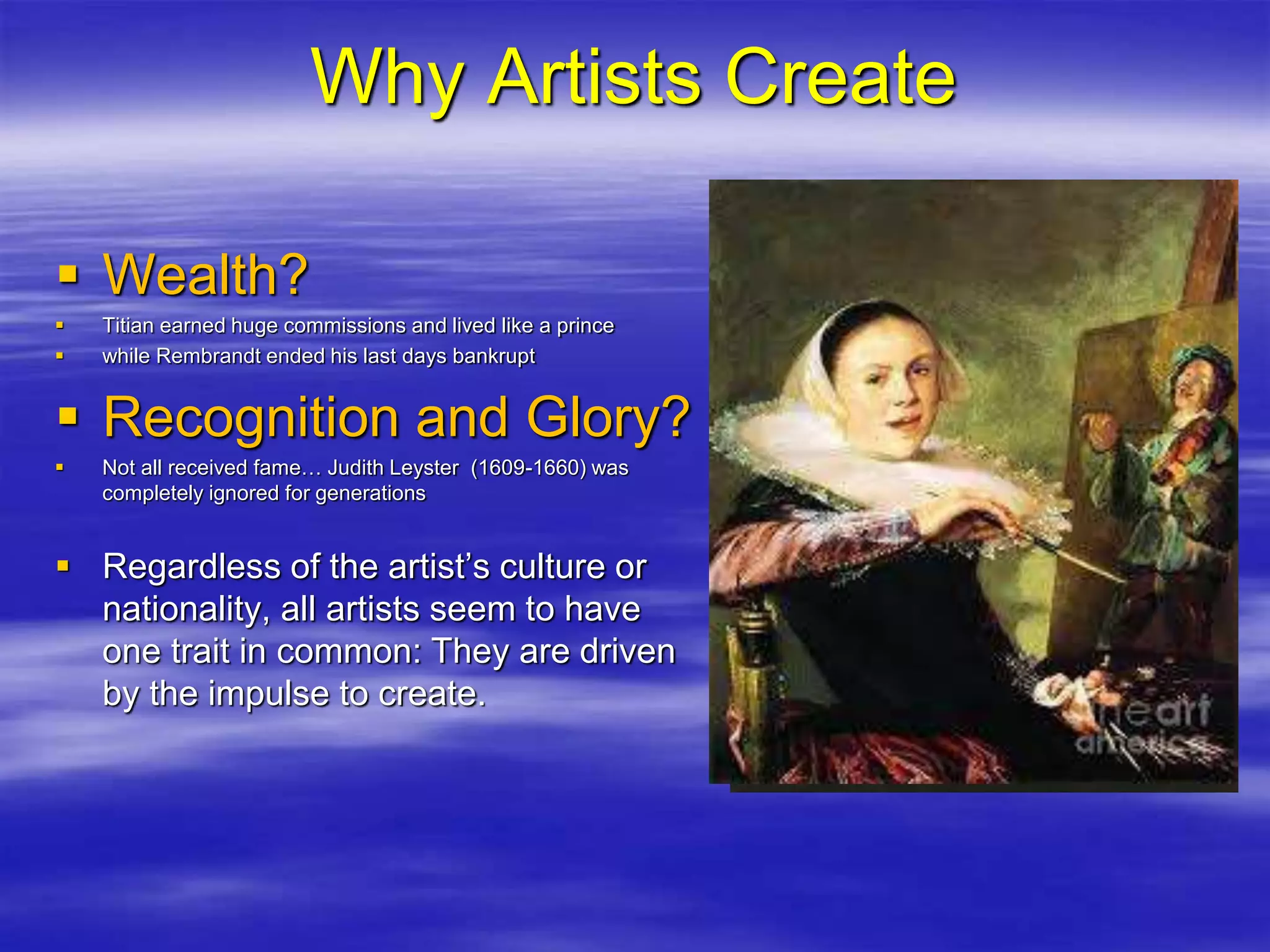
 Recognition and Glory?
 Not all received fame… Judith Leyster (1609-1660) was
completely ignored for generations
 Regardless of the artist’s culture or
nationality, all artists seem to have
one trait in common: They are driven
by the impulse to create.
Why should you study art
 You might wonder why you should involve
yourself in the creation of art.
 When you create original works of art, you
experience the creative process
 Presented with a puzzling visual problem,
you learn how approach the problem and
resolve it as an artist might.
 You develop your own capabilities for self-
expression
1. Self-Expression
– Assume for a moment that you want to express
an idea or emotion in a work of art.
– As you create you look for ways to convey this
idea or feeling to others.
– This task involves more than manipulating
material with your hands, it also requires that
you use your mind to draw upon your emotions.
Why should you study art
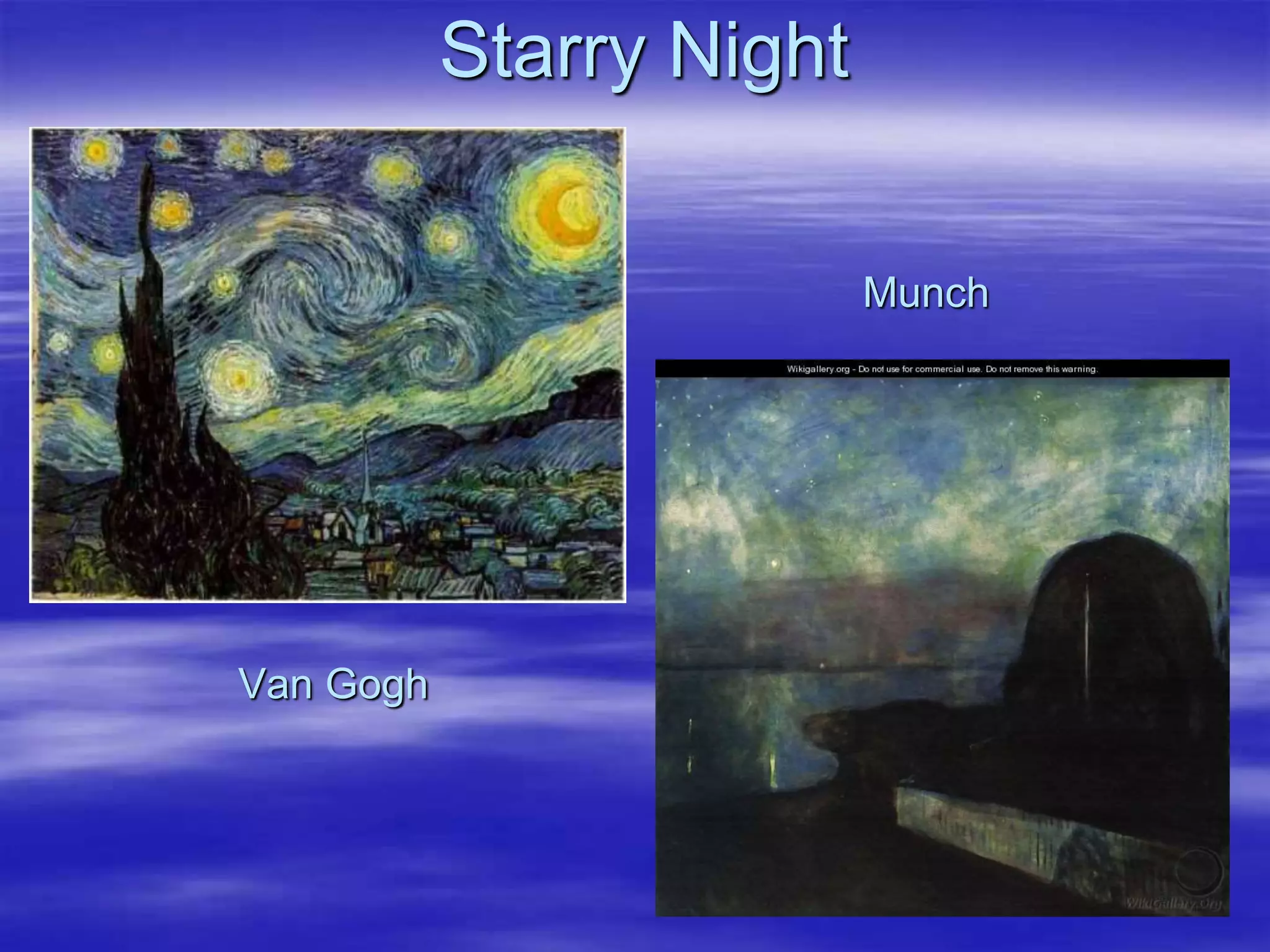
Starry Night
Munch
Van Gogh
2. Decision Making and Problem Solving
 What subject should I paint or sculpt?
 Which medium and technique should I use?
 What colors, shapes, lines and textures
should I emphasize?
 How can I arrange these elements
effectively?
 How will I recognize that the work is finished
and the creative process has ended?
Why should you study art
 Clarify the problems
 Identify Possible Solutions
 Test each possible solution
 Select the solution that seems most
appropriate
 Apply the Solution
 Determine whether the solution resolves the
problem
3. Real-World Connections
Why should you study art
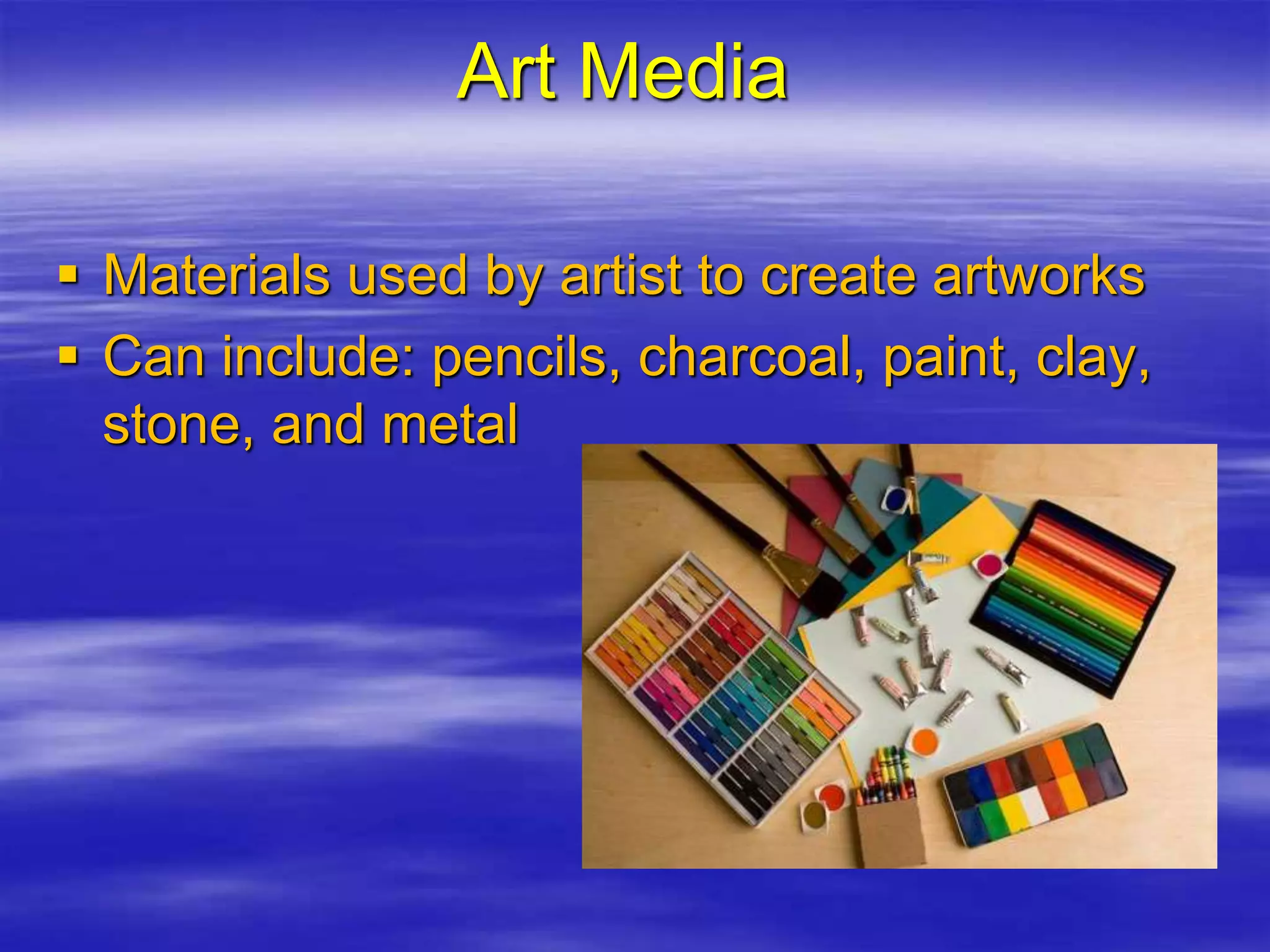
Art Media
 Materials used by artist to create artworks
 Can include: pencils, charcoal, paint, clay,
stone, and metal
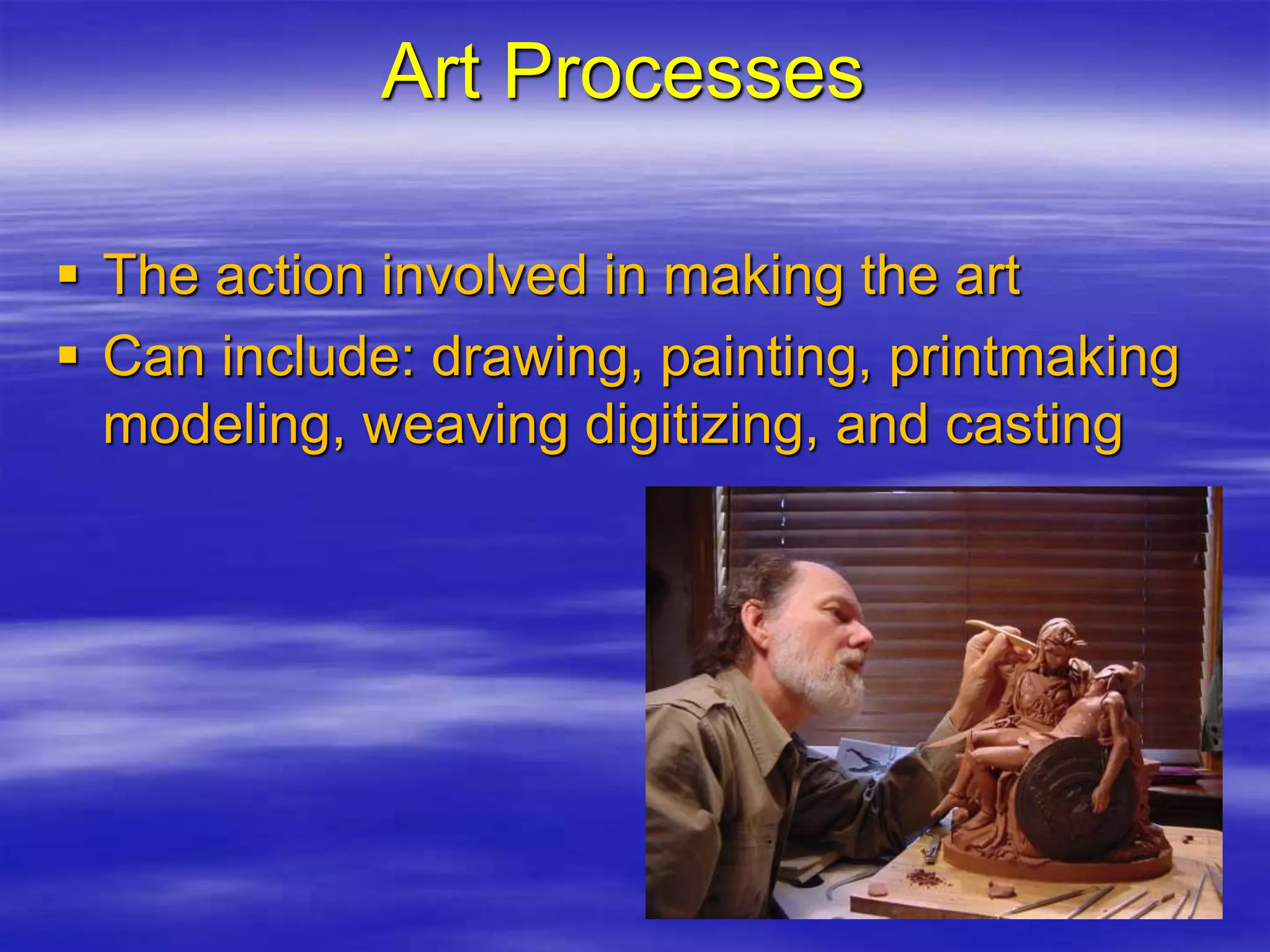
Art Processes
 The action involved in making the art
 Can include: drawing, painting, printmaking
modeling, weaving digitizing, and casting
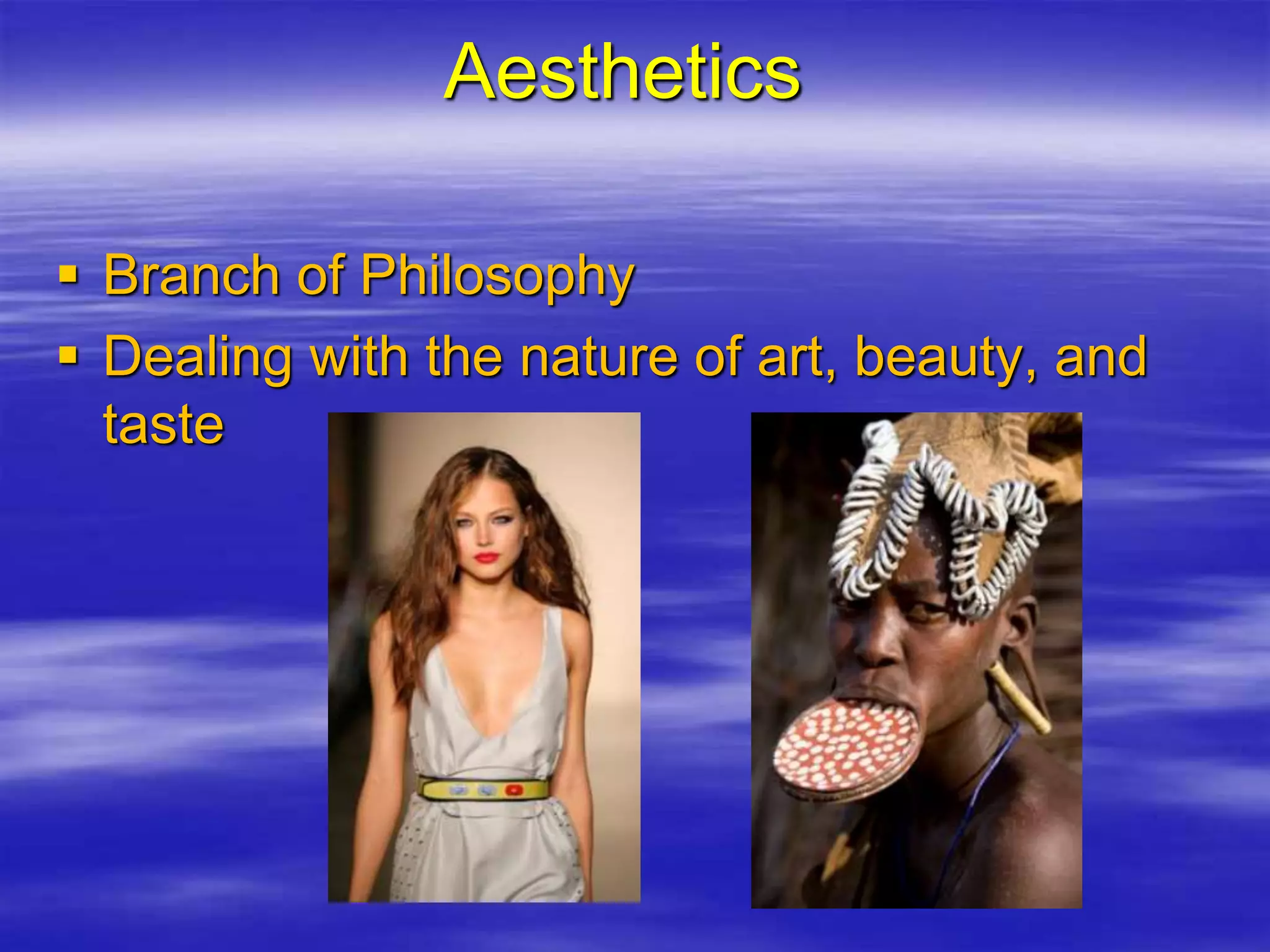
Aesthetics
 Branch of Philosophy
 Dealing with the nature of art, beauty, and
taste
Art Criticism
 The criteria, or standards of judgment you
will need when making decisions about art.
 The four steps of art criticism are:
1. Description
2. Analysis
3. Interpretation
4. Judgment
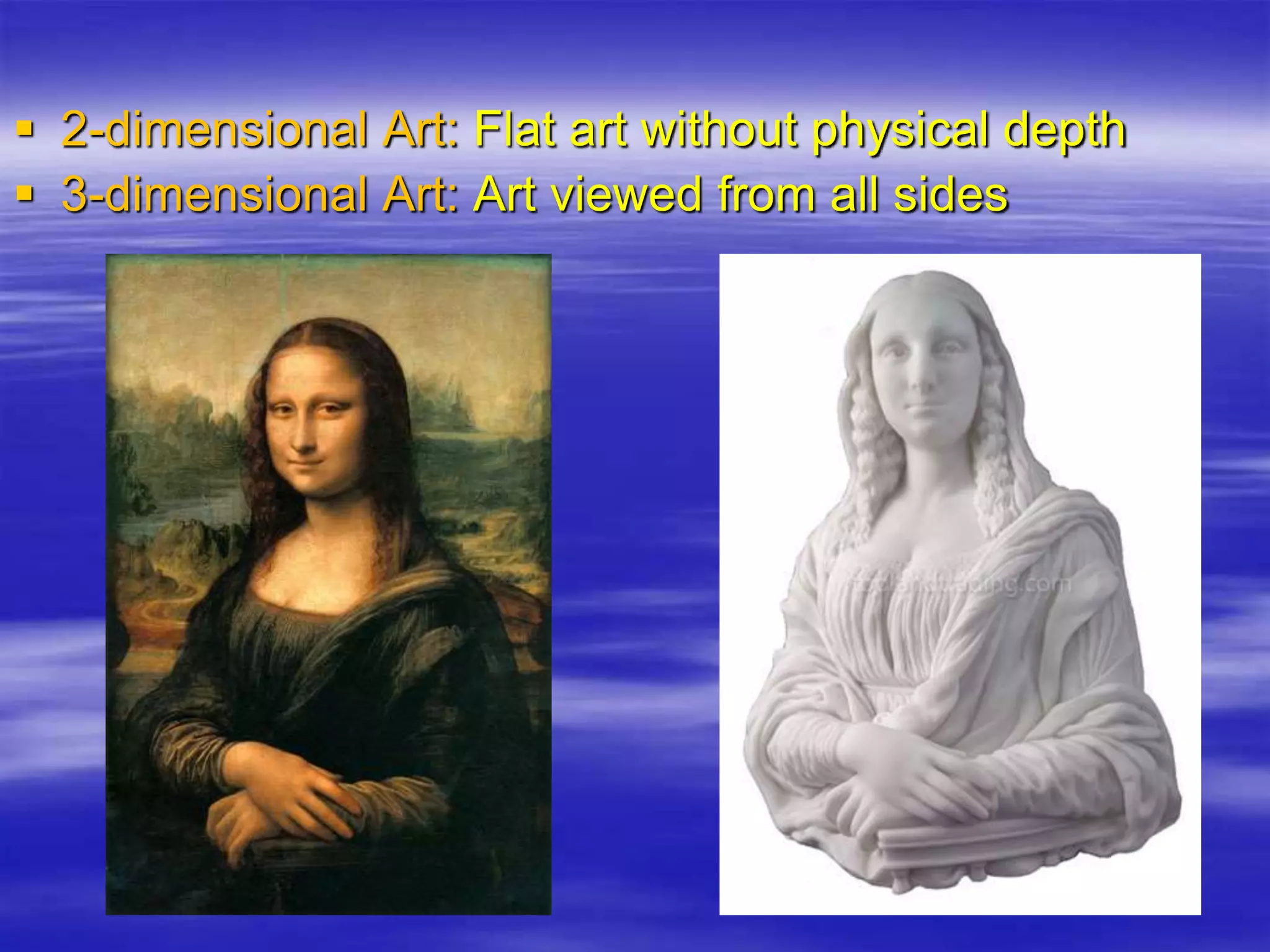
 2-dimensional Art: Flat art without physical depth
 3-dimensional Art: Art viewed from all sides
The Creative Formula
 Spark (inspiration): start with a problem to be
solved; brainstorm; observe; become aware of
relationships.
 Planning (calculation): decision-making phase.
Selection of materials. Refine visual elements:
gather visual references.
 Communication (execution): create the project.
Maintain craftsmanship, and integrity

2 Exploring Art Chapter 1.ppt

  • 1.
    Exploring Art Chapter 1– Art in Focus Mr. Mulligan
  • 2.
    What is Art? The arts are a basic form of human communication.  The visual arts, music, literature, and poetry may be considered the means by which people, past and present, express themselves in unique sights and sounds that capture the interest, imagination and appreciation of others.
  • 3.
    Visual Arts  Scholarshave tried to establish the qualities that identify an object as a work of art.
  • 4.
    Qualities of aWork of Art  1. Art should mirror reality. It must look like something seen in the real world
  • 5.
     2. Artmust be pleasing to the eye, even if it is not realistic. Qualities of a Work of Art
  • 6.
     3. Artshould express the artist’s ideas, beliefs, and feelings so that others can understand them  Figure 1.5 on page 8 Hugo Robus - Despair Qualities of a Work of Art
  • 7.
    Various Forms ofart  Two primary forms art fine arts and applied arts.  Fine Arts- refers to painting, sculpting, and architecture, arts which have no practical function, valued on their visual pleasure they provide or their success in communicating ideas or feelings.
  • 8.
    New Jersey Groundsfor Sculpture Fine Art: Elizabeth Catlett: Mother and Child
  • 9.
     Applied Art– the design or decoration of functional objects to make them pleasing to the eye.  Made either by hand or machine  Intended primarily to serve a useful function  Artisans, designers and craftspeople Various Forms of art
  • 10.
  • 11.
    Why Art isCreated  Aesthetics  Simply for its visual appeal and the pleasure it brings  Morals/Ethics  Depict people and behaviors that reflect morality  Spirituality  Enables people to connect with the spiritual world  History  Provide valuable information about people, places and events  Politics  Used as a tool of persuasion or propaganda
  • 12.
    Why Artists Create Wealth?  Titian earned huge commissions and lived like a prince  while Rembrandt ended his last days bankrupt  Recognition and Glory?  Not all received fame… Judith Leyster (1609-1660) was completely ignored for generations  Regardless of the artist’s culture or nationality, all artists seem to have one trait in common: They are driven by the impulse to create.
  • 13.
    Why should youstudy art  You might wonder why you should involve yourself in the creation of art.  When you create original works of art, you experience the creative process  Presented with a puzzling visual problem, you learn how approach the problem and resolve it as an artist might.  You develop your own capabilities for self- expression
  • 14.
    1. Self-Expression – Assumefor a moment that you want to express an idea or emotion in a work of art. – As you create you look for ways to convey this idea or feeling to others. – This task involves more than manipulating material with your hands, it also requires that you use your mind to draw upon your emotions. Why should you study art
  • 15.
  • 16.
    2. Decision Makingand Problem Solving  What subject should I paint or sculpt?  Which medium and technique should I use?  What colors, shapes, lines and textures should I emphasize?  How can I arrange these elements effectively?  How will I recognize that the work is finished and the creative process has ended? Why should you study art
  • 17.
     Clarify theproblems  Identify Possible Solutions  Test each possible solution  Select the solution that seems most appropriate  Apply the Solution  Determine whether the solution resolves the problem 3. Real-World Connections Why should you study art
  • 18.
    Art Media  Materialsused by artist to create artworks  Can include: pencils, charcoal, paint, clay, stone, and metal
  • 19.
    Art Processes  Theaction involved in making the art  Can include: drawing, painting, printmaking modeling, weaving digitizing, and casting
  • 20.
    Aesthetics  Branch ofPhilosophy  Dealing with the nature of art, beauty, and taste
  • 21.
    Art Criticism  Thecriteria, or standards of judgment you will need when making decisions about art.  The four steps of art criticism are: 1. Description 2. Analysis 3. Interpretation 4. Judgment
  • 22.
     2-dimensional Art:Flat art without physical depth  3-dimensional Art: Art viewed from all sides
  • 23.
    The Creative Formula Spark (inspiration): start with a problem to be solved; brainstorm; observe; become aware of relationships.  Planning (calculation): decision-making phase. Selection of materials. Refine visual elements: gather visual references.  Communication (execution): create the project. Maintain craftsmanship, and integrity