Social Studies for 9th EGB
Teacher: Mauricio Torres
Roman emperors came and went. Chosen,
killed, inherited the position or outlived plots
against them
Some were good, some were bad. Some were
wise, some were nuts!
Age of Augustus

Years of Trial

Empire Reborn

Augustus

Julio-Claudian
dynasty

Elected
Emperors
Family by blood and Adoption
It normally refers to the first five Roman
Emperors: Augustus, Tiberius, Caligula,
Claudius, and Nero.
They ruled the Roman Empire from its formation, in
the second half of the 1st century, until AD 68,
when the last of the line, Nero, committed suicide.
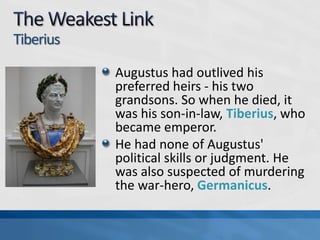
Tiberius
Augustus had outlived his
preferred heirs - his two
grandsons. So when he died, it
was his son-in-law, Tiberius, who
became emperor.
He had none of Augustus'
political skills or judgment. He
was also suspected of murdering
the war-hero, Germanicus.
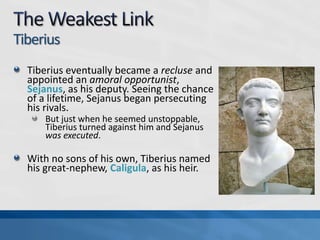
Tiberius
Tiberius eventually became a recluse and
appointed an amoral opportunist,
Sejanus, as his deputy. Seeing the chance
of a lifetime, Sejanus began persecuting
his rivals.
But just when he seemed unstoppable,
Tiberius turned against him and Sejanus
was executed.

With no sons of his own, Tiberius named
his great-nephew, Caligula, as his heir.
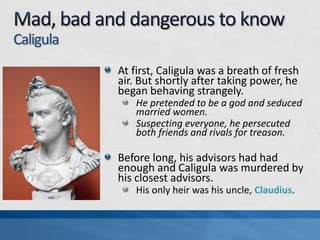
Caligula
At first, Caligula was a breath of fresh
air. But shortly after taking power, he
began behaving strangely.
He pretended to be a god and seduced
married women.
Suspecting everyone, he persecuted
both friends and rivals for treason.

Before long, his advisors had had
enough and Caligula was murdered by
his closest advisors.
His only heir was his uncle, Claudius.
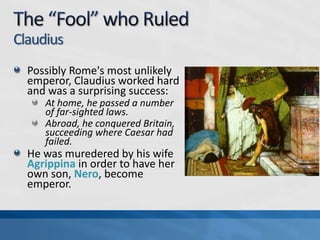
Claudius
Possibly Rome's most unlikely
emperor, Claudius worked hard
and was a surprising success:
At home, he passed a number
of far-sighted laws.
Abroad, he conquered Britain,
succeeding where Caesar had
failed.

He was muredered by his wife
Agrippina in order to have her
own son, Nero, become
emperor.
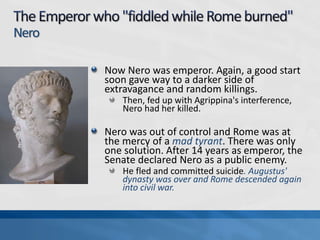
Nero
Now Nero was emperor. Again, a good start
soon gave way to a darker side of
extravagance and random killings.
Then, fed up with Agrippina's interference,
Nero had her killed.

Nero was out of control and Rome was at
the mercy of a mad tyrant. There was only
one solution. After 14 years as emperor, the
Senate declared Nero as a public enemy.
He fled and committed suicide. Augustus'
dynasty was over and Rome descended again
into civil war.
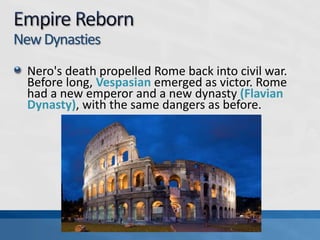
New Dynasties
Nero's death propelled Rome back into civil war.
Before long, Vespasian emerged as victor. Rome
had a new emperor and a new dynasty (Flavian
Dynasty), with the same dangers as before.
The Year of the Four Emperors
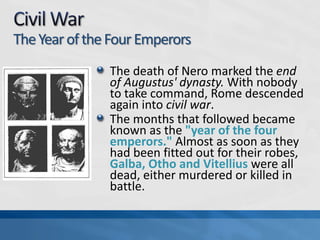
The death of Nero marked the end
of Augustus' dynasty. With nobody
to take command, Rome descended
again into civil war.
The months that followed became
known as the "year of the four
emperors." Almost as soon as they
had been fitted out for their robes,
Galba, Otho and Vitellius were all
dead, either murdered or killed in
battle.
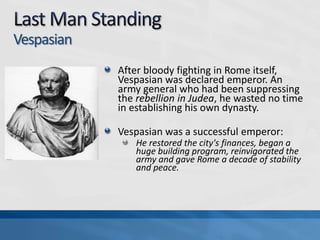
Vespasian
After bloody fighting in Rome itself,
Vespasian was declared emperor. An
army general who had been suppressing
the rebellion in Judea, he wasted no time
in establishing his own dynasty.
Vespasian was a successful emperor:
He restored the city's finances, began a
huge building program, reinvigorated the
army and gave Rome a decade of stability
and peace.
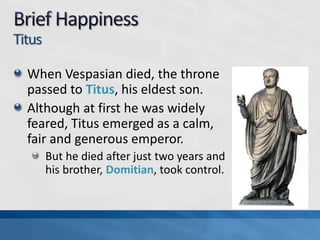
Titus
When Vespasian died, the throne
passed to Titus, his eldest son.
Although at first he was widely
feared, Titus emerged as a calm,
fair and generous emperor.
But he died after just two years and
his brother, Domitian, took control.
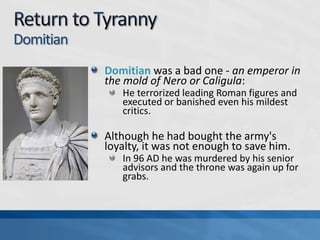
Domitian
Domitian was a bad one - an emperor in
the mold of Nero or Caligula:
He terrorized leading Roman figures and
executed or banished even his mildest
critics.

Although he had bought the army's
loyalty, it was not enough to save him.
In 96 AD he was murdered by his senior
advisors and the throne was again up for
grabs.
Nerva
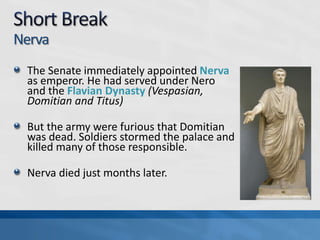
The Senate immediately appointed Nerva
as emperor. He had served under Nero
and the Flavian Dynasty (Vespasian,
Domitian and Titus)
But the army were furious that Domitian
was dead. Soldiers stormed the palace and
killed many of those responsible.
Nerva died just months later.
Trajan
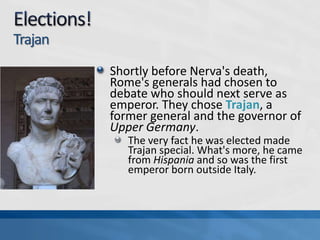
Shortly before Nerva's death,
Rome's generals had chosen to
debate who should next serve as
emperor. They chose Trajan, a
former general and the governor of
Upper Germany.
The very fact he was elected made
Trajan special. What's more, he came
from Hispania and so was the first
emperor born outside Italy.
Trajan
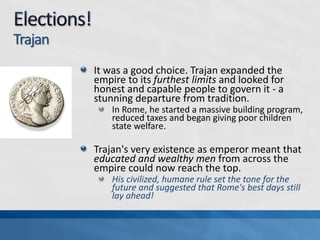
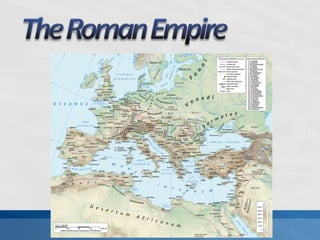
It was a good choice. Trajan expanded the
empire to its furthest limits and looked for
honest and capable people to govern it - a
stunning departure from tradition.
In Rome, he started a massive building program,
reduced taxes and began giving poor children
state welfare.

Trajan's very existence as emperor meant that
educated and wealthy men from across the
empire could now reach the top.
His civilized, humane rule set the tone for the
future and suggested that Rome's best days still
lay ahead!
After Augustus

After Augustus

  • 1.
    Social Studies for9th EGB Teacher: Mauricio Torres
  • 2.
    Roman emperors cameand went. Chosen, killed, inherited the position or outlived plots against them Some were good, some were bad. Some were wise, some were nuts! Age of Augustus Years of Trial Empire Reborn Augustus Julio-Claudian dynasty Elected Emperors
  • 3.
    Family by bloodand Adoption It normally refers to the first five Roman Emperors: Augustus, Tiberius, Caligula, Claudius, and Nero. They ruled the Roman Empire from its formation, in the second half of the 1st century, until AD 68, when the last of the line, Nero, committed suicide.
  • 4.
    Tiberius Augustus had outlivedhis preferred heirs - his two grandsons. So when he died, it was his son-in-law, Tiberius, who became emperor. He had none of Augustus' political skills or judgment. He was also suspected of murdering the war-hero, Germanicus.
  • 5.
    Tiberius Tiberius eventually becamea recluse and appointed an amoral opportunist, Sejanus, as his deputy. Seeing the chance of a lifetime, Sejanus began persecuting his rivals. But just when he seemed unstoppable, Tiberius turned against him and Sejanus was executed. With no sons of his own, Tiberius named his great-nephew, Caligula, as his heir.
  • 6.
    Caligula At first, Caligulawas a breath of fresh air. But shortly after taking power, he began behaving strangely. He pretended to be a god and seduced married women. Suspecting everyone, he persecuted both friends and rivals for treason. Before long, his advisors had had enough and Caligula was murdered by his closest advisors. His only heir was his uncle, Claudius.
  • 7.
    Claudius Possibly Rome's mostunlikely emperor, Claudius worked hard and was a surprising success: At home, he passed a number of far-sighted laws. Abroad, he conquered Britain, succeeding where Caesar had failed. He was muredered by his wife Agrippina in order to have her own son, Nero, become emperor.
  • 8.
    Nero Now Nero wasemperor. Again, a good start soon gave way to a darker side of extravagance and random killings. Then, fed up with Agrippina's interference, Nero had her killed. Nero was out of control and Rome was at the mercy of a mad tyrant. There was only one solution. After 14 years as emperor, the Senate declared Nero as a public enemy. He fled and committed suicide. Augustus' dynasty was over and Rome descended again into civil war.
  • 9.
    New Dynasties Nero's deathpropelled Rome back into civil war. Before long, Vespasian emerged as victor. Rome had a new emperor and a new dynasty (Flavian Dynasty), with the same dangers as before.
  • 10.
    The Year ofthe Four Emperors The death of Nero marked the end of Augustus' dynasty. With nobody to take command, Rome descended again into civil war. The months that followed became known as the "year of the four emperors." Almost as soon as they had been fitted out for their robes, Galba, Otho and Vitellius were all dead, either murdered or killed in battle.
  • 11.
    Vespasian After bloody fightingin Rome itself, Vespasian was declared emperor. An army general who had been suppressing the rebellion in Judea, he wasted no time in establishing his own dynasty. Vespasian was a successful emperor: He restored the city's finances, began a huge building program, reinvigorated the army and gave Rome a decade of stability and peace.
  • 12.
    Titus When Vespasian died,the throne passed to Titus, his eldest son. Although at first he was widely feared, Titus emerged as a calm, fair and generous emperor. But he died after just two years and his brother, Domitian, took control.
  • 13.
    Domitian Domitian was abad one - an emperor in the mold of Nero or Caligula: He terrorized leading Roman figures and executed or banished even his mildest critics. Although he had bought the army's loyalty, it was not enough to save him. In 96 AD he was murdered by his senior advisors and the throne was again up for grabs.
  • 14.
    Nerva The Senate immediatelyappointed Nerva as emperor. He had served under Nero and the Flavian Dynasty (Vespasian, Domitian and Titus) But the army were furious that Domitian was dead. Soldiers stormed the palace and killed many of those responsible. Nerva died just months later.
  • 15.
    Trajan Shortly before Nerva'sdeath, Rome's generals had chosen to debate who should next serve as emperor. They chose Trajan, a former general and the governor of Upper Germany. The very fact he was elected made Trajan special. What's more, he came from Hispania and so was the first emperor born outside Italy.
  • 16.
    Trajan It was agood choice. Trajan expanded the empire to its furthest limits and looked for honest and capable people to govern it - a stunning departure from tradition. In Rome, he started a massive building program, reduced taxes and began giving poor children state welfare. Trajan's very existence as emperor meant that educated and wealthy men from across the empire could now reach the top. His civilized, humane rule set the tone for the future and suggested that Rome's best days still lay ahead!