1798 Rebellion
• Ireland was an uneasy country in the years
leading up to 1798
• Penal Laws had been introduced in the 1700’s
• They were a series of laws against Catholics
and Presbyterians
• They were not allowed to sit in parliament
and they owned very little land
• Catholics also had to pay a 10% tithe(tax) to
the Church of Ireland
1798 Rebellion
1798 Rebellion
• Ireland’s trade was also restricted by the British
Parliament
• People were also angry with the system of
government in Ireland
• Any law passed in Ireland had to go to Britain for
approval
• At the same time Britain could make any law they
liked for Ireland
• Henry Grattan led a drive for reform which
resulted in some freedoms
1798 Rebellion
• Theobald Wolfe Tone was a protestant lawyer
who wanted reform
• He fought for Catholic rights and would go on to
form the United Irishmen
• This group wanted independence from Britain
and got members from all religious groups
• The British government began to keep on eye on
the United Irishmen
• The Army then started to gather the United
Irishmen’s weapons and arrest their leaders
1798 Rebellion
• Wolfe Tone sought the help of the French
• They arrived of the coast of Ireland in 1796 with a
large amount of troops but could not land
because of the weather
• This frightened the British and they cracked down
on the United Irishmen even more
• In 1798 the Irish revolted in Wexford and in
Ulster
• In Wexford they had early success at Enniscorthy
and Wexford town
1798 Rebellion
1798 Rebellion
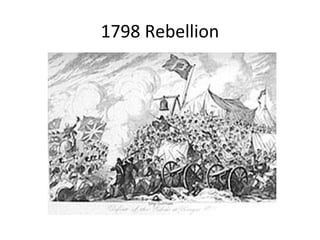
• The United Irishmen were defeated at Vinegar
Hill leading to the end of the rebellion in
Wexford
• In Ulster there were two revolts, one in
Antrim and one in Down
• Henry Joy McCracken lead the revolt in Antrim
and Henry Munro in Down
• Both revolts were defeated fairly quickly
1798 Rebellion
• The French again sent help. 1000 men arrived in
Mayo
• After some early success they were defeated
• Another French force along with Wolfe Tone
attempted to land in Donegal
• They were captured in Lough Swilly
• Wolfe tone was recognised and brought to
Dublin for trial
• He cut his own throat in his cell had he had been
denied a soldiers death
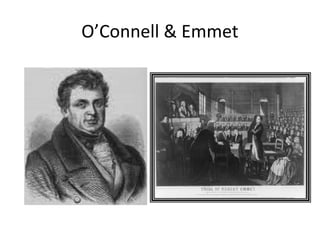
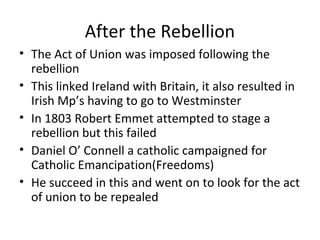
O’Connell & Emmet
After the Rebellion
• The Act of Union was imposed following the
rebellion
• This linked Ireland with Britain, it also resulted in
Irish Mp’s having to go to Westminster
• In 1803 Robert Emmet attempted to stage a
rebellion but this failed
• Daniel O’ Connell a catholic campaigned for
Catholic Emancipation(Freedoms)
• He succeed in this and went on to look for the act
of union to be repealed
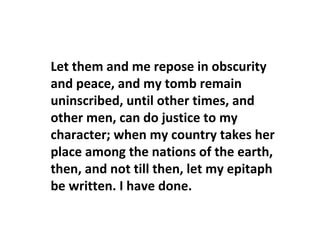
Let them and me repose in obscurity
and peace, and my tomb remain
uninscribed, until other times, and
other men, can do justice to my
character; when my country takes her
place among the nations of the earth,
then, and not till then, let my epitaph
be written. I have done.

1798 rebellion

  • 1.
    1798 Rebellion • Irelandwas an uneasy country in the years leading up to 1798 • Penal Laws had been introduced in the 1700’s • They were a series of laws against Catholics and Presbyterians • They were not allowed to sit in parliament and they owned very little land • Catholics also had to pay a 10% tithe(tax) to the Church of Ireland
  • 2.
  • 3.
    1798 Rebellion • Ireland’strade was also restricted by the British Parliament • People were also angry with the system of government in Ireland • Any law passed in Ireland had to go to Britain for approval • At the same time Britain could make any law they liked for Ireland • Henry Grattan led a drive for reform which resulted in some freedoms
  • 4.
    1798 Rebellion • TheobaldWolfe Tone was a protestant lawyer who wanted reform • He fought for Catholic rights and would go on to form the United Irishmen • This group wanted independence from Britain and got members from all religious groups • The British government began to keep on eye on the United Irishmen • The Army then started to gather the United Irishmen’s weapons and arrest their leaders
  • 5.
    1798 Rebellion • WolfeTone sought the help of the French • They arrived of the coast of Ireland in 1796 with a large amount of troops but could not land because of the weather • This frightened the British and they cracked down on the United Irishmen even more • In 1798 the Irish revolted in Wexford and in Ulster • In Wexford they had early success at Enniscorthy and Wexford town
  • 6.
  • 7.
    1798 Rebellion • TheUnited Irishmen were defeated at Vinegar Hill leading to the end of the rebellion in Wexford • In Ulster there were two revolts, one in Antrim and one in Down • Henry Joy McCracken lead the revolt in Antrim and Henry Munro in Down • Both revolts were defeated fairly quickly
  • 8.
    1798 Rebellion • TheFrench again sent help. 1000 men arrived in Mayo • After some early success they were defeated • Another French force along with Wolfe Tone attempted to land in Donegal • They were captured in Lough Swilly • Wolfe tone was recognised and brought to Dublin for trial • He cut his own throat in his cell had he had been denied a soldiers death
  • 9.
  • 10.
    After the Rebellion •The Act of Union was imposed following the rebellion • This linked Ireland with Britain, it also resulted in Irish Mp’s having to go to Westminster • In 1803 Robert Emmet attempted to stage a rebellion but this failed • Daniel O’ Connell a catholic campaigned for Catholic Emancipation(Freedoms) • He succeed in this and went on to look for the act of union to be repealed
  • 11.
    Let them andme repose in obscurity and peace, and my tomb remain uninscribed, until other times, and other men, can do justice to my character; when my country takes her place among the nations of the earth, then, and not till then, let my epitaph be written. I have done.