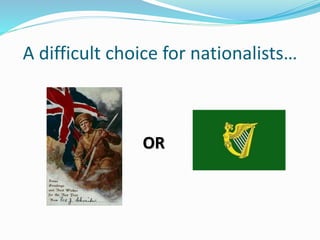
A difficult choice for nationalists…
OR
A difficult choice…
 Unionists had no problem volunteering to fight in World War 1
 Nationalists had a difficult choice to make….
 If Nationalists joined the British Army maybe Britain would be
impressed and grant Home Rule to Ireland… or maybe not?
 Or should we fight against Britain and suffer the consequences?
 John Redmond felt Nationalists should fight in the British Army
 Eoin MacNeill and others believed that Nationalists shouldn’t
fight for the freedom of other countries until their own was
free – these people were known as “Sinn Fein Volunteers”
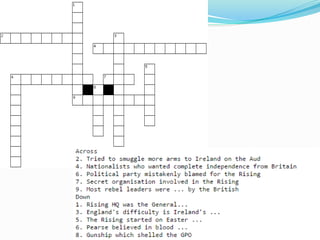
“England’s difficulty is Ireland’s
Opportunity”
 Some in the Irish Republican Brotherhood (IRB) felt that the
outbreak of World War One gave Ireland an opportunity
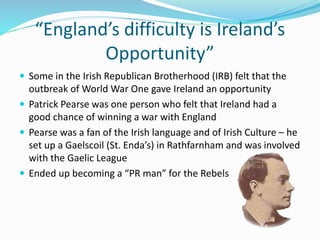
 Patrick Pearse was one person who felt that Ireland had a
good chance of winning a war with England
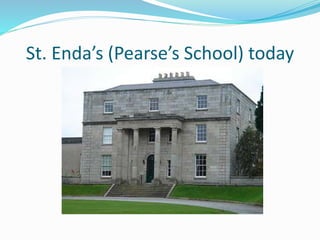
 Pearse was a fan of the Irish language and of Irish Culture – he
set up a Gaelscoil (St. Enda’s) in Rathfarnham and was involved
with the Gaelic League
 Ended up becoming a “PR man” for the Rebels
St. Enda’s (Pearse’s School) today
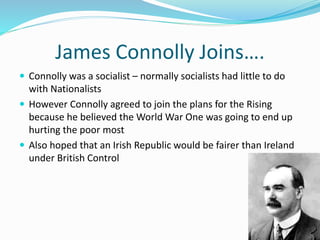
James Connolly Joins….
 Connolly was a socialist – normally socialists had little to do
with Nationalists
 However Connolly agreed to join the plans for the Rising
because he believed the World War One was going to end up
hurting the poor most
 Also hoped that an Irish Republic would be fairer than Ireland
under British Control
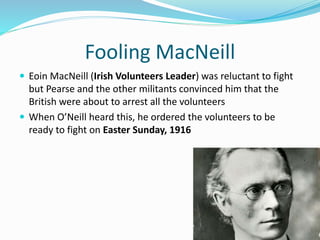
Fooling MacNeill
 Eoin MacNeill (Irish Volunteers Leader) was reluctant to fight
but Pearse and the other militants convinced him that the
British were about to arrest all the volunteers
 When O’Neill heard this, he ordered the volunteers to be
ready to fight on Easter Sunday, 1916
Weapons smuggling
 The volunteers had not enough arms to have a successful uprising
and hoped to smuggle some in from Germany
 A ship, the Aud was supposed to smuggle in weapons to Kerry but
was intercepted by the British Navy
 When Eoin MacNeill (Volunteer leader) saw this, he knew the Rising
had no chance of success and ordered a stop
 This messed up the plans of Pearse, Connolly and the other militants
but they decided to go ahead with the Rising on Easter Monday,
1916
 The Rebels hoped to inspire the Public and to set an example to
future generations – Pearse called this “Blood Sacrifice”
Fighting Breaks out…
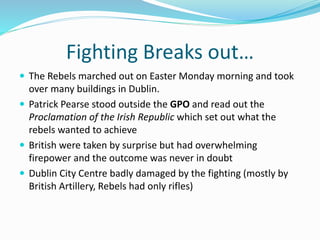
 The Rebels marched out on Easter Monday morning and took
over many buildings in Dublin.
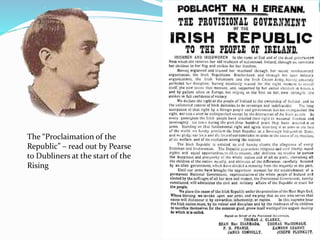
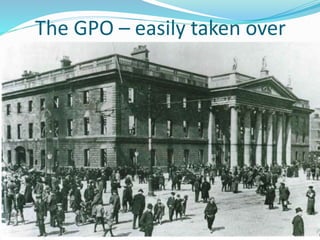
 Patrick Pearse stood outside the GPO and read out the
Proclamation of the Irish Republic which set out what the
rebels wanted to achieve
 British were taken by surprise but had overwhelming
firepower and the outcome was never in doubt
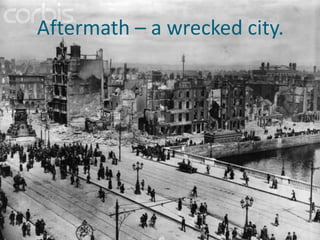
 Dublin City Centre badly damaged by the fighting (mostly by
British Artillery, Rebels had only rifles)
The “Proclaimation of the
Republic” – read out by Pearse
to Dubliners at the start of the
Rising
The GPO – easily taken over
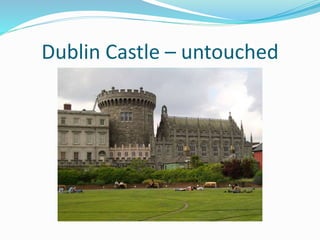
Dublin Castle – untouched
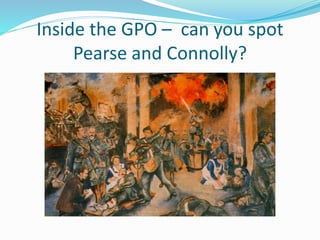
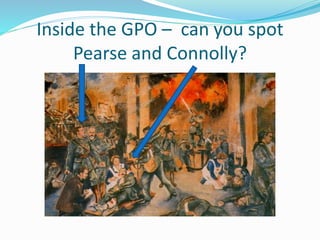
Inside the GPO – can you spot
Pearse and Connolly?
Inside the GPO – can you spot
Pearse and Connolly?
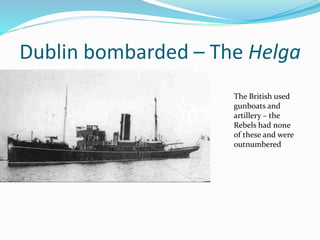
Dublin bombarded – The Helga
The British used
gunboats and
artillery – the
Rebels had none
of these and were
outnumbered
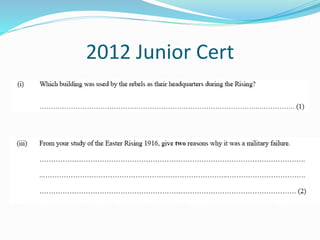
2012 Junior Cert
Response
 The British felt betrayed by the Rising – as they were fighting
the Germans the Irish had joined up to also attack them
 It was decided to execute all the ringleaders of the Rising in
order to discourage any further attempts at rebellion
 The ordinary people of Dublin were NOT happy with the rising
– the city was in ruins and many ordinary people had been
killed in the fighting
 Rising had ended in complete military failure
 But the story was not over yet…
Aftermath – a wrecked city.
Aftermath
 The British decision to execute all the Rebel leaders proved
to be a serious mistake
 Instead of frightening off the remaining rebels, all that
happened was that sympathy for the rebels increased
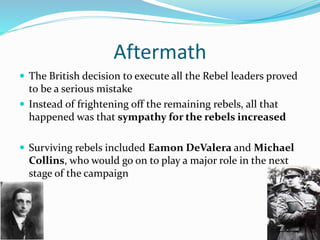
 Surviving rebels included Eamon DeValera and Michael
Collins, who would go on to play a major role in the next
stage of the campaign
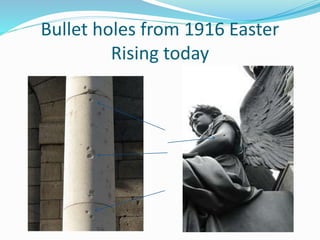
Bullet holes from 1916 Easter
Rising today
The 1916 Easter Rising - Junior Cert History

The 1916 Easter Rising - Junior Cert History

  • 2.
    A difficult choicefor nationalists… OR
  • 3.
    A difficult choice… Unionists had no problem volunteering to fight in World War 1  Nationalists had a difficult choice to make….  If Nationalists joined the British Army maybe Britain would be impressed and grant Home Rule to Ireland… or maybe not?  Or should we fight against Britain and suffer the consequences?  John Redmond felt Nationalists should fight in the British Army  Eoin MacNeill and others believed that Nationalists shouldn’t fight for the freedom of other countries until their own was free – these people were known as “Sinn Fein Volunteers”
  • 4.
    “England’s difficulty isIreland’s Opportunity”  Some in the Irish Republican Brotherhood (IRB) felt that the outbreak of World War One gave Ireland an opportunity  Patrick Pearse was one person who felt that Ireland had a good chance of winning a war with England  Pearse was a fan of the Irish language and of Irish Culture – he set up a Gaelscoil (St. Enda’s) in Rathfarnham and was involved with the Gaelic League  Ended up becoming a “PR man” for the Rebels
  • 5.
  • 6.
    James Connolly Joins…. Connolly was a socialist – normally socialists had little to do with Nationalists  However Connolly agreed to join the plans for the Rising because he believed the World War One was going to end up hurting the poor most  Also hoped that an Irish Republic would be fairer than Ireland under British Control
  • 7.
    Fooling MacNeill  EoinMacNeill (Irish Volunteers Leader) was reluctant to fight but Pearse and the other militants convinced him that the British were about to arrest all the volunteers  When O’Neill heard this, he ordered the volunteers to be ready to fight on Easter Sunday, 1916
  • 8.
    Weapons smuggling  Thevolunteers had not enough arms to have a successful uprising and hoped to smuggle some in from Germany  A ship, the Aud was supposed to smuggle in weapons to Kerry but was intercepted by the British Navy  When Eoin MacNeill (Volunteer leader) saw this, he knew the Rising had no chance of success and ordered a stop  This messed up the plans of Pearse, Connolly and the other militants but they decided to go ahead with the Rising on Easter Monday, 1916  The Rebels hoped to inspire the Public and to set an example to future generations – Pearse called this “Blood Sacrifice”
  • 9.
    Fighting Breaks out… The Rebels marched out on Easter Monday morning and took over many buildings in Dublin.  Patrick Pearse stood outside the GPO and read out the Proclamation of the Irish Republic which set out what the rebels wanted to achieve  British were taken by surprise but had overwhelming firepower and the outcome was never in doubt  Dublin City Centre badly damaged by the fighting (mostly by British Artillery, Rebels had only rifles)
  • 10.
    The “Proclaimation ofthe Republic” – read out by Pearse to Dubliners at the start of the Rising
  • 11.
    The GPO –easily taken over
  • 12.
  • 13.
    Inside the GPO– can you spot Pearse and Connolly?
  • 14.
    Inside the GPO– can you spot Pearse and Connolly?
  • 15.
    Dublin bombarded –The Helga The British used gunboats and artillery – the Rebels had none of these and were outnumbered
  • 16.
  • 17.
    Response  The Britishfelt betrayed by the Rising – as they were fighting the Germans the Irish had joined up to also attack them  It was decided to execute all the ringleaders of the Rising in order to discourage any further attempts at rebellion  The ordinary people of Dublin were NOT happy with the rising – the city was in ruins and many ordinary people had been killed in the fighting  Rising had ended in complete military failure  But the story was not over yet…
  • 18.
    Aftermath – awrecked city.
  • 19.
    Aftermath  The Britishdecision to execute all the Rebel leaders proved to be a serious mistake  Instead of frightening off the remaining rebels, all that happened was that sympathy for the rebels increased  Surviving rebels included Eamon DeValera and Michael Collins, who would go on to play a major role in the next stage of the campaign
  • 20.
    Bullet holes from1916 Easter Rising today