Topic: Chemical Reaction Depersonalization in
“The Tradition and individual talent “
Name: Jinal B. Parmar
Roll No.: 13
Paper No.: 7 Literary Theory and
Criticism
M.A. Sem.: 2
Year: 2013-2014
Submitted to: Department of English
Smt. S. B. Gardi
Maharaja
Krishnakumarsinhji Bhavnagar
University
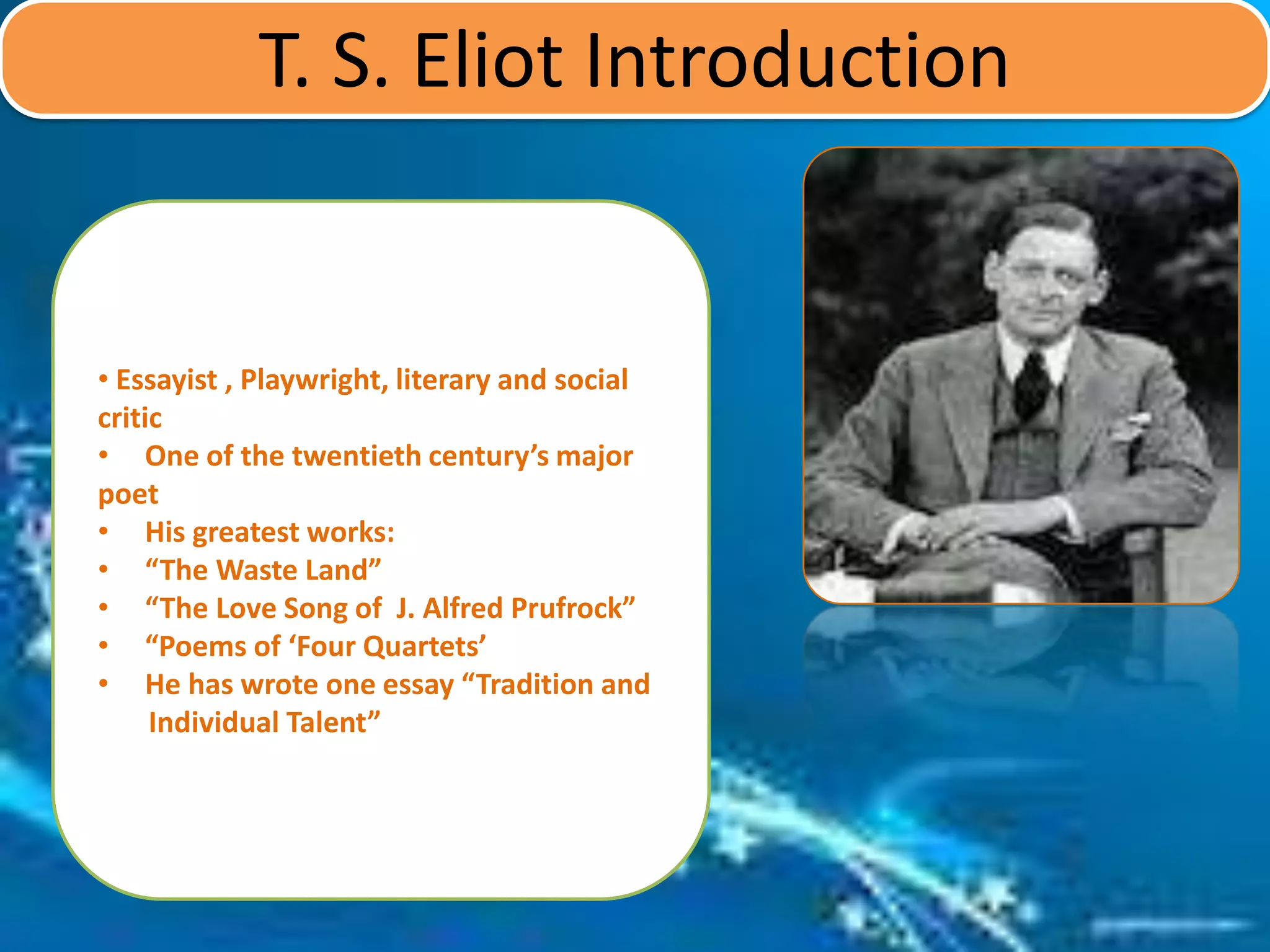
T. S. Eliot Introduction
• Essayist , Playwright, literary and social
critic
• One of the twentieth century’s major
poet
• His greatest works:
• “The Waste Land”
• “The Love Song of J. Alfred Prufrock”
• “Poems of ‘Four Quartets’
• He has wrote one essay “Tradition and
Individual Talent”
Tradition and Individual talent
• Published in 1919
• First published in ‘The
Egoist’
• The essay is also available
in Eliot’s
“Selected Prose” and
“Selected
Essays”
• Eliot presents his
conception of tradition
and the definition of the
poet and poetry
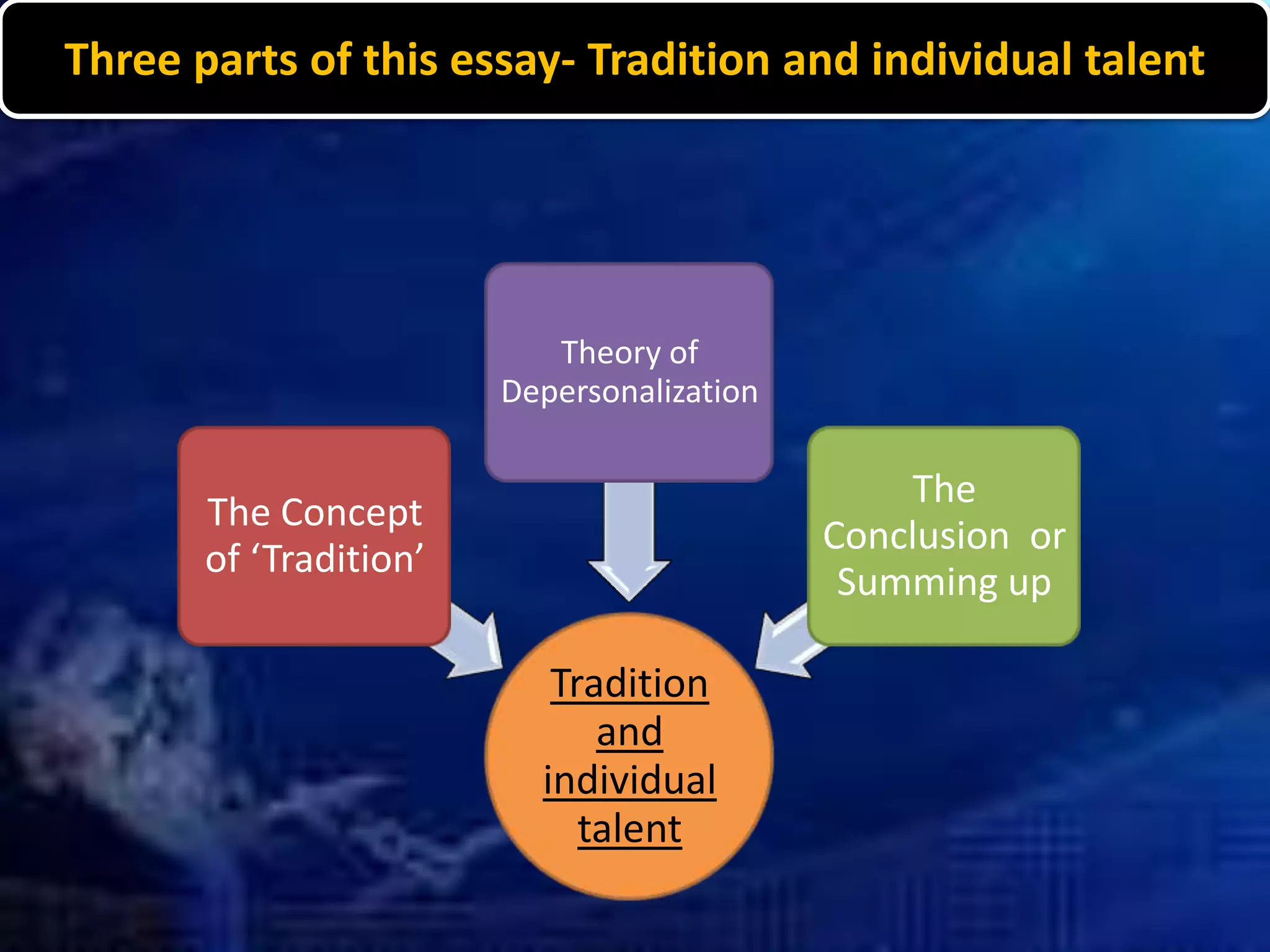
Tradition
and
individual
talent
The Concept
of ‘Tradition’
Theory of
Depersonalization
The
Conclusion or
Summing up
Three parts of this essay- Tradition and individual talent
Theory of Depersonalization
What is Depersonalization ?
• Depersonalization means which in not personal and
impersonal things
• Here in this essay Eliot gives important to poetry
rather than the poet which is Depersonalization
“Honest criticism and Sensitive appreciation is
directed not upon the poet but upon the poetry”
Eliot , start the second part of his essay with:
The poet adopts the process of depersonalization:
“ A continual surrender of himself as he is at the moment
to something which is more valuable. The progress of an
artist is a continual self sacrifice, a continual extinction of
personality”
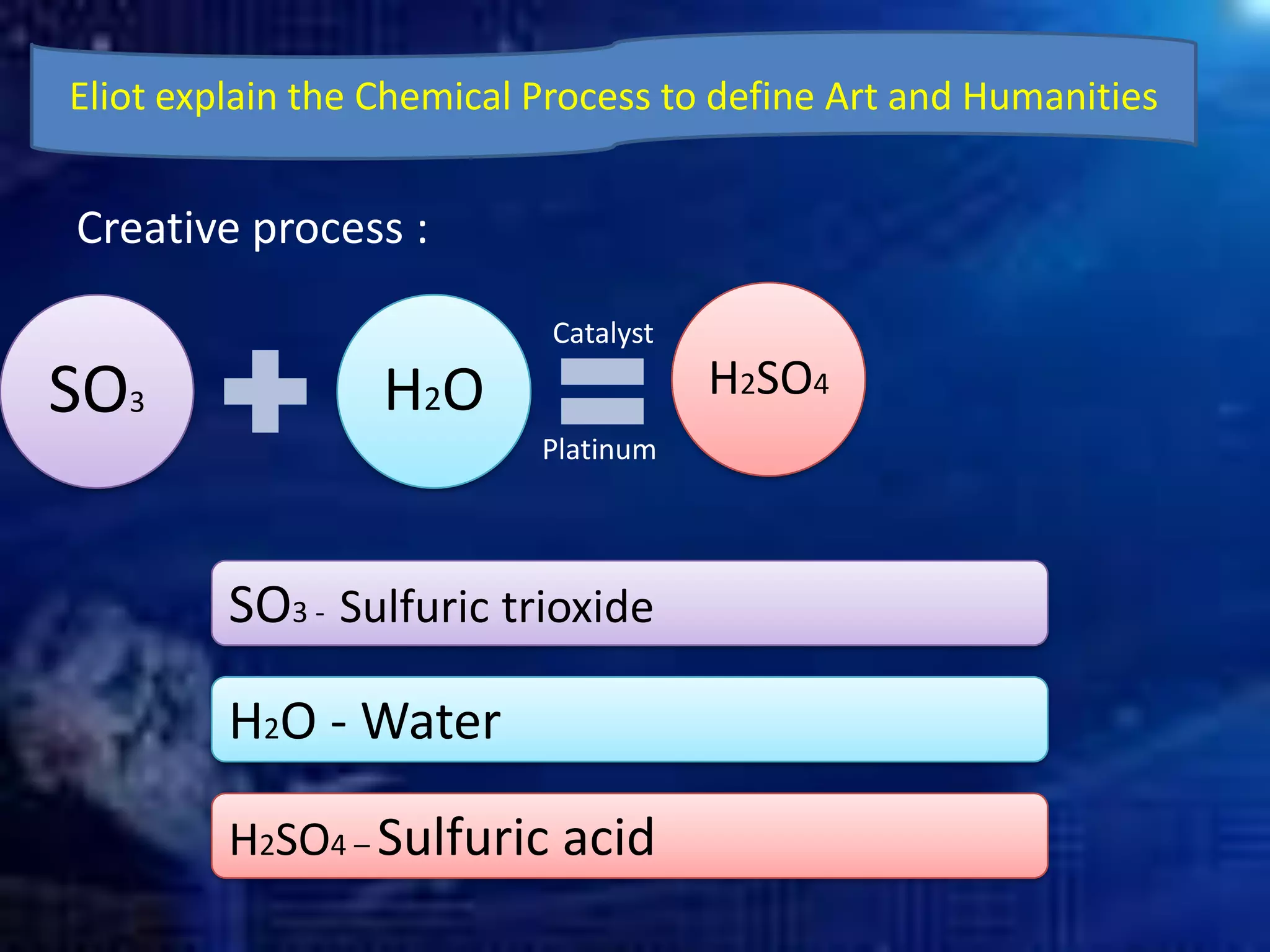
Eliot explain the Chemical Process to define Art and Humanities
Creative process :
SO3 H2O H2SO4
Catalyst
Platinum
SO3 - Sulfuric trioxide
H2O - Water
H2SO4 – Sulfuric acid
• “The analogy was that of the catalyst when
the two gases Oxygen and Sulphur dioxide , are
mixed in the presence of a filament of
platinum, they form sulfuric acid.
• This combination takes place only if the
platinum is present: nevertheless the newly
formed acid contains no trace of platinum, and
the platinum itself is apparently unaffected; has
remained inert, neutral , and unchanged.
• The poet ‘s mind just like as Platinum
• The poem is like Sulphuric acid
• The mind of the poet is just like Platinum
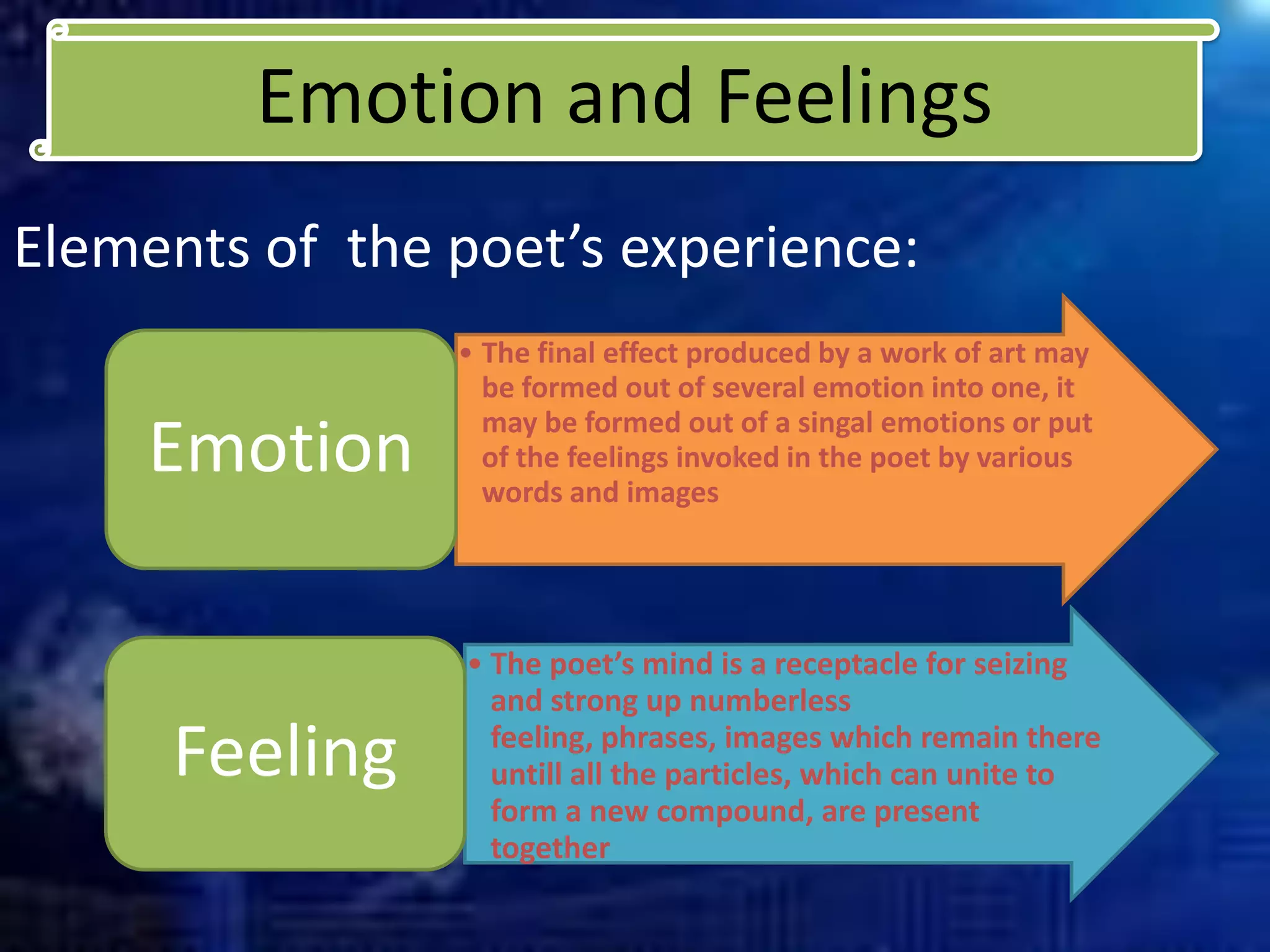
Emotion and Feelings
• The final effect produced by a work of art may
be formed out of several emotion into one, it
may be formed out of a singal emotions or put
of the feelings invoked in the poet by various
words and images
Emotion
• The poet’s mind is a receptacle for seizing
and strong up numberless
feeling, phrases, images which remain there
untill all the particles, which can unite to
form a new compound, are present
together
Feeling
Elements of the poet’s experience:
The Emotion of Art
• The poet has not a ‘Personality’ but they
has particular medium to express in which
impressions and experiences combine in
peculiar and unexpected ways
• Impressions and experience which are
important in the man may take no place in the
poetry, and those which become important in
the poetry may play quite a negligible part in
the man, the personality
• Poet’s personal emotion, it provoked by particular
events in his, in that poet is in any way remarkable or
interesting
• The business of the poet is not to find new
emotions, but to use the ordinary ones and, in
working them up into poetry, to express feeling
which are not emotions
Thank you..

paper no-7 literary theory and criticism "chemical reaction denationalization in"The tradition and individual talent"

  • 1.
    Topic: Chemical ReactionDepersonalization in “The Tradition and individual talent “ Name: Jinal B. Parmar Roll No.: 13 Paper No.: 7 Literary Theory and Criticism M.A. Sem.: 2 Year: 2013-2014 Submitted to: Department of English Smt. S. B. Gardi Maharaja Krishnakumarsinhji Bhavnagar University
  • 2.
    T. S. EliotIntroduction • Essayist , Playwright, literary and social critic • One of the twentieth century’s major poet • His greatest works: • “The Waste Land” • “The Love Song of J. Alfred Prufrock” • “Poems of ‘Four Quartets’ • He has wrote one essay “Tradition and Individual Talent”
  • 3.
    Tradition and Individualtalent • Published in 1919 • First published in ‘The Egoist’ • The essay is also available in Eliot’s “Selected Prose” and “Selected Essays” • Eliot presents his conception of tradition and the definition of the poet and poetry
  • 4.
    Tradition and individual talent The Concept of ‘Tradition’ Theoryof Depersonalization The Conclusion or Summing up Three parts of this essay- Tradition and individual talent
  • 5.
    Theory of Depersonalization Whatis Depersonalization ? • Depersonalization means which in not personal and impersonal things • Here in this essay Eliot gives important to poetry rather than the poet which is Depersonalization
  • 6.
    “Honest criticism andSensitive appreciation is directed not upon the poet but upon the poetry” Eliot , start the second part of his essay with: The poet adopts the process of depersonalization: “ A continual surrender of himself as he is at the moment to something which is more valuable. The progress of an artist is a continual self sacrifice, a continual extinction of personality”
  • 7.
    Eliot explain theChemical Process to define Art and Humanities Creative process : SO3 H2O H2SO4 Catalyst Platinum SO3 - Sulfuric trioxide H2O - Water H2SO4 – Sulfuric acid
  • 8.
    • “The analogywas that of the catalyst when the two gases Oxygen and Sulphur dioxide , are mixed in the presence of a filament of platinum, they form sulfuric acid. • This combination takes place only if the platinum is present: nevertheless the newly formed acid contains no trace of platinum, and the platinum itself is apparently unaffected; has remained inert, neutral , and unchanged. • The poet ‘s mind just like as Platinum • The poem is like Sulphuric acid • The mind of the poet is just like Platinum
  • 9.
    Emotion and Feelings •The final effect produced by a work of art may be formed out of several emotion into one, it may be formed out of a singal emotions or put of the feelings invoked in the poet by various words and images Emotion • The poet’s mind is a receptacle for seizing and strong up numberless feeling, phrases, images which remain there untill all the particles, which can unite to form a new compound, are present together Feeling Elements of the poet’s experience:
  • 10.
    The Emotion ofArt • The poet has not a ‘Personality’ but they has particular medium to express in which impressions and experiences combine in peculiar and unexpected ways • Impressions and experience which are important in the man may take no place in the poetry, and those which become important in the poetry may play quite a negligible part in the man, the personality
  • 11.
    • Poet’s personalemotion, it provoked by particular events in his, in that poet is in any way remarkable or interesting • The business of the poet is not to find new emotions, but to use the ordinary ones and, in working them up into poetry, to express feeling which are not emotions
  • 12.